Distinguished Critique: Manhunter: The Special Edition Review
Some concepts are slightly unbalanced, but this award-winning classic delivers dramatic, thrilling tension
—by Nathan on August 20, 2026—
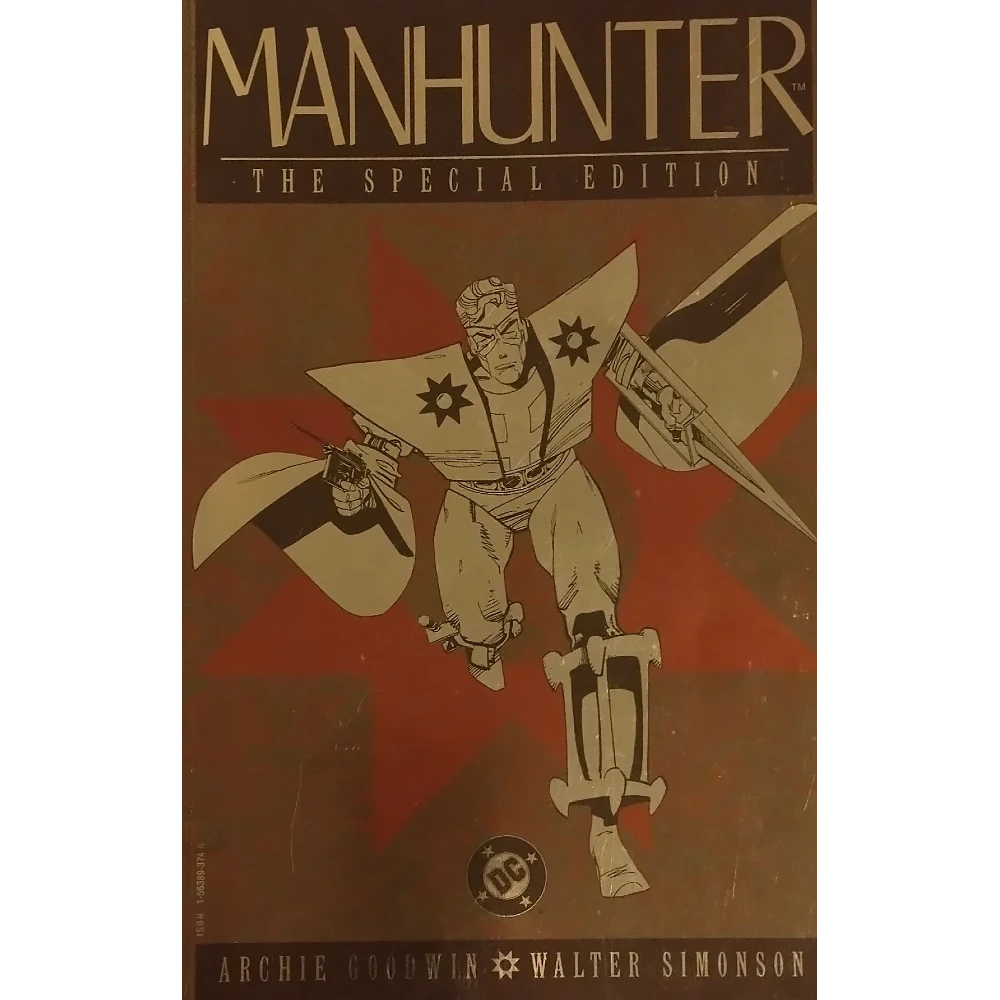
DC has, as far as I understand it, no less than three different characters or groupings of characters with "Manhunter" in the name.
First up, you've got "Martian Manhunter," the shape-shifting alien and member of the Justice League.
Second, you've got the "Manhunters," plural, the robot police force created by the Guardians of the Universe which preceded the Green Lantern Corps. Y'know, those "No man escapes the Manhunters!" dudes.
Third, you've got "Manhunter," singular, the alter ego of Paul Kirk, former big game hunter and crimefighting mercenary.
We're focusing on that last guy today.
Walter "Walt" Simonson, artist renowned, contributed to a Teen Titans/X-Men crossover produced in the early 80s that I recently reviewed. Recalling Simonson's other, fairly famous DC contribution, I dug out the volume we're reviewing today to give it a re-read.
That's right. I don't always review these on the first go. Occasionally, I've got to sit back, do some thinkin', give the story a second readthrough. Just to make sure I'm prepared to say all that I want to say.
Hopefully, Kirk is appreciative. He's a planner himself, y'know, and these award-winning issues, courtesy of Simonson and the late Archie Goodwin, deserve some thoughtful ink spilled about them. Course, that's not all the spilling we'll find in these pages. Some blood, a few secrets…all the hallmarks of a good thriller.
Manhunter
Writer: Archie Goodwin
Penciler: Walt Simonson
Inker: Walt Simonson
Colorist: Klaus Janson
Letterers: Ben Oda, Walt Simonson, Joe Letterese, Alan Kupperberg, and Annette Kawecki
Issues: Material from Detective Comics #437-443, plus "The Final Chapter"
Publication Dates: November 1973, January 1974, March 1974, May 1974, July 1974, September 1974, November 1974, August 1999
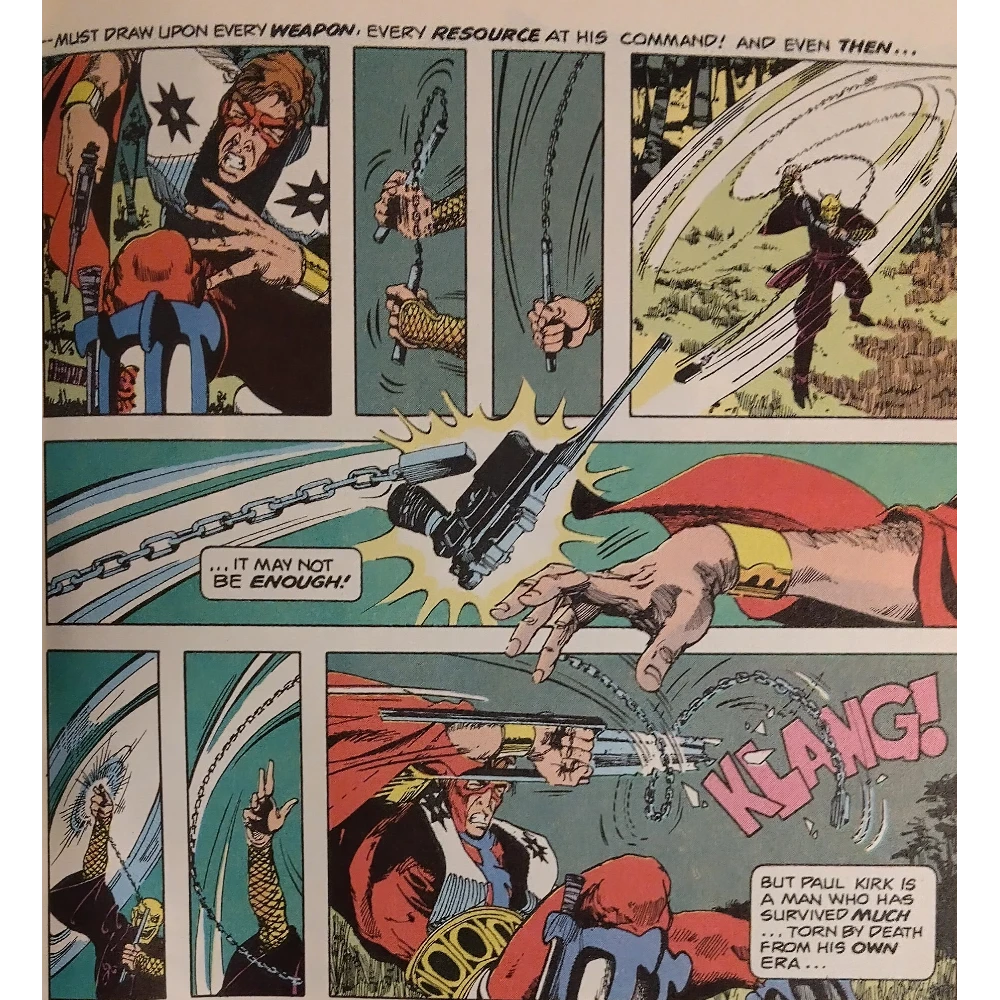
I have good reason for waiting to read these Detective Comics backup features a second time before reviewing them. Goodwin and Simonson tell their tale in only eight chapters, those shorter backups plus a brief bonus serving as an epilogue, yet the entire thing reads like the comic version of a full-fledged action flick…and then some! Imagine Jason Bourne with some sci-fi craziness thrown in the mix, and you've got this Manhunter tale down pretty much pat.
I think that notion, the blend of grounded action with more comic-booky zaniness, threw me for a loop the first time I read this arc. You get a globe-hopping adventure featuring Simonson's realistic backgrounds and landscapes blended with clones, a dimensional portal, and a group of old geniuses seeking immortality. There's a lot to take in, and on my first read, I found myself a tad distracted by some of the story's more "out there" elements.
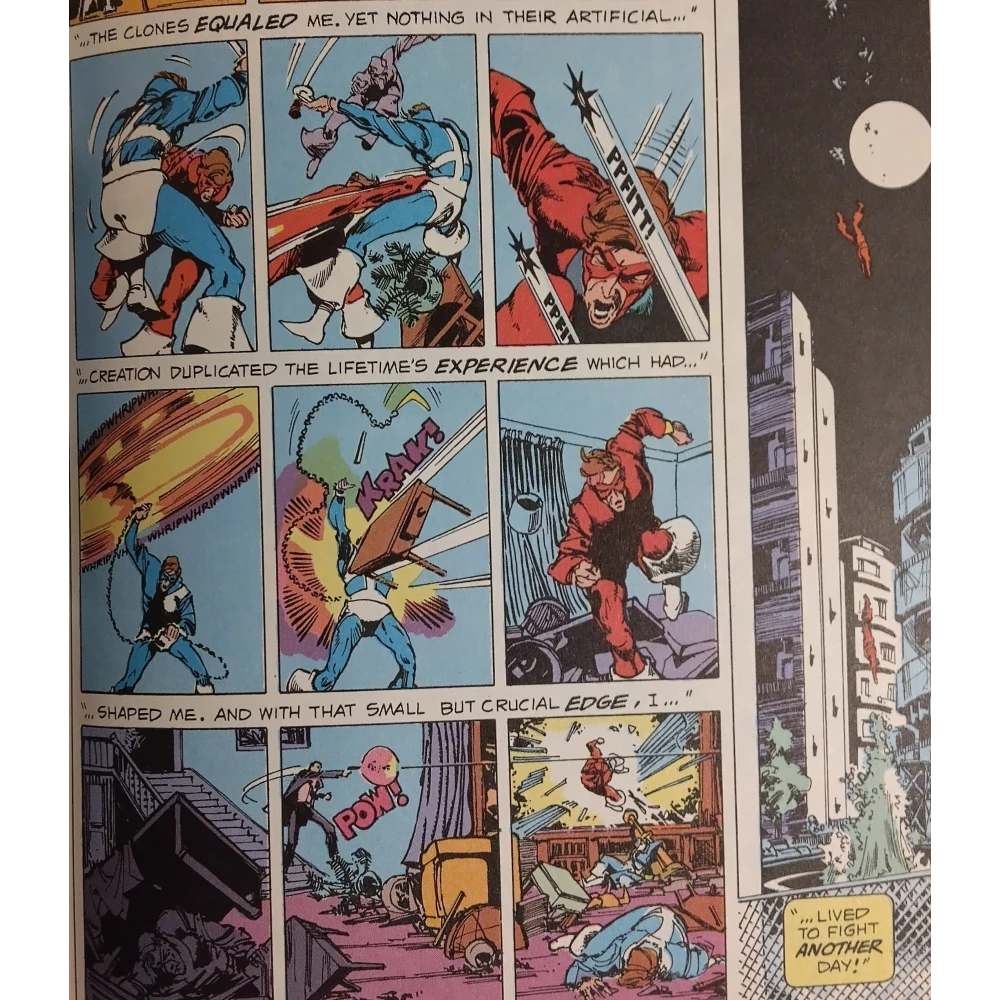
On this second reading, I can say the comic book qualities feel somewhat more at home, even if they don't perfectly cozy up to Goodwin and Simonson's frenetically-paced conspiracy tale. If anything, those pieces are less jarring and wind up making the stronger qualities stand out all the more for their strengths.
If we look at this through the lens of an action-adventure yarn dealing with a global conspiracy, with one man pitted against a ruthless cabal, the whole thing works brilliantly. Frequently tense, rarely letting up on action, the tale always knows when and where to move. Goodwin and Simonson introduce (or, in this case, reintroduce) Paul Kirk as a former hunter turned mercenary, giving his natural skills a slight cybernetic boost as he battles the aforementioned cabal and clones of himself to prevent a global catastrophe. Partnered with Interpol agent Christine St. Clair, Manhunter finds his misadventures put them both on the run, stacking the odds against our fugitives as that conspiracy's threads pull tighter and turning the Manhunter into the Manhunted.
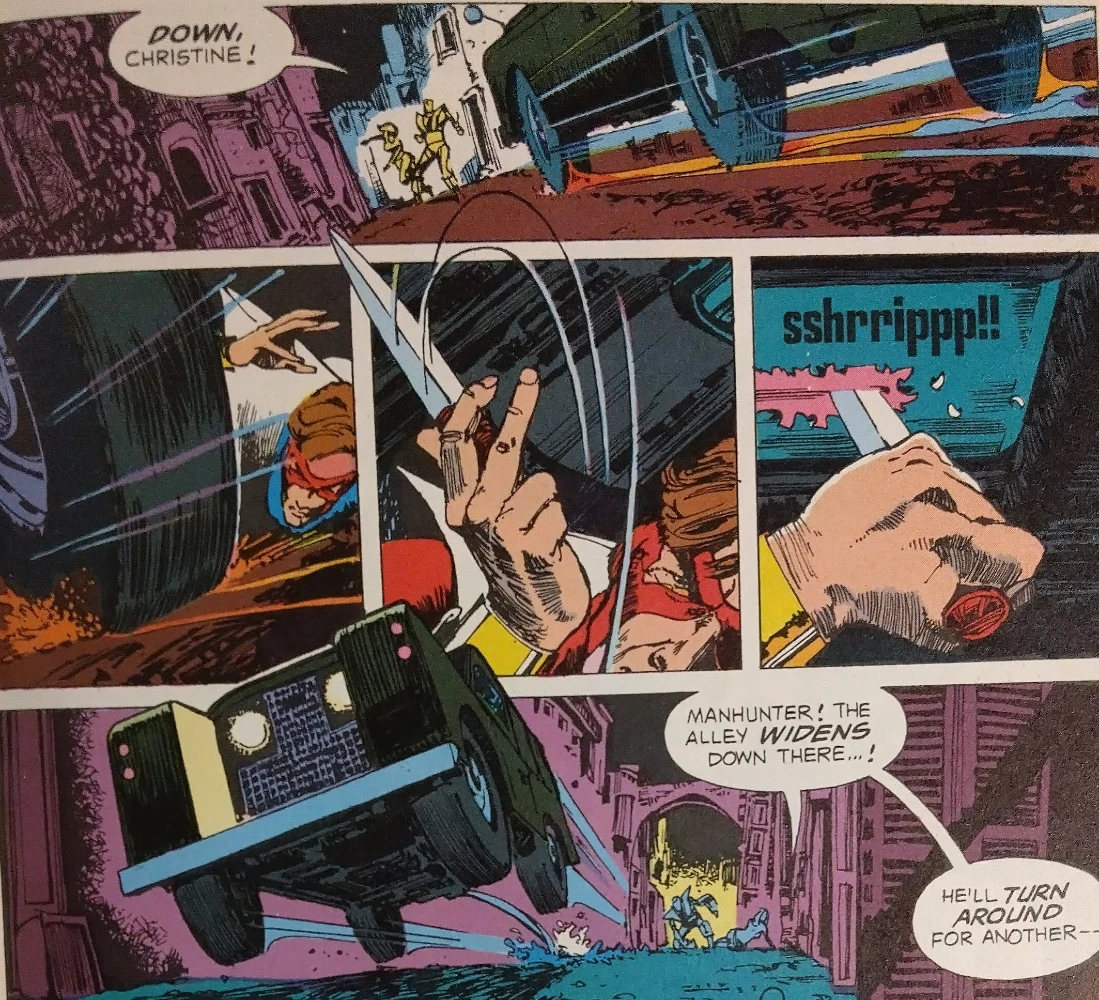
It's a packed plot, and with scene and location changes happening often, one would be forgiven believing Goodwin and Simonson can't commit to a complete tale. Such an assessment neglects how well the plot, though perhaps confusing at moments, always moves forward, setting up the stakes early and never relenting in steering our heroes towards its ultimate destination. You can carve out very distinct acts across these pages, with certain payoffs set up early; the narrative's length means you can zip through each chapter quickly and reach those rewarding payoffs without trudging through pages of exposition and details.
Quick reading, however, isn't necessarily encouraged. You have to pay attention to some of those earlier scenes if you want the full impact of this story, which may have been my other issue when I first read this. I just missed some of those pieces. No skin off Goodwin and Simonson's nose, naturally. One throwaway line in particular, in the arc's second issue, becomes integral to understanding a late game twist that, otherwise, feels somewhat random and takes away from a surprisingly emotional moment shortly thereafter. It's only when you connect the dots that the weight of that line and the later sequence become apparent. I'd argue each of Goodwin and Simonson's twists work, to a certain extent, and there are multiple, so keep those eyes peeled and memories fresh. Every few pages, you may find yourself in for yet another pleasant shocker.
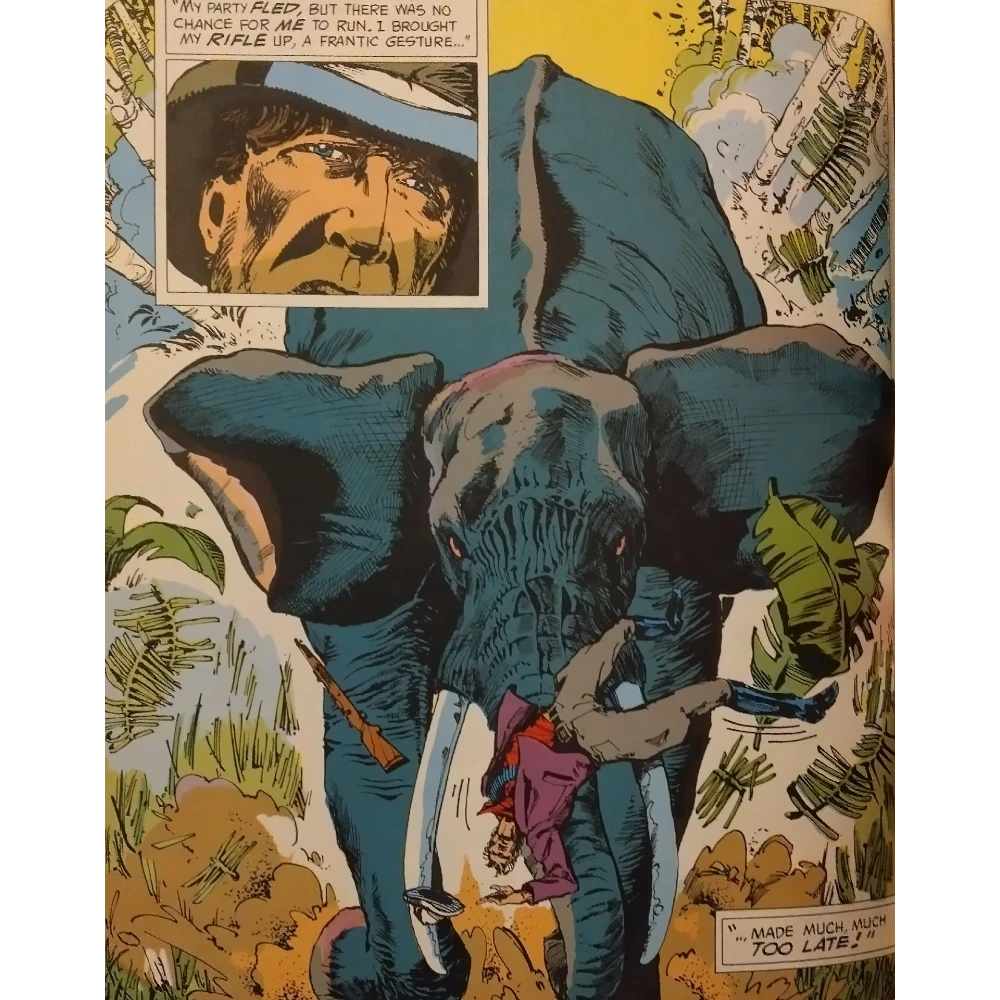
Goodwin doesn't provide us with the deepest characters, needing to dole out development in smaller moments or in the circumstances surrounding our protagonists. Though Paul Kirk existed before these Detective Comics issues, I did not find myself bothered by being introduced to him here. Kirk is allowed a brief backstory, bringing him to the present day, but his heroics are grounded less in his past (poaching elephants doesn't seem to inspire magnanimity toward one's fellow man) and more in his current circumstances. He decides he'd rather not help a secret cabal that cloned him without his permission change the world's societal fabric, and that's fair. He turns his natural athleticism and crackshot skills outward–just pure gumption. No dead parents or uncles or girlfriends required. Much as I like a more psychologically compelling character, I wasn't bothered by Goodwin's portrayal.
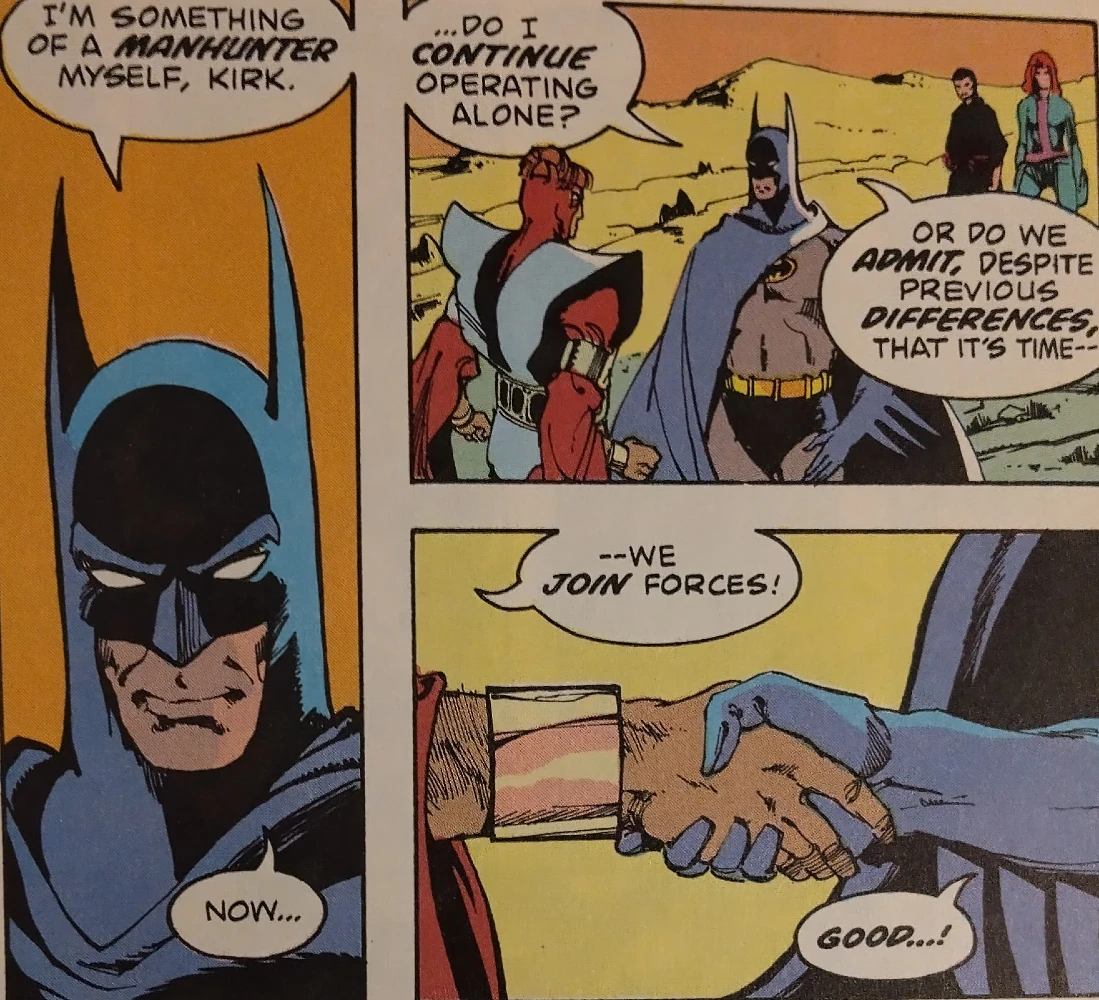
We do get somewhat of a moral element once Batman factors into the plot, appearing late and briefly expressing his frustrations with Manhunter's methods. Goodwin doesn't take the argument too far, just enough to make you realize the opposing viewpoints to Kirk's activities and that you've likely grown comfortable supporting the actions of a vigilante killer. Once Batman is thrown into the mix, you may experience some internal quibbling, but it won't overpower the story. This isn't the Punisher debating Spidey or Daredevil yet again over his lethal crimefighting ways. For a plot that's fairly straightforward in terms of theming, it is nice to have at least a semblance of something to chew.
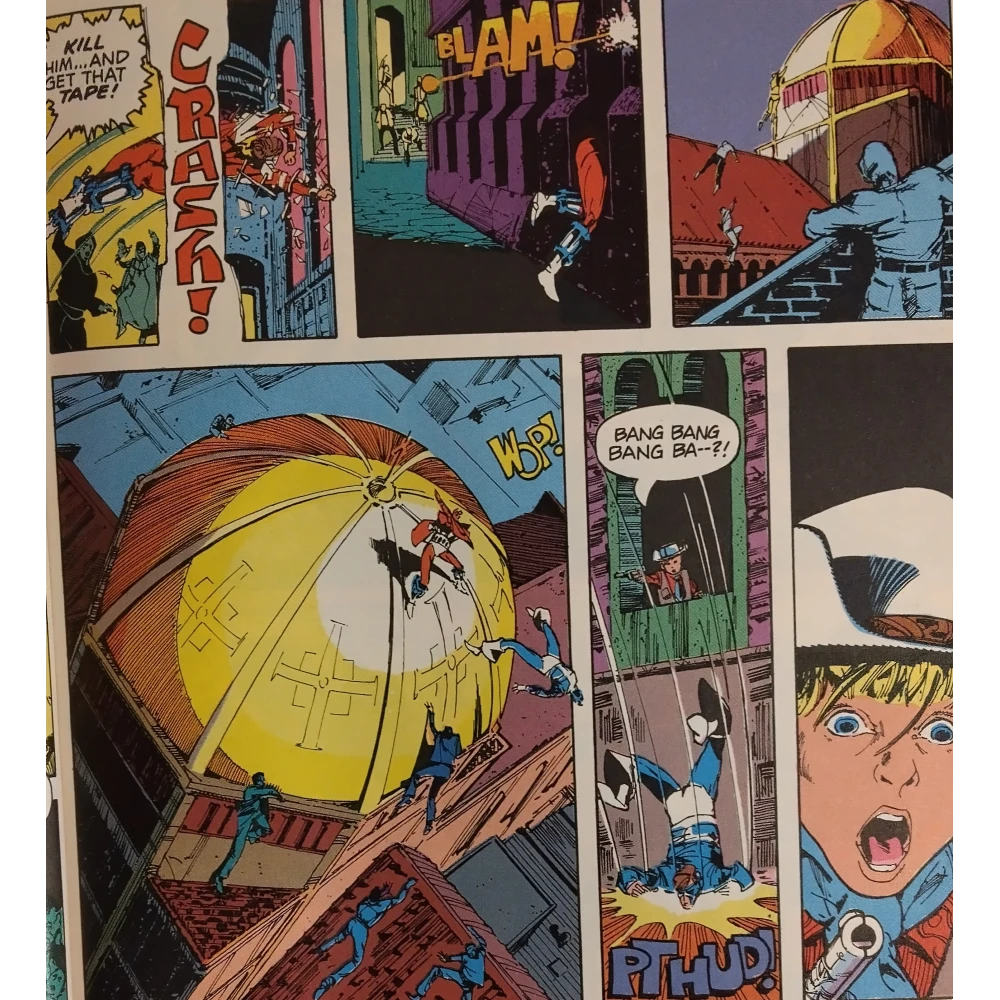
If any real chewing is to be done, it's that of scenery…specifically, the scenery Walt Simonson creates. I've already noted his penchant for realism, which is mostly what he sculpts, aside from the occasional sci-fi doohickey. His settings are packed with details, from the ancient Romulus Cathedral, majestic despite its weathered features, to the slick alleyways of Nepal and Marrakesh. Goodwin demands much of the artist, asking him to craft a cityscape in one issue, a jungle battleground the next, and Simonson always rises to the challenge. The book is never static, and neither is the art.
Beyond just his settings, Simonson excels at crafting a story, finding ways to not only tell Goodwin's tale but to do so inventively. His page layouts are highly effective, multiple series of smaller panels providing those frantic feelings across action sequences which pack in as much movement in as little space and time as possible. When he needs to breathe, Simonson finds places to linger, such as my favorite panel in the narrative, a bull elephant, rendered in lifelike detail and given imposing menace, charging down Kirk during (and effectively ending) his big game hunter days. Moments also exist where Simonson just wants to experiment, such as a sequence of panels at the Cathedral shaped like stained-glass windows or a character's name incorporated into the infrared of a sniper's scope. These bits create a unique reading experience, Simonson plucking elements within the story to create the framework through which the tale is told.
Not to be missed is that epilogue, a twenty-three-page, wordless finale drawn by Simonson. In an afterword to this volume, Simonson explains he and Goodwin never got around to following up their Manhunter work, despite an interest in doing so. This silent piece, without Goodwin's words, is an homage to the man in light of his passing in 1998. It's pure Simonson, an upbeat, last adventure seeing a familiar batch of faces hunt down what appears to be the final Manhunter clone still lingering at the end of the original Detective Comics issues. The tribute is fitting, Simonson's way of remembering a friend.
"Short and sweet" doesn't begin to sum up this volume. You won't spend much time reading it, even if I encourage you to take your time and soak in the story. At just a smidge over 100 pages (and that's including the epilogue), these issues tell a charged narrative that doesn't slow down much. Yet it isn't sloppily told; there's no rush. Goodwin and Simonson wield a smart sense of control and calm as they lead Kirk through the wilds of dangerous cities against even more dangerous enemies. Plenty of surprises exist, and if you can look past some of the sci-fi sheen (heck, you may enjoy it more than I), you're in for a fun time following a man who stalks the world's most dangerous game.