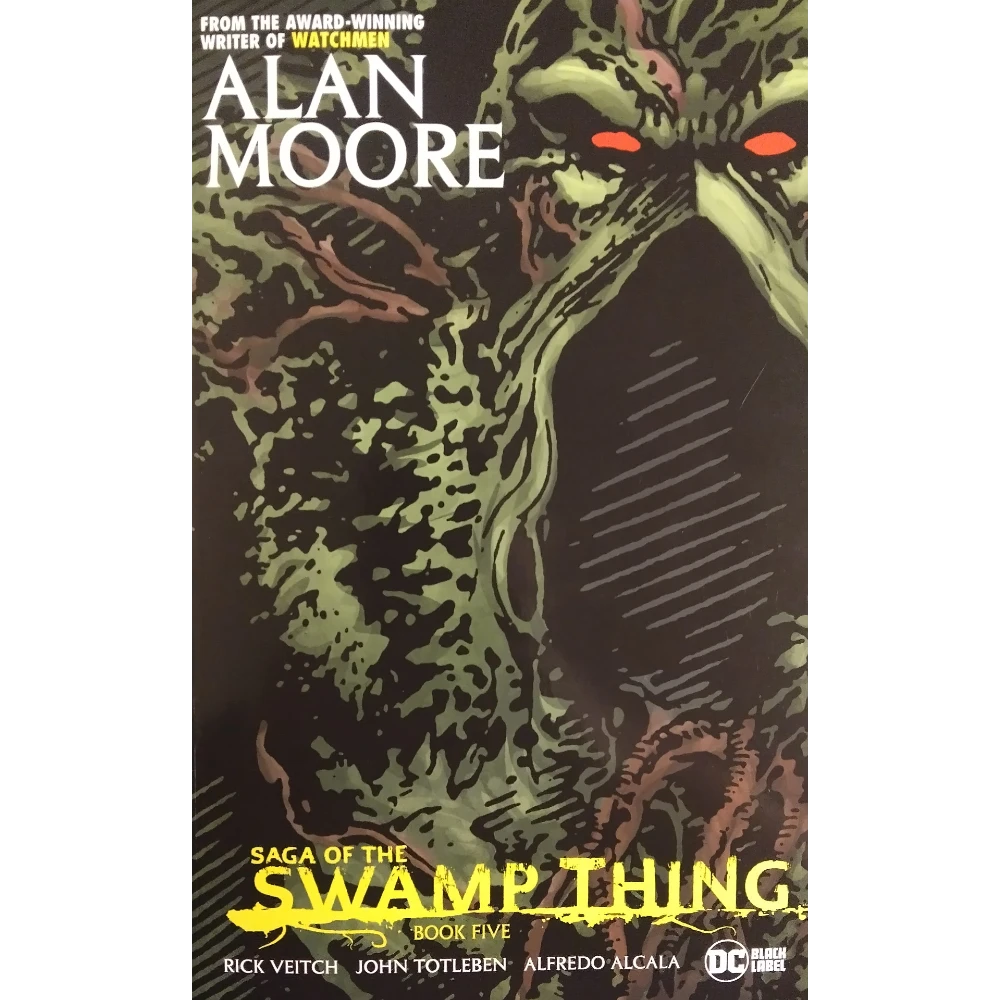
Random Reviews: Saga of the Swamp Thing (Book Five)
Presenting Moore's strongest material yet, these issues fantastically apply the development Swamp Thing's received thus far
—by Nathan on November 8, 2026—
The Crisis had been averted. The multiverse, though diminished in scope, was saved. Lives were lost, yet others were rescued.
While the battle to save the physical universe brought a conglomeration of heroes to the very roots of existence at the dawn of time, another, quieter war waged: Swamp Thing, paired with supernatural heroes such as Etrigan the Demon, Deadman, and the Spectre, and supported by occultists like John Constantine, Zatanna, and Zatanna's father Zatara, had helped save heaven itself. The monster who once believed himself to be Alec Holland was instrumental in turning back the tide of the Great Darkness (no relation to the Legion of Superheroes saga of the same name), creating a truce between shadow and light.
As our volume opens, not-Alec is transported back to his beloved marshes, where events have transpired without his knowing: in Houlma, Louisiana, his lady love Abby Arcane–the former Mrs. Abigail Cable–has been accosted by the public, causing her to flee to Gotham City, where she has been arrested. Scratch that: Abby isn't just Swampy's "lady love;" she's his "wife," as she identifies herself. Abby Holland, then. And that's the issue. Turns out, regular folk don't appreciate people up and marrying muck monsters embodied with the memories and personality of a dead man. It's Abby-normal.
Swampy learns of her arrest upon his return, and that tabloid tidbit sets him off on an adventure which will shape the events of this volume…and beyond.
The Saga of the Swamp Thing (Book Five)
Writer: Alan Moore
Pencilers: Rick Veitch and John Totleben
Inkers: Alfredo Alcala and John Totleben
Colorist: Tatjana Wood
Letterer: John Costanza
Issues: Swamp Thing #51-56
Volume Publication Date: July 2013
Issue Publication Dates: August 1986-January 1987
Publisher: Vertigo (DC Comics imprint)
In my review of volume four, I noted how Moore's Crisis contribution really could mark the end of his Swamp Thing run, especially in terms of scope. Swampy and Friends battled an ancient darkness which threatened all of spiritual existence! And they won! Coming off a victory like that, you'd expect Moore to wash his hands of all the mud he's been sculpting, call it a day. He's told this epic story and brought Swamp Thing through to the other side. Nowhere to go but down, right?
Right…and wrong.
If you define "down" by lessening the scope of his narratives, then yes, you're correct. We're provided a much more personal story in these issues, one which builds upon the character work Moore has been developing for both Abby and Swamp Thing. He pivots away from the one-to-two issue parables he's been telling to build to the climactic Crisis tie-in tale and delivers a chunk of issues which all follow the same narrative thread. Yet if you define "down" in qualitative terms, I'd wager that judgment is incorrect.
Not to imply you're making that kind of assumption. Sorry if you aren't. But if you are…
Moore's character work has always been tightly intertwined with his stories, but in these issues more than anywhere else, he doubles down on the emotion and the payoffs in detailing how far he's brought his central characters and where he chooses to take them next. He's woven a growing love story like a weed through the lawn of his run, and as these issues continue, those roots deepen and spread. Swampy is no longer fighting eldritch horrors, supernatural threats, or even the physical embodiments of American tragedies. Most of Swamp Thing's antagonists here are regular folk and their darned principles. The only eldritch horror, it seems, is him.
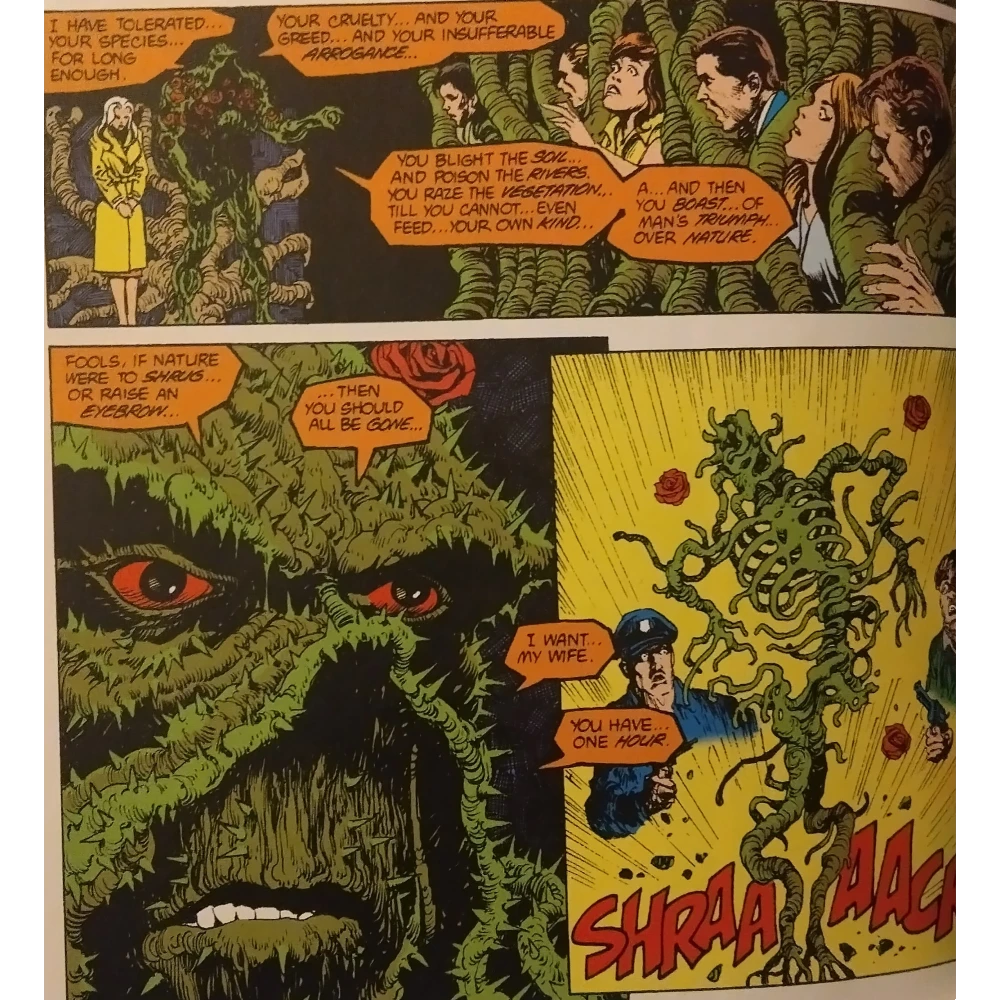
Learning of Abby's arrest in Gotham, Swamp Thing leans fully into the persona of an "elemental," a personification of "the green," tapping into the earth as a source of power. Moore has been allowing him to build his abilities across the whole run–transporting through greenery, physically controlling tracts of land–but in these issues, Swampy fully embraces his role as what Moore calls "the swamp god," becoming the embodiment of environmental justice. Across two issues, Swampy wages war with Gotham in some of the most stunning scenes Veitch and Totlebon have captured yet, carpeting the city in foliage, snaking vines along buildings and around cars, turning Gotham into a veritable jungle.
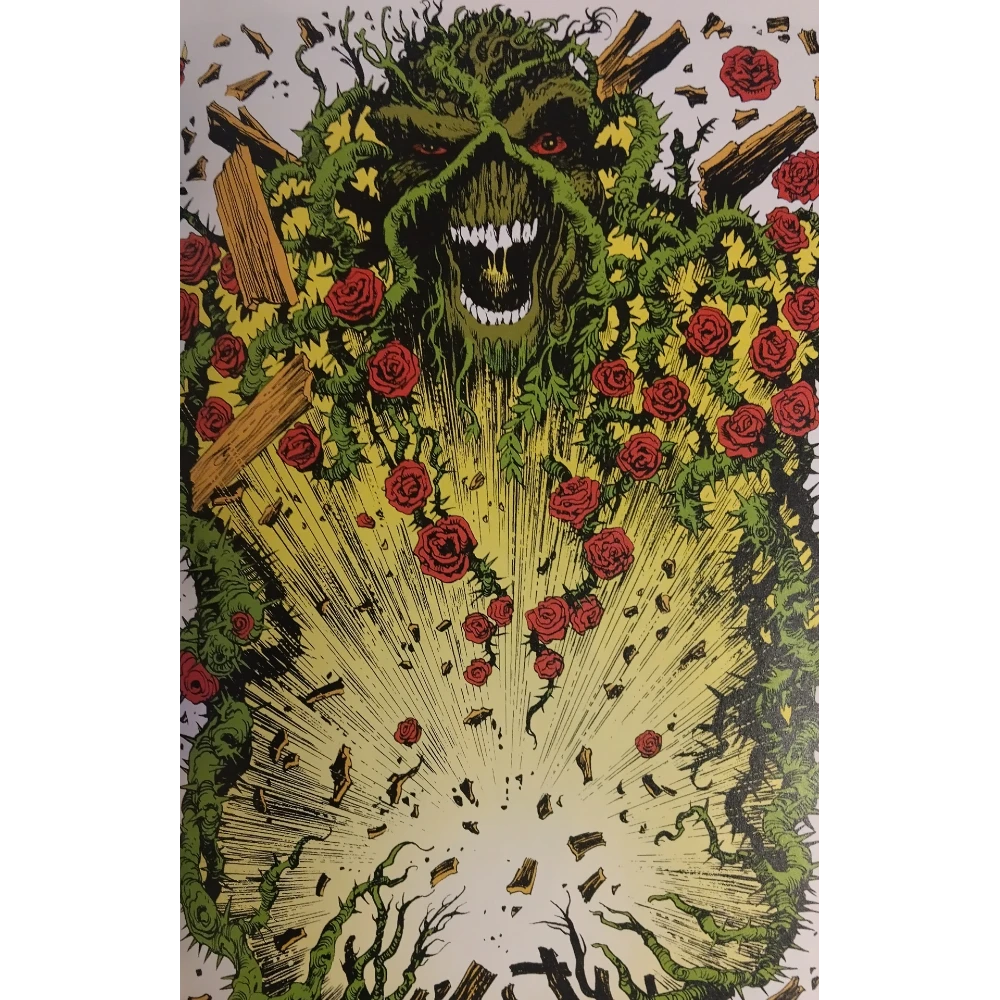
We've reached the apex of Moore imbuing our marsh monster with strength after strength. All the ways in which Swampy has grown, from transporting his consciousness across the U.S. and even to other countries to controlling vegetation, find in this arc their ultimate application. Swamp Thing, growing himself a skeletal frame composed of trees the flora colossus called Groot would envy, lumbers down a Gotham street, making his intentions known: he's in charge, as long as any semblance of green exists. He's commanding his powers in ways unknown until now.
Though we're far from confronting ancient evils, the horror element integral to the book is always present. Utilizing a double-length issue to chart most of the narrative, Moore is allowed the time necessary to turn his growing (in more ways than one) central character into a fiercer monster. Swampy's path to find purpose, identity, and meaning is wrenched in a new direction here, Moore jabbing at the heart of who this creature truly is. We're reminded that all of Swampy Thing's humanity comes from the memories absorbed from Alec Holland, that there is no innate mental, physical, or emotional connection outside Alec's unintended influence. Swamp Thing, cutting loose, seems to, possibly, temporarily abandon the emotions which allowed him to express sophisticated feelings other than pure rage.
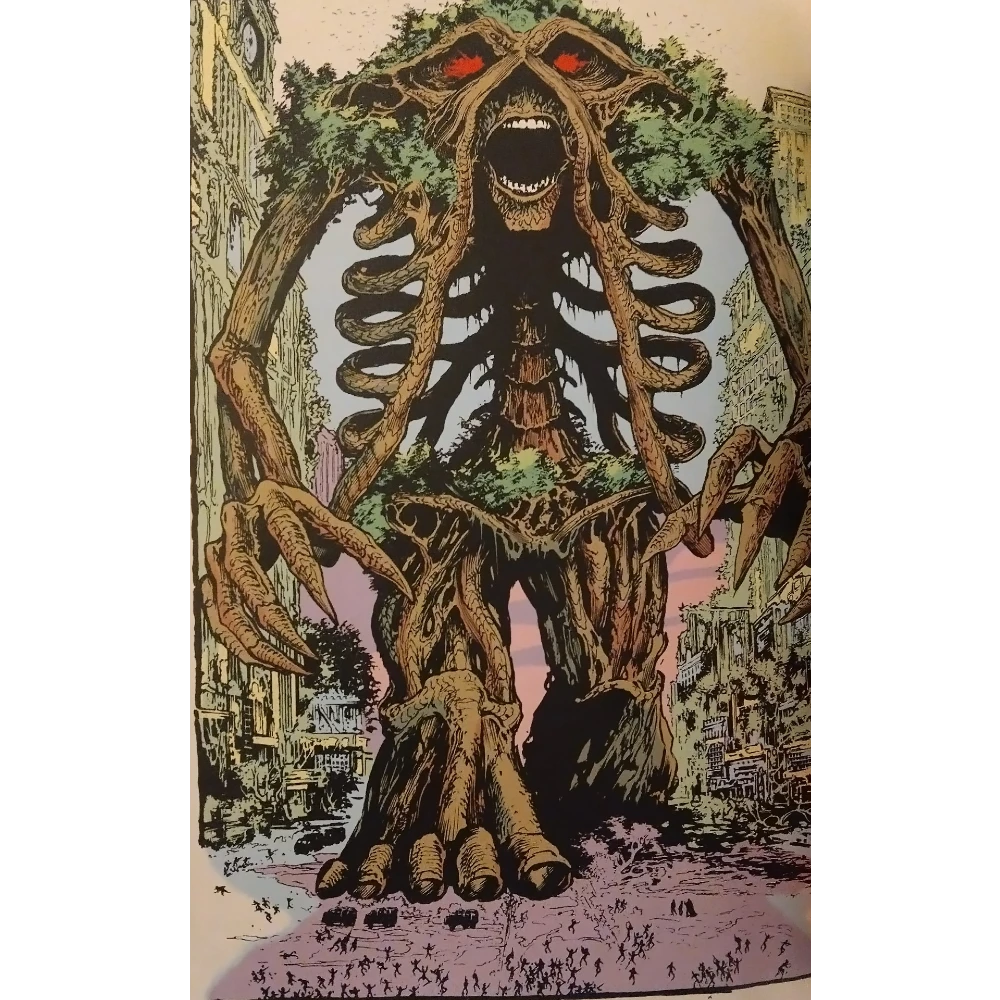
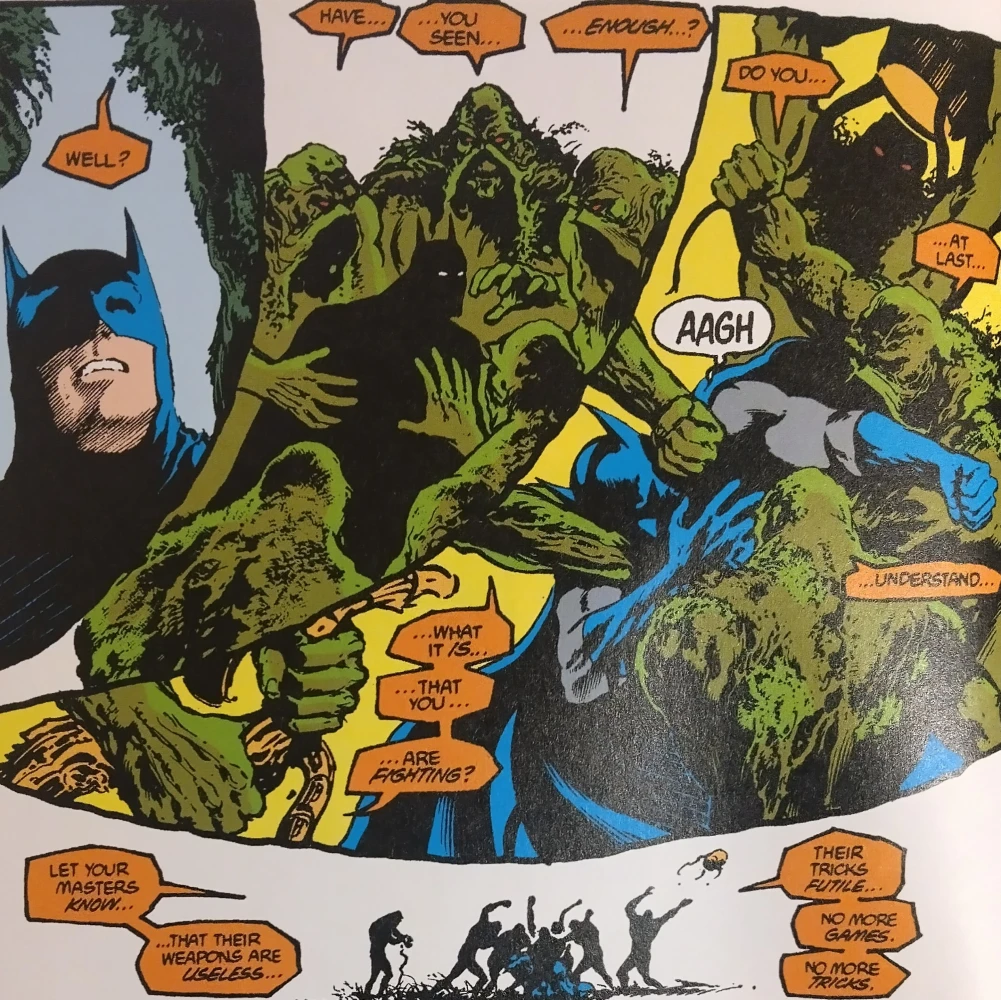
And yet…those genuine emotions need to be considered. You cannot dismiss Swampy as just a mindless freak of nature for laying siege to the city, lest you risk misunderstanding the intersection of where he exists. His actions are untamed, yet his rage is pulled from deeply settled feelings of love. This isn't self-defense; this is a fight for his interpretation of justice, pitting his full might against a system of law some might consider close-minded or held too stringently. Then again, maybe there is a line Swampy crosses in ensnaring an entire city in a snarl of undergrowth, regardless of where his intentions fall along the moral spectrum, and maybe Gotham's defenders, including the police, a certain Dark Knight Detective, and others, should be able to do whatever they can to ensure a lawful resolution to the situation.
That wrestling the reader undertakes is what this whole arc and its aftermath pivot upon, lobbing the moral quagmire your way and asking you to wade through it. Moore never makes Swampy the innocent victim, nor does he make the Gotham authorities and Batman the unfeeling perpetrators. As he jabs at Swamp Thing's center, so does Moore prod at matters of unthinking virtue and heartfelt retribution. And, look, I'm not one to necessarily defend the Swamp Thing/Abby romance. I think its development is crucial to Moore's entire run, especially in gauging just where Swampy's humanity begins and ends, but I would likely side with the Gothamites in upholding a certain standard. However, their obstinance and disregard in the face of Swampy's overwhelming wrath does cement Moore's message in following the letter versus the spirit of the law.
Moore unpacks the aftermath of this conflict–which I won't reveal for the sake of spoilers–with as much ferocity as he does those pivotal events themselves. We're given a well-examined denouement to the whole situation, with not only Abby but supporting characters seeded in prior issues and Gotham citizens expressing their reactions to the entire display. Both Swamp Thing and Abby, individually, are given time to reflect on the past and fixate on the seemingly inescapable future, wrenched in a completely different direction than anything Moore has attempted with his small cast until this point.
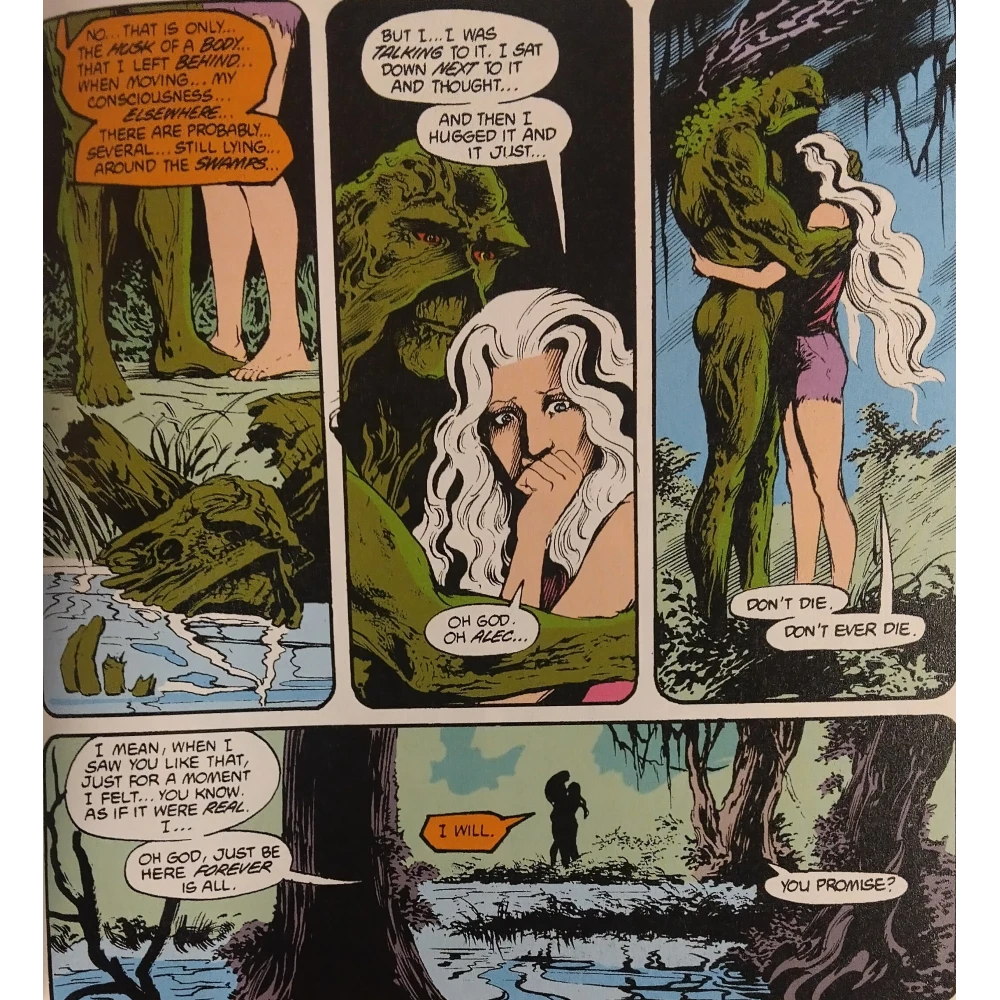
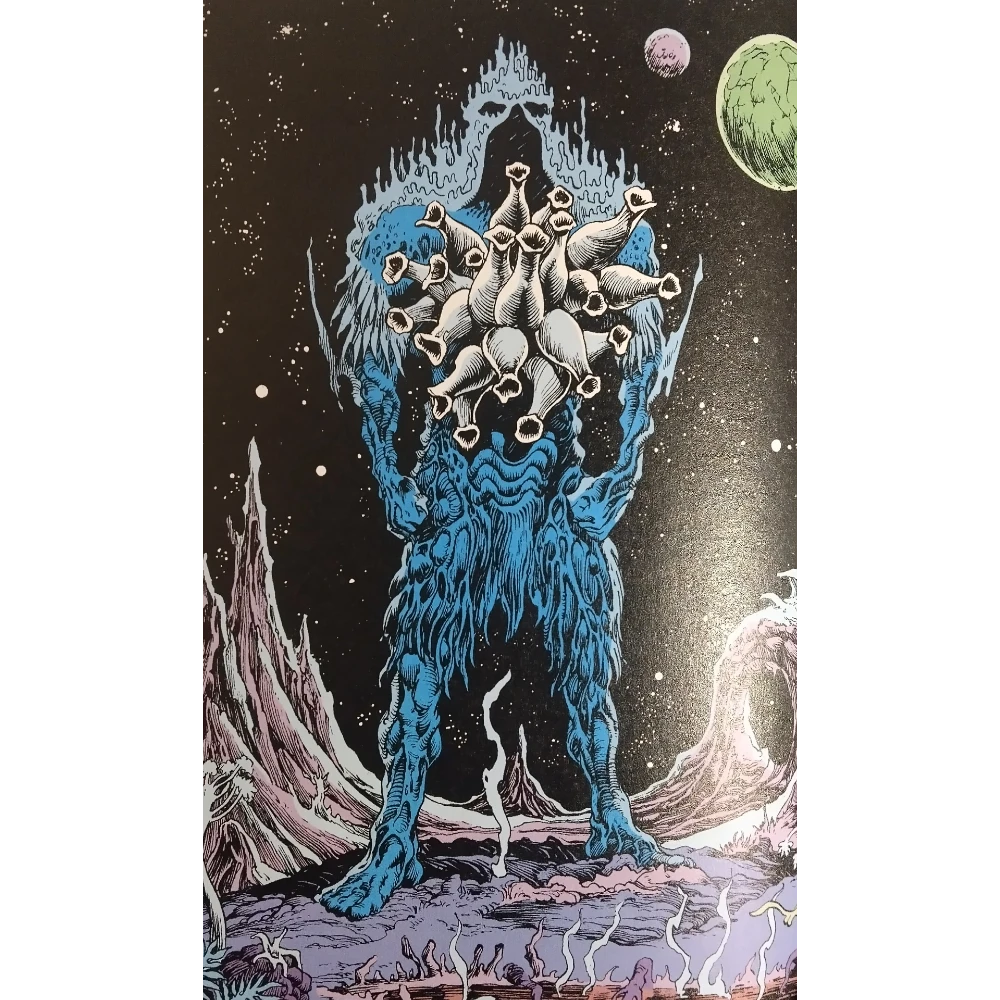
The volume's final issue is either the perfect stopping point or an unnecessary prologue to grander adventures which could have been packaged in the sixth volume. The issue itself, "My Blue Heaven," has become a celebrated classic for fans of the series, and it's easily one of Moore's most poetic issues to date. There's a distinct beauty to it, especially in how Tatjana Wood utilizes a color scheme far different than the typical greens and grays we've seen until now; blended with Moore's vocabulary, the issue as a standalone narrative works wonderfully. But it serves as a prologue to what comes next, and though it may tantalize readers into picking up that final volume, I feel it would have been more appropriate to include in the next collection we'll be reviewing, especially as the preceding issue's final page provides a stellar preview of what lies ahead.
Engaging as Moore's previous issues have been, I would call the arc collected here my personal pick for his zenith. Swampy's been climbing this mountain of quality narratives, and as an angry god in Gotham, he summits. The scope may be smaller than literal Armageddon, but it lets Moore tug all the twisting vines he's been growing and tie them together firmly. We've got one more volume to explore, and it promises a totally (and tonally) different feel than what we've discovered so far. The scope stretches out again, but those issues will hopefully remember the detailed development Moore has woven for Swamp Thing and Abby in these chapters.