Random Reviews: Saga of the Swamp Thing (Book 3)
Though bleak in nature, these issues provide parables using horror to highlight harm
—by Nathan on September 3, 2026—
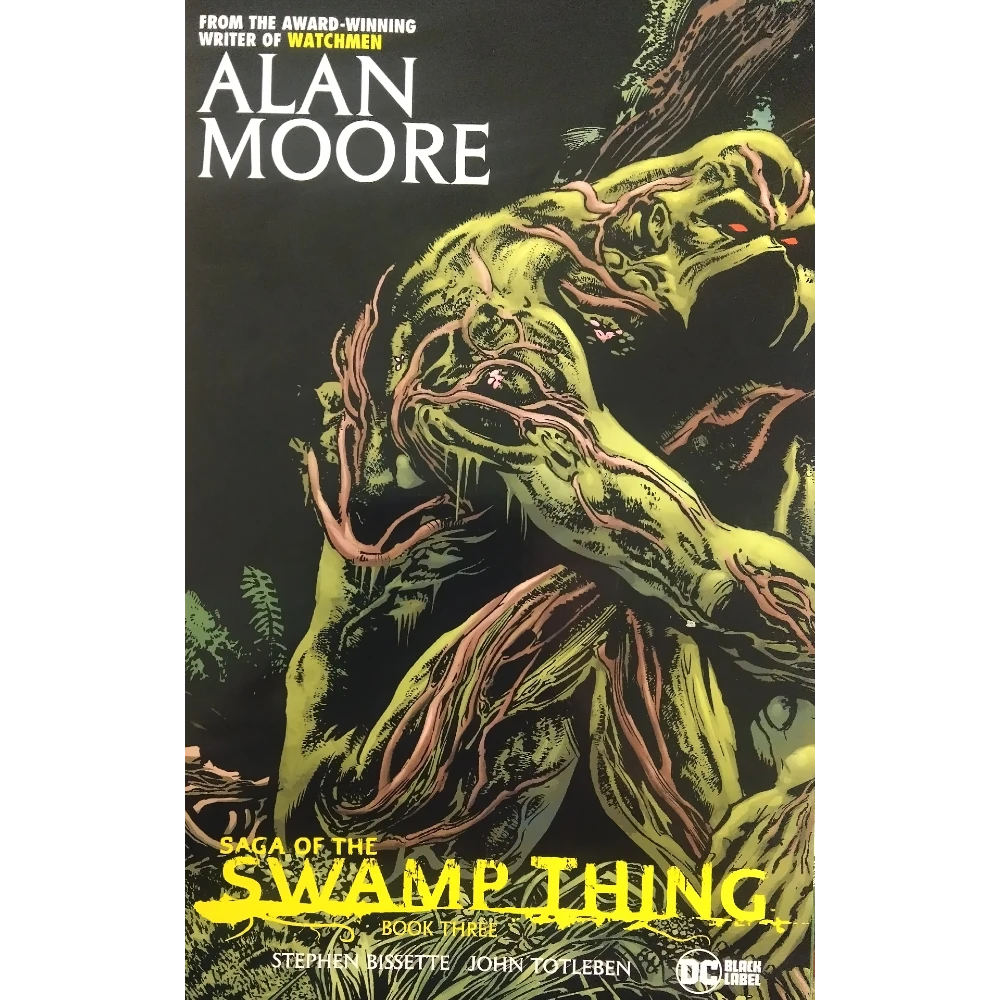
Love is a many-splendid thing, is it not?
Who cares if you're a sentient, shambling figure of moss, mud, and mulch? You'll find someone who cares about you as deeply as you do them. I mean, it's not a guarantee or anything (apologies to all you single sentient shamblers out there), but for Swamp Thing, it's more than a possibility. He loves Abby Arcane, and against all hopes, she loves him. We're not quite at the "How does one domesticate a walking house plant?" bridge, but we may reach there yet.
This volume and its contents have other topics to explore.
When we last left not-Alec-Holland, Alan Moore and his artists had continued plunging the depths of just who this muck monster truly is, having him bury Holland's corpse as a final "farewell" to the memory of the man Swampy originally believed himself to be. Swamp Thing seeks purpose, finding it as he becomes more strongly aware of his connection to the green when he isn't exploring his burgeoning feelings for Abby, the niece of his former arch-foe Anton Arcane.
And what a pair they make. Abby, whose husband Matt is technically not dead (currently lying in a coma), finds in Swampy the warmth and affection her comatose spouse was unwilling to provide even when he was less a vegetable than not-Alec-Holland. As befitting a couple where one member is living greenery, their love has blossomed. Moore explores their ever-deepening affection here, yet we also find, in this volume, a true turn towards the real horror that has come to define this series.
Saga of the Swamp Thing (Book 3)
Writer: Alan Moore
Pencilers: Steve Bissette, Rick Veitch, Stan Woch
Inkers: John Totleben and Alfredo Alcala
Colorist: Tatjana Wood
Letterer: John Costanza
Issues: Swamp Thing #35-42
Volume Publication Date: January 2013
Issue Publication Dates: April 1985-November 1985
Publisher: Vertigo (DC Comics imprint)
I won't pretend to be a horror aficionado by any means, but I've found that the horror media I've most appreciated ingesting intrigues me when creators can apply tangible themes to the grotesqueries on screen or on the page. I don't like slasher movies, as they're often violence for the sake of violence. But I love the original Jurassic Park, which casts rampaging, carnivorous dinosaurs onto a story about corporate greed. My sister and I recently watched Obsession, which masterfully constructs an uneasy, tense narrative involving (so it seems) demonic possession circling around the contours of modern dating, romance, and human autonomy. If you can dig through all the blood and gore to find a realistic heart still beating beneath, you can win me over. And the less you say, the better I'll receive it. Let me find the theme instead of force-feeding it to me. I'm not a zombie.
Moore recognizes the grim realities buoying the effectiveness of horror narratives, and though supernatural darkness has leached into the pages of the issues in the previous volumes, that darkness is directed much more intentionally here. The horrors are applied, not to just telling stories about Swamp Thing or his world, but to gritty truths about our own reality–the state of minorities, women, others undeserving of mistreatment. It's a very outward focused volume, Swamp Thing becoming not just a protector but a chronicler. Even in stories when he cannot rescue the downtrodden and despairing, he's present, soaking in trauma, systemic racism, environmental issues. He becomes a face upon which Moore can project all his discomforts with society.
And there are several.
Don't look for happy stories. Don't look for much in the way of encouragement. These issues, fairly short stories with an undercurrent of connection, provide a grim countenance to the world. The two-part "Nukeface Papers," as an example, focuses on an irradiated drifter ambling through the swamp, infecting our protagonist with his radioactive touch; the final page of the drifter, working ever deeper into the swamp and perhaps into an unsuspecting America beyond, hypothesizes his impact across the rest of the country. You read the issues, you see his misfortune as the unintended yet unconsidered consequences of a toxic waste dump, and you connect his continual drifting with the widespread use, misuse, and unregulated discarding of chemicals. Bissette, Tortleben, and Costanza include newspaper headlines warning of widespread contamination, a nice touch that is perhaps a tad on the nose Swamp Thing doesn't have but providing a visual bombardment of the genuine problem Moore indicates.
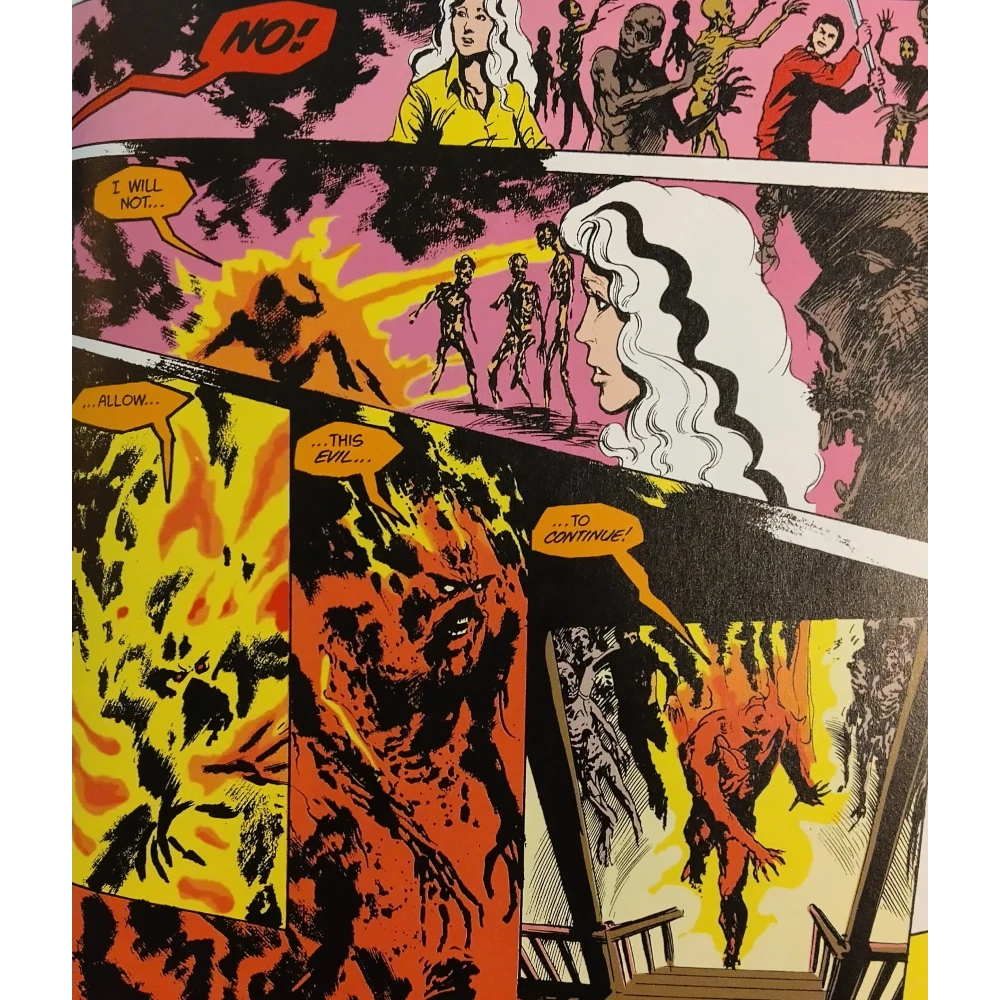
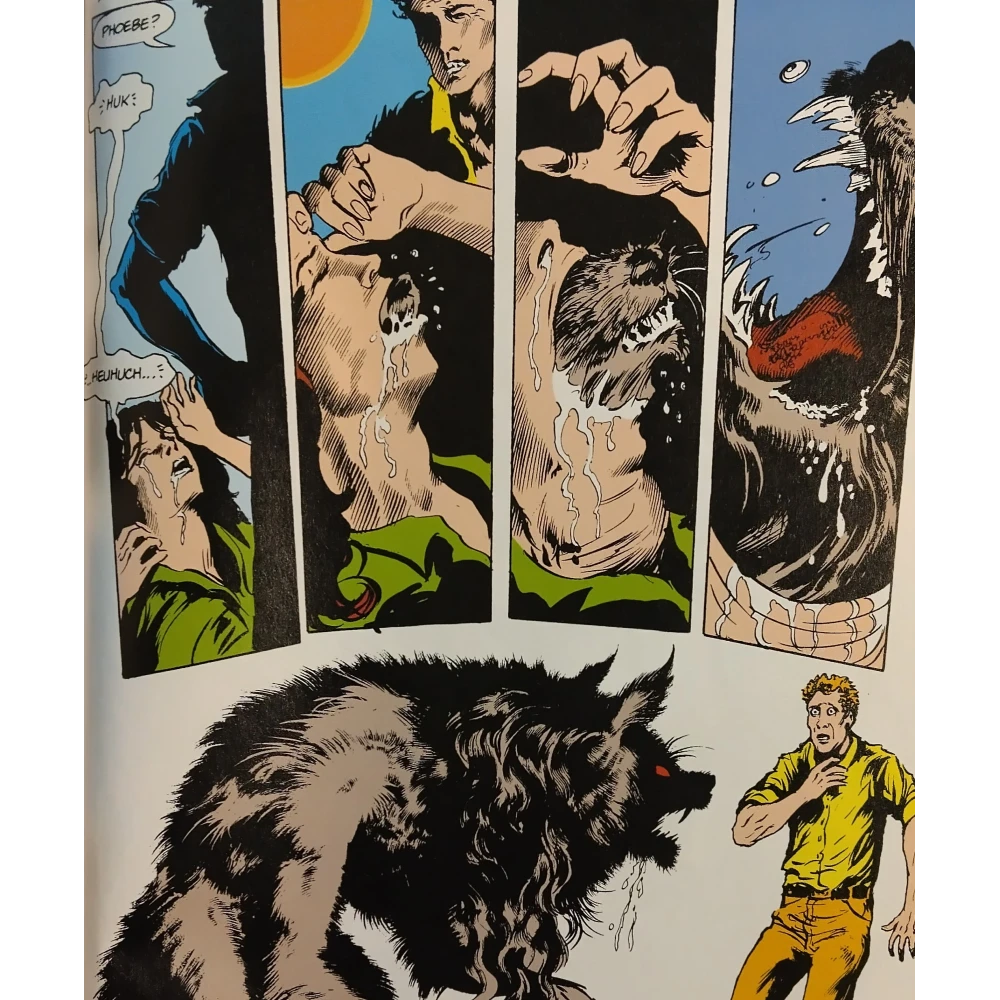
Somewhat subtler are other stories, such as a single issue focusing on an repressed housewife whose pent-up rage triggers her transformation into a werewolf, her lycanthropic release threatening her husband, a town, and even Swampy himself. A two-parter at the volume's end provides Moore's version of a ghost story, spirits from an antebellum plantation infesting a modern day movie crew and highlighting the ongoing disparities between white and black characters. Moore paints a world where the supernatural is, seemingly, striking back at the crimes humanity has committed. Ghosts of old take vengeance upon racists, a seeming Native American curse unleashes the fury of longstanding oppression, the chemicals we created and discarded are turned against us.
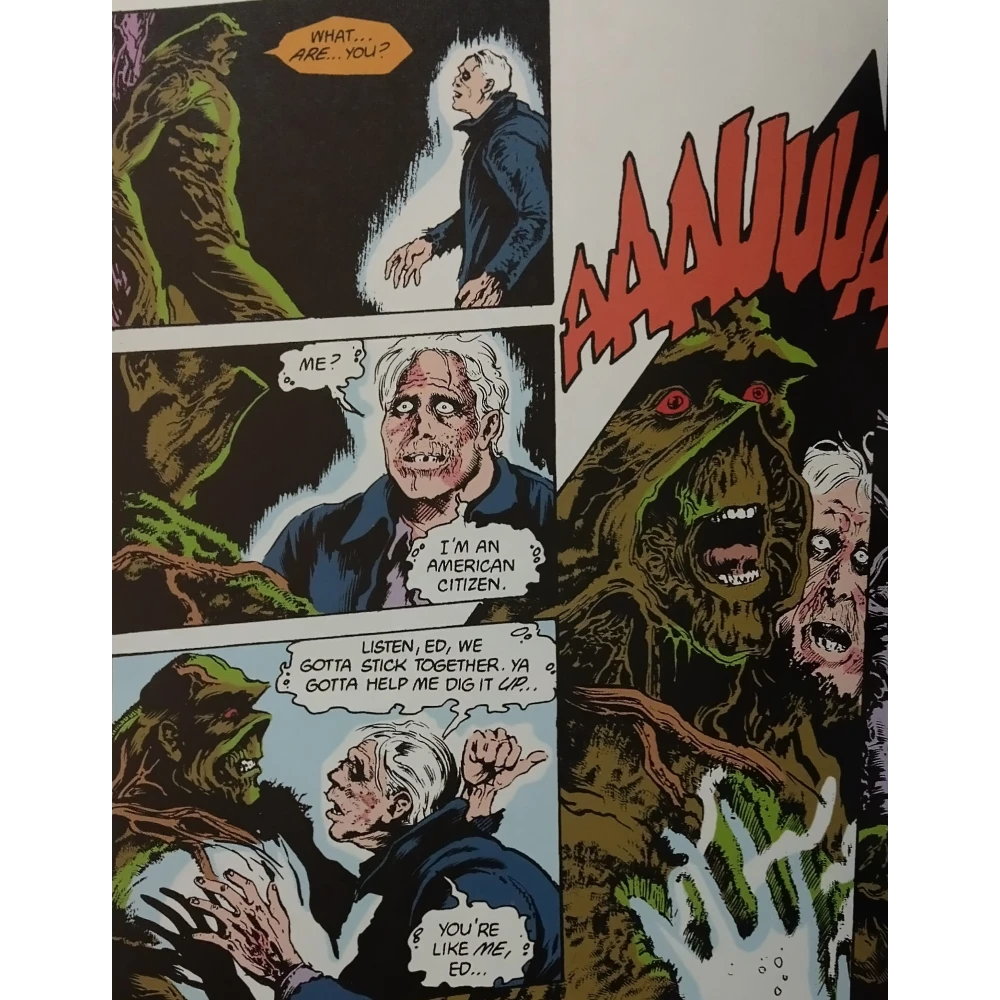
Moore isn't necessarily one to provide out-and-out solutions. He is here to tell his tales, and as a storyteller, it's his function to creatively bring the problem to the forefront of your mind. Moore likely isn't highlighting any crime or unfairness which you aren't already aware of, but the genre in which he and his artists work define that unfairness in such unspeakably monstrous terms, you can't help but react. The movie crew, influenced by the spirits, begin treating each other barbarically, touching on base qualities time has not dimmed. That drifter leaves one poor character alive but irradiated, Moore keeping their story unfinished…but you can guess the results.
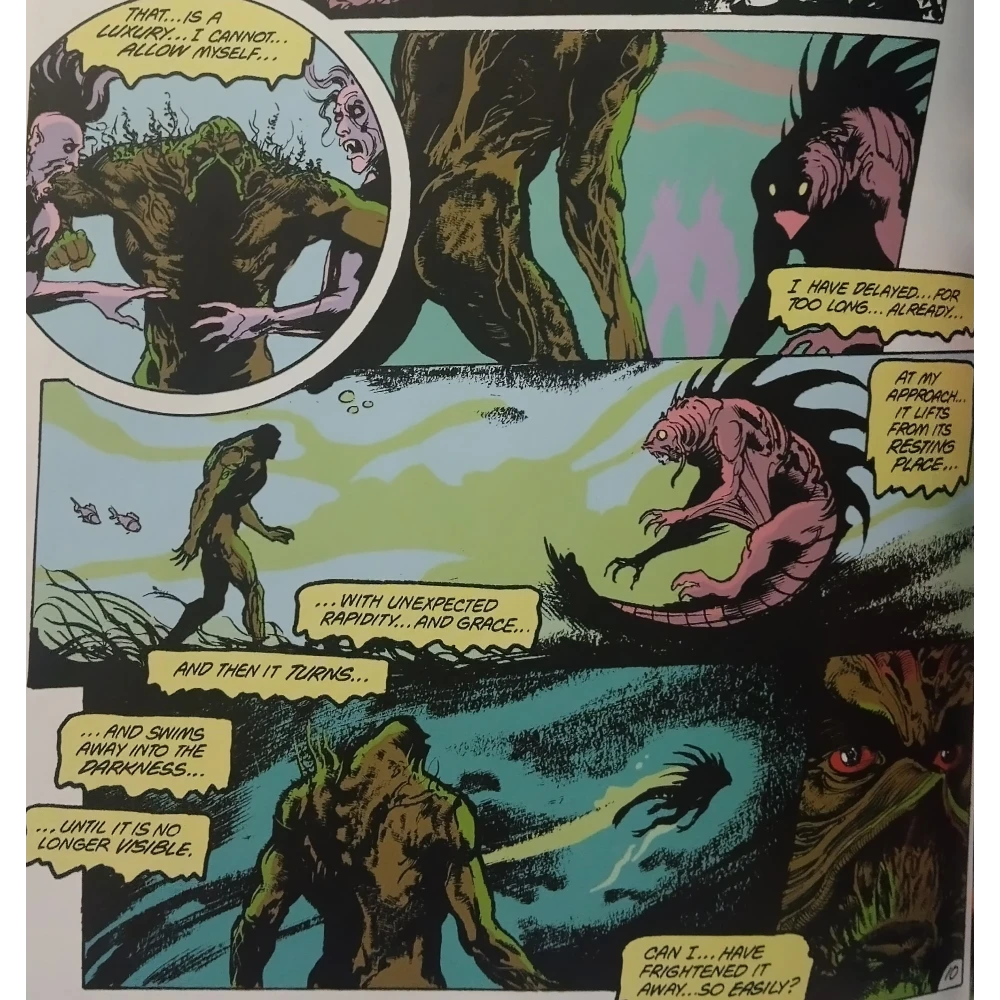
The visual horrors our artists craft are meant to be upsetting. Comics don't have the benefit of the sudden jumpscares spooky films perpetuate, but they can provide a certain amount of disquiet. Woch and Totleben illustrate an obscenely obese zombie queen, pushed around by her mindless, hungry devotees. A man with his head twisted backward and a hand sewn into his back appears in a doorway after a few tense panels heralding his grim appearance. The aforementioned housewife transforms by shedding her skin, her lupine form pushing its way up her throat and out of her mouth, discarding flesh like a snake would. The most upsetting visuals follow a pattern: twisted reality, offering something not wholly unrecognizable but understood and distorted. This is not what life is supposed to be, the images of fish-zombies partying in a sunken football stadium or a man drinking radioactive waste from a beer bottle whisper to the reader.
Disquieting and horrifying at these visuals are, they serve to elevate our muck-encrusted hero. Physically unappealing as he may appear, Swamp Thing possesses a humanity greater than most folks around him, including John Constantine, the know-it-all British mystic introduced in these pages and leveraged later by Jamie Delano and Garth Ennis. He's a cold, conniver, that Constantine, to the point where even Swamp Thing takes umbrage with his nonchalance towards the human condition. Moore appreciates the irony of having stripped Swampy of his original human host only to imbue him with greater emotion. As a monster himself, Swamp Thing can readily identify with and feel empathy for the woman-turned-werewolf, the decaying drifter, the vampiric fish-people.
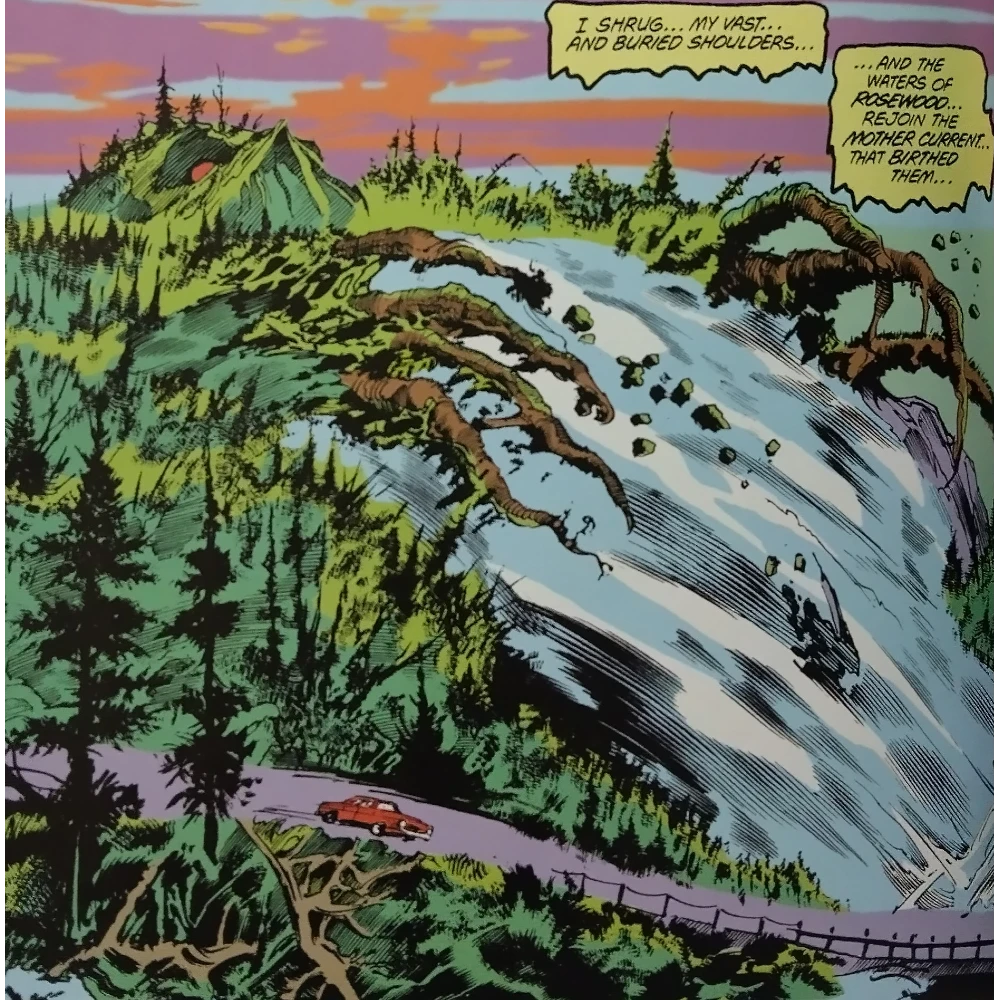
As the issues progress, Swampy's interaction with the drifter provides an unexpected result: events proceeding from this encounter lead to an even greater connection with the "green," as Swamp Thing becomes more deeply one with the earth. These effects lead to an engaging mode of transportation as Swampy sends his conscience through the soil to build new bodies elsewhere, yet they introduce a troubling question, particularly for Abby: who–or maybe what–really is Swamp Thing? His body, which can now be abandoned and reformed at will? His mind, which moves fluidly from form to form? Neat progression occurs as our hero learns to master this newfound ability, not only forming new bodies more quickly but extending himself outward to greater parcels of land. One of the volume's strongest images sees Swampy become part of a forest, his rooted fingers widening a pond to unleash a deluge, showing the breadth of this newfound power and awareness.
Moore sews hints that Swamp Thing is related to the rest of the DC Universe, occasionally referencing the reddening skies known as a hallmark of Crisis on Infinite Earths. But his muddy monstrosity is largely siloed from the rest of DC's comic kingdom, and the series is all the better for it. Able to flex his writing chops without worrying about interfering or being interfered with, Moore and his stable of artists can dive deep into horror, safely knowing a subset of readers will find themselves comfortably uncomfortable in Swamp Thing's quagmire. No one here is afraid to ask difficult questions or touch on difficult topics. These issues feel very real for pushing some of those boundaries, knowing when to reach for the roots through clever narratives which, though short on answers, engagingly deliver a thoughtful perspective on, at least, the troubles we still wallow through today.