(Strand)om Stories: Strikeforce: Morituri (vol. 3) Review
An improvement over the previous volume, these issues provide an unsung series a mostly satisfactory conclusion
—by Nathan on October 15, 2026—
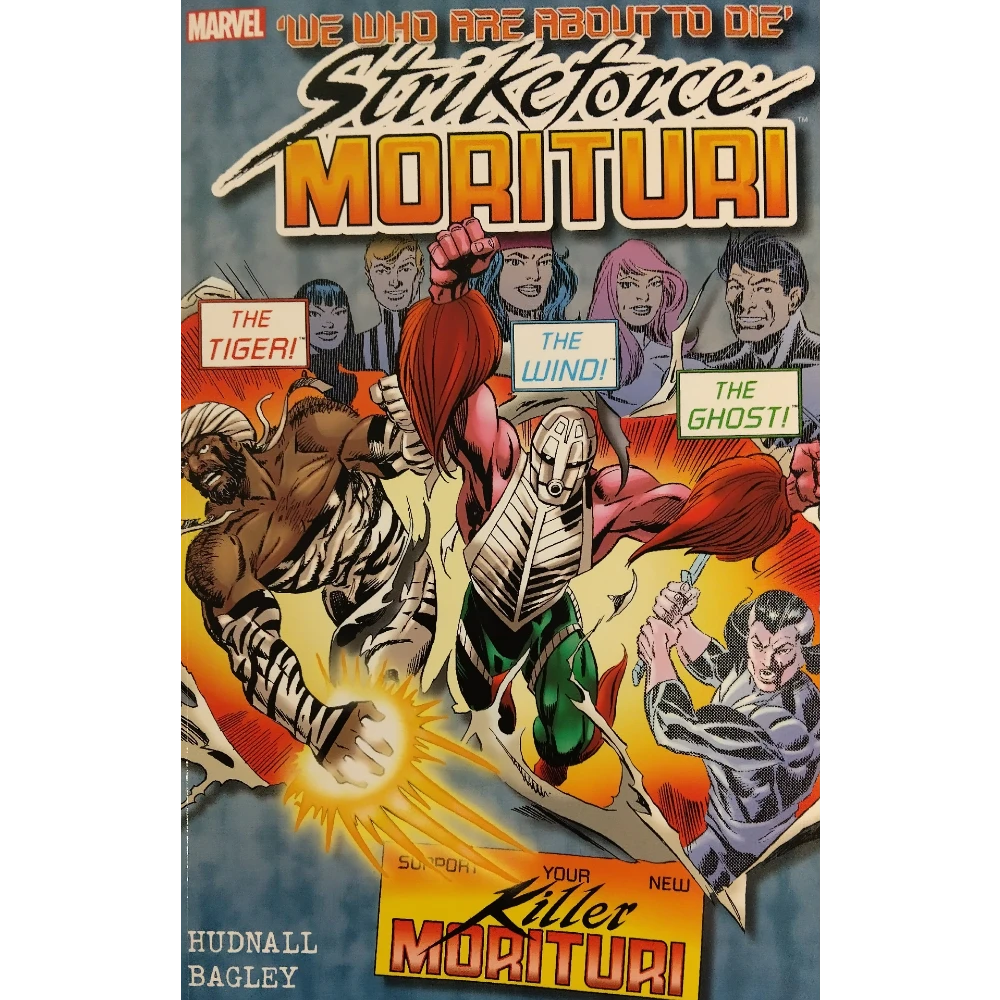
My recent review of the second volume collecting Marvel's under-the-radar Strikeforce: Morituri series wound up harsher than I intended it to be. I praised the first volume, Peter B. Gillis and Brent Anderson crafting an unusual, gripping take on the customary capes-and-cowls concept. Interesting, fleshed out characters given a limit on their lives, wrestling with how best to use the time allowed them while feeling pressed under the thumb of their superiors. The first thirteen issues are genuinely riveting and refreshing.
The second volume, presenting issues 14-26, are much the same in content and mostly the same in concept, which you wouldn't think I'd criticize. The quality of writing and artistry is still there, yet under Gillis, the core idea, once rejuvenating, grew somewhat stale. New characters didn't connect as well with me, the shock of death wore off somewhat, the internal crises felt repetitive when the status quo wasn't allowed to evolve.
James Hudnall replaced Gillis as writer with issue 21, and though the internet seems to agree Gillis' departure marked a downturn for the series, I actually appreciated what Hudnall offered. The writing itself may not have been as crisp, but Hudnall provided the necessary momentum I believed flagged in Gillis' later issues. He steered the series in a different direction, and in that volume's closing issues, Strikeforce received a dramatic departure from its ongoing story structure, wrenched violently in a different direction.
We explore that new direction today, closing out this underrated series and its five-issue follow-up, courtesy of Hudnall and an artist more closely associated with Spider-Man, a few years prior to drawing the wall-crawling wonder.
Strikeforce: Morituri (vol. 3)
Writer: James D. Hudnall
Penciler: Mark Bagley
Inkers: Val Mayerik and Carlos Garzon
Colorists: Christine Scheele and Julie Michel
Letterer: Phil Felix
Issues Collected: Strikeforce: Morituri #27-31 and Strikeforce: Morituri: Electric Undertow #1-5
Volume Publication Date: June 2012
Issue Publication Dates: March 1989-July 1989, December 1989-March 1990
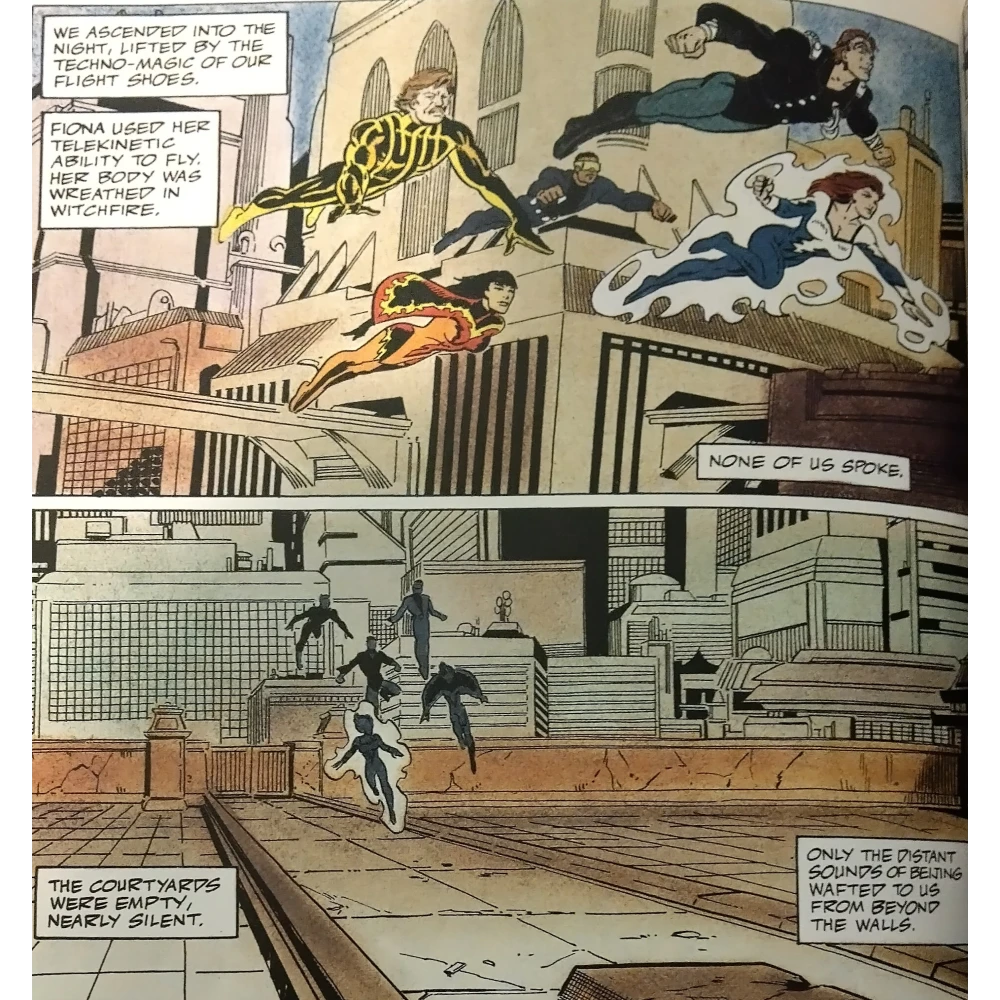
Those first thirteen issues of Strikeforce, the series' highwater mark for me, largely represented a singular vision, Gillis and Anderson feeling synchronized as they crafted this bleak future for an alternate Marvel Universe. There's a sense of unity between a writer's imagination and an artist's depiction which doesn't happen again until this volume, particularly where the five-issue Electric Undertow series is concerned. What we're given here isn't perfect, but it's a consistent representation of the synergy between Hudnall and Bagley which helps bring the Strikeforce's story to a close.
This volume is difficult to review without providing spoilers, but I will be as vague as I can. I've already referenced how Hudnall pivots the series drastically, and the momentum he gains from shifting gears continues here as the main series wraps up and Electric Undertow explores the ramifications of that conclusion. The shift he provides generates somewhat gentler stakes than the alien armada our heroes have faced up until this point–making me wonder, for a time, if Hudnall unintentionally undercut the drama the Horde delivered–but what it lacks in world-shaking tension, these issues make up for in personal drama.
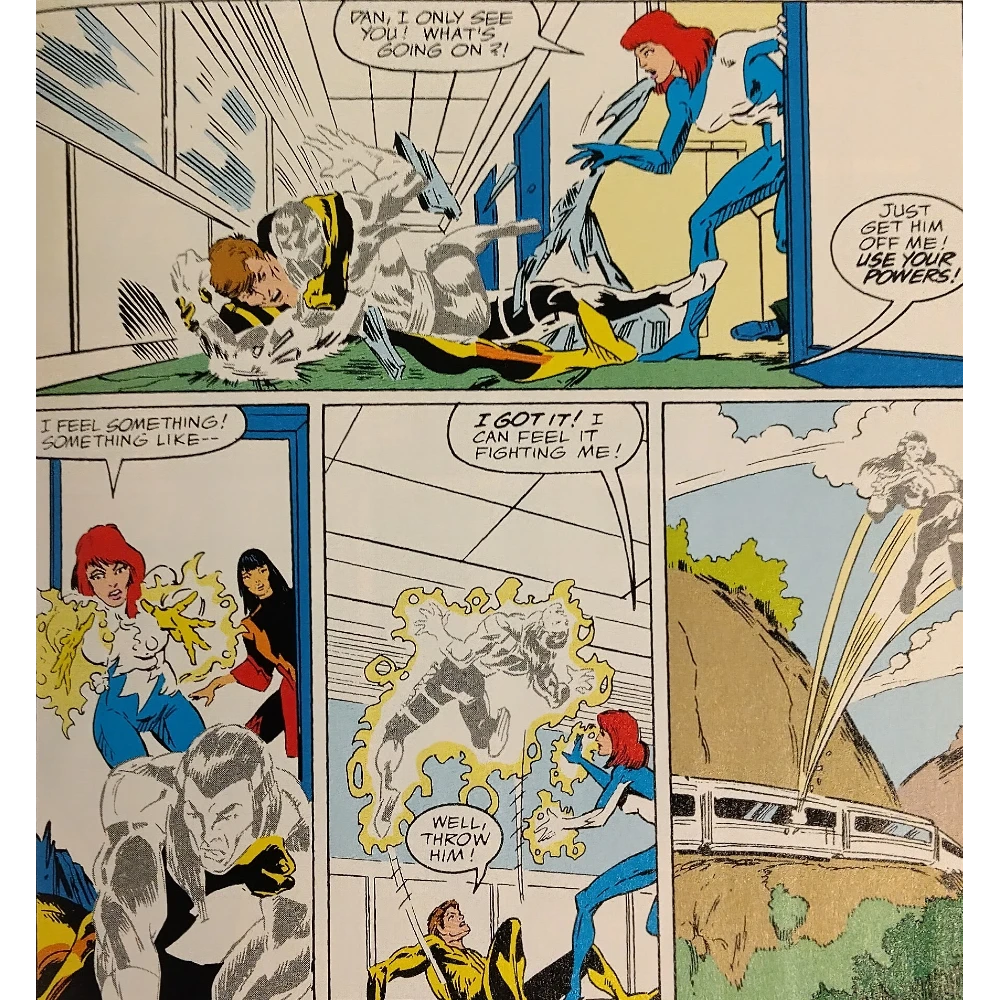
As in the last volume, Hudnall can, at times, be more concerned with the ongoing narrative than his characters, particularly in the main series' final issues, but he certainly applies attention to his heroes. Faced with what amounts to a political conspiracy, with a looming extraterrestrial menace unfolding in the background, the remaining Strikeforce members have a greater personal stake than in any conflict before, racing against the clock imposed by the Morituri process, the U.S. military, and a few villainous individuals given superhuman abilities. Action tends to supersede dramatic character moments, but Hudnall wants these leftover heroes to shine in fight sequences and scenes where they can cleverly showcase their abilities.
Hudnall, in both his initial issues and these later installments, does seem more intrigued in providing worldbuilding than what we were given in previous installments. Gillis' series hinged on certain rules–the Horde has laid siege to Earth, a one-world government is directed toward tearing away the extraterrestrial grip–but there wasn't quite an emphasis on fleshing out this version of Earth. Hudnall is more intentional in this construction, providing additional details to how this one-world government functions and other intriguing bits of lore, such as that North and Central America, at some point, have been divided into five individual countries, or the presence of a seemingly unstoppable plague of deaths by spontaneous combustion. Each detail adds an extra layer of interest to the Strikeforce and their world.
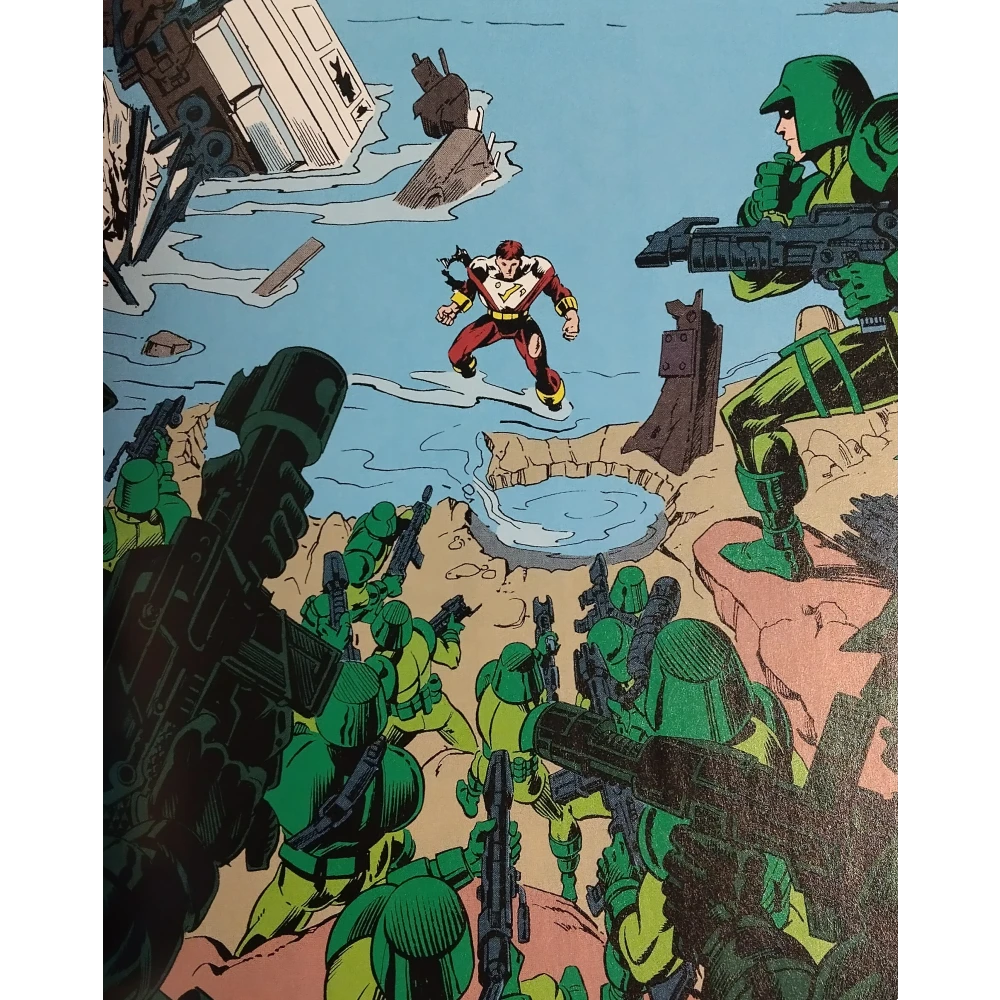
The world of Electric Undertow, set after the original series, is the most vibrant environment explored in any Strikeforce narrative yet. Mark Bagley, working with inker Carlos Garzon and colorist Christine Scheele, constructs cities and suburbs that feel more lived in than other environments we've received so far. He wonderfully taps into what our modern world could look like with a futuristic twist, creating holographic communicators, floating billboards, and a country-wide subway system. The art, thanks to the coloring, feels akin to what readers found in the Marvel Graphic Novels line or early Valiant comics, separating itself from standard comic fare with a higher quality feel.
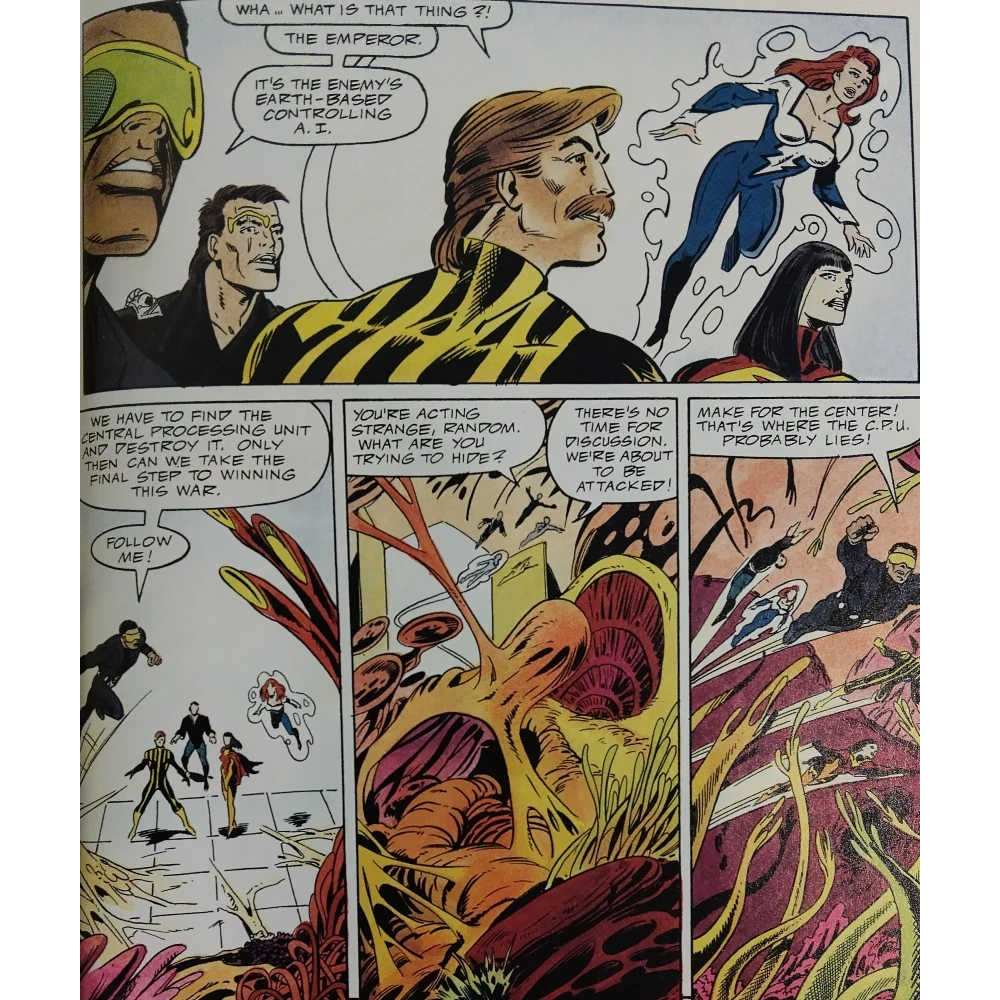
Electric Undertow also seeks to develop a better balance between action and characterization, telling a sequel story directed through Scanner, one of the later generation characters. Hudnall focuses most of the plot beats and the series' narration through Scanner's perspective, and with a wife and children serving as an emotional incentive to prod our hero forward, the writer finds more mileage out of an individual character's journey than focusing on the team as a unit. Other characters are present, certainly, but Scanner becomes Hudnall's central protagonist, a welcome adjustment given the original series' emphasis on cycling through different teams of people.
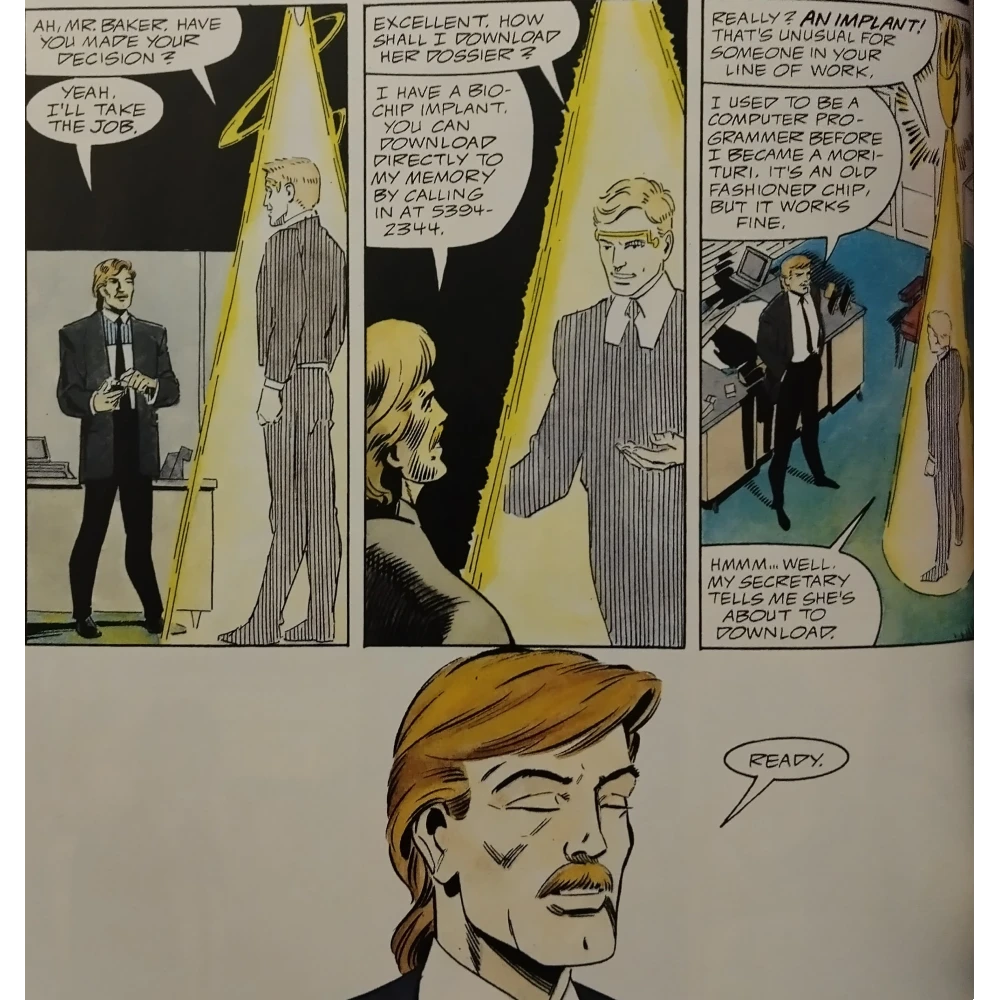
Again, I'd like to be coy about details to prevent spoilers, but there is a Dark Knight Returns-esque style applied to the narrative, a focus on somewhat older heroes drawn back into action in a world that's changed from what they remember. What resuming that lifestyle means for Scanner–who, running his own security firm, perhaps feels the most frustrating disconnect from the "good old days" (if one can call them that)–and any remaining Morituri becomes a theme Hudnall works to explore while also wrapping up a few dangling threads left over from the main series. We're given some new material, but Hudnall wisely positions himself to utilize previously introduced characters and plotlines to give the Morituri a largely satisfying sendoff.
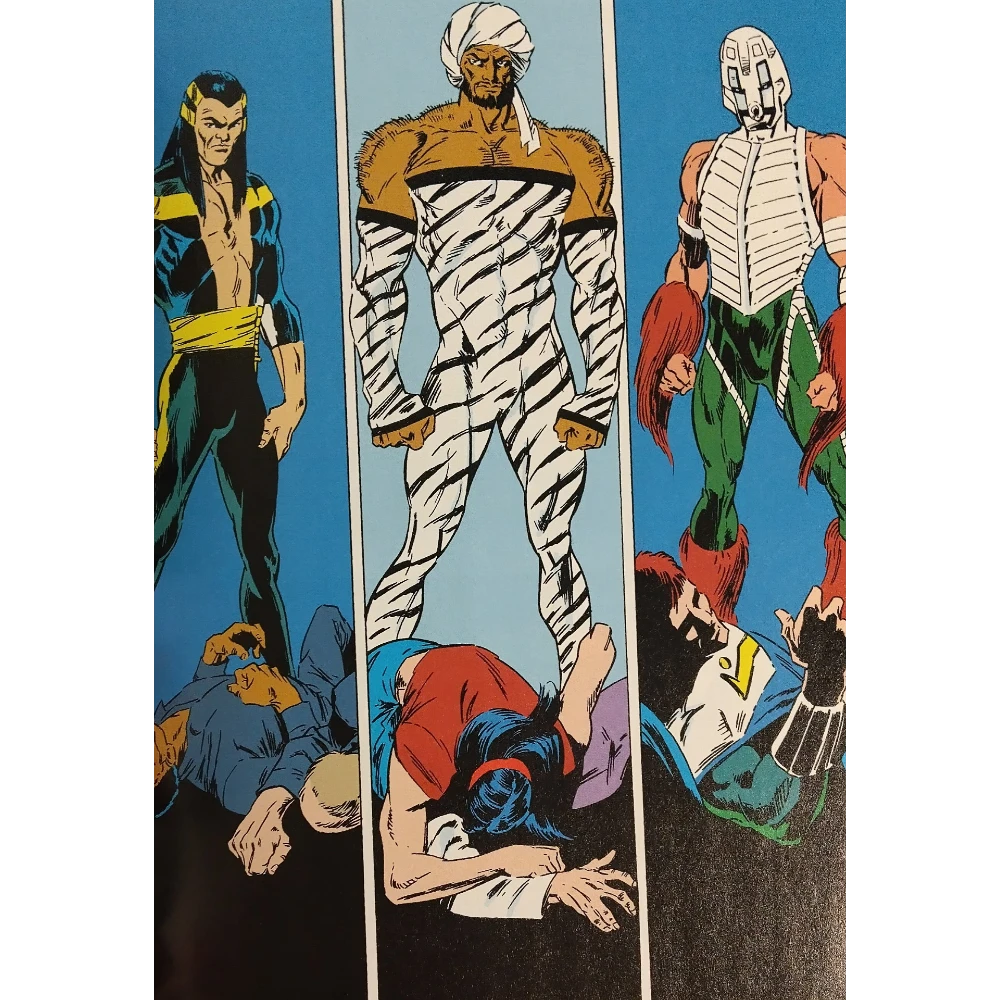
There are, admittedly, a few baffling exceptions. Two or three characters utilized in the original series are never referenced in Electric Undertow. Understandably, Hudnall couldn't utilize every aspect introduced in the original series, but these characters in question aren't provided anything final in the original series. One individual, introduced by Gillis as an interesting thought experiment within the narrative's context, could have become an engaging inclusion to Hudnall's later issues. Instead, they vanish like vapor, their future left blank. It's not so much these characters disappear; it's that they disappear without any cathartic conclusion.
"Better than Volume 2" doesn't necessarily mean these issues match what we received in Volume 1. These final issues are a step up from their predecessors, and Electric Undertow is a neat limited series to cap off Hudnall's run and the Morituri story overall. We're given better character moments, a grander sense of setting, a sophisticated visual style, and some decent thematic application to bring the overall story to a largely satisfying close. Some of the particulars don't sit with me quite as well, such as neglected characters, but those are minor gripes.
Strikeforce: Morituri, on the whole, has left me a tad more divided than I would have wanted. These characters and their world are wholly unique to the Marvel Universe, with a fantastic premise that taps into relatable themes…at first. I put those initial issues alongside other creative yet lesser-known series such as Mark Gruenwald's Squadron Supreme, telling unique stories with unique characters without any reliance on Marvel's staple heroes. You feel as if Strikeforce could have been published as part of Jim Shooter's New Universe or Marvel's Epic line alongside series such as Six from Sirius and Alien Legion. You won't find another comic like Strikeforce: Morituri out there, certainly not at the time the original series or its follow-up were produced.
Yet looking at the series as a singular narrative leaves me less satisfied than I had hoped, Gillis' story stalling before Hudnall offers a somewhat different direction. Hudnall, however, sacrifices character for plotting, and it's only when he reaches Electric Undertow with Bagley that he figures out how human heroes can compliment his storytelling. If Gillis had remained, would he have moved away from the sense of stalling found in his later issues? Was there a plan to end the Morituri/Horde conflict? Does Hudnall's vision jive at all with what Gillis planned? I have no idea.
The initial issues gave me the hope this series would be a runaway success in my imagination, which it does not wind up being. It's a solid, creative entry in Marvel's 80s bibliography, yet the middle portion does not maintain the quality found in its earliest issues or Electric Undertow. Earth-1287 has appeared twice since 1990, once in an Exile issue, once in an X-Force issue. The Strikeforce and the Horde, however, seem to have been retired. At one time, in the early 2000s, Marvel planned to turn the series into a "live-action two-hour back-door pilot movie called 1000 Days," which ultimately did not pan out. I doubt we'll see an MCU adaptation anytime soon, but hey, it's always an option. You've got plenty of material here to consider, and with the right director, writer, and cast, maybe we get a film that elevates the series' strengths while reconsidering some of its weaker aspects. Even if the series has no future in comics or other media, and even though I wouldn't appraise it as highly as I do some other unsung gems from the 80s, Strikeforce: Morituri doesn't deserve to die out and be forgotten.