Distinguished Critique: Superman: Dark Knight Over Metropolis Review
Though imperfectly balanced in its depiction, the Superman/Batman dynamic is deepened nicely in these issues
—by Nathan on October 17, 2026—
As I've noted in a few other reviews, we are building toward the final two arcs within the "Death and Return of Superman" crossover event. We've watched Supes die, and we've seen him buried. As we approach the "Return" portion, I hoped to unpack a few narratives with some additional context for a few important characters.
Recently, we examined that time Superman launched himself into space on a self-imposed exile. Believing himself too dangerous to remain on Earth, the Man of Steel flew through meteor showers, past suns, and along planets both empty and inhabited to seek solace away from anyone he could hurt. Oh, he still ended up fighting people, but along the way, he learned to disbelieve certain lies and embrace certain truths about himself…
…including a bit of ancient family history (Kryptonian, not Kent, though he's learned about that side of himself as well) found in an old artifact which was removed from the planet of Clark's birth long before Krypton died. During his spacefaring journeys, Clark was introduced to this item, called "the Eradicator," and despite its ominous name, he took it home to Earth. The device promptly lived up to its ominous name, temporarily transforming Clark into an agent bent to its well. Cold, somewhat soulless, Clark was a temporary slave to the Eradicator before overcoming the device.
The Eradicator would come back, as would a character introduced in the previous volume whose own story continues here: a dude named Hank. Though I read these issues thanks to Hank's appearance, we're likely going to find that it's a guy named Bruce and his uneasy alliance with Clark which makes for the most interesting reading in these issues.
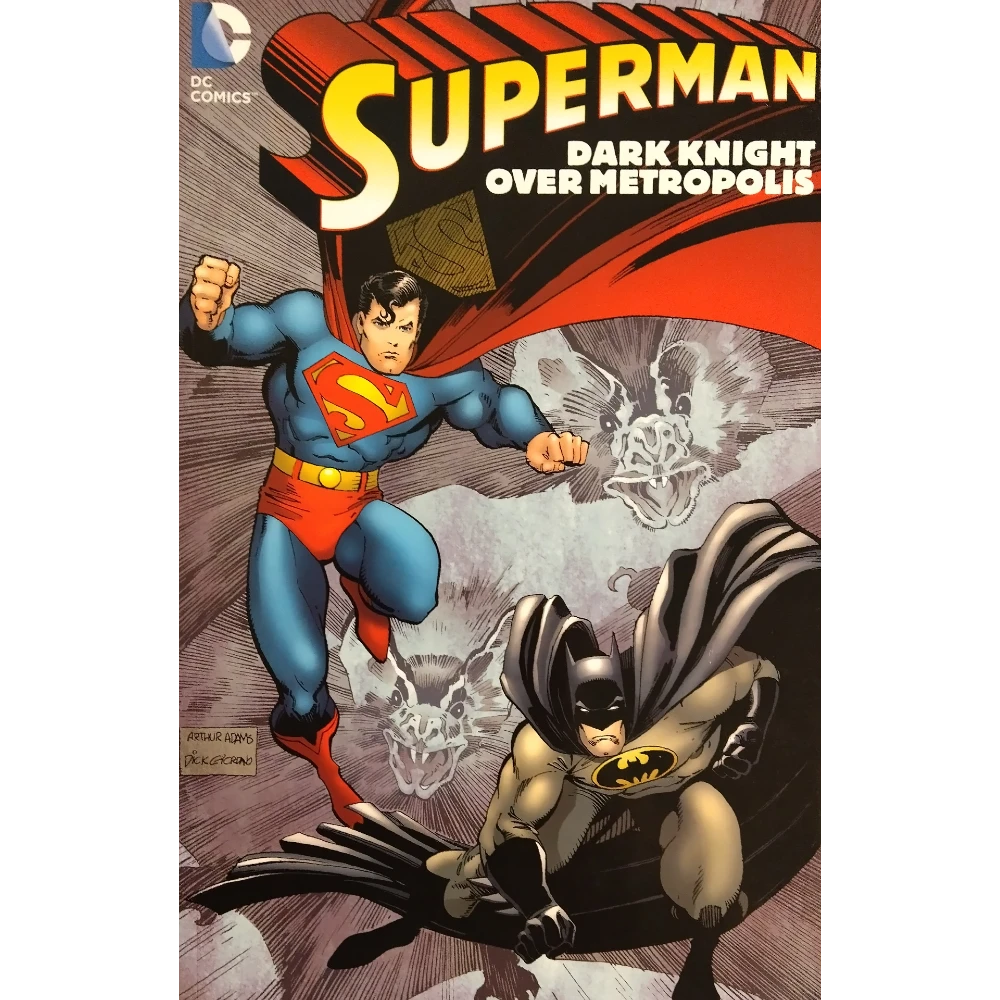
Superman: Dark Knight Over Metropolis
Writers: John Byrne, Dan Jurgens, and Roger Stern
Pencilers: Art Adams, Dan Jurgens, and Bob McLeod
Inkers: Dick Giordano, Art Thibert, Brett Breeding, and Dennis Janke
Colorists: Petra Scotese and Glenn Whitmore
Letterers: Albert DeGuzman, Bill Oakley, and John Costanza
Issues: Action Comics Annual #1, Adventures of Superman #466-467, Action Comics #653-654, and Superman #44
Publication Dates: October 1987, May 1990-June 1990
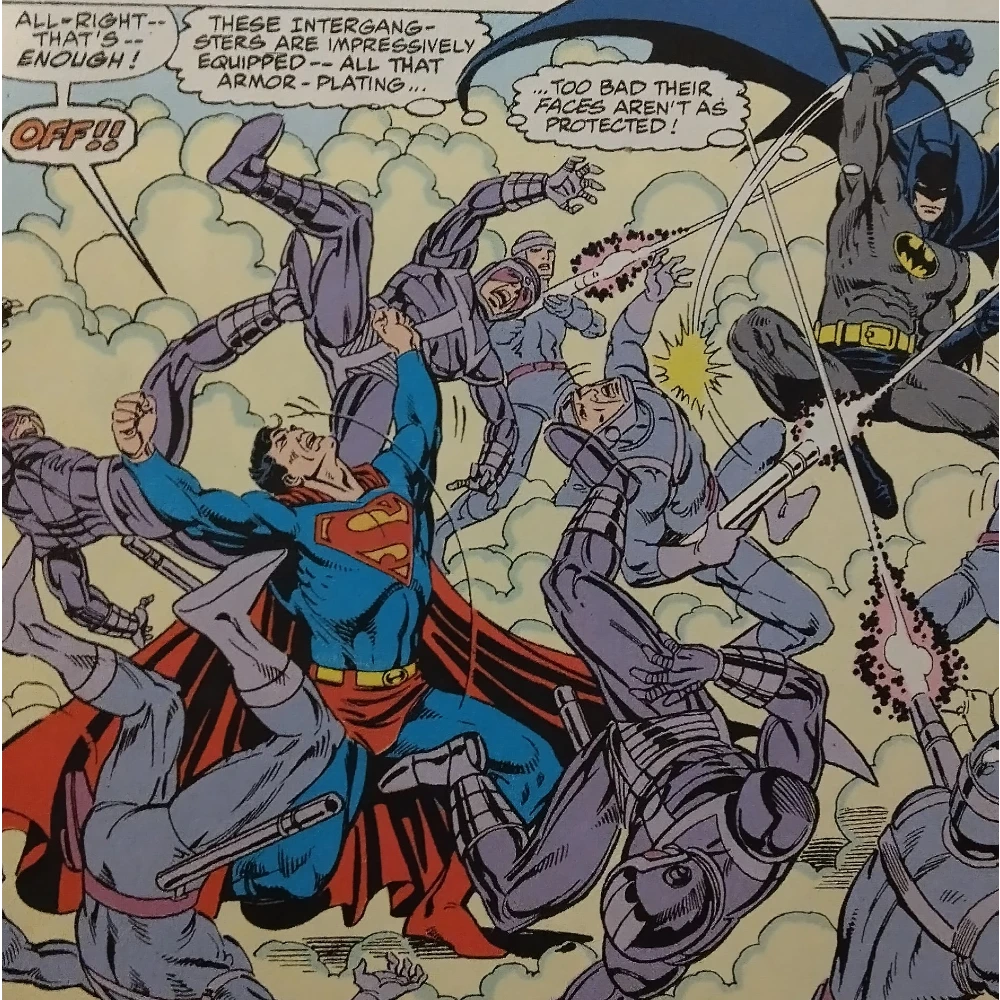
The multi-part "Dark Knight Over Metropolis" arc from which this collection takes its name does serve as the primary narrative featured in this volume, but we've got some extra issues included as well, some of which are woven into the central narrative, one of which isn't. But most issues present serve the volume's overarching concept, if not its story: the burgeoning post-Crisis friendship between Metropolis' Man of Steel and Gotham's Dark Knight Detective.
When John Byrne had Superman and Batman meet for the first time in post-Crisis canon, their interactions were somewhat tense, each man wary of the other. The reaction was sensible. An all-powerful alien crosses your path, or a masked vigilante dressed as a bat swings your way, you might find those flight-or-fight reactions kicking it up a notch. Who is this guy? What does he want? The men pushed through their initial unease, working together, if a bit frostily, to catch a kleptomania-compelled criminal.
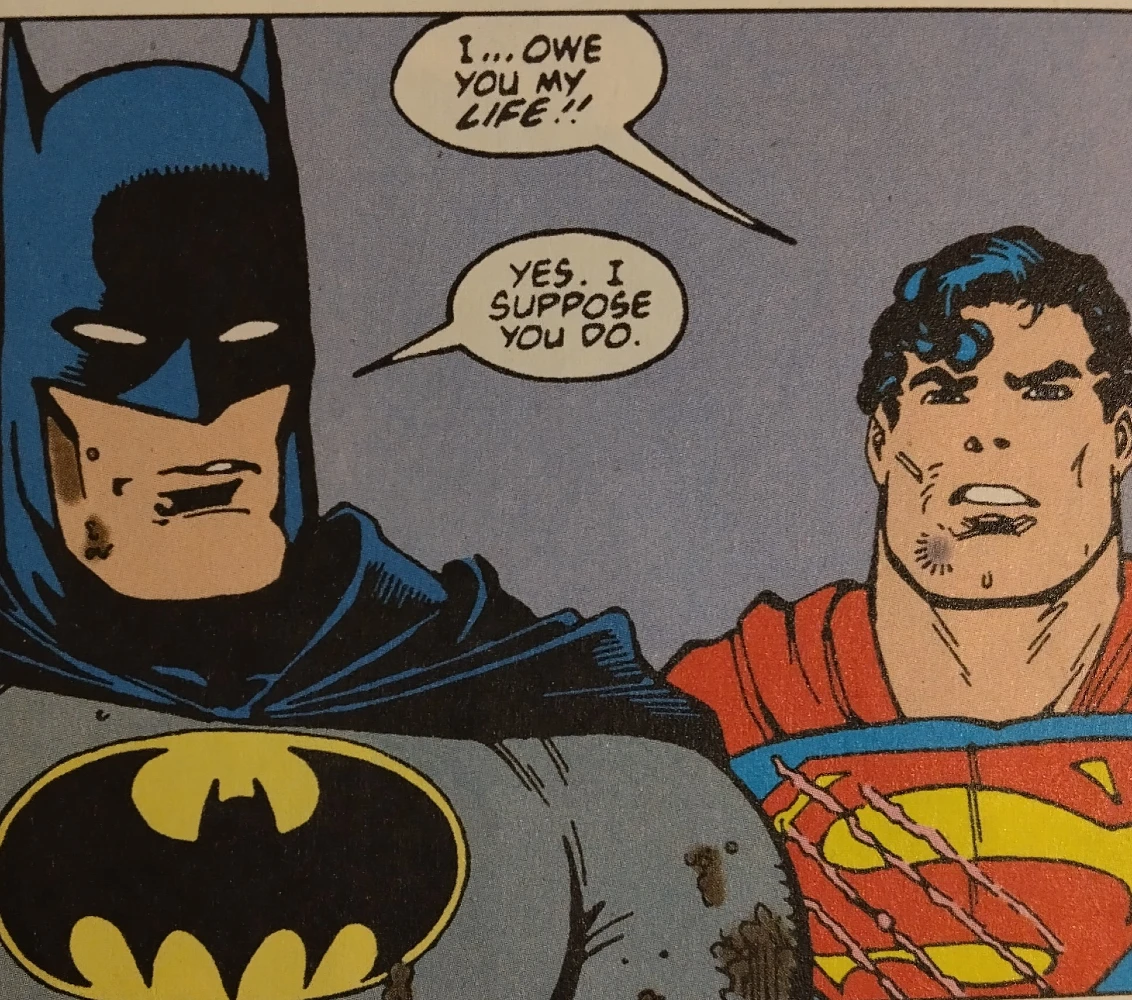
I'm not sure what the duo's relationship was like in the few years outside that first meeting–Superman wasn't really part of the Justice League Bruce headed up (at least, not at first), but I'm sure the occasional crossover event brought them together. Yet even in these issues, one taking place in the late 80s, the others in the early 90s, the Big Blue Boy Scout and our bat-eared buddy aren't exactly what one would call chummy. In the late 80s issue, John Byrne and Art Adams present a coldness to their relationship, Bruce brusquely brushing aside gratitude from Superman when he saves Clark's life as merely doing his due diligence. During "Dark Knight Over Metropolis," Clark refers to Bruce as "invading my city" when Batman pops up on a case, and Bruce seems to approach Clark begrudgingly, out of courtesy more than anything else, recognizing he's on the other hero's turf. They know each other's identities, but that seems a point of contention, both men having uncovered the other's secret through somewhat underhanded fashions rather than confiding in each other. Trust slips around on an icy patch.
The friction adds an entertaining dynamic to these issues. You never think these guys will wind up going toe-to-toe at any point, but tension flows through even the moments where they choose to collab. Superman is critical of some of Batman's methods, seeing them outside the bounds of the law (yet he goes along, for example, when Batman breaks into Lexcorp). Batman recognizes the inherent difficulty in working with someone so used to operating on his own…and wonders, momentarily, what a Superman would be like if he applied a few of the Dark Knight's law-bending techniques. Perhaps too much of a goody-two-shoes exists in the Man of Steel which Batman finds it difficult to trust…
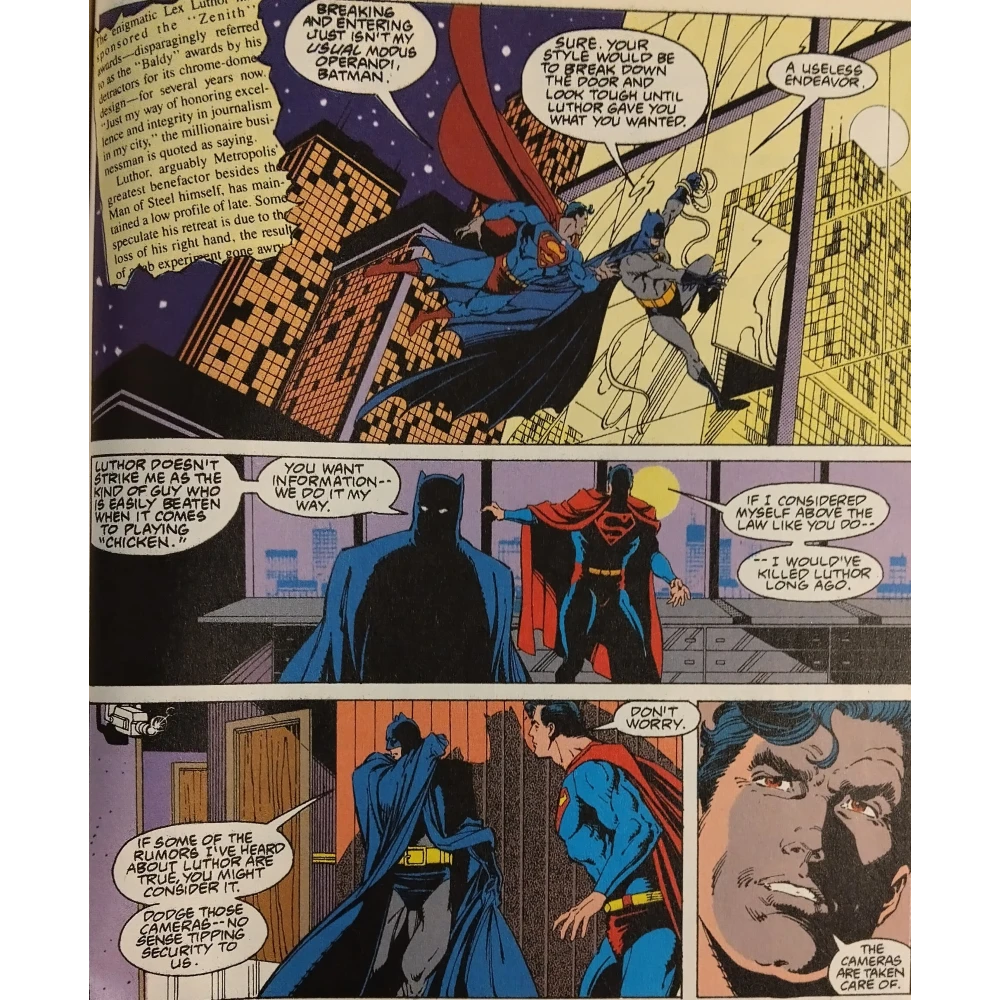
...yet trust they must. Our writers smartly identify ways in which each man, particularly in the "Dark Knight Over Metropolis" arc, must rely on one another as they resolve a mystery which could, potentially, implicate Superman of serious wrongdoing. Our Man of Steel may possess a great deal of power, but Batman possesses a level of skill, intellect, and technique which affords him a greater eye for detail than even a superhuman alien with X-ray vision. In these issues, at least, you believe that each man has a skill or ability the other lacks or could benefit from, meaning the idea of a team-up between a regular mortal dude and a near-invincible extraterrestrial is plausible.
We're presented with a sense here that some of that earlier unease is meant to erode as the issues progress, and with the volume's final pages seeing Clark take a significant step in trusting Bruce, we're asked to see this as a new era in their relationship. Maybe they won't be collaborating on selling war bonds with Robin, but they've become closer. Superman does concede that "we're not exactly friends," meaning more work is to be done between them. But with Batman swooping in to clear up a particularly tense thread introduced during Byrne's earliest issues and culminating during "Exile," a certain amount of trust has been established. It's a unique place to leave our heroes, our writers recognizing the need to at least maintain some amount of slight friction between the two men–Superman does enter the Batcave unannounced and uninvited at one point, though perhaps this was to provide balance to Batman swinging by Metropolis earlier.
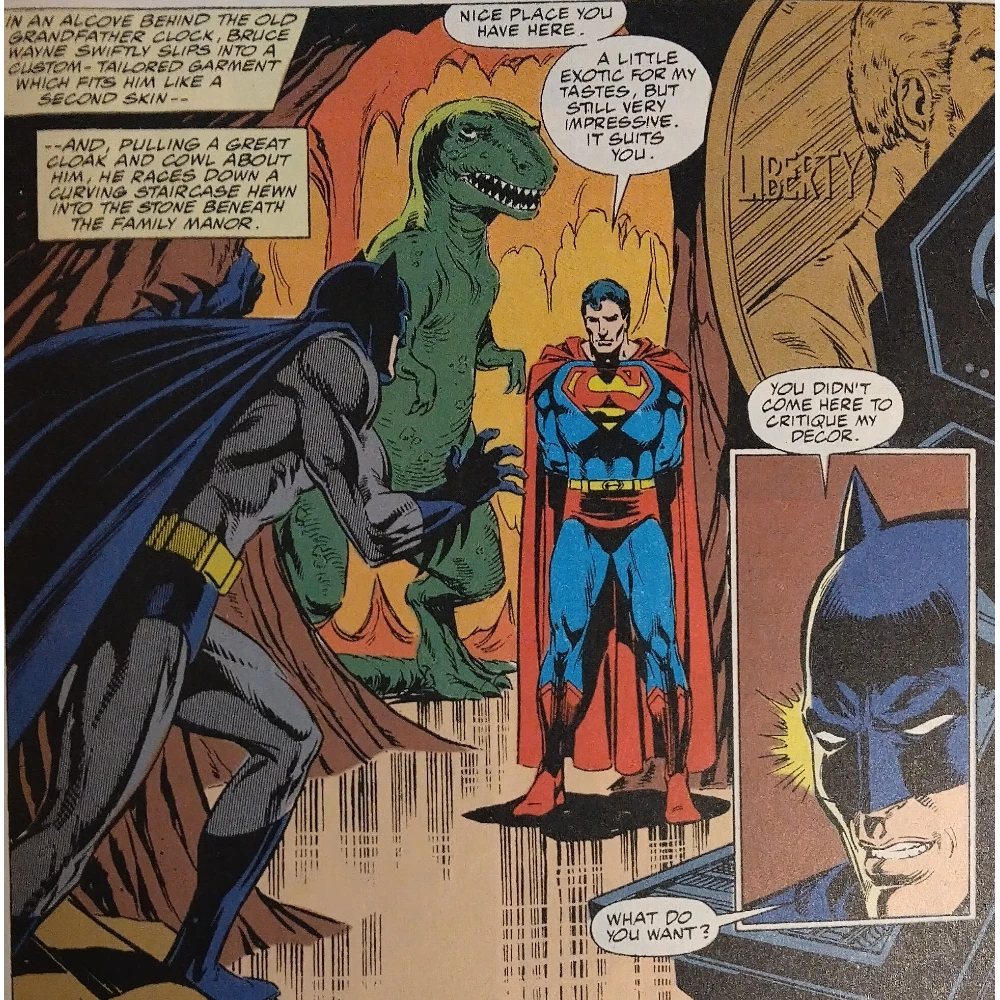
The longer narrative, though capitalizing on the Superman/Batman friction, could have utilized some strong moments between Bruce and Clark in their regular guises or a few moments of casual conversation between the duo as they sussed out the current mystery. The two "happen" to cross paths at a society function in their civilian identities, but little is made of the interaction. Neither character discusses their personal lives or reference relationships or struggles maintaining dual identities. It's all action and suspense here. Even a brief quiet moment between the heroes to touch on whatever normalcy they can acquire would have been nice. The closest we get is Superman commenting on Bruce's flashy, chauffeured motorcar.
As these are Superman titles, any personal development is limited to the folks popping in on his life. A burgeoning relationship between Clark and Lois takes a more dramatic turn here, which will only become more serious when the pair become engaged shortly before his fatal fight with Doomsday. A subplot involving Morgan Edge which has slipped through several previous issues is given, somewhat surprisingly, a pretty nonchalant conclusion, especially as it forms the crux of that mystery which has lingered since "Exile." Most importantly to this post, we bear witness to the plight of one Hank Henshaw, leader of a four-person space crew bombarded with cosmic energies; in a one-off issue that presents a clever if twisted pastiche on Marvel's First Family and their fabled origin, Hank finds his world imploding, with even Superman's involvement proving ineffective. The issue successfully presents this darkly-tinged take on the Fantastic Four, yet unknowingly at the time, it sows seeds for an arc we'll examine later. As a standalone narrative, without any excess weight, the issue reads entertainingly enough.
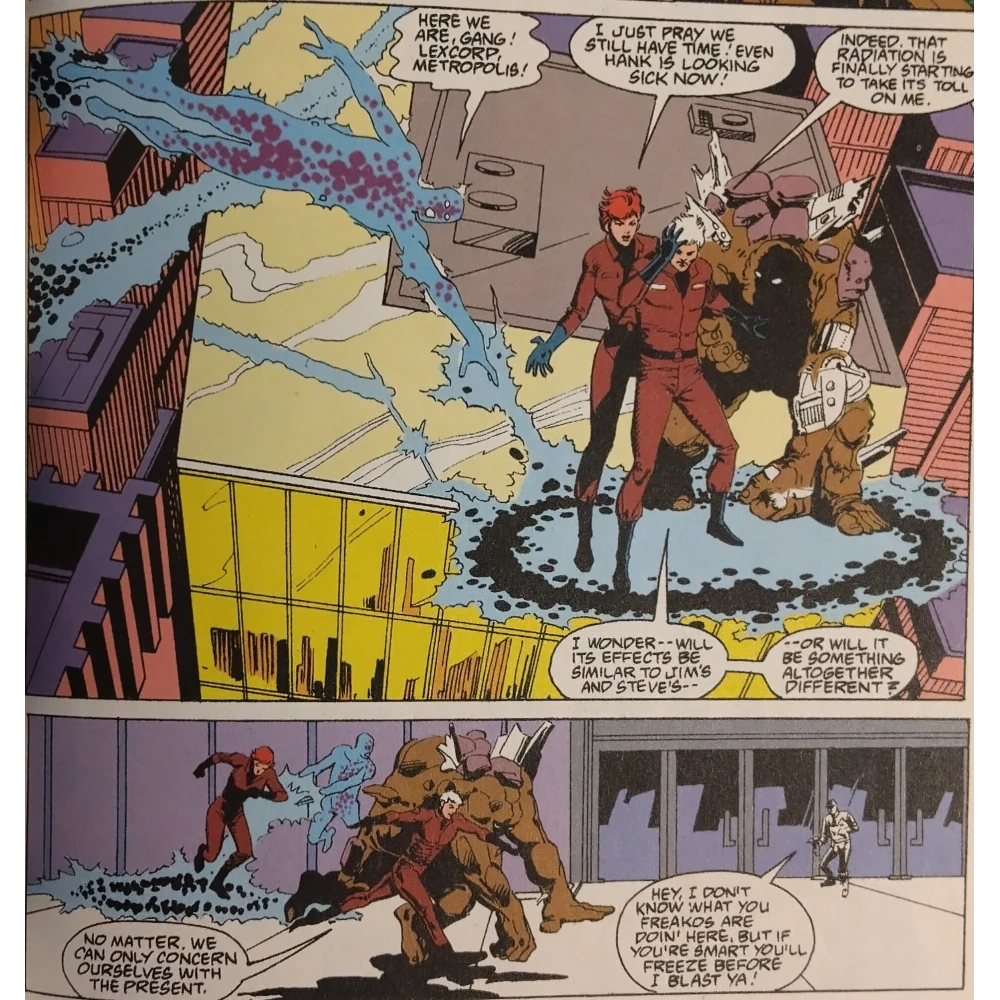
Yet you're likely not here to watch poor Hank Henshaw; that's just a bonus for you folks who have come to see the favorite sons of Metropolis and Gotham work through some of the unease filtering through their partnership. These issues, fun as they can be for continuing important aspects of Superman lore–teasing characters appearing in "Death and Return," contributing to the ongoing Clark/Lois romance, even wrapping up long-running subplots–are likely best remembered for helping cement the importance of the Superman/Batman dynamic. Superman himself may say they aren't quite friends yet, but as history has indicated, even begrudging respect between these two titans was only the first step toward a more lasting connection.