Distinguished Critique: Superman: Funeral for a Friend Review
A city mourns in several emotionally charged issues as creators seek to make engaging stories without their central superhero
—by Nathan on January 13, 2026—
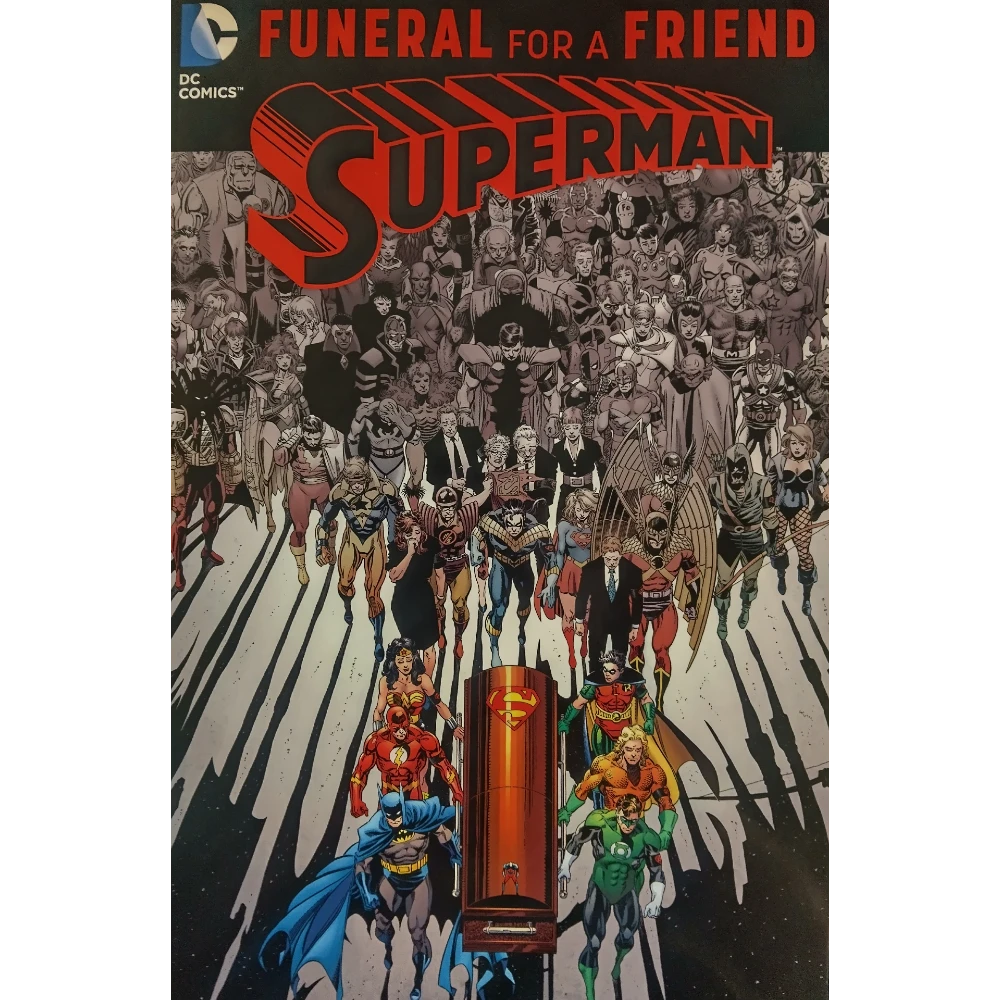
Nearly three years ago, I reviewed the first part of DC's 90s crossover arc known collectively as "The Death of Superman." That first part featured the actual death of its titular hero, Superman collapsing and succumbing to his wounds after an intense battle with the creature known as Doomsday, who also perished during the fight. It was a brutal battle, claiming more lives than just a rampaging monster and a stalwart Man of Steel. The damage inflicted was heavy, Doomsday's brief reign of terror crossing state lines and even bringing the Justice League to its knees. But Superman won. No matter the cost, Superman won.
I don't know how much planning went into the entire "Death of" arc or how long the writers intended the narrative to unspool until they inevitably brought the Big Blue Boy Scout back to life. The story has been collected in four volumes (five, if you're counting quasi-sequel material), each with their own distinct purpose and specific portion of the whole arc. It appears the base concept was outlined, at least, prior to DC cranking this story out, and the two portions I have read so far flow fairly well, the aftermath of Supes' death derived fairly naturally from his demise.
This second fourth is what we're reviewing today. Superman is dead. He shows up physically, sure, as either a memory, a dream, a news item, or, most disturbingly, a corpse. But it's the idea of Superman which provides the impetus for this volume's material, as a city–nay, a nation–grapples with the fallout of Superman's passing and as people wonder what's going to happen to the world without her Man of Steel.
Superman: Funeral for a Friend
Writers: Dan Jurgens, Karl Kesel, William Messner-Loebs, Jerry Ordway, Louise Simonson, Roger Stern
Pencilers: Jon Bogdanove, June Brigman, Rick Burchett, Tom Grummett, Jackson Guice, Dennis Janke, Dan Jurgens, Denis Rodier, Walt Simonson, and Curt Swan
Inkers: Brett Breeding, Butch Guice, Doug Hazlewood, Mike Machlan, Ande Parks, Denis Rodier, Josef Rubinstein, Trevor Scott, and Walt Simonson
Colorists: Gene D'Angelo and Glenn Whitmore
Letterers: John Costanza, Albert DeGuzman, Bill Oakley, Willie Schubert, and John Workman
Issues: Action Comics #685-686, Adventures of Superman #498-500, Justice League America #70, Legacy of Superman #1, Supergirl and Team Luthor Special #1, Superman #76-77, and Superman: The Man of Steel #20-21
Publication Dates: January 1993-April 1993, June 1993
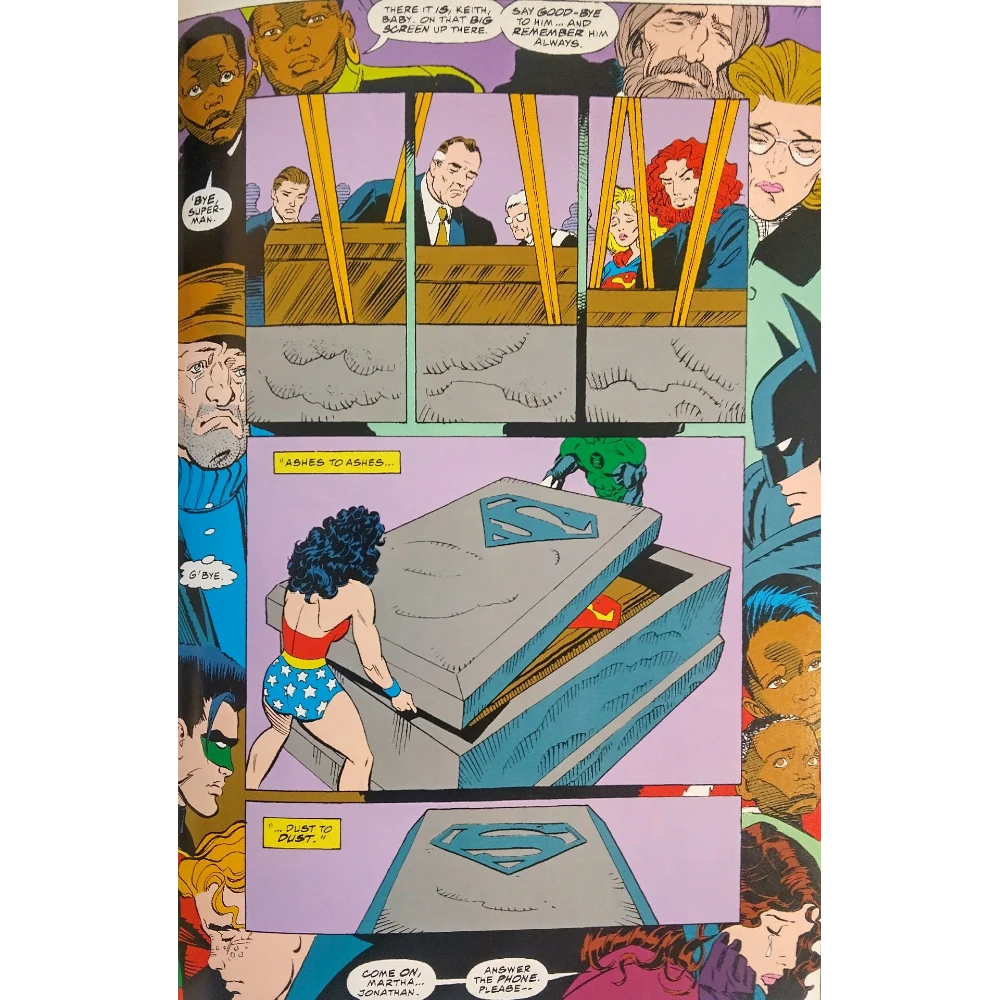
I was concerned, heading into this volume, that reading a collection of Superman comics without Superman in them would be kinda boring. That without the Man of Steel headlining the pages and saving Metropolis and the world from sinister plots, I'd be thumbing through 300+ pages of people mourning and ruminating, with nary an action sequence or much else to keep my attention once I grew bored of the drama.
Thankfully, the assembled creators proved me wrong.
This volume is their thesis, writ large: by drawing you into a world where there is no Superman, you are supposed to miss him, you are supposed to see the vitality he brings to the DC Universe; you are meant to note that, by removing him, DC writers and artists have deadened a glowing ray of hope and justice and changed the face of Metropolis and the world, possibly permanently. If DC can convince you of the full impact Superman's loss and continued absence generates, they have done their job. An older version of the trade I'm reviewing was titled "World Without a Superman," and I wonder if this volume should have kept that title, as it more accurately reflects what this collection seeks to accomplish.
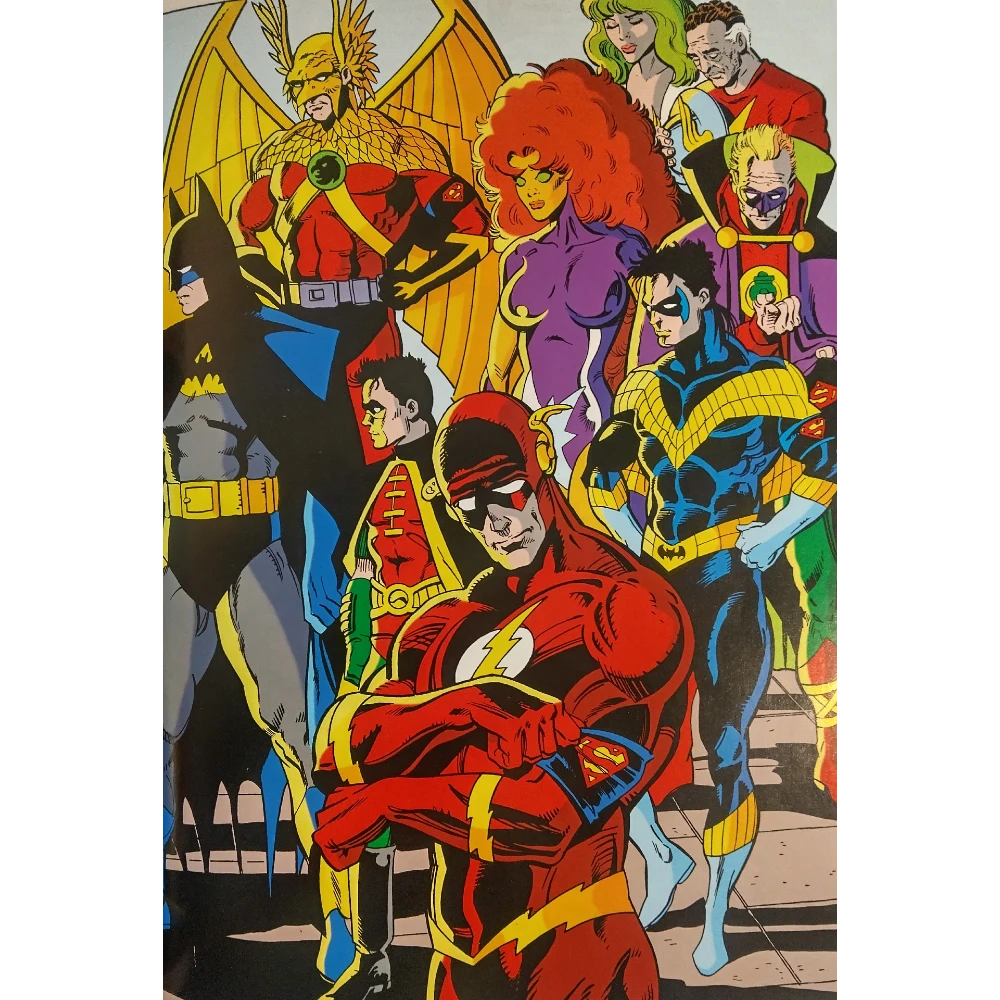
The pieces which work well in this volume are the moments various creators wring emotions out of their characters as they react to Superman's passing and begin wondering how they'll ever function in a world without him. These reactions range from quiet desperation from Lois Lane, who has to mourn the loss of not just Superman but her fiancee Clark Kent, maintaining a brave face when most folks around her believe they'll eventually find Clark among the living, to Lex Luthor, whose seeming frustrations mask deeper emotions. Some folks are allowed only a few pages to reflect on the Man of Steel, such as Booster Gold, whose friend Blue Beetle was grievously wounded in the fight with Doomsday, or bar owner Bibbo Bibbowski, who prays for his "pal Superman" and wonders why such a good man was taken so early. But even small moments do well to encapsulate the difficult, raw emotions coursing through everyone in these stories.
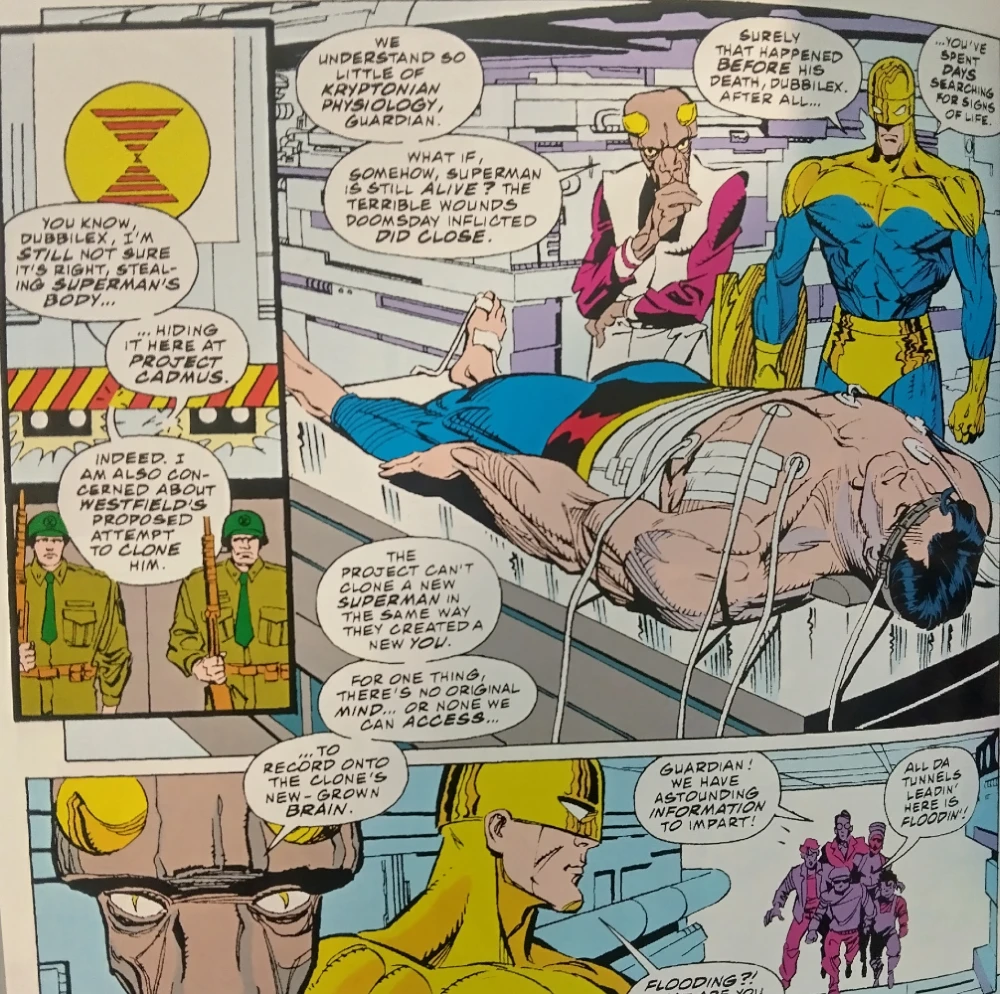
These issues feel constructed around the premise of "What now?" and the creators do well to explore varying facets of that idea. What are Jon and Martha Kent going to do without their son? Who will project Metropolis? Conversely, who now feels like Metropolis is a ripe fruit for plucking without her favorite son around to defend her? Clark's parents and close friends are given the time to grieve–a standout sequence sees Jon flitting through old memories, watching his young son in his mind's eye, with the implication that Clark's death takes a toll on his physical body as well as his emotions. People use Superman's death to their own advantage, including women who claim to be Superman's widow and the head honcho of Project Cadmus, who seems bent on scraping DNA from Superman's corpse to develop superhumans of his own.
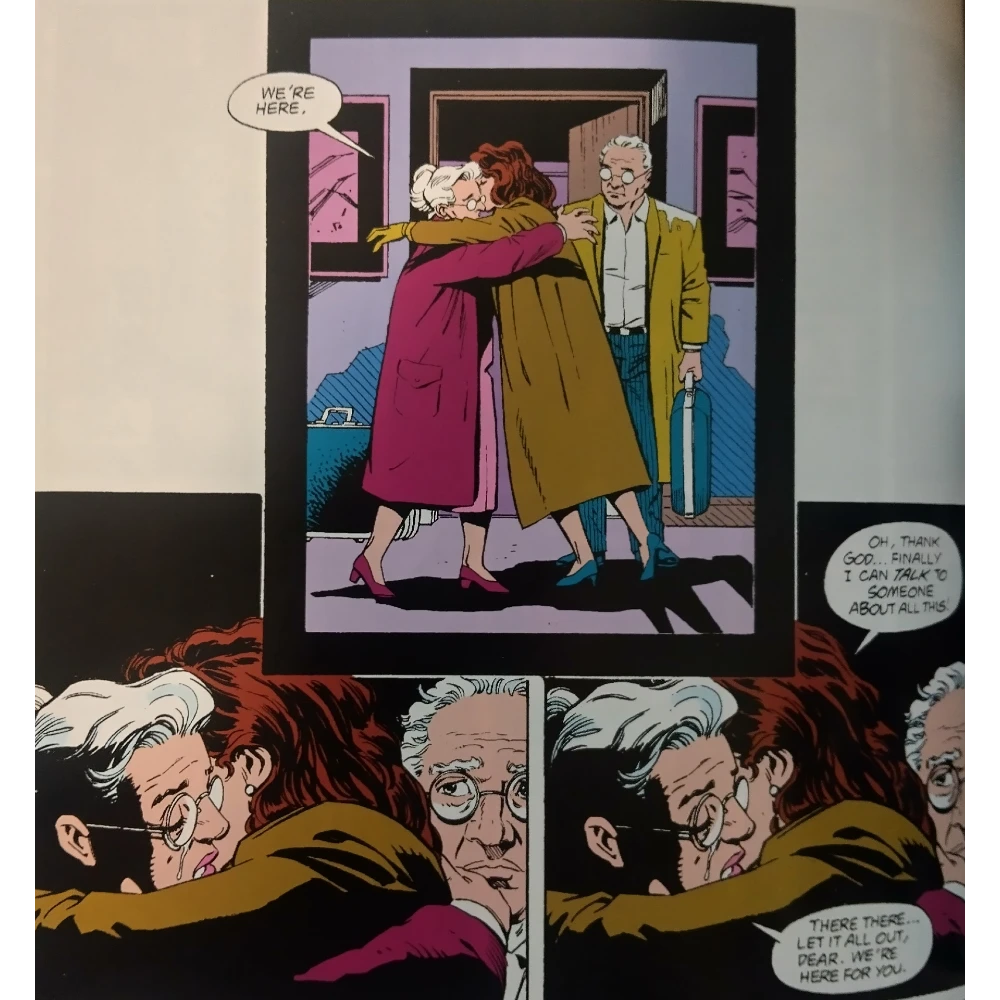
Superman's loss leaves several voids, not just inside people's hearts, but outside in Metropolis and the world as well. As the creators explore the reactions from specific characters, they also showcase how the rest of the superhuman community is forced to step up, whether it's the Justice League and their allies answering fan requests around Christmas (an event for which even the irascible Guy Gardner sets aside some of his patented mirthlessness to provide assistance) or other costumed caretakers trying to step into Superman's boots. It's a huge legacy to fill, and though we're shown how Supergirl provides the necessary heft, other vigilante figures struggle against the law and lawlessness alike. The writers don't linger too long on the whole "vigilante justice" dilemma, but they offer enough to indicate that these heroes are a different breed than what Metropolis is used to, fitting for the 90s but perhaps imperfect for the city's needs.
It would be easy for the issues in this volume to fall into sappy sadness over Superman's death, and though the majority of characters are broken-hearted, very human selfishness pours out in moments. Superman is not portrayed as a polarizing figure in that his death causes a spectrum of emotions from good people–we don't get much divisiveness in how people react. No, the people who react poorly are meant to be intentionally antagonistic. You see it in a few folks who draw weapons and plan to cause harm at Superman's funeral, in Project Cadmus attempting to steal Superman's body to replicate his abilities, and in Lex Luthor's brooding. Superman's death and the aftermath of his death are meant to be these heavy, impactful moments, but people are people, and even if it seems cruel of them to take advantage of one powerful man's passing, those moments of cruel selfishness are as important as the mourning.
Luthor becomes one of the most engaging characters in the entire volume. At this stage, Luthor was pretending to be his own son, his brilliant brain rescued from a dying body and placed into a younger form. As "Lex Luthor the Second," he develops the grandest funeral service for Superman and constructs the greatest tomb money can buy, all to seemingly honor the Man of Steel…when, in quiet moments alone and in the privacy of his own thoughts, Luthor snarls at being cheated out of his revenge while drawing a measure of contentment knowing he's (literally) buried Superman. It's a nice complexity the writers allow him, made all the more impactful by his love for Supergirl and steps he personally takes to protect the city. He's filling a void, in his own way–with one Kryptonian out of the way, and with another under his thumb, Luthor's poised to reap the benefits Superman reaped and claim the Man of Steel's previously held title of "Metropolis' Favorite Son." He receives the glory which was always due him (so he believes) and so often denied him by that pompous blowhard of an alien Boy Scout.
Good riddance, amiright?
As I said, "A World Without Superman" would be a much more fitting title to this trade, because even though there is a "funeral for a friend," it's only a short portion of the volume and does not adequately reflect the contents fully. These issues focus on the dark days following the death of the Man of Steel, as friends mourn his loss, as family remembers the hero and he was, as Lois grieves a future she and Clark will never have, as superheroes gather and wear black armbands in honor of their fallen friend, as people in masks try to live up to his legacy, and as cruel men exploit his death and take dark joy in his passing. A bright light has gone out with Superman, and our creators strive to prove how damaging this loss is, and to not just Metropolis but to the global community. It's weird to say they succeed because he does come back–the loss, as it would not be for an actual loved one, is impermanent. As a thought experiment, this volume works. Superman's return doesn't necessarily undercut what the creators are trying to do here and maybe actually works in their favor: if you can get readers to agree that the world without a Superman really needs a Superman, won't that spark joy all the more when Superman returns?