Random Reviews: Six from Sirius
While not wholly original, Six from Sirius does provide well-illustrated action and intriguing parallels to real world conflict
—by Nathan on February 28, 2026—
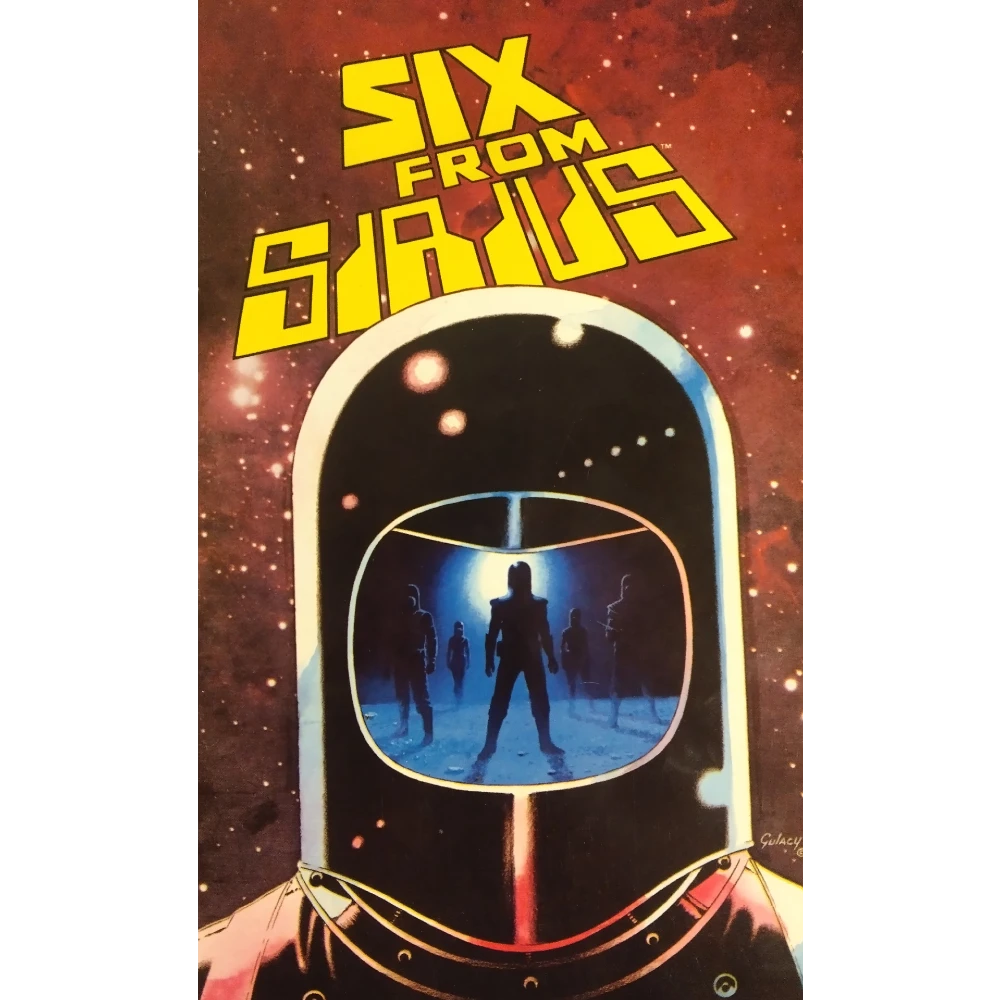
We're returning to the Epic side of Marvel in this review–no, not an Epic Collection; those reviews can be found elsewhere. We're returning to Marvel's creator-driven, adult-oriented imprint from the 80s through most of the 90s. Here, Jim Starlin wrote the adventures of Vanth Dreadstar instead of Captain Marvel, J.M. DeMatteis brought a young man through puberty instead of dealing with Spidey's adult crises, and Stan Lee used the Silver Surfer to wax poetic on the state of humanity instead of…oh, no, wait, no difference from mainstream continuity there.
Creators Doug Moench and Paul Gulacy, known for their contributions to Marvel's Master of Kung Fu series, brought their vision of a far-flung future to life through the series we're reviewing today. Since I just reviewed their five-part Legends of the Dark Knight saga "Prey," I thought skipping over to the Marvel offices and seeing some of the less mainstream material they collaborated on would be fitting. According to editor Archie Goodwin in the first issue, Six from Sirius was Epic's first limited series, as their other series (such as Dreadstar and Alien Legion) were meant to be ongoing while Sirius was a complete story told in four installments. "Sort of a super graphic novel, if you will," he wrote. So while past reviews may have touched on a few open-ended narratives with finished arcs, today we're covering a tale in its totality.
(Though it did spawn a sequel, which has not been collected)
I couldn't tell you if this was intentional, but the Epic narratives I've already reviewed all deal with outer space in some shape or form, whether the cosmos is being explored, fought over, or saved through annihilation (yeah, I'll let Starlin explain that one further). We drift deeper into the darkness in this review as well, exploring a sci-fi saga about a motley crew seeking to save the universe from a deadly super weapon that can eradicate planets.
Something you've never seen before in sci-fi, right?
Six from Sirius
Writer: Doug Moench
Penciler: Paul Gulacy
Inker: Paul Gulacy
Colorist: Paul Gulacy
Letterer: Gaspar Saladino
Issues: Six from Sirius #1-4
Volume Publication Date: November 2005
Issue Publication Dates: July 1984-October 1984
Publisher: Epic Comics (Marvel Comics imprint, original issues); Dynamite Entertainment (collected edition)
I enjoyed "Prey" a bit more than the Legends of the Dark Knight arcs preceding it, primarily because of the thematic elements Moench wove into the narrative and how he crafted the conflict between Bruce Wayne and Dr. Hugo Strange as a way to dig into Batman's head. Through "Prey," we come to understand the brokenness of Batman better. A theme is taken from the character and wrapped into the story seamlessly.
The exact same cannot be said for Six from Sirius.
Sci-fi has never been my wheelhouse, especially outside of comics. Within comics, I find I like the occasional romp through space and battle for the fate of the universe, but I've never been particularly drawn towards laser guns, ships sailing at warp speed, teleporters, and alien races. All that to say, I came into this series relatively ignorant of the tropes surrounding the genre, and I find myself incapable of detailing how Moench and Gulacy deliver a yarn which encourages or subverts those tropes. I made the cheeky nod to Star Wars above, but you could make a similar, surface-level comparison to a good chunk of fiction, regardless of genre–eclectic band of adventurers face a grave evil that threatens the whole of a race, land, world.
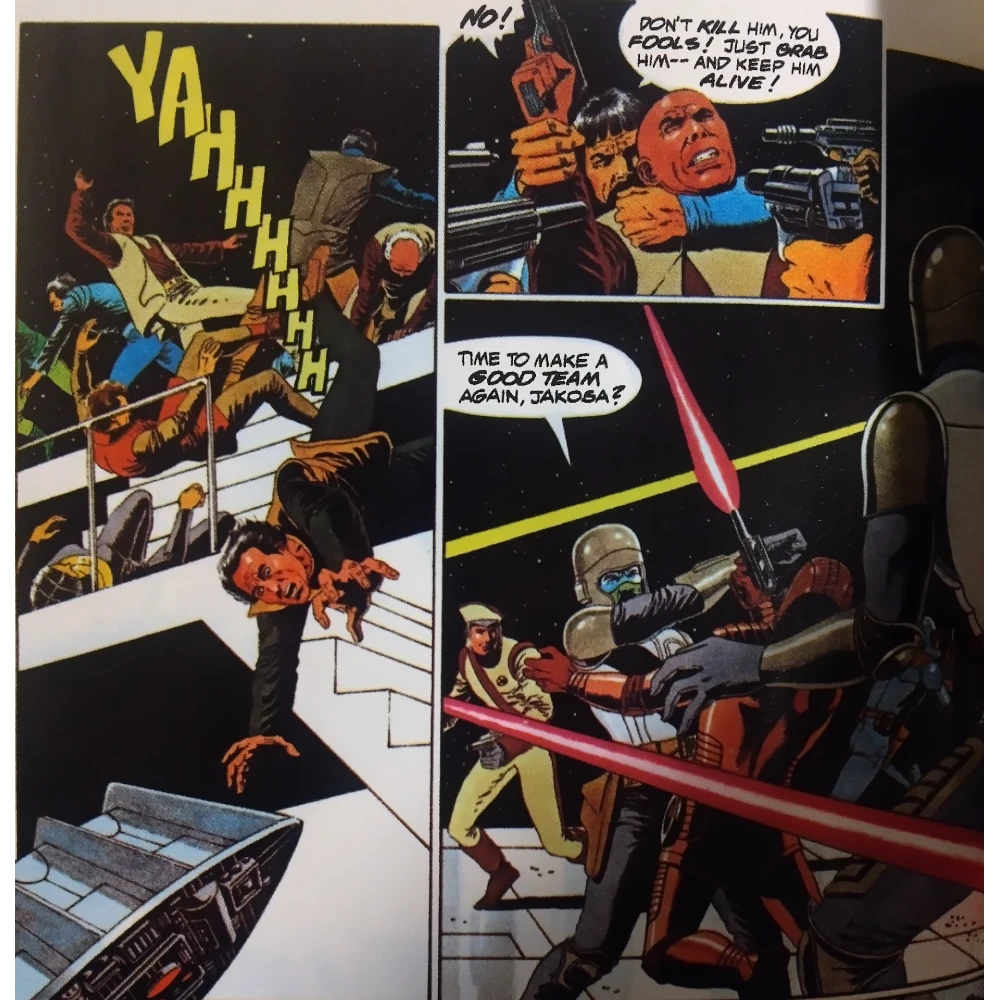
So within the broader parameters of fiction, Six from Sirius follows a fairly standard formula: our intrepid heroes, led by a witty and bold captain, are pulled into a grander conspiracy and are tasked with rescuing a few planets before sinister forces can wipe them out. We get spaceships chasing other spaceships, forceful boarding parties, exchanges of laser fire…all very exciting and thrilling in the moment but also very expected. There's little in the way of action that even a sci-fi novice won't be familiar with.
That isn't to say Six from Sirius is dull; as noted, the action sequences are thrilling, Paul Gulacy providing a terrific level to detail to keep your eye following panel to panel as spaceships swoop in and out of a futuristic city, our space crew (led by the dashing Jakosa Lone) breaks into a prison, and a laser skirmish breaks out over a deadly cannon. But you can take more than a moment to let your mind hover outside the immediate action, and you just can't help feel that tug of recognition–our crew breaks into the prison to save a female ambassador; the team disguises their ship as an asteroid to float by the prying eyes of enemies; their mission is to stop that aforementioned cannon from devastating at least one planet. Especially considering Moench began developing the series in 1979, one need not dig too deeply to find the commonalities between this series and the ever-influential brainchild of George Lucas.
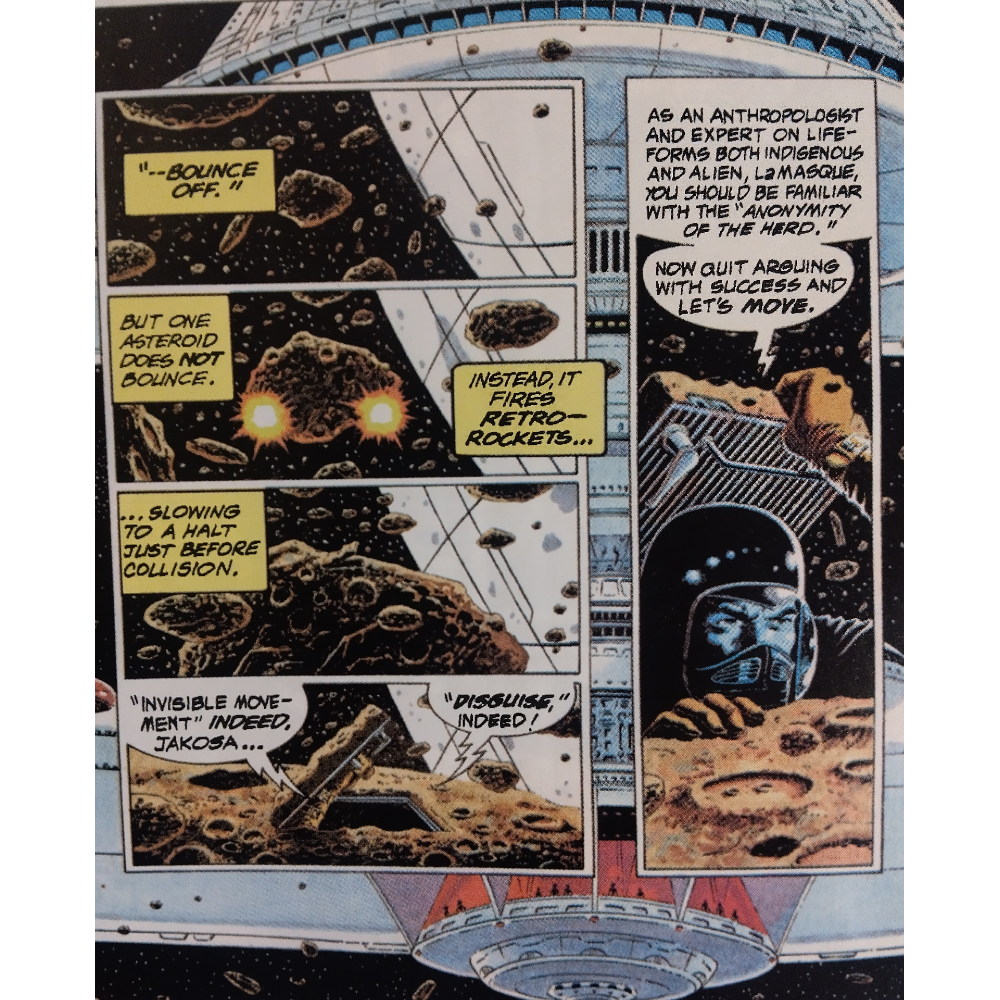
Jaded reflections aside, I would like to note Moench's penchant for worldbuilding. He seems to owe a great deal to tropes and Mr. Lucas, but Moench capably crafts a unique scenario within those influences. He imagines a future embroiled in a Cold War-esque pattern of chaos, planets aiming weapons and threatening to overturn a stalemate; robots serve as both militia and spies, their uncanny resemblance to humans providing at least one well-placed twist late in the narrative; one character is endowed with extrasensory perception, drawing in a semi-mystical bent to the proceedings. He's thought through the politics, the state of certain situations this universe belongs to, capably crafting conflict from the grimmest of possibilities. Our motley crew must save planets from themselves, showing that even in a way-off future after humanity has colonized other worlds, our darkest natures can still rise up. The theming doesn't feel blunt–in other words, you may not grasp the Cold War analogues at first blush–but there's enough for the reader to recognize real world parallels and appreciate Moench taking actual conflicts and giving them a sci-fi sheen.
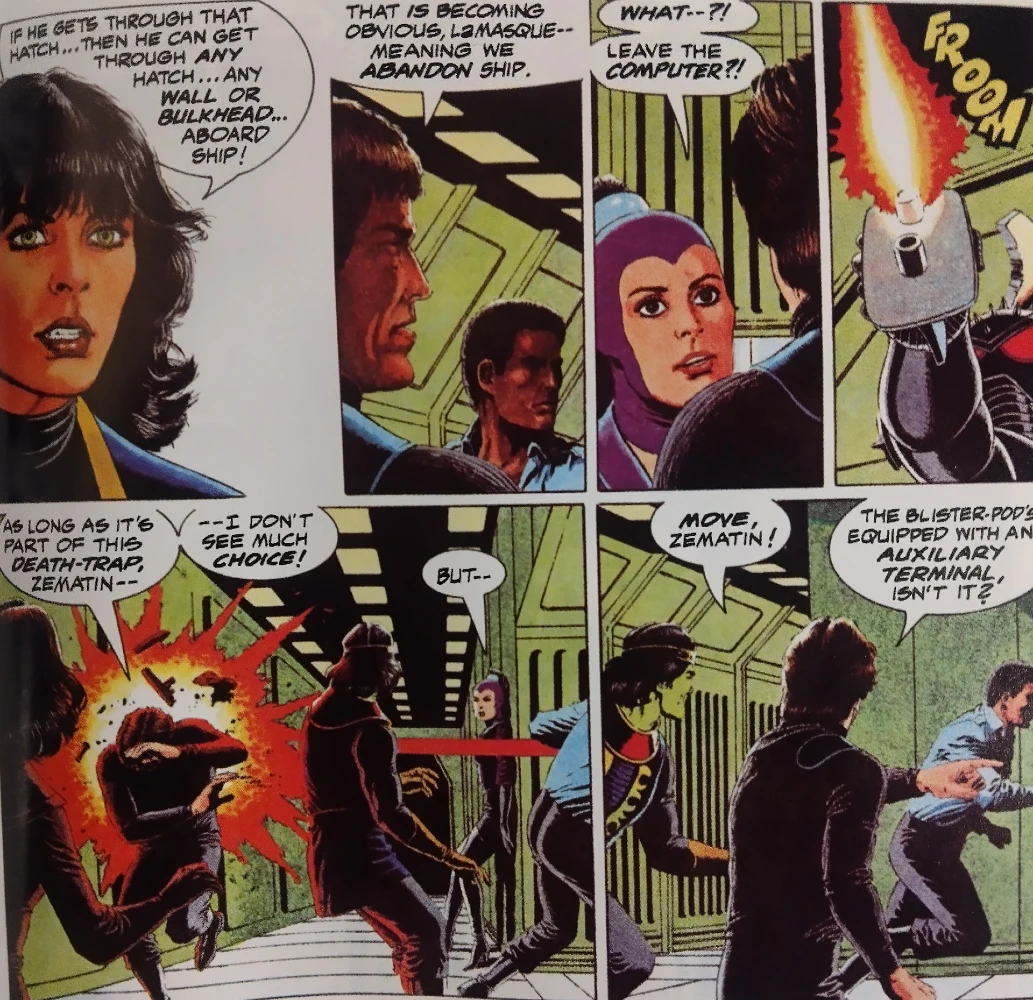
Jakosa's "motley crew" represents the series' backbone, the batch of characters you follow through their daring adventures. Moench works to imbue each crew member with some unique characteristic, be it Zematin's close connections to machines, Grod's preference for referring to himself through third person, or Skreed's insistence on speaking in poetic narration. Several of these traits feel fairly surface, letting us divvy up the characters into respective "classes" (Skreed's the comic relief, Jakosa the leader, Zematin a "mechanic" of sorts) each hero fits within snugly.
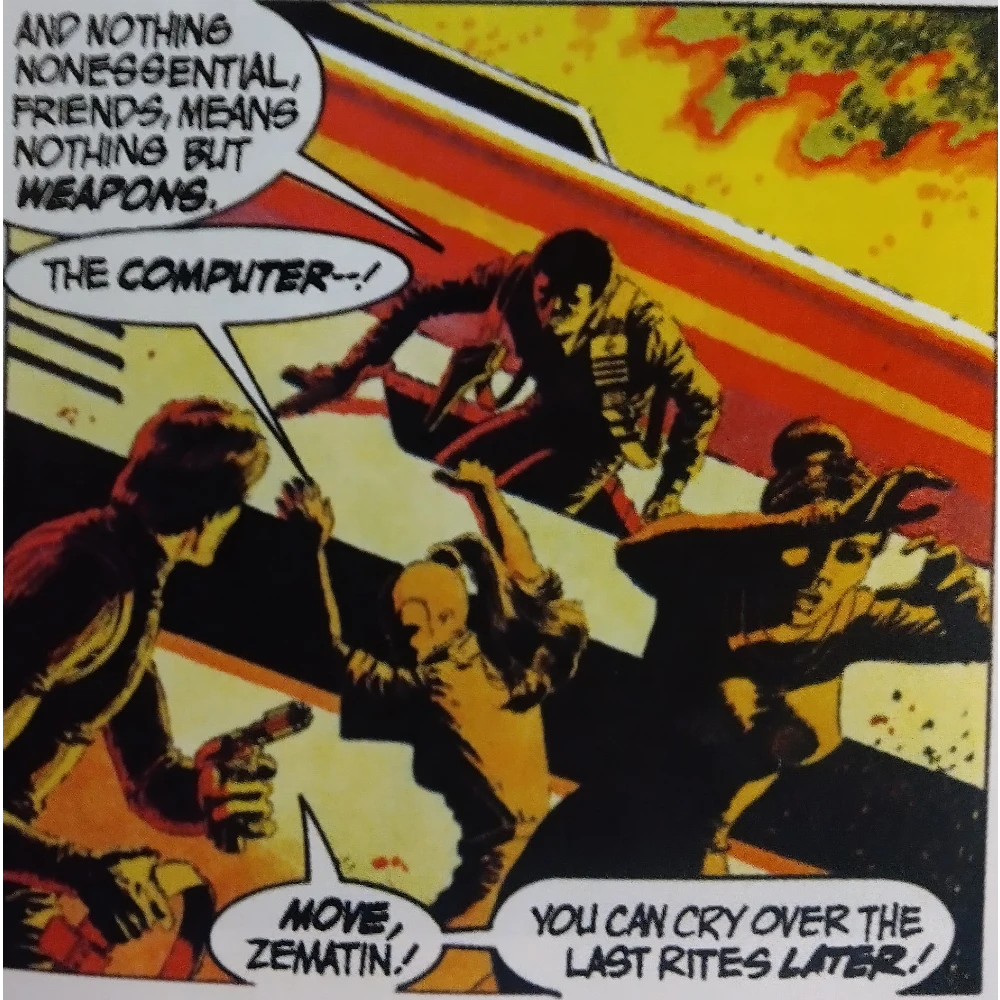
Yet Moench dives deeper at moments, providing additional hints at developing characteristics. When the six must destroy a ship of theirs, Zematin is shown to reluctantly follow through with severing the connection; Grod is a dutiful warrior, fighting alongside Jakosa, yet he doesn't allow his loyalty to prevent him from speaking up when he believes Jakosa may be behaving less level-headed than he should; Jakosa himself has a tragedy-marked past which resurfaces to challenge him late in the story. These moments and traits create characters who aren't quite flat, though a few more static qualities would have been appreciated. It's the trouble of team books, panels split between various individuals, forcing a writer to maneuver their attention between protagonists quickly.
The book's shining star is Paul Gulacy, tasked with bringing Moench's vision to detailed life…and "life" is a strong descriptor. No exaggeration to be found here in physical proportions. Gulacy's characters are stunningly realistic, to the point where I wouldn't be surprised to learn he used photo references. Details are beautifully etched in faces, providing a range of emotions and, in certain wordless panels, indicating story beats. Elsewhere, Gulacy crafts all sorts of mechanical instruments, from ships, to space stations, to guns. Technology feels like the natural evolution of actual human advancement–where some may be content to project esoteric shapes and out-of-body concepts onto the state of the future, Gulacy is more at home in the grounded feeling of metal under feet, fingers grasping triggers, ships veering between buildings.
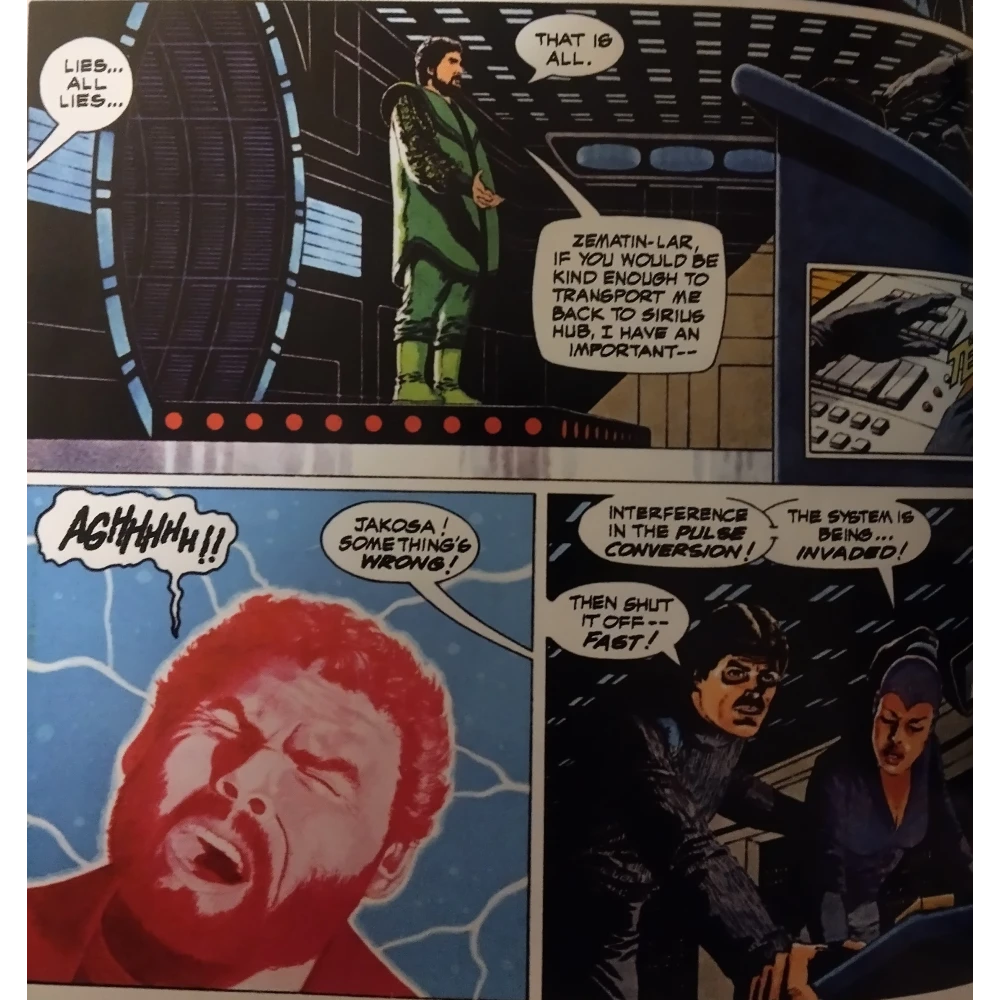
At moments, Six from Sirius feels like it's one "Aren't you a little short for a stormtrooper?" away from copyright infringement, parallels fairly clear between itself and George Lucas' magnum opus…though I'm certain commonalities can be found between this series, Star Wars, and a litany of other sci-fi works. As I mentioned, the genre really isn't my wheelhouse. Similarities notwithstanding, Six from Sirius is a serious sci-fi romp, threading Cold War-era politics into a futuristic world dominated by the tactile progression of technology, a hint of the supernatural, and the stalwart endurance of the human spirit. Though I've never been overly passionate towards the genre's trappings, even I can see the underlying humanity and relatability Moench and Gulacy pour into their characters, be it the obnoxious poet, the unflappable space captain, or the woman whose ties to machines outstrip tethers to other people.