Distinguished Critique: Resurrection Man (vol. 1) Review
Despite some narrative coincidences, this series is based on a strong, unique premise as it unravels a compelling plot
—by Nathan on May 4, 2026—
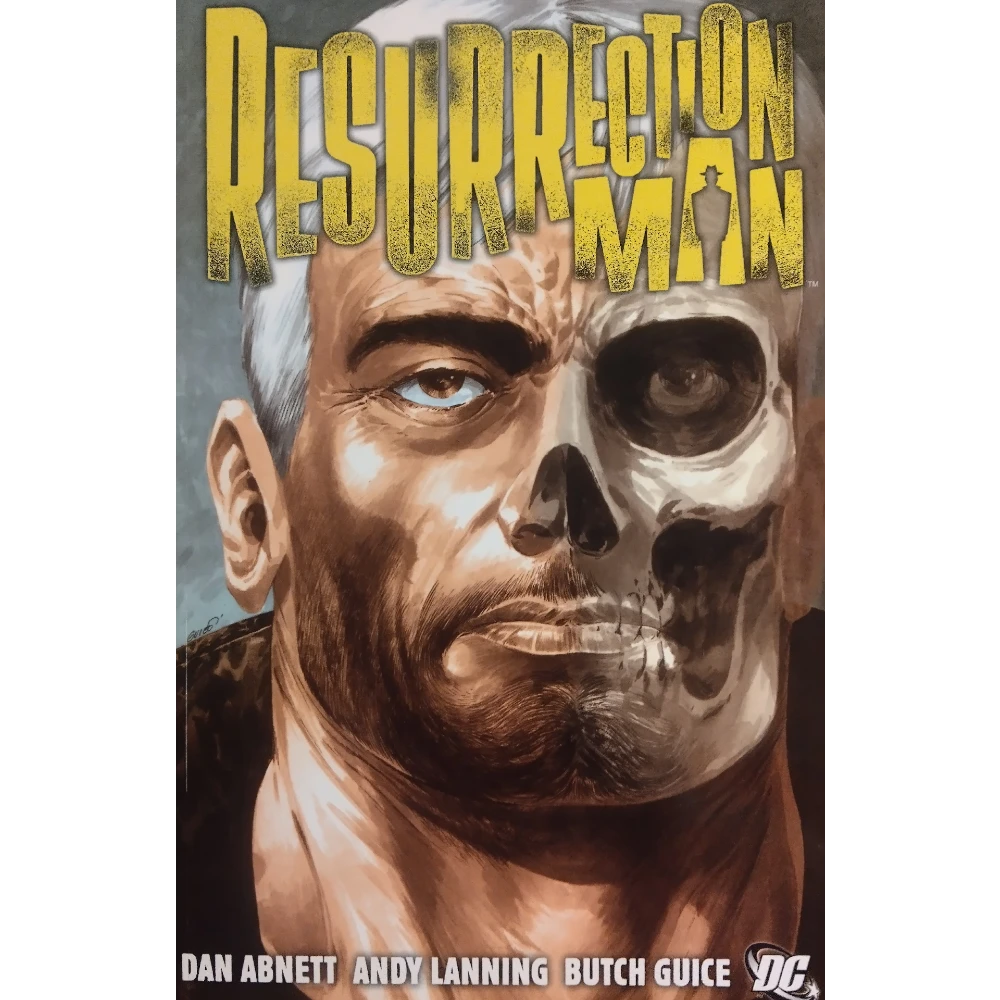
A few posts ago, I dove into a post-West Coast Avengers series featuring several of the "Wackos" titled Force Works. Helmed by writing duo Dan Abnett and Andy Lanning, the series' first fifteen issues allowed the former West Coasters a second shot at stardom. Abnett and Lanning may be known better for their early 2000s rejuvenation of Marvel's cosmic corner through "Annihilation," but I found Force Works a fairly compelling look at their early work, strong characters and plotting creating some intriguing, even surprising stories.
In hopes of remaining a little longer on the "DnA train," I decided to give today's volume a read. Like with Force Works, we're looking at about half of a full series the pair wrote in the 90s, this one for Marvel's biggest competition. Teaming initially with X-Factor and Flash artist Jackson "Butch" Guice, the two created a brand new hero instead of revamping classic characters.
Maybe you'll like him. Could be difficult. After all, Mitch Shelley is a lawyer who just won't stay dead.
Resurrection Man (vol. 1)
Writers: Dan Abnett and Andy Lanning
Pencilers: Jackson Guice, Joe Phillips, Tom Grindberg, and Mike McKone
Inkers: Jackson Guice, Ray Kryssing, John Stanisci, Andy Lanning, Dexter Vines, and Jason Rodriguez
Colorists: Carla Feeny and Jamison
Letterer: Ken Lopez and John Workman
Issues: Resurrection Man #1-14
Publication Dates: May 1997-June 1998
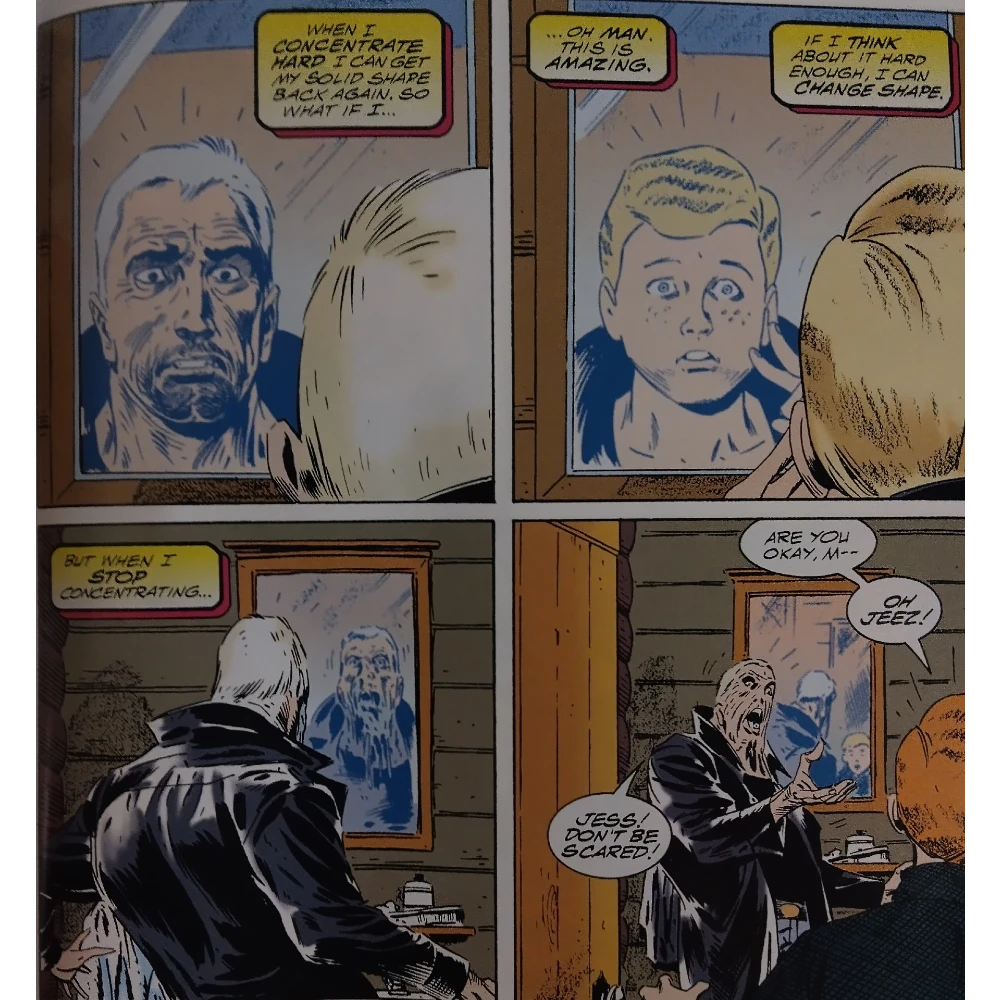
Given his codename, you'll likely catch onto what Mitch's shtick is fairly quickly: guy keeps popping up from the grave. Dude gets bumped off many, many times across these fourteen issues, whether he's shot, blown up, shot, poisoned, shot, decapitated, or ripped open by a man with a scaly skin condition. And each time Mitch comes back, he's blessed/cursed with a brand new power that lasts as long as he's alive. Sometimes, it's flight or bulletproof skin or pyrokinesis. Sometimes it's making colorful butterflies materialize outta nowhere. Bit of a mixed bag, those powers. But Mitch's abilities help him tough out his own personal mission, because even though he's gained newfound powers and a resistance to death, Mitch has lost most of his memory. And he just wants to know who he was.
"Amnesiac man with superpowers trying to remember his past" may not sound like the most original concept (Abnett and Lanning even used the idea with Force Works member Century), but paired with the resurrection bit, Abnett and Lanning have quite a bit of fun with poor Mitch, dragging him across the country in search of his memories…as long as he stays alive long enough to keep putting one foot in front of the other! The premise becomes a fairly worthy one to follow, not just because each new power is interesting to experience, but because of the mystery circling Mitch's past. You're given fragments early on, and Abnett and Lanning latch into those fragments to generate a largely compelling series.
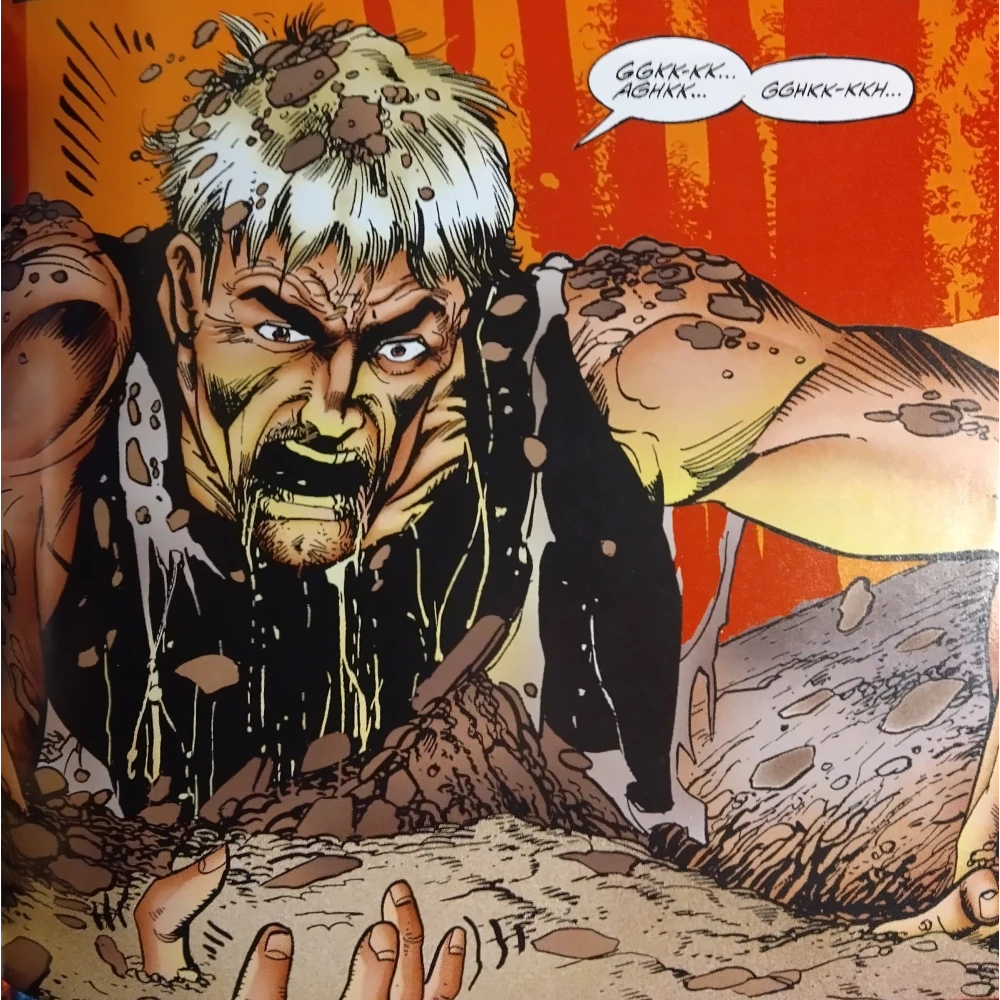
The story works. Let me be blunt about it. I have some gripes, but the overarching plot isn't one of them. We are given, in these fourteen issues, a fairly complete narrative, broken up into a handful of arcs which feel like they flow seamlessly into each other. A multi-issue opening arc seeing Mitch pursue an initial batch of memories gives way to a series of misadventures as Mitch, a few supporting cast members, and a couple recurring rogues scamper across the country in search of deeper answers. Similar to how Abnett and Lanning structured Force Works, mysteries are teased early on which feel more or less answered by time we reach the volume's final issue. We are given a cliffhanger at the very end to kick off, what I assume, is a new arc in Mitch's life (lives?), yet any lingering feeling of incompleteness is less on the creators and more on the volume's packaging. I just assume this collection didn't sell well enough for DC to bother publishing the series' second half in trade format. Maybe we'll get a DC Finest edition?
Mitch is a decent enough fellow, and though his exploration into his past provides a few more difficult answers than he would've appreciated, he's by no means defined by those previously forgotten escapades. Think if Jason Bourne found out he was a smarmy lawyer instead of a world-class assassin. As a blank slate, Mitch allows other emotions and motivations to form within him, spending a small chunk of time trying to either reconnect with folks from his past or reconcile who he was with the guy he now wants to be. There's a general easy likability to the Resurrection Man that makes you root for him as he works to be better than he knows he was.
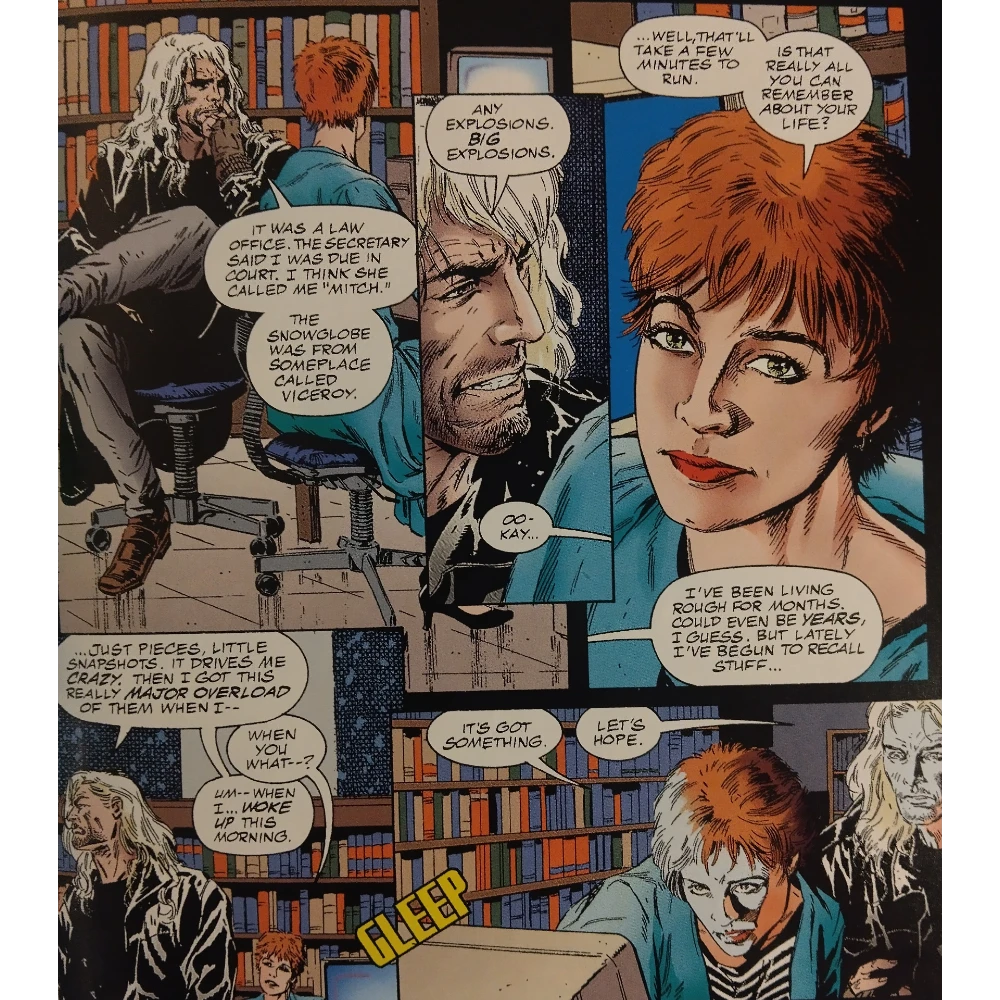
The mystery surrounding his past, revealed in pieces across these issues, is compelling enough to drive the story forward. A mysterious villain, who also cannot seem to die, is related to Mitch's origin. An important supporting cast member also linked to Mitch's past organically enters the story and unknowingly provides conflict in the opening arc. When Mitch finds his former wife and learns his "widow" is now in a relationship with his former business partner and friend, Abnett and Lanning nicely tease one layer to the pair before revealing another; it's a good twist, one which I wondered would hinge on Mitch's obliviousness, but DnA make him smarter than that. This allows the twist to work in the moment it happens without its effectiveness dwindling, a narrative facet which nicely occurs in other places. The writers tease a development and, shortly thereafter, capitalize on it.
The series works as well with Mitch's abilities and almost as well with his living/dead/living bit. I worried about two things heading into this volume before flipping the first page: one, that Mitch's powers would become convenient to the plot, that our Resurrection Man would be born anew with abilities necessary for a particular problem. Two, that Mitch's resurrection cycle would grow old quickly. For the first, I felt Abnett and Lanning justified Mitch's abilities, allowing them to be varied enough within particular contexts without having them absolutely nail the exact situation Mitch finds himself confronting. Bulletproof skin is great against guns, but it allows for Mitch to hatch a plan that brings people with guns together so he isn't hurt rather than occurring in the middle of a firefight. Abnett and Lanning let Mitch use his abilities to navigate his situations rather than have his situations determine his abilities.
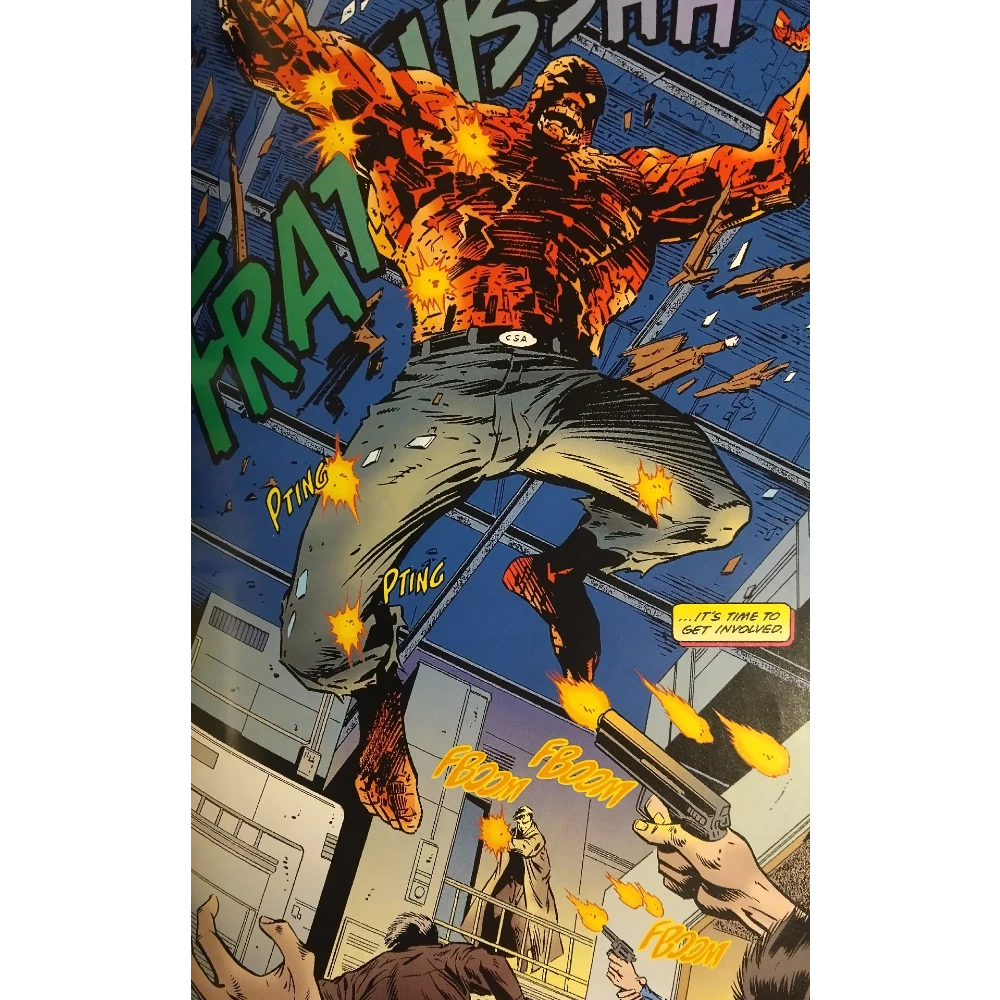
Sometimes, the powers are pitch perfect–a Halloween issue gives Mitch shapeshifting abilities, for example–but at other times, the randomness creates unique situations you don't expect. Why turn into a flaming skeleton when confronting the hitman known as Hitman? No reason. Why does Mitch have lightning powers when he first meets Batman? Again, no reason, other than it keeps the concept fresh and interesting. You can't really anticipate what's going to happen, because you're not quite certain which direction DnA will take Mitch's abilities. It isn't like, "Oh, Mitch is visiting Atlantis this issue, so I'll bet he'll 'randomly' develop gills." There's no trickery here.
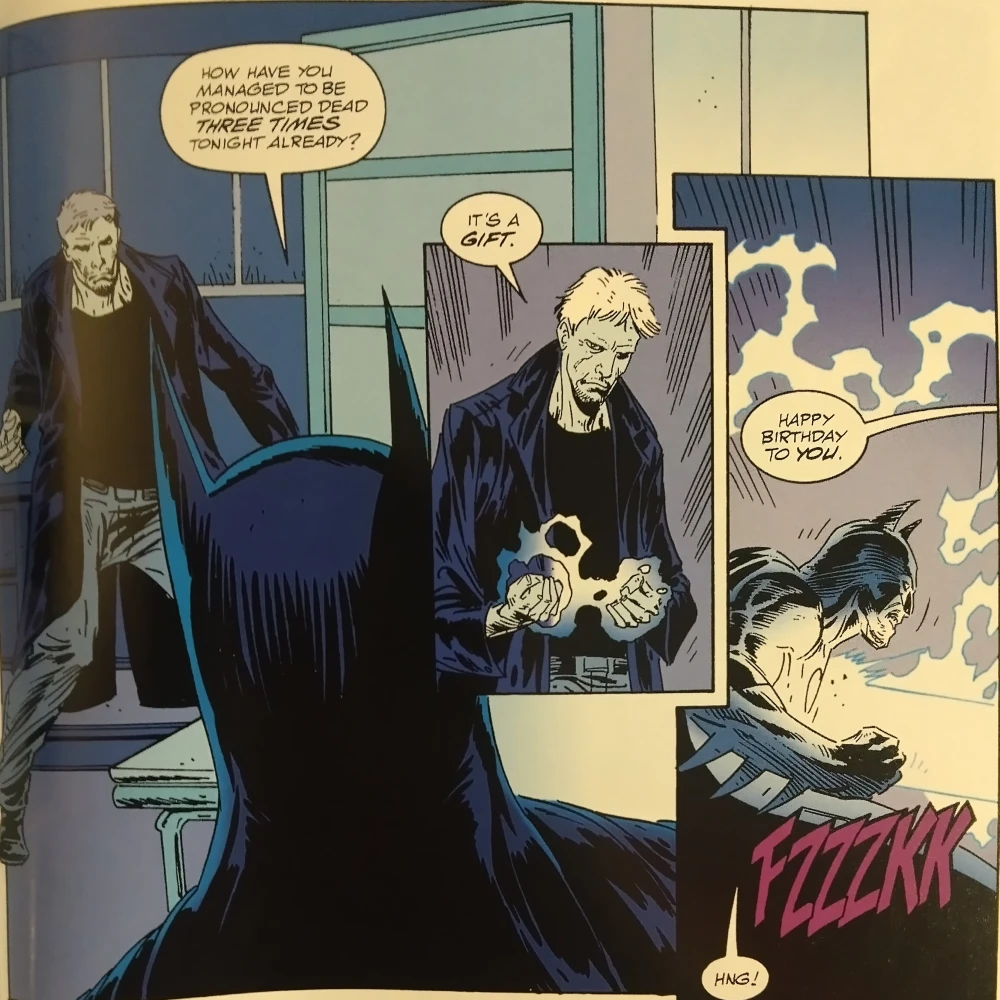
As to the second point, Mitch's resurrection stunt becoming old hat, I have a little less leniency. It isn't that Mitch dying routinely becomes a problem–that's the core concept. It's how he gets new powers. What irks me is that, often, the manner in which Mitch dies feels convenient or difficult to justify given his abilities. One issue, Mitch is hit on a darkened backroad by a car in a manner which feels highly convenient–sure, you can argue that it's dark, he didn't hear the guy, the driver may not have seen him, but several things need to go right (wrong?) for that particular incident to occur. Similarly, in the issue where Mitch meets Batman, he's killed three times in Gotham City. Three times. We don't even get to see which powers he's reborn with for two of those lives. I struggle to believe, even in Gotham, that Mitch would fall victim to lethal crime, especially with his powers. More amusing are moments when our creators use his deaths intentionally, such as when Hitman keeps shooting Mitch to cycle through his powers. These moments utilize the premise uniquely, even subverting the concept a little, working better than the times where Mitch dies because the writers feel its time to give him a new ability.
What works less well more often is the art, which ends up a mixed bag. Jackson Guice maintains his position as penciler for most of the series, providing the opening arc and a few later issues with crisper details and a more grounded feeling. Yet a litany of inkers and a handful of other pencilers wish to etch their names on Mitch's ever-shifting tombstone, and they only muss up the world Guice is endeavoring. That grounded feeling is eliminated soon enough, with a more cartoony style and an ostentatious palette invading several issues. The series does circle back to Guice, but it just can't maintain that momentum, with those other folks just consistently peppering the book, preventing it from finding consistency.
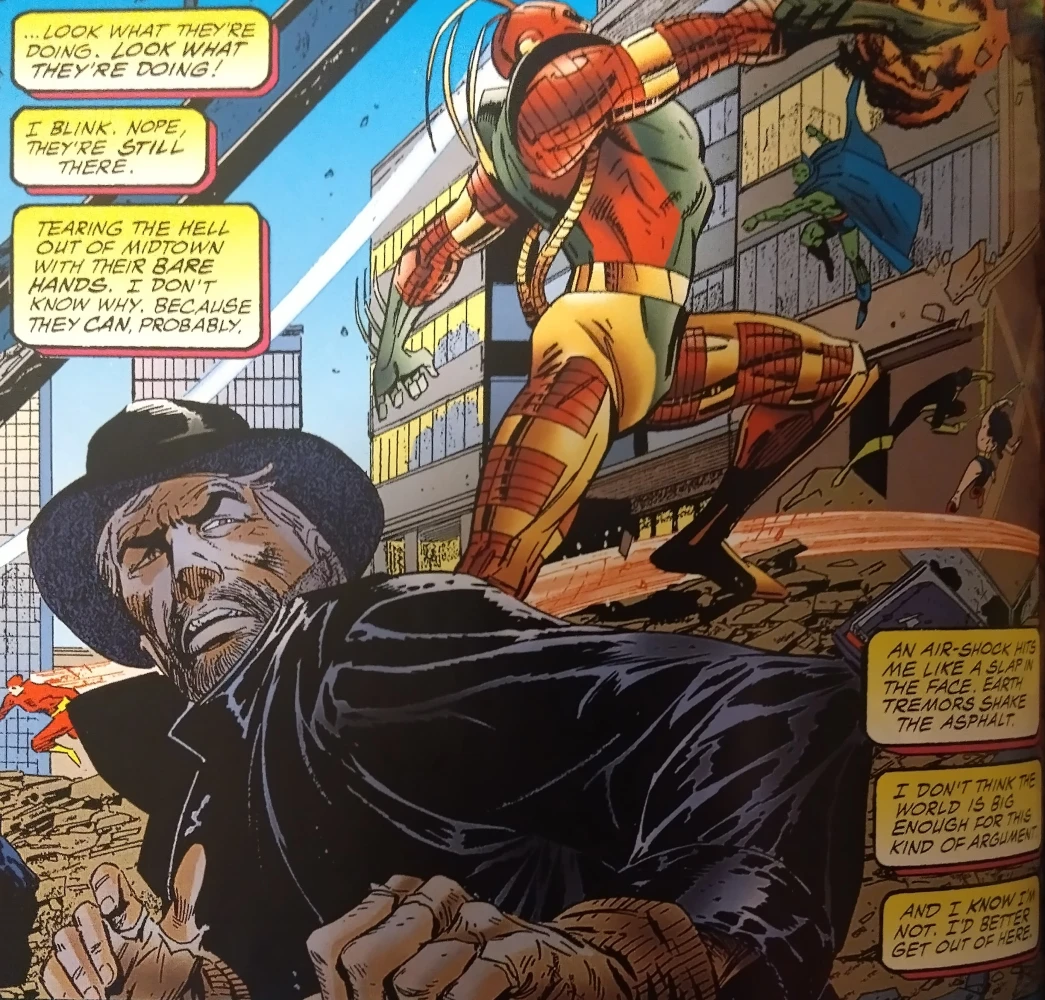
Yet where consistency can be found is where Mitch himself is often found, on the fringes of the DC Universe. Save for his encounter with Batman and watching the Justice League in action, the Resurrection Man is largely divorced from what's happening in the broader world. It allows Abnett and Lanning an "on the outside looking in" perspective, brief commentary on the state of the DC Universe. An issue featuring brief ties to late 90s event "Genesis" is largely used for laughs; Garth Ennis' Hitman character is treated with some humor; and the Justice League actually benefit from Mitch's brief involvement. A few references and Easter eggs can be found, but Resurrection Man largely skirts around the action, tangential when DnA want the series to be, but otherwise snug in its own corner of the universe. It means that, really, all the context you need comes from prior issues, creating a streamlined, easy-to-follow narrative that isn't hampered by tie-ins and other writers' plans.
Each time Mitch resurrects, his body is put together the exact same way it was before. White hair, stubble, even his clothes are intact. Such perfection couldn't accurately describe this series–problems exist. There's a bit too much convenience in Mitch's deaths, and a bit too much inconvenience in the series' inability to maintain a recurring art team. Aside from this, Abnett, Lanning, and Guice create a compelling character with an original power set, steeping his story in mystery and intrigue. This is well worth a read if you want to learn who the real Mitch Shelley is, and you can be especially grateful that answers are made available, because a second edition hasn't been. I assume, given it's been fifteen years since this volume was published, DC is unlikely to resurrect this property anytime soon, but like Mitch, it certainly deserves another chance at life.