Distinguished Critique: Batman: Shadow of the Bat (vol. 1) Review
Longer arcs work where one-and-done issues don't, enabling Grant and Breyfogle to neatly develop their subjects
—by Nathan on May 14, 2026—
This is the final "Knightfall prequel" post, I promise.
Actually, the next review will be on a volume with "Prelude" literally in the title, so I guess the above statement is a lie; maybe it's better to say this is the final post dealing with a volume of comics not directly leading into "Knightfall." The last few posts have been building up, more or less, to Batman's climactic showdown with his famed 90s nemesis. I've been using them to introduce or reintroduce characters, such as Anarky and Tim Drake's version of Robin; touch on important concepts, such as the drug "Venom"; or reference themes present in the famous crossover epic. But even though we've reached the last of these prologue posts, we're still exploring a first for the Batman mythos: a new series.
In late 1989, to capitalize off the success of Tim Burton's Batman, DC Comics began publishing a third Batman book alongside his titular title and Detective Comics. Legends of the Dark Knight peered into the past, crafting new stories or new takes on old characters in Bruce Wayne's early crimefighting days. Alan Grant, who had written several issues of Batman and Detective Comics, was brought in to helm the series, along with frequent collaborator Norm Breyfogle.
A fourth Batman title would need a hook, however, something to distinguish it from the other titles. Grant himself, in an introduction to the volume I'm reviewing today, notes how each title endeavored to tackle a different facet of the Caped Crusader, whether it was Legends' focus on his past, Batman's focus on main continuity stories, or Detective's focus in filling in the gaps left over from Batman. Shadows of the Bat would need an identity…and, turns out, that centering concept was right there in the title. Each month, Grant (who wrote the majority of the series) would focus on that ever-present "shadow" cast by the Dark Knight, watching where, and on whom, it would fall.
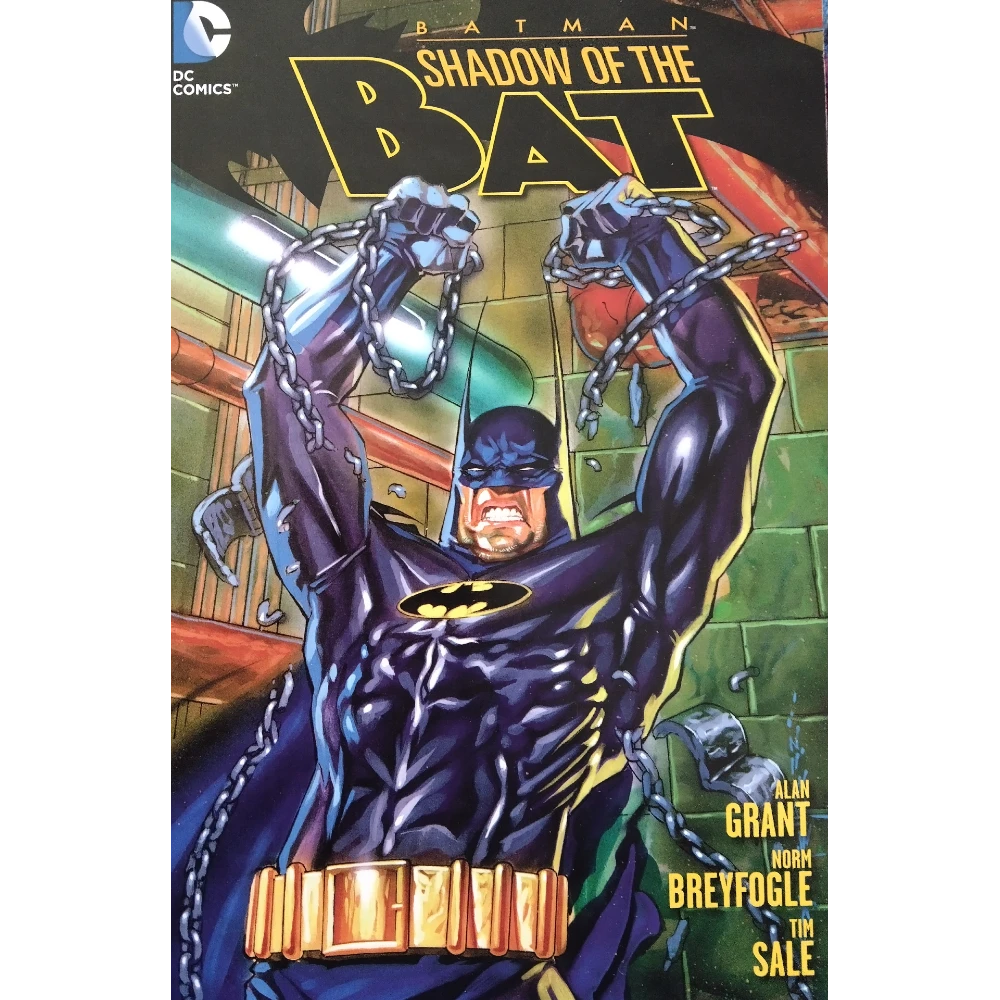
Batman: Shadow of the Bat (vol. 1)
Writer: Alan Grant
Pencilers: Norm Brefyfogle, Dan Jurgens, Tim Sale, Mike Collins, Vincent Giarrano
Inkers: Norm Breyfogle, Dick Giordano, Tim Sale, Steve Mitchell, Vincent Giarrano
Colorist: Adrienne Roy
Letterer: Todd Klein
Issues: Shadow of the Bat #1-12
Publication Dates: June 1992-May 1993
As noted, the concept behind this fourth title was to aim a bright beam at individuals who fell under Batman's shadow–a strange idea, using a shadow as a spotlight. As these first twelve issues indicate, Grant used those dark wings to hone in on either new characters or individuals never given much attention, particularly the villains.
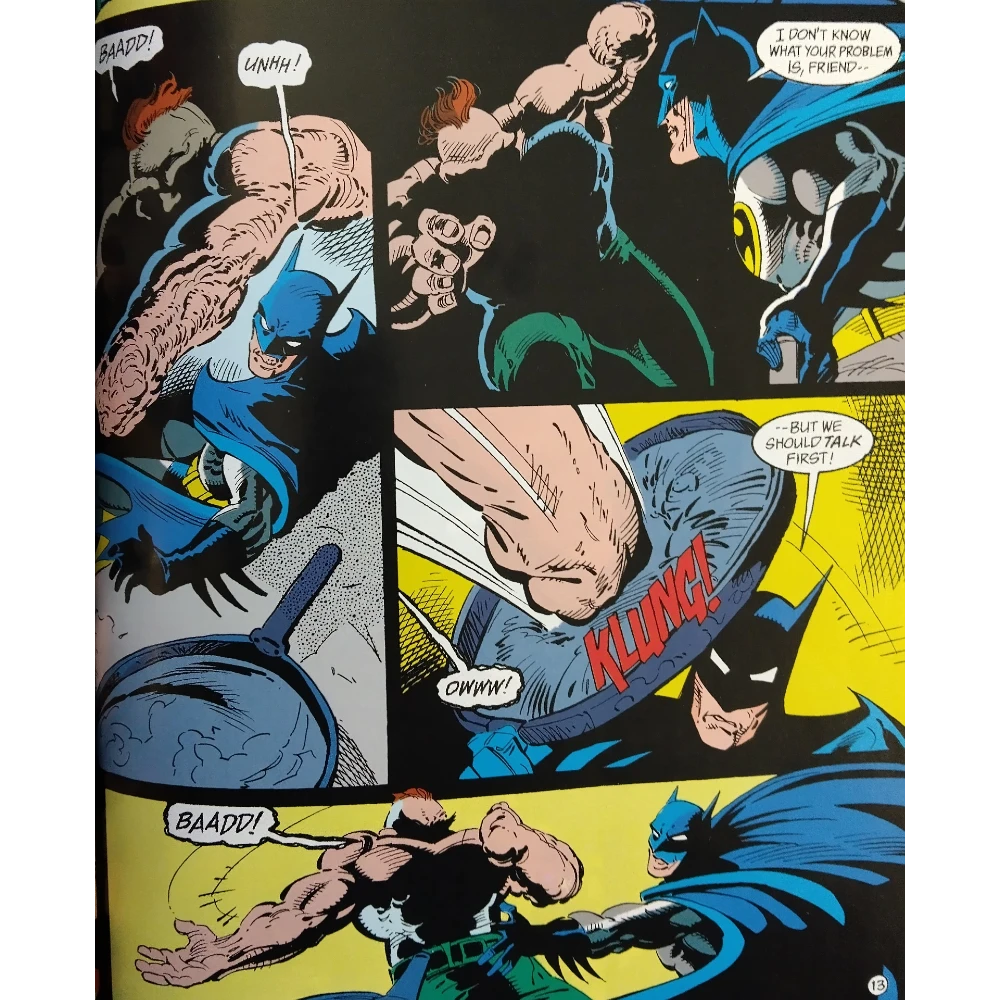
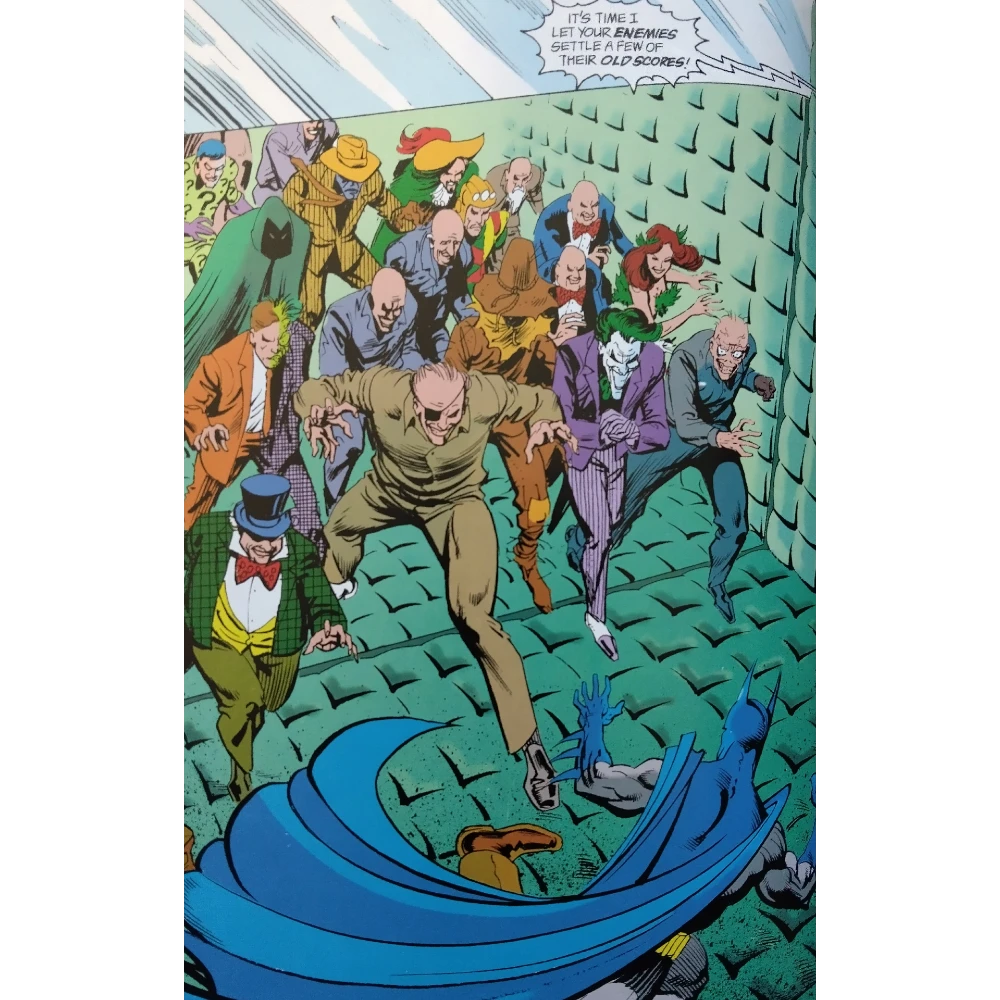
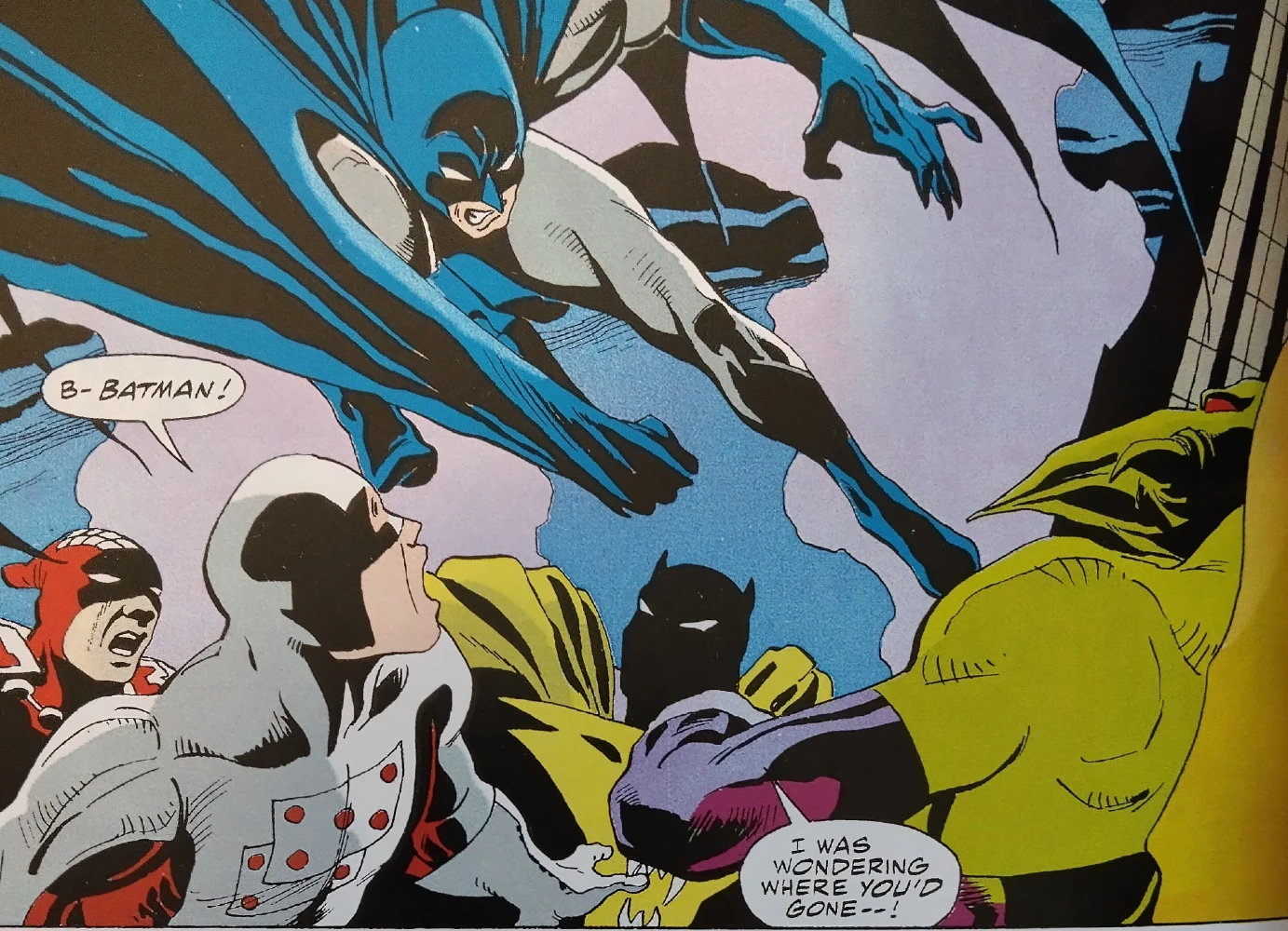
Oh, some mainstays show up for you eager beavers. Grant's first arc, a four-issue narrative focused on Arkham Asylum, features a prison-load of classic Batman enemies. Tellingly, they're mainly used in a sequence where Batman tears through this "Who's Who?" of his rogues gallery, beating the likes of the Scarecrow, Two-Face, Poison Ivy, and the Joker in a matter of panels. It's as if Grant is saying he's not as interested in these top-tier fellows; he wants your focus elsewhere. In the same sequence, Batman spends the most time fighting man-mountain Amygdala, and if you go flipping through your comic collection to figure out how obscure the guy was before this moment, don't bother trying: this is his first appearance. He's a new villain, just dropped in to rumble with the Bat, and if you're a fan of one new character, perhaps you'll enjoy how Grant largely divides this four-issue arc between two brand new characters: serial killer Mr. Zsasz and Jeremiah Arkham, the Asylum's latest proprietor.
Any run-of-the-mill comic can have Batman punch the Joker's lights out or swap brainpower with the Riddler for the umpteenth time. Grant is more interested in exploring the lesser-known facets of Batman's world, particularly his rogues gallery, seeing what humanity can be drawn out from the grim hearts of briefly handled bad guys and boogeymen. Most of these narratives are one or two issues a pop, giving Grant a laser focus on his subjects, preventing your attention from being lost amid a cacophony of multi-issue arcs.
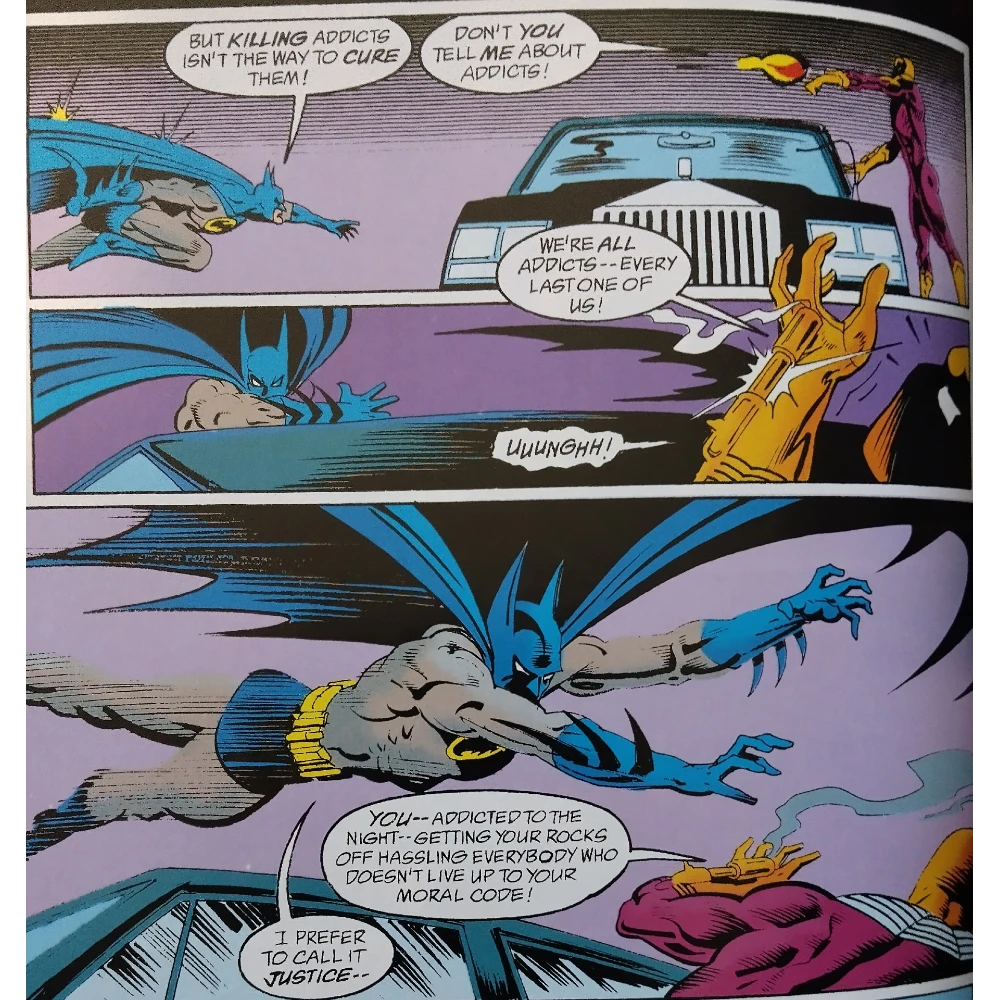
Though I praise Grant's methodology for fulfilling the series' "brief," it does hinder him from developing narratives which are palpable and influential. Standalone narratives and one-shots can often be the perfect spot for a creator to provide memorable stories, but the smaller tales are the most forgettable here. Grant does his darndest to imbue each story with some satisfactory ending, be it through a strong character moment or twist, and in this, he does succeed. A single-issue story that sees Batman wind through a labyrinthine castle ends with a character's misinterpreted intentions revealed for what they really are. Surprise! An issue focused on supervillain/anti-hero the Black Spider offers some momentarily compelling empathy for the character. "What's he gonna do?" you ask as the masked killer hunts criminals responsible for a personal tragedy.
I recognize this is the intention: "the shadow as spotlight," as mentioned above, briefly highlighting certain individuals and creating engaging stories with those characters, even if those characters weren't used engagingly previously or haven't been used engagingly since. Yet the impact feels limited, constrained to the moment. These aren't stories which are going to linger with the reader (at least not this reader) outside their initial telling. A racist named the Ugly American (and rightfully so) is a love-to-hate character for the issue he appears in, but he'll leave your imagination soon after the issue ends, a similar fate befalling characters like the dying Mortimer Kadaver or the Black Spider.
Better serviced are the multi-part tales, particularly the opening four-issue narrative focusing on Arkham and introducing Zsasz, as well as a three-issue romp penciled and inked by Tim Sale. I am, perhaps unfairly, naturally predisposed to appreciating Sale's art, early as this material is, yet the story's length allows Grant to tell a more interesting tale. Centered on villainous "misfits" Killer Moth, Calendar Man, Cat Man, and newcomer Chancer, this trilogy of issues does what some of the shorter stories fail to do: tell a compelling tale with background or minor characters or villains used in an engaging way, creating even a modicum of staying power beyond the initial tale. You're not likely to close the volume caring more for Killer Moth, but maybe you'll appreciate (alongside Sale's excellent costume design) the arc as a whole, the idea of down-on-their-luck third-stringers actually trying to become something more than what they are, darn it.
The Arkham arc (collectively referred to as "The Last Arkham") feels the weightiest in terms of impact, introducing not only Victor Zsasz but Jeremiah Arkham, the great-nephew of Amadeus Arkham, the founder of the asylum. Grant is able to use the four issues to plunge into the theme of madness' impact, not only on the villains within but on Jeremiah himself. Grant unpacks unique interplay between Jeremiah's chosen profession as caretaker and his own instability, brought to light by Batman's involvement in a case; though Jeremiah presents himself as the one person capable of curing his patients, the reader is meant to question his methods and wonder whether he isn't really just an inmate himself, albeit one in a position of authority.
As Grant uses Batman to highlight the personalities of these rogues, so too does he highlight their weaknesses, the evils they commit, the darkness they believe in and perform for. The shadow draws attention to characters in need of additional depth but also characters whose actions shouldn't be ignored. Be they a serial killer like Zsasz, a self-absorbed warden like Jeremiah, a racist like the Ugly American, a dying criminal such as Mortimer Kadaver, or a drug addict like the Black Spider, their deeds deserve to be called out, punished. Batman won't stand for murderers of any stripe, and through palpable evil, we see his determination play out.
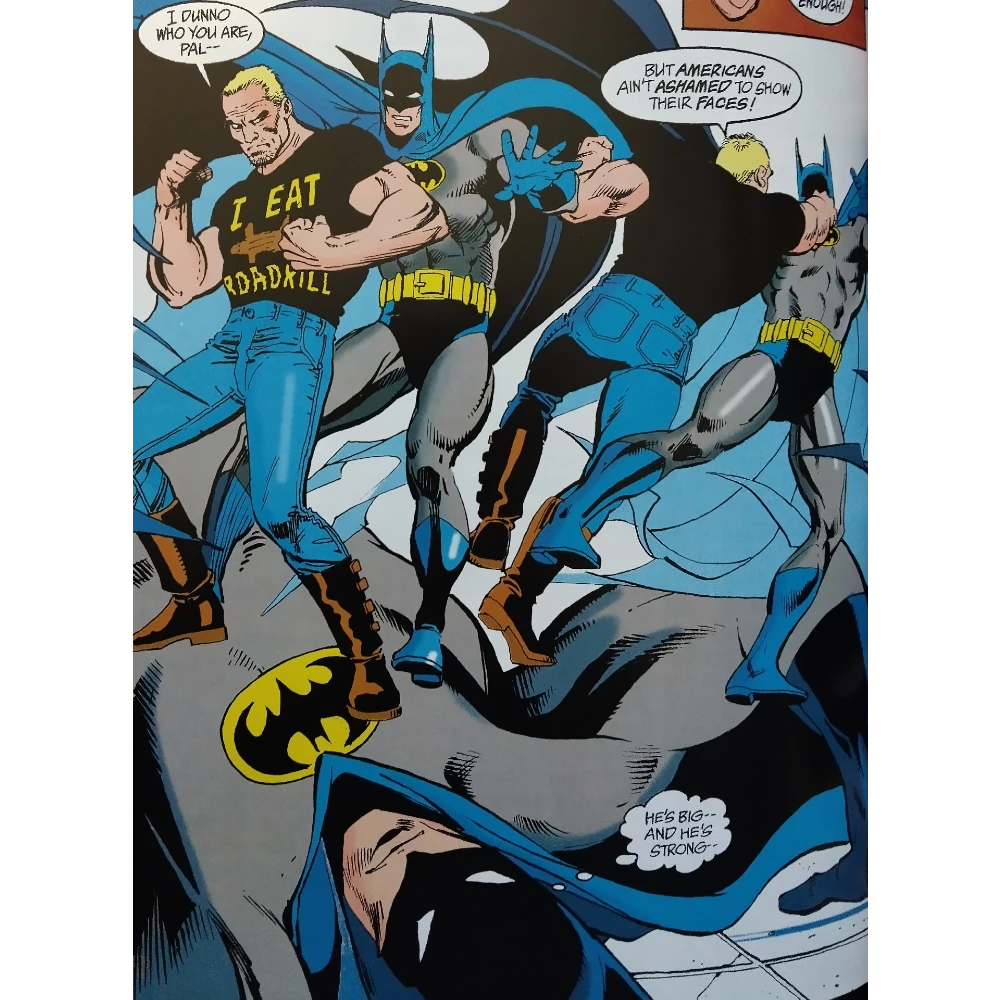
It's worth noting that Grant also just allows Batman some fairly decent, fairly human moments. The Dark Knight Detective brings a young girl to her home, shielding her from a scene of violence they stumble upon, and he expresses empathy for a few muscled men he battles who clearly suffer from some form of mental disability. And yet Grant's Batman is also fiercely principled, attacking a federal agent whose plans to "clean up" an incident involve murder and sternly chastising a few wrong-headed animal rights activists. We get a little bit of Bruce Wayne in the mix, mainly in that three-parter with Sale, but the mask is firmly in place through most of these issues, meaning Grant is tasked with making human emotion come through the Batman persona.
It's a long shadow the Batman casts across Gotham, particularly the darker, seedier underbelly where crime flourishes and criminals hope they can hide. Though these individuals generally choose evil of their own accord, such actions lead them right into the Caped Crusader's circle of influence, and by "influence," I generally mean his fists and feet. Grant and his artists depict how, through Batman's involvement, we come to understand these characters a bit more completely. Caring for those characters may be harder to accomplish, mainly because one-and-done tales don't leave much in the way of lingering emotions. But maybe you're a different reader than I am. The dying, the narcissistic, the brainwashed, the manipulated, the unstable, the misunderstood, the pure evil…all are present here. Which of those people speak to your capacity to understand and empathize on a human level will be completely up to you. Unlike other series, I don't intend on diving much deeper into Shadow of the Bat specifically, as several upcoming issues tie into "Knightfall," so we'll need to see how Grant uses his own corner of the Batman universe to comment on that overarching narrative.