Random Reviews: Astro City: Life in the Big City Review
Though perhaps a tad crammed for newcomers, Astro City provides a fun, unique spin on classic characters and concepts
—by Nathan on May 29, 2026—
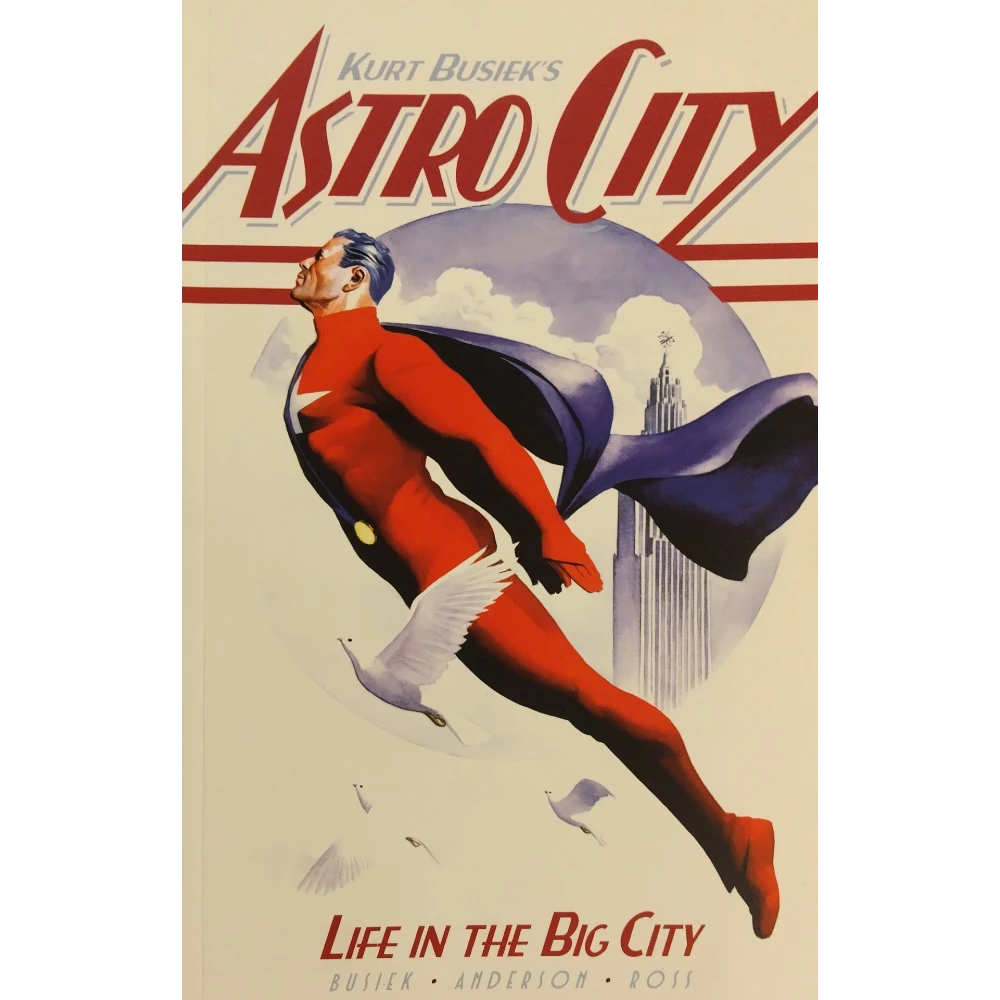
Kurt Busiek and Alex Ross were at it again.
The dynamic duo, who had made such a splash in 1994 with their acclaimed series Marvels created for–say it ain't so–Marvel Comics, returned the next year with a new collaboration: Astro City. Busiek's brainchild in the wake of Marvels, pivoting from an initial idea of developing a Marvels sequel or a similarly themed anthology title, the series was a continuation of Busiek and Ross' concepts without involvement from the House of Ideas. Busiek initially shopped the idea to Dark Horse, but when communications broke down with them, he wound up publishing the series' first issues with Image Comics.
There's a delightful irony there we'll examine later.
For collaborators, Busiek secured Ross' participation for covers, but for interior work, he snapped up artist Brent Anderson, known for Strikeforce Morituri and the God Loves, Man Kills X-Men graphic novel. The three became a powerhouse team, and between stellar cover art, well-written narratives, and detailed interiors, Astro City would go on to win several Eisners, not unlike Busiek and Ross' previous collaboration.
Those are the facts: the who, the what, the how. But I can't just rattle off personnel and awards and hope that convinces you to give this a read. For that, I'll have to throw on my Clark Kent glasses (or just my own glasses, because I'm nearsighted) and provide an answer to that all-important question: why?
Astro City: Life in the Big City
Writer: Kurt Busiek
Penciler: Brent Anderson
Inker: Brent Anderson
Colorists: Steve Buccellato, Electric Crayon
Letterers: Richard Starkings, Comicraft
Issues: Astro City #1-6
Volume Publication Date: March 1999
Issue Publication Dates: August 1995-January 1996
Publisher: Homage Studios (Image Comics imprint)
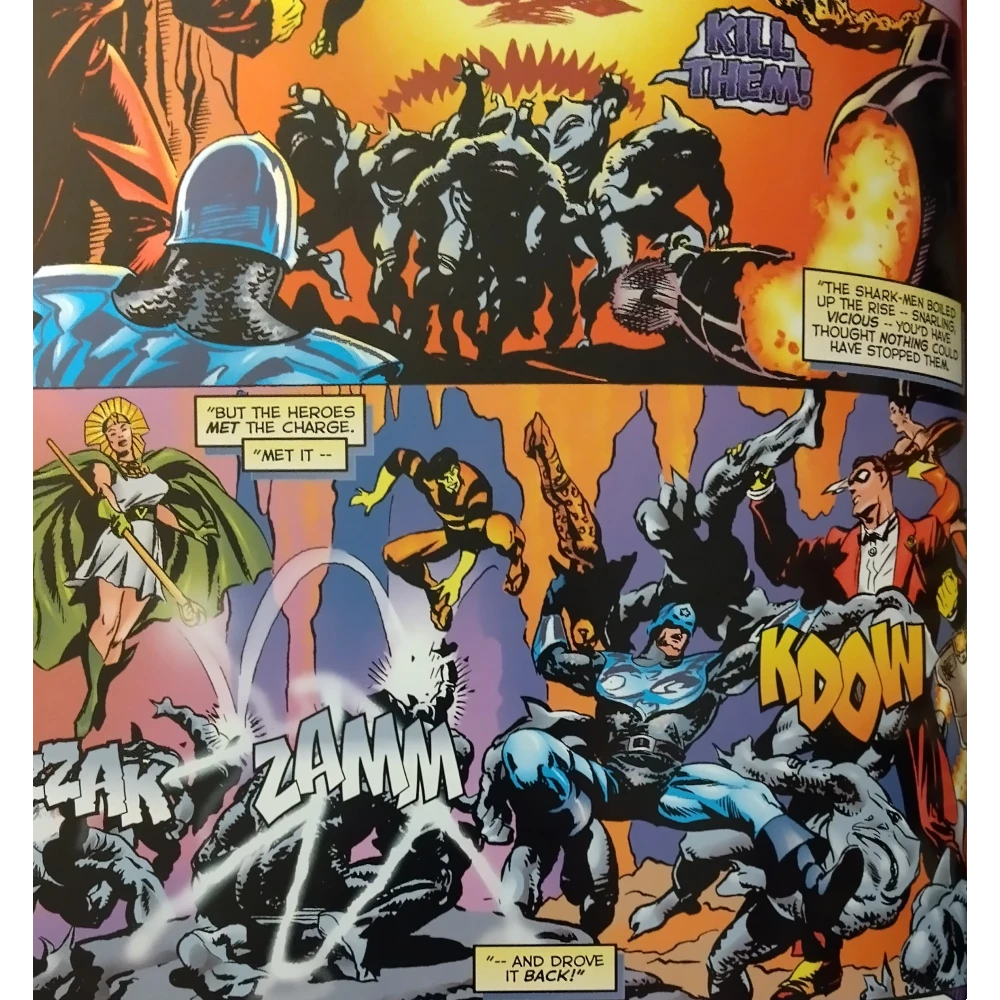
I noted the bit of irony that Busiek and Anderson published Astro City, initially, with Image Comics (specifically, Homage Studios, an imprint of Jim Lee's Wildstorm). Given the vibe Busiek imagined for the series, Image seems the antithesis of everything Busiek pictured. Busiek wanted a hopeful, colorful series that rebelled against the grip of inky, grim material Image promoted through books such as Youngblood and Spawn. Perhaps that was part of the appeal: to be a bit countercultural, to remind people of why they read comics…or why they should read comics.
Busiek makes it clear in an introduction to this volume that Astro City isn't just supposed to be what our world would look like with superheroes. He contends that it really wouldn't be, because our world wouldn't have all the supplementary elements which so often come with superhero comics. The aliens, the magicians, the super-science, the alternate dimensions. Those are part and parcel of the genre. You see it in Marvels; you see it in Astro City. That wouldn't be our world, not precisely. The point of Astro City, Busiek notes, isn't to visualize what our lives would be like with superheroes, but to step into a different world and imagine what the lives of people living there are with superheroes. It's not a thought experiment; it's their reality.
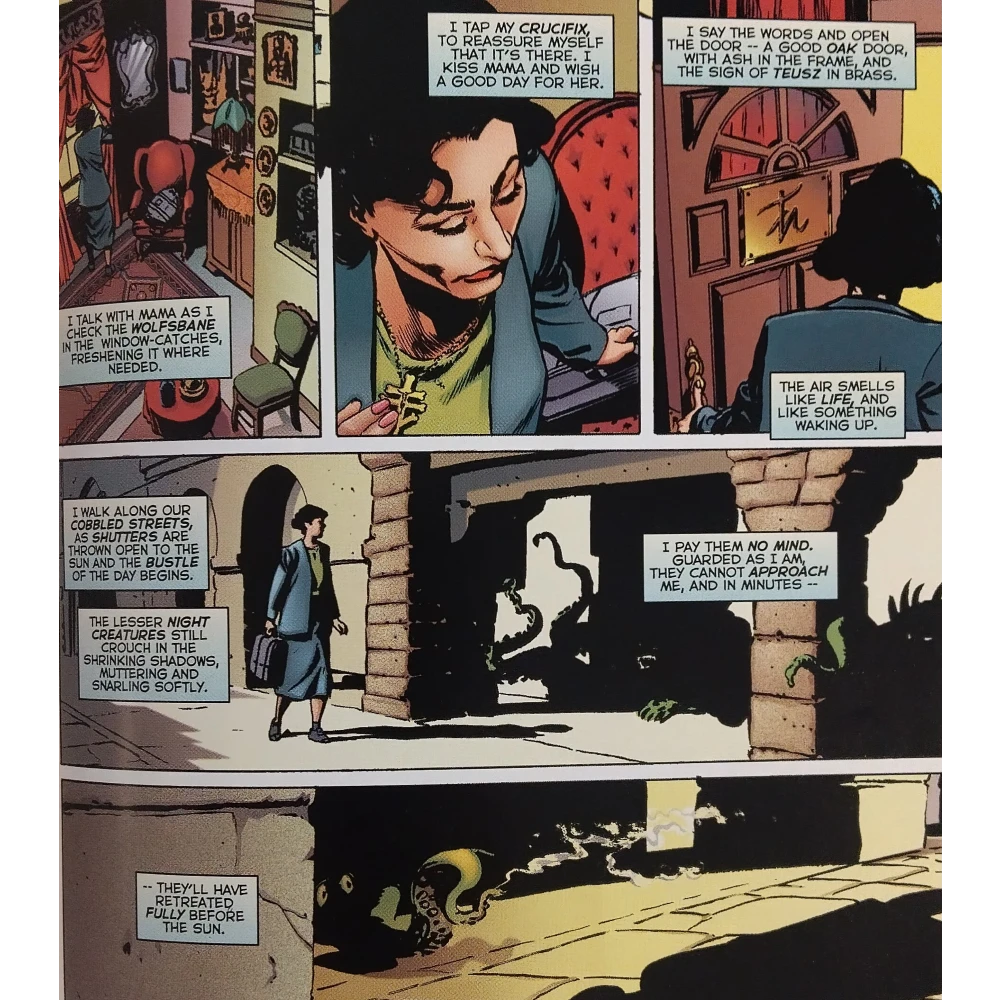
Marvels is all about people in the Marvel Universe coming to grips with the fact that their world has changed forever and either adapting to or rebelling against those changes. The beauty of Astro City is that we're not entering a world just dipping its toes into the fantastic; the fantastic is here, and the world has already changed. Astro City (the fictional setting, not just the series) boasts a community of people on the outskirts whose daily commutes intermingle with magic and monsters; the rest of "proper society" has already shunned them. The news industry is heavily reliant on the latest superhuman adventure happening in the city. Criminals worry about heroes around every corner. This is a way of life, and depending on the person you are, you either thrill to it or fear it. But you've accepted it. There's no changing it.
Busiek's greatest strength as a writer is drawing us into a world that already exists and convincing us of its tangibility. He's a master at Worldbuilding 101: give your readers a glimpse of the larger setting and have them believe there's a depth of history and culture you don't need to generate. Let their imaginations fill in the blanks. Reading these issues, you believe that superhero team the Honor Guard has been around for years, and you trust these characters have developed rivalries with enemies, a few romances with colleagues, and names that generate Beatles-levels of mania. Busiek and Andersen pepper the pages with names and costumes, newspaper headlines tout battles we'll never witness, and battling teams possess organic chemistry, and it's never overwhelming. Not to me, at least.
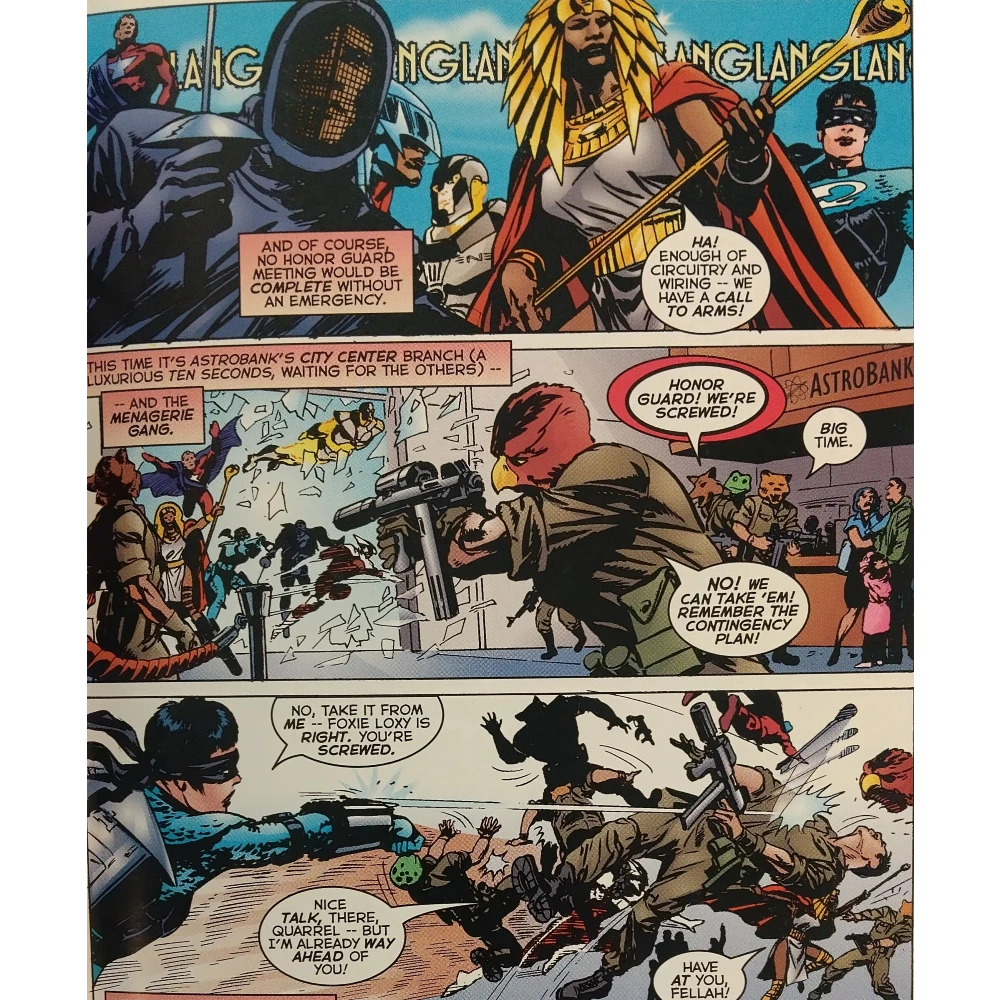
I'll admit to having something of an advantage, as given my reading experience, I found it easy to identify the tropes and character types Busiek and Anderson lean into or subvert. A team called the First Family is reminiscent of Marvel's Fantastic Four, and the Samaritan is a clear homage to Superman (down to his alien origins). The threat of alien invasion, supervillain rituals, and bank robberies are commonplace in comics. We've seen versions of these characters and situations before, and they allow a smooth entrance into Astro City. You trust Busiek and Anderson to create something comfortable and familiar, all the while supplying twists here and there to prevent the reading experience from feeling as if you're picking up another Marvel or DC comic.
Busiek and Anderson seek a balance, therefore, between what the general reader will have experienced previously and what expectations can be finagled. You know Superman, sure, but what about a Superman who fights crime and stops natural disasters nearly 24/7, only finding rest when he dreams about flying freely? You know Captain America, but what about an American patriot who's popped in and out of suspended animation over the last few centuries? And if you enjoy alien invasion stories, why not follow an issue told from the perspective of one invader and his thought process behind determining whether Earth is ripe for large scale attack? The setups are solid, knowable, yet the executions end up feeling original and entertaining.
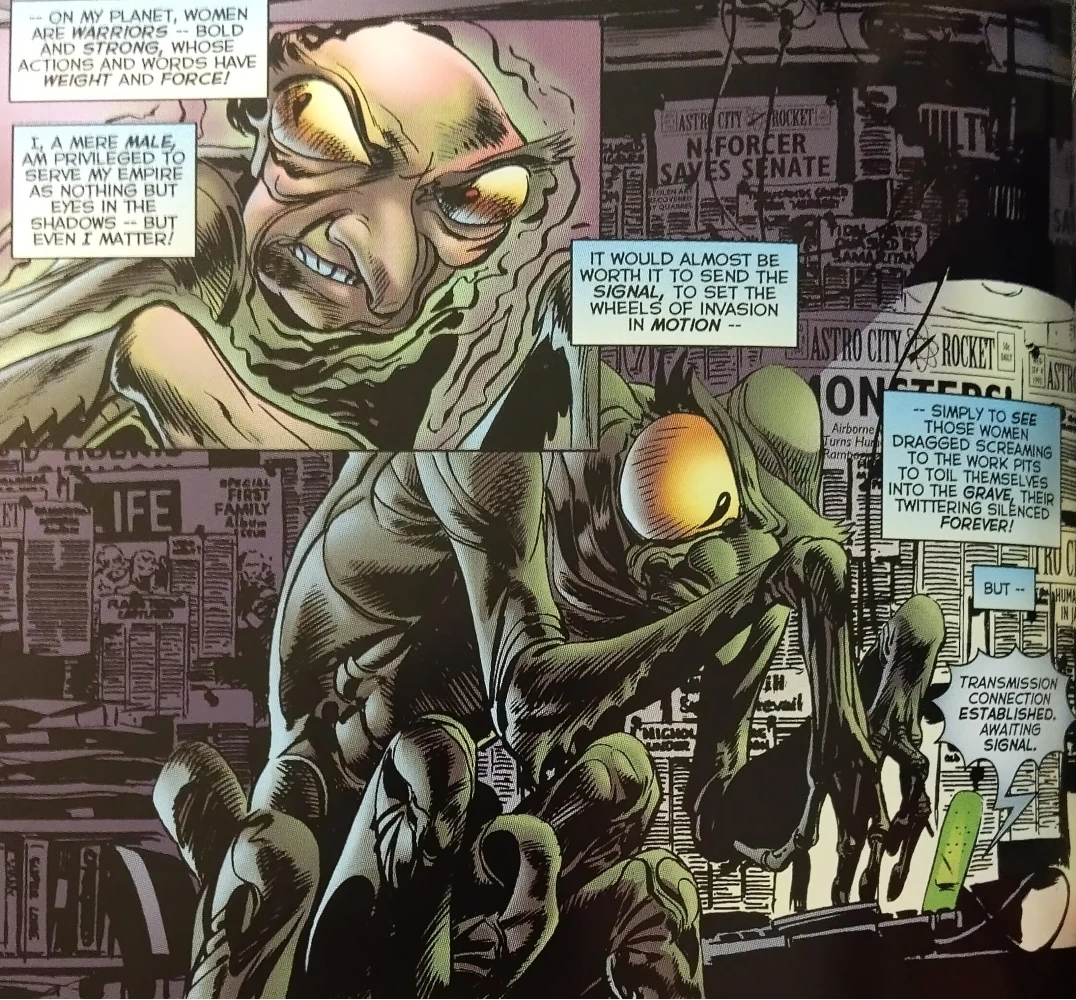
That said, for the uninitiated, Astro City may be a somewhat more difficult read. So much of it is based on knowing the kind of narrative you're encountering or having a baseline understanding of comic book universes and tropes. You can come in blind–no gatekeeping here–but the volume's impact may be limited. This means that maybe, just maybe, too much of what Busiek and Andersen utilize is cribbed from other resources. Wholly original characters exist, such as the bounding Jack-in-the-Box or swashbuckling Crackerjack, but most of the material here is parody or pastiche of other companies' characters. It means engaging comparison between Astro City and other series, but readers who are newer to comics may find themselves somewhat swamped and unable to anchor themselves in the wink-wink, nudge-nudge style of storytelling.
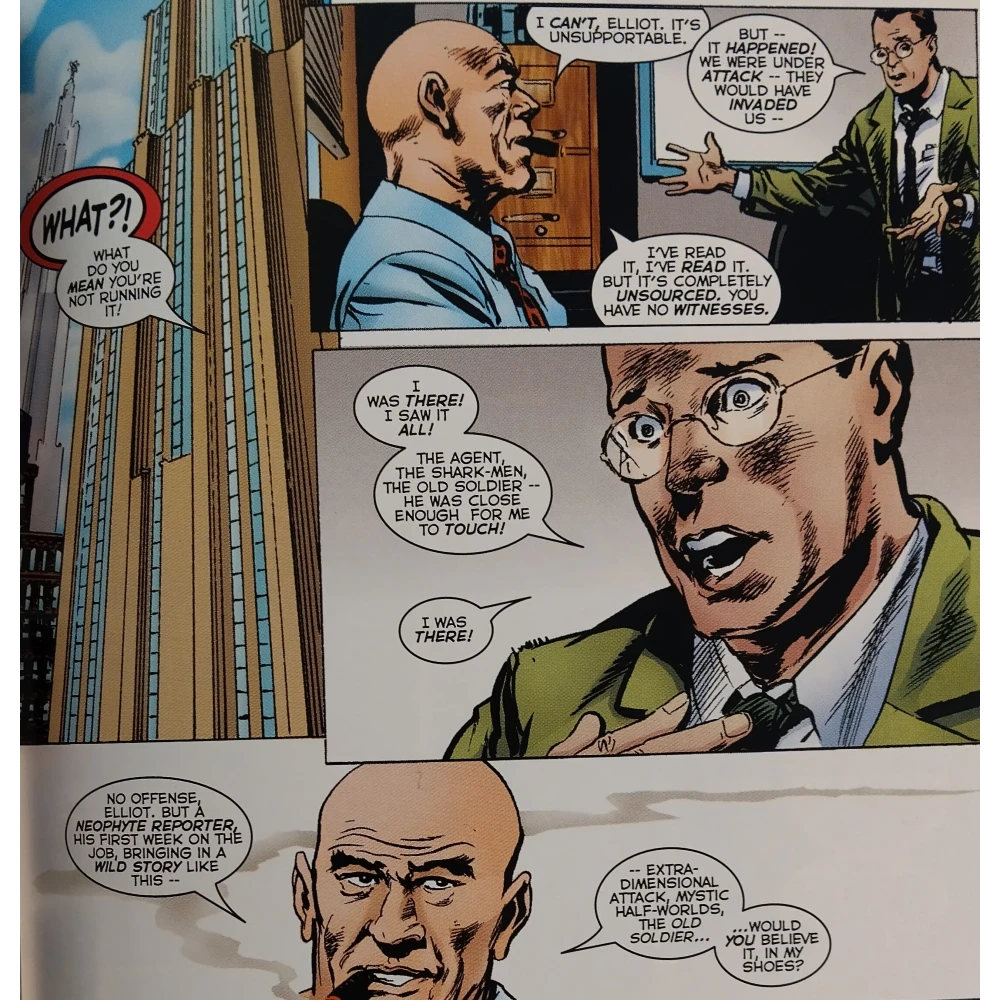
Still, if readers can swim through an ocean of nods and references, they'll find deeply human stories. Each of these issues focus on central characters who, though surrounded by very supernatural situations and environments, deal with the same emotions and problems real people handle. That alien I mentioned earlier? He waffles between calling on his brethren and biding his time, his decision determined by his attitude with annoying regular folk The Samaritan takes fellow hero and Wonder Woman pastiche Winged Victory on a date, the couple finding it difficult to relax and enjoy the human sides of themselves together when they're bombarded by ongoing disasters. A young, inexperienced reporter finds out the hard way that, even in a city as fantastic as Astro City, there are just some things people aren't going to believe, stymieing his attempts at breaking a big story that he obviously knows happened. If you've ever been irritated by your neighbors (even if you couldn't sic an alien invasion on 'em) or had no one believe a true story you told (even if it didn't involve superheroes), you'll find connection points with these characters.
All of it is meant to generate delight, that movement away from the yawning maw of maturity turning down a sharper, darker corner. Thanks largely to Steve Buccellato, Astro City teems with color, vigilantes and heroes alike sporting costumes that feel pulled from the Silver Age era of complimentary colors. A moment or two of darker reality buzzes by, but this almost feels like commentary from Busiek–in one of the series' most telling moments, a supervillain voicing dark intentions is easily batted aside by one of the First Family members. Even Jack-in-the-Box, a clown-faced vigilante who could be easily molded to possess a scarier demeanor, is given a certain goofiness, relying on his joy-buzzing rubber noses to combat crime. And because Astro City isn't based on a previously established universe, none of this delight is generated for a quick grasp at nostalgia. It may make you yearn a bit for some of the earlier adventures of the characters our heroes are based on, but any fun found here works under its own merits.
This volume provides the first several chapters of an anthology title designed to draw you into a world where "mundane" equals "amazing" or "beyond imagination." Superheroes and their adventures aren't a form of escape; they form the bedrock of Astro City's society. The series is an amalgamation of old characters given new faces and recurring ideas given organic twists. The mightiest man on Earth dreams of flying free without concerns, a reporter finds it difficult to express the truth when people take the impossible for granted, and an alien contemplates signaling for an invasion because some people bug him. You've seen these ideas before, just not with the veneer Busiek, Anderson, and their collaborators give this astonishing city.