(Strand)om Stories: "Onslaught" Review (Thor-oughly 90s, Part 4)
Epic in scope, "Onslaught" could use much tighter plotting and a more centered villain to feel genuinely impactful
—by Nathan on July 31, 2026—
Back when I reviewed Warren Ellis' brief Thor run, I mentioned how I'd use a short series of 90s-focused reviews on Marvel narratives to build to one of their most infamous crossovers of that particular decade: "Onslaught." We reach that crossover today.
The "Thor lens" was a bit of an arbitrary decision, spurred on by realizing I owned a few volumes of not only Thor but Iron Man and Avengers comics leading directly to Onslaught's deadly doorstep. In all honesty, my original scheme was to skip over anything X-Men-involved or X-Men-adjacent entirely and just jump into Thor's post-"Onslaught" position within the broader Marvel Universe. Yet it seemed unfair to ramp up to such an important event and merely pay lip service. So we slipped back into the timestream and swam further backwards, to the epic X-Men arc which properly influenced "Onslaught" and its immediate fallout.
And now we're here.
I've noted this before, but "Onslaught" finds us in a tumultuous position in Marvel's history. At this time, Captain America was made a fugitive, Thor was stripped (temporarily) of his powers, Spidey was some dude name "Ben Reilly," and the current version of Iron Man was a youthful Tony Stark (the original Tony died shortly after revealing himself as a longtime secret agent planted by Kang the Conqueror). What a time. Yet the always–popular X-Men were chugging along, churning out event after event. And a few folks among a popular band of creators, having left the Marvel fold a few years prior to pursue their own destines, had been convinced to return home and help chart a new course for the financially struggling House of Ideas.
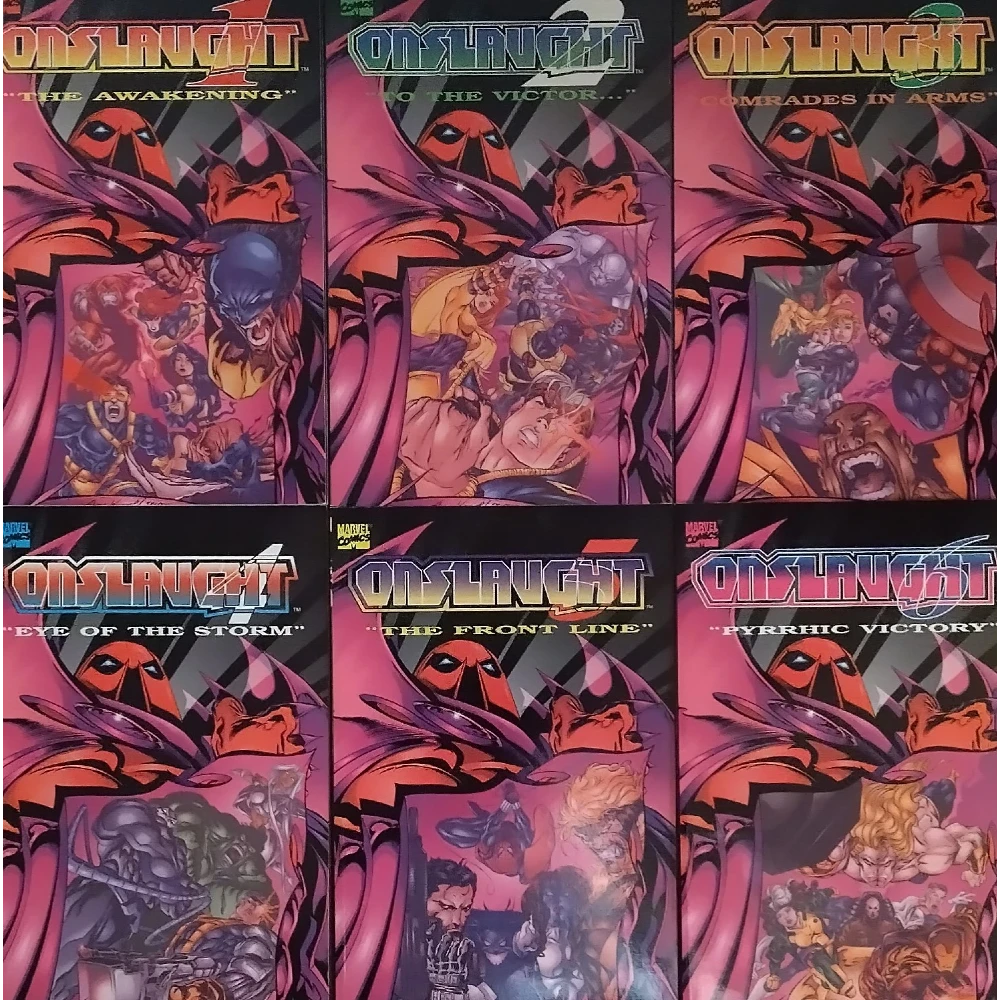
Before we reach that brave new world (if you want to call it that), we must first witness the fall of the old one. "Onslaught," for interested readers, comes in many forms. Pick your poison. Omnibus? A few complete editions? Or perhaps a series of six smaller volumes which collect enough of the narrative to provide a decent understanding of what the heck is happening? That was the chalice I drank from, anyway. Regardless of your decision, you may find yourself biting back a bitter aftertaste.
"Onslaught"
Writers: Scott Lobdell, Mark Waid, Larry Hama, Terry Kavanagh, Jeph Loeb, Howard Mackie, Tom DeFalco, and John Ostrander
Pencilers: Tom Grummett, Andy Kubert, Joe Madureira, Pasqual Ferry, Val Semeiks, Steve Skroce, Anthony Castrillo, Jeff Matusda, Mike Deodato Jr., Carlos Pacheco, Ian Churchill, Angel Medina, Mark Bagley, Josh Hood, Tom Lyle, and John Romita Jr.
Inkers: Al Milgrom, Dan Green, Mark Pennington, Matt Ryan, Cam Smith, John Dell, Tim Townsend, Vince Russell, Dan Panosian, Art Thibert, Chad Hunt, Bud LaRosa, Todd Hunter, Mark Morales, Tom Palmer, Bob Wiacek, Harry Candelario, P. Craig Russell, Scott Hanna, Robin Riggs, Larry Mahlstedt, Derek Fisher, Robert Jones, and Al Williamson
Colorists: Steve Buccellato, Digital Chameleon, Joe Rosas, Malibu Color, Team Bucce, Mike Thomas, Marie Javins, Glynis Oliver, John Kalisz, Ariane Lenshoek, Bob Sharen, Gregory Wright, and Kevin Tinsley
Letterers: Richard Starkings, Comicraft, Kojia Fuchs, Bill Oakley, and Jim Novak
Issues Collected: Uncanny X-Men #322, #334-336, X-Men #53-56, Onslaught: X-Men, Wolverine #104, X-Man #18-19, X-Force #57-58, X-Factor #125, Avengers #401-402, Fantastic Four #415-416, Cable #34-35, Incredible Hulk #444-445, Amazing Spider-Man #415, Green Goblin #12, Punisher #11, and Spider-Man #72
Volume Publication Dates: March 1997-May 1997
Issue Publication Dates: July 1995, June 1996-September 1996
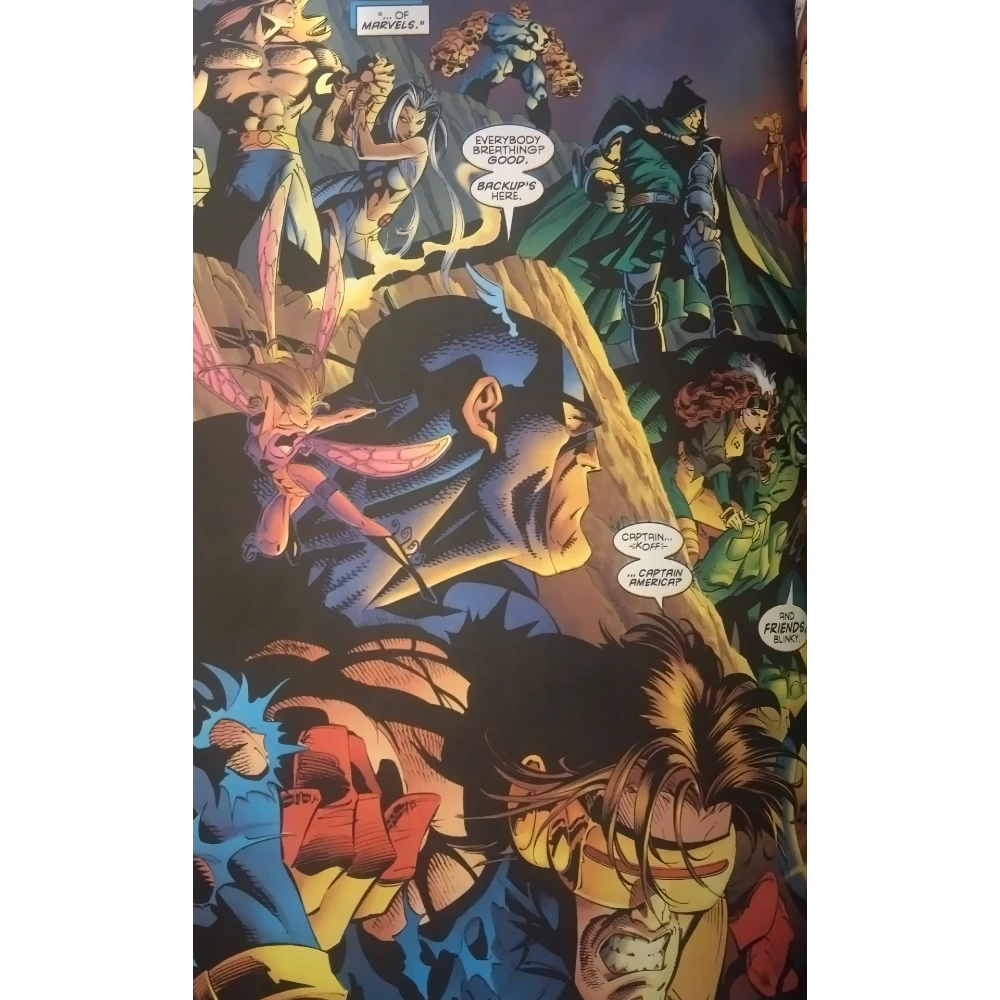
Surprisingly, these six slimmer volumes I picked up do contain the majority of this particular crossover, save for a few issues I have between a Thor and an Avengers volume and a couple issues on the back-end of the crossover. Obviously, the more complete collections out there (the Complete Onslaught Epic or X-Men/Avengers: Onslaught volumes) are the prime methods of checking this material out; even if the volumes I have (which wound up being the cheapest option, honestly) contain a good 98% percent of the whole arc, they don't provide the most conducive reading order. That's not necessarily a crack at the story, however. I'm storing that ammo a bit below.
Let's actually start at the end.
"Onslaught," though a story unto itself, is likely more impactful for what it set up than the actual narrative it told. In deep financial straits, Marvel appealed to their old pals at Image Comics, hoping the return of those talented creators would mark an upswing in sales. Of the original seven, only Jim Lee and Rob Liefeld followed Marvel back, helping launch new versions of several classic characters, with that Image sheen. But this wasn't Marvel rebooting their universe in the style of Crisis on Infinite Earths. The old world remained. They were instead birthing a new universe…with characters from the old.
How to do it?
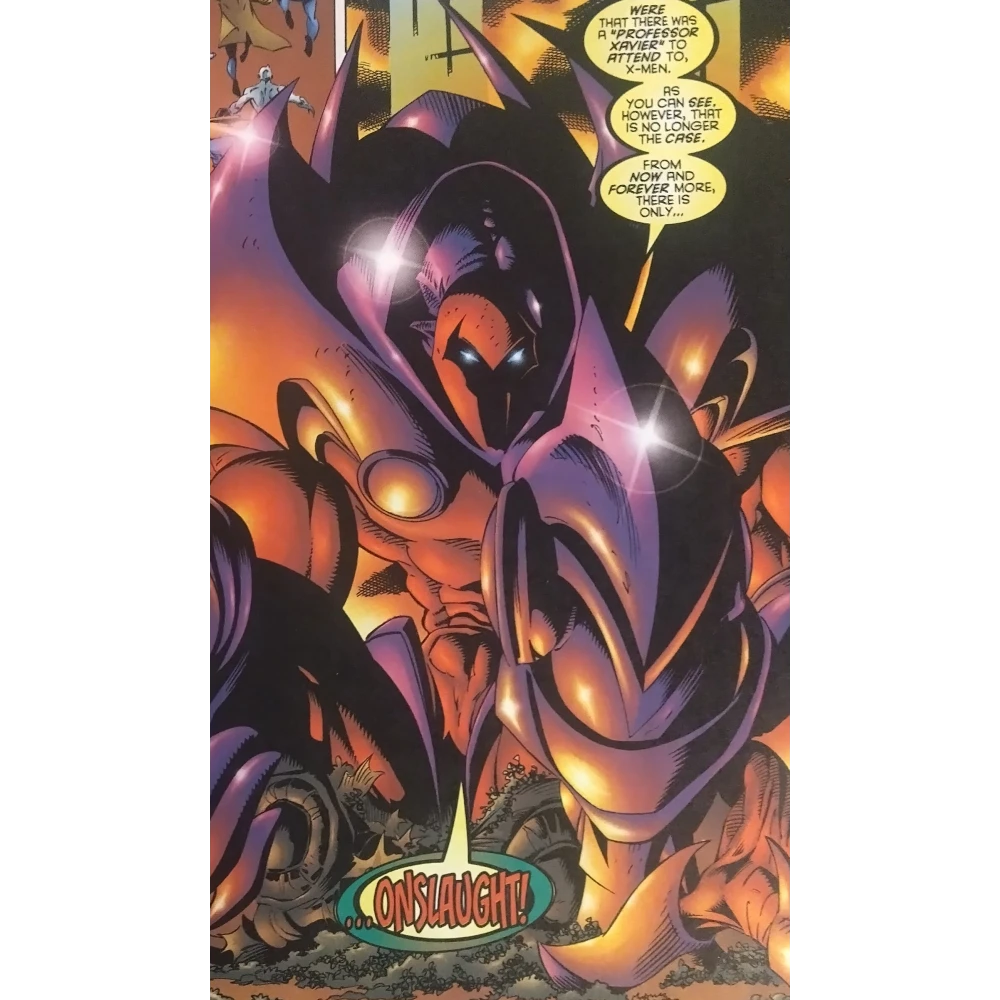
The answer to that question was the event's titular antagonist, Onslaught. A monster born from the melded hatred and rage of Charles Xavier and Magneto, the arch-foe was the physical manifestation of the darkness tainting both men following "Fatal Attractions," the X-Men crossover where Xavier mindwiped the master of magnetism. A threat to the entire Marvel Universe, the menace of Onslaught crossed over multiple titles before dramatically culminating in an Avengers: Endgame-style conclusion that saw the Avengers and Fantastic Four seemingly killed. In reality, they'd been drawn into that other, new universe, a pocket dimension created by Onslaught's prime target, Franklin Richards.
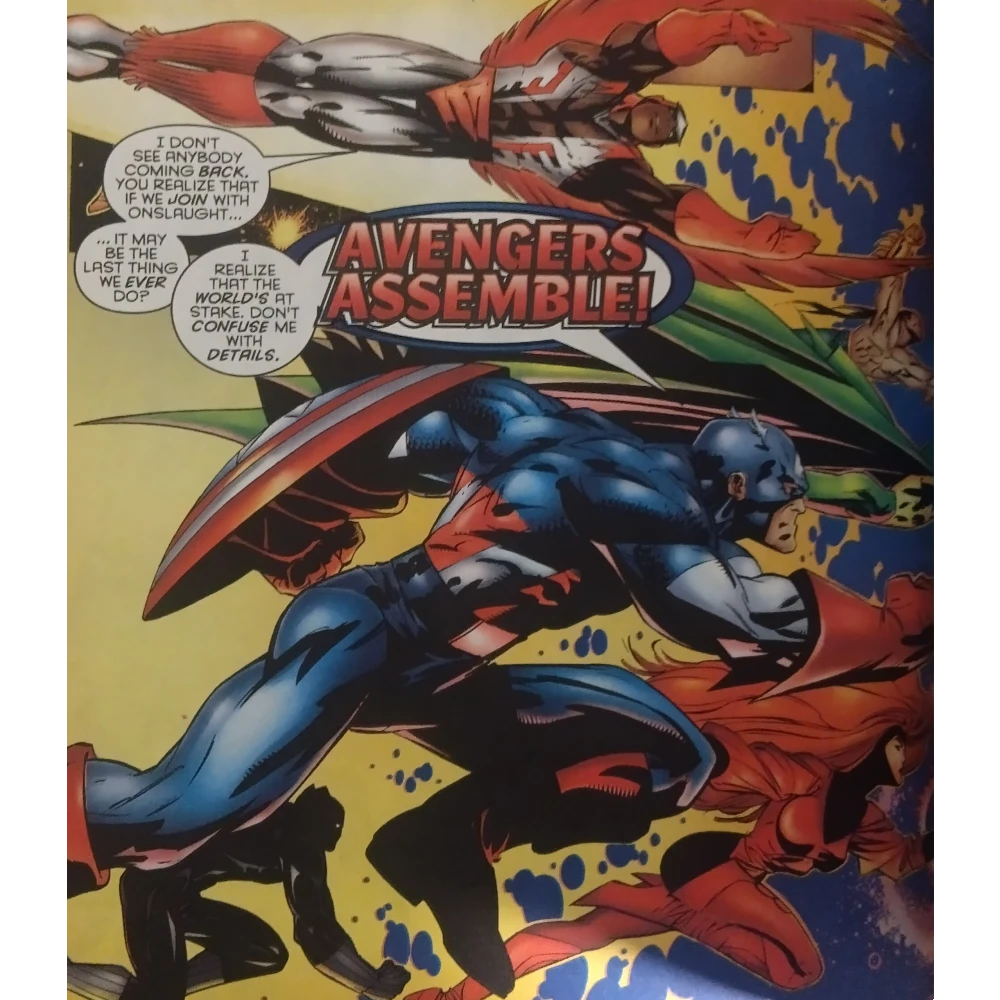
That big finale, a Scott Lobdell/Mark Waid/Andy Kubert production, epitomizes the arc's potential, which makes the weaknesses inherent in "Onslaught" all the more frustrating. This last issue is probably the arc's strongest chapter, with Waid in particular using several small, subtle moments to remind us of our characters' strengths and their relationships. Yet it feels hollow in certain respects, as it's difficult to trust that this is truly the climax of what we've been building to, because most of that build-up feels empty.
"Onslaught" doesn't begin too badly, with a few prelude issues not collected here that ominously tout some upcoming threat. Lobdell sets up the villain's strength quickly, having him pummel the nearly invulnerable Juggernaut close to death. The opening "salvo" of issues wrangles an intriguing mystery as to who this prime villain is, and even if you enter the story aware of Onslaught's creation, you still feel the tension. You watch Professor X slowly give way to this darker portion of himself, taking on the likeness and rage of Magneto and fully plunging his dream into a twisted nightmare. These issues don't necessarily read like a convoluted scheme to recontextualize Marvel's heroes in a different universe for the sake of profit; that writer Scott Lobdell tethers Onslaught's rise to "Fatal Attractions" allows a fairly organic narrative to develop, at least at first.
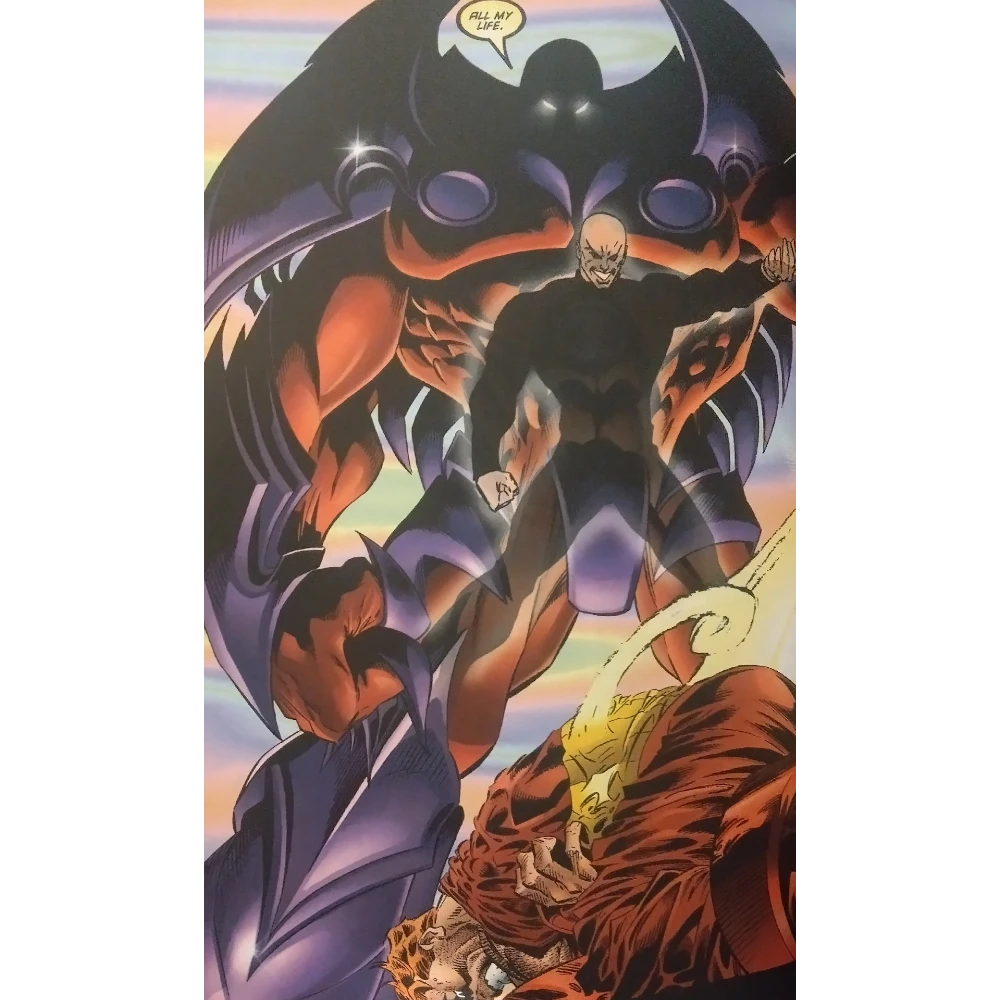
The event's biggest weakness is how stretched and unfocused it winds up feeling, dispersed over six X-Men titles and several issues of other Marvel series. Pieces of story flare up and snap together haphazardly, resulting in a narrative that is told in disjointed segments and involves more characters than is easy to track. Onslaught's plan involves specific characters cast in different books, and with a few issues from each X-Men series included in the mix, you're subject to a lot of jumping around, like Nightcrawler "bamf"-ing from location to location. Folks pop up, stick around for a bit, then vanish, only to surface some time later.
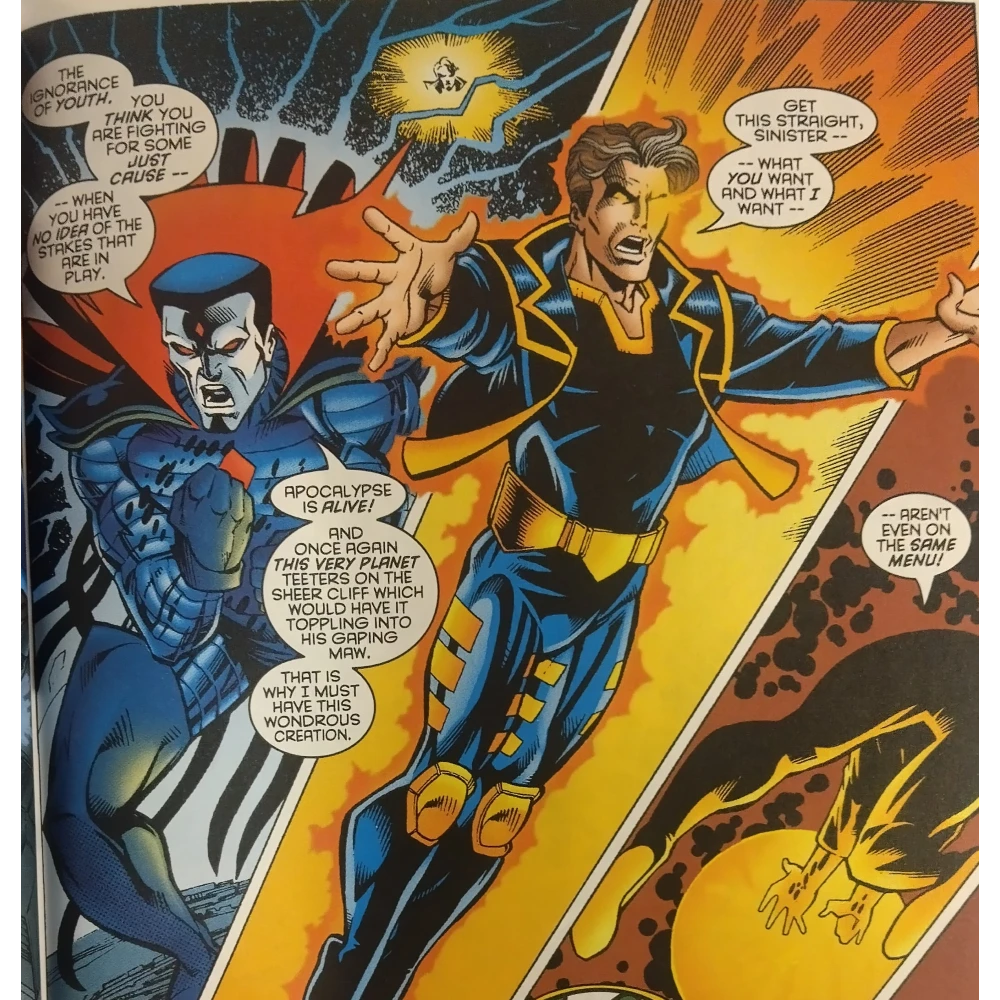
The X-books become especially frustrating when they decide to deviate from the ongoing narrative to focus on plot points already in development. Apocalypse returns after being defeated in his own crossover arc, taking up page space (mostly unnecessarily) dedicated to seeding his own upcoming narrative; Nate Grey's adventures dovetail with appearances by Mister Sinister, this epic's second villain to take an unhealthy interest in the alt universe son of Scott Summers and Jean Grey; we're constantly reminded Hank McCoy has been replaced by a villainous version of himself from an alternate universe; the Fantastic Four face different elements of drama that distract them from worrying about the son trapped in Onslaught's clutches. Our writers are trying to create with Claremontian tactics in mind, teasing or reminding of other stories in the midst of the crossover, when their focus should be on the unfolding epic itself.
Better read are issues which utilize "Onslaught" to tell character-centered story arcs. One of my volumes tells a four-part mini-crossover between Cable and the Hulk's books, allowing them to delightfully clash in a twisted scheme launched by the villain, followed by an absolute blunder on the Hulk's part that derives insights from his character. An Avengers issue focuses on Joseph, the then-clone of Magneto, with Waid later creating a neat contrast between his own heroics and Magneto's villainy. As little as I enjoyed Tom DeFalco's Green Goblin series, I won't deny Phil Urich's final fight against a Sentinel isn't appropriately dramatic, heralding the end of the heroic glider-rider's short-lived career.
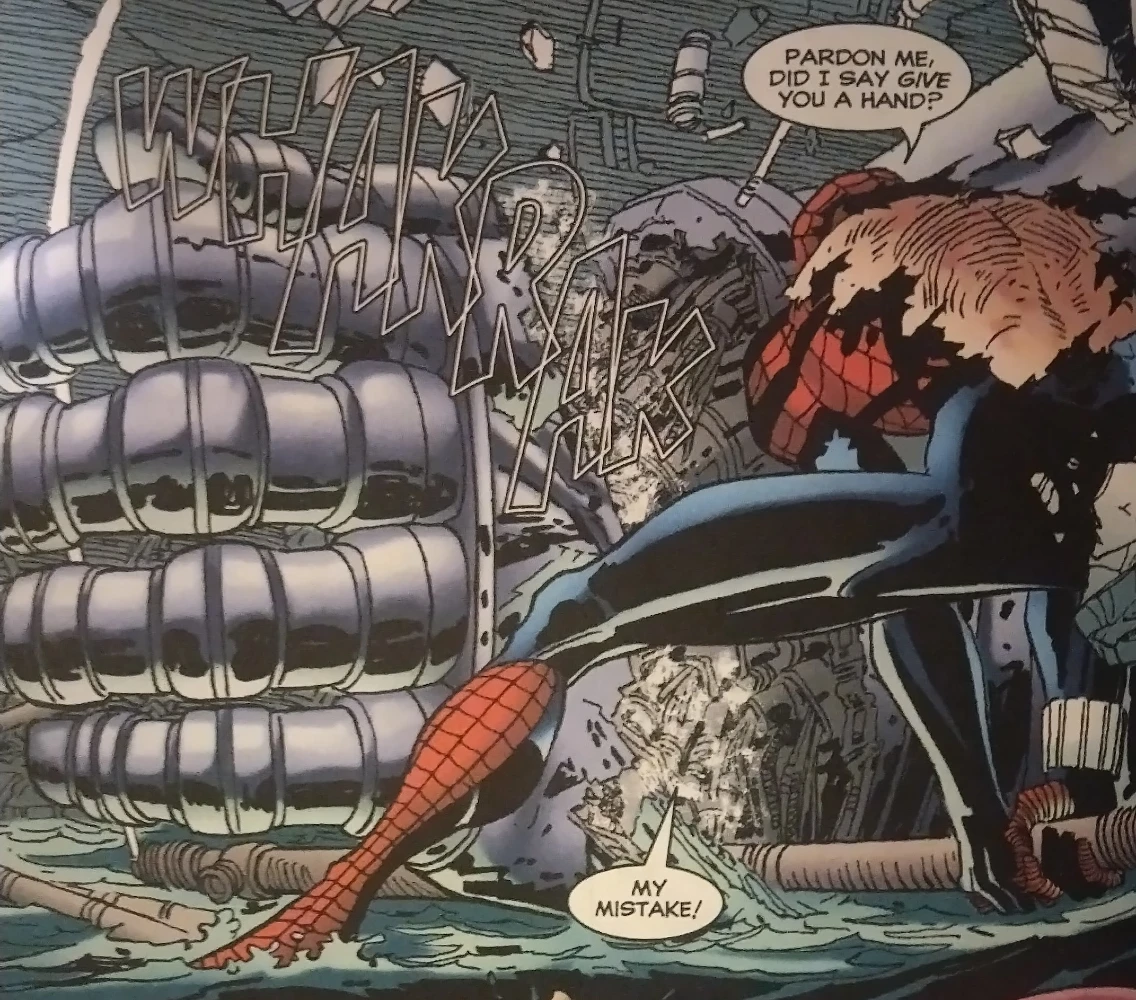
The common thread among these issues? They're not X-Men issues. This may be an unfair critique, but I found the strongest chapters were the one-shot installments, dealing with the ramifications of Onslaught's attack on New York rather than handling the Onslaught problem directly. Yet it's because those more direct issues were seeding other narratives that they failed to hold my attention completely. I much preferred seeing Spider-Man team up with his ill-fated clone Ben Reilly in a death-defying battle against a Sentinel while wondering if he'll make it home to a pregnant Mary Jane than Mr. Sinister trying to kidnap Nate Grey, especially when Nate and X-Factor should have been focused on fighting Onslaught. With these tie-in issues, our writers can tell narratives focused on particular characters, much harder to do in the issues trying to tell the main story. If those central stories had set their unfocused subplots aside, however, I'd argue they could have made more space for those all-important character moments.
Our psychic arch-enemy himself, though the focus of the crossover's energies (and its title), is another annoying element to contend with. Our writers (and I'll likely place most of the blame on Lobdell for this) are never terribly clear on what exactly Onslaught is, having him begin as a manifestation driven by Xavier's psyche infected by Magneto's wrath, and having him end as an entity wholly separate from the professor. For a time, our heroes are distraught that Charles has taken such a drastically dark turn, yet by time the crossover wraps up, Onslaught is just another powerful villain, not a hero gone rogue. I wonder if Marvel got cold feet part way through, refusing to blemish Xavier further or realizing that, if they continued down this path, he'd wind up likely dying. For whatever reason, Onslaught shifts as an antagonist, which is disappointing, as I find the morally darkened Xavier to be an intriguing plot point. If "Fatal Attractions" nicely showcased the extremes he would go to to keep his dream alive, "Onslaught" should have shown the unintended consequences of stepping too far. Separate from Xavier, he's just a shell, an energy monster with no real soul to watch corrupted or redeemed.
Plot inconsistencies and conveniences also hamper the reading experience, from the shifting nature of Onslaught/Xavier's connection to the villain's powers fluctuating depending on the plot. On one page, Onslaught unleashes the metal force of a bomb, leveling skyscrapers. Elsewhere, he's pinned by the combined might of several heroes whose abilities, even used together, don't equal the devastating force Onslaught loosed; though a "cool" moment, it seems done for the sake of the plot, forsaking the villain's immense power levels because he needs to have some vulnerabilities. Onslaught's ultimate defeat isn't based on previously established plot points but rather our heroes gaining the upper hand through some arbitrary decisions. Even the choice of who to send in to defeat Onslaught, the incident which propels the Avengers and FF into Franklin's alternate world, feels based less on rational storytelling decisions and more coincidence, as Marvel had already decided who they wanted to cast into this other universe.
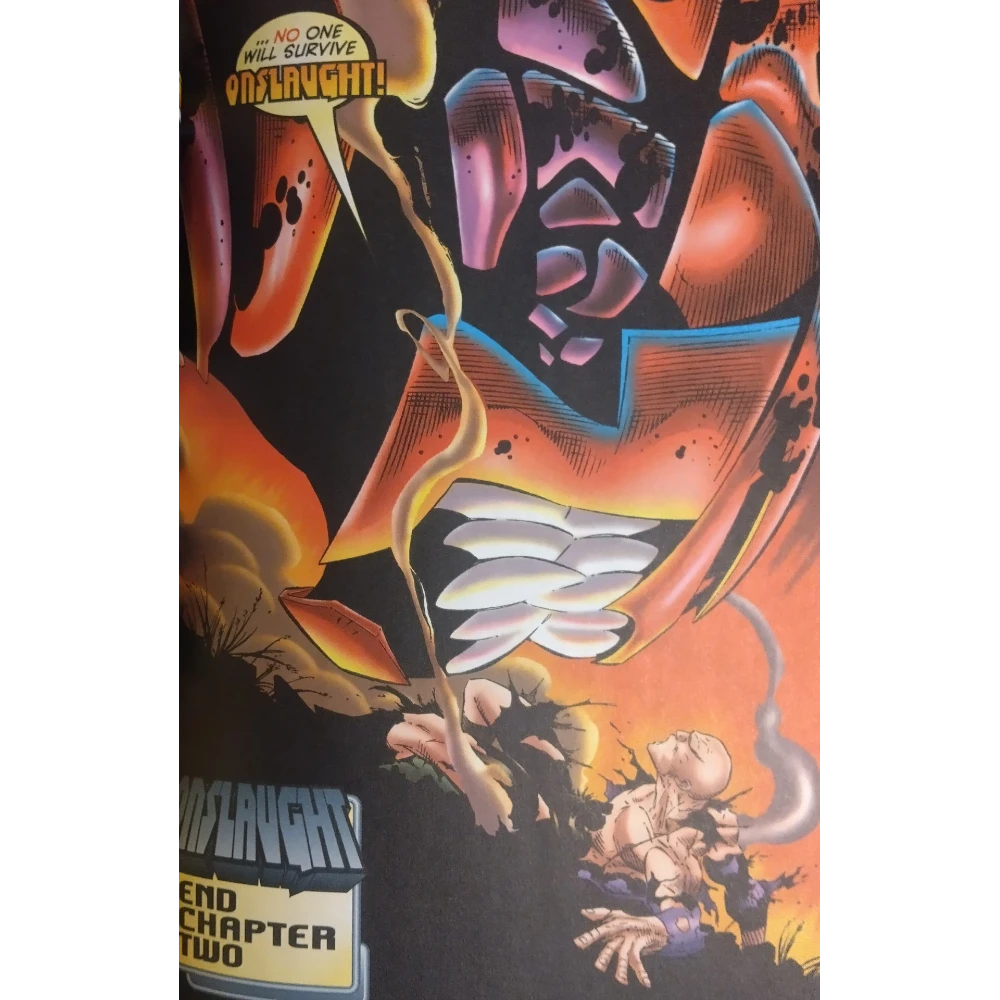
"Onslaught" is bookended by an engaging premise and a somewhat thoughtful final showdown; it's that middle part, all those issues in-between, which becomes a muddled morass of plot points, weak character moments, and disjointed storytelling. I don't expect the "Heroes Reborn" era we'll dip our toes into to fare much better. The "Onslaught" idea, grounded in a long-gestating conflict in Marvel's X-books, could have worked really well as an X-Men-only narrative. Yet it was turned from a story into a tool to generate income the company sorely needed. You can understand it from a financial standpoint, and as I understand it, the ploy worked…at the time. Marvel's true economic salvation came later. That final issue wants you to believe our heroes are facing the greatest crisis they've ever encountered; even with Mark Waid working with Lobdell to generate as much emotional attachment as he can, such efforts come too late. The danger may be real, but the reader's connection to it, marking the success of that tension, feels like the most significant victim to fall before this mutant-mind-melded menace.