Distinguished Critique: Justice League Task Force (vol. 1): The Purification Plague Review
This volume's effectiveness at generating engagement is dampened by a rotating roster of characters and creators
—by Nathan on November 6, 2026—
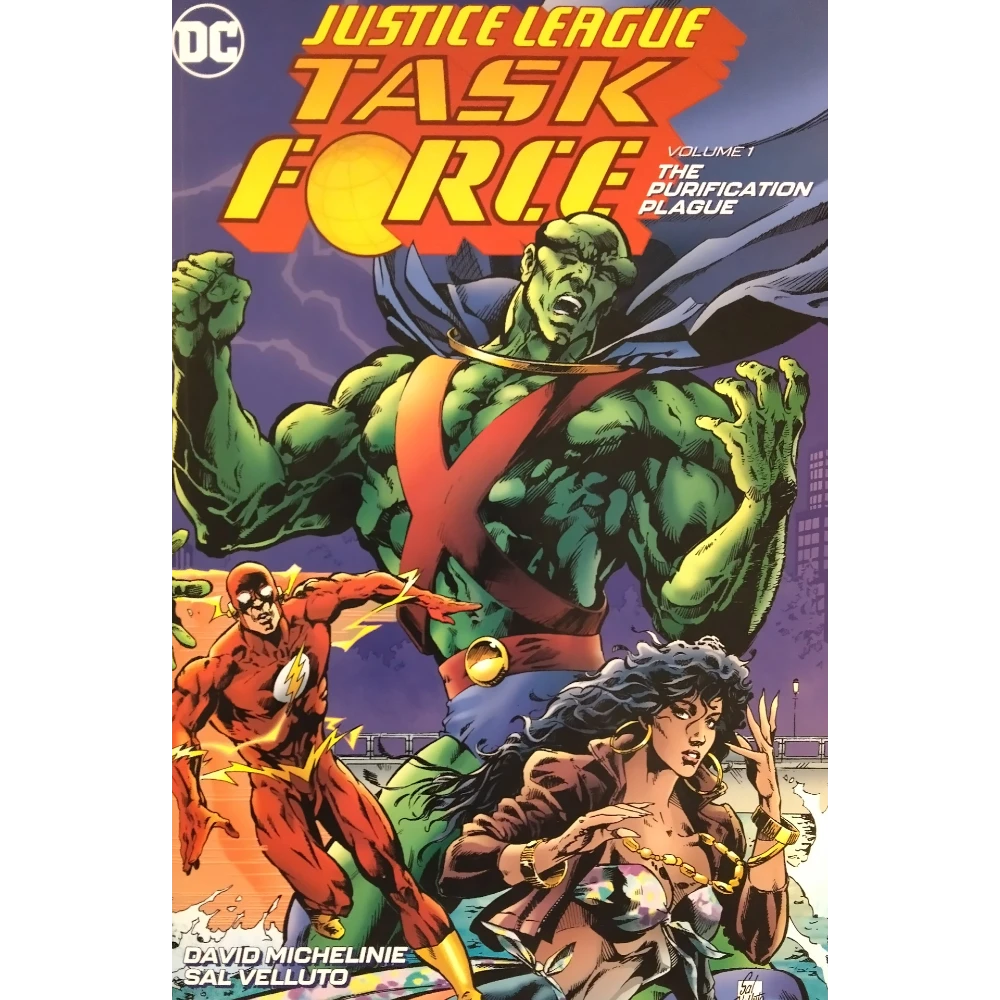
We've had ourselves a little detour going on over at the DC Comics corner of this website lately. During the last several months, as I've slowly, methodically worked my way up to and through the 90s crossover epic known as "Knightfall," I've engaged with other narratives that have, more or less, been connected to what's happening with Bruce, Bane, and a broken back.
Most recently, I charted the second half of the "Death and Return of Superman" saga, dealing with copycats and comebacks, knowing it leads into "Emerald Twilight," which itself leads into "Zero Hour," which incorporates our Dark Knight Detective and his allies during the "Knightfall" era. There's a path, if you look closely. It zigs, it zags, but it'll lead us where we want to go.
Today's path brings us a bit closer back to "Knightfall" than other posts, as the issues we're reviewing here and now actually feature busted-back Bruce. Not much, but he's present. His own exploits will be the focus on a review in the near future; for now, it's just important that he appears. He's not central billing–that honor goes to the men and women appearing in this title, a Justice League spinoff of a Justice League spinoff. It's the 90s; why should a team or character be relegated to a single title?
The Purification Plague collects the series' first twelve issues, about a third of Task Force's entire run. Aside from the two issues following those collected here, the remainder of the title has never been reprinted in volume format. As we dive into this review, maybe we'll consider a few reasons why.
Justice League Task Force (vol. 1): The Purification Plague
Writers: David Michelinie, Chuck Dixon, Dennis O'Neil, Peter David, Jeph Loeb, and Michael Jan Friedman
Pencilers: Sal Velluto, Gabriel Morrissette, and Greg LaRocque
Inkers: Jeff Albrecht, Dick Giordano, Aaron McClellan, Kevin Conrad, and Robert Jones
Colorist: Glenn Whitmore
Letterers: Bob Pinaha, Albert DeGuzman, and Clem Robins
Issues: Justice League Task Force #1-12
Publication Dates: June 1993-May 1994
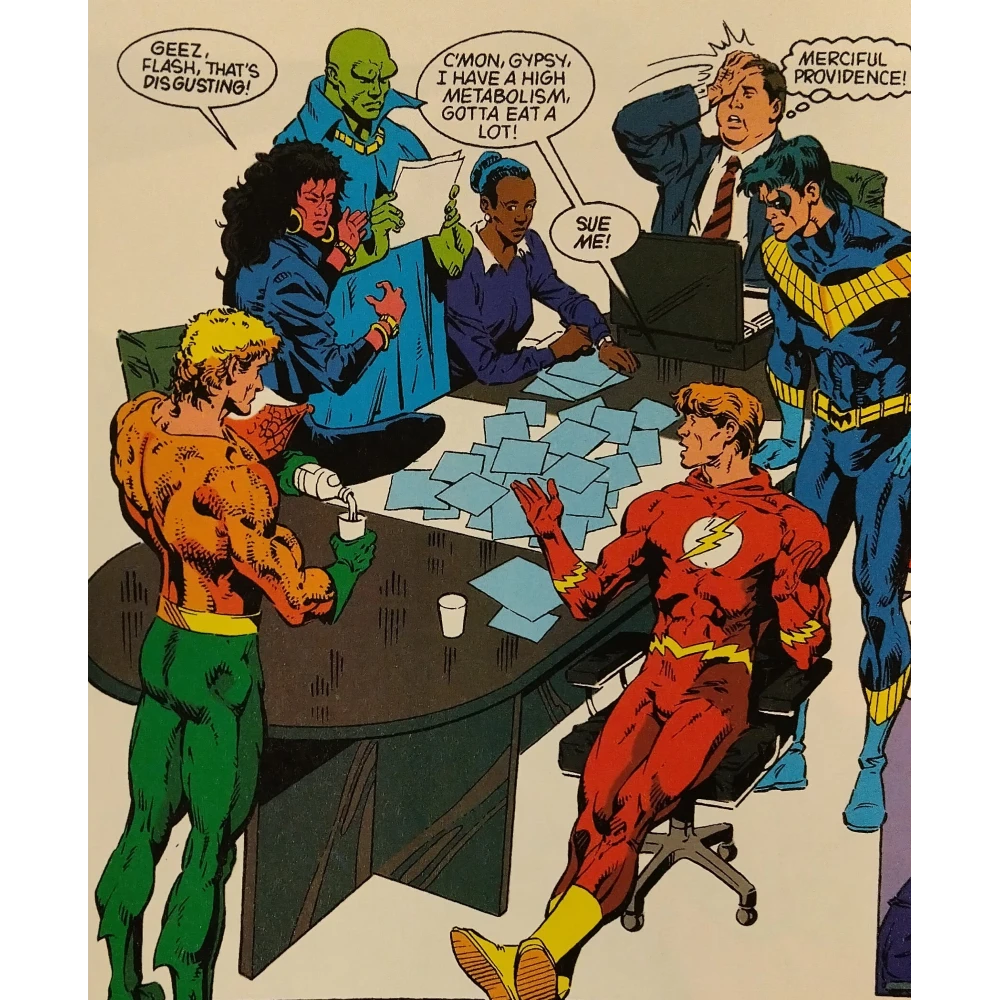
There seems to have been a trend, during the 90s, in having your superhero teams be more proactive in how they went about fighting crime. No more just waiting for disaster to strike. If you learned about an impending (totally metaphorical) hydra coming to harm humanity, you pulled together a bunch of guys and gals and went to (metaphorically) cut off its head. It's not an idea exclusive to the 90s–check out John Ostrander's Suicide Squad from the decade prior–but it seems to have reached some kind of pitch during that time. You want the X-Men and Avengers to learn of a plot bent on plaguing mutants in Genosha]? Have 'em jump aboard a Blackbird or a Quinjet and go after it!
Justice League Task Force reads like a combination of Marvel's Secret Defenders and Force Works, the former focusing on a rotating group of heroes pulled together in times of crisis (on a singular Earth), the latter centering on those proactive efforts to stop threats which evoke real-world situations. Third world despots, gender violence, airborne viruses, those kinds of threats. Of the two, Force Works actually managed to tell entertaining tales that blended heartfelt characterization that spoke to some genuine problems with reality (albeit in a somewhat opaque manner)...
…Task Force is less adept at selling me on the same thing.
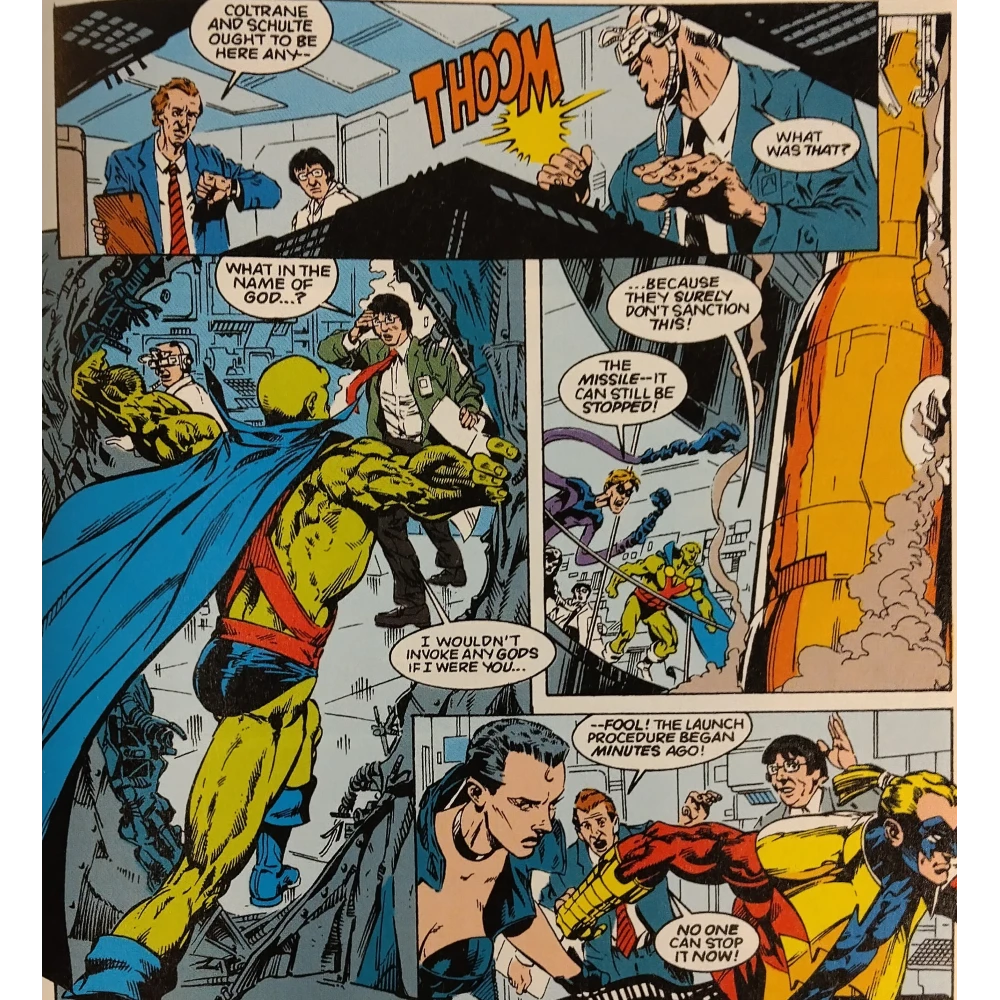
I'd wager these issues' biggest hiccup exists in the Secret Defenders half of the concept: a rotating cast of characters. A very small core group of folks exists, more or less–longtime JLA'ers Martian Manhunter and Gypsy–but don't get too excited if you see heroes like Flash and Nightwing, Suicide Squadee Bronze Tiger, or martial arts master Lady Shiva pop up. They're not here for the long run. The narrative reason is that our latest Justice League is sanctioned by the United Nations, directed wherever they're pointed, with recruits chosen based on their abilities to aid the mission.
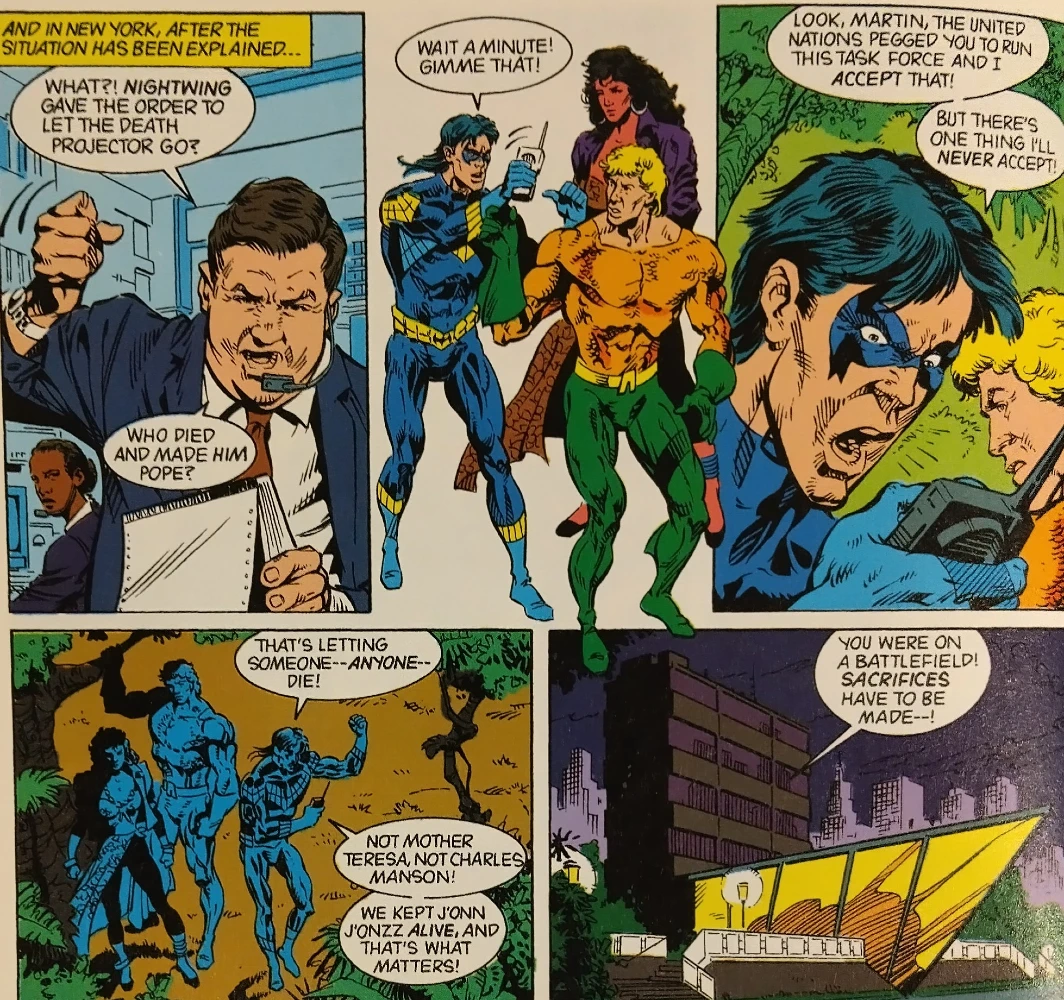
Is it a neat idea? Sure, in theory. David Michelinie, writing our first three-issue arc, lays out the premise pretty well and executes it nicely. He offers a dynamic energy, backed by Sal Velluto's pencils, that delivers the core concept the gravitas it needs to function well. We're given a stripped back League, just a few members, performing a black-ops-style mission against, they're told, a band of Caribbean-based freedom fighters, defending the clearly corrupt government regime. Why? International politics is why. The whole situation is scuzzy, from the moral dilemma to the ladder-climbing behavior of Hannibal Martin, the team's U.N. handler.
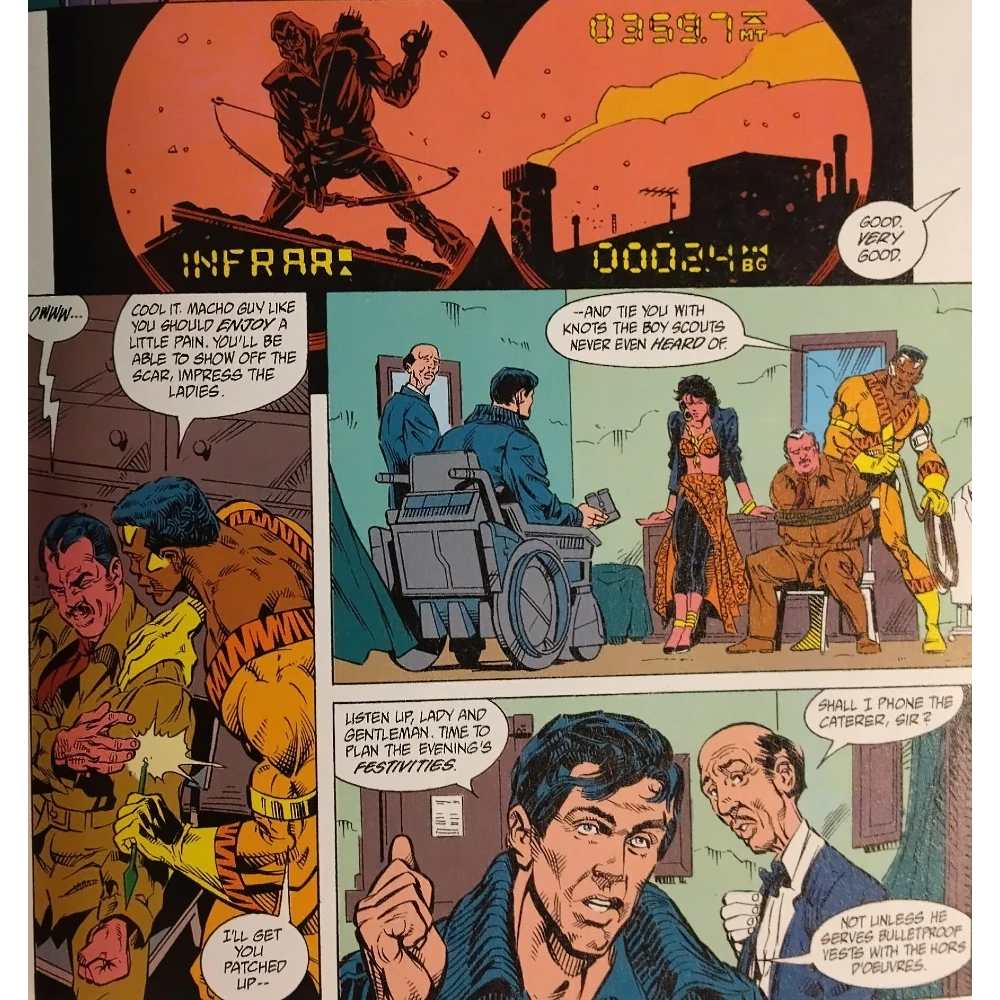
Michelinie allows the frustration to filter through nicely, and nowhere else does that same sense permeate the title. Peter David endeavors something similar in a two-parter designed to be more comedic than serious, yet his Martian Manhunter only gripes over the mission's uncomfortable particulars without ever digging too deep into any moral quagmires. It's one of the few times where David's renowned humor falls flat for me. Michael Jan Friedman captures some of the launching chapters' more serious tone in the volume's closing issues, but it's still not the same. Both he and Michelinie are, at least, each given three issues to tell somewhat more interesting, invested stories, with a genuine flow between installments that try to comment on the evils of oppression and corruption while generating moral dilemmas.
I liked the constant feeling of discomfort the initial issues generated, especially, that our team was seemingly stuck in a bad position, pressured by a certain level of authority, and forced to determine for themselves a clever conclusion to resolve the conflict without sacrificing their morals. I had assumed the rest of the issues would read the same way. Likely because of the rotating teams, both within and without the book, that spirit is never maintained.
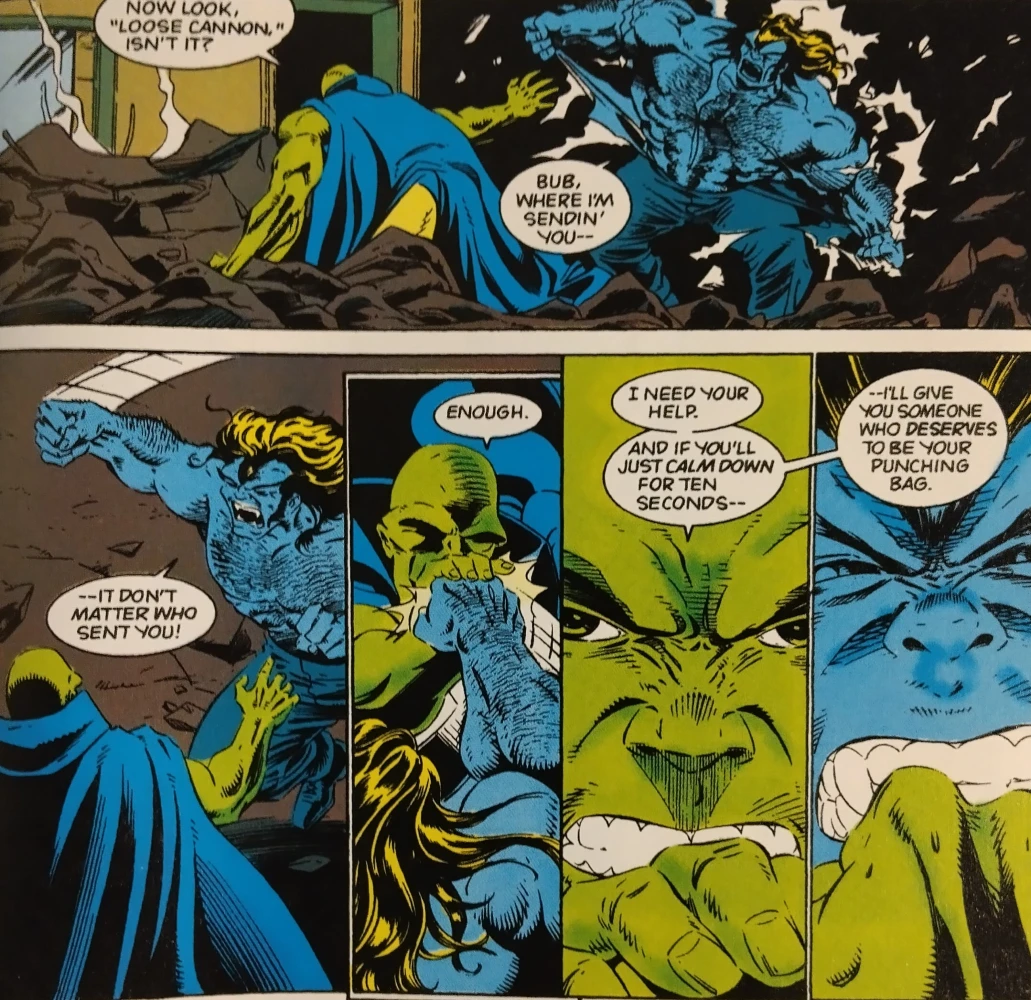
Similar to Secret Defenders, you never spend more than a few issues with a select group of folks; thus, our writers–who switch out as often as each team–can never develop solid characterization or provide us with any tantalizing subplots. Jeph Loeb reintroduces Loose Cannon, a character he invented in a Superman annual during the "Bloodlines" crossover, who fails to make much of an impression; Dennis O'Neil could do more with Gypsy in the "Knightquest" tie-in issues if he allowed her to speak, his choice to keep her mute a strange decision; and Chuck Dixon does what he can with Lady Shiva in a single-issue appearance, but he must still unwrap a plot across twenty-odd pages, never finding much personality to unravel. Stories pass too quickly, plots kept too siloed, characters phase in and out too regularly to give these issues any semblance of coherence or forward momentum.
The most dynamic character, somewhat oddly, winds up being the League's U.N. handler, Hannibal believing guiding this team is beneath him, a punishment rather than an opportunity, and is constantly itching at a shot at promotion. He can at least chew the scenery while on page, providing some of that snarky discomfort I alluded to above. He represents the United Nations, but he has own agenda, and that means keeping these Leaguers in line and stressing the importance of following the op to the letter of the law, even if it means sacrificing the spirit.
My hope, heading into this volume, was that with a roster of talented writers (I'm familiar and appreciative of all present but Friedman, whom the internet tells me is a New York Times Bestselling author), you'd wind up with engaging narratives. You have guys who have written celebrated arcs which blend real-world evils with superhuman heroics–O'Neil's "Snowbirds Don't Fly" or Michelinie's "Demon in a Bottle"–and I assumed, at least, some stories to indicate that caliber. Michelinie gives us a fine start, and Friedman wraps up the trade decently enough, but a lot of the middle is jumbled. Too many characters, too many writers, too many shifting storylines all work against each other, failing to give us something deeper and more engaging.