Distinguished Critique: Superman: Reign of the Supermen Review
Some bluntness slightly suppresses this arc's effectiveness in analyzing Superman's "replacements"
—by Nathan on October 21, 2026—
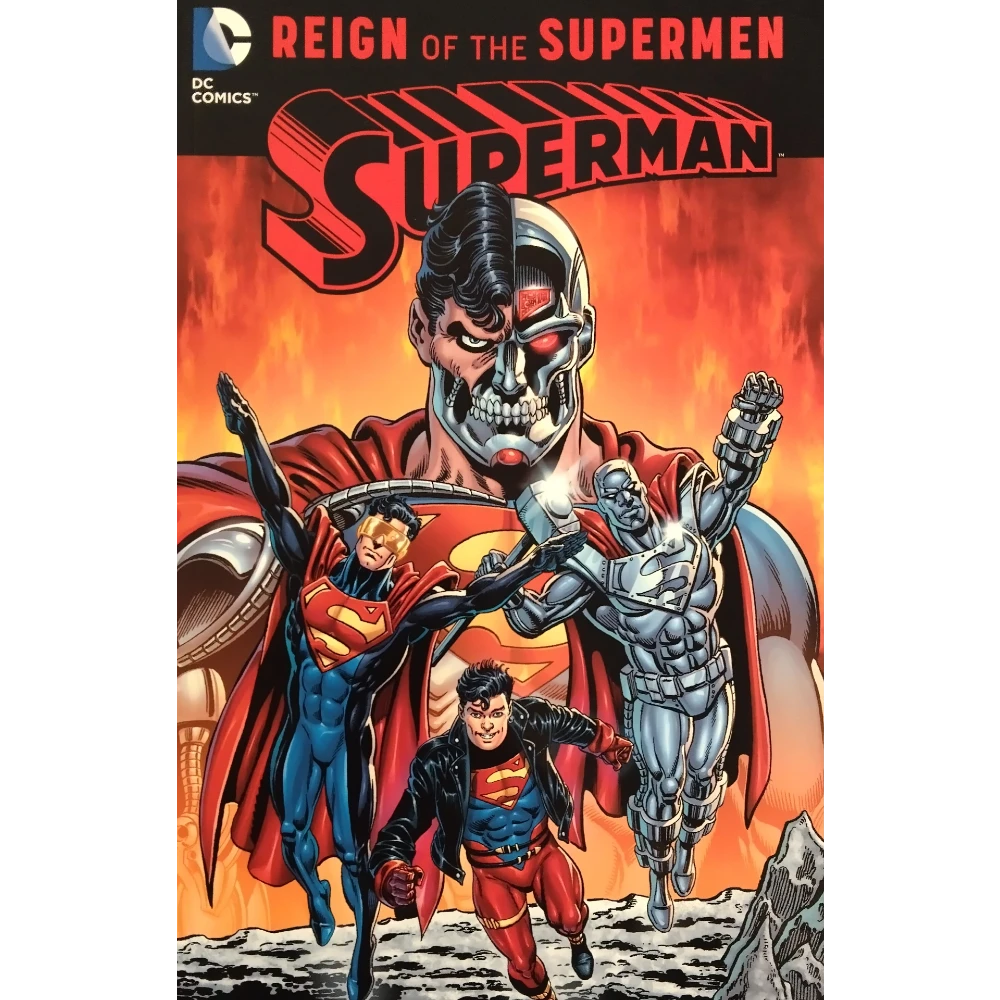
When Superman was killed at the hands of Doomsday, he left an impossible vacuum to fill. In the wake of his death, writers and artists strove to unpack the effects of his passing on loved ones, Metropolis, and the superhuman community at large, detailing just exactly why the world was worse off without a Man of Steel to watch over her.
In the wake of Superman's demise, a few heroes have done what they can to close the gap: the golden Guardian, Supergirl (at this point, an artificial lifeform from a pocket dimension taking on the guise of Superman's cousin), Gangbuster, even a vigilante calling herself the Thorn. Despite their efforts, Metropolis hasn't been the same, and with crime on the rise, folks are beginning to worry. Without Superman, could we be witnessing the birth of another Gotham City?
Don't fret too quickly, however. Similar to how an incapacitated Batman was replaced by a darker, broodier version of himself around this same time, so would others step in for Supes during his death (a mystery we'll tackle in this arc's final volume later). With Batman, however, only Jean Paul Valley, the former Azrael, showed up to fill the void. For a guy like Superman, one copycat won't be enough.
Superman: Reign of the Supermen
Writers: Roger Stern, Louise Simonson, Karl Kesel, Dan Jurgens
Pencilers: Jackson Guice, Jon Bogdanove, Tom Grummett, Dan Jurgens, David Lapham, Eddy Newell
Inkers: Denis Rodier, Dennis Janke, Doug Hazelwood, Brett Breeding, Mike Machlan, Mike Barreiro
Colorists: Glenn Whitmore
Letterers: Bill Oakley, Albert DeGuzman, John Costanza
Issues: Action Comics #687-688, Adventures of Superman #500-502, Superman #78-79, Superman Annual #5, Superman: The Man of Steel #22-23, and Superman: The Man of Steel Annual #2
Publication Dates: June 1993-July 1993
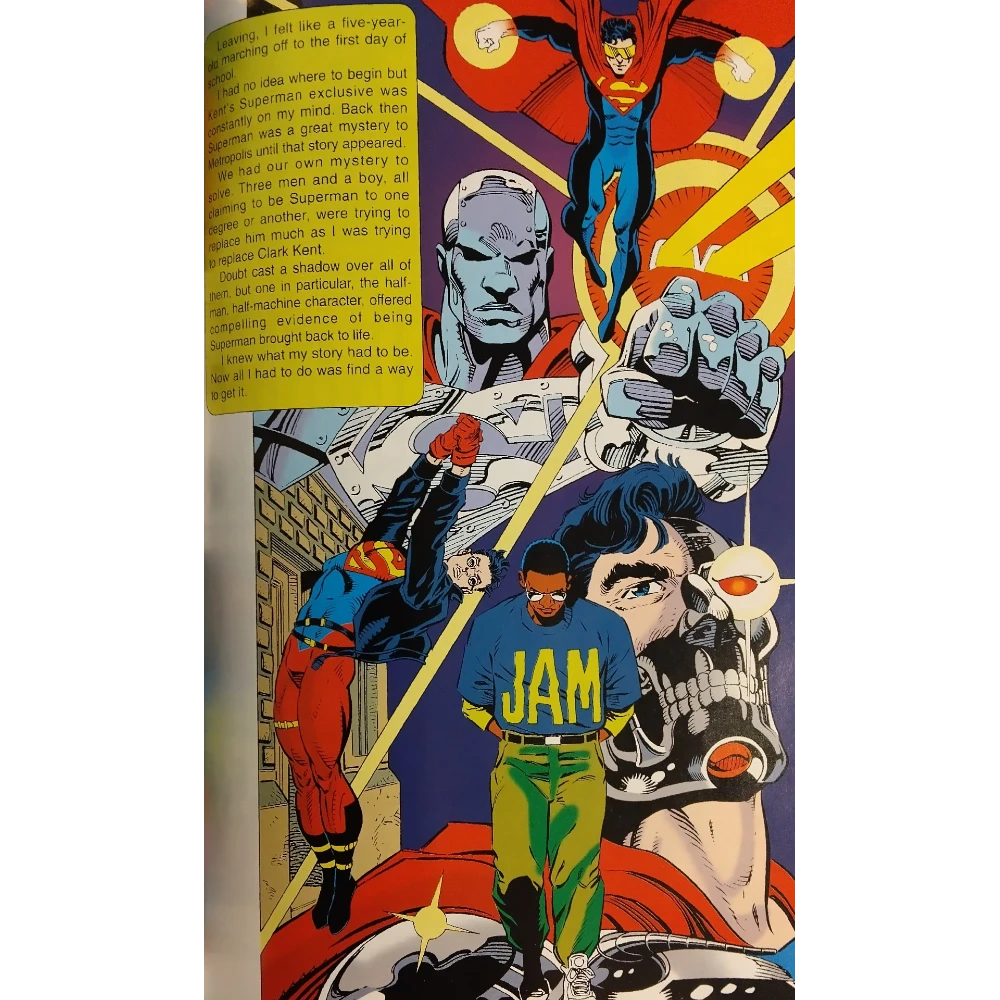
To my surprise, this volume doesn't end with some of the central mysteries surrounding these issues resolved–namely, just who some of these Superman-wannabes are. Folks familiar with these issues the last thirty-plus years are aware of the names behind half of the mystery replacements, but for the sake of spoilers, I won't say directly. I will note, for the curious, that I did read a few late 80/early 90s Superman arcs recently for a purpose, to build to this volume and its successor, noting how a self-imposed exile to space, a funky brainwashing experience, and an encounter with a Fantastic Four parody group made known to Superman a few central players involved here. The oblivious and unspoiled should read those reviews at their own risk.
We'll likely tackle some of the details in my next review, but for now, it's important knowing that four men have risen to replace Superman: an energy being which has constructed a Superman-lookalike body (the Last Son of Krypton); a cybernetic version of the hero, flesh and metal combined (Cyborg Superman); an African American man wearing a suit of armor (Man of Steel); and a boy with a dope leather jacket and shades (Superboy–though don't call him that! It's Superman, hear?). Of the four, only Henry "Steel" Johnson doesn't pass himself off as the real Superman reborn, choosing to protect loved ones rather than try and replace the original Man of Steel for the sake of Metropolis.
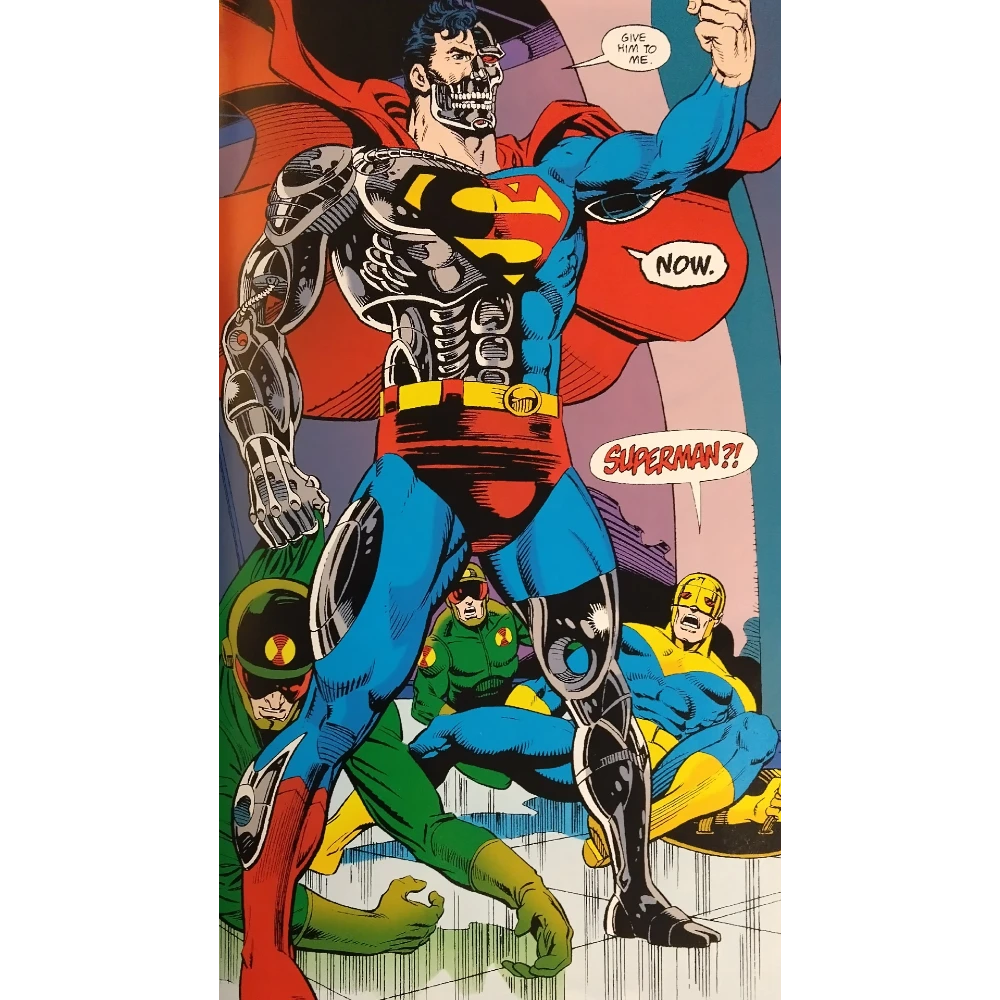
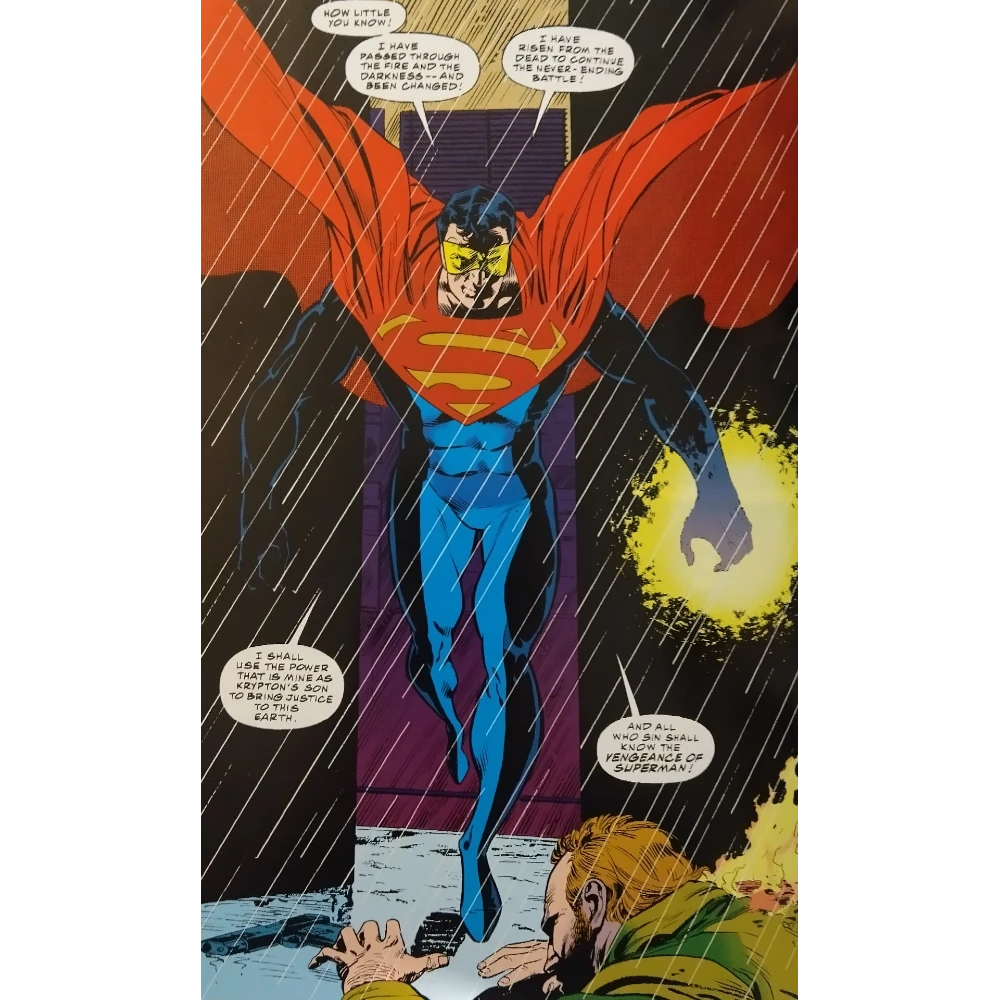
With "Knightfall" and the subsequent "Knightquest" arc, no mystery was ever made of Jean Paul's identity. He did what he could to convince regular folks he was Batman, but with the additional armaments and brutal crimefighting methods, the deception became quickly obvious. With "Reign," our writers set up at least two characters who could possibly, maybe, perhaps be Superman, Last Son and Cyborg. Steel and Superboy (sorry, kid, it's gonna stick) are never pushed as the genuine article, despite the young man's protests to the contrary.
This is a strange volume to read in hindsight, because the mystery aspect is annihilated. You likely read this knowing the real Superman will return, knowing he actually isn't a cyborg or discorporated energy being given a new body. I can imagine readers, when this was originally published, falling along a spectrum of deceived and highly suspicious, but we don't have that benefit. I didn't read this as a mystery, my attention more attached to how well I felt our writers and artists presented each character as a Superman replacement.
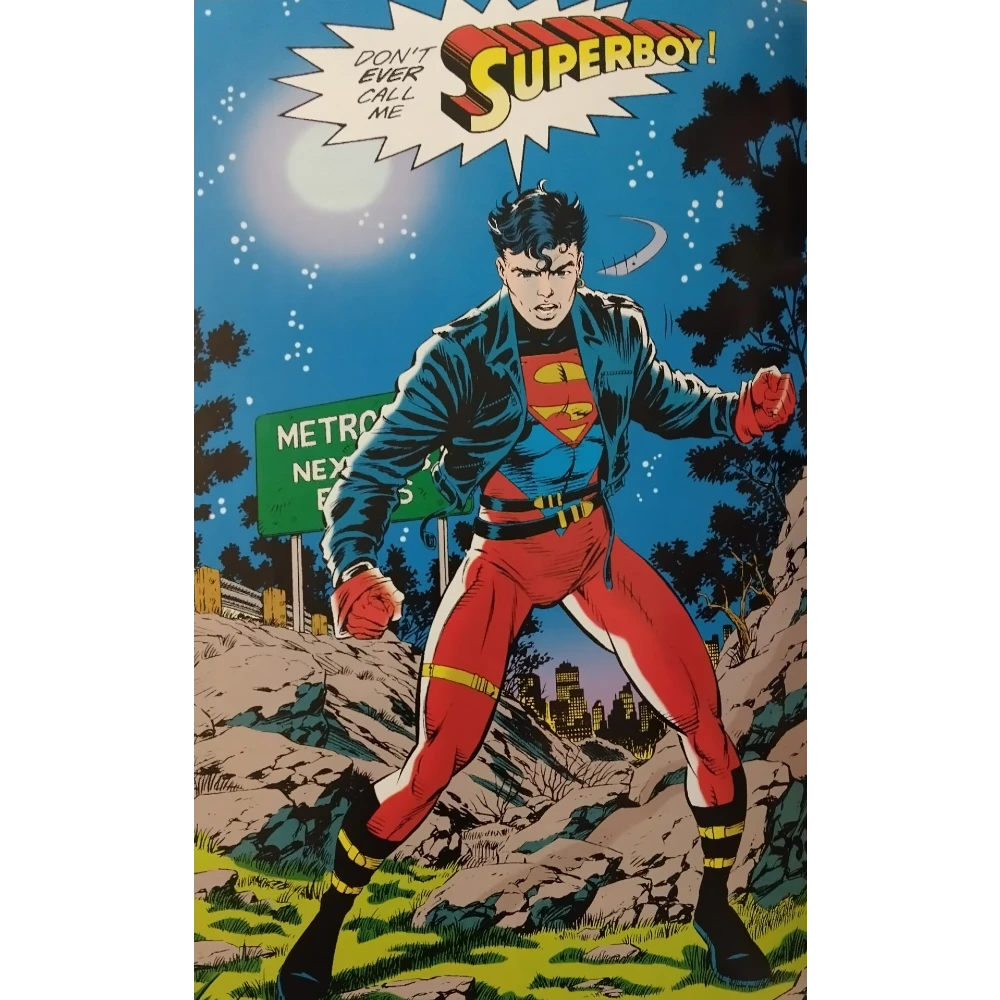
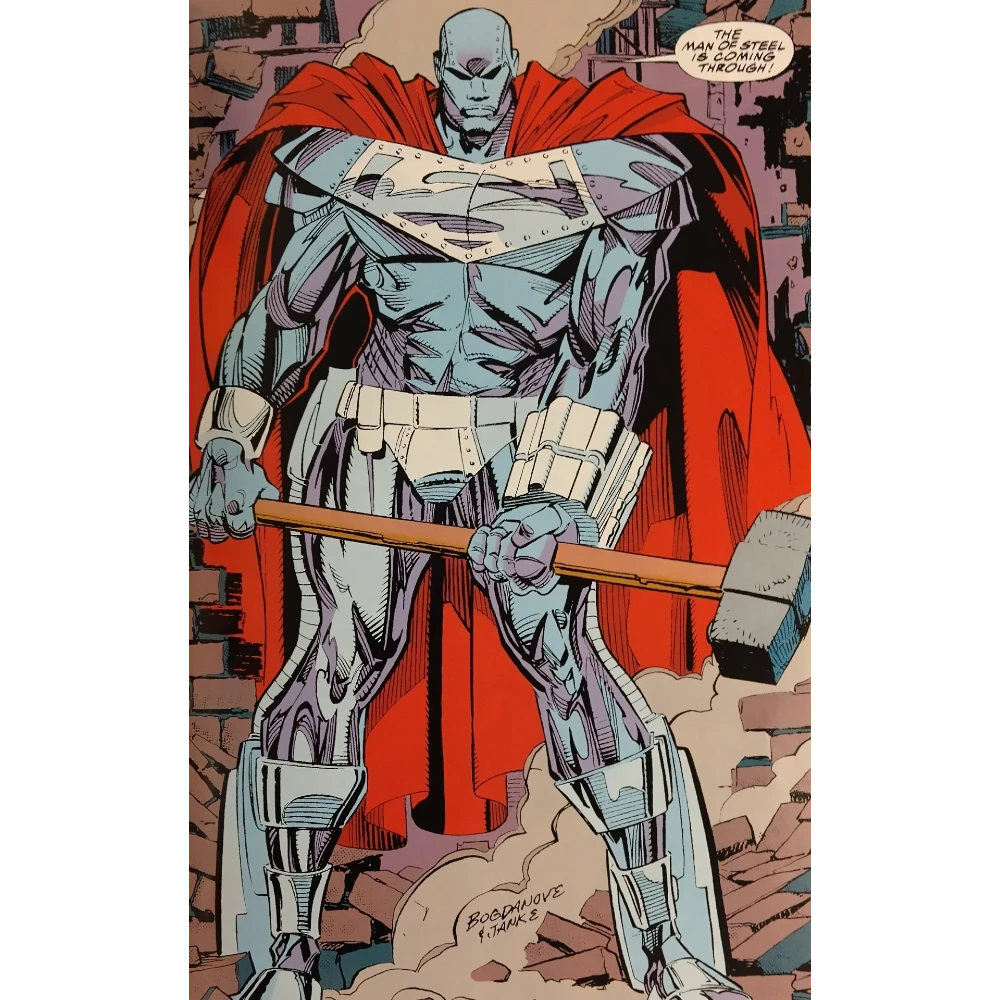
Obviously, similar to how "Knightquest" quickly establishes Jean Paul as the wrong replacement, you likely aren't convinced any of these characters are necessarily the right person for the job, be they a resurrected Superman or not. Our writers nicely imbue each character with a quality similar to Superman, yet they take the time to provide twists on each man's more-or-less inherent nobility to create tension. Cyborg Superman establishes himself as the likeliest replacement, yet his heroics are undercut by a colder demeanor, shadier tactics (more so shown the reader, his underhandedness hidden from the general public for now), and the inability to shake preconceived notions based on his Terminator-like appearance. Superboy may swoop in to save the day, but he's a kid, kind of a punk, diving into danger without a second thought to how his actions may create consequences for others. Last Son fights for justice, but it's a Kryptonian style of justice, and he's not above murdering criminals to get results.
Each man is almost Superman, and as interesting as the similar and differing traits are, our writers are none too subtle about categorizing the positives and negatives. The Cyborg, Las Son, and Superboy each interact with Lois Lane at some point, and despite her deep sorrow over losing Clark and wishing he'd return, she's not convinced that any of these men are Clark, despite what some scientific testing claims. Yet as much as I like that Lois is given opportunities to intentionally vet each hero, her assessments are blunt, telling us the direct issues we can already see. I much prefer moments where Cyborg Superman skulks around like Batman, Last Son brutally dispatches some thugs, or Superboy flies headlong into trouble instead of Lois telling us, fairly directly, why none of these men are Clark.
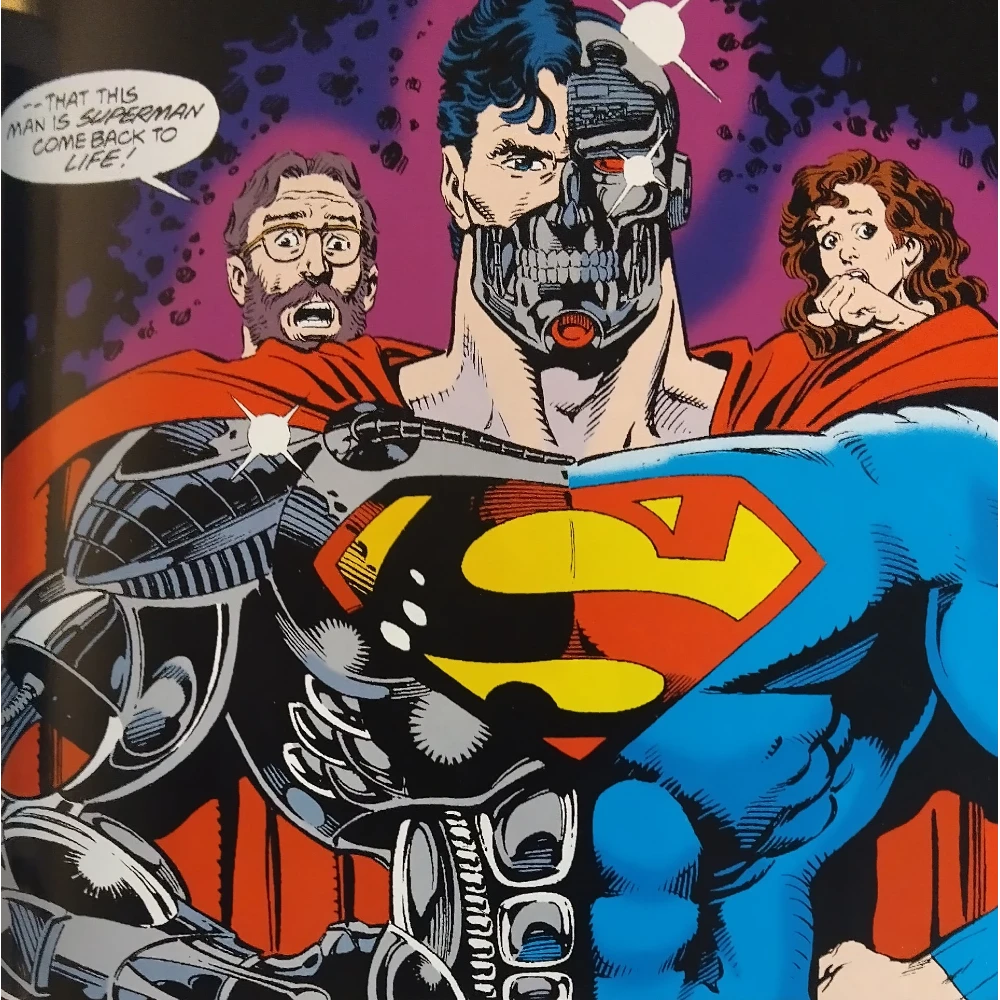
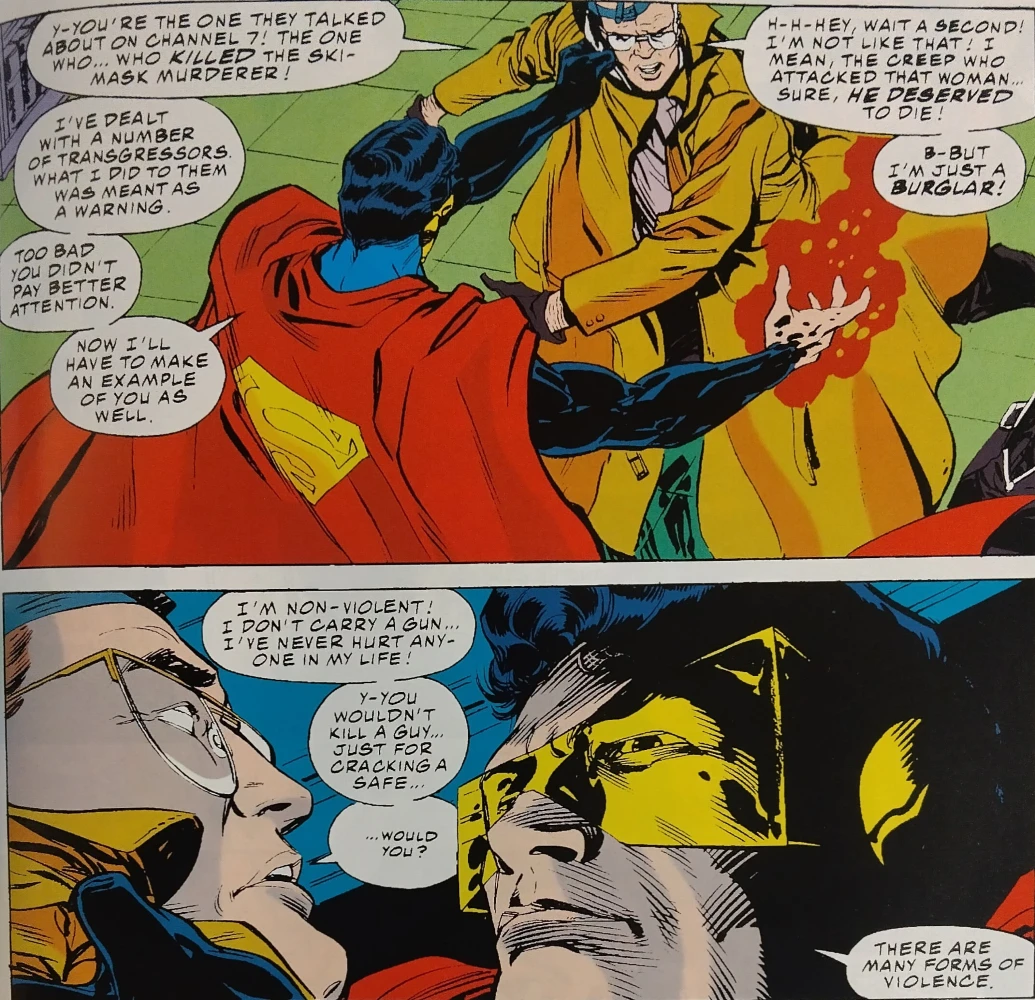
Conceptually, despite the bluntness, the idea derives decent tension. Each of our heroes is only a partial Superman, their complexity found in how they almost fit the bill…yet not quite. Cyborg Superman may ingratiate himself with people, even the President after saving the White House, but he's more flagrant in bending certain laws to his own whims (those shadier tactics I alluded to previously). Last Son may appeal to no-nonsense types like Guy Gardner, but he exhibits a cold brutality in how he handles criminals. And Superboy may cozy up to the media, even get his own Lois Lane analogue, but he basks in the fame, hoping to impress young women, land brand deals, get his name out there.
Steel stands out as the exception to the rule, the one hero who genuinely wants to do good for the sake of good and do it the right way. This is likely the reason why, beyond our other Superman stand-ins, he receives the most characterization, including an origin and a developing backstory. He's more of a character than our other replacements, not a clone or energy given solidity or a half-man, half-machine. He doesn't possess invincibility or heat vision or incredible strength. He's fully human, inspired by an American legend to weld his own suit of armor and wield a hammer for the sake of justice. His motives feel purer, his actions more sacrificial, the stakes higher for him personally even if the evil he fights is somewhat more grounded.
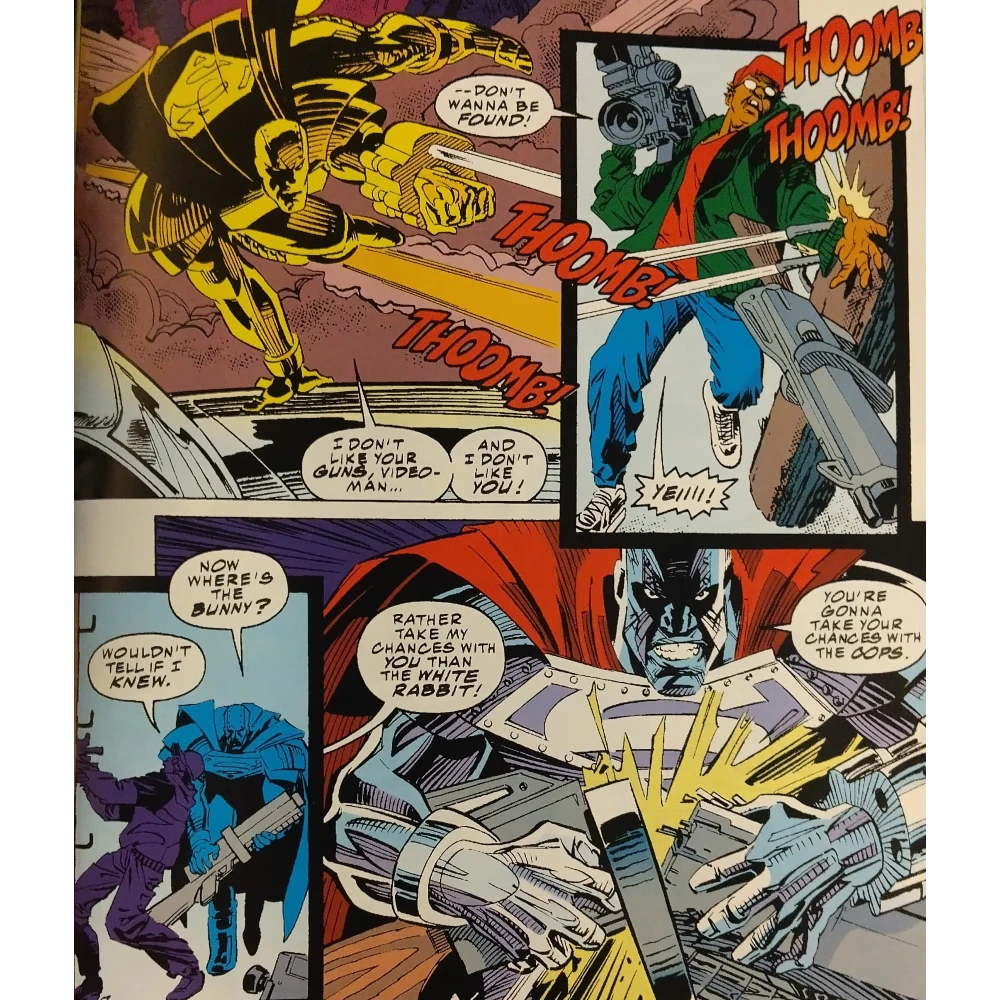
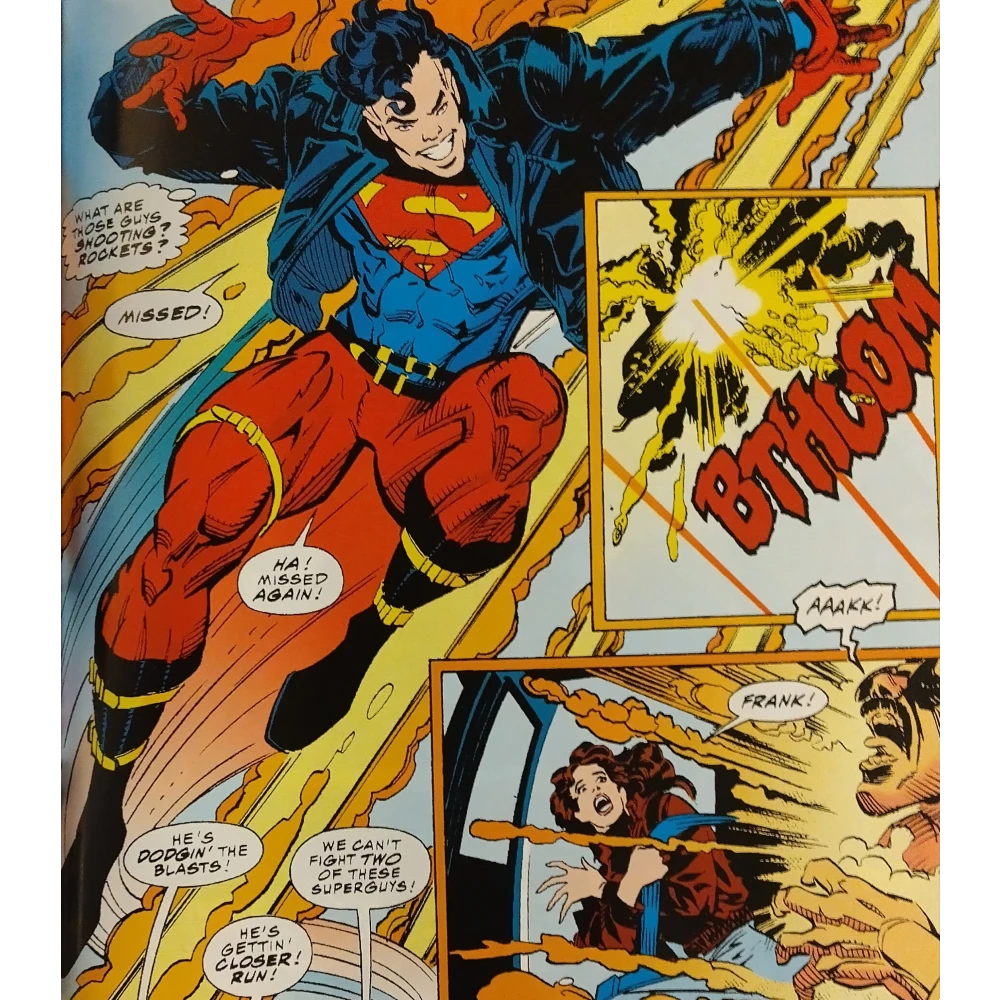
A few of our replacements do mingle slightly in this volume, but we're not given so much out-and-out rivalries. Perhaps we'll see more of this in the next volume. The interactions we do get, such as between Steel and Superboy, are brief, with each hero expressing a somewhat critical eye toward the other. If anything, you do get the sense that folks are divided over their opinions of these new heroes–Lex Luthor "Jr." wishes to get a few guys on his payroll, some people appreciate the Last Son's violence while others deride it, and still others try to determine where they fall on the issue.
But the truth of the situation is clear: Metropolis needs a Superman, even if these guys aren't the Superman.
The tension found in this volume is fun to witness unfold, as a city of people whose greatest hero has died work to cope with men who are either impostors or the replacements necessary to carry on Superman's legacy. Some of these guys feel more heroic than others, and you wonder if there's a chance they'll grow to become worthy of the role–will Superboy mature? Last Son lose his stranglehold on violence? Obviously, we all know Superman, as he often does, returns. The real one. So perhaps hypotheticals are moot. But if you view these issues as a thought experiment, similar to how Jean Paul Valley was always meant to be a temporary replacement for Bruce Wayne, the stories therein tell an interesting tale, proving to readers how ineffective anyone but Superman is always going to be for Metropolis.