Distinguished Critique: Superman: Eradication! (The Origin of the Eradicator) Review
The endgame may be obvious, but this arc's trajectory allows for a unique examination of a hero transformed
—by Nathan on October 12, 2026—
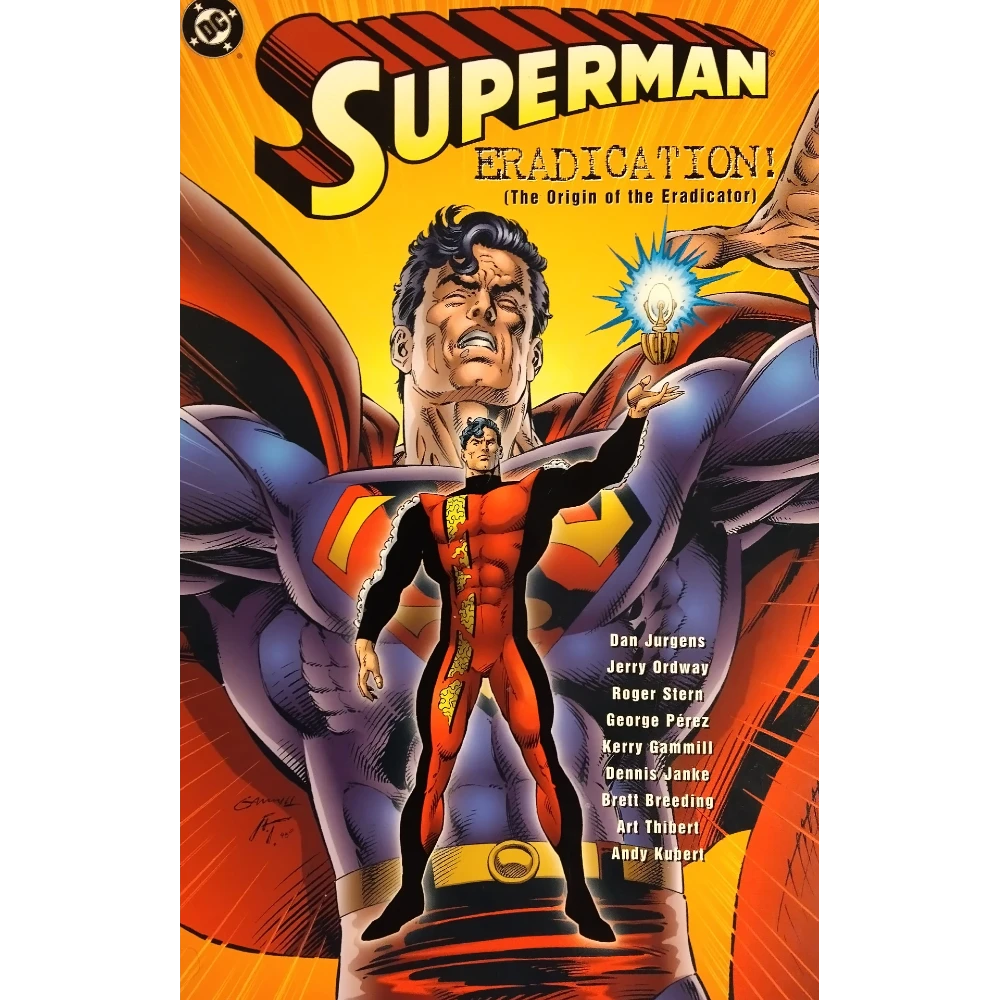
This is one volume which won't be winning any awards in creative titling. What a mouthful.
Last "Distinguished Critique" post, we examined Superman's self-imposed, if temporary, exile to the depths of outer space, Clark Kent's alter ego wrestling with deep guilt over recent events that led him, among other things, to murder three Kryptonian criminals. Believing himself a danger to those around him, Clark jettisoned himself into the cold heart of the Milky Way, planning to never return.
He did. Return, that is. Of course he did. It's what he does. They titled a whole movie after the idea.
But Superman didn't return alone.
During his journeys, Supes was introduced to an ancient Kryptonian artifact known as the Eradicator, created by Kem-L, a distant ancestor of his. The Eradicator was a weapon (as if the name didn't alert you to that already!), created to destroy a particular threat against Kryptonian hegemony but also to ensure societal perfection in general. If you look up Kem-L's DC Database profile, you'll see he's referred to as "xenophobic." Maybe that'll indicate why he made such a weapon.
Superman brought the Eradicator with him back to Earth, clinging to a relic of his people that, he hopes, could be used as more than a weapon. A few issues have passed between his return and the beginning of this obnoxiously titled volume, and even in that time, the Eradicator has indicated intelligence and caused consternation. As this particular arc opens, Clark's about to learn just how dangerous this seemingly sentient curio really is…and why some family heirlooms just aren't worth the trouble keeping.
Superman: Eradication! (The Origin of the Eradicator)
Writers: Roger Stern, Dan Jurgens, Jerry Ordway
Pencilers: Kerry Gammill, Dan Jurgens, Jerry Ordway, George Perez
Inkers: Brett Breeding, Dennis Janke, Art Thibert, Andy Kubert
Colorists: Glenn Whitmore
Letterers: John Costanza, Albert DeGuzman, Bill Oakley
Issues: Action Comics #651-652, Adventures of Superman #460 and #464-465, and Superman #41-42
Publication Dates: November 1989, March 1990-April 1990
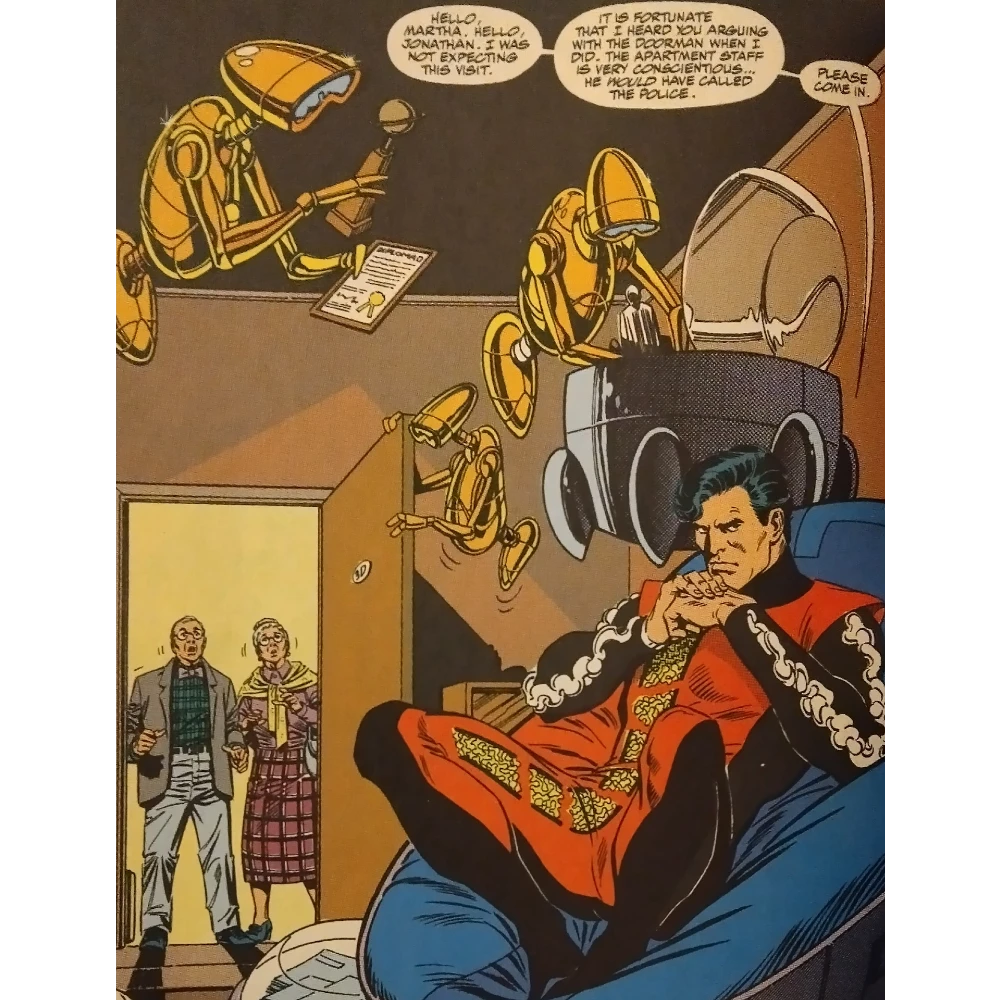
Spoiler, but this is not the last we'll hear of the Eradicator. The weapon makes a comeback during the "Death and Return of Superman" arc, which is the reason I'm reviewing this now. I expect it's also the reason this volume is titled the way it is, emphasizing the artifact, rather than utilizing the arc's commonly known name: "The Day of the Krypton Man."
Which is a far more fitting title to this narrative.
To spoil a portion of the story (which becomes the plot's basis so it's not much of a spoiler anyway): the Eradicator, developed to prioritize Kryptonian biological perfection above all else, begins scheming on its own cognizance. In so doing, it hijacks Superman's subconscious, transforming the Man of Steel from a defender of truth and justice into an agent of the artifact's Kryptonian agenda. Superman will carry on his birth planet's legacy, through the Eradicator's influence.
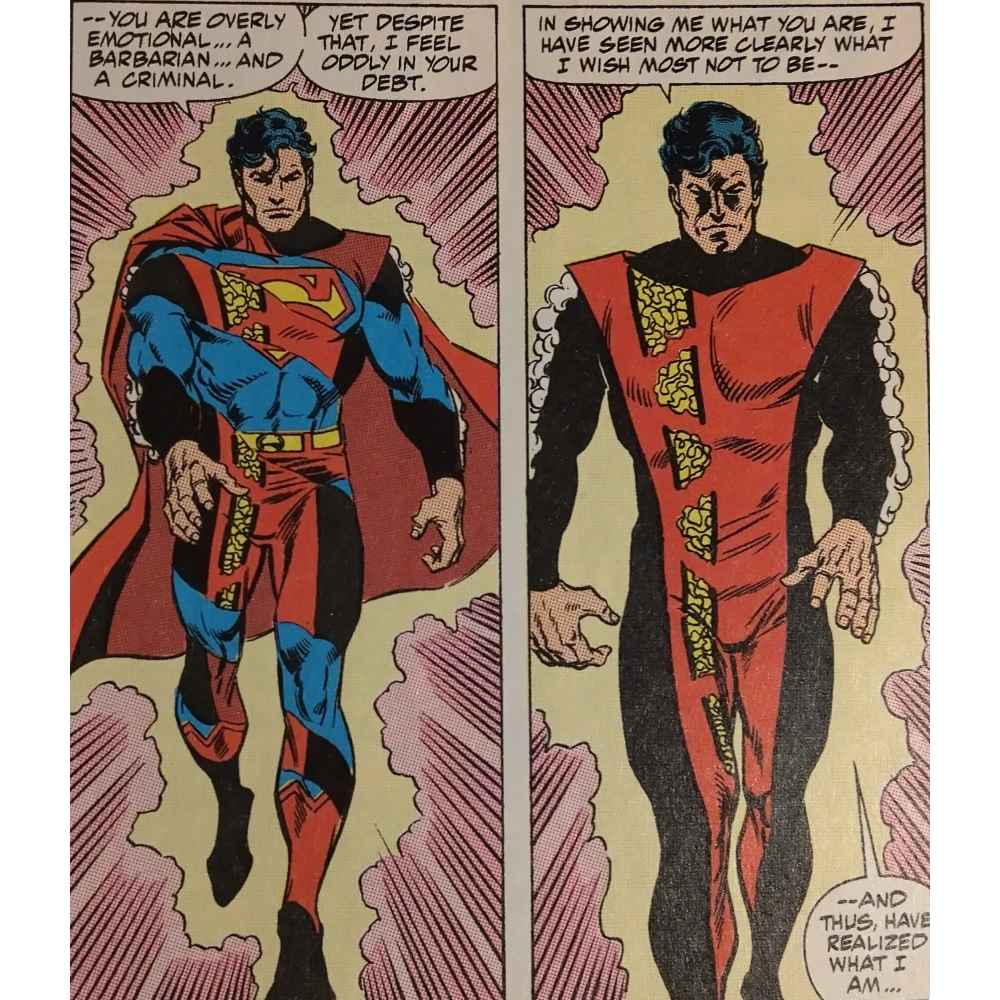
Thematically, similar to "Exile" before it, this "Krypton Man" narrative centers on Superman's identity. I've noted before the best Superman stories grapple with Kal-El's "dual citizenship," as the final representative of a long-dead planet whose only memories and influences come from being raised by a farming family in America. Stories which latch onto both aspects and allow them to influence his character work well, especially when they find conflict at that crossroads. I critiqued John Byrne's Man of Steel limited series for having Clark, somewhat callously, turn his back on his Kryptonian heritage, choosing a stalwart stance upon his American upbringing. Here, we are approached with the opposite problem: what if someone, or something, forces Clark to abandon his human heritage in favor of his alien "inheritance"?
Most of this story sees Clark behave as if he's an unwilling servant of the Eradicator's, with folks noticing the changes in his demeanor almost instantly. He's cold toward his parents, old friend Lana Lang, and Lois Lane (completely misreading the latter's request for a romantic dinner as a mere platonic invitation he casually rejects); working in a new capacity as managing editor for Newstime magazine, he behaves curtly around subordinates, prioritizing their effectiveness over their humanity; eventually, he abandons the title Superman and the name Clark Kent altogether, calling himself Kal-El, flying around in a new costume provided by the Eradicator, and calling Ma and Pa by their full names. Heck, even his flying style changes, a nice artistic touch to help hammer home how our Superman has been altered so dramatically.
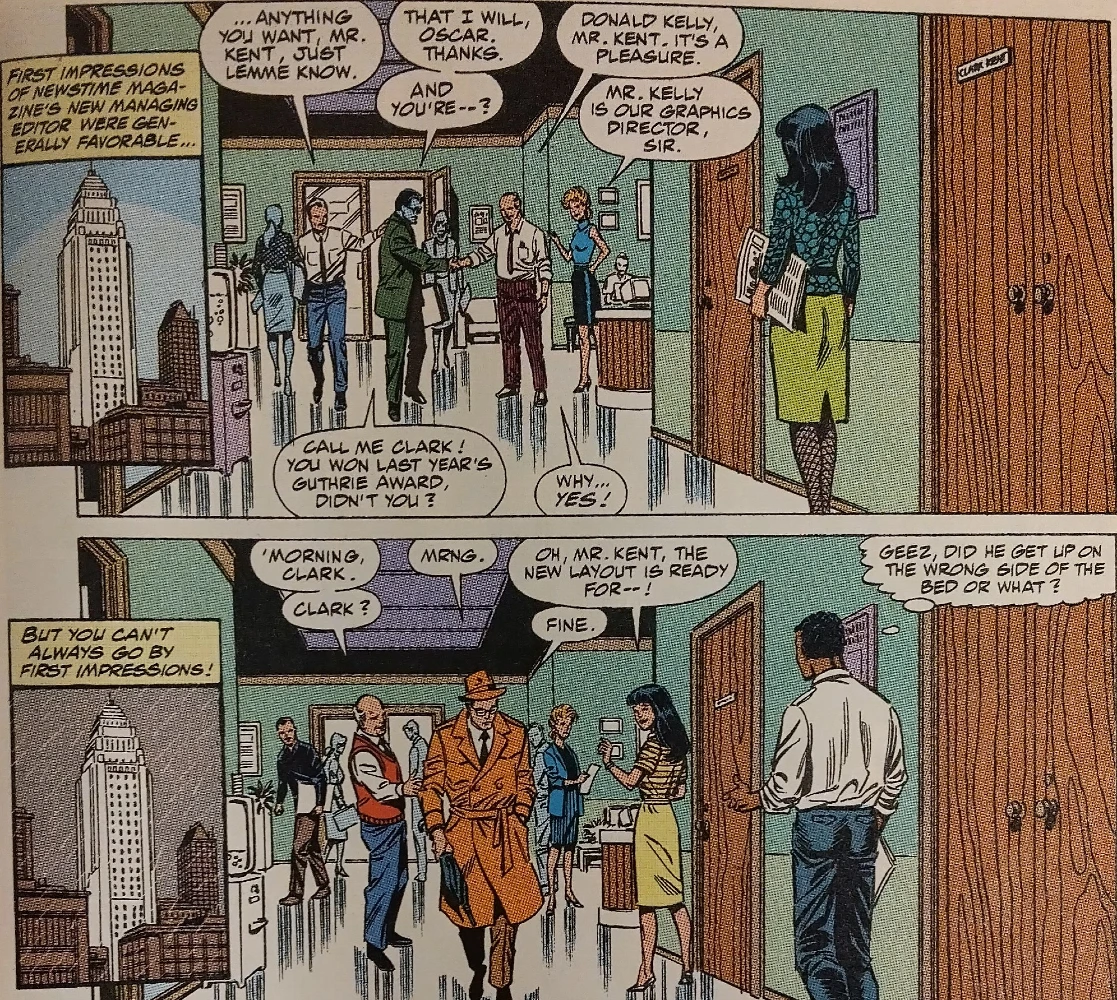
There's no mystery for the audience to unravel: they know the Eradicator is at fault. The suspense lies nicely in watching this new personality subsume who Clark is meant to be, a transformation made all the more dramatic and unfortunate given his recent journey through space to reconcile darker sides of himself. Just when Superman can look himself in the mirror again, the Eradicator alters the reflection. The discomfort works well, our writers placing Clark in awkward situations where you can just feel the palpable uneasiness, knowing he'd never act certain ways were it not for whatever Kryptonian hypnosis he's been whammied with.
Stories such as these, obviously, always have their limits. Narratives where such a dramatic alteration causes our heroes to act far differently than the norm adds decent tension, but you have to go in knowing the status quo will be reinstated by the end. If you want to enjoy Doc Ock usurping Spider-Man's body, you have to know Peter will eventually take it back. If you want to thrill at Iron Man fighting other superheroes and breaking the law to end the threat of stolen Stark Industries technology, you have to believe his standing with the law and superhuman community will be restored.
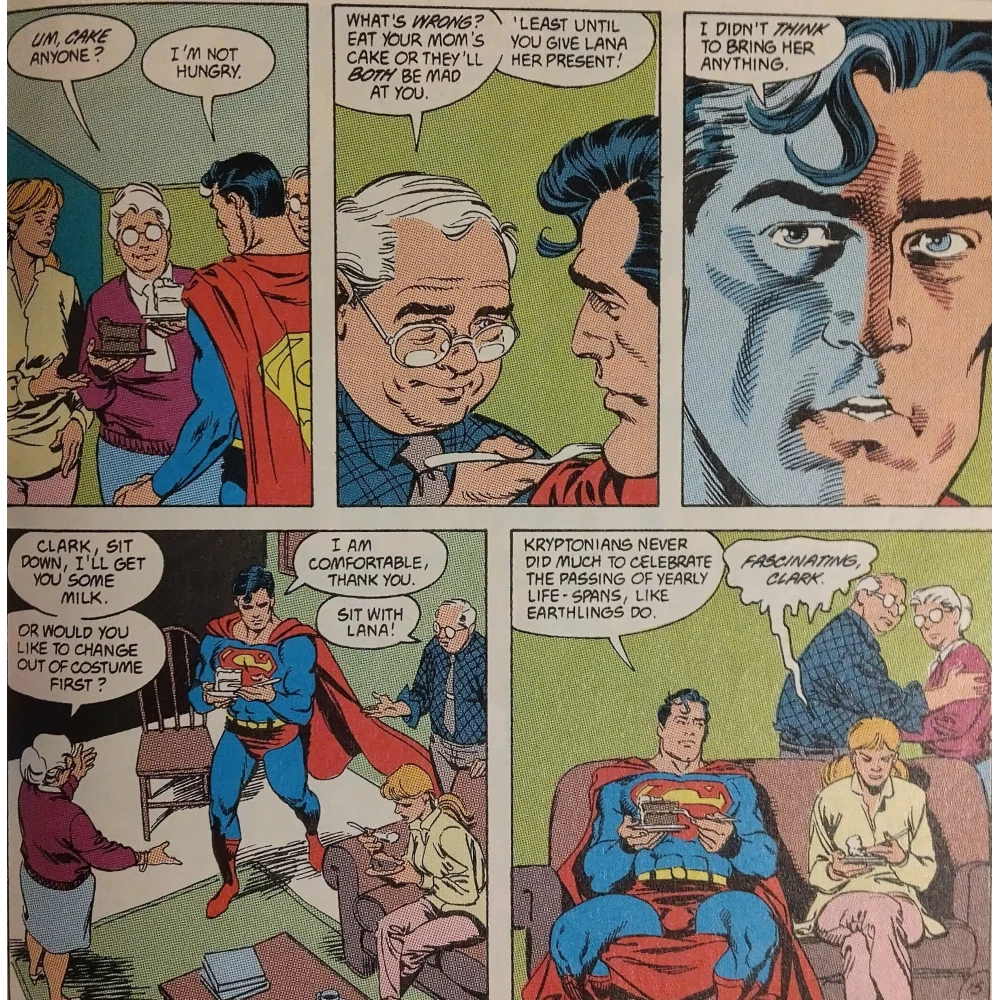
That's the point, of course. This "Day of the Krypton Man" is meant to paint for you a picture of an alternate Superman, of what Clark could be were it not for that human side of him. Granted, there's the indication that had he only his Kryptonian identity to fall back on, he wouldn't necessarily be the cold fish he is here (it's pointed out, late in the game, that his biological parents did love him–why else rocket infant Kal-El from their dying homeworld?). That's the Eradicator's influence, which makes this weapon all the more insidious, as you know it doesn't show us Clark's complete Kryptonian side but a twisted, soulless version of who he would be without the Kents' kindness.
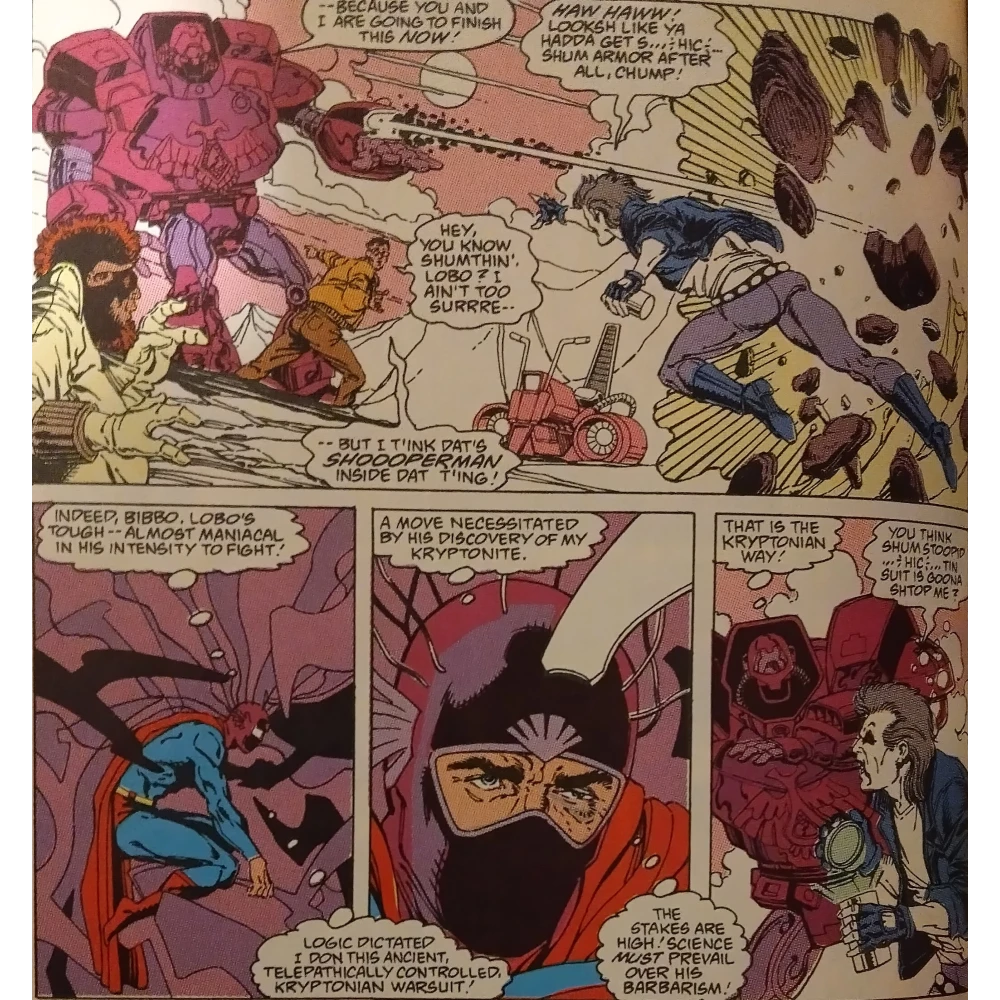
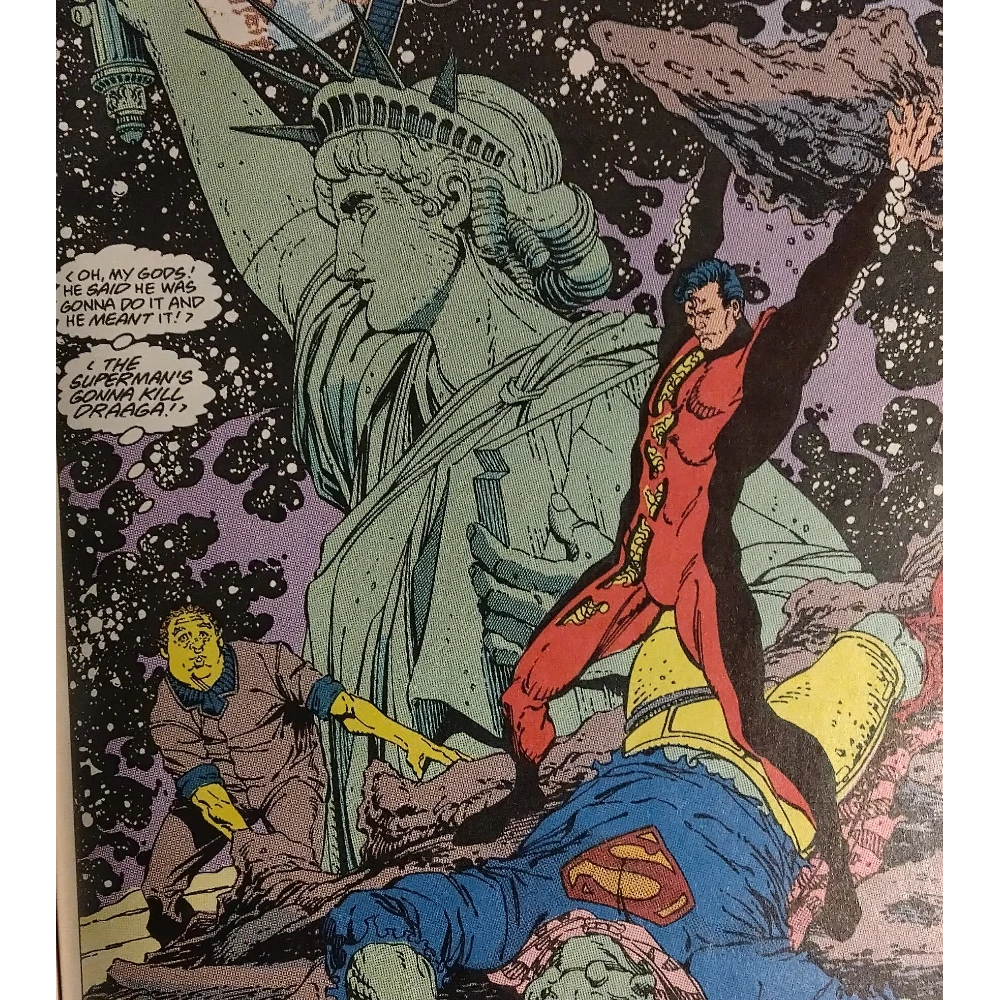
As this is a superhero comic, much of Clark's mental tampering is made physically evident through confrontations, created to show the effects the Eradicator has had on him. From tricking bounty hunter Lobo with Kryptonian technology, to rejecting the advances of superpowered extraterrestrial warrior Maxima, to nearly beating gladiatorial warrior Draaga to death, Superman exhibits a level of deceit, disrespect, and brutality he wouldn't show otherwise. Our writers recognize the need to ramp up the Eradicator's threat, so what starts as Clark able to use a Kryptonian warsuit he couldn't command before builds to a battle on the moon where Supes fully intends on killing his adversary. Draaga's inclusion is a nice touch, the gladiator having fought a merciful Superman on Warworld during the "Exile" arc; expecting a simple rematch, Draaga now faces an opponent who seems fully willing to end his existence, far from the hero he stared down previously.
As a thought experiment, this arc works well enough. It's kinda difficult shouting its praises from the top of the Daily Planet, because you know the effects are temporary. Much like Clark's exile into space, you know Superman will return to his old self, ready to defend truth, justice, and the American way. The arc's most significant conflict is in determining how exactly he finds that path back to his old self and who helps him discover those core principles which have shaped him.
That said, there's somewhat of a macabre intrigue derived from seeing this colder side of Clark Kent. The discomfort created by his callousness toward friends, family, and associates is a nice strand of tension, but when he sports a Krypontian-inspired costume and lashes out at his enemies, you kinda get the appeal of a more serious Man of Steel. Folks have complained that Supes' power set, invincibility, and do-gooder demeanor can make him a stilted character; throwing in some additional moral ambiguity, as this arc does, showcases another facet of Superman's character you don't see as often.
Several months ago, I reviewed a Batman arc titled "Blind Justice," where writer Sam Hamm toyed with some of the building blocks upon which Bruce Wayne's crimefighting career was constructed. Hamm poked at questions such as "What if James Gordon could do more than allude he knew Bruce Wayne was Batman?" and "What if our Dark Knight could find the happy ending so often eluding him?" Hamm gave no definitive answers, of course, but the questions made for compelling reading, hinting at truths buried beneath the dirt of comic book tropes and committed status quos.
Similarly, this "Day of the Krypton Man" arc jabs at the core qualities of Superman and decides to twist them a little, explore a Man of Steel not quite in his right mind or without his priorities straightened. This isn't off-his-rocker Injustice Superman; this is a Superman who has, temporarily, been switched to a certain type of default settings. "Factory reset Superman." Superman without the Kent moral code or as a certain branch of Kryptonian society would have wanted him to be. The Eradicator lives up to its name, even if those homegrown morals win out eventually, allowing us a thoughtful look at a kind of Superman who'll come back to haunt us in the near future.