Spider-view: "Pursuit"
Some blunt action aside, this four-parter provides strong drama in unraveling a mutual vendetta surrounding identity
—by Nathan on November 2, 2026—
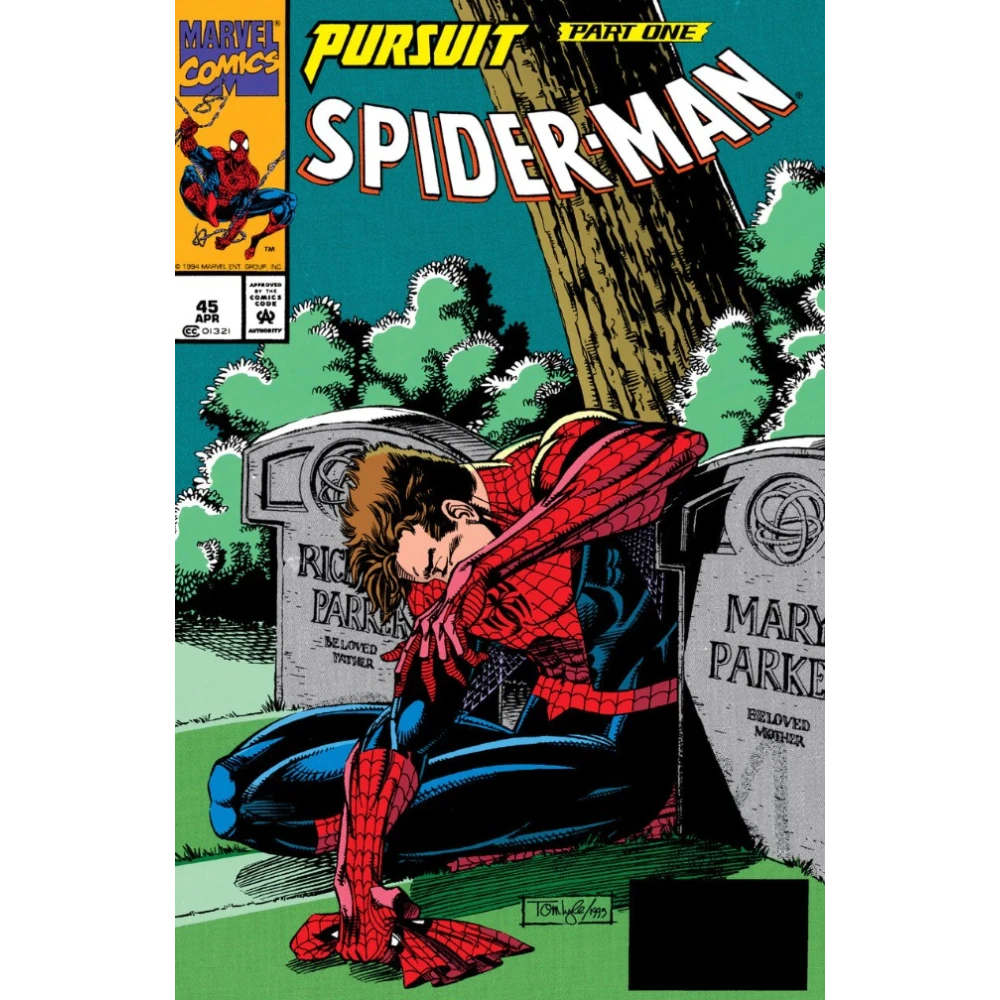
Peter Parker was happy.
His parents, Richard and Mary Parker, long-believed dead, had come back into his life. Once thought to be spies for the Red Skull killed in a plane crash, the Parkers had actually been prisoners of the Soviet Union until its collapse, finally making their way home to Peter, May Parker, and Mary Jane. A joyous reunion followed…
…and then the doubts.
And the questions.
And the hints.
Aunt May's uncertainty led her to hire a private investigator, much to Peter's consternation. But what Peter assumed was senility wound up being May's maternal instincts. Eventually, right after Peter confided his dual identity to Richard and Mary, the truth was revealed: his "parents" were simulacra, Life Model Decoys created by the Chameleon to get revenge on Spider-Man through Peter. In the ensuing fight, Peter's "father" tried to kill him, but his "mother," perhaps programmed with maternal instincts of her own, killed her "husband," before dying in Peter's arms.
Chameleon's partner Vulture, now blessed with long-sought youthfulness, was arrested, but in the chaos, the slippery spy slunk away. He's now on the run, a fugitive not only from the law but also from a very peeved arachnid who blames the shifty supervillain for stealing the happiness he had just found.
"Pursuit"
Writers: Howard Mackie, Mike Lackey, Terry Kavanagh, J.M. DeMatteis
Pencilers: Tom Lyle, Sal Buscema, Alex Saviuk, Mark Bagley
Inkers: Scott Hanna, Sal Buscema, Stephen Baskerville, Al Milgrom, Randy Emberlin
Colorists: Kevin Tinsley, Ericka Moran, Bob Sharen, and Nel Yomtov
Letterers: Richard Starkings, Joe Rosen, Steve Dutro, Jeff Powell, and Loretta Krol
Issues: Spider-Man #45, Spectacular Spider-Man #211, Web of Spider-Man #112, and Amazing Spider-Man #389
Publication Dates: April 1994-May 1994
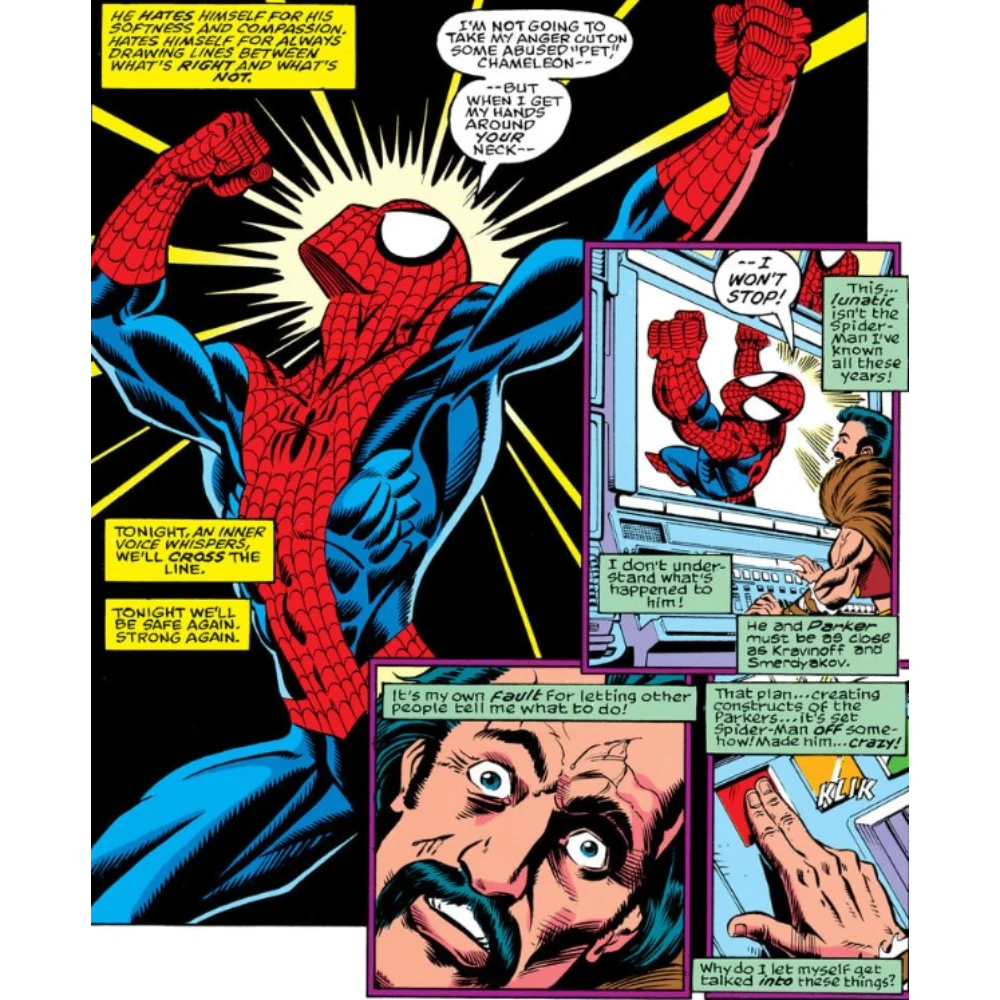
It doesn't matter if you headed into the previous arc knowing the "Richard and Mary aren't real" twist. The impact of it is brutal, the final nail in the coffin of Peter's opportunity to have a regular relationship with normal parents, of reclaiming a portion of his childhood lost before he had the chance to know the love he had. Sure, writers had hinted things weren't quite on the up-and-up–Richard's rather nihilistic perspective on the whole "Maximum Carnage" killing spree, for example–but the exact nature of the reveal should hit hard. It's not just that Richard and Mary were spies for one of Spidey's enemies, or that they were using Peter. The pain comes from them never having been real, that any hope Peter had of bonding with them was lost the moment they walked back into his life.
All that tension introduces this arc decently as Peter, torn up inside, sets his sights on hunting down the Chameleon and…doing what, precisely? A few blows to the kisser? Love tap on the noggin? Suspension at the top of a skyscraper until Spidey's webbing dissolves? Even Peter is uncertain, but our writers make clear that Spider-Man dwells on the cusp of exacting some very lethal revenge if he can just get his hands on the shapeshifter.
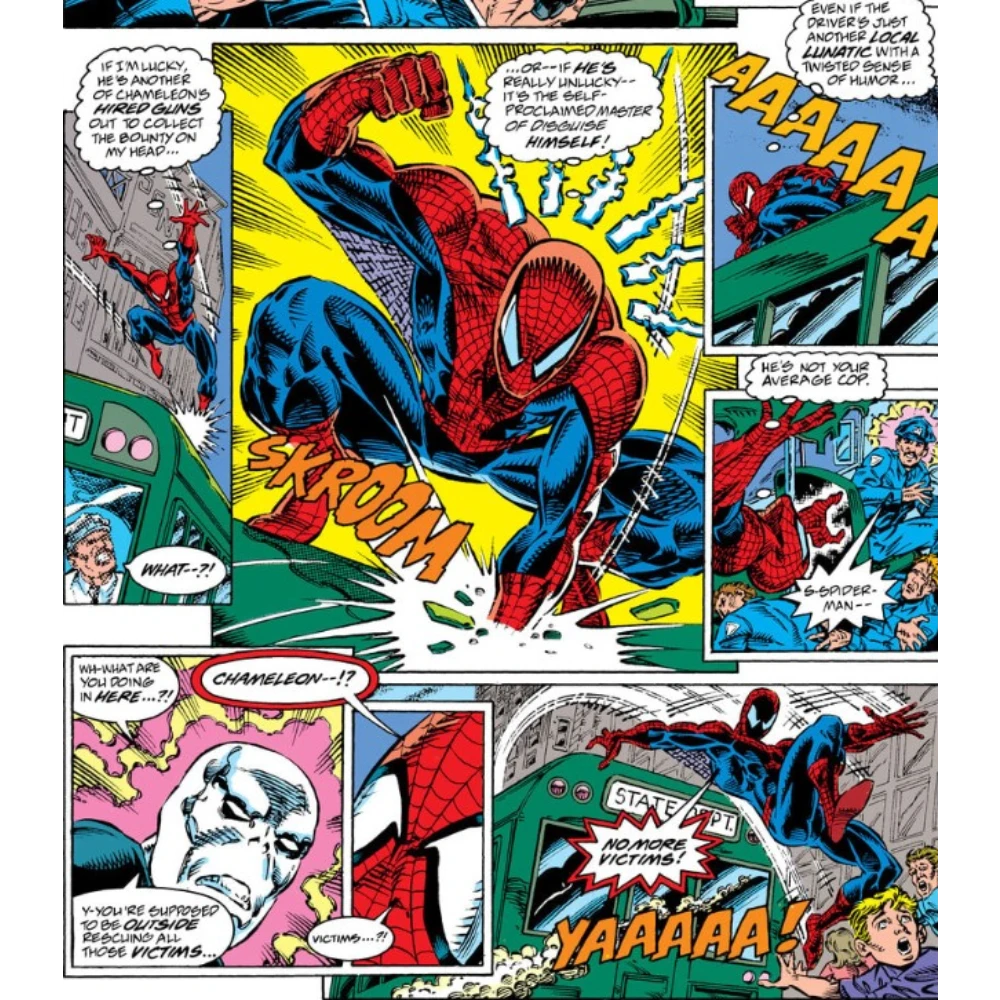
We've been at this place before, and we'll be here again as we enter the "Clone Saga," this tension within Peter between playing the proper hero and crossing the line into full-blooded vigilantism. Writers have bandied about Peter's relationship with murder for years, from Peter David carrying Spidey close to the threshold in "The Death of Jean DeWolff," to Christopher Priest (then as Jim Owsley) having Peter accidentally cross the threshold in Spider-Man vs. Wolverine #1. But accidentally inflicting lethal injuries and intentionally tracking down someone with the intent to murder them–however subdued Peter wants to make it–are two very different states of mind.
I won't argue this is a bad direction for our writers to have Spidey take, the wrestling over the kind of justice he wishes to inflict upon the Chameleon. I can't say it's a new or unique struggle for Peter to have, but for a character who routinely plays the "no killing" card when interacting with armed vigilantes and seemingly penitent villains, seeing him with a darker tinge to his actions can be appealing. Naturally, you need a strong narrative for him to embrace this grimmer perspective, and I'd argue that ripping the rug out from his feet and not even leaving him with a floor to stand on through the "parents aren't real" twist works well. Put yourself in Spidey's boots, imagine the gaping wound such betrayal causes, and maybe you'd want to pursue the perpetrator yourself.
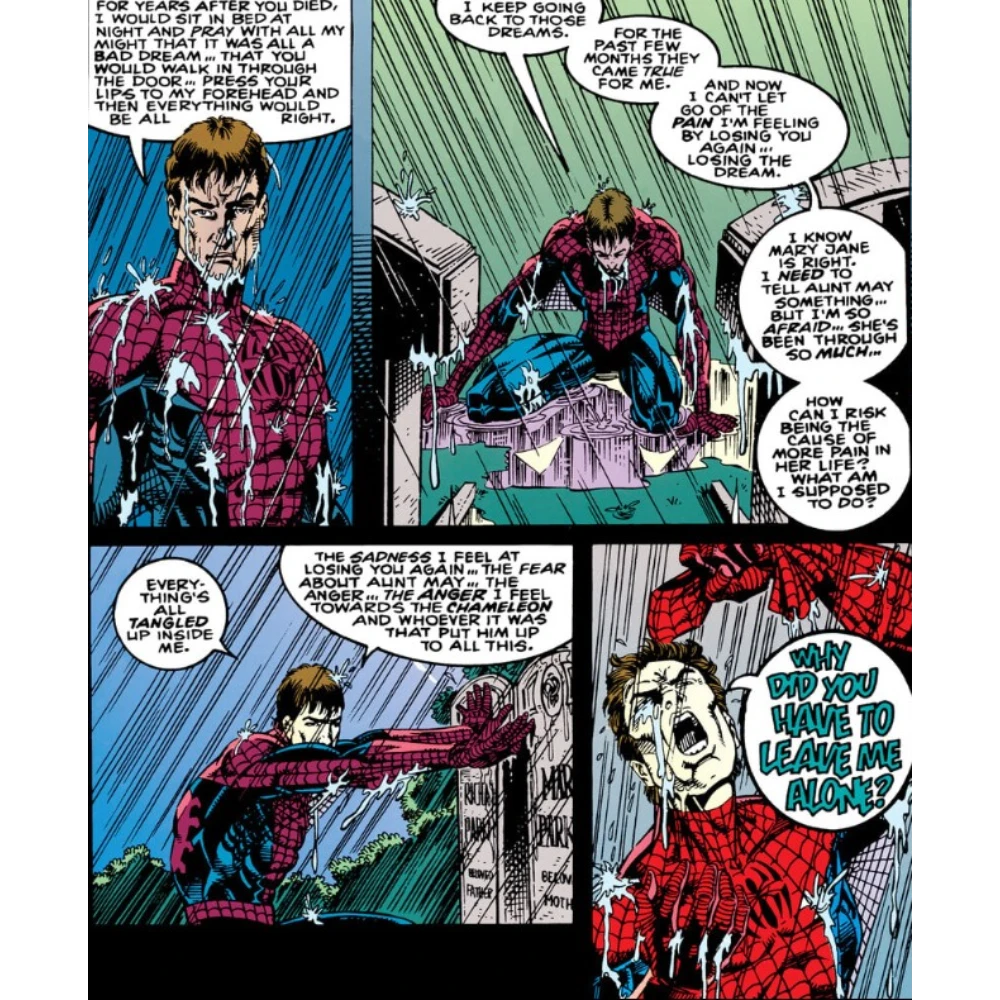
Our writers do a decent job navigating Spidey through the tragedy, providing him opportunities in and out of costume to reckon with the effects of it all. A few scenes see Peter debating with MJ over how best to handle the situation, one issue ends with Peter breaking the news to Aunt May (albeit with some details omitted), and another sequence witnesses Peter mourning losing his parents a second time at their original gravemarkers in Queens. It's not all swearing revenge and digging through the criminal underworld to find Chameleon. We get some quieter, reflective, more human moments mixed into the action and violence.
Much of that action and violence surrounding these softer scenes can become a tad repetitive–Spidey hunts for the Chameleon, the Chameleon reacts by sending someone after Spidey, and Spidey beats them silly before continuing the chase. The plot thickens about halfway through the third issue, setting up a strong final fight delivered by master storytellers J.M. DeMatteis and Mark Bagley. But some of the set up is ho-hum: Spidey fights a group of high-tech bounty hunters, then a single high-tech bounty hunter, then a breakout of low-tech criminals. This is the best the Chameleon could consider? Doesn't he have buddies within the supervillain community? Maybe our writers are attempting to showcase desperation on the part of Dimitri Smerdyakov, last ditch efforts to escape the superhero he knows is gunning for him. Still, the stakes feel less impactful than they could if Spidey were tussling with out-and-out superhuman adversaries.
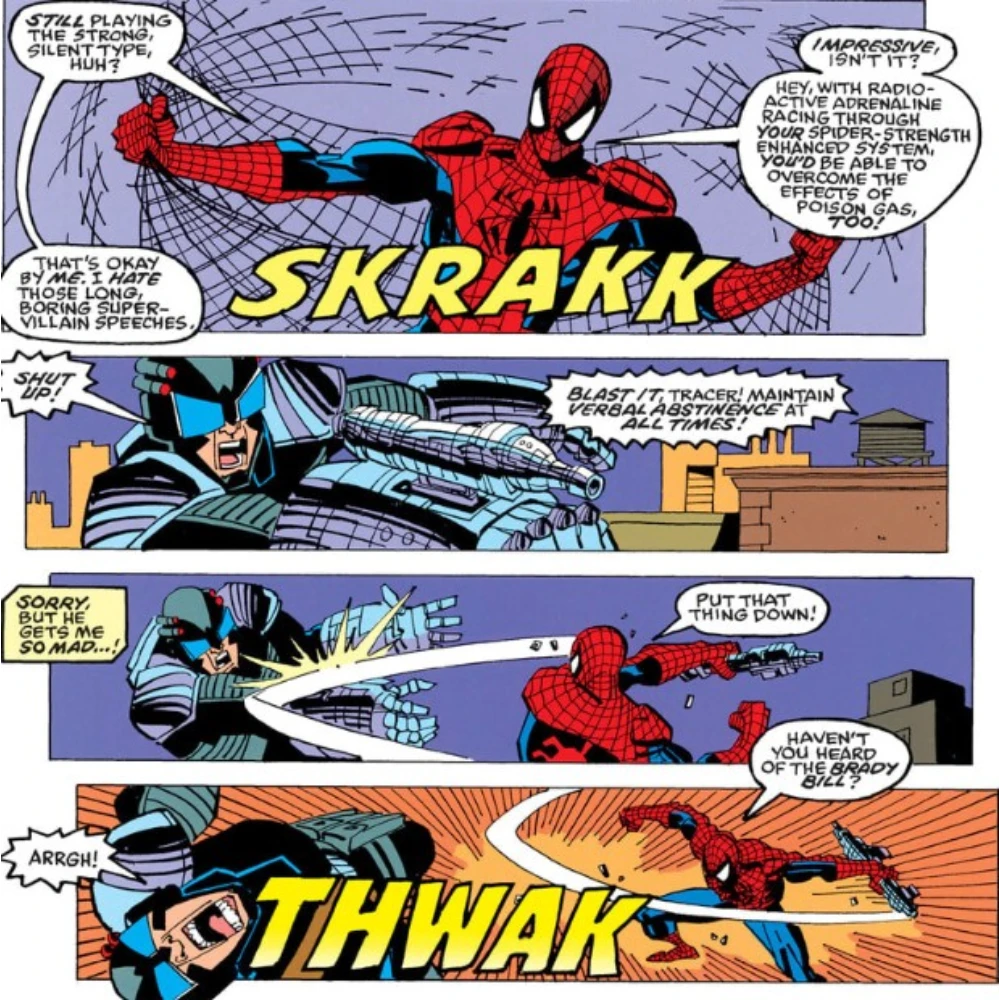
As the arc's central antagonist, Chameleon does fit well, and our writers nicely balance scenes of Spidey battling bad guys with the shapeshifter's side of things. Dimitri, in certain ways, acts as a foil for Spidey: as our hero hunts him down for revenge over the "deaths" of his "parents," so does Chameleon seek vengeance on the Web-Head over the death of half-brother Kraven the Hunter. Responsible for drawing Kraven into his unending dance with the Wall-Crawler, Dimitri also holds Spidey responsible for Kraven's death, either ignorant of or ignoring the hunter's own hand in his demise.
None of this information is administered subtly, but our creators involved do make sure to provide enough engaging nods and references, narratively and artistically, to at least allow the reader fun in making judgement calls. A message scrawled by our hero for the Chameleon in Spider-Man #45 is aped by a message left for Spidey by Chammy in Spectacular Spider-Man #211. Chameleon, able to transform his body at will, experiences certain shifts in partial flashes depending on his emotions, a neat visual trick depicting his face molding momentarily into Kraven or Spidey's, seemingly effortlessly.
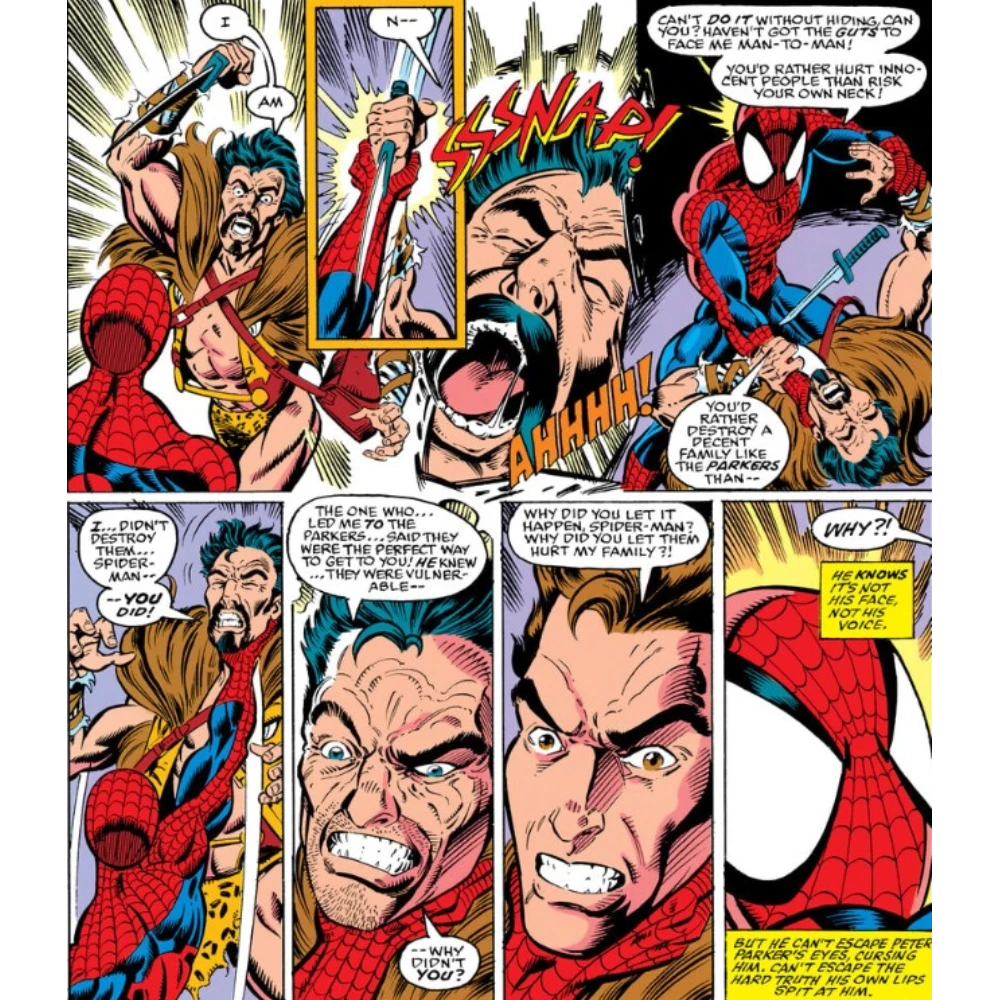
DeMatteis ratchets these aspects up in the finale, having Bagley double down on the imagery without ever needing to provide an explanation. Identity factors into the final conflict neatly, an aspect our writers have teased for the Chameleon–just who is Dimitri Smerdyakov, outside of his seeming obsession with his half-brother?–but DeMatteis plays with the concept more significantly, appropriately applying it to a character whose shtick is taking on the identities of others (if you're always somebody else, then who is the real you?). As the writer for "Kraven's Last Hunt" and its haunting follow-up, DeMatteis being the man to craft the conclusion for this arc feels right, his final statement on the Spidey/Kraven conflict.
Treading deeper into spoiler territory, I want to note DeMatteis also provides the arc one final twist, associated with another villain-centric story of his. Throughout the narrative, Chameleon references an enigmatic benefactor, whose identity is dramatically disclosed in a last-page reveal to close out the story. Like the reality behind Richard and Mary, so does the leering visage of Harry Osborn's Green Goblin bludgeon Peter. Chameleon, for all his hatred and bluster, wasn't the final architect; this whole plot was orchestrated by a man who continues haunting Spider-Man–like Kraven, like his parents–from the grave. Such a reveal doesn't necessarily diminish Harry's sacrificial death, but it further puts into perspective the Green Goblin's machinations prior to the younger Osborn's change of heart and hammers home the ever-present specter of the Goblin legacy.
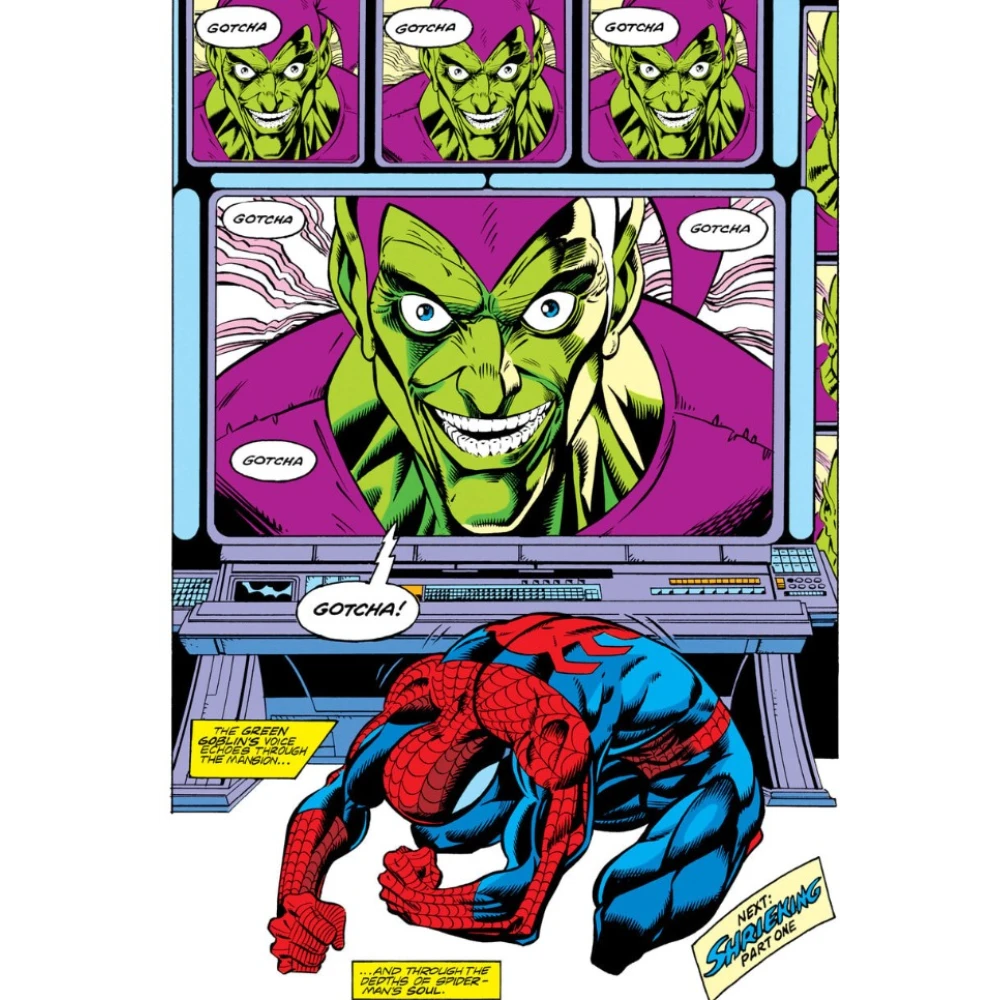
Not a bad follow-up, this four-parter. The emotional stakes are clearly present, depicted in the physical game of cat-and-mouse between Spidey and the Chameleon in a way where you're not always certain who's the hunter or the hunted (an appropriate image, hopefully, given Kraven's lingering presence). Enough parallels are made between the two antagonists to give this arc some thematic heft, and while some of the action itself may be emblematic of 90s tropes, there's a thread here–shown in Spidey's lean toward darker urges–worth following. It's a thread we'll be seeing plenty of in upcoming arcs, and while it certainly unravels the longer we travel, the concept works in a self-contained fashion as the passing of Parker-pretending puppets provides a strong impetus for Peter's venting.