(Strand)om Stories: Captain Britain: Dipped in Science, Clothed in Magic Review
Original ideas struggle to compete with Delano's generally engaging follow-up to previous narratives
—by Nathan on November 4, 2026—
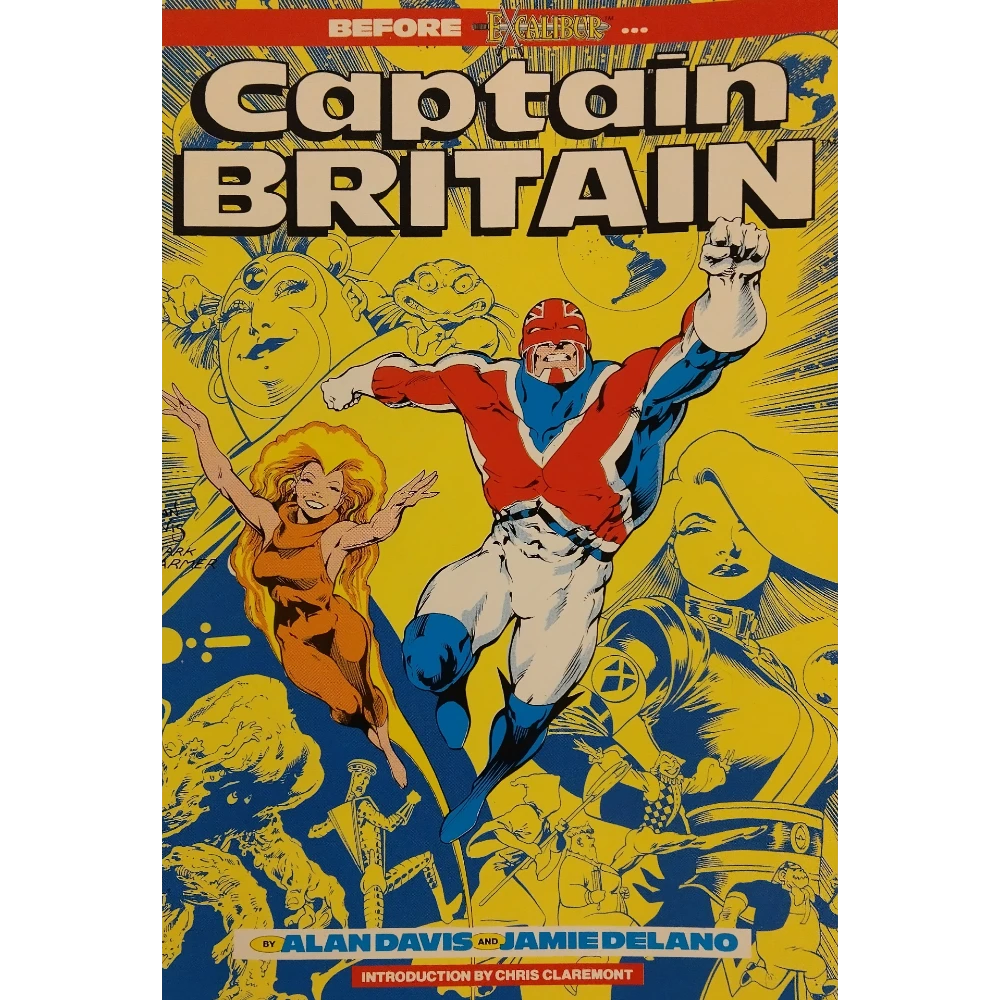
Brian Braddock, the stalwart defender of Britain, be it the United Kingdom of his reality or others, has seen a lot since returning to Earth-616 from a distorted dimension known as "The Crooked World" (or Earth-238, if we want to be technical) That universe, driven dysfunctional by the reality-warping powers of James "Mad Jim" Jaspers, was later destroyed by a power-hungry politician, an event which Brian witnessed. Throw in his resurrection after being murdered by a killing machine called the Fury and facing Earth-616's version of Jaspers (who also displayed those same reality-warping powers), Brian hasn't had his feet set on solid ground for any extended period of time without it turning upside down, around, or inside out on him.
The man could use a breather. Maybe a nice cup of tea.
All that multiversal madness can be credited to Alan Moore and Alan Davis, young minds at the time of those issues' publication. Picking up from previous writers who had constructed a scaffold for Brian, Moore had taken the character's core concept and refashioned it, as the writer seemed often wont to do. The resulting drama, with the ever-flexible Davis illustrating the heck out of psychedelic fight sequences and interdimensional court proceedings, elevated Brian to new heights, or at least drew him into a much grander cosmic opera than any other creator had pulled him into previously.
With Moore leaving the character at the end of his arc (commonly known as "Jasper's Warp"), Jamie Delano was brought in to pen a new series for the United Kingdom's favorite son. No longer were Brian Braddock and his friends relegated to strips within larger anthology issues; he and his companions, with Delano at the helm (with help from a few other writers) and Davis remaining to help steer artistically, were given fourteen issues to explore their further multiversal misadventures.
Captain Britain: Dipped in Science, Clothed in Magic
Writers: Jamie Delano, Alan Davis, Steve Craddock, Mike Collins, and John Tomlinson
Pencilers: Alan Davis and Noel Davis
Inkers: Alan Davis, Noel Davis, and Mark Farmer
Colorists: Steve White
Letterers: Steve Craddock and Annie Parkhouse
Issues Collected: Captain Britain #1-14 and material from Mighty World of Marvel #14-16
Volume Publication Date: May 1988
Issue Publication Dates: July 1984-September 1984, January 1985-February 1986
In a review I wrote two years ago about Delano's inaugural Hellblazer issues, I noted how the writer attempted to emulate Moore's stylings and cadence; it seemed to me Delano latched onto the poetic voice Moore utilized on books such as Swamp Thing and Watchmen and transferred it to Hellblazer. Now that I think of it, such a writing style may have been intended as intentionally respectful towards Moore, as Delano was helping fashion, in John Constantine, a character Moore originally created. In this volume, we find ourselves coming into contact with, yet again, a protagonist already touched by Moore's brushstrokes left in Delano's care. We come to that same crossroads: follow in the footsteps of the character's originator...or forge one's own path.
Delano endeavors a little bit of both in this volume, working to genuinely pick up the pieces where Moore had left them and fashion an organic narrative in the aftermath of "Jasper's Warp" while shifting the series somewhat to his own narrative tastes. Though dealing with some alternate universe shenanigans, Delano seems to want his Captain Britain to face slightly smaller stakes. Brian travels to another universe, encounters another Saturnyne (even as his sister fights a different, more wicked version of himself), plays hopscotch with a few other locations, but Delano is going for a somewhat less fanciful take here.
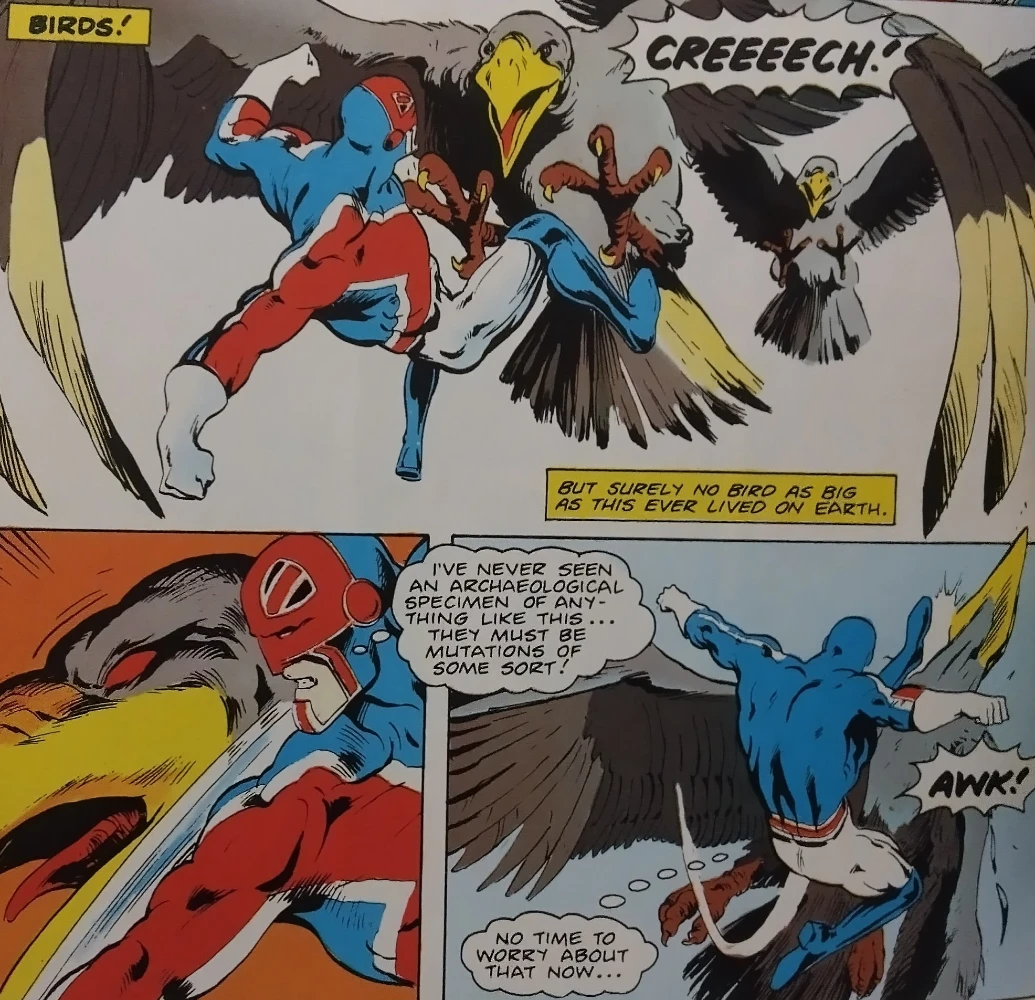
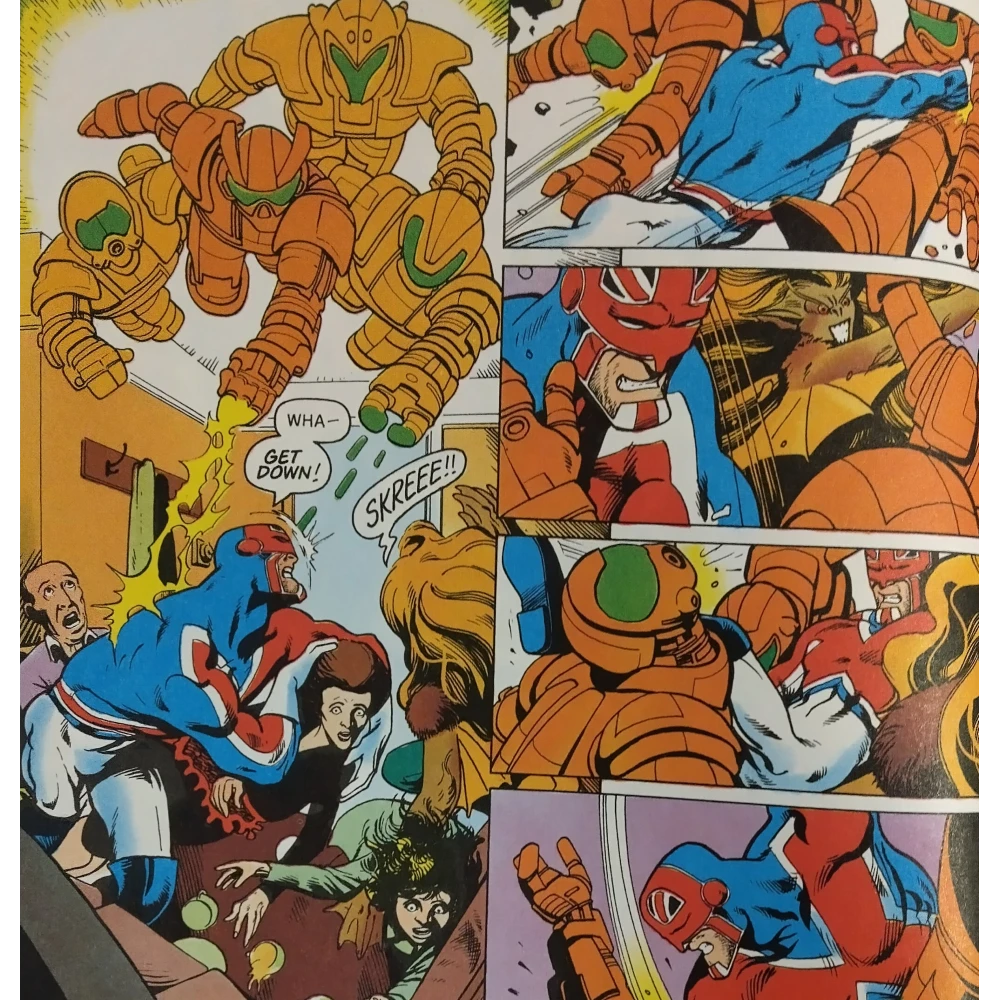
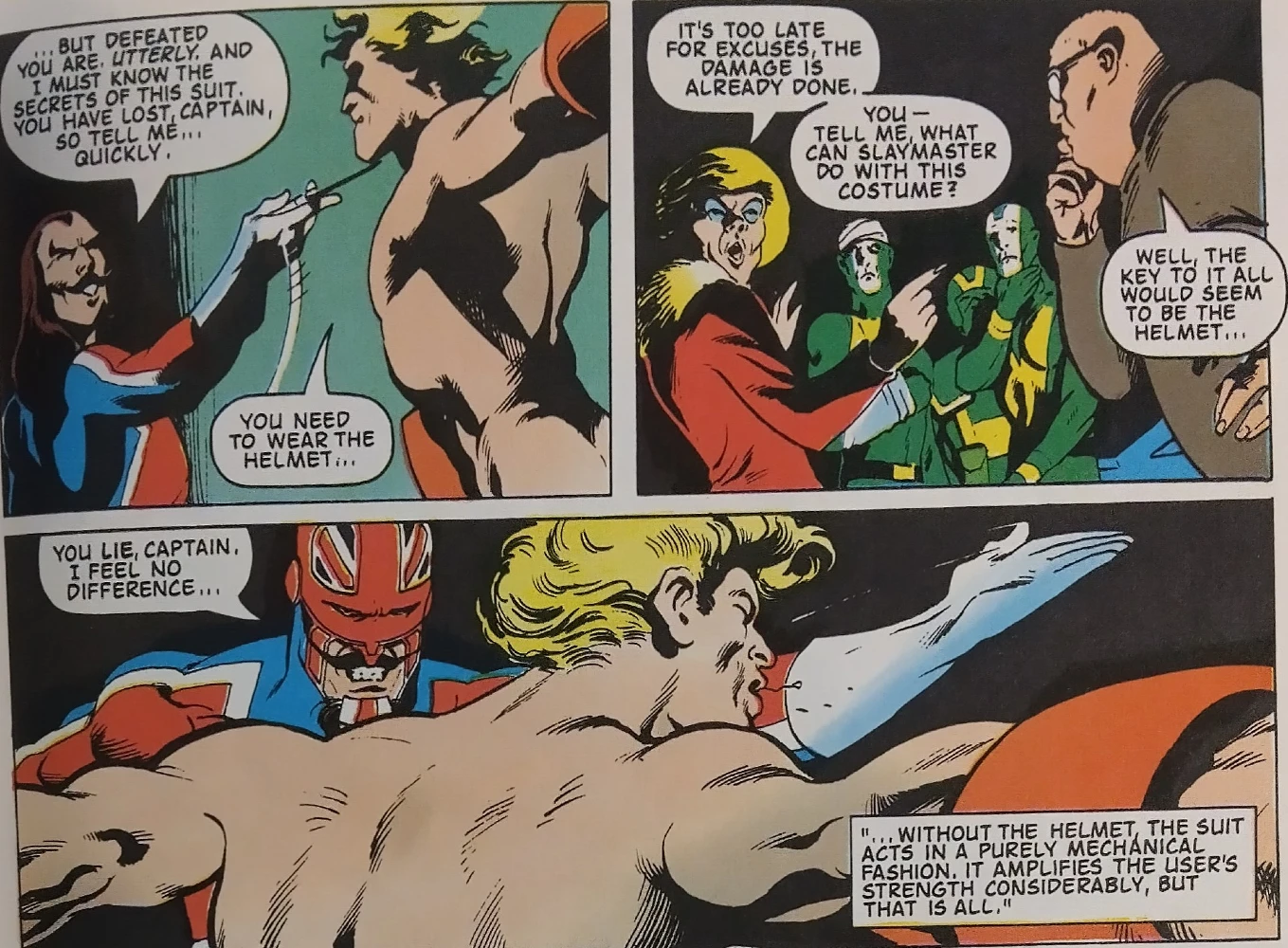
The trouble with reviewing Delano's work overall is that it never establishes the same overarching narrative throughline as Moore's. There is no one story guiding Brian's hand, making me wonder if these fourteen issues were meant to belong to an ongoing series, exploring pieces of Captain Britain's life and those of his allies as Delano saw fit. Yet the stories themselves feel like they happen in fits and starts–Brian faces old foe Slaymaster, who takes Brian's costume for a spin; he encounters several dramatic turns at his residence, dealing with government stooges and mutated children; he travels to Africa to save his brother before finding himself, somewhat inexplicably, in a few other countries. Some of the pieces feel more randomly selected than intentionally structured.
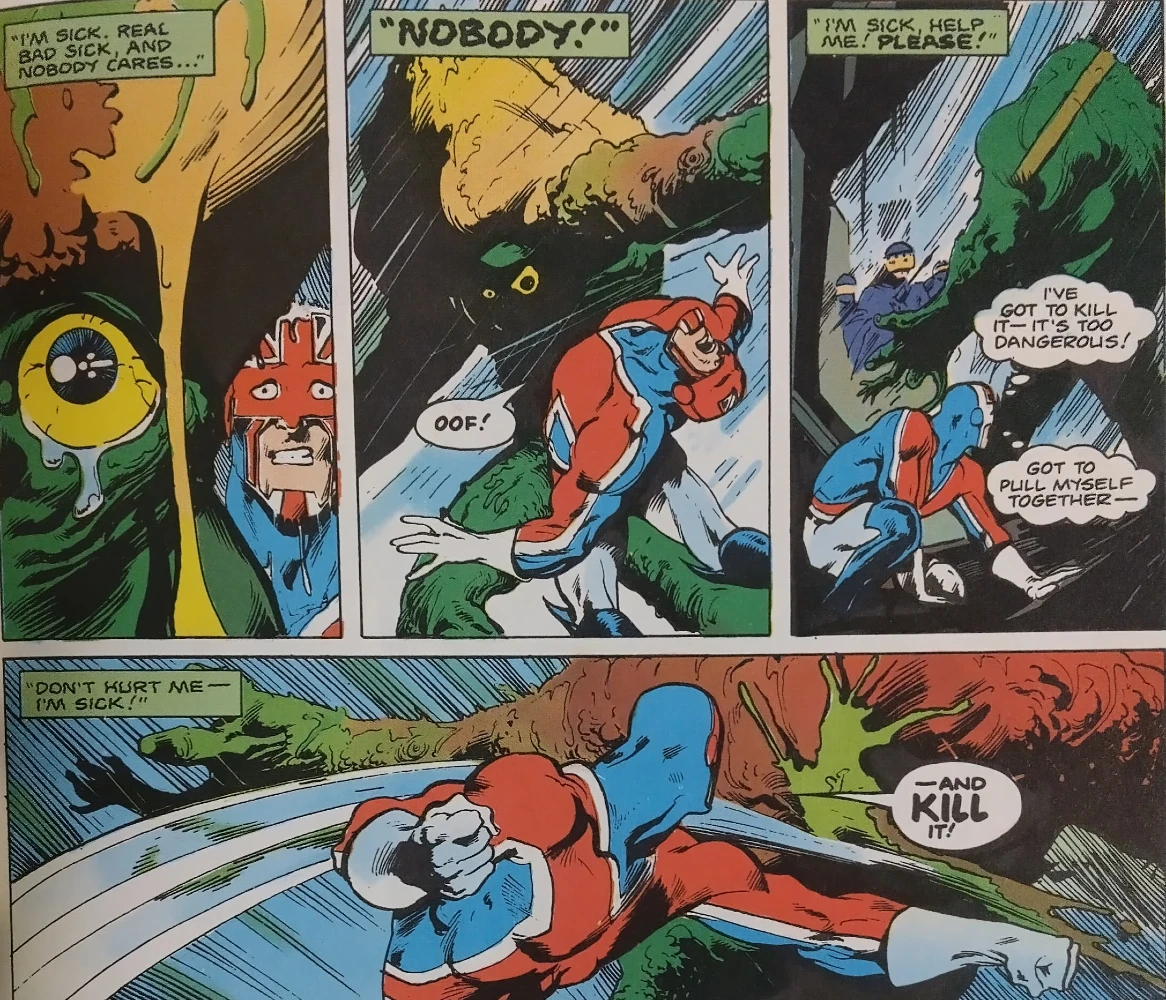
I mentioned an "organic narrative" above, by which I mean Delano makes certain his issues pertain to how Moore left the title. Jumbled as his individual plots seem to be, Delano can nicely string elements from Moore's run in the background, sewing conflict and characters that feel relevant in the fallout of "Jasper's Warp." Delano explores the ramifications of "Mad Jim" Jasper's insanity, with a few characters recalling the reality-bending events and acting accordingly. A police officer remembering the "Warp" tries to piece together Captain Britain's identity; Brian encounters several antagonists who are essentially "refugees" from the "Crooked World," including a poor homeless fellow transformed into a walking malignancy thanks to the Fury ; Delano even adds another (emotional, not alternate) dimension to a certain character by tying together certain plot elements that, as far as I'm aware, weren't previously connected. I assume a retcon is at play, though my ignorance of Captain Britain's original series leaves me guessing. If it is a retcon, it works decently.
There are clever ideas here, maybe not quite to the extent of Moore's capabilities, but Delano can craft his own take on what had been planted earlier. Make of that what will you will, a writer whose original content I find less engaging than his adaptation and continuation of another person's work. It may point too strongly to Moore's storytelling chops than Delano's. But if you enjoy Moore's work, you'll appreciate how seamlessly Delano carries certain threads, in ways I assume Moore would not have considered. Slaymaster assuming Brian's costumed identity delivers a quasi-"Kraven's Last Hunt" narrative, while Delano effectively handles Brian's emotions towards a different version of Saturnyne based on Moore's development.
If anything, while the ideas are clever, they shift along with Delano's issues and locations, never retaining the staying power they deserve. This undercurrent of a post-"Warp" world becomes Delano's focus, and though it introduces good tension and plays nicely into some of the issues, it does impede progress of some other characters and elements I would have appreciated seeing develop. That cop who pegs Brian for Captain Britain? Vanishes for thirteen issues, and when he reappears, his stance towards Brian has changed without us seeing why. Slaymaster pulls his own disappearing act, his rivalry with Brian re-entering Delano's final issue, where it takes a devastatingly personal turn that, though emotionally resonant, comes out of nowhere. Ideas are seeded in interesting ways; the follow-up could have used some additional consideration.
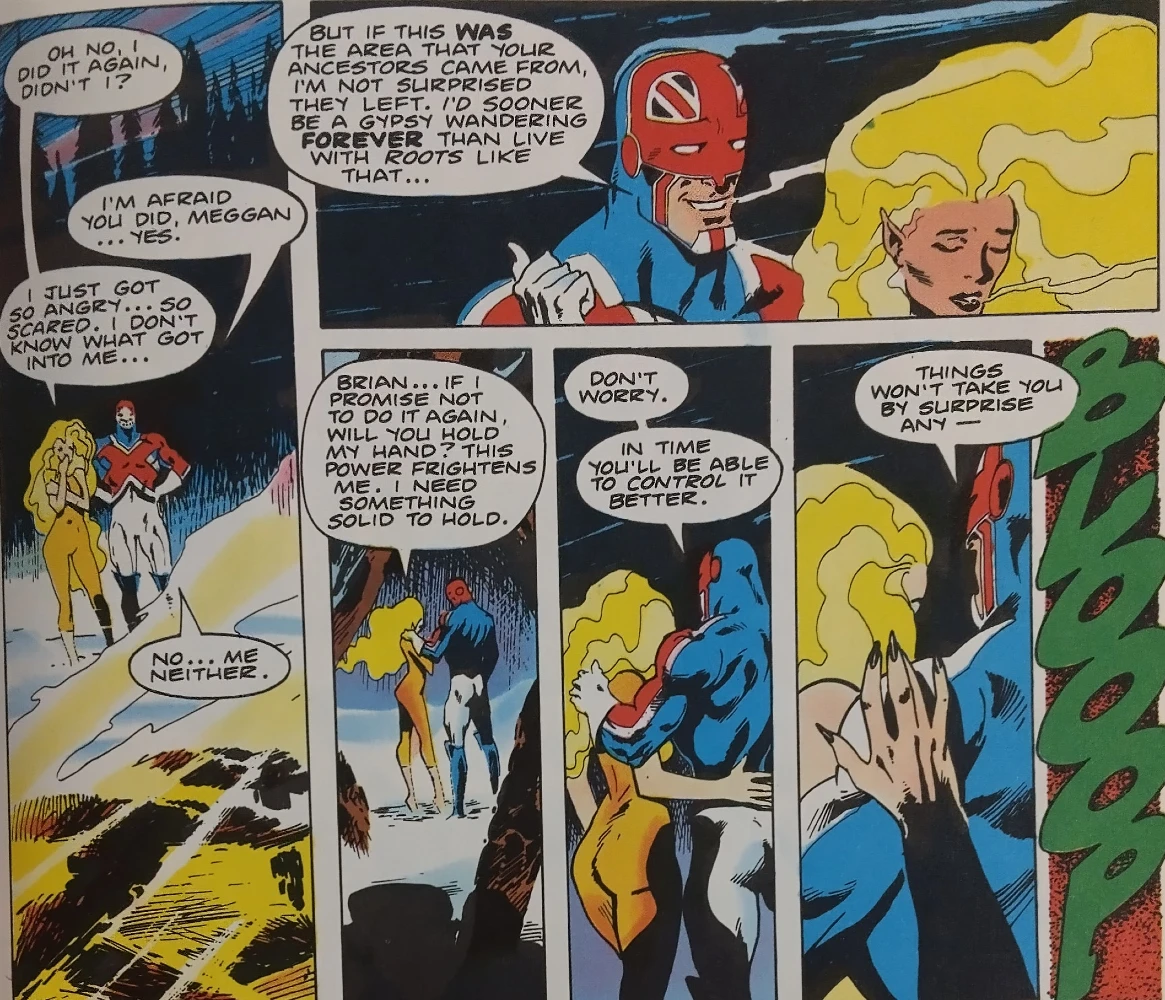
Where Delano does provide more focus can be found in his characters, who do serve the story well. Brian retains the passionate nobility Moore imbued him with, though tempered by some additional doubts concerning the complexity of his role. Delano reintroduces an earlier Moore creation, Meggan, providing her with abilities and a sense of empathy which elevates her character dramatically. If a character-focused subplot can be found, it's in her developing powers and growing affection for Brian. Delano's treatment of Brian's sister, Betsy (the future X-Man known as Psylocke) may cause division among readers–she experiences a few fairly difficult developments, Delano touching on grimmer material through her while providing at least one opportunity for her to fight against a fairly dark situation. There is a strength to her actions, but it comes at the cost of frustrating implications and a twisted development that, I assume, guided her character forward.
Alan Davis, as he did with Moore, brings a strong level of artistic stability to the proceedings. When Delano asks him to craft crazy adventures featuring mutated children and an alternate reality, he's up to the task. His imagination isn't allowed to run as wild as it did with Moore's material, but Davis seems more than happy to indulge in detailed character designs, some globe-hopping environments, and the occasional sci-fi gimmick. Additionally, Davis pens the volume's final issue, doing a pretty engrossing job at developing a denouement. He delivers, as best he can, a sense of catharsis for our cast, straddling the line between a fulfilling ending and the promise that future adventures could one day arise. You finish this volume, not necessarily believing Brian's adventures are at a complete end, but that he's certainly found a better resting point than he was left at the end of Moore's run.
And, per Davis' final panel, he does get that nice cup of tea.
The cover of this collection notes it as happening "Before Excalibur," perhaps to entice readers of that particular super-team. You're more than welcome to jump from Moore's material to Excalibur, I suppose, but you'll likely miss some important developments (you'll also probably need to read some of Chris Claremont's Uncanny X-Men to get a more complete picture). I noted above how I criticized Delano aping Moore for Hellblazer, yet it's when Delano follows Moore's footsteps that he provides his strongest storytelling here. There are some strong character moments otherwise, but the plots feel a tad twisted in on themselves in comparison to Moore's skillful tapestry. The skeins aren't laid out as nicely. If you're looking for a follow-up to Moore's work and want to see what happens in the fallout of those issues, Delano has you covered. His dedication to a strong story arc certainly helps to tamper the weaknesses of some of the original ideas explored (not as sufficiently as I would like) in this series.