(Strand)om Stories: Captain Britain Review
A tad rough at moments, these issues nevertheless lay out an impressive run by young creators honing their craft
—by Nathan on August 13, 2026—
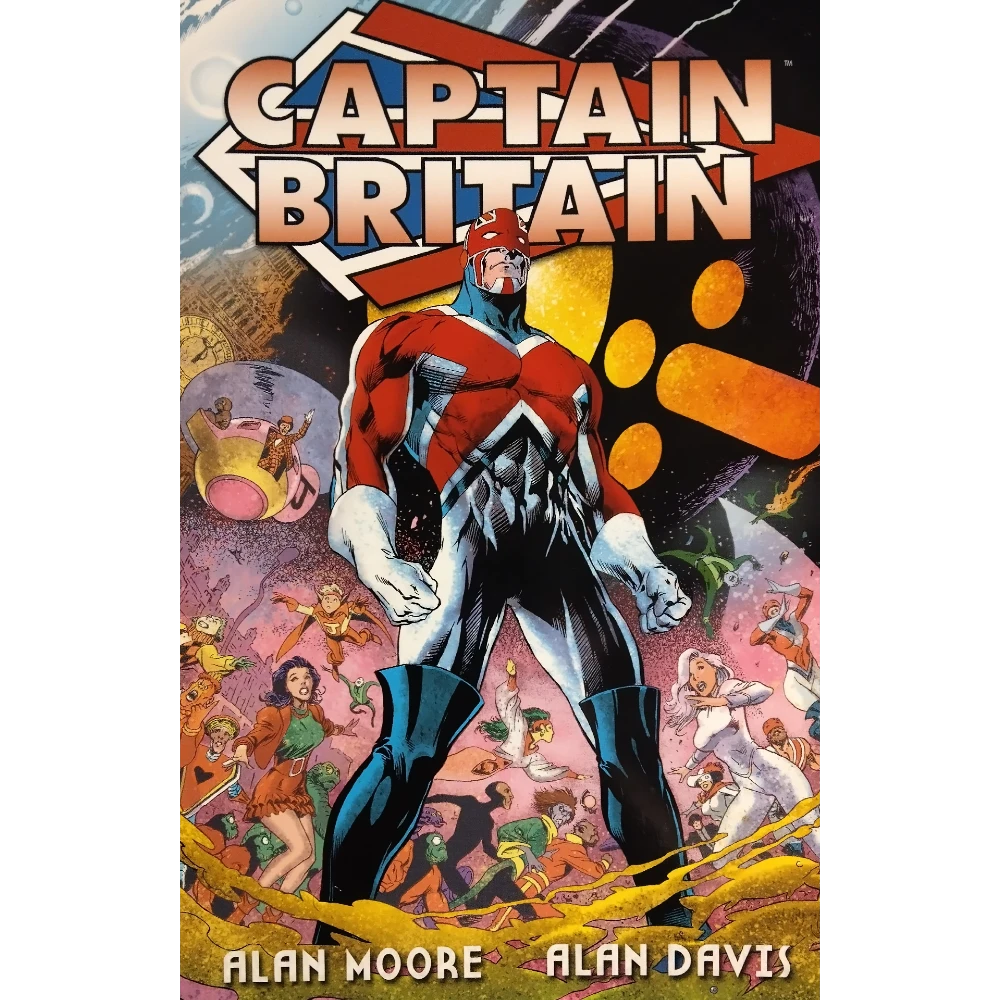
Last August, I covered a volume collecting several sporadic appearances of Marvel's red-white-and-blue hero with the stiff upper lip: Captain Britain. Writers Chris Claremont, Steve Parkhouse, David Thorpe, Alan Moore, and Jamie Delano were all represented, doling out slices of Brian Braddock's adventures as he traveled from one England to another, engaging in a multiversal mission.
That volume was a hodgepodge, a smattering of narratives serving as a primer on who exactly Captain Britain was in his earlier years. Today, we're narrowing the lens to one of those writers, Moore, and his work alongside Alan Davis.
A recap for those uninterested in perusing my previous publication: Claremont established the character, unraveling his mystical origin, with the good Captain then appearing in several issues of his own series, which that volume I reviewed did not cover. Writers such as Parkhouse and Thorpe bandied the character about in a few other publications, not quite sure of the direction to take him. Brian Braddock, aimless wanderer? Captain Britain, seeker of King Arthur's tomb?
What to do with the old boy?
By time Moore takes over the character in the issues collected here, Thorpe has landed Brian and his sidekick, the elfin Jackdaw, in an alternate England, formally ushering the multiverse concept into Marvel Comics. This new England belongs to a universe known as "the Crooked World," sitting on the brink of obliteration, where the powerful Saturnyne is attempting to jumpstart its development. These are the events which bring us to Alan Moore's doorstep, where he has inherited someone else's narrative and, as an up-and-coming writer paired with an up-and-coming artist, must determine how best to move forward, one step at a time.
Captain Britain
Writer: Alan Moore
Penciler: Alan Davis
Inkers: Alan Davis
Colorists: Uncredited colorists
Letterers: Jenny O'Connor, John Aldrich, Steve Craddock
Issues Collected: Marvel Super-Heroes #387-388, The Daredevils #1-11, Mighty World of Marvel #7-13
Volume Publication Date: February 2002
Issue Publication Date: July 1982-August 1982, January 1983-June 1984
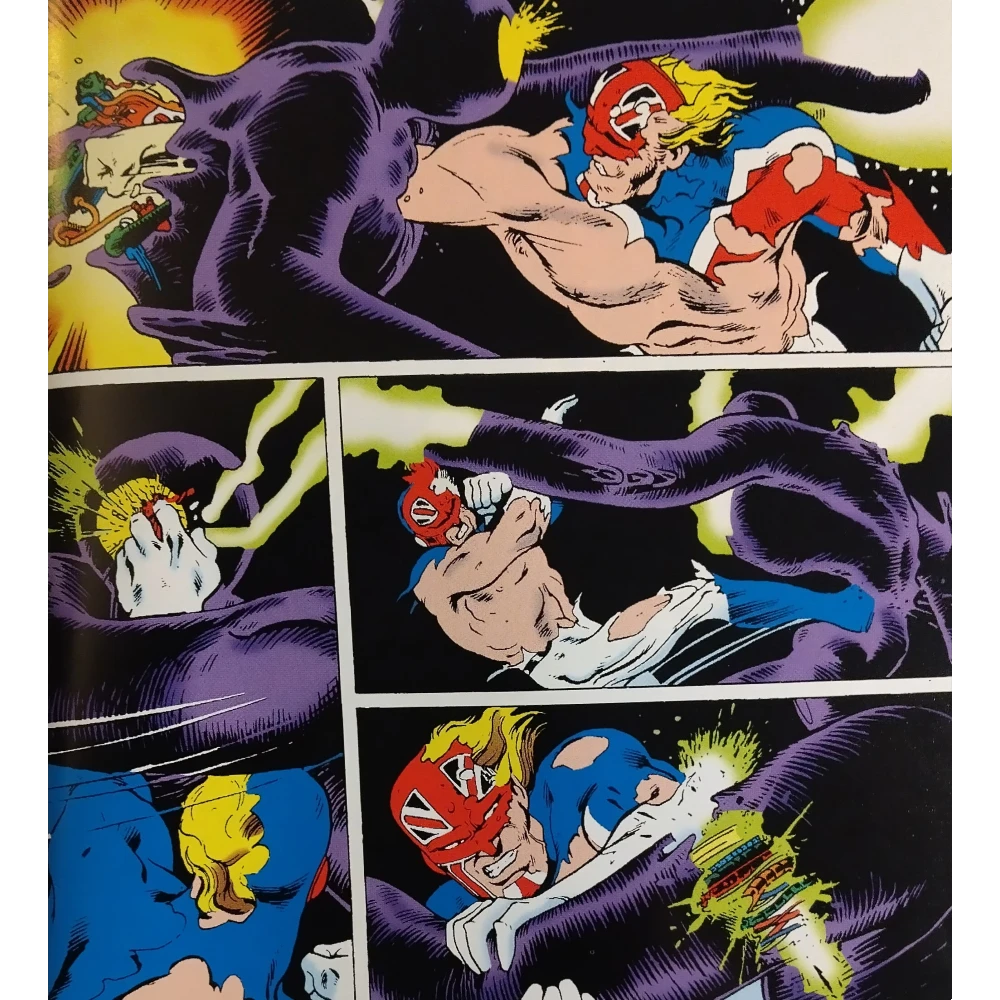
In an introduction to this volume, Moore admits to not having read this material in the twenty years since its original publication. He also admits some retrospective embarrassment on his part, noting that while he finds re-reading his Captain Britain narratives fun, he recognizes they're not exactly emblematic of the writer he would become.
That doesn't mean this material is disappointing, however. It also doesn't mean we haven't seen this kind of story from Moore elsewhere.
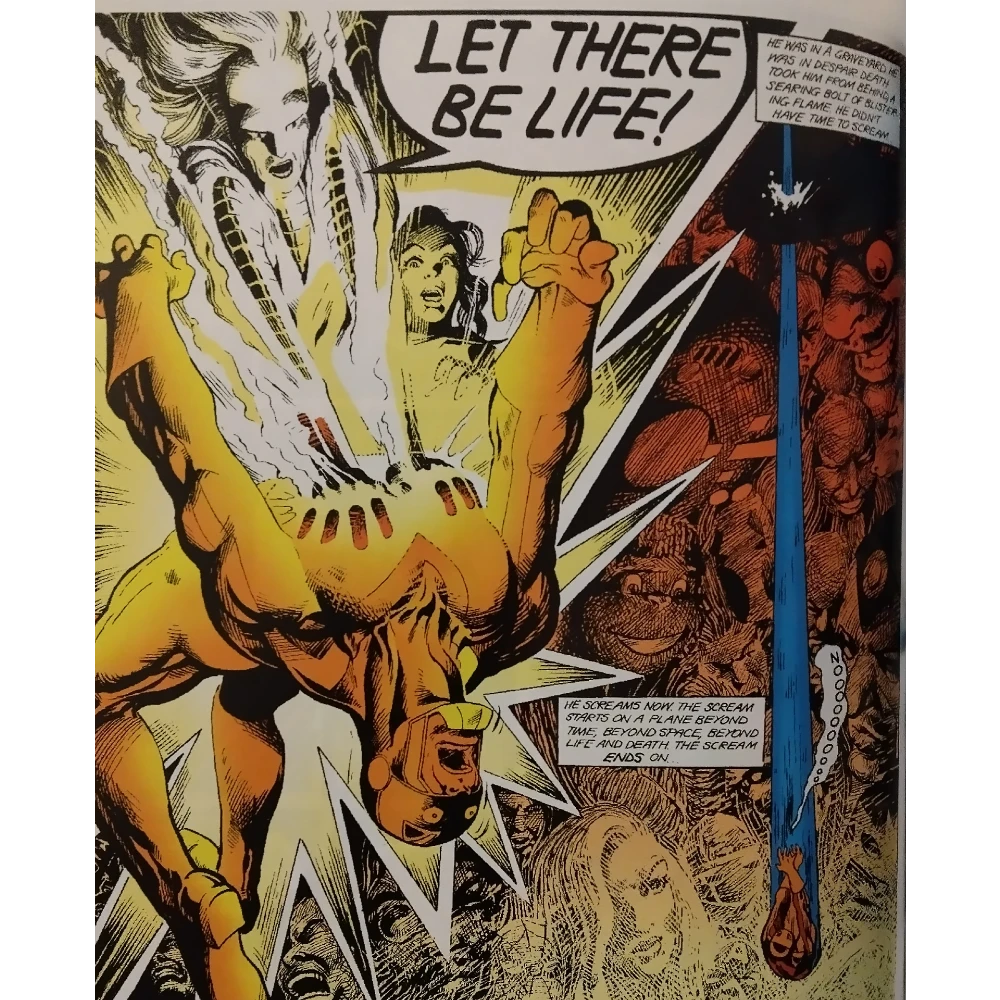
In these opening chapters, Moore, stepping in medias res to a narrative he was handed, must wrap up plotlines seeded by the previous writer, and he decides his best method is by seemingly killing his primary protagonist and rebuilding him, flushing out some of the old material, like an act of narrative nasal irrigation. To that end, not only does Saturnyne also pop away for a time, but Jackdaw is, fairly brutally, murdered before Brian himself bites the dust, and if that isn't a surefire way to lay your claim to a book someone else was writing, I don't know what is.
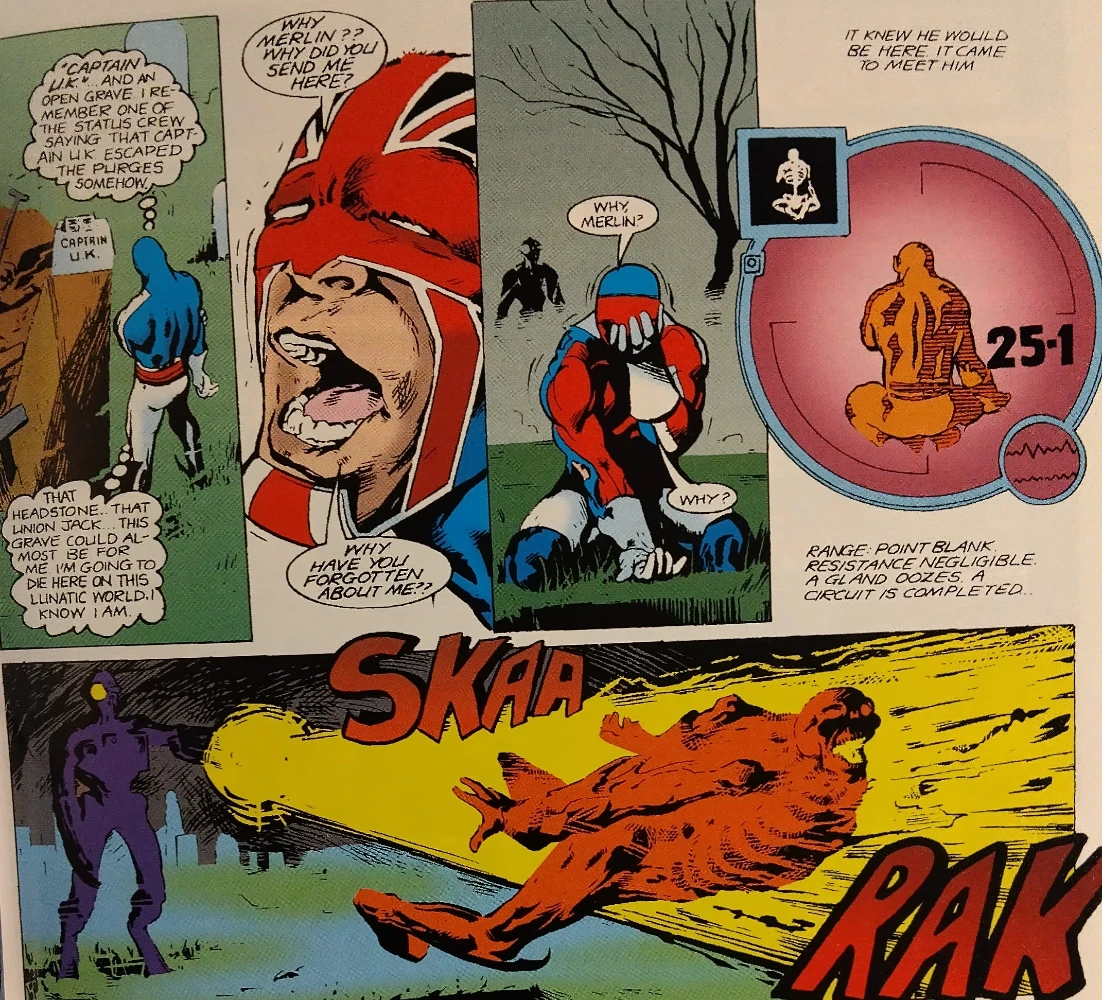
Other folks in other reviews are quick to compare this idea of temporarily removing and reconstructing Brian Braddock with another series Moore wrote for a few years after starting his Captain Britain run: Saga of the Swamp Thing. Moore employs a similar tactic in both series: wrap up one story, distance yourself momentarily from the readily accepted supporting cast, and break your main hero down to his individual components to see what ticks before rebuilding him. The difference, of course, is that Moore doesn't use these early issues to reveal that Captain Britain is only the memories of a British man stuffed into an American body or some other retcon. He just kills Brian, and through the magic of Merlin, brings him back to physical life.
The execution is a tad clunkier here than it is for DC's muck monster. The brilliance of Moore's inaugural Swamp Thing arc, especially "The Anatomy Lesson," is you can't quite tell what he's doing until you've read it. There's the sudden, dramatic reveal: Swamp Thing was never Alec Holland! Your agonizing moment of realization happens in parallel to Swampy's, the crushing understanding that he'll never be human. That this character deconstruction happens while an antagonist dissects the marsh monster adds another engaging layer. For Brian, the process is reversed: his history is broken down while Merlin builds up a new body. It's a clever juxtaposition but outright killing Brian to jumble the status quo is a tad too convenient.
Yet the challenge facing Moore after this ending is the same that existed for him with Swamp Thing: where does one go from here? How to do something new?
With Swamp Thing, Moore afforded the character a new purpose in his environment...to be blunt, his purpose became the environment. For Brian, the idea is somewhat similar, yet instead of a sole environment to oversee, Moore draws him into a much larger narrative. Through Captain Britain, Moore generates the Marvel multiverse, pulling Brian into a conflict that spans multiple realities, even includes multiple Captain Britains, in a story that dramatically ups the ante far beyond what any other writer had tried.
There's a somewhat clever "thumbing your nose" aspect to the whole piece: Moore had come into a narrative set in an alternate England, which James "Mad Jim" Jaspers was affecting with his reality-warping abilities. After resurrecting Brian, Moore seeks out to tell, essentially, the same story, now set in the Marvel Universe proper. It's as if he looked at the previous tale he helped finish and decided he could construct a better narrative.
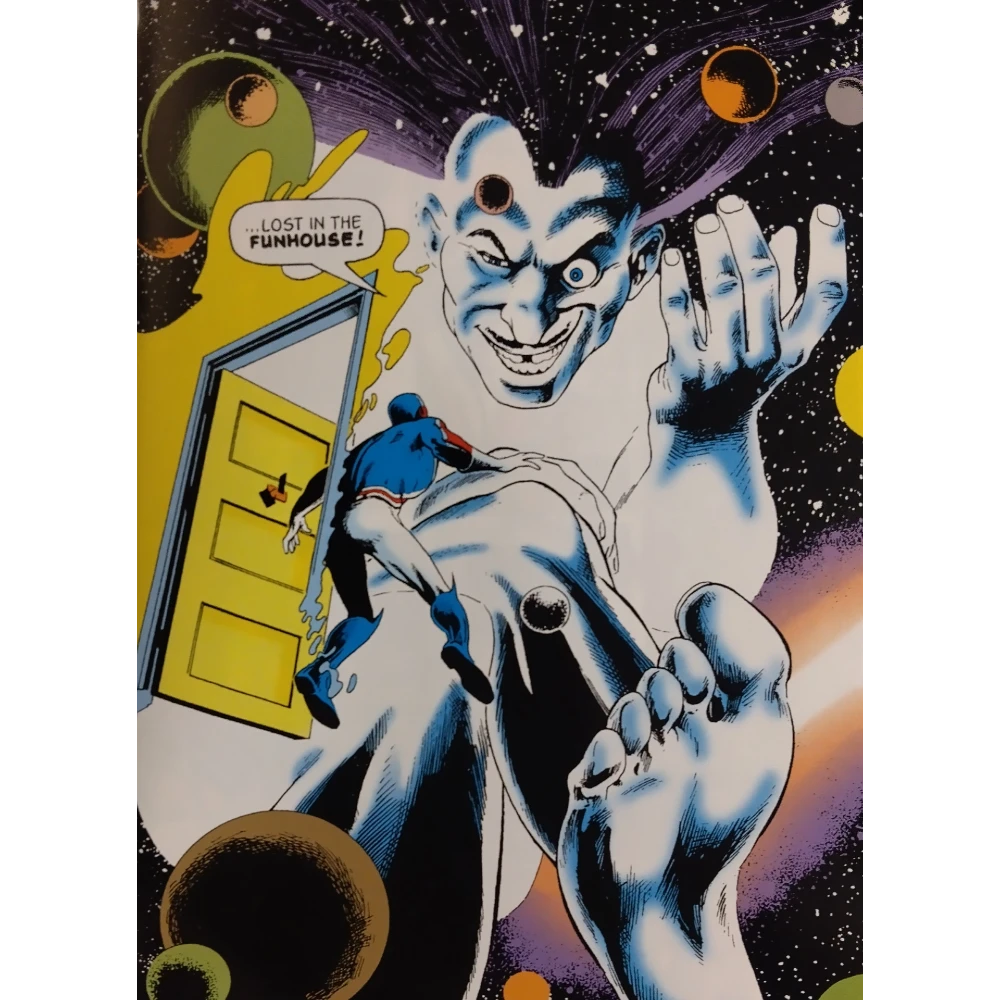
Such storytelling gives Brian an engaging amount of agency, as he is now walking into a similar situation he's somewhat more aware of than he was earlier. If these issues can rightfully be considered a trial of fire for Moore as a writer and Davis as an artist, so, too, is Brian faced with his own fiery baptism as he tackles a somewhat familiar problem with a greater sense of understanding. Moore nicely raises the stakes, especially when Brian comes face-to-face with the Fury, a techno-organic creature that was the cause of his death earlier. Will he make the same mistakes? Has he grown at all? Can he overcome the creature which killed him previously?
As a hero, Brian is fairly noble, doggedly pursuing what he feels is the right course of action in front of him, regardless of the cost. Moore gives him this twinge of inexperience as he first dives into his madcap multiversal crusade, that despite all his adventures, he's not nearly as prepared as he could be for other Captain Britains, an intergalactic courtroom, and folks who can (and, in one shocking scene, do) snuff out whole universes. But would any of us be? Even as the characters around him behave as if squabbling about obliterating a universe is just another Tuesday, Brian provides grounding, a relatable perspective on the multiversal madness unfolding around him. Moore keeps Brian humble, yet his dogged attitude results in heroic acts that force Brian to look beyond the bounds of his confusion or ignorance and make those difficult decisions.
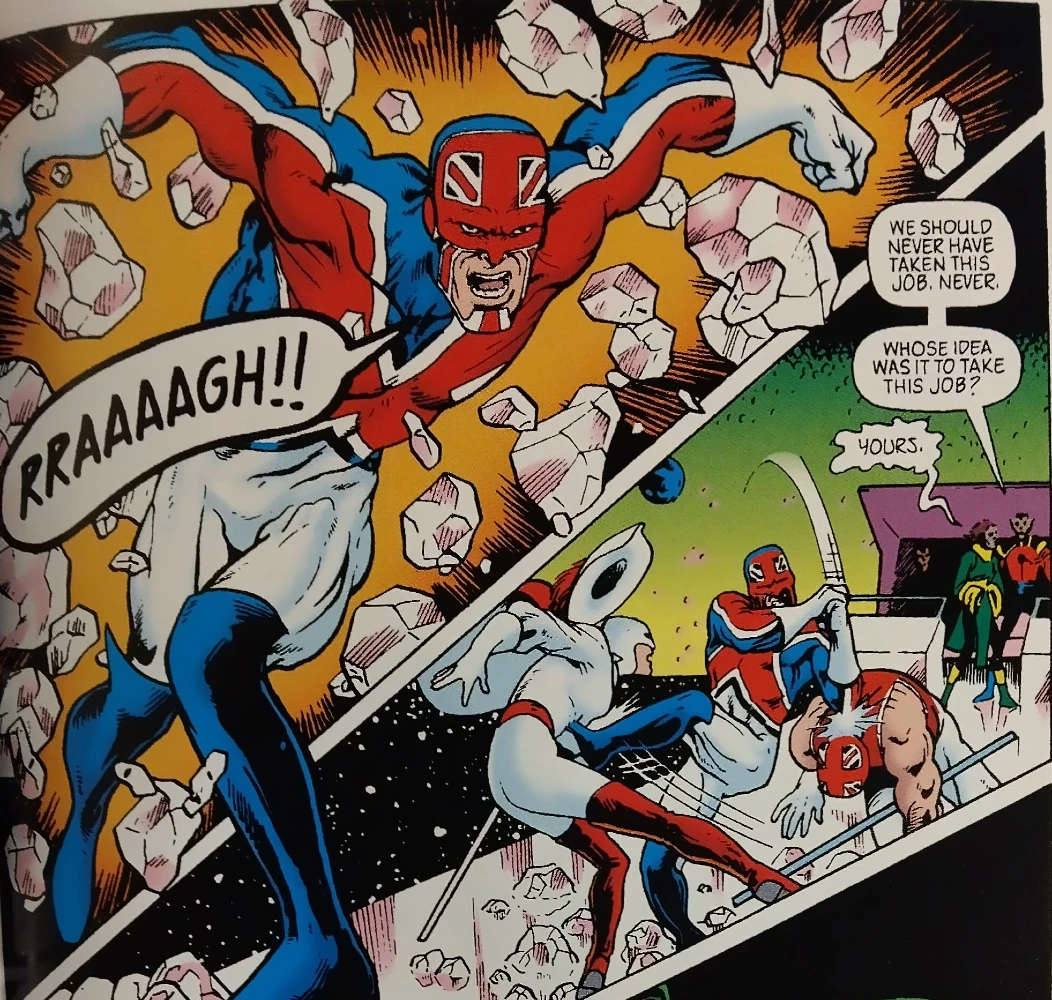
Other elements of plotting showcase some of Moore's greatest strengths as a writer, foreshadowing the deeper cleverness he'd exude on stories such as Watchmen and V for Vendetta. As he winds a narrative around Brian, you can tell Moore's considering the details. But this isn't Chris Claremont, who'd sow hints for tomorrow's stories in the soil of today. Moore isn't interested in planning that far ahead; it quickly becomes apparent he has an endgame in mind (and not just because that's the actual title of his second-to-last issue), and by time you reach that endgame, you see how the puzzle pieces have aligned. A concept introduced earlier in Moore's run returns just in time to engage with the Fury for the finale, generating a unique sense of inflated conflict that feels planned. Characters introduced earlier are given more significant roles the deeper you travel through the issues, particularly a female version of Captain Britain, who strives to redeem a previous failure as the arc closes. There isn't the exact level of consistent cleverness here than what you'd find in Watchmen, for example, perhaps leading to Moore's somewhat self-effacing introduction. But what we get is very good.
Alan Davis is at Moore's beck-and-call throughout the entire narrative, stretching himself as an artist as he adapts to Moore's storytelling sensibilities. You can see shades of Moore's partnership with Dave Gibbons, as Davis stresses the fun background details Gibbons excels at in Watchmen. Particularly amusing is a running gag where Mad Jim Jaspers switches headgear in every panel he appears, these unspoken switcheroos attesting to his reality warping abilities (and, perhaps–and this just an out-there postulation–serving as a nod to the old Stan Lee/Jack Kirby Thor comics, where Odin never wore the same helmet twice). But if headgear feels like a subtle indication of reality shifting, even more pronounced are later issues where Davis is called upon to craft different dimensions, an intergalactic court stuffed with all manner of extraterrestrial beings, and the ever-malleable Fury. We're offered an imaginative smorgasbord, a full menu of Moore's concepts plated with enthusiasm by Davis.
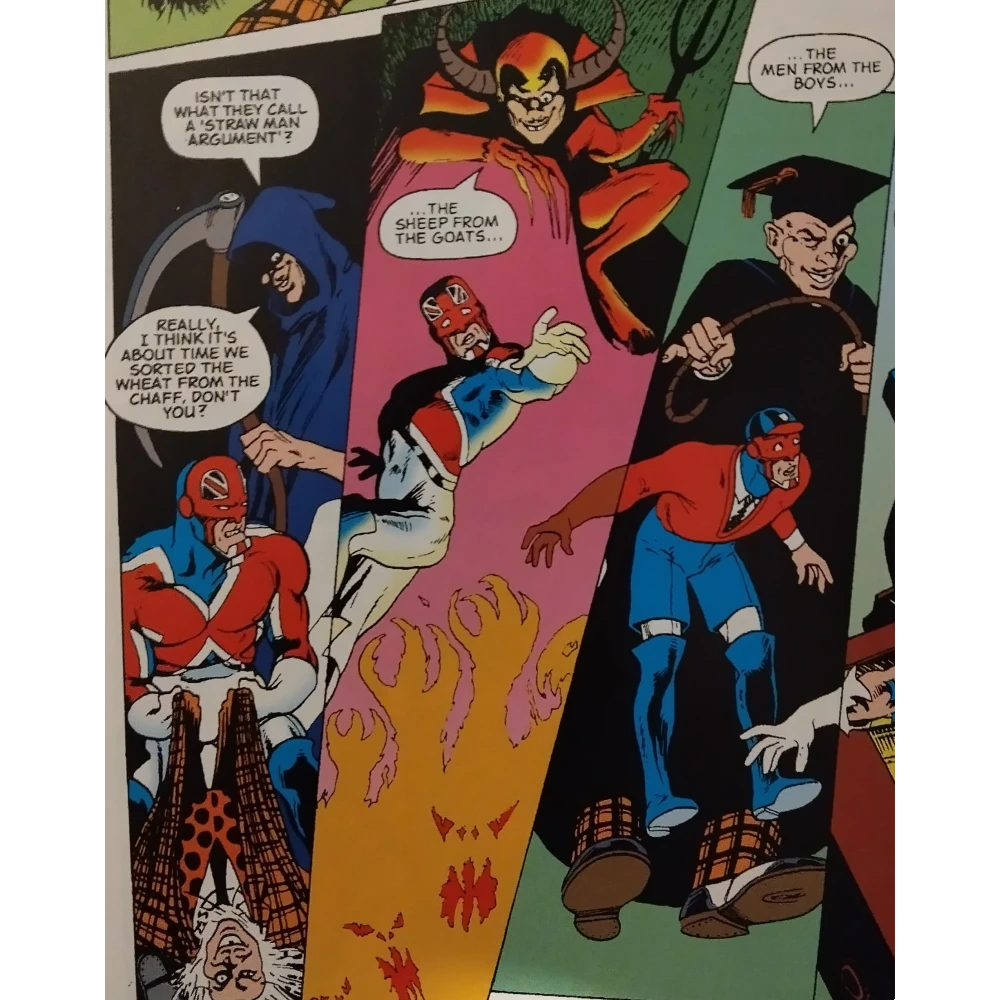
Perhaps because both Alans were relatively new at their craft, it seems Captain Britain doesn't get the same level of attention as Moore's later contributions or even Davis' work on Excalibur. I wouldn't call these issues hidden gems, as both creators have a pedigree that likely lead most readers to sifting through their entire catalog. Yet this arc is nicely ambitious for creators so green, and given their relative inexperience, the whole piece holds together pretty well. Some elements may seem clunky at times, and fans may praise other narratives more highly, but there's not much here to take offense at or indifference towards. It's solid. Give this volume the old university try (is that how they'd phrase it in England?). Captain Britain's one chap you can rely on for an entertaining read.