Distinguished Critique: Adam Strange: The Man of Two Worlds Review
This three-issue arc nicely modernizes and darkens a classic hero's purpose
—by Nathan on November 22, 2026—
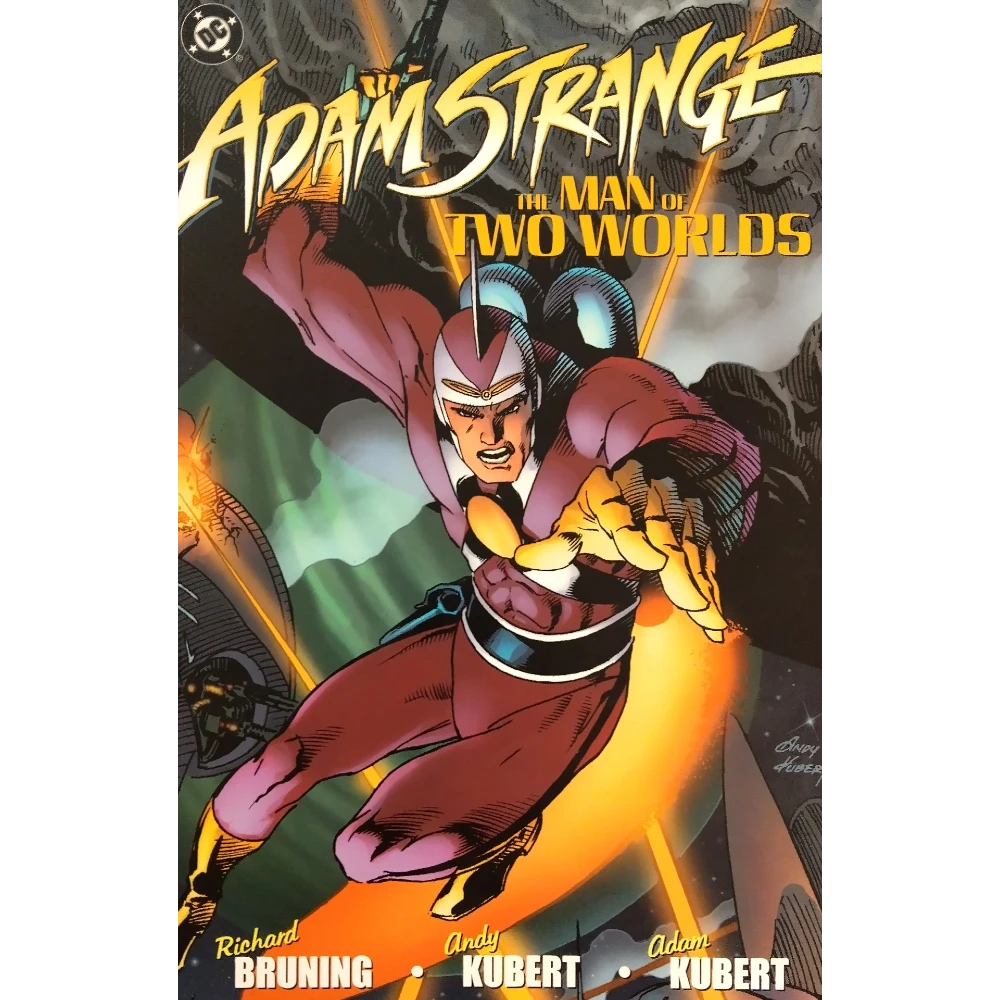
During some of the final issues of his Swamp Thing run, Alan Moore had the monster who once thought he was Alec Holland visit the planet of Rann, finding a physical body in its flora. There he ran afoul of both some visiting Thanagarians and Rann's famed protector himself, the Earth human known as Adam Strange.
Rann was an appropriate place for Swampy to journey for a time, as it was undergoing a food crisis the muck monster attempted to stave off through adding some vegetation to the dying ground, once wracked with nuclear fallout. As Swamp Thing made peace with Adam and left the planet, so did Adam learn that his wife Alanna was pregnant…
…just before he, too, vanished from Rann.
I'm not terribly aware of Adam Strange's history, aside from knowing his main shtick: thanks to a "Zeta Beam" fired by his father-in-law Sardath, Adam makes periodic yet temporary trips to Rann. During his early adventures, as he spent what time he could on the planet, he fell in love with and married Alanna, Sardath's daughter. Moore's narrative added a new wrinkle: Adam was warping in-and-out of Rann away from not only his wife but his unborn child as well.
Talk about your long-distance relationships.
Moore, as I understand it, tried to reconcile some inconsistencies found in those older Adam Strange stories, touching on certain ideas and themes: Rann's genetic sterilization, its fairly homogenous ruling class of Sardath clones, and Rannian society's seeming complacency.
Richard Bruning, DC's design director at the time, tried his hand at writing Adam's first-ever series, a three-issue, prestige format book. In the style of Moore's work and other post-Crisis on Infinite Earths character shake-ups, Bruning would try something different with the Mystery in Space star.
There's sort of a mystery…and this does take place in space…but we'll find there's more to this interpretation of DC's Silver Age sci-fi hero than one might initially imagine.
Adam Strange: The Man of Two Worlds
Writer: Richard Bruning
Penciler: Andy Kubert
Inker: Andy Kubert
Colorist: Adam Kubert
Letterer: Todd Klein
Issues: Adam Strange #1-3
Publication Dates: March 1990, June 1990-July 1990
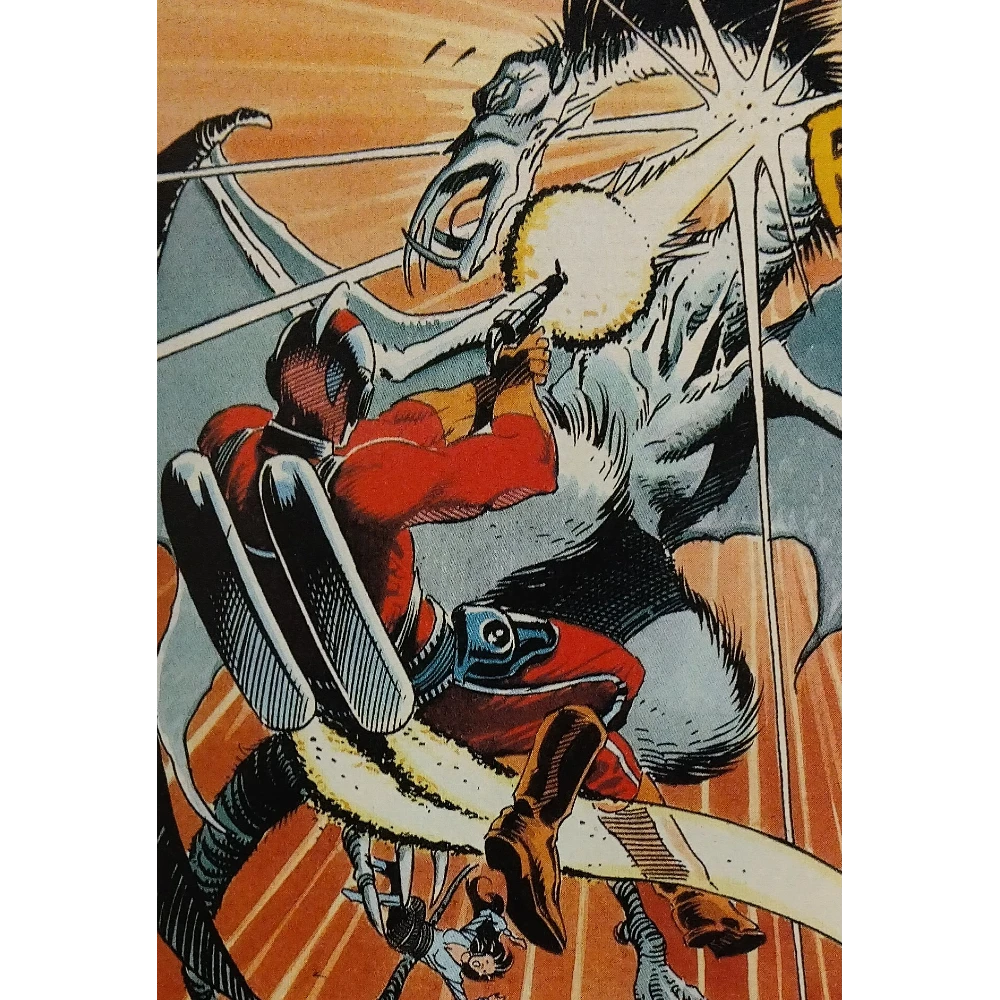
Opening the first issue of Adam Strange, I was hit with a wave of nostalgia for another 90s DC limited series: James Robinson and Paul Smith's JSA: The Golden Age. I've expressed my love for this comic before, praising its tightly wound story which provides deep characterization for lesser-known superheroes and a twisty plot. Adam Strange possesses a similar visual aesthetic, particularly in Adam Kubert's coloring painted across his brother Andy's pencils and inks. The book looks great, both brothers providing grounded visuals for Earth scenes and playing up the sci-fi imagery on Rann.
The story steers us just a little off-course, bumping some meteors sailing to its destination.
As I said above, Bruning cuts Adam Strange from the same cloth as several other post-Crisis protagonists: we're given a more insightful, somewhat darker look at a DC hero that refuses to take core concepts at face value. This seems to have been all the rage in the new DC Universe. It wasn't enough for Bruce Wayne to dress up as a bat to avenge his parents; he needed psychological or symbolic reasons. "Jack Kirby created a Hulk-like monster" wasn't enough for Etrigan the Demon to act heroically; he required selfish motivations to explain why a demon would willingly choose to help others.
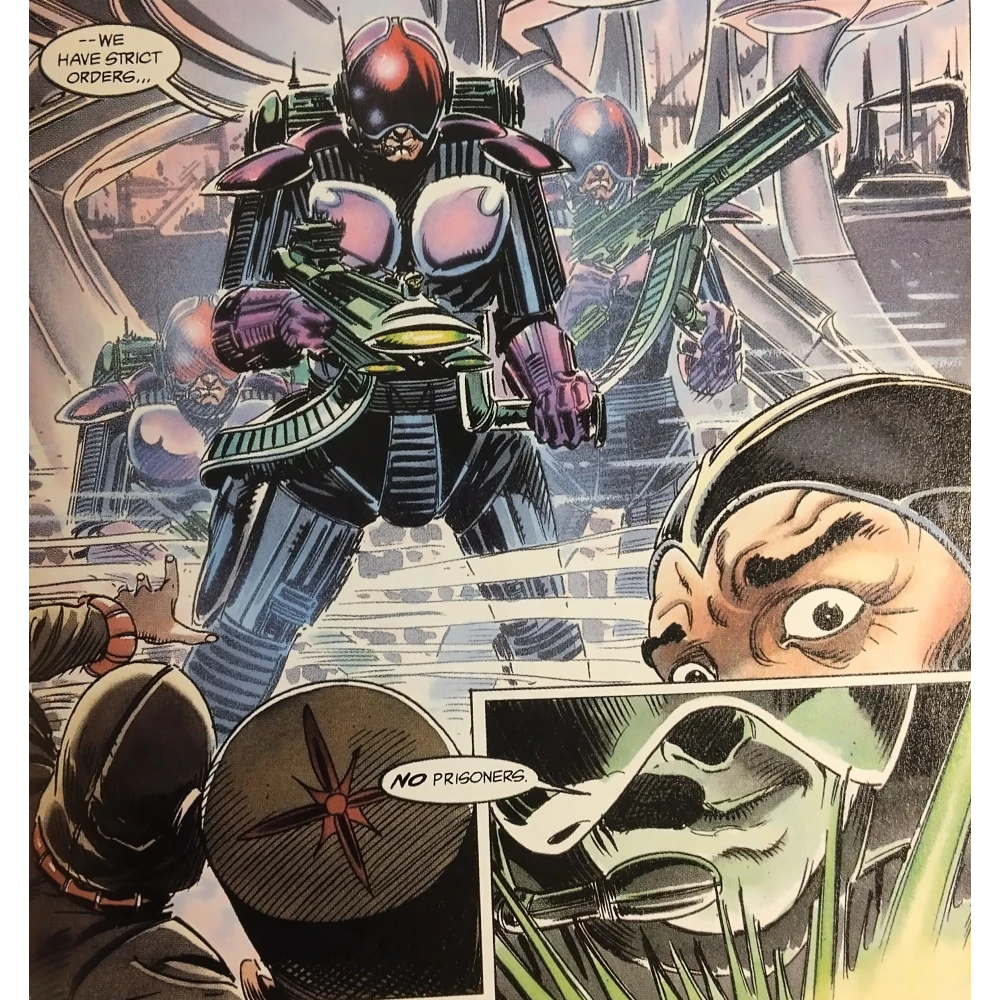
For Adam Strange, being randomly teleported to Rann to help stave off monsters as a hero didn't seem like a strong enough foundation for Alan Moore. There had to be more, something deeper, to the pivot on which Adam's adventures turned. He introduced a few grimmer concepts, which Richard Bruning takes and runs with.
Though this volume is titled "Man of Two Worlds" and the series is just called "Adam Strange," our hero's first-ever solo series was originally touted as "The Fall of Adam Strange." DC went so far as to make a promotional poster with the title. There's an interesting visual juxtaposition happening in the poster, the title ominously declaring Adam's fall while the hero himself rockets upwards using his faithful jetpack.
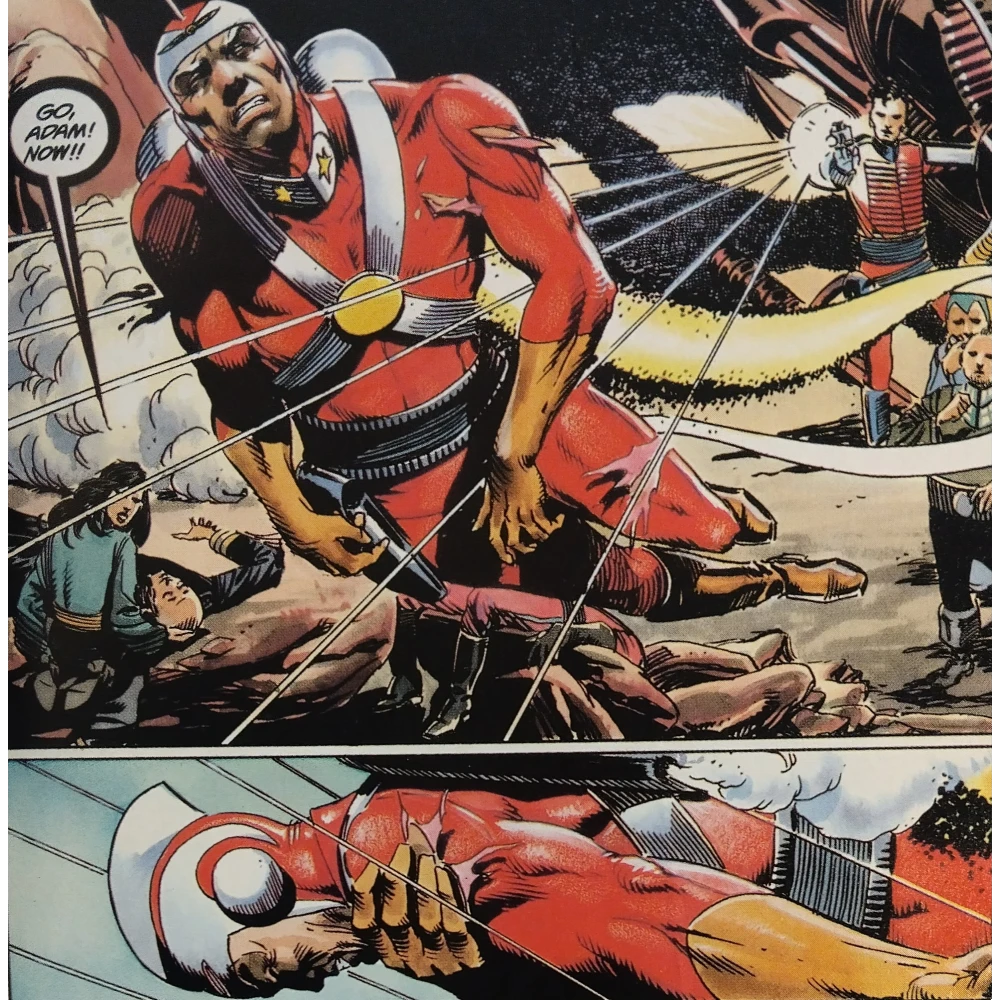
This is the dichotomy Bruning endeavors to achieve, focusing on the fame Adam had received as Rann's hero and pulling it apart to expose some of the ugliness beneath. Why would a human hero, brought accidentally to an alien planet, be relied upon by that planet's leader as its savior? As Delaken, a Rannian city guard with eyes for Alanna who can also fire a blaster and fly with a jetpack, indicates, he could just as well serve in Adam's position. Bruning believes a deeper, darker reason exists for Adam's involvement, and he tugs at those strands fairly well.
The premise makes you think, makes you grapple with the reason for Adam's heroics. You won't blame Adam himself for the situation, but Bruning does enough to make you see the charmed lifestyle he possesses. A lovely wife, a child on the way, a museum dedicated to his exploits…all because he was an archaeologist who was in the right place at the right time on Earth when Sardath first fired his beam? The whole situation seems a little neat and tidy, don't it?
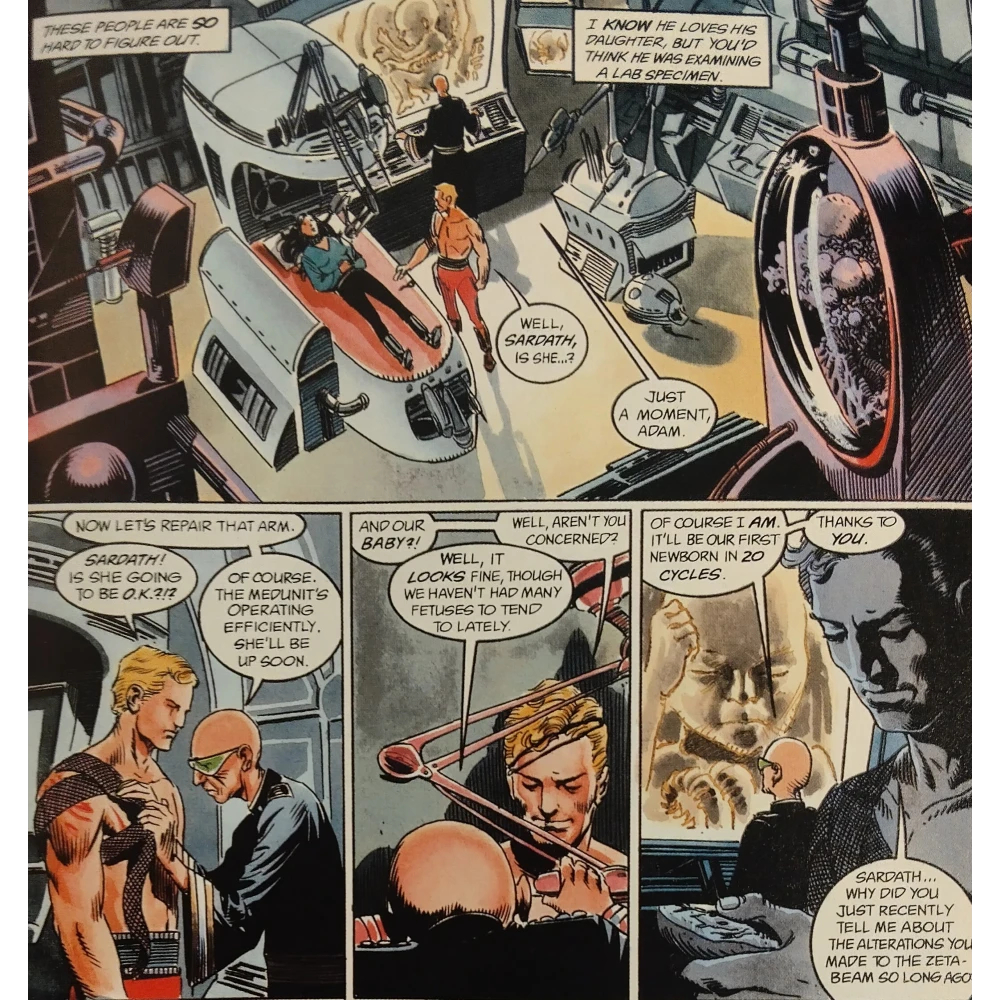
Two narrative components are founded in Bruning's exploration which work well for the series: first, Adam's character. I don't know how much of a backstory Adam received prior to this series, but our jetpack joyrider emerges as a more well-rounded protagonist than I would have assumed initially. Warping back home to Earth one last time before receiving one final jolt from a beam which Sardath promises will make his placement on Rann permanent, Adam is faced with a few final pieces of life to lay to rest. Bruning takes pains to unpack aspects of Adam's childhood and family life which help you see why he steered his life in the direction he did, such as an older brother whose restless lifestyle influenced Adam's own archeological adventures…and perhaps encouraged him to embrace the role of hero on a planet as far away as one can could get from a frustrating home life.
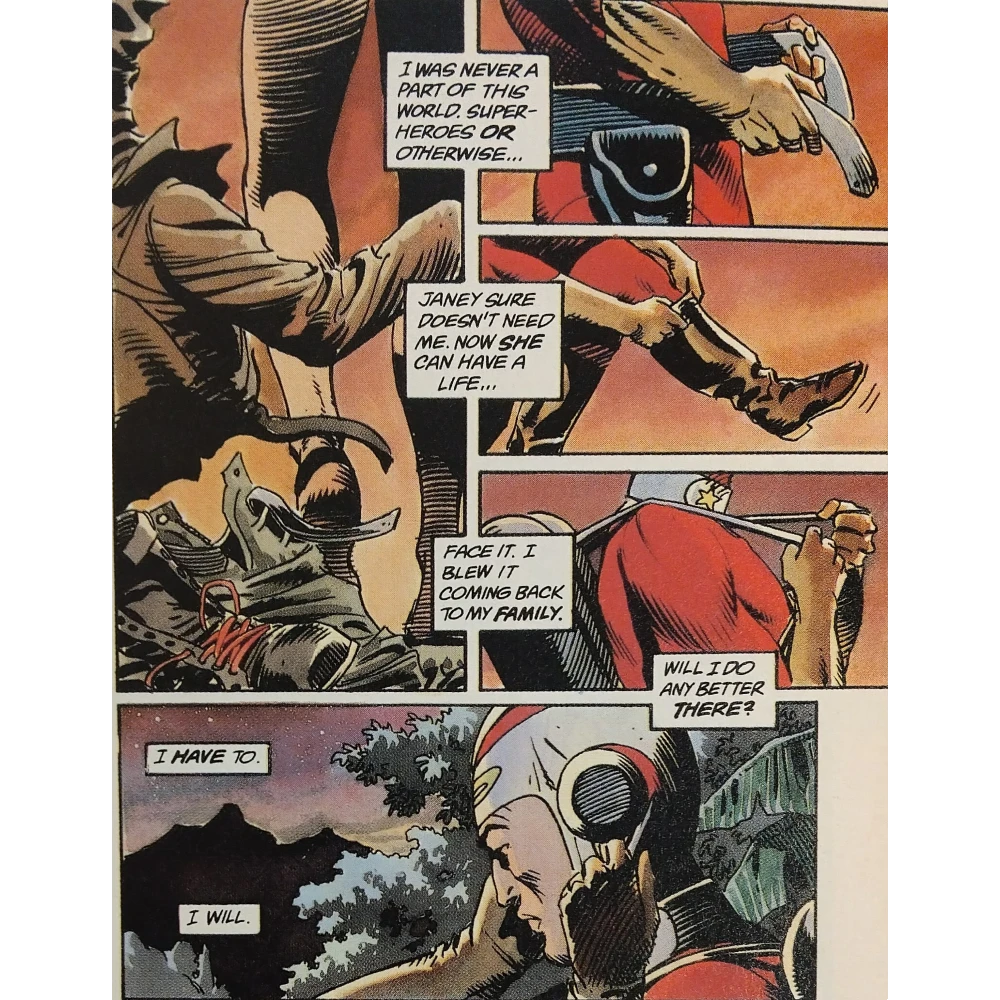
With Adam on Earth, Bruning toys with the "man of two worlds" aspect well, placing our Mr. Strange on a homeworld where he doesn't seem to fit, where his family cannot accept the fantastic voyages he's routinely undertaken. Still feeling obligated to make a go at it, Adam just cannot find the normalcy necessary to fit in with Earth life, so far removed he has been so often. He's torn between the choice to strap on a pack and jet around blasting aliens and or go back to the reality of a dying father and estranged sister, and you can see why he longs for Rann. He's someone there. Similar to the mystery men and women of Robinson and Smith's Golden Age, Strange has found a home alongside the incredible, and he cannot tear himself away.
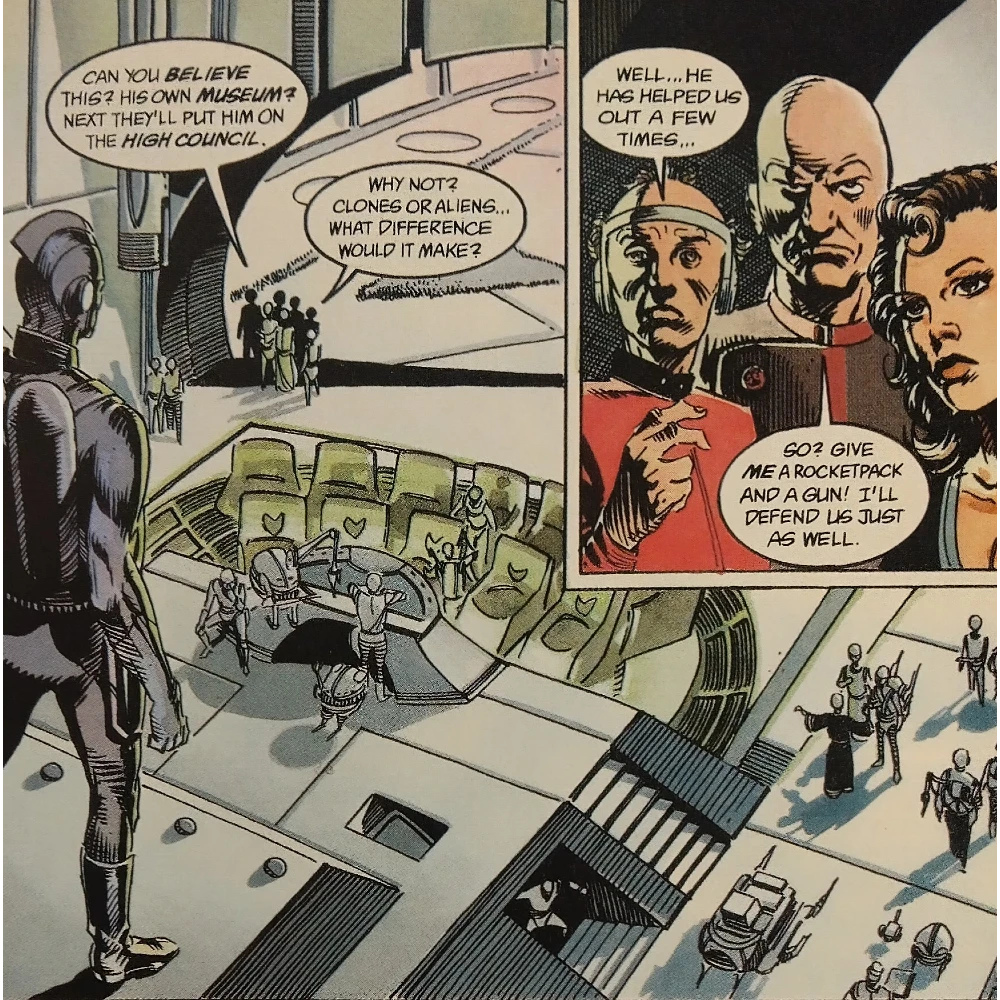
This bleeds well into the second component, the societal aspect which Bruning comments on well. He toys with the notion that Adam's fame, a core component of the hero's identity which fuels his behavior, is somewhat fabricated. Bruning introduces Rannian characters who are frustrated with Adam's position, nonplussed by the museum devoted to his exploits, underwhelmed by Sardath's leadership. Rann is, seemingly, a paradise, protected from without by Adam's heroics, run by within by technological advances. And yet with saving and advancement comes complacency, folks whose ambitions have grown sterile. Society no longer seems able to move ahead, and the inability of some to sit still in rapturous admiration of the Earth guy who can fly just as well as their officers fuels engaging external conflict.
If you've seen the second Incredibles movie, you'll likely remember a scene where villain Screenslaver monologues on society's growing laxity, especially concerning costumed crusaders: "Superheroes are part of a brainless desire to replace true desire with simulation." That sums up Bruning's core conflict nicely enough. He achieves a decent amount of irony, pitting Adam's own perspective of his heroism, especially under the watchful gaze of Sardath, against the people's response. The latter half of Bruning's series deals with the downfall which occurs on Adam's return, as Rann's stalwart protector comes face-to-face with the realities he has not yet seen of a society turned against him that, just maybe, he needs to defend at least one more time.
Where Bruning's narrative can somewhat lag is through the introduction of a supporting Earth character who becomes far more important than I feel is warranted. Said character introduces a strand of tension to Adam and Alanna's marriage which is unnecessary and comes off as sour, with later panels dedicated to their own journey which could have been repurposed for better use. Bruning works to defend the character's inclusion by having them play an important role at a critical juncture, and while their involvement is beneficial, it makes you feel Bruning only wanted this character around for that specific incident and thus forced them into the rest of the narrative unnecessarily.
When the narrative focuses on Adam and his struggle, Bruning and Kubert craft an engaging story that refashions a classic character through a more modern, deconstructionist perspective. We're given glimpses into different pieces which have shaped who Adam is now–his past on Earth, his present with Alanna, the duality of his heroics and his relationship with Rann, even the manipulative elements which transform his societal importance into something of a fable. Adam becomes a cog in a machine more nefarious than he realized; watching him come to the realization and react to it guides the series along well, far better than the inclusion of a smaller cog with blunted teeth that just annoyingly clicks as it rotates.