Distinguished Critique: Batman: Prey Review
Doug Moench and Paul Gulacy successfully peer into the Dark Knight's subconscious in this taut psychological thriller
—by Nathan on February 25, 2026—
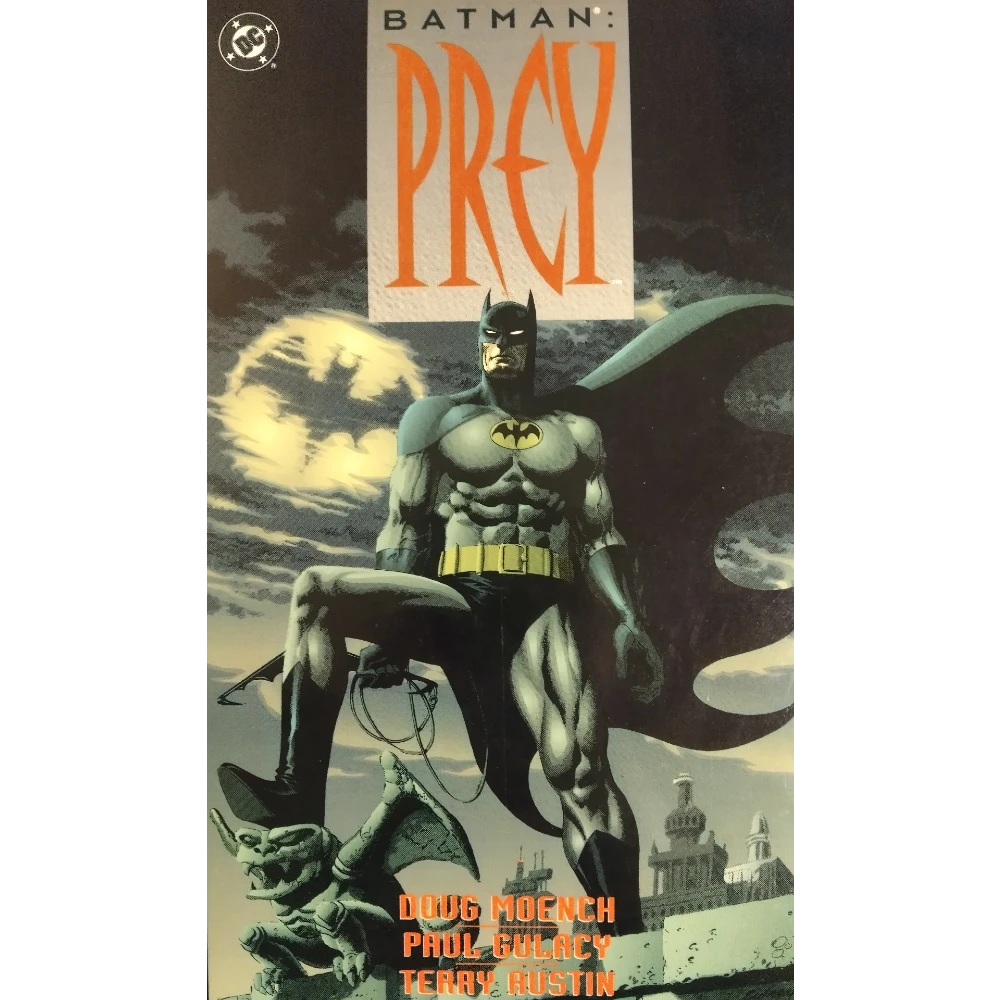
I have previously reviewed two early arcs in DC's Legends of the Dark Knight series, a title intent on examining Batman's earliest days. "Shaman" was a Denny O'Neil/Ed Hannigan murder mystery which provided an explanation behind Bruce's adoption of the bat motif, while "Gothic" allowed Grant Morrison and Klaus Janson a fairly grim look into Bruce's youth. Both narratives, interestingly, hinged on the possibility of mystic elements, with O'Neil weaving shamanistic rituals into Batman's identity, while Morrison toyed with the possibility of an immortal serial killer, an unquiet ghost, and the devil himself.
Real down-to-earth Batman material, y'know?
I enjoy both stories well enough for what they are, but for Legends' third arc, I was glad to see the mysticism and spirituality haunting previous issues taking a backseat to street level antics. Writer Doug Moench, paired with frequent collaborator Paul Gulacy, was tasked with revisiting the first conflict between Batman and one of his earliest recurring adversaries: Dr. Hugo Strange. We're setting aside ghosts in white sheets in exchange for men in white coats, foreign tribes for homegrown mobsters, and a haunted castle for Wayne Manor's pristine walls. But even in Gotham, especially in Gotham, Batman finds there are some shadows he cannot outrun…those on the inside.
Batman: Prey
Writer: Doug Moench
Penciler: Paul Gulacy
Inker: Terry Austin
Colorists: Paul Costanza
Letterer: Steve Oliff
Issues: Legends of the Dark Knight #11-15
Publication Dates: September 1990, November 1990-February 1991
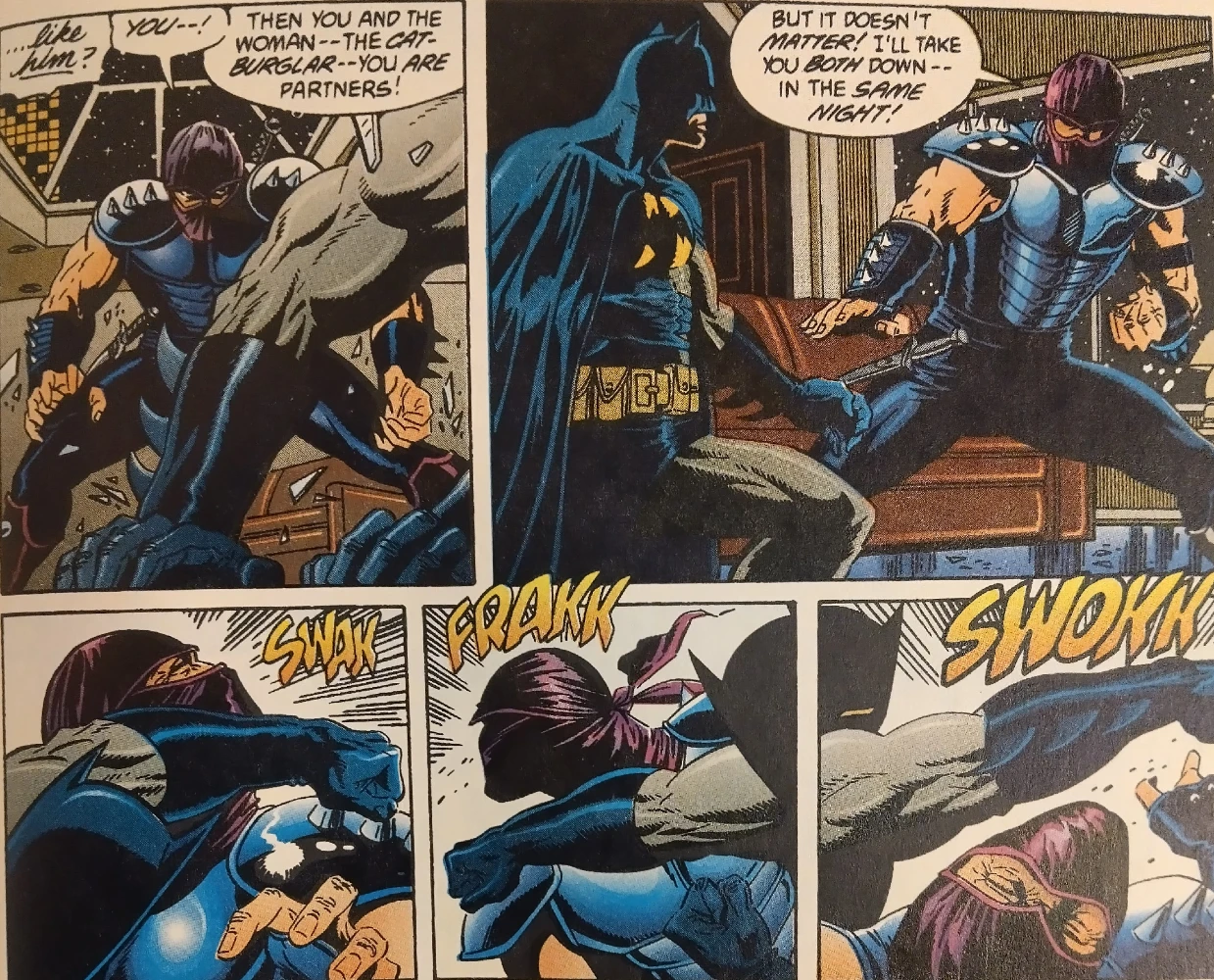
I noted that I enjoyed "Shaman" and "Gothic," but I'll admit there's generally something about Batman stories tackling mystic or spiritual aspects which always leaves me a little annoyed. It's not that I don't think such stories can utilize interesting themes–look at how Jim Starlin folds certain ideas into his acclaimed Batman: The Cult limited series–but it's how stories such as these can occasionally hint at some greater, unknown powers without providing a concrete answer which causes consternation. Batman's world is all about concrete, the tangible city he drives, swings, or glides around, the feel of a common street thug's chin under his gloved knuckles. Toss in ghosts or rituals, and things can get a little fuzzy.
So when we get something solid, like Moench and Gulacy's "Prey," I find myself more appreciative. This five-issue narrative draws us into the heart of a gritty Gotham, where a novice vigilante is working to create an impression on this city and finds allies are few and far between. This is a story about a subset of city folk (read: cops) coming to terms with this guy who dresses like a bat and punches crooks with those gloved knuckles, working to determine whether he's a benefit or a detriment.
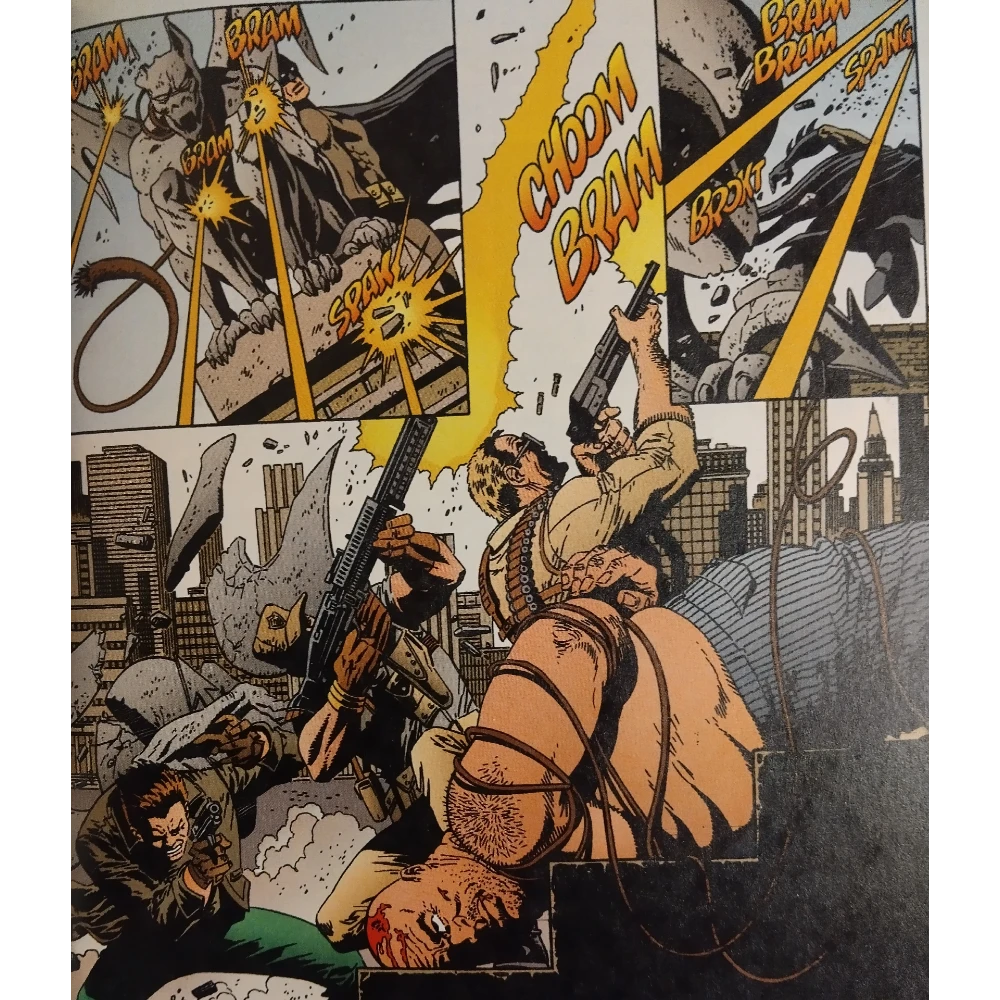
I think it's easy to take the idea of "Batman as lawless vigilante" for granted at times. Yes, it makes sense that the police wouldn't want some schmuck in a costume doing their jobs for them, for purely practical reasons. What Moench does in this arc is he plays with the psychological concept of Batman. Others have done this as well, but Moench works with the framework established by Frank Miller's "Year One" to try and get to the heart of the question: is this vendetta really the healthiest option Bruce can choose to preserve and honor his parents' memories?
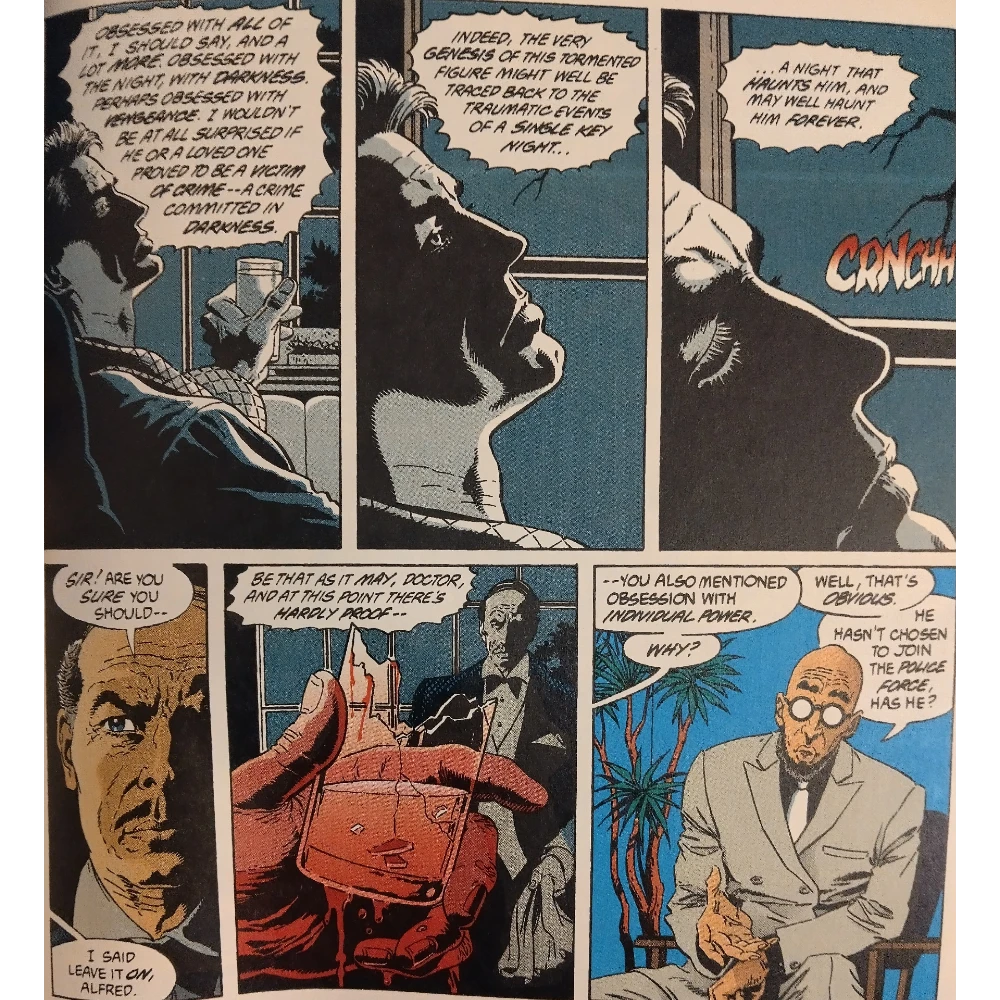
Moench artfully sets up the conflict between Dr. Huge Strange and our Caped Crusader, calling into question Batman's sanity and seeking to sniff out his motivations. Even if you're not convinced that Dr. "Not Stephen" Strange is ultimately correct in his total assessment, Moench weaves the argument well enough to at least recognize the doctor's got Bruce on one thing: these are not the actions of a completely healthy person. During an interview early in the arc, Strange argues Batman seeks glory and fame, deprives the police force of a potential strong cadet, and suffers from specific mental and personality disorders. Watching the interview, Bruce responds to these accusations verbally with a single "No." The response feels less like a man's complete confidence in his own sanity but rather a man vainly fighting the possible truth of Strange's words.
Bruce is truly broken…and he'd rather not admit it.
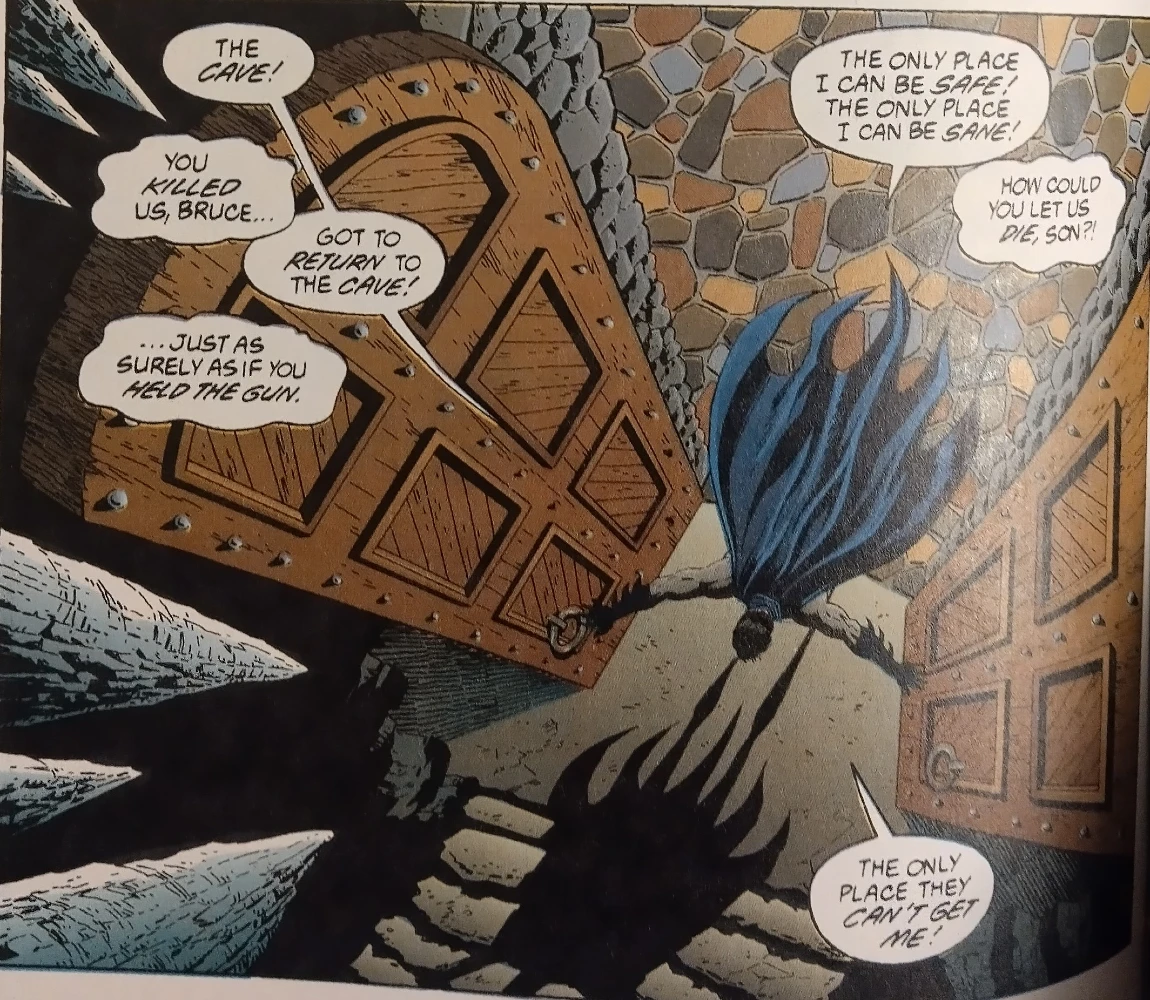
This level of mental vulnerability becomes as powerful a storytelling tool as Bruce's physical weaknesses, if not more. Moench and Gulacy play a bit with the notion that Bruce isn't yet at the top of his physical or technological game–he shreds an early bat-glider and is forced to walk home after fighting crime one night, he suffers physical harm, he's caught flatfooted by Catwoman in one scene–but they're more interested in the mental toll being Batman takes on Bruce. Late in the narrative, Bruce is driven to the mental brink by Strange's manipulations, seeking solace in his Batcave to confront himself. He wrestles internally, concluding that, even as he tries to establish himself as an untouchable symbol, he's also a man, flesh and blood, and that a level of weakness has to be inherent and acceptable for him to carry on his mission.
The physical humanity of Batman is always worth exploring. A near-invulnerable vigilante who can dodge every bullet, block every knife, or counter every kick swiftly becomes boring. Rough him up a little, make him bleed a bit, break his back if you have to. But a Batman who can be damaged internally provides a greater victory ultimately. The character has become so heavily associated with his unflappable nature that such a thing seems impossible these days, but we're talking about an unseasoned Batman here. He hasn't been tested this way before. Moench instills hints of doubt early in his career, showing the toll a dramatic defeat could take on a younger, less experienced vigilante, thus upping the personal stakes for whenever Bruce chooses to accept and live with the reality of his limitations and weaknesses.
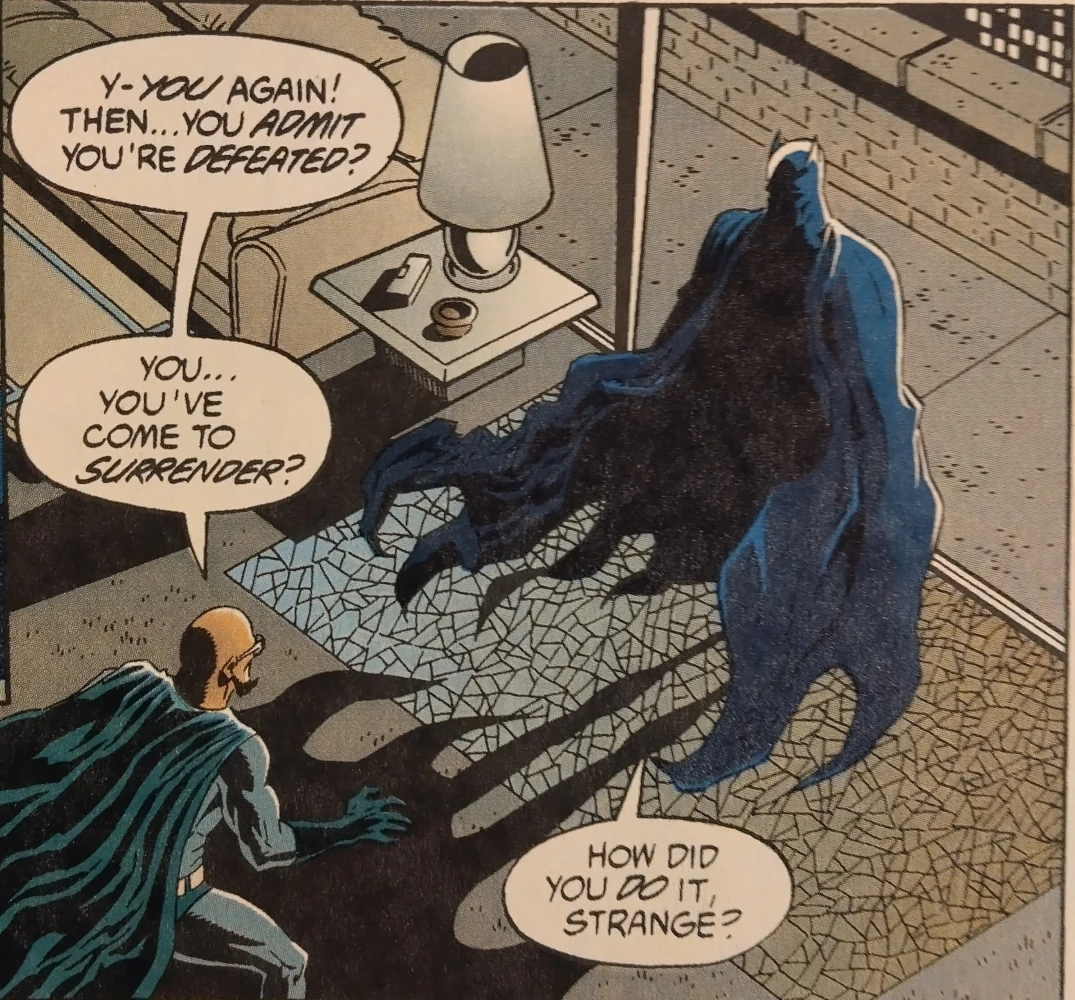
The complexity of the conflict Moench develops extends to his other cast members. Hugo Strange, as a villain, is presented as an unhinged yet master manipulator. Moench seems to take cues from Steve Englehart and Marshall Rogers's Detective Comics run by imbuing the psychiatrist with arrogance masquerading as confidence, a defense against his own inadequacies. Parading around an apartment with a mannequin in lieu of an actual female companion, Strange dresses up as Batman (another concept borrowed from Englehart), muttering "Oh, how I envy him. Oh, how I hate him." He grows jealous of a female character's professional interest in Batman, twisting it into a dark obsession he must destroy (because why can't she see in Hugo what she clearly sees in that chiseled Caped Crusader?), and he hypnotizes someone into becoming a different vigilante, letting them perform physically against the Dark Knight in a way Strange could not. Strange has never been a formidable adversary, but his mind provides him the necessary tools to try and break the Bat's brain.
I appreciate the genuine wrinkles Moench allows this devious doctor–the guy may come across as the kind of wounded individual he'd probably serve during his day job, but Moench relies well on a combination of brilliance and insanity to make him a credible threat. Strange's early assessment of Batman is, in some ways, accurate, and in other ways, completely false. He sees Batman through the lenses of (other than his glasses) his skewed perspective, hinging on "facts" which seem more palatable to him rather than what's true. Indeed, in a moment of drugged helplessness, it's Batman himself who inadvertently gives Strange a hint to his internal reality, providing him with leverage the doctor's narrow vision would have always prevented him from discerning. Strange is smart yet delusional, a simp who tries to rise above his inherent shortcomings by either denying them or blaming others.
Moench wisely takes advantage of Legends' primary premise–taking place early in Batman's career–by positioning his narrative at a time where Batman's solidarity with the police force and other authority figures is at its weakest. James Gordon, not yet a commissioner, is more a begrudging ally, wondering if he can make this alliance work while surreptitiously keeping his activities under wraps from prying eyes and expressing concern for his family's safety; Sergeant Max Cort is a shoot-first-ask-questions-later hardcase, humiliated early by Batman and allowing a personal vendetta dangerously override his willpower once he's tasked with hunting our hero; even the mayor, wary of this urban vigilante, finds himself a victim of Strange's machinations, too weak to resist what seems an easy solution to this problem. Resolves are not yet strengthened, Batman's prowess is not yet well-known, his symbol is not yet solidified, and we get a front-row seat to watching these staggering steps. Distrust is, rightfully, an opponent our new-ish Batman must face alongside Hugo Strange, as he tries to prove his worth to a dangerous city while struggling with his own self-perception.
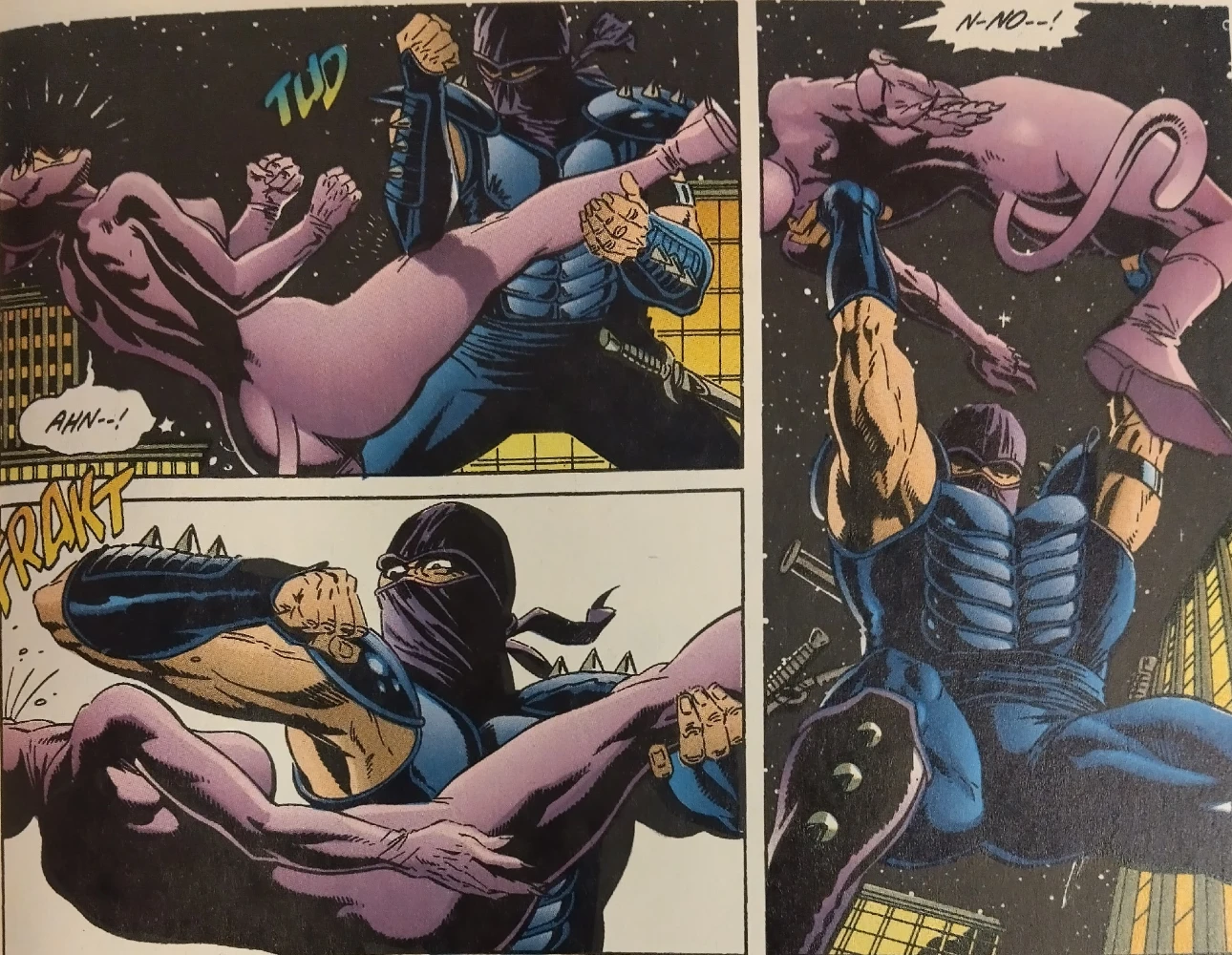
Where the conflict Moench weaves doesn't work as well lies in his use of Catwoman. In this post-Miller world, Catwoman dons her famous purple outfit and sneaks into the houses of the rich to pilfer for herself. Moench tries to incorporate a bitter irony, having Batman labeled as Selina's ally and thus having her draw Strange's ire, perhaps commenting on the unintended ripple effect Batman has on others. Selina's scenes, however, happen too few and far between to sustain any ongoing impact, her existence feeling used to largely justify a fairly brutal beatdown from a costumed newcomer as well as a later moment where she acts as a deus ex machina for our titular hero. It's not the clunkiest storytelling device in the world–I would actually argue it's used far better than Batman rescuing Catwoman in the feline fatale's first-ever limited series–but it makes earlier appearances feel included for reasons other than any interest Moench had in developing the character.
Aside from a somewhat bungled burglar, Moench derives quite a bit of complexity from this examination of Batman's early days. A classic villain is wrapped with menace and internal torments he fights by breaking down others; a future ally is torn between helping the masked man who saved his infant son and becoming a victim of his corrupt coworkers; a trigger happy cop stews in his own vengeance. And a young vigilante, with very few friends, is pushed to the breaking point as he comes to terms with parts of himself he may be denying. The subtitle "Prey" immediately brings to mind a predator devouring a smaller, weaker animal. As you watch the inexperienced man in the bat outfit resist the verbal abuses of the witty yet insecure psychiatrist, you may find yourself grappling with which one fits the definitions of predator and prey better.