Distinguished Critique: Batman: Anarky Review
A morally interesting, empathic anti-hero is given misguided characterization following an effective, impactful debut
—by Nathan on March 15, 2026—
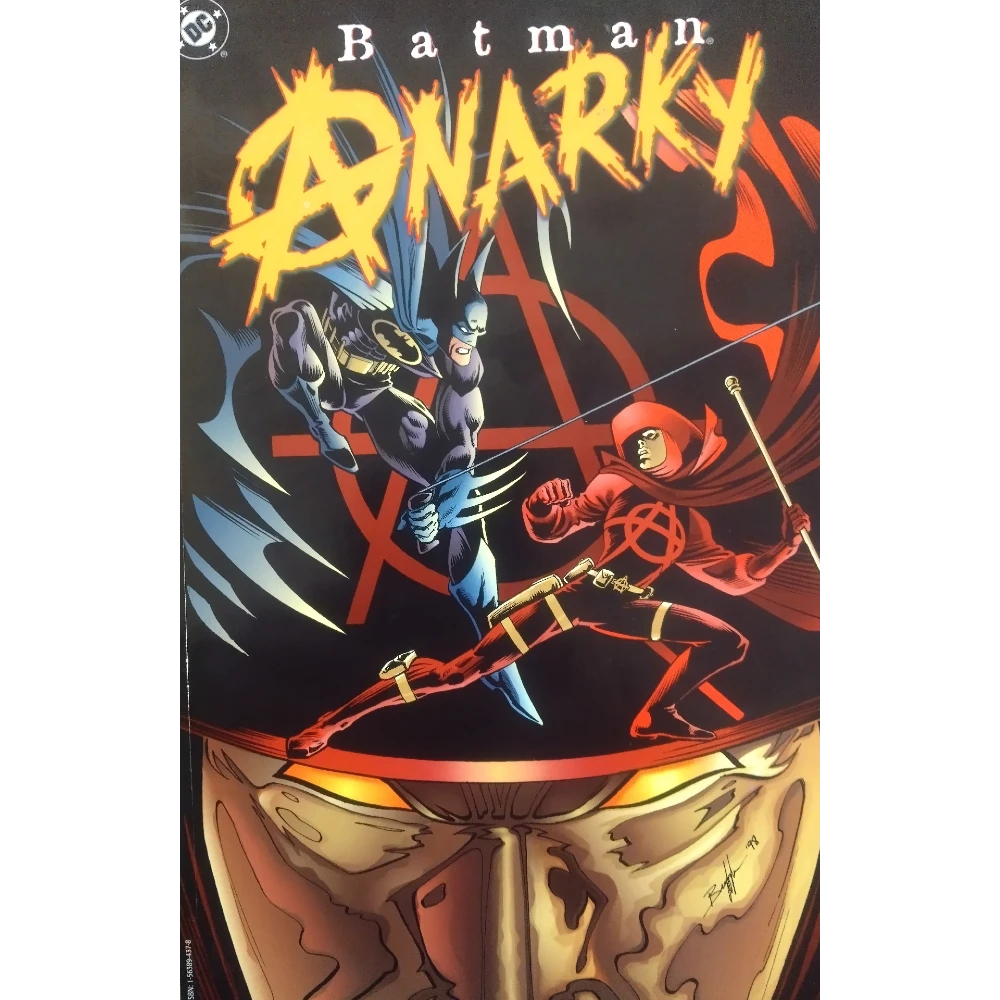
In the 1990s, writer Alan Grant and Norm Breyfogle introduced a character to the Batman mythos they believed could become the third Robin. A young man, intelligent beyond his years, driven by an all-encompassing sense of justice.
And I don't mean Tim Drake.
Fans, of course, will know that it wasn't Grant or Breyfogle who initially created Tim, the third Robin introduced by Marv Wolfman and Pat Broderick in Batman #436, a few issues before he would officially assume the mantle of his deceased predecessor, one month prior to Anarky's debut. But Lonnie Machin was Grant's "hat in the ring," as it were, a potential candidate for Batman's latest sidekick. Fate, in the guise of other DC staff, made different plans, however, leaving Anarky to run his own course, as his societal namesake is often wont to do.
Our latest dive into late 80s/early 90s comics progressing towards "Knightfall" brings us into Anarky's sphere of influence, with much of this small volume featuring stories in the wake of Batman's eventual return to the cowl. But as Anarky would pop up sporadically in other 90s narratives, including a story I plan on reviewing a few posts from now, I thought it'd be fun to rope the young man into our little journey. He's on a journey himself, you see, one very similar to where other young folks find themselves: discerning one's place in the universe, and perhaps just as important, whether you have the ability (or even the freedom) to change that universe once you understand it a bit better.
Batman: Anarky
Writer: Alan Grant
Pencilers: Norm Breyfogle, Stewart Johnson, and John Paul Leon
Inkers: Steve Mitchell, Cam Smith, Ray McCarthy, and Josef Rubinstein
Colorists: Adrienne Roy, Phil Allen, Sherilyn van Valkenburgh, and Noelle Giddings
Letterers: Todd Klein, Bill Oakley, and John Costanza
Issues: Detective Comics #608-609, Batman Chronicles #1, Batman: Shadow of the Bat #40-41, Anarky #1-4
Publication Dates: November 1989-December 1989, July 1995-April 1995, May 1997-August 1997
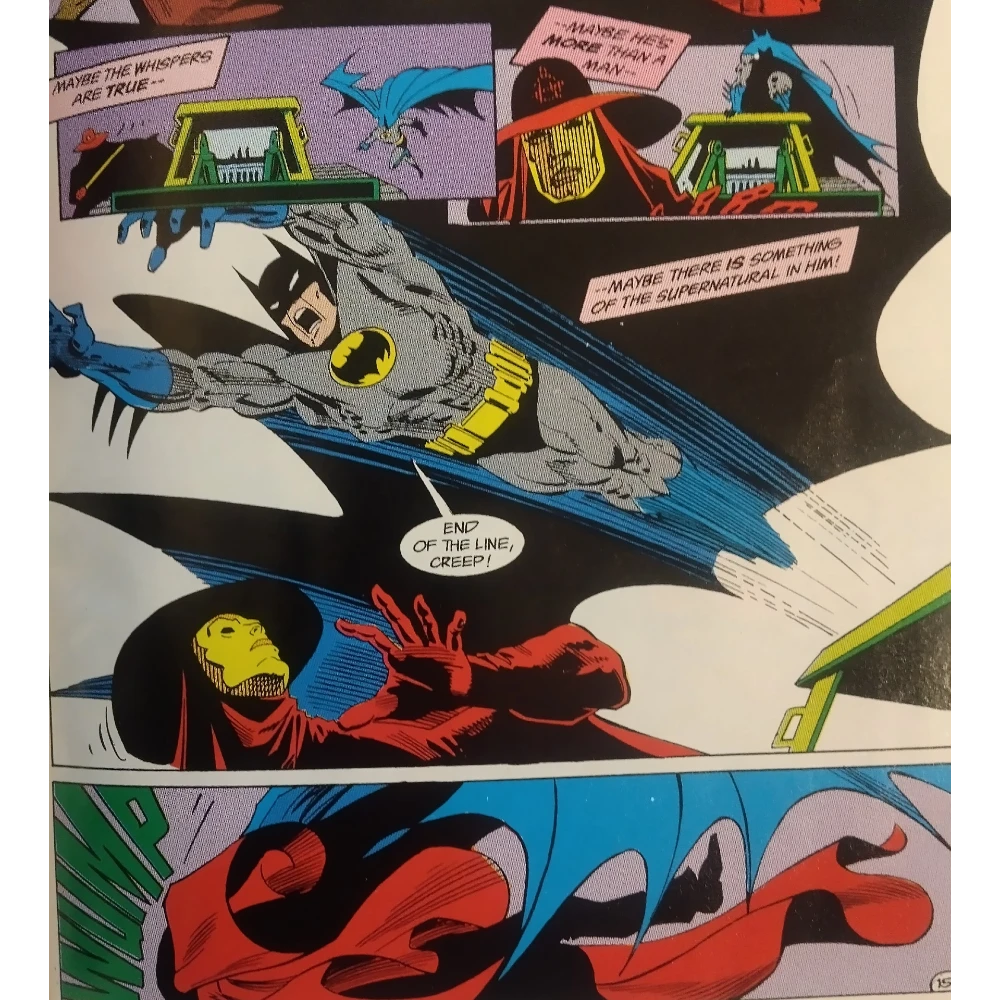
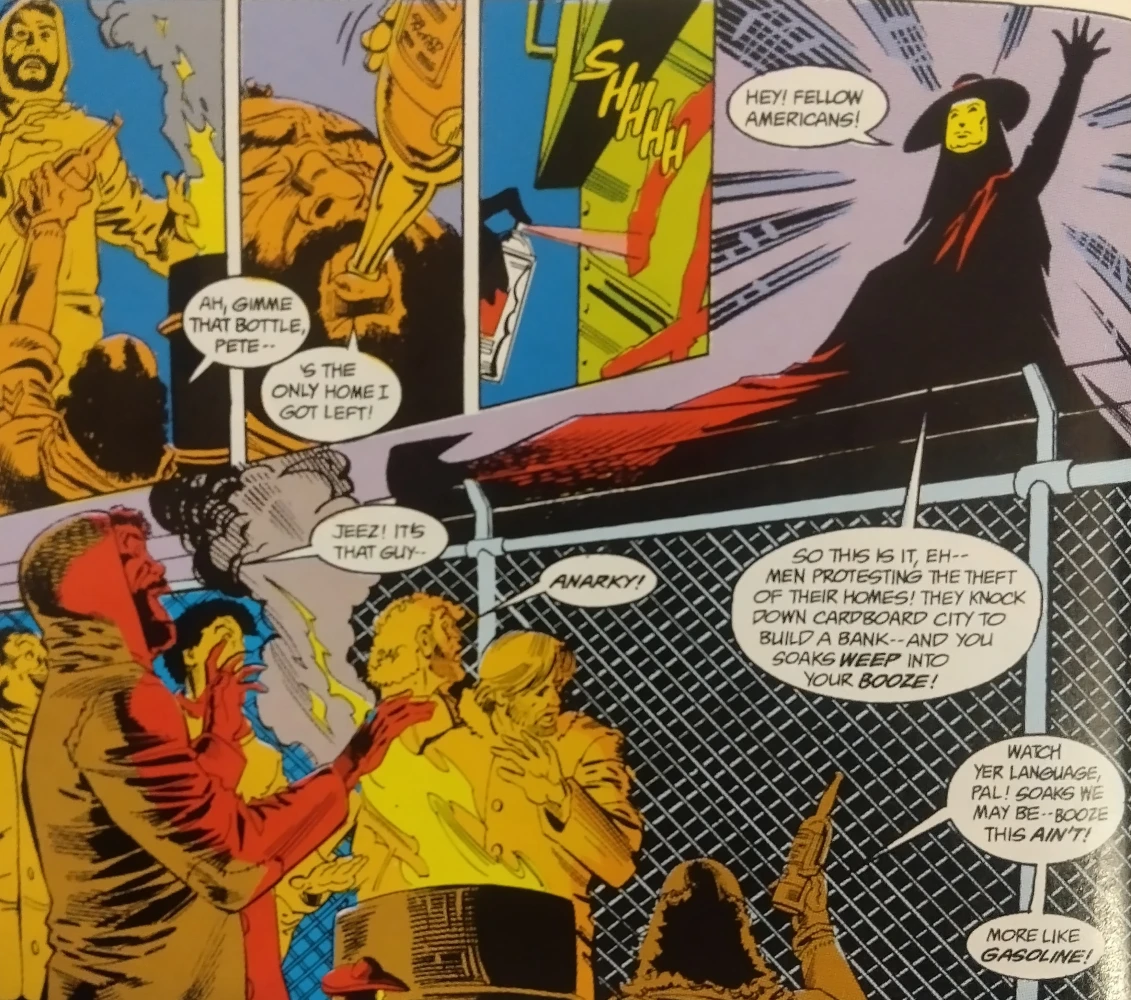
Even though I've already alluded to Lonnie's age, the notion that Anarky is a child in his first appearance is intended to be a twist. Visually, the character represents an adult, if not a somewhat gangly one, inspired by Alan Moore and David Lloyd's faceless terrorist V, with his mask and brimmed hat, accompanied by flowing robes. Philosophically, this vigilante isn't that far from V either, striking out at perceived injustices in an effort to create justice for the common folk. Lonnie isn't looking to destabilize a government, murder corrupt officials, or overthrow oppressors, but he does cause some harm to those he believes have hurt folks unable to defend themselves.
That he's a child casts his Detective Comics debut in a somewhat different light, a glow which is meant to create empathy for the character. Most folks who read this volume are likely aware of Lonnie's age beforehand, but in the context of the issues when they were published, that twist is intended to surprise. Grant and Breyfogle seed a few hints to point suspicion at Lonnie's father, such as the man sleeping in after a seemingly restless night, compounding the effect of the twist once Anarky's real identity is revealed. Once you're aware Anarky is simply a young man whose criminal activities are largely unknown to his family, you begin to see his crusade against the dual villains of criminality and capitalism differently: this isn't some self-styled vigilante with a thought-out campaign planning to bring a city to its knees. This is a boy, a young kid, whose notions about the world, despite his intelligence, may not be as developed or evenly informed as an adult's would be.
It's funny, then, that my biggest complaint regarding this volume is the perceived lack of empathy given Lonnie in other narratives. As noted, most of this volume happens after "Knightfall," and over time, Lonnie has aged a bit more. No need for prosthetic gimmicks to give the appearance of an adult; Lonnie fits the costume he originally created, and after extensive training and some tinkering with his own brain, is set to strike out anew on an unsuspecting world. Perhaps his progressed age and continued flaunting of the law is what turns others against him, but even in his second-ever story arc, Lonnie finds himself at the wrath of both his parents and Batman, the latter of whom continues reacting rather wrathfully during Anarky's own limited series.
The appeal Lonnie initially generates is that he was meant to fit that image of "young, smart man who could be the next Robin," and though Tim Drake was ultimately chosen to fill those boots, Anarky's introduction at least creates inspiration for his potential path forward. In Lonnie, you see a character who is, like Jason Todd was, misguided in his perspective of the world. He's not a villain, barely even an anti-hero at this stage. He's a child, an intelligent boy who's maybe read some of the wrong books or has at least been inspired incorrectly by those books. He acts out of a sense of justice, which is fair, yet applies that morality in a more reprehensible fashion. Given the right coaching, mentorship, or training, Lonnie could be taken and directed positively, his viewpoint remolded, maybe even tamed.
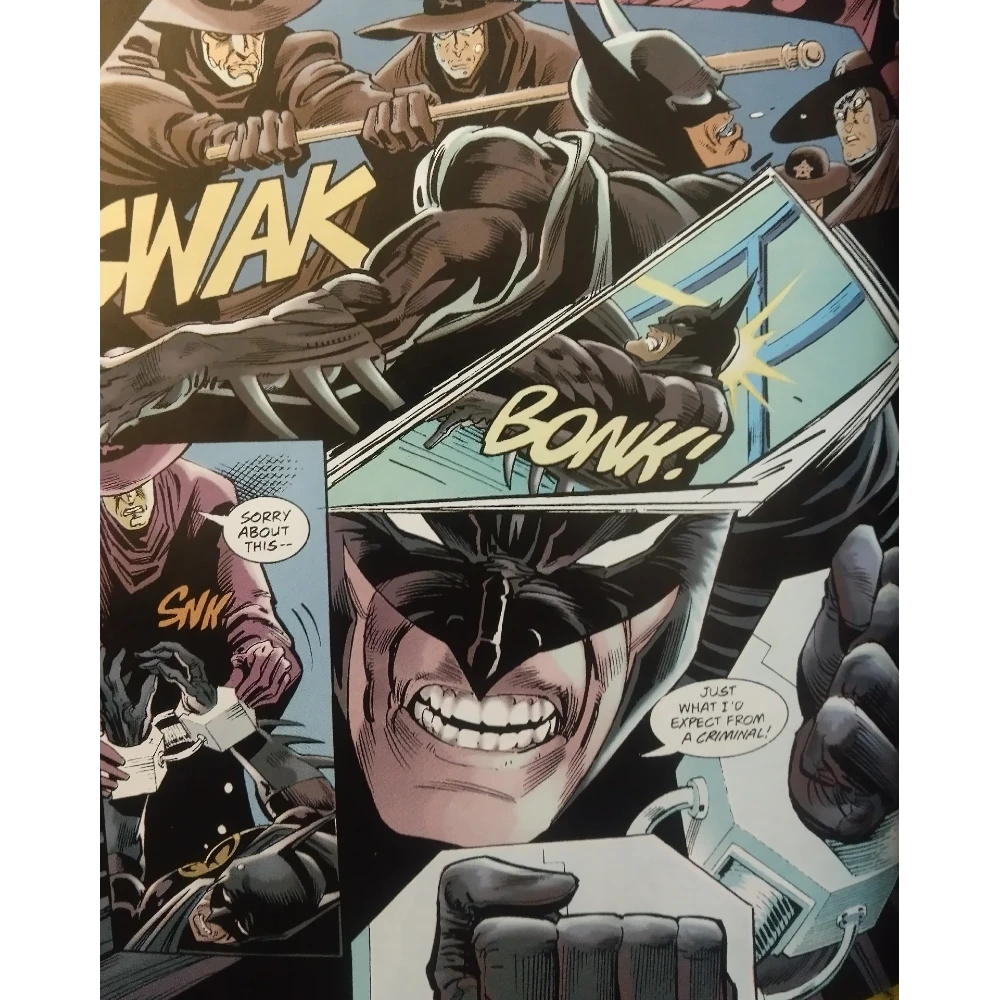
This is not what Grant does. Obviously, Tim assuming the mantle of Robin crushes specific dreams Grant had for Lonnie, but beyond that, Grant doubles down on the ideals he allows Anarky to believe. From selling philosophical tracts to doomsday prophets to creating a machine to brainwash Gotham into following his own ideals, Lonnie sticks with the angry anarchist bit, essentially fulfilling the criminal epithet others brand him with. My complaint above primarily comes from the fact that Lonnie isn't allowed the empathy and concern which could steer him away from being anything other than an anarchist and a criminal. You would think Batman, at the very least, would recognize a layer of woundedness others wouldn't as willingly see, from one broken child to another.
Grant does hint, briefly, that Lonnie's actions may stem from his upbringing, or to be more accurate, his rebellion against it. Introduced as two fairly decent people in the Detective Comics issues–to the point where Lonnie's father "confesses" to being Anarky to protect his son from the Dark Knight–they have changed dramatically by time a two-part Shadow of the Bat arc comes around. Lonnie's mother threatens him with prison, and his father comments how some physical punishment could have taught the boy some necessary lessons, attitudes which feel difficult to reconcile with their treatment of Lonnie earlier. I can recognize a parent losing patience with a child or distancing themselves after certain actions, but I would expect such a reaction from parents with adult children who have done genuinely horrible things. That Lonnie, as just a teenager, is subjected to such a consistent sense of disappointment from his parents provides a possible reason for his continued actions. It's a decent motivation, though I wish his parents' later actions were better justified to help create that sense of rebellion.
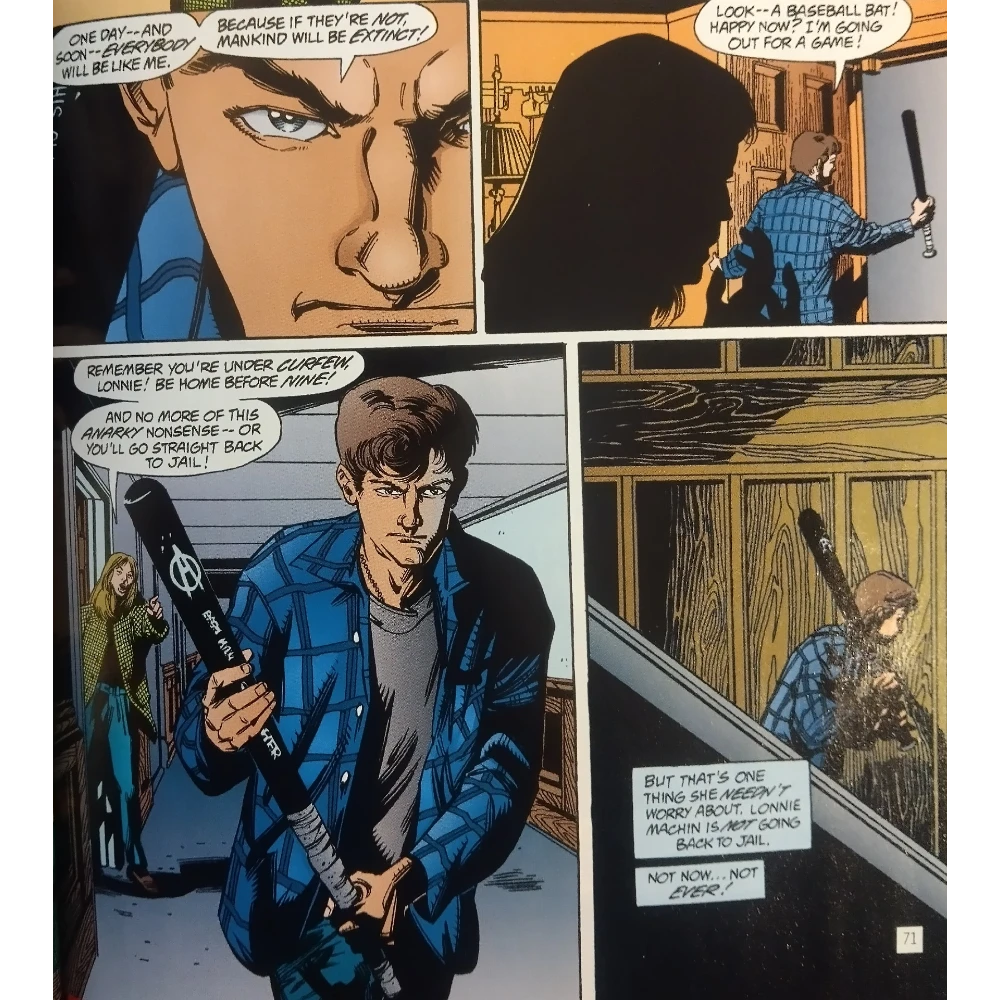
Throughout the volume, Anarky spouts platitudes about how he perceives the world and government, particularly how powerful, more well-off people debase and damage those without power or means. In his first few appearances, the rhetoric is fine, and I attribute this, in part, to Lonnie's age–he has good, thoughtful ideas, but he's still growing and learning. Anarky spends much of his own series pontificating about injustice and humanity's tendency towards evil, with Grant even using whole pages as cutaway "lessons" on historical or philosophical events which have shaped the present, unfair status quo. To an extent, Lonnie makes a decent point–I won't argue against the idea that we live in an unjust world that could use change–but Grant's heavy-handedness hurts his primary message.
There's a story found here, for sure, as Lonnie examines the prospect of evil through confronting the demon Etrigan and even Darkseid (yeah, and on the dude's home turf, too!). Here, his youthfulness is less a crutch against his mental and moral development as it is against his physical prowess; though physically fit and capable of fighting, Lonnie nevertheless encounters setbacks to his planning and schemes. So his story progresses as he develops a plan of his own, resisting any hijacking attempted by Batman, but it's the proselytizing which weighs it down. He goes right for the moral jugular in his second issue by facing Darkseid, which feels like Grant just plucked the most awful DC character he could think of for Lonnie to spar against philosophically.
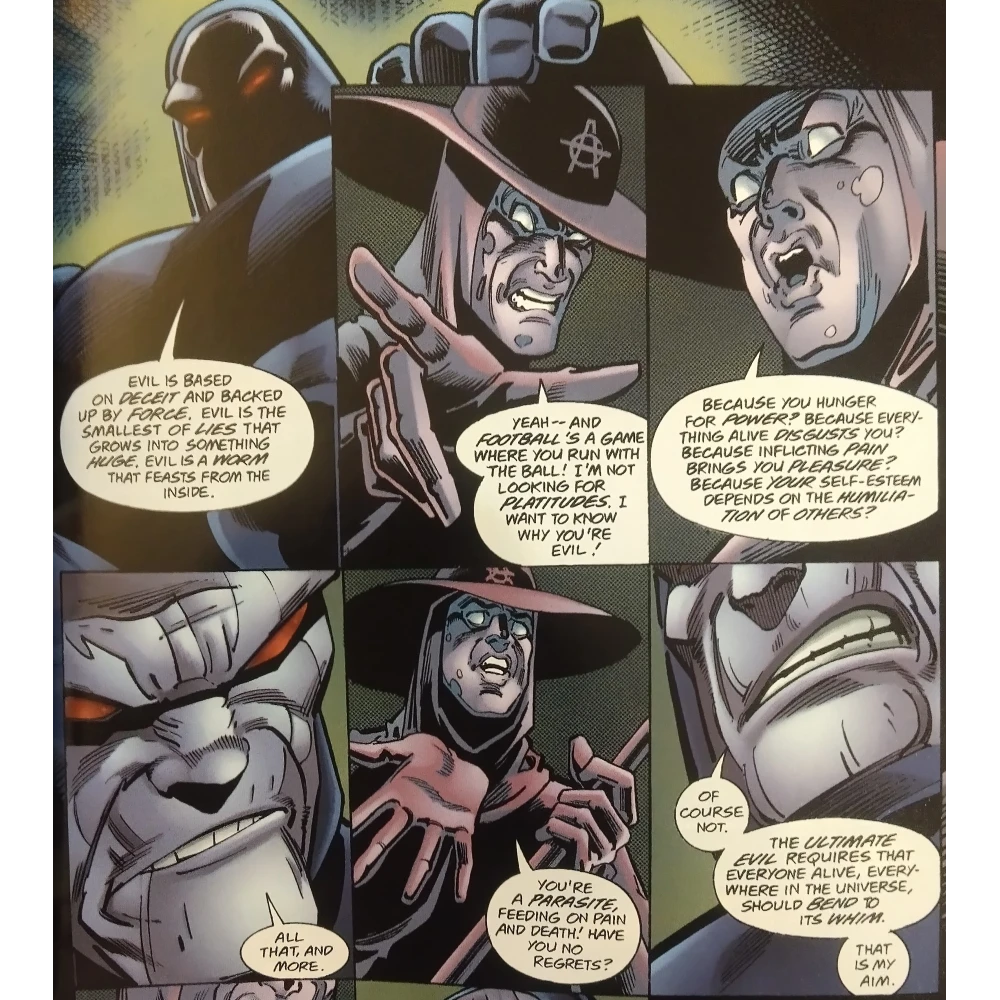
In the two main arcs following his debut, Anarky becomes a character you struggle to understand. Grant seems interested in using him as a mouthpiece, of having him rage against the horrors of how the world functions, even as his own plans to seemingly rectify those problems would wind up causing more problems. What are we supposed to learn from Anarky's example? You'd think it'd be a complex lesson, as Lonnie's developing perspective of the world clashes with his penchant for sewing discord. He certainly reaches that "anti-hero" status by the volume's ending, and yet he's still simultaneously a kid. Grant seems to identify with Anarky's philosophy, encourage a different way of acting, disagree with Lonnie's continued rebellious nature, and yet is insistent upon coaxing anarchy out of Anarky.
I recognize the value inherent in creating an imperfect character, of making a flawed individual and driving them towards healing. I think that could be especially interesting in a younger character like Lonnie–think of all the stories where children head out on adventures and come back genuinely wiser and stronger as a result. Anarky, debuting as a lost young man seeking to take a stab at upending injustice, is an interesting take on the anti-hero concept, particularly knowing how Lonnie's life could have gone. As Robin, he could have been a socially conscious character, but maybe Grant's clumsy efforts at commentary would have plagued that idea.
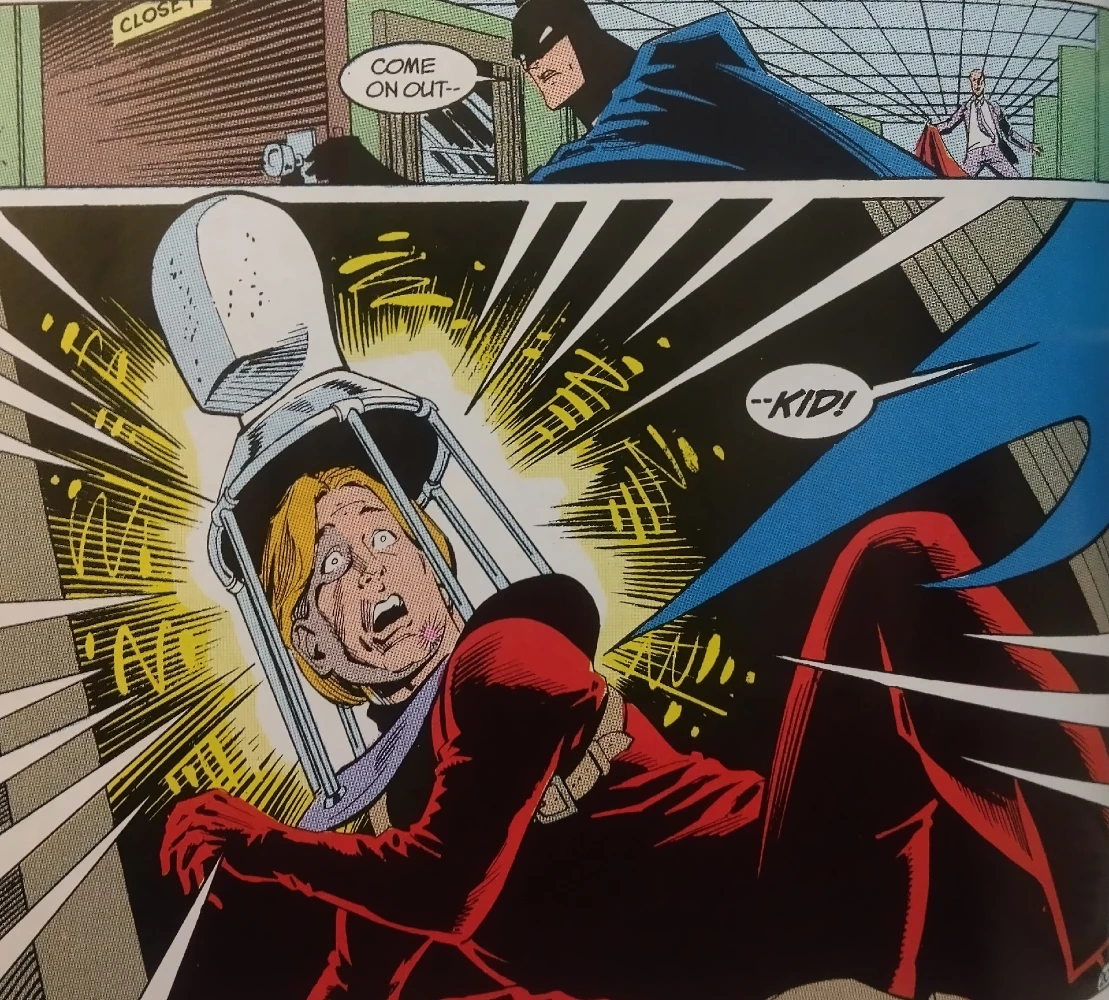
In Detective Comics #609, Batman opens a closet to find a young man dressed in red, a metal contraption around his neck to help the illusion of Anarky as an adult. Lonnie is scared, his earlier bravado gone. He's a kid, hiding at his dad's workplace, waiting for the Dark Knight Detective to catch him. It's the best moment in this volume, showing genuine vulnerability and recontextualizing the entire narrative preceding it. "Oh, snap, he's a kid," you say, flipping back through the pages to find any hints. From that moment forward, Anarchy's story crumbles, with Grant failing to provide an interesting continuation of these events. You may feel bad for Lonnie, especially given the heel-turn his parents take, or you may find that Anarky, even though he ages a bit, never stops being a frightened kid whose world has suddenly fallen into…
You know the rest.