Distinguished Critique: Batman: Prelude to Knightfall Review
As "Knightfall" nears, Doug Moench slowly breaks Batman, while Chuck Dixon builds tension in revealing the epic's architect
—by Nathan on May 21, 2026—
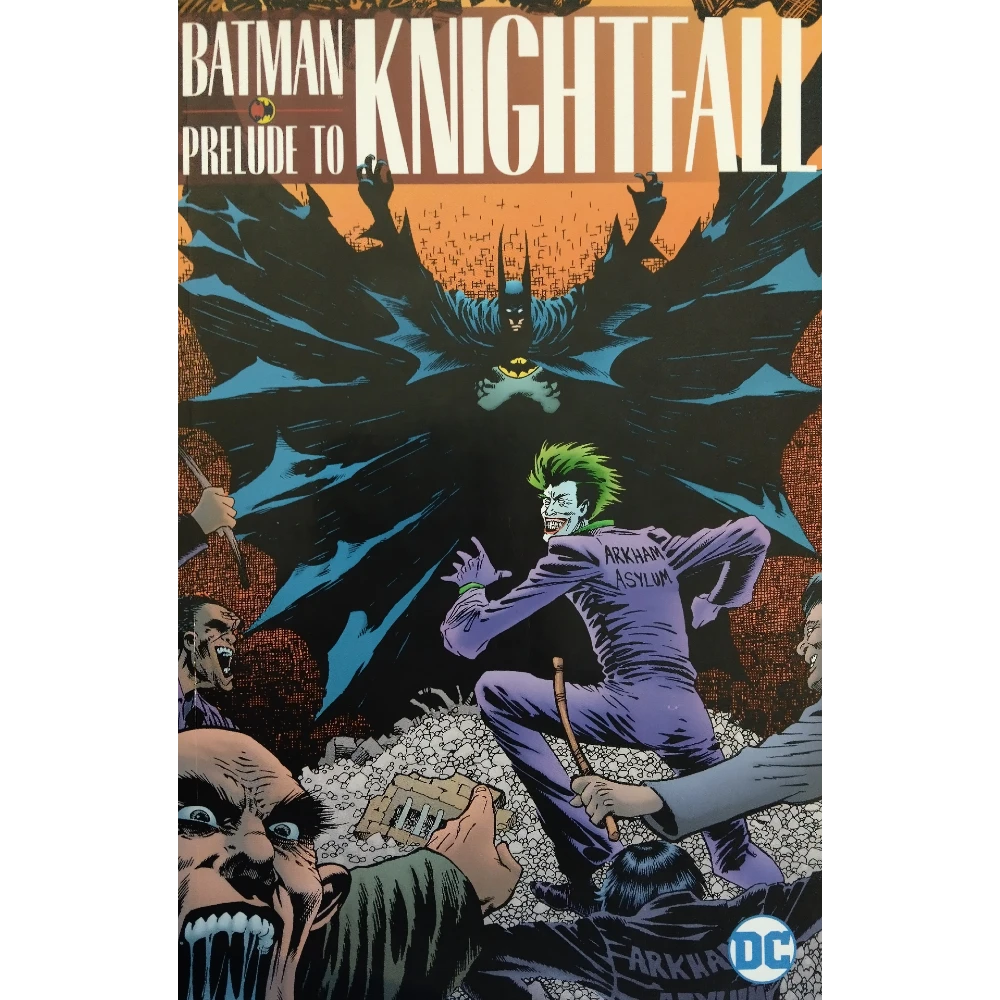
We are, at last, reaching the narrative my last few Batman-centered reviews have been building to: "Knightfall." Or, at least, the "Knightfall" prologue.
I have read this volume no less than three times over the last few years in anticipation of reviewing this arc, meaning I wasn't looking terribly forward to reading it yet again. Those other times, I just never got around to writing a review or never really knew what I wanted to write about. Perhaps examining some of these other reviews recently has given me the impetus I needed to crack open the spine for this volume's most recent read.
And speaking of cracking spines, that's the endgame we're heading towards. The big bruiser Bane finally makes his Venom-veined debut here, as pieces are set in motion which will lead to Batman's ultimate downfall. Bane's not quite the master manipulator here yet, but as we'll see, he isn't above letting others do some dirty work for him to tenderize tough bat meat.
Batman: Prelude to Knightfall
Writers: Chuck Dixon and Doug Moench
Pencilers: Graham Nolan, Tom Grindberg, Jim Aparo, Michael Netzer, and Tom Mandrake
Inkers: Eduardo Barreto, Trevor Scott, Jim Aparo, Scott Hanna, and Luke McDonnell
Colorist: Adrienne Roy
Letterers: Bill Oakley, Richard Starkings, Jim Aparo, and John Costanza
Issues: Batman: Vengeance of Bane #1, Batman #484-491, and Detective Comics #654-658
Publication Dates: September 1992-April 1993
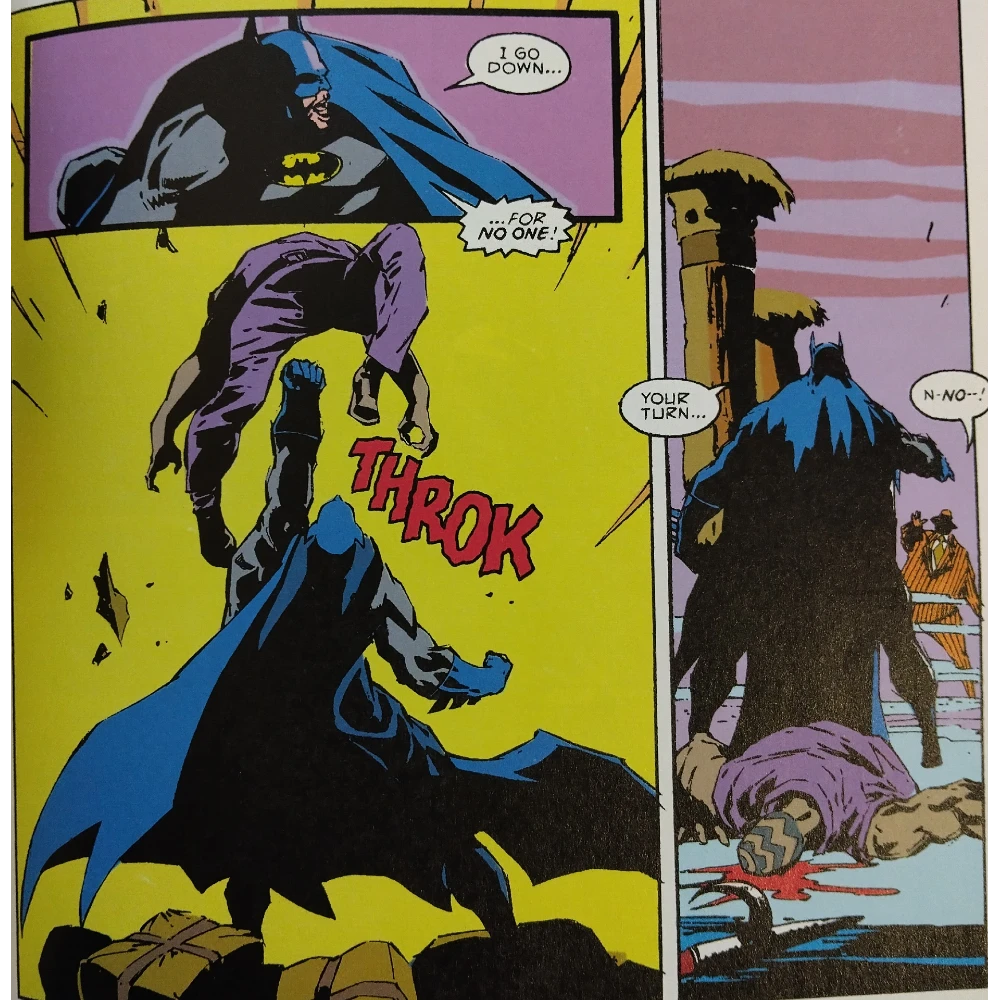
You get the sense, dipping into this volume, that if you weren't reading these issues when they were published, you wouldn't necessarily understand that Doug Moench (on Batman) and Chuck Dixon (on Detective Comics) were building towards a catastrophic confrontation with the former prisoner of Pena Duro. Part way through these issues, you may realize such a confrontation is eventually inevitable, but we're given a bit of a slow burn here, hints of a greater plot. If you ever read this volume, it's because you likely know of that upcoming fight, but considering the context of when they were originally published and of the narrative itself, these issues serve as stepping stones leading…somewhere. The destination, somewhat unknown, becomes a tantalizing prospect, because here is where things begin going wrong, and you wonder what the accumulative effect will be on our Caped Crusader.
These issues, when they're not focused on introducing Bane, follow Batman through a series of confrontations with either new or fairly low level villains, the collective point of which is to wear the Dark Knight down, physically and mentally. Bane's involvement becomes more pronounced near the end of the volume, so you sort of have to turn a blind eye to coincidence if you'd rather not consider how Bane's sudden appearance just so happens to line up with a period of significant toil for Batman.
If you're willing to look past that coincidence, these issues largely form an engaging narrative featuring Batman's life falling to shambles around him, as if the eternally young billionaire bachelor has suddenly been hit with a mid-life crisis. A series of arson attacks on his properties, the kidnapping of Lucius Fox, and extended bouts with exhaustion all combine to plague Batman and Bruce Wayne both, making one feel as if the writers just wanted him to go through a cripplingly difficult period. It happens to real folks, right? Why does Batman's pain need to only be limited to scary bad guys and violence?
Moench understands the brief from basically the beginning, setting Batman up against low-level mooks, such as the spiky Metalhead and the assassin Headhunter, who give the vigilante a harder time than you'd imagine. These guys should be creampuffs to Batman–no dude with stupid spikes on his head should be able to draw blood from our hero, yet here we are. Batman is feeling ragged, a few steps behind, and even the goofiest schmucks can take advantage of his flagging energy.
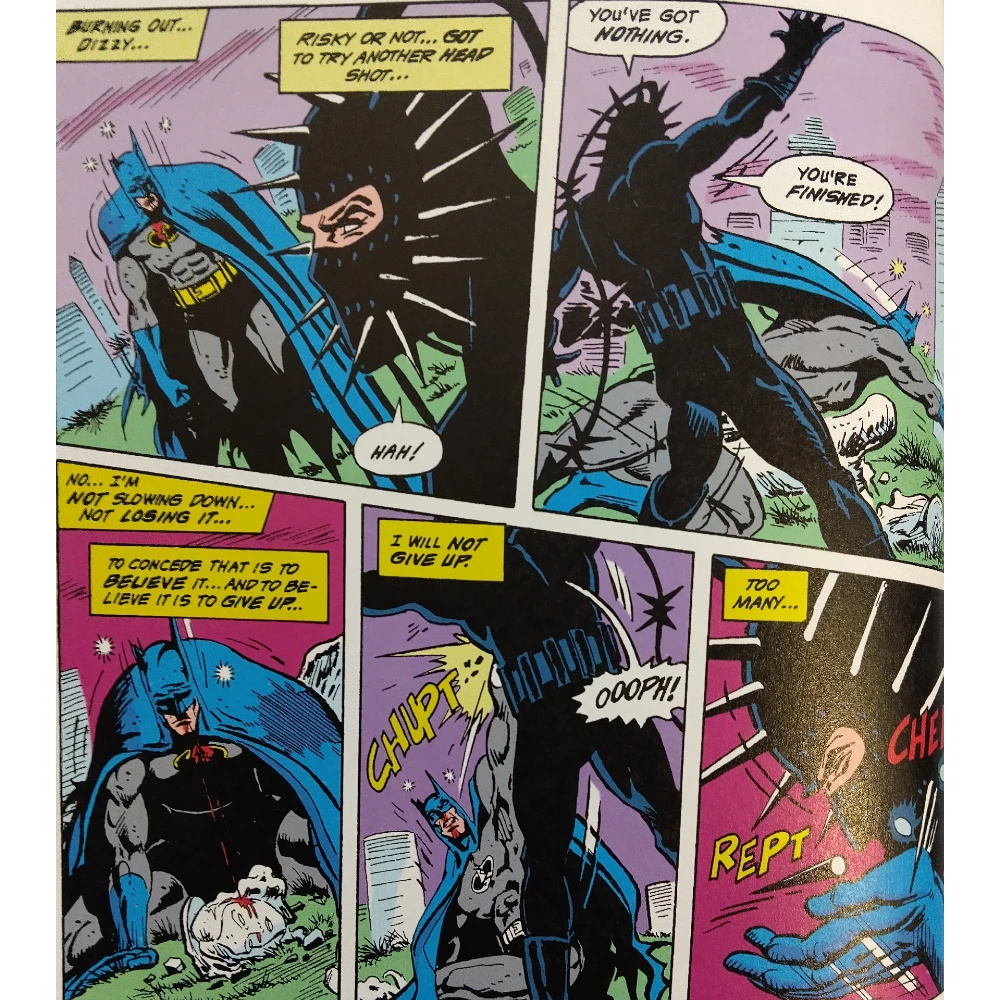
Bruce's exhaustion is at the forefront of Moench's narratives, personified through the image of blood. When Bruce tries meditating, an image he conjures is replaced by a box spilling blood. His nose, broken in one conflict, leeks blood. He does what he can to ignore it, but Moench notes that setting aside the pain, weakness, and exhaustion is having an adverse effect. Scenes of Bruce barely winning battles are set against him ignoring Alfred's advice to sleep, his inability to meditate, his body shaking, him stumbling around. The cracks are widening, and Bruce doesn't want to admit his weaknesses. Initially, Bruce pushing through his pain has an admirable quality, but once Moench brings him to a place where he does admit his need for help (way beyond where he should), your admiration of Bruce's "tough it out" attitude becomes more critical.
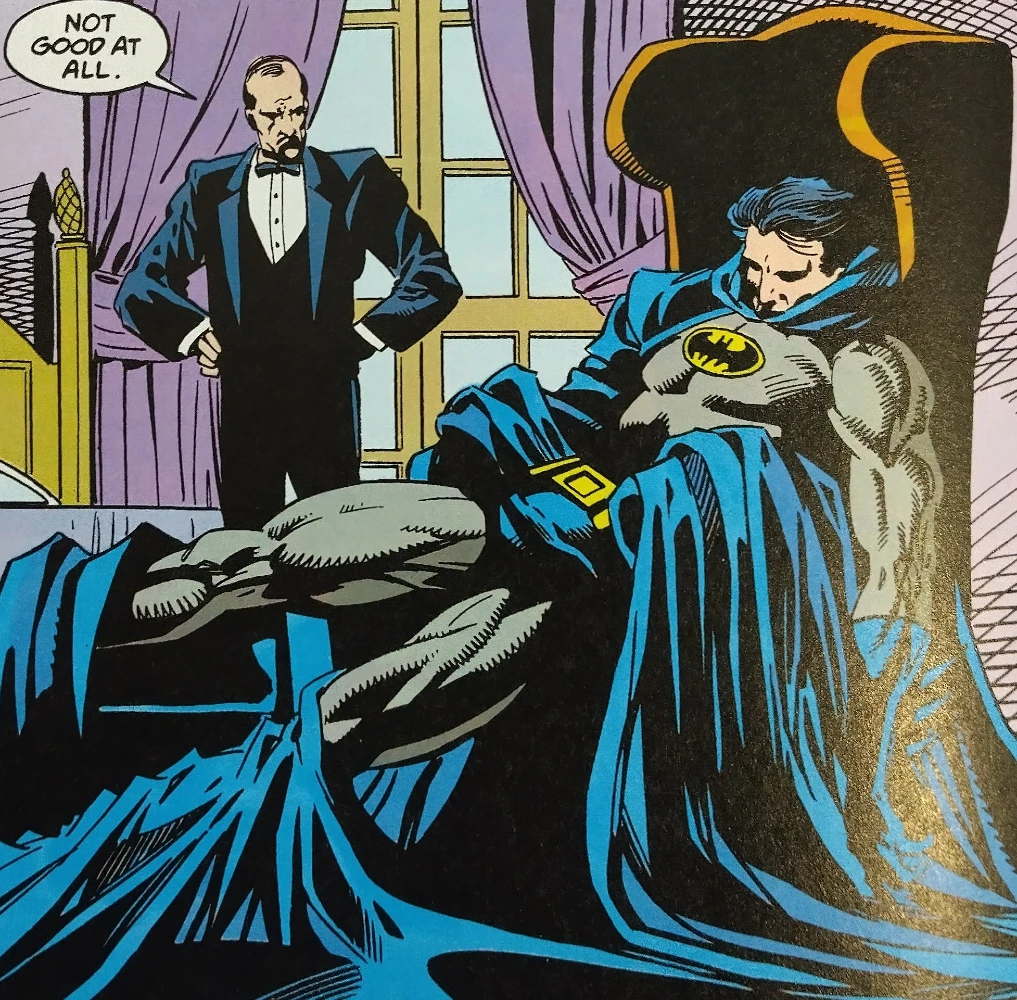
Dixon, whether by interest or skill, is less adept at drawing out Bruce's waning strength and health in Detective Comics. He wants to tell interesting stories, pitting Bruce against a young man who unites Gotham's gangs and strikes back at the police, but maintaining the "Bruce is fading" plot doesn't seem as much a priority. When Batman's taken unawares by an enemy, it seems less because he's weak and over-tired and more a way to move the plot forward and prevent an enemy from being beaten too early. Dixon's first arc does end with Bruce slumped in an arm chair, Alfred standing over him with concern, but the scene doesn't provide the situation the same heft as Moench's Batman issues, making it appear as if our Dark Knight Detective is just really tired rather than suffering from debilitating exhaustion.
It also doesn't help that these series aren't intertwined–the "crossover" aspect would feature into "Knightfall," but in this prologue, Moench and Dixon seem to be writing with somewhat of the same general idea yet with the freedom to largely do their own thing. Some overlap occurs–both men use Jean Paul Valley, aka "Azrael," introduced late 1992 in his own limited series (which I plan to review later), training him under Robin to shake off the religious programming instilled in him–but each writer is more intent on their own portion of building towards the upcoming saga rather than finding synergy.
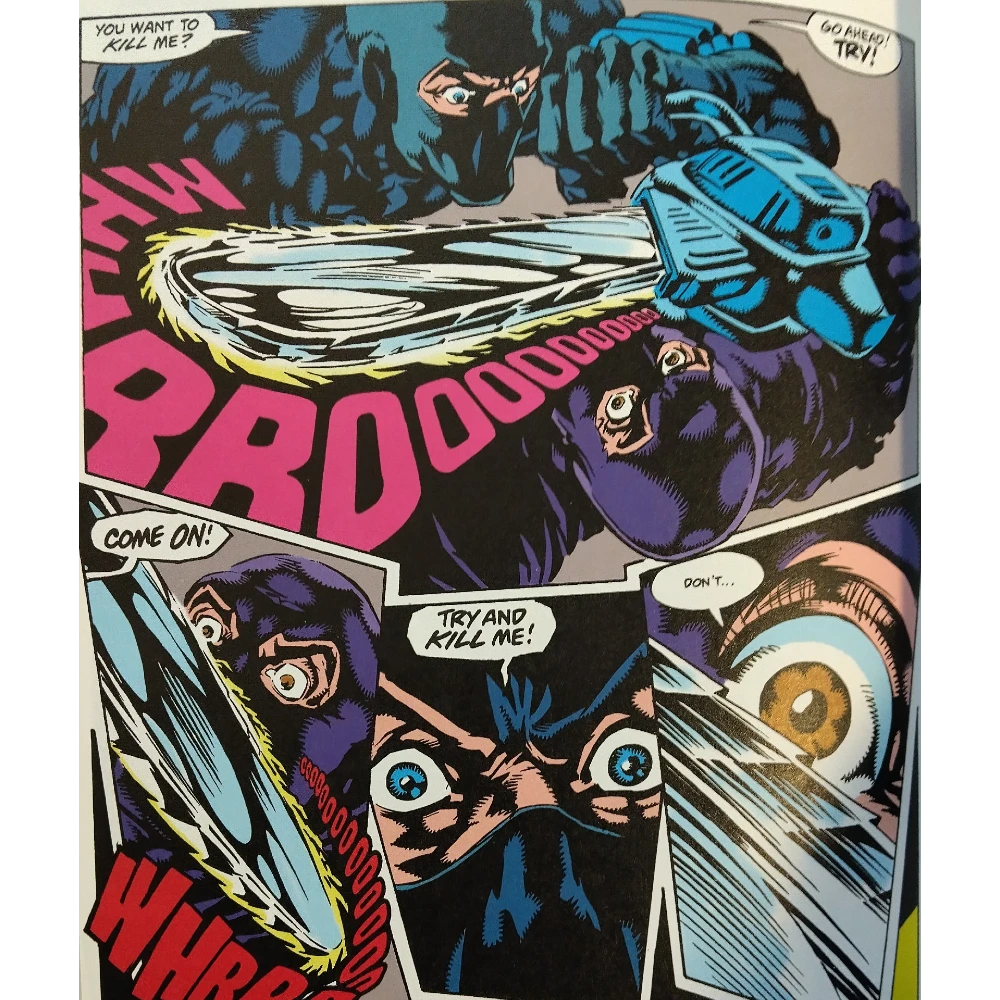
Azrael is a somewhat interesting character–he presents himself as a pretty friendly guy, confident and kind, and even as a vigilante paired with Robin, he seems earnest in his willingness to learn the ropes. That's really the only personality he's given, feeling somewhat bland in places…until his previous "programming" kicks in. Dixon develops a scene where Azrael, lost in the violence of the moment, nearly decapitates a thief with a chainsaw, Tim Drake's Robin shaking him out of his headspace. It's a dark moment, a shift for the character smoothly interjected by Dixon, indicating that there's healing to be done; Tim's generally nervous disposition is a portent of things to come, understanding Jean Paul isn't exactly as whole as he wants to be...
Not that it'll cause any future problems, of course.
Bane, as a villain, is used more sparingly in the initial issues, his presence somewhat clearer late in the volume. Lingering in the background, Bane observes and watches his foe as Batman wears himself down. We know he's building towards some form of confrontation, and until Batman becomes more aware of his presence, the muscled mountain of a man makes for a fairly imposing shadow. Even before his direct involvement, Bane and his goons talk a big talk, and when the time comes for them to initiate actions, they live up to their pontificating. Breaking prisoners free from the newly-built Arkham Asylum run by Jeremiah Arkham, injecting the Riddler (not seen since his attempts at summoning a bat-demon–true story!) with the same variant of Venom which Bane uses, and snapping Killer Croc's arms…such actions are perpetuated by Bane and the boys late in the volume, as his true threat to Batman and Gotham is revealed in part.
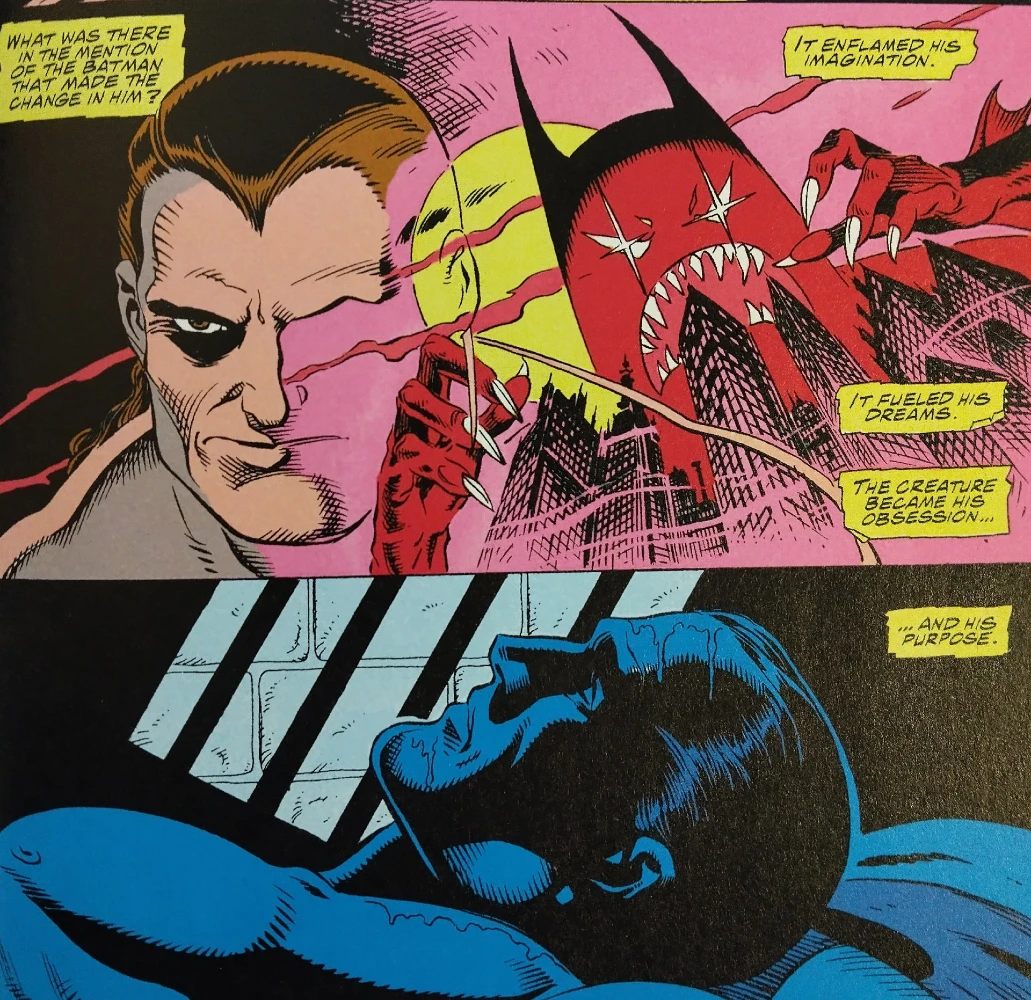
Dixon's most interesting contribution is Bane's origin, featuring the villain's first-ever appearance in a one-shot before he'd properly pop up in a Batman comic. Born to a prisoner of Pena Duro on Santa Prisca, the island nation introduced during Dennis O'Neil's run on The Question, Bane serves the sentence his deceased, revolutionary father never would. Across 55 pages, Dixon creates a surprising amount of empathy for the young boy who grows to be Bane. A favorite teddy bear becomes a symbol of Bane's growth from child to legend, his dreams are haunted by images of a bat, he becomes determined early on to grow into a certain kind of man…elements are nicely sprinkled through that allow for in-depth storytelling in such a limited space.
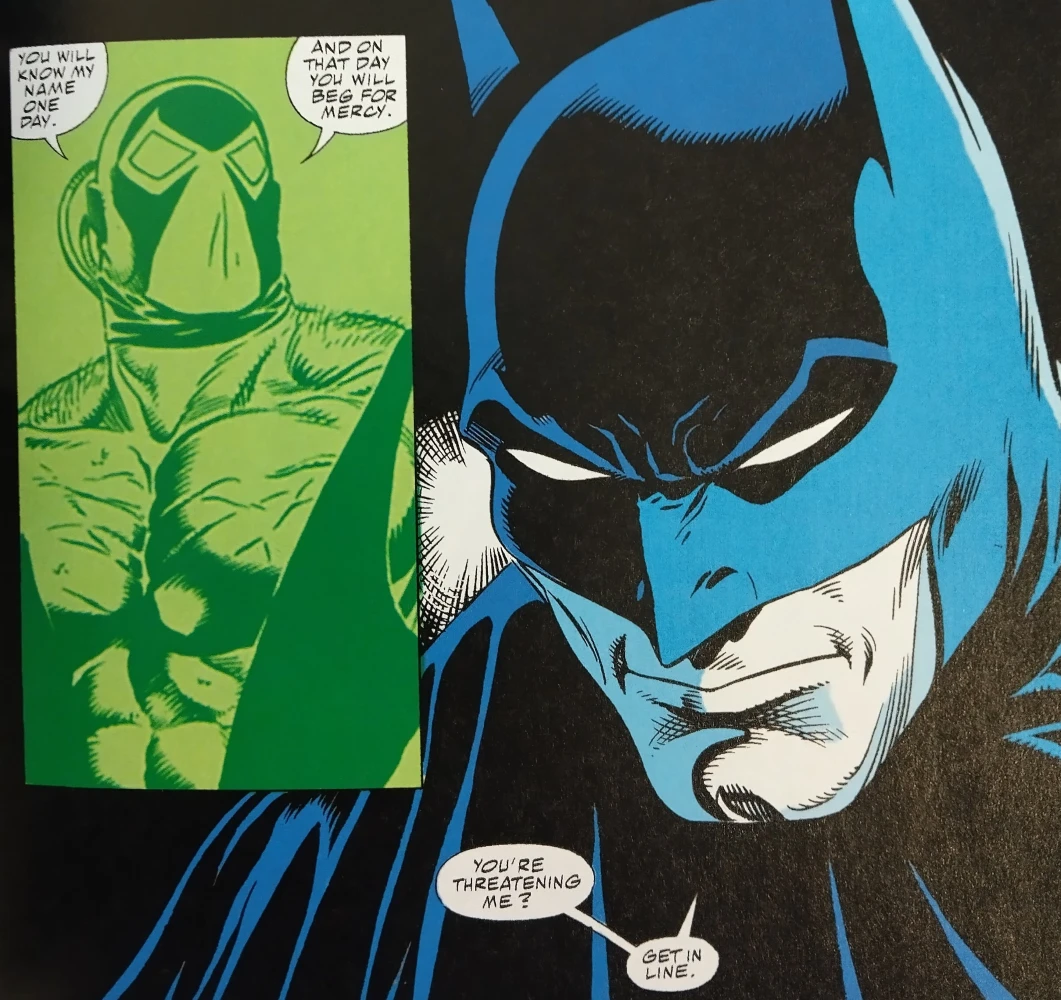
You grow to believe Bane's vendetta against Batman is a legitimate motivation for a man who had never confronted the Dark Knight previously, that his desire to break and surpass the vigilante is founded in his upbringing. All he has known is violence, the breaking of men, and when confronted with the chance to break a great man, Bane leaps. Dixon winds in a scene where Bane intentionally comes face-to-face with Gotham's greatest detective, and though no violence occurs, it's enough to cast a shadow across Bruce. Some unknown enemy threatens him ("You will beg for mercy!" Bane promises. "You will scream my name!"), and even though Bruce knows nothing about him, there's the sense that Bane can make good on his grim promise.
Chilling stuff.
As the story of Batman approaching brokenness, these issues do quite a bit to ravage his body and mind. He hasn't fallen, but he's teetering on the precipice. Moench more strongly threads this notion throughout his issues, making it a constant obstacle that affects Bruce's sleep and crimefighting prowess. Dixon seems to be on the same page, at least conceptually, but the impact of Bruce's exhaustion is nowhere near as pronounced. Even without the crowning endgame we know is coming, these issues place Bruce in an interesting position. Other stories have broken Bruce, physically, mentally, and spiritually, but these issues draw out that breaking aspect, chipping away at Batman's strength, knowing even worse days are coming to befall the Dark Knight.