(Strand)om Stories: World War Hulk: Gamma Corps Review
A tie-in worth reading, this limited series effectively introduces new characters deserving of more exposure
—by Nathan on June 7, 2026—
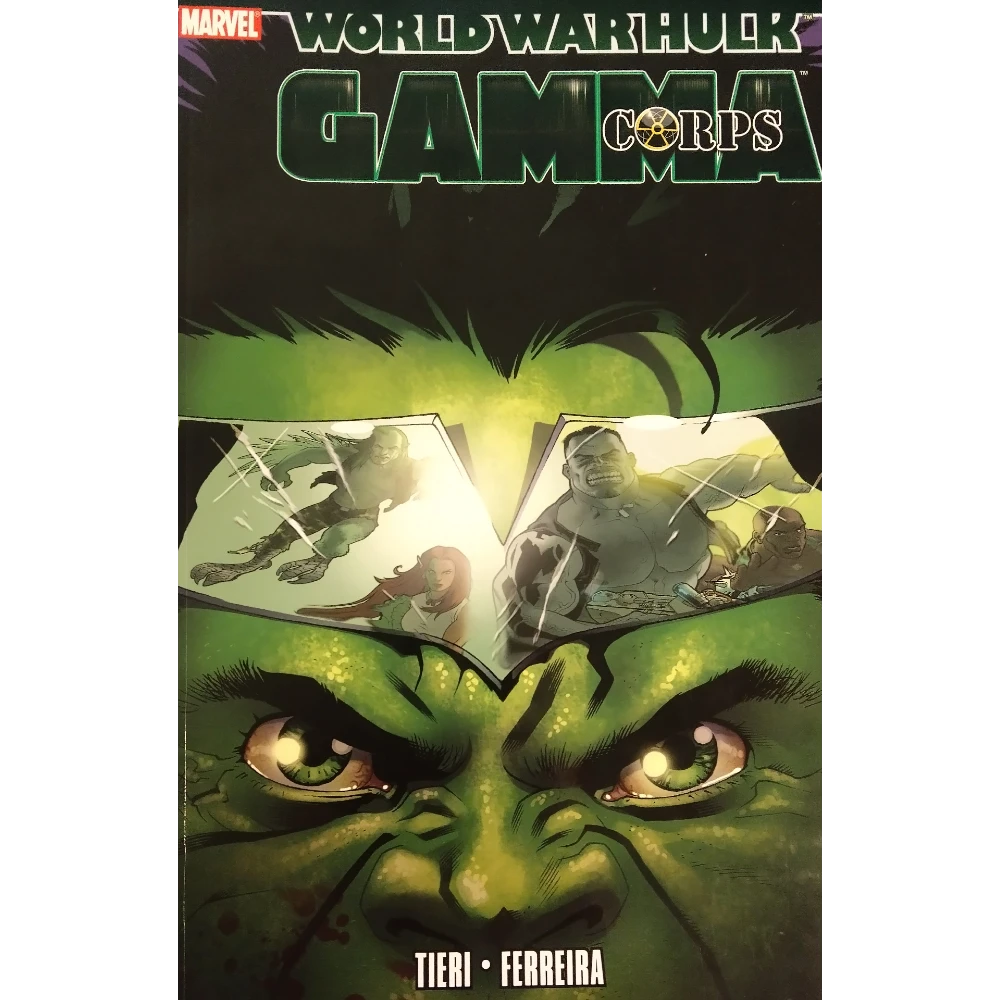
For your reading pleasure today, we're checking out another title that falls under the "memory lane" style of reviews I've been doing lately. Whether that's examining a graphic novel telling Barry Allen's origins as the Flash from his wife Iris' perspective or seeing how the Justice League, as individuals and as a team, try and solve real world problems, we're looking at comics that I recall fondly from my childhood. Nostalgia, in certain cases, may not paper over a few bumps and bruises here and there, but that's part of the fun: how can my adult eye, better trained to pick up literary nuance (at least, I'd like to think so), perceive these comics through my present perspective?
As today's review represents, not all of those youthful memories are of DC titles. I can't necessarily say I subscribe to reminiscing about the Hulk often–he's always been my dad's favorite character, and while I've picked up a tale or two from time to time, I am more adequately versed in other characters. I could review Greg Pak's Planet Hulk, which I do remember reading in an airport waiting for a delayed flight as a kid, but I'd rather save that for a different context. When considering Hulk or Hulk-related comics which I felt tethered to as a younger reader, it's actually this tie-in limited series which came to mind. Spinning out of the Planet Hulk sequel World War Hulk, today's series features the Green Goliath at his rampaging best, but its focus really exists elsewhere.
My dad picked up the individual issues when they were initially released, and though they're still in a longbox under my bed, I tend to defer to trades whenever possible. Picking up a fairly cheap copy of this series off eBay a while back, I dove back in, giving Frank Tieri's story a revisit in the hopes of reminding myself what that initial spark was which originally fired my interest nearly twenty years ago.
World War Hulk: Gamma Corps
Writer: Frank Tieri
Penciler: Carlos Ferreira
Inkers: Sandu Florea and Rudolfo Muraguchi
Colorist: Will Quintana
Letterer: Ed Dukeshire
Issues Collected: World War Hulk: Gamma Corps #1-4
Volume Publication Date: May 2008
Issue Publication Dates: September 2007-November 2007, January 2008
Crossover events, amiright?
So often, you get this major story, built up to over various issues across several months, and then not only do you need to read the main event itself, but you gotta check out all the tie-in issues to make absolute sense of everything going on and where everyone is at all times. It can get exhausting. I like crossover events well enough, but I prefer narratives which make the central event series the only requirement and let everything else be optional. Do you need to read Marc Guggenheim's Wolverine to know what happens in "Civil War"? Absolutely not. Still, if you want to follow supervillain Nitro after he blows up a Stamford, Connecticut school (and find out why Damage Control is partially responsible???), you've got the option. Key word, of course, being "option."
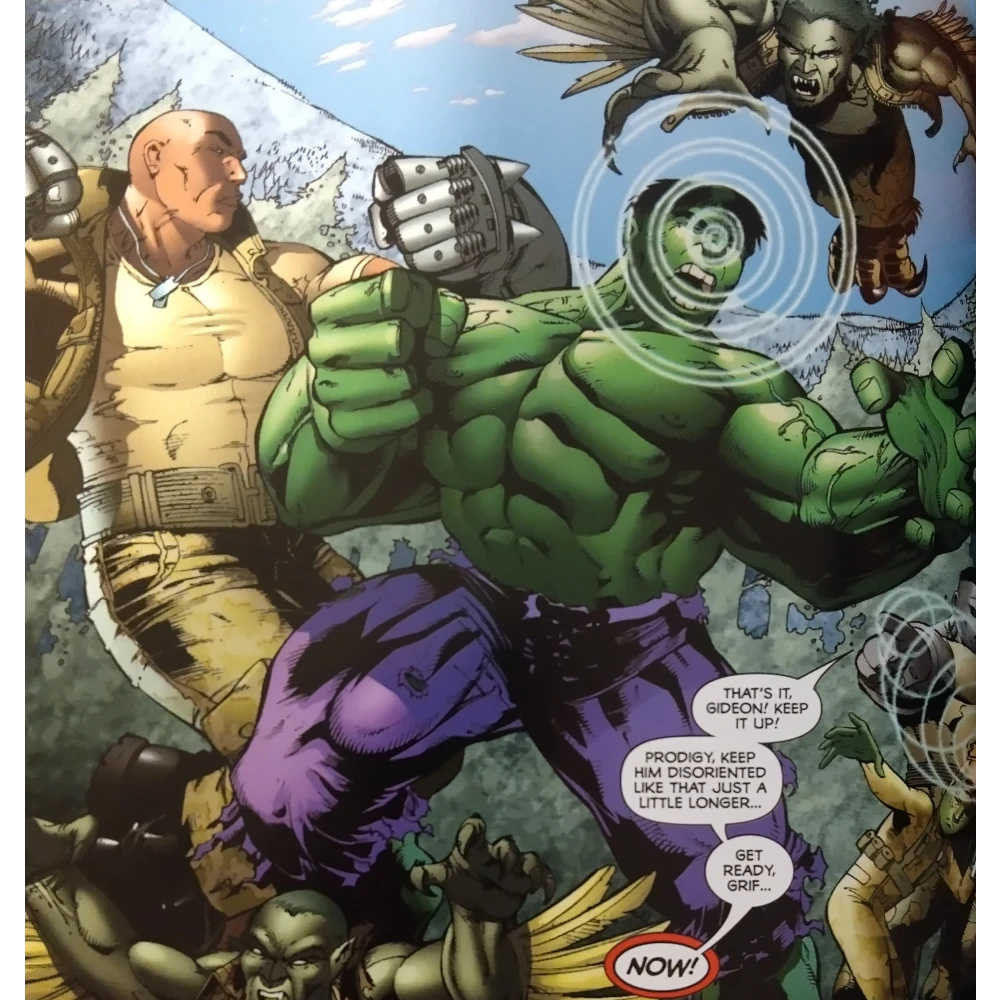
Gamma Corps hits that sweet spot of being an interesting narrative woven in-between issues of World War Hulk while being completely inessential to the main event. Whether or not you read Gamma Corps, Worldbreaker Hulk will still rampage through New York, kicking the snot out of Black Bolt, Hulkbuster Iron Man, Sentry, and others while our characters here act out the events of Tieri's series. You're not gonna see the former Clown, now an irradiated goof called Griffin, pop up to claw at the Hulk at any other point during the event. "Inessential" isn't an insult; it just means your understanding of World War Hulk isn't reliant on reading Gamma Corps. Positively, this means Tieri can take the time to craft a fairly decent series out of these four issues that utilizes the Hulk and his current vendetta against the world without feeling constrained to faithfully follow or recreate the primary beats of the main event.
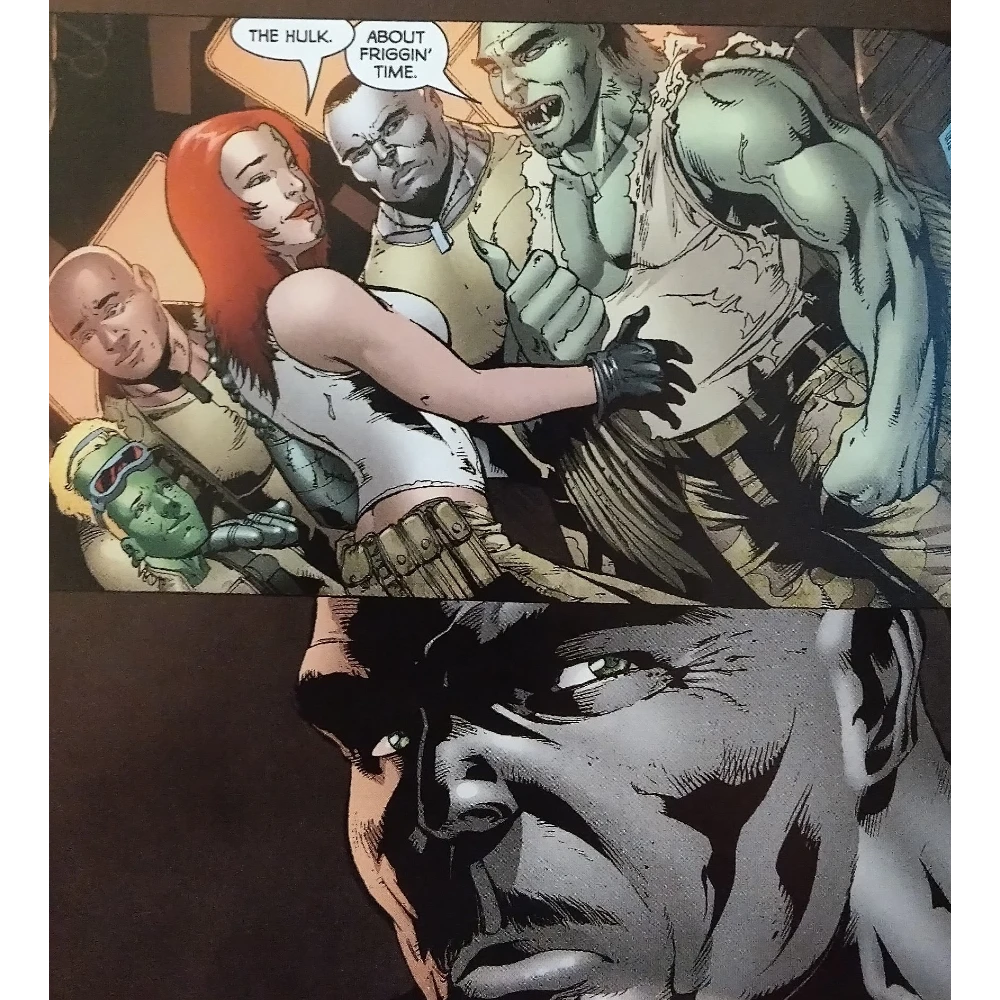
I came into this series remembering the characters most distinctly, and that's still the most significant impact Tieri leaves. He introduces us to five new(ish?) superhuman characters, members of an elite military squadron under the direction of General John Ryker, a former foe of the Hulk's. Each character–Brian Talbot's Grey, Nicole Martin's Mess, Gideon Wilson's Mister Gideon, Timothy Wilkerson's Prodigy, and Eliot Franklin's Griffin–has, more or less, a vendetta against the Hulk and have willingly subjected themselves to Ryker's experiments to become a squad capable of taking the Joyless Jade Giant down.
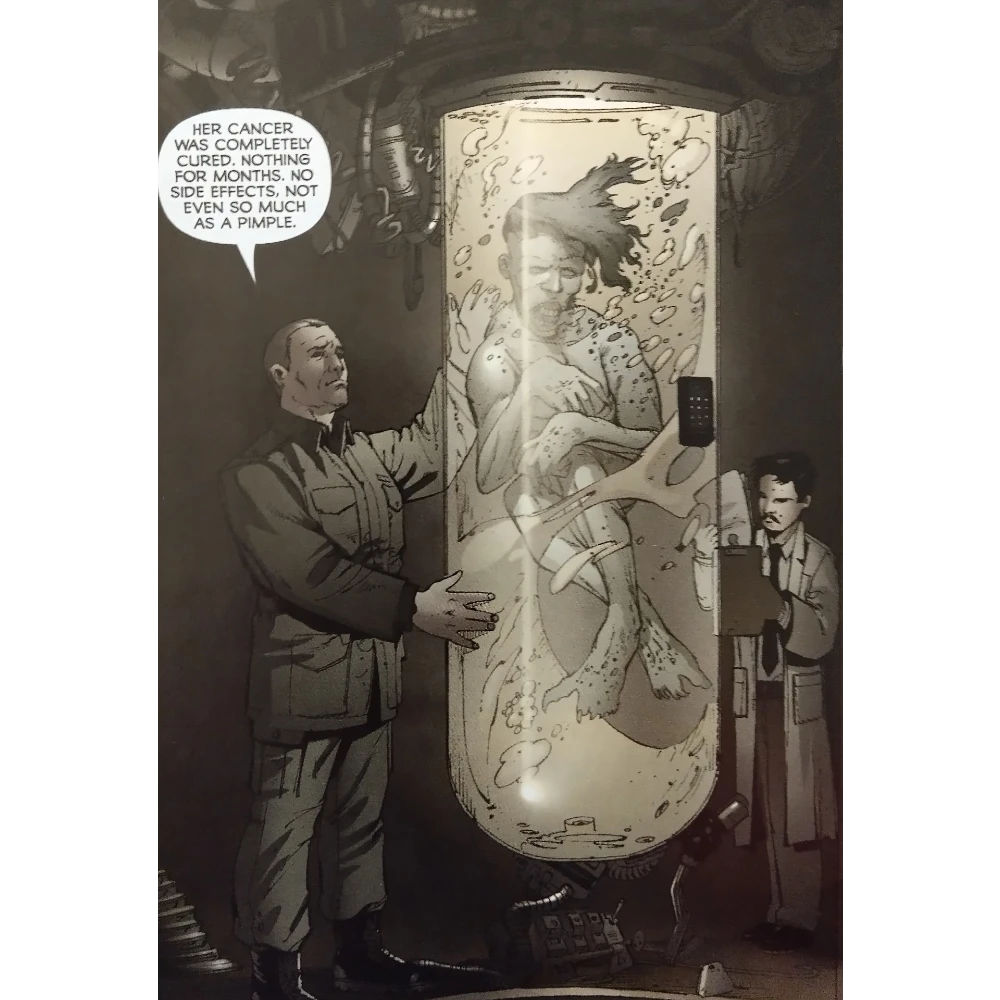
The narrative is smartly written, Tieri effectively introducing our main cast and then using flashback sequences to flesh out their backstories, including Ryker's. I’m not certain how much depth Ryker, a character introduced a few years prior by Paul Jenkins, received in his original outing; if the basics were laid out by Jenkins, Tieri incorporates them well here. It's hard to tell whether he expands on Ryker's backstory–the general's vendetta against the Hulk stems from Ryker's failed attempts to use the monster's gamma-irradiated DNA to cure his wife's cancer. Ryker now sees vengeance as his best option, shooting all kindsa kooky, chemical casseroles into people to see if they develop the abilities needed to thwomp the recently returned green gladiator.
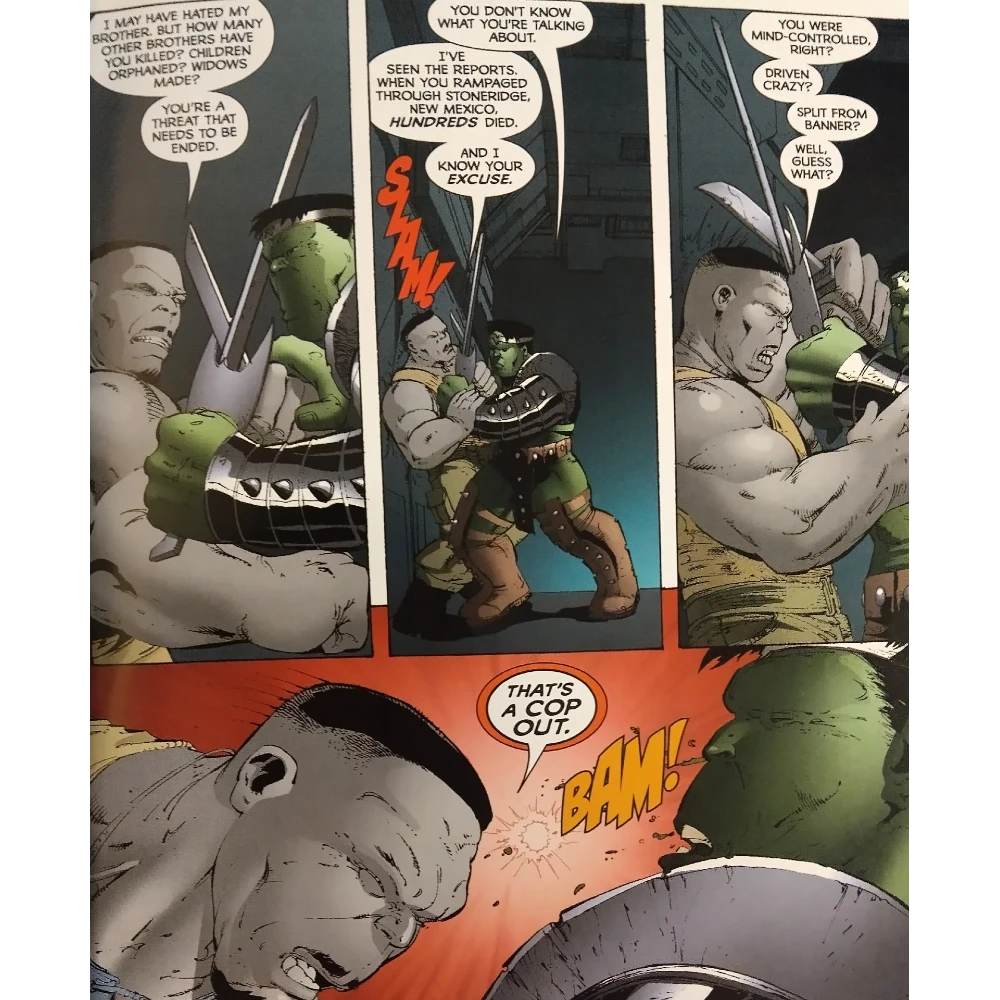
While working outside the confines of WWH's endgame from a story perspective, Tieri understands he's on the clock, that he's somewhat subservient to the whims of a larger story arc. He has to write something that, at least, makes some sense within the story's broader continuity and timeline. I'm not as familiar with WWH's tie-ins as I am other events, but from what I remember about the main series, the event unfolds rather quickly. Hulk shows up, trounces the Illuminati, and goes to war against any superhero or military representative who gets in his way. There's not much room for deeper conversations or concrete character moments. It's all "crush this, smash that, blow that piece of expensive hardware up." Tieri gets in on the action himself somewhat briskly, meaning the flashbacks are his best friend regarding character development. One website indicates Gamma Corps is spread across the entirety of the WWH event, which doesn't make much sense. Most of Tieri's Hulk-focused sequences are centered in a brief moment of time, meaning you'd probably do best to read this series halfway through World War Hulk if you're looking to be strictly chronological.
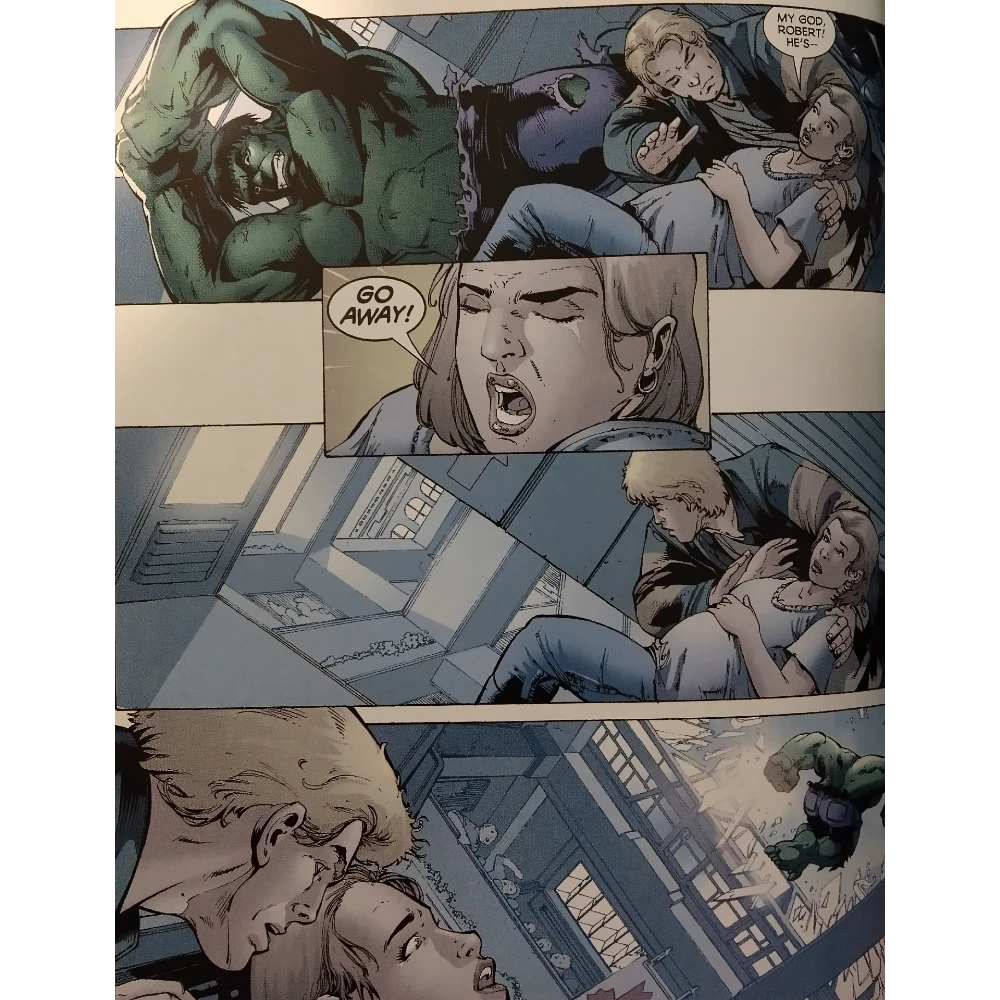
What works well, perhaps better than the Hulk sequences, are the ancillary scenes born from the general concept. The flashbacks, specifically, offer a deeper look into our main characters. A young man blames a mental disability on Hulk's interference with his mother's pregnancy. A mom wishes to avenge the death of her son. A father who also blames the death of his son on his involvement with the Hulk. Again, this is all thrust upon us rather quickly, but these moments offer motivation, intention, meaning to why these five would allow themselves to be subjected to Abomination, Leader, Doc Samson, or Harpy DNA. The motivations are reasonable as far as you allow yourself to believe in a comic where someone allows themself to be subjected to Leader or Harpy DNA. Is it convoluted? Yeah, but it works within the framework of the universe and the narrative.
I never felt like Tieri was attempting to do too much, meaning the story is generally neatly paced, even for how quick it feels as moments. Again, Tieri has to weave a tale within an ongoing narrative, and with only four issues, he has to maximize his page space. And he does that fairly well. I'll admit, some of that could be the nostalgia talking. I've often found I enjoy stories more a second time around, when I'm not being constantly bombarded by new narrative info and can soak in the deeper themes. It's easier for me to gauge the characters, understand their motivations, see narrative and artistic parallels.
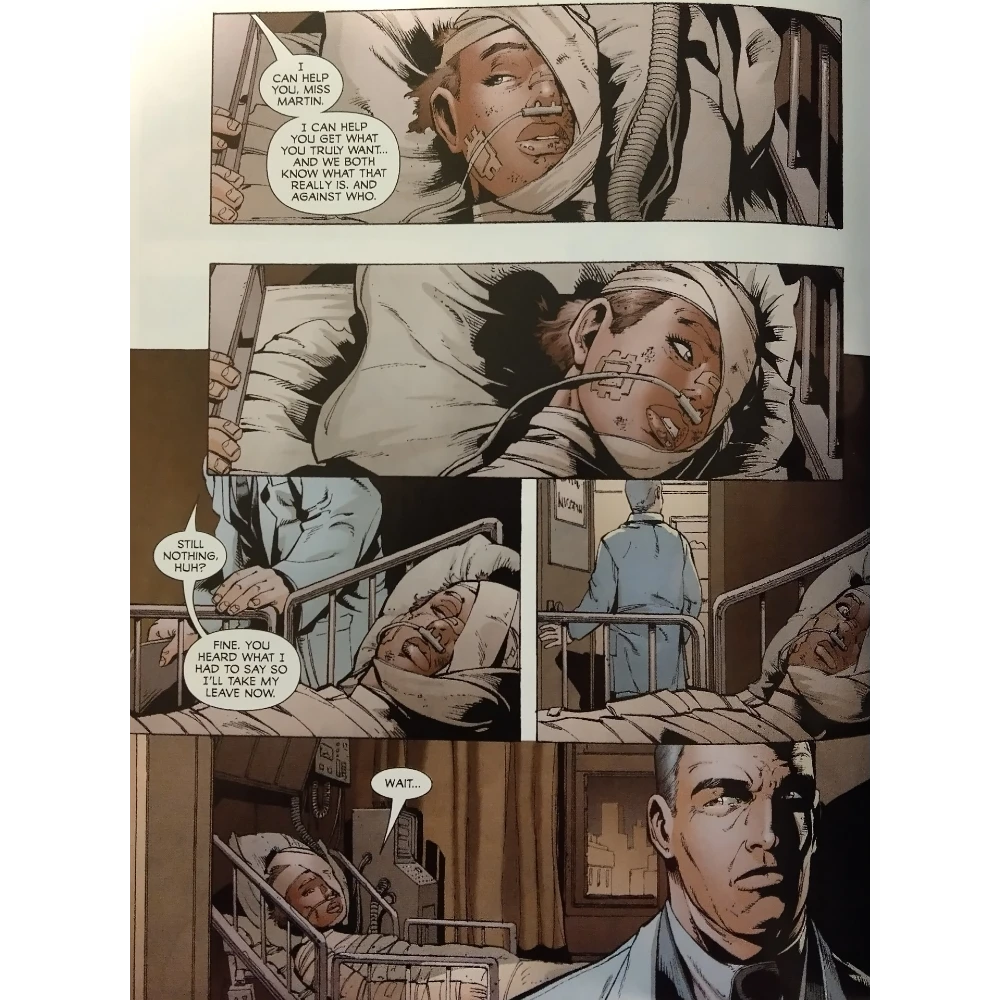
One of my favorite sequences from the flashbacks showcases Ryker disguising himself and approaching each member of his team to recruit them, a fun narrative detail bolstered by Carlos Ferreira's illustrations–Ryker in a doctor's lab coat, a reverend's frock, a military outfit, a business suit. The sequences are highlighted by Ryker repeating a statement about loss to the two parents who lost children to the Hulk in his efforts to recruit them; it's not lazy writing but a laser focused indictment of Ryker's tactics to gain what he wants, whether it's through impersonating a medical professional or offering a half-baked platitude with the illusion of sincerity. Verbally and artistically, Tieri and Ferreira showcase the lengths to which our primary villain assembles his squad.
If any weakness is to be found, you can locate it a little deeper into the series. A couple narrative details, haphazardly implied slightly earlier on, become a bit of a bigger plot point late in the game. And when I say "implied," I mean "very loosely" and "far more easier to pick up on a reread than assume the first time around." The narrative ends up going down a way you might expect it to go, but to reach that somewhat expected turn, we're offered some new information to a character not previously revealed. Does it make sense, story-wise? Yes, but in the moment it occurs, this new info feels somewhat crammed in to have the series turn the way Tieri wants it to. Am I a weird guy for quibbling this while having no trouble with people voluntarily letting themselves be injected with Leader or Harpy DNA? Absolutely. Maybe I need a gamma dosage myself.
Aside from this somewhat awkward revelation, Gamma Corps is worth reading. The team has not made many appearances in the years since–they appeared in a "Dark Reign" tie-in one-shot (which I may review some time in the future) and a later Hulk story where they were effectively depowered. A few folks have shown up in their "non-gamma" identities, but most of the team hasn't been used post-WWH. I get the decision to depower the team: if you're not going to use a group of gamma-powered misfits, why keep them around? At the same time, given how succinctly and effectively Tieri created backstories for these characters, it's a little disappointing the Corps wasn't used more often.
There's depth here not often found in a tie-in narrative to an event series, a level of thought put into a story that doesn't just try to saddle up next to the main tale. Tieri and Ferreira take what could have easily been a paint-by-numbers cash grab and turn it into a series that stretches beyond its tie-in status, that actually cares about the characters it creates and generates a narrative that uses the "Hulk smash everything" premise of the main event to its strengths rather than completely kowtowing to the whims of the crossover itself.