Distinguished Critique: Space Ghost Review
Simple and straightforward, this limited series gifts a classic TV hero an avenging spirit
—by Nathan on July 15, 2026—
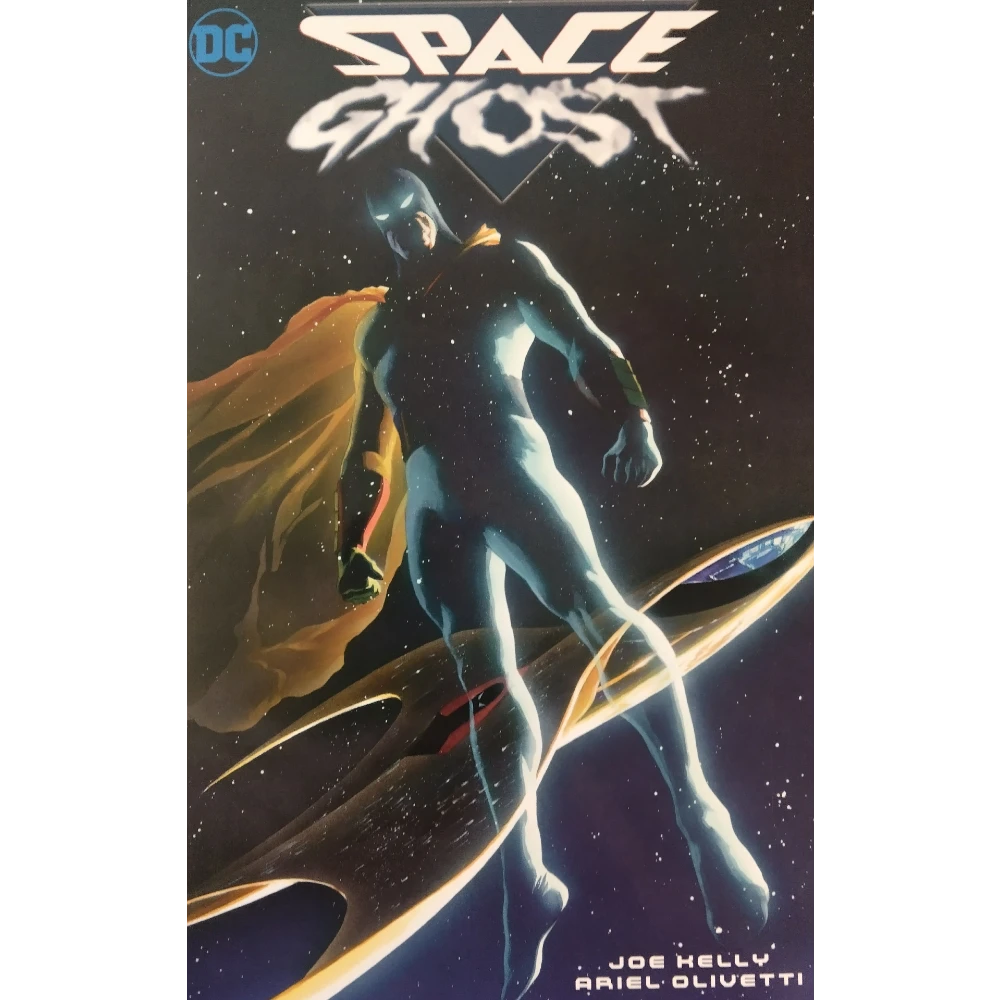
As a few of my recent reviews will attest, I'm heading down a bit of a nostalgic rabbit hole, diving into stories which I remembered with a certain fondness from my youth, triggered by my excursion into Kurt Busiek and Alex Ross' unparalleled Marvels. Though Ross didn't contribute artistically to today's narrative, you will likely notice his distinctive style on the cover, showing a white-suited man set against the backdrop of the cosmos.
Like other reviews where I've analyzed modern takes on classic comic or pulp culture characters, I'll admit to having no context for or much knowledge of the subject of today's post: Hanna-Barbera's Space Ghost. Though I have childhood memories of watching reruns of The Flintstones and The Jetsons on Cartoon Network, I never saw any of Space Ghost's incarnations, whether his original appearance or his 90s Space Ghost Coast to Coast talk show. Today's review is born purely of a different form of nostalgia. My dad found a trade copy of this DC Comics series from the library many moons ago, and for whatever reason, the comic has remained lodged in my mind.
Maybe it's that Alex Ross cover art. He seems to be the key connection between several recent reviews.
Finding a slightly different trade copy than the one my dad picked up, I've been looking for a chance to give this limited series another readthrough. Since I've been working my way through a few other childhood reads, I decided to devote some time to read and unpack the adventures of Thaddeus Bach, as Joe Kelly and Ariel Olivetti show how a man dedicated to justice comes to haunt the spaceways.
Space Ghost
Writer: Joe Kelly
Penciler: Ariel Olivetti
Inker: Ariel Olivetti
Colorist: Ariel Olivetti
Letterer: Richard Starkings
Issues: Space Ghost #1-5
Publication Dates: January 2005-May 2005
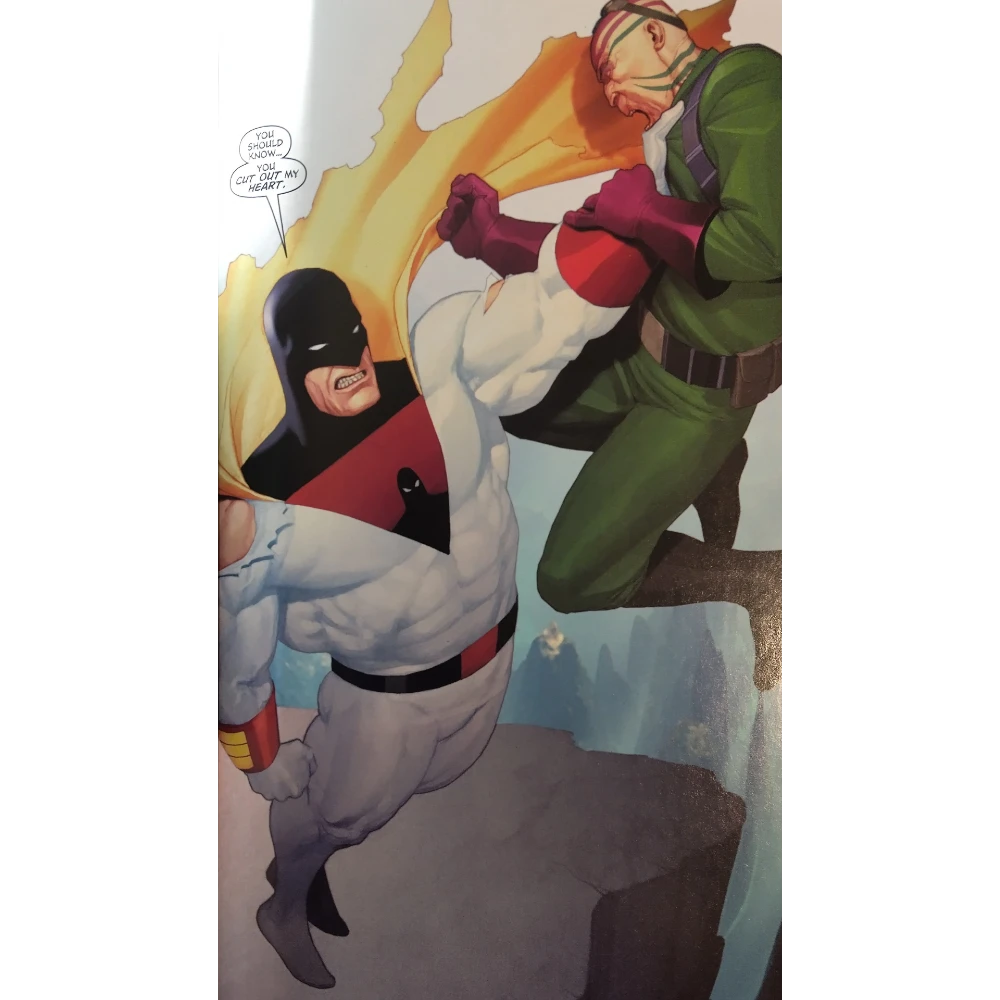
As far as I understand it, this was the first attempt anyone had ever made to give Space Ghost an origin story or explain who he was or why he did what he did. As with other adaptations of older characters, this series exists to give our central hero a backstory and motivation, fleshing out Thaddeus as an actual human being we would be willing to root and cheer for as a superhero.
In a turn that isn't all that surprising, Kelly decides the best way to make Space Ghost a fully-formed human character is to develop a tragedy which the character is tasked with avenging. Right off the bat, you're aware this series will go to some grim places, which I believed shocked me a little as a young reader. I won't say "traumatized," but the fairly horrifying implication of one image in particular has lingered with me in the years since I first read this series. Nowadays, I view it as just good storytelling, a pretty brutal concept allowed to fester in the reader's imagination rather than shown to them in all its dark detail.
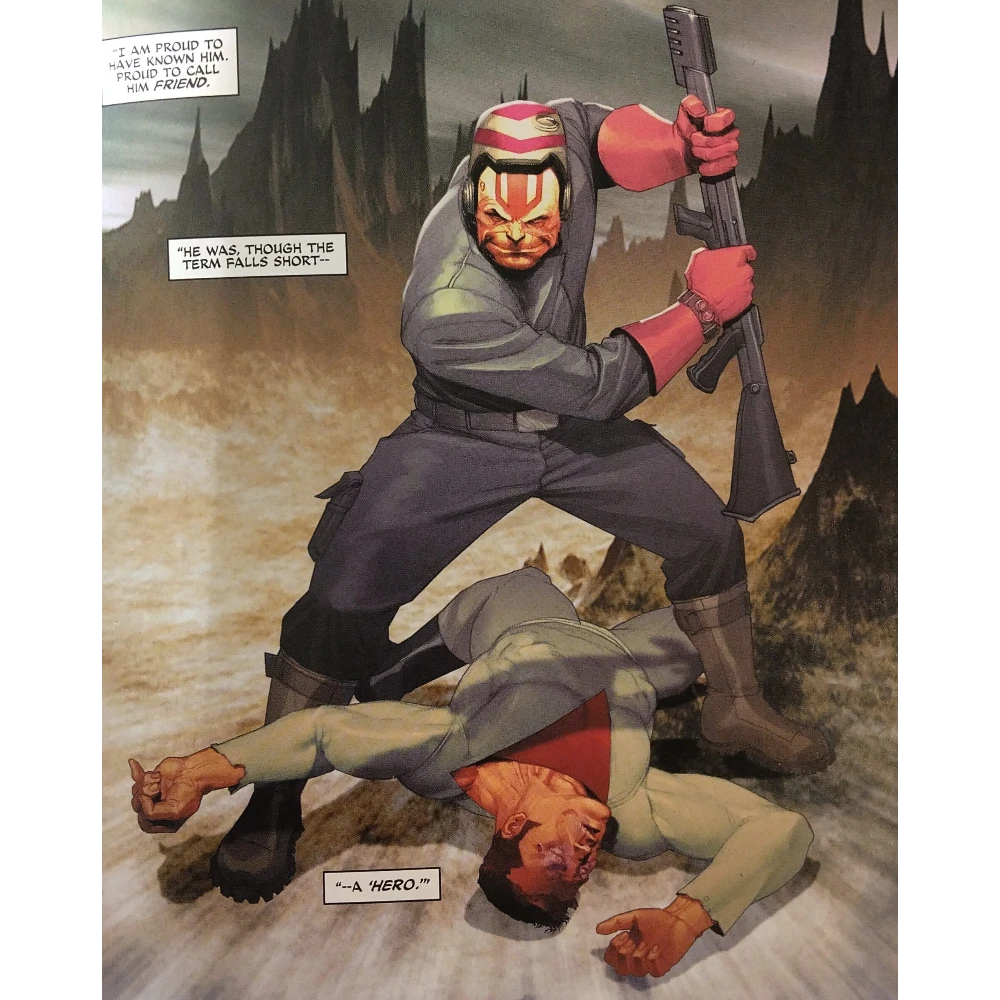
Yet what we receive across the bulk of this series is fairly standard material–Thaddeus, a law enforcer drawn into a futuristic shadow ops program by his shady superior, faces the unintended and cruel consequences of his actions when his morals supersede his loyalty to his peers. Left for dead on a seemingly uninhabited planet, Thaddeus gains the resolve and weapons necessary to hunt his enemies down in vengeance's name. There's a dead family, a pledge to avenge them, steps taken to stalk those responsible and deliver justice without the help of the seemingly corrupt system Thaddeus once pledged to uphold. He's the Punisher in space!
(an idea which Joe Kelly totally beat Frank Tieri to by seven years)
Though simple and standard, it's enough fodder to provide Thaddeus an understandable motivation and an arc to carry him beyond his seeming death. Founding his narrative on a tried-and-true storytelling methodology, Kelly nevertheless digs deeper into some of the thematic implications, and he does so neatly enough to let the reader draw their own conclusions. As part of this shadow ops group, Thaddeus becomes a "phantom," working outside the boundaries of typical law enforcement without restrictions or the same level of moral responsibility. Kelly delightfully contrasts this to his activities as a "ghost," highlighting that Thaddeus' vigilantism is justified, if you wish it to be, by his ultimate objective. Instead of working outside the law under the auspices of a greedy superior officer, Thaddeus pursues his own mission in the name of what he considers justice.
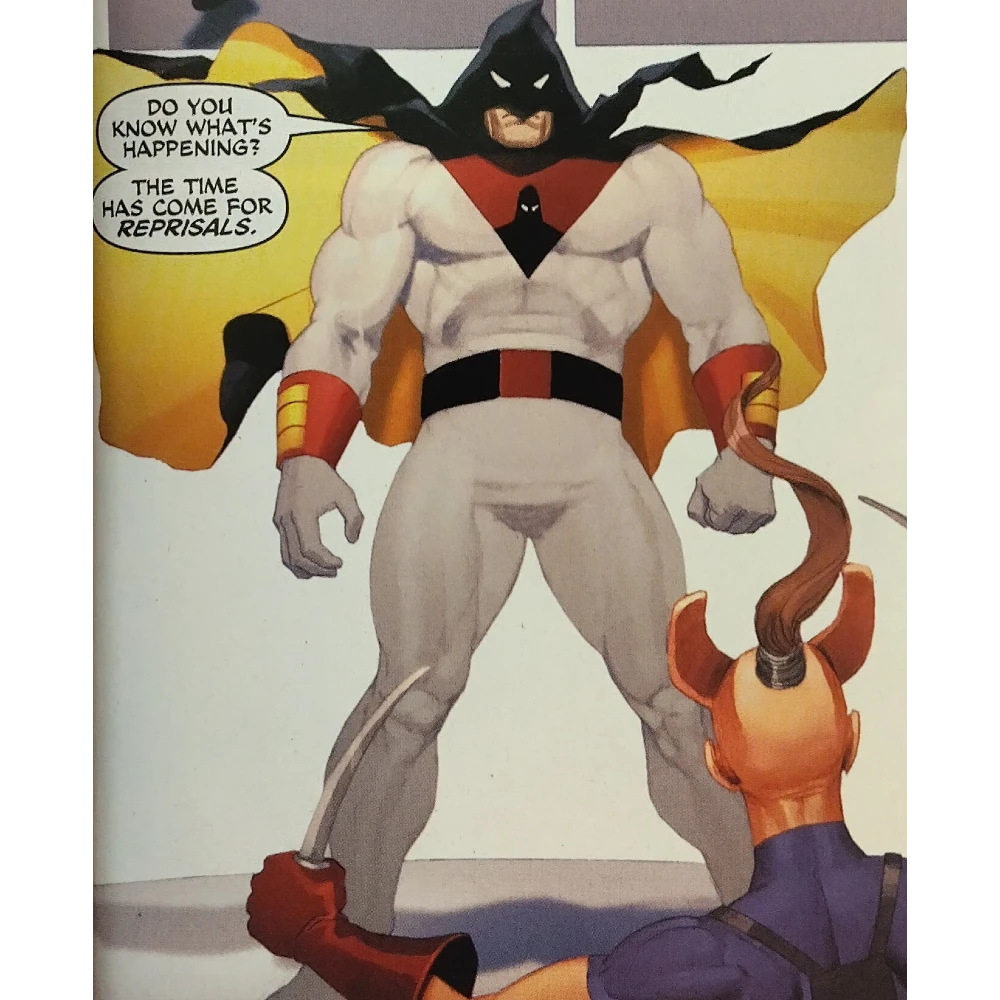
While not an actual phantom, Thaddeus' decision to wrap himself in a cloak and utilize invisibility tech is a strategic option that also highlights who he is as a character. After losing his family, Thaddeus is no longer the same man, embracing an internal death that propels him on a dangerous mission. "I died too," he tells a friend after recuperating from seemingly fatal wounds. Even after his "resurrection," death stalks the Space Ghost. He uses technology and a spacecraft from a "planet of the dead," shocks his enemies by revealing he's still alive, and either engineers multiple deaths or refuses to save guilty parties. Early on after losing his family, Thaddeus momentarily contemplates suicide, finding strength to keep living in order to avenge the dead. Dying would be easy; living with haunted memories, pursuing a haunted agenda...that takes a strength of resolve Thaddeus chooses to embrace, regardless of the difficulty.
Much of your support for Thaddeus as Space Ghost relies on how well Kelly introduces him as a character, and again, though the mechanics are fairly simple, Kelly gives him a solid grounding. If you aren't won over by the empathy generated by Thaddeus' marriage to an expecting wife, then hopefully his moral center will guide your allegiance. Thaddeus is introduced with qualities intact, and the arc he undergoes musses up some of those noble traits while re-enforcing core aspects.
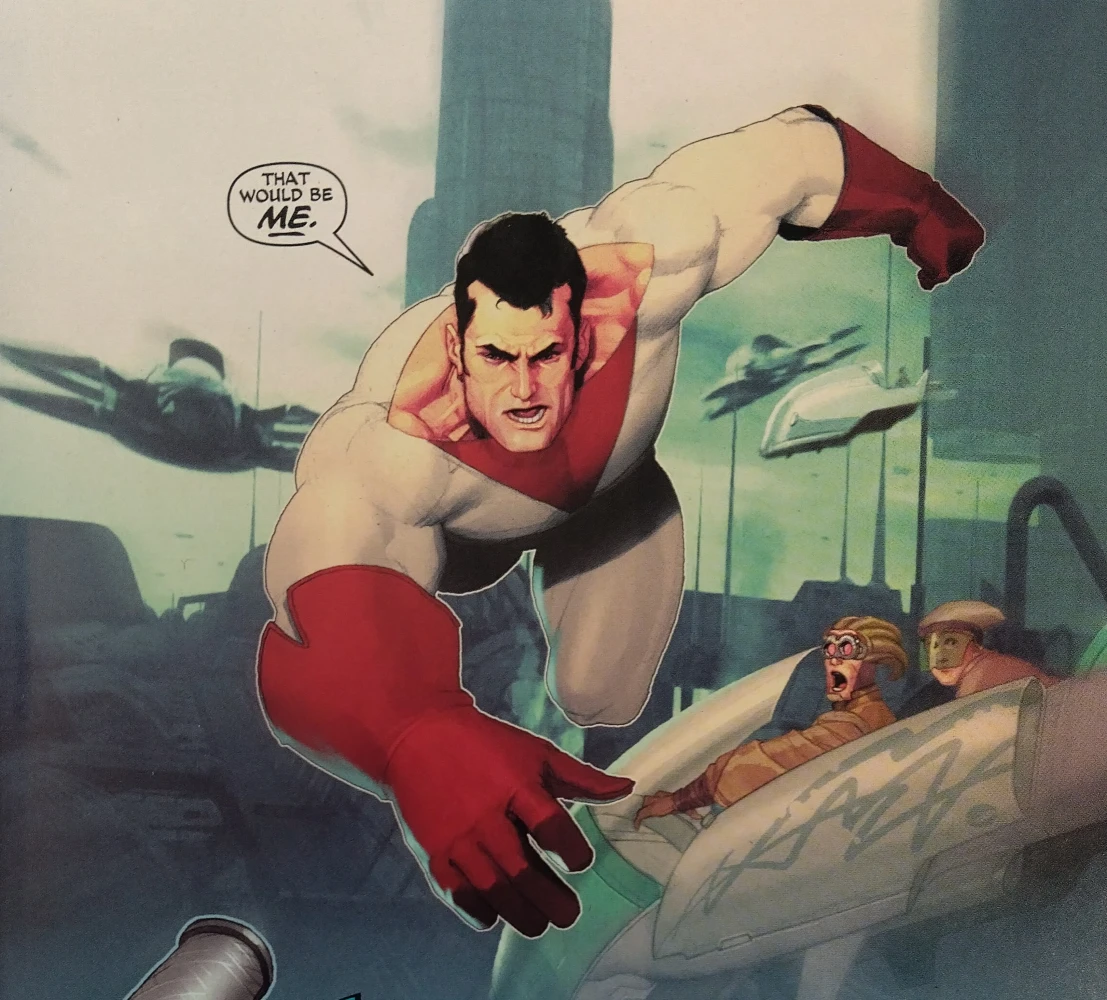
There is a sense, in the series' latter half, that Kelly is dabbling with the idea that he wants Thaddeus to represent more than vengeance. In a move utilized years later by Matt Reeves in The Batman, Thaddeus undergoes a subtle transformation from mere avenger to actual superhero, defending a planet against an alien invasion and saving two children (who will go on to become his sidekicks from the original cartoon). Some of the mirth and joy Thaddeus lost is reestablished, the kids feel like surrogate children, and Space Ghost finds a purpose beyond hunting his enemies. The question of "Gee, Space Ghost, whatcha gonna do next?" is answered well to give the series a decent ending while hinting at further adventures extending beyond the scope of these five issues.
Woven in the background is a subplot of sorts which becomes vastly important during the series' second half. Teasing a larger threat, Kelly unleashes that menace full bore late in the game, not so much disrupting his tale of revenge but giving it a new twist. This plot point is created, it seems, to introduce an antagonist central to Space Ghost lore, and even though Kelly provides a few hints, I found the sudden insertion to be jarring. Suddenly, the nicely plotted revenge story is at odds with an alien invasion, and though it tethers into the revenge story and allows the development of that heroic theme referenced above, it feels like a sudden shift in plot. Your direction is wrenched away from Space Ghost, Thaddeus' own attention is diverted, a new villain is made central to the story, and what was already happening feels interrupted by this new plot thread. I don't mind the concept itself; it's just introduced in a clunky fashion.
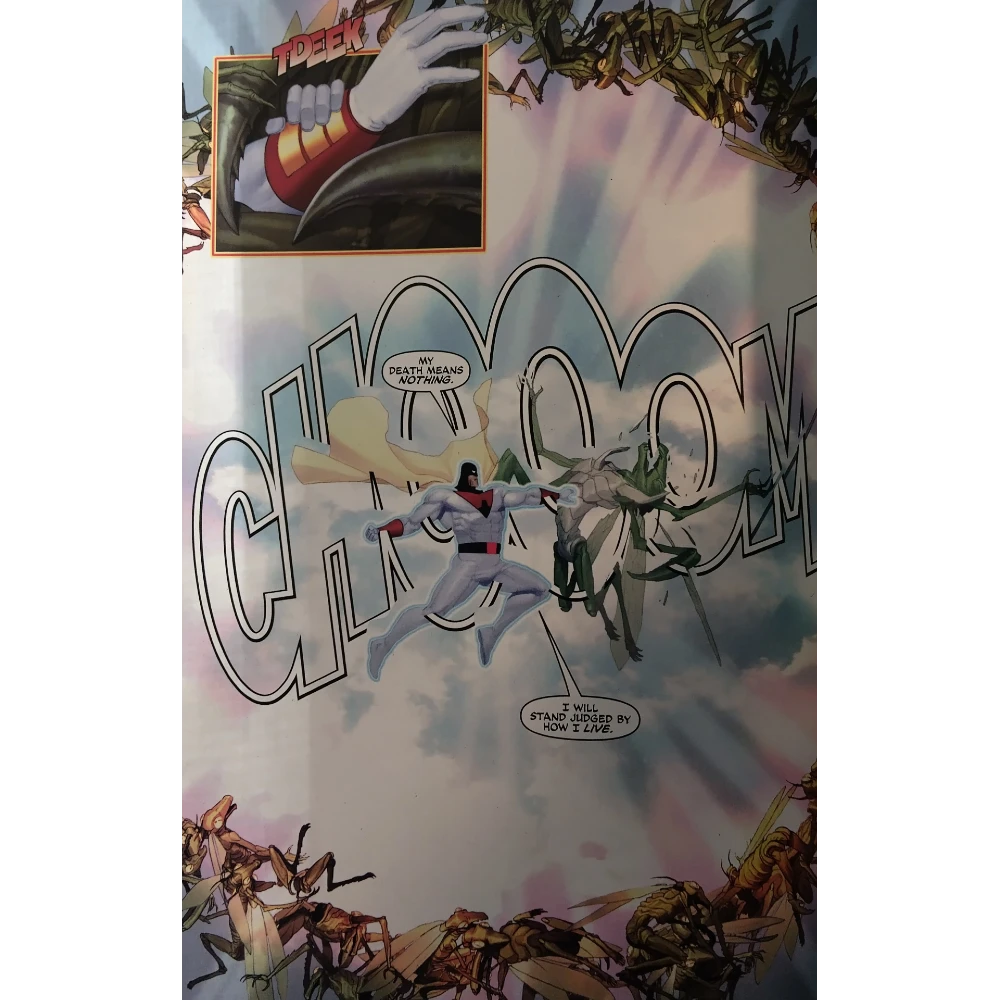
Did Space Ghost need the gritty sheen gifted others of his kind, such as the Shadow and Doc Savage? Not necessarily, would be my argument. Though not a pulp comic hero, Space Ghost exists at the same intersection of older characters originally introduced for young audiences given a modern, somewhat more mature facelift for older readers, likely the adult versions of those same kids who watched the Hanna-Barbera cartoons. Simply told, this series does dive into some engaging thematic elements, Kelly nicely contrasting Thaddeus Bach the man with Thaddeus Bach the avenging phantom. But I cannot say it's anything special or absolutely memorable, my current outlook somewhat at odds with a series that swirled around my mind the last few decades. I'm glad I finally gave this a re-read, glad I finally allowed myself to develop an updated opinion as an adult. Space Ghost hasn't manifested itself as the most corporeal story on my shelf, but it won't dissipate from my memories like a wispy apparition.