(Strand)om Stories: Space: Punisher Review
It doesn't deliver any new insights on Frank Castle, but this bonkers series is a fun twist on the Marvel Universe
—by Nathan on June 30, 2026—
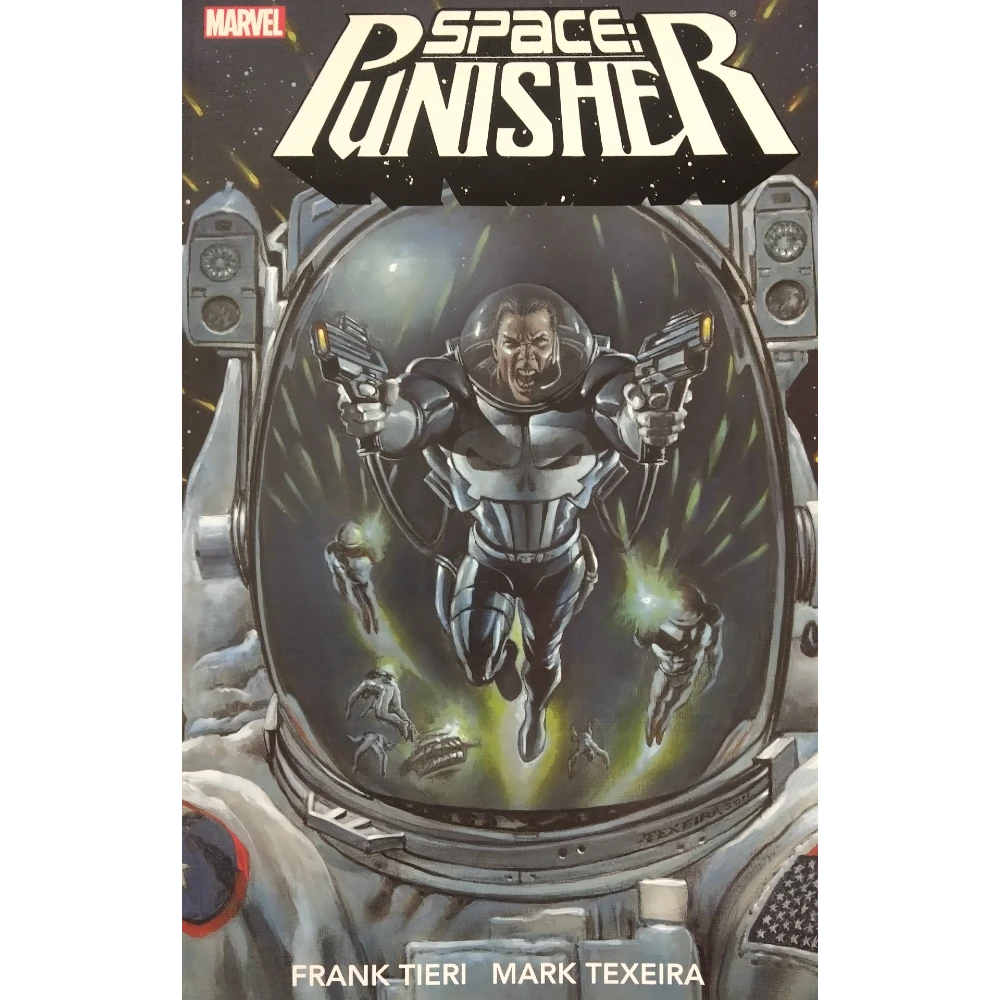
In space, someone actually can hear you scream.
His name is Frank Castle. And he wants to hear you.
With all respect due Ridley Scott's Alien, Ellen Ripley and the rest of the Nostromo's crew never dealt with the Punisher. He may not have the exact same chest-bursting capabilities as a Xenomorph, but he's one bad dude who looks awesome in black, no matter the universe. And he'll get you to scream…and scream…and scream…
Today's review is all about Frank Castle's and his constant drive for vengeance, which really doesn't make this series sound any different from any other Frank Castle comic out there. The Punisher carries big guns and lotsa bullets and spends lotsa pages finding lethal places for those bullets.
But have you ever seen the Punisher find lethal places for lotsa bullets…in space???
With the series title prioritizing the word "Space," I assume this was meant to be the first in a series of stories set in the great expanse beyond Earth (and do note this isn't "Space Punisher," even though it's totally about "space Punisher"; the colon is important, emphasizing the setting over the character). There are aspects of the story which make it feel like what was meant to be the first in an ongoing concept of narratives. But this is all we have of whatever that concept may have been, four issues of Frank Castle bringing his particular brand of justice-just-kidding-it's-really-revenge to the outer reaches of human and alien civilization.
Frank Tieri, having written a few narratives I've recently reviewed, delivered this four-issue limited series, alongside Black Panther and Sabretooth artist Mark Texeira. Tieri's involvement is the only reason I'm reviewing this comic right now, but it isn't the only reason folks should give this bizarre series a spin.
Space: Punisher
Writer: Frank Tieri
Pencilers: Mark Texeira and Juan Santacruz
Inkers: Mark Texeira and Juan Santacruz
Colorists: Mark Texeira and Angel Marin
Letterers: Clayton Cowles and Note Piekos
Issues Collected: Space: Punisher #1-4 and Marvel TV: Galactus–The Real Story #1
Volume Publication Date: December 2012
Issue Publication Dates: April 2009, September 2012-December 2012
Don't let the back cover copy fool you: just like there's no secret finale to Stranger Things (too soon?), there's no fifth Space: Punisher issue. This is the opposite error of Steven Grant and Mike Zeck's original Punisher limited series, where Marvel accidentally touted four issues when five were always planned, which is actually a much better (and preferred) problem to have! I'm letting you know now so you don't make the same mistake I did and (reasonably) assume there are five issues only to be bamboozled when the series ends at issue 4 even though there are more pages in the trade. Those pages belong to a one-shot I'll ramble about later.
You've been warned.
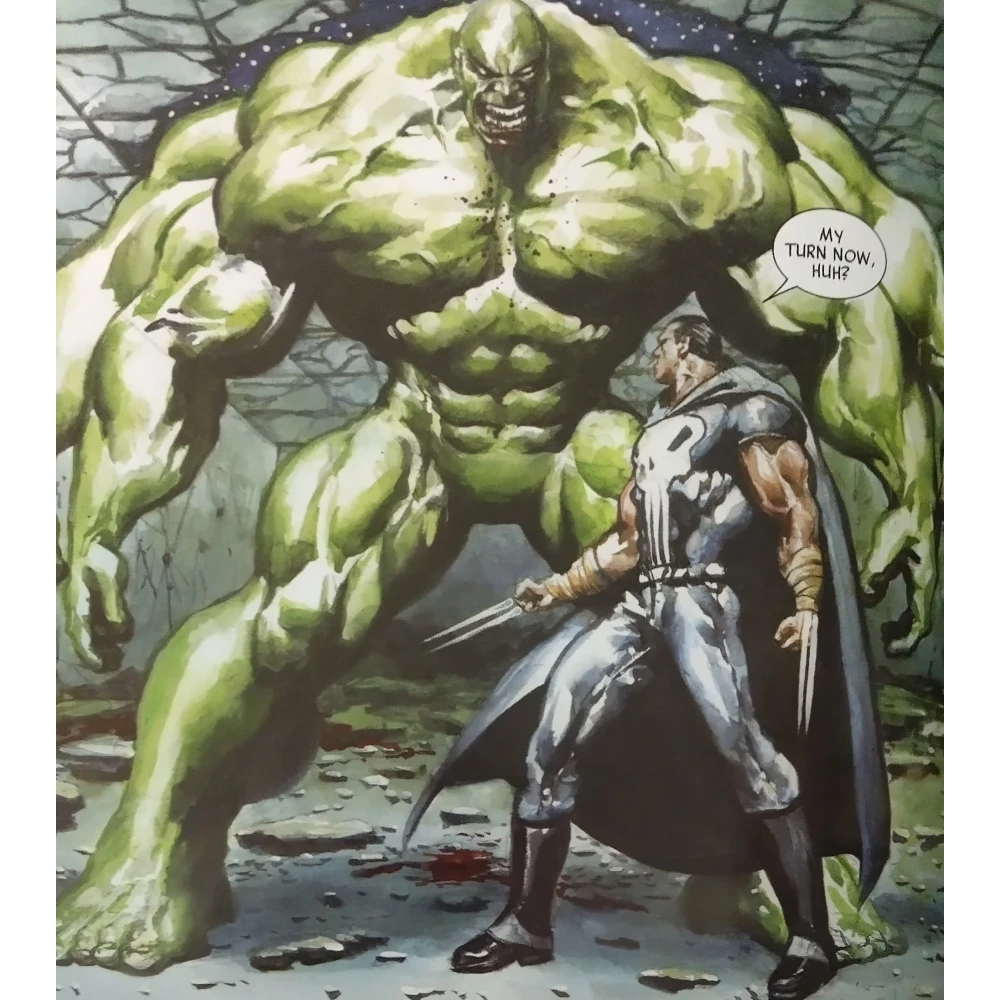
I said this is no different than any other Punisher comic "out there," except for the fact that it's way the heck "out there." We're in a totally different universe than Earth-616, where the main divergence is that everybody you love and know on planet Earth in mainstream continuity now zips around other planets. This isn't a universe where all the earthbound characters decided to go off-planet and colonize the rest of the cosmos. They're all just in space. The Hulk's a big green alien. Doc Ock is a multi-armed alien. The Red Skull is a red-headed alien…though he's still a Nazi.
Which brings me to my main caveat with this series: the lack of context. Normally, I'm fine when a writer throws a crazy idea against the wall and sees where it sticks. You want to translate Marvel characters into space without providing any sort of backstory? They're all just "aliens" now? That's typically fine with me. What's odd about this series is that Tieri, while never hinting at the universe's larger context, gives hints as to certain concepts which only make sense if Earth is involved. Frank calls the Red Skull a "Nazi," which either means that this universe has an Earth history or that space Adolf Hitler is a thing…
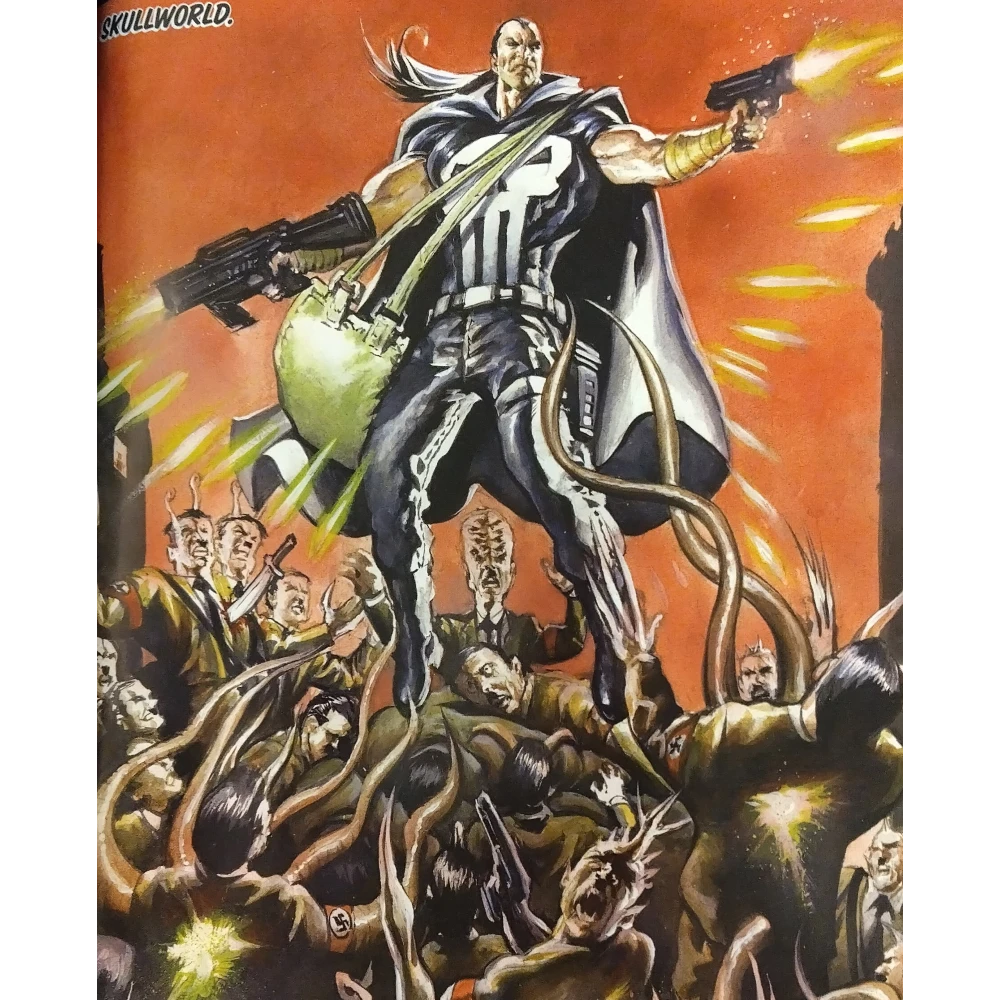
…which it actually is! Punisher mows down a bunch of aliens that all look like Adolf Hitler. But why do they resemble the form of the once-living dictator? I don't know. It may sound like I'm splitting hairs, but part of me hoped for a bit of logic to the whole shebang. Tieri's concepts work better when they just take Marvel continuity and twist it with a bit of sci-fi looniness: Bruce Banner, experimenting with gamma rays, becomes a multi-armed Hulk rampaging through space. Punisher foe Barracuda is a cross between gangster thug and water-breathing extraterrestrial, befitting his name. Frank kills a Brood Queen ruling over a nest of Sym-Brood-iants, combining symbiotes and the Brood in a horrifying yet fitting ("horrifitting"?) visual design.
This warping of traditional Marvel fare is what you read the series for, Tieri taking what is known from the Marvel Universe and giving it a science-fiction twist. No explanations, no continuity. You should see a big gray dude with a horn growing out his forehead and go "That's the Rhino" without anyone telling you it's the Rhino. You should spot Thanos in the background of a bar scene, chuckle at an establishment called the "Starjammer," or recognize alien versions of the Avengers based on their visual designs (Iron Man is a blend of flesh and metal, for example, while Ant-Man has mandibles and antennae). This is where the fun of the series is found, the wacky ways in which Tieri tasks Texeira to give the Marvel universe a sci-fi, extraterrestrial sheen, no questions asked and no context given. It just works better for me, because at least with "space Marvel Universe," you're further twisting what's already fiction rather than introducing some sci-fi ideas with real world equivalents.
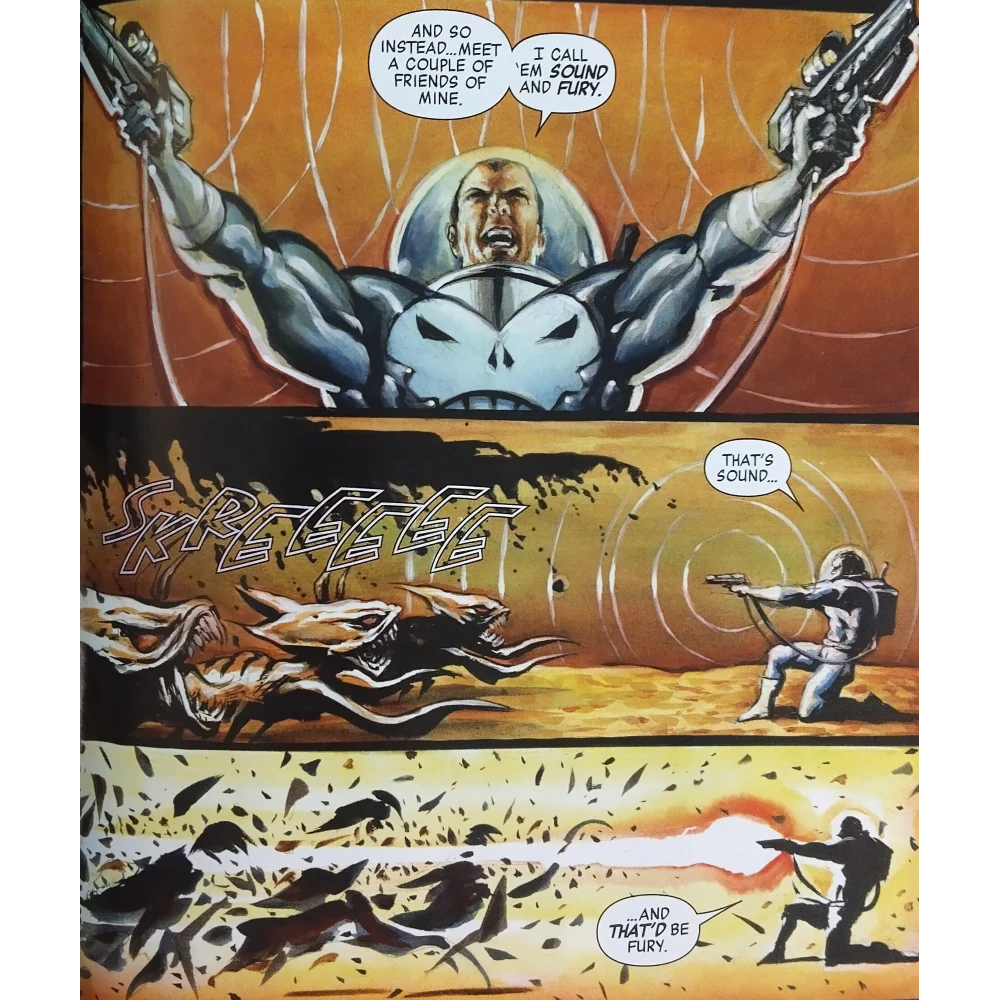
The varied visuals give weight to a paint-by-numbers plot which sees, as I've already alluded to, the Punisher tracking down the individuals behind the individuals responsible for the death of his family. It's classic Punisher, an angry man with big guns shooting criminals as he looks for more criminals. Tieri adapts the Punisher well to the genre–instead of a battle van, the Punisher flies in a ship operated by a computing system named after his wife; instead of Micro, Frank's partner-in-murder is "Chip," a robot who's just as lethal as Castle; instead of bullets, Frank fires lasers and sets black hole bombs.
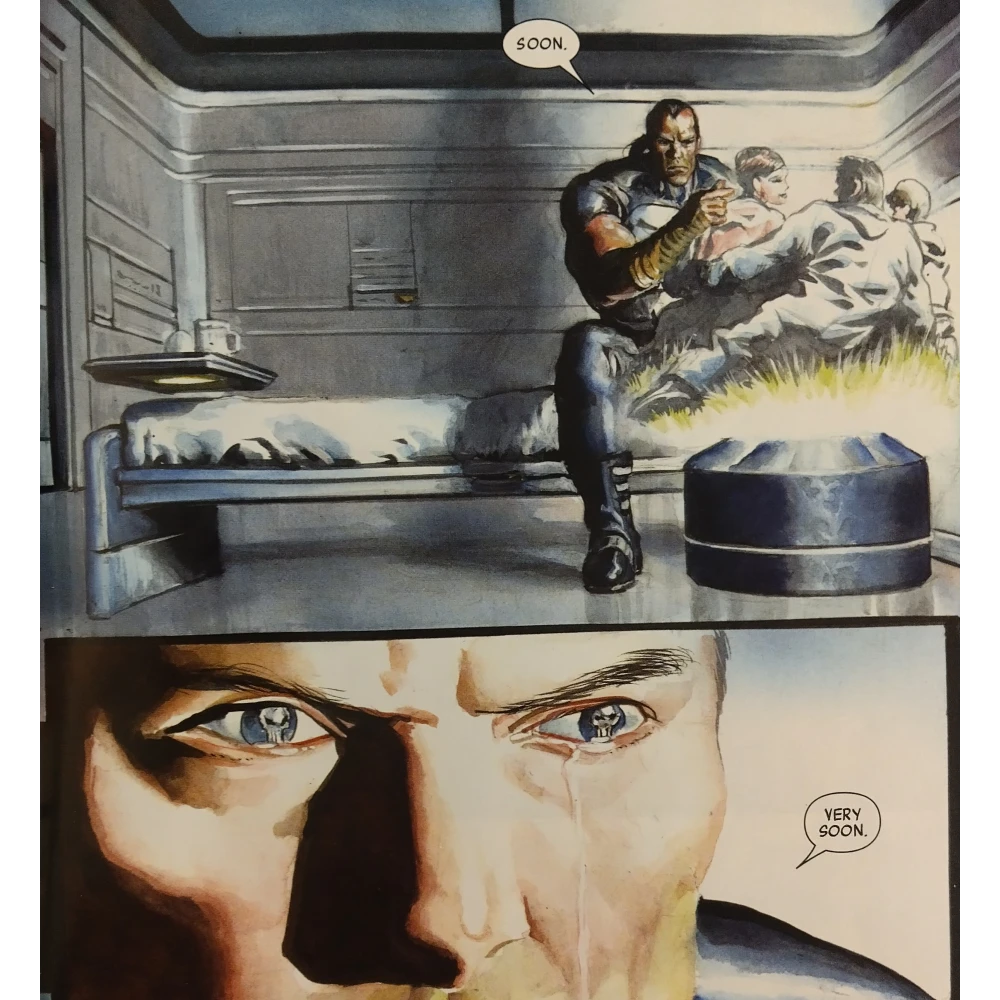
"Avenging his family" is all the characterization you're going to receive here. It's really all you need for this kind of Punisher story. Frank is just the vehicle for Tieri to explore this unique universe (again, emphasizing the setting over the character), and aside from one scene where he looks at holographic memories of his family, the Punisher does a lot more shootin' and scootin' than reminiscing. He exhibits a closeness to his robot friend and spaceship, but those are really the only relationships he has. Maybe there's something to be said about how these cold, mechanical objects have been made as "replacements" for his real family, but that's just my interpretation.
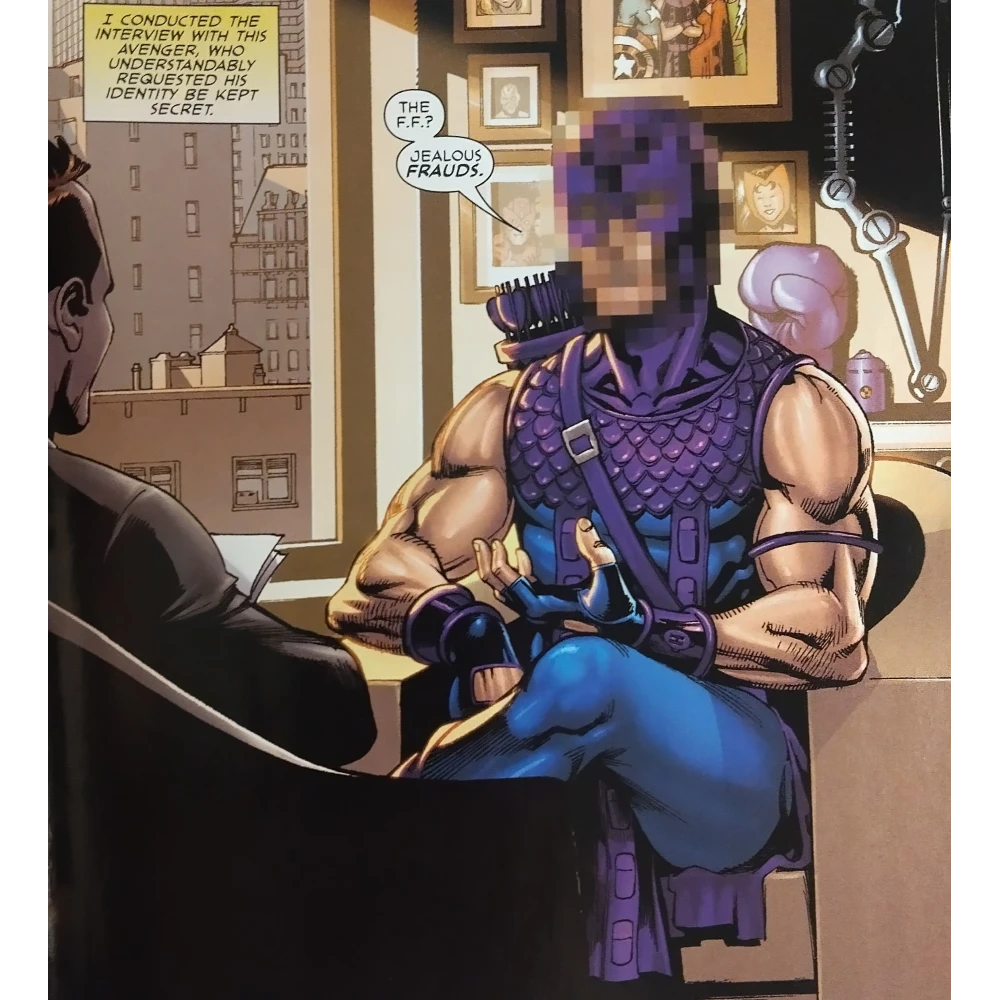
Also included is the one-shot I alluded to previously, a more whimsical affair by Tieri and artist Juan Santacruz which sees an exploitive TV show host try to debunk Galactus as a hoax. This isn't related to Space: Punisher whatsoever, but rather a run reimagining of Galactus as a concept as the host conducts interviews with heroes and villains to make the claim that there's never been a massive giant attempting to devour the Earth. It's a fun read, with visual and verbal gags flying hither and yon, such as Hawkeye asking to be interviewed anonymously, with only his face hidden while the rest of his costume remains obviously apparent. Again, no real character work can be found here; it's humor for the sake of humor, and even if not every joke lands, there are enough references, gags, and in-jokes for readers to appreciate.
I keep referring to the "character" idea, mainly because it's what I like to look for in a comic. One of the reasons I enjoy Tieri's Gamma Corps limited series is because of how well he develops a small cast across four issues. They have personalities, motivations, arcs. That same feeling cannot be found here. You don't read this for development; you read it for the absolutely bonkers sight of robot butler Jarvis lifting Galactus' empty helmet to crush Frank Castle with or the Hulk biting Sabretooth in half. In that way, Tieri does what he set out to do. There's a sense Space: Punisher was meant to sprout other stories, given the ambiguous nods to Galactus and an epilogue featuring the Avengers. Those never happened. Four issues is all we got, and for how fun the concept is, four issues utilizes the notion's potential well.