(Strand)om Stories: The Punisher: War Zone Review
These nicely illustrated issues tap into a unique premise, but some illogical particulars hamper the believability
—by Nathan on April 16, 2026—
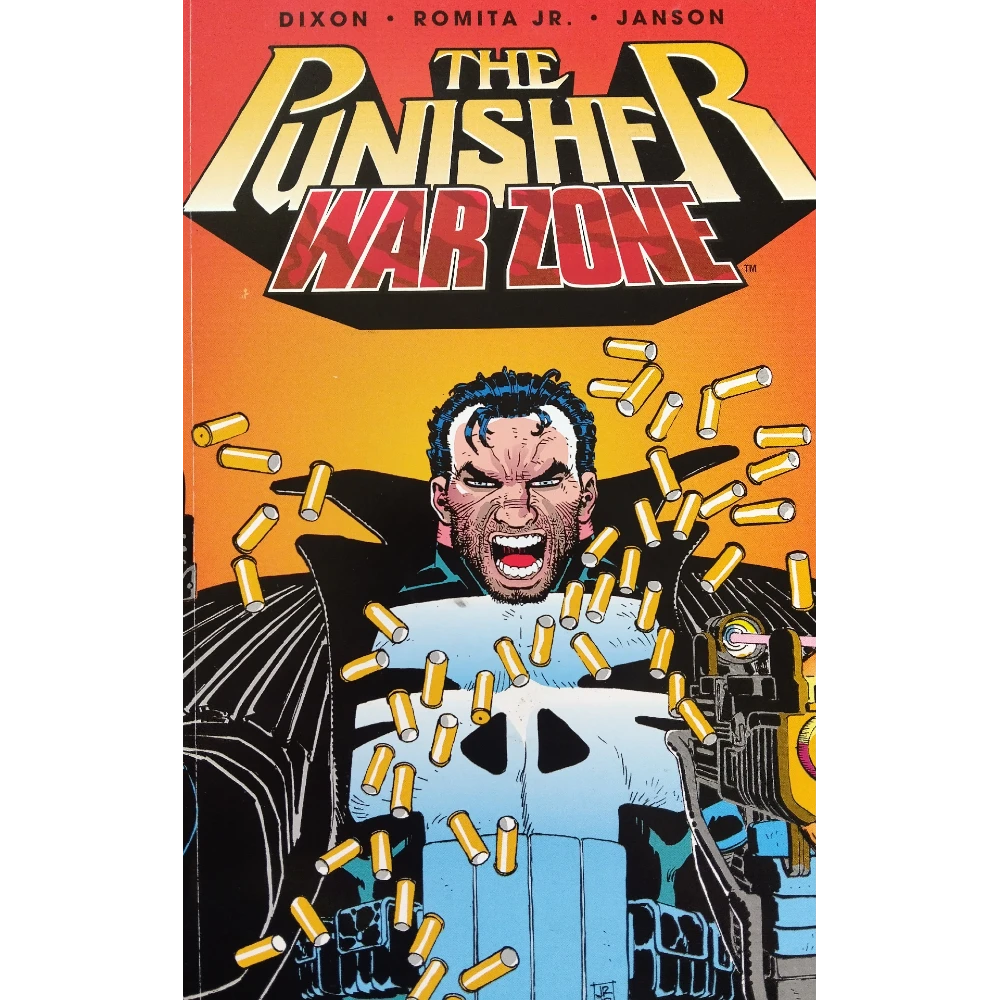
You wanna know what's better than having one Punisher book on the shelves?
Two Punisher books.
And I'm just gonna let you guess what's better than having two.
It's pure financial mathematics, right? You create something popular, you try to multiply it, see if you can keep the popularity going. Amazing Spider-Man isn't enough, so you give him a team-up book and a second solo title (and a third…and a fourth…). X-Men is selling like hotcakes, so you start a title with young mutants and then a book with older mutants who once were the young mutants.
Of course, the issue is that you need to give people a reason to keep reading, right? People love regular Batman so much, maybe they want some insight into who he was when he was just beginning his crimefighting career. You gotta have a hook.
Sometimes, that hook is just slapping a few names on a book. Wanna see how Jim Lee draws the Punisher? There's a hook. Okay, how about John Romita Jr? Boom, there you go. Even better, we've got the guy who, around the time this third Punisher book began, had been working on a couple Robin miniseries, which is important because those gigs were landed because of even earlier Punisher work he did. We're talking Chuck Dixon, who'll become even more important to several "Distinguished Critique" reviews I'll be producing on the "Knightfall" epic. It's because of Dixon's involvement in other work that I elected to give this volume a read.
Naturally, a strong story is always a perk, too, right? I mean, that's why these guys are in this business. And speaking of "business," these first six issues of Frank Castle's War Zone title feature a different kind of enterprise, one dealt with in backrooms and alleyways. It's a business Castle's been looking to eradicate for a while…and this arc sees him get closer to the dark than some might find comfortable.
The Punisher: War Zone
Writer: Chuck Dixon
Penciler: John Romita Jr.
Inker: Klaus Janson
Colorist: Gregory Wright
Letterer: Jim Novak
Issues Collected: Punisher: War Zone #1-6
Volume Publication Date: September 2002
Issue Publication Dates: March 1992-August 1992
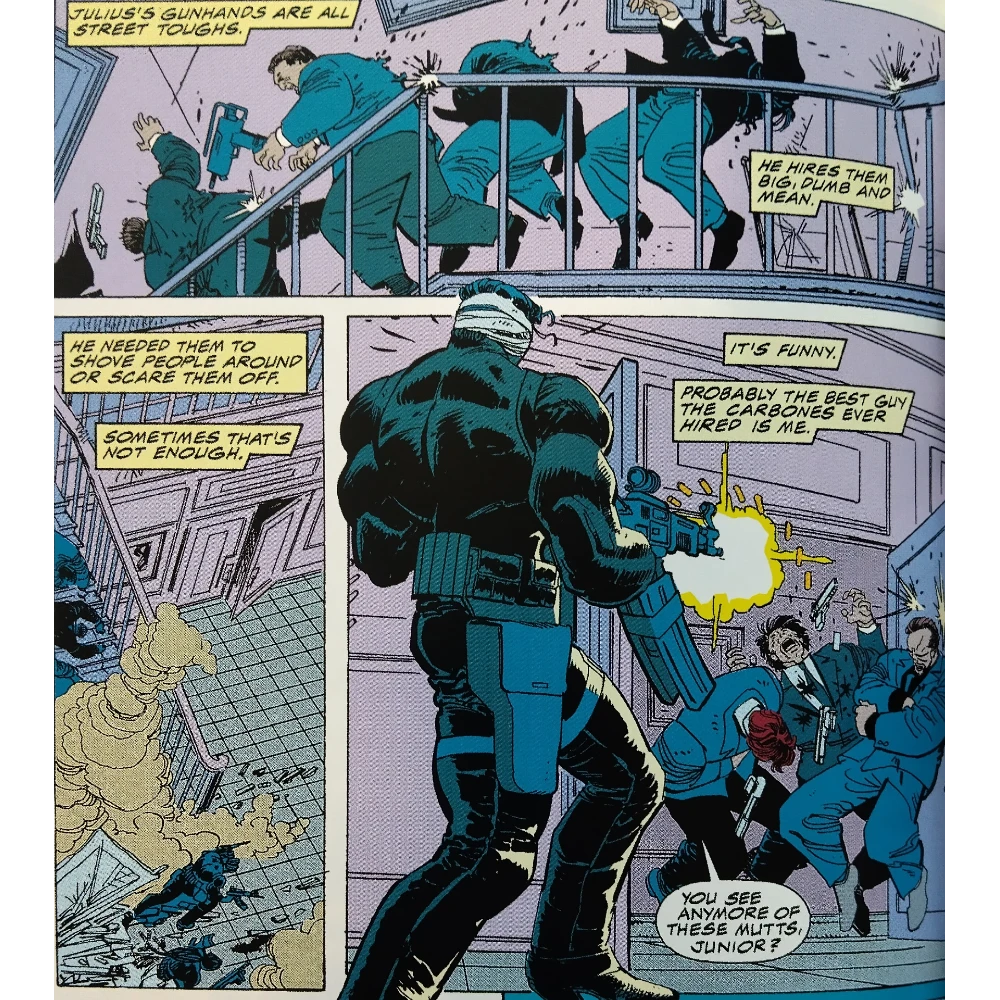
The appeal of this volume comes with a certain amount of retrospection–I noted Dixon's pedigree above, but it seems he was still somewhat early in his career when tasked with writing the issues found collected here. He may have been most well-known in some Punisher fan circles at the time, hopefully giving this title a sense of familiarity to readers. I certainly elected to tackle it now because I know who Dixon is and I'm a huge sucker for anything drawn by Romita Jr. Interestingly, this is a title that has gone largely fallow in terms of collections–a few volumes pick up arcs here and there, including some crossover tales, but we've yet to see a dedicated Epic Collection or omnibus pick up War Zone. Sister title War Journal ran for 80-some issues, and War Zone ran for 40-plus, so it certainly wasn't unpopular, especially at a time where Marvel was trying to exploit Frank Castle's gun-toting self for all he was worth.
None of the above, however, means that the volume is purely interesting for the names slapped onto the cover and my interest in their other material. Recognizable names, especially fondly recognizable names, of which Dixon and Romita Jr. both fall under for me, usually guarantees solid storytelling. I won't necessarily say the "usually" is a caveat for this narrative, but it kinda twirls around that definition. You'll see what I mean.
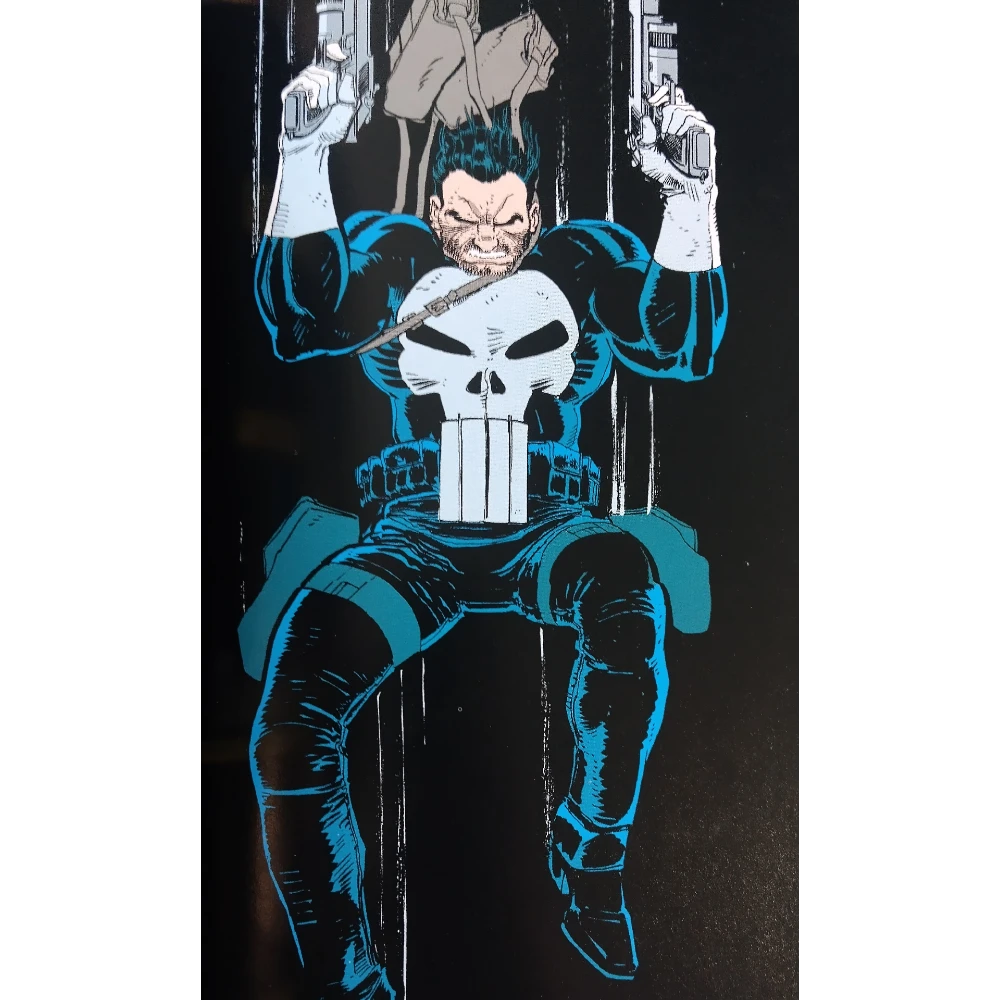
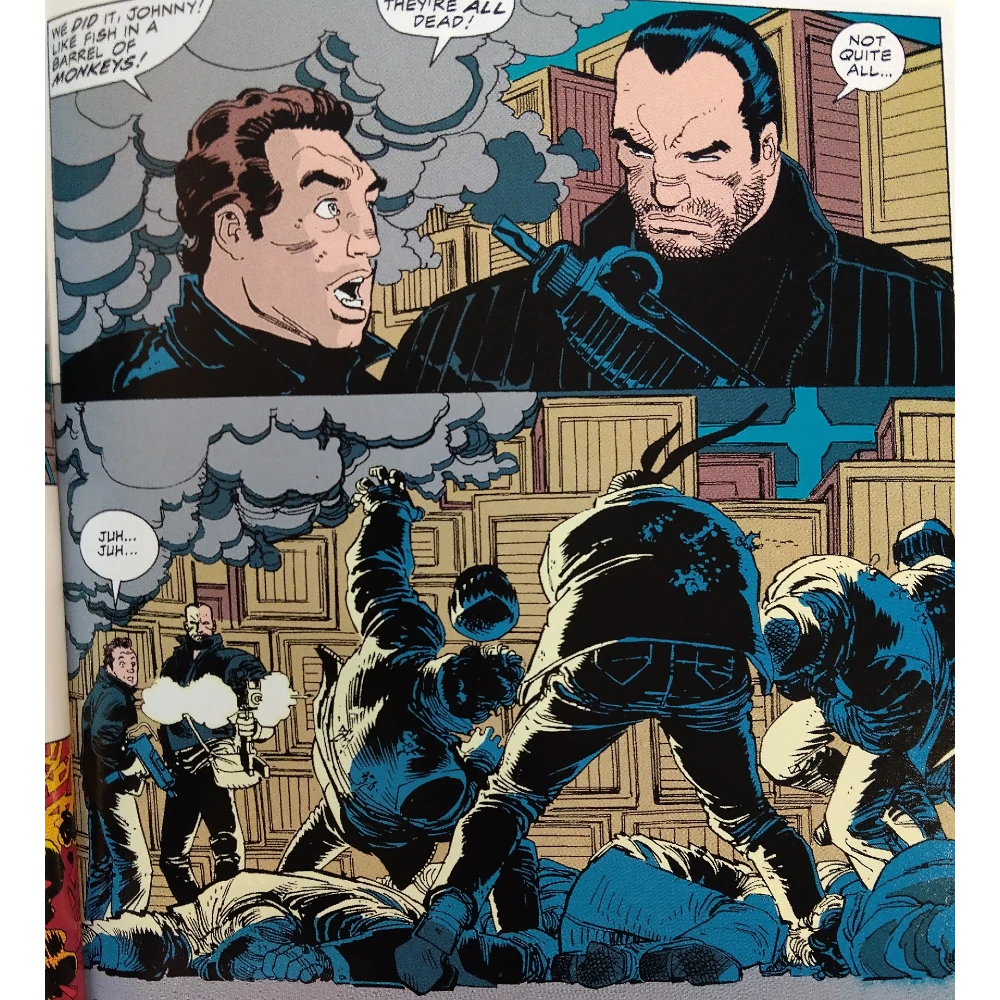
In these initial issues, Dixon hits upon an engaging idea for an arc: have the Punisher go undercover as the very kind of guy he's usually trying to kill. That's right; Frank Castle becomes a criminal...strictly in the way he defines "criminal," of course, because I hope that, for most of us, we'd already scoot him under that category for the whole murder bit. As "Johnny Tower," Frank works with low-level gangster Mickey Fondozzi to ingratiate himself into a mob family, all part of a plot to take these scumbags down from the inside. Frank is now in a position where he can more easily murder criminals, especially in instances where the gang he's "working" for goes after a rival gang. He's just doing his Punisher thing without the skull vest! He gets to kill bad guys in the presence of other bad guys, and nobody bats an eye at how effective he is. "The enemy of my enemy is just another dead enemy." In terms of pure plotting, it's an entertaining hook.
Where I wish Dixon had explored more deeply was the possibility of a moral dilemma in all of this. Frank takes to the role pretty easily, thanks in part to Mickey's initiative when interacting with their bosses. Too easily, in some cases, as Frankie can't help but blow away a member or two or four of the crime family they're working under. He's got that itchy trigger finger, y'know? Frank certainly gets what he wants, yet the transition into grunt for the mob feels too seamless. Yes, as I said, he's in a better spot to kill criminals, and he isn't going to complain about killing mobsters while pretending to be a mobster. That's Dixon's nifty little escape route to prevent any philosophical scruples coming into play.
But I like philosophical scruples! I like my characters debating the morality of certain actions. The line between "vigilante" and "villain" is so razor thin when involving moral quandaries such as cold-blooded murder that the idea is worth some exploration here. Punisher's always been a guy who lives way too close to the ethical precipice, and as tiring as it can get hearing Spider-Man or Daredevil chide him for the millionth time, there's something to be said about Frank contemplating his own morality. He should be allowed some form of conscience, even if it's a self-awareness of the potential ramifications of his choices. I didn't necessarily want Frank to undergo some internal dilemma about his career choices (maybe he likes being a thug! Maybe he could become a hitman for the mob!)–that woulda been dumb! But at least allow the guy to wonder if playing the criminal role is just a little too much to keep his one-track purpose chugging along. Here, he slips into Johnny Tower's skin like a snake in reverse and barely gives it a second thought.
What this means is that Dixon must provide a different form of conflict, which he does through a few means. Frank's buddy Microchip, feeling pushed too far in fulfilling his friend's mission, temporarily quits their two-man band. Dixon weaves in an engaging thought experiment where Frank deludes himself into believing Micro's gonna show up any moment, a concept given extra weight when the Punisher hopes his buddy'll come rescue him from a rigged car. Will Microchip show up in this latest darkest hour? I'll let you discern whether Dixon leans into or subverts the trope. But it adds decent intensity to the moment; elsewhere, this staunch belief of Frank's helps play up the true relationship he has with Micro. The guy's his only friend in the world, and even though Micro (fully understandably) wants some distance (to the extent he visits a therapist he doesn't tell Frank about), Dixon uses the strain to highlight a bit of Frank's humanity in the longing he feels for his friend's presence. In Mickey, Frank discovers a surrogate Micro, and though Dixon sorta plays this for laughs, it hints at the ache left in Frank now that his best bud has left him…though stone-faced Frank isn't ever gonna admit it!
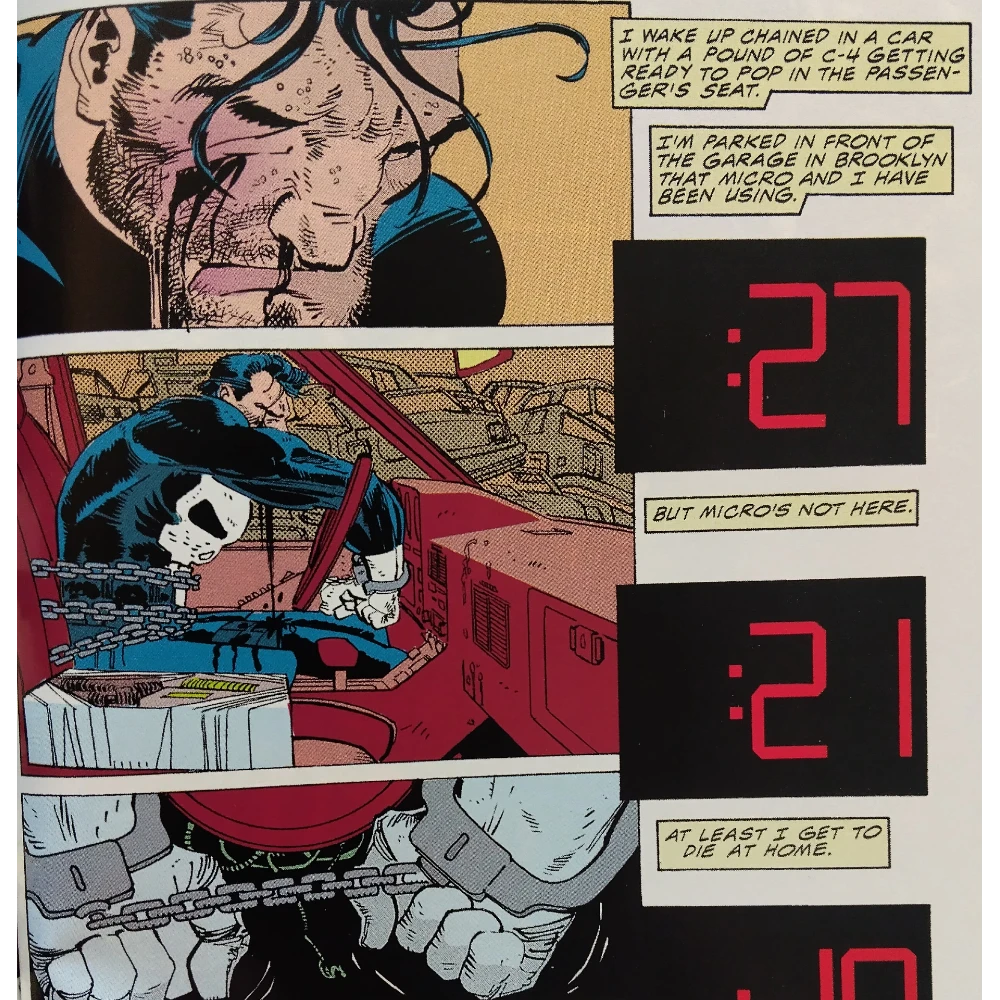
Elsewhere, Dixon gets some mileage through his villains, some of whom eventually piece together this little charade Frank's been pullin'. Dixon's villains are intelligent, picking up the accidental clues Frank's laid down. The Punisher has gotten too deep, he's gotten sloppy. In other comics, the writer might just let "Johnny Tower" convince his boss that a few of their own guys were killed on the job when it was the Punisher who meted out the punishment. He might get away with more for a longer period of time, a writer attempting to develop tension beyond what is believable. Dixon turns the screws on Frank, knowing the conflict generated by his role being discovered and allowing Frank the opportunity to work himself out of a predicament he helped create.
A little bit of romance flutters through these pages as well, but this is a largely dismissive subplot. It's Dixon's way of adding even more tension to the narrative, Frank possibly disrupting a happy little mob family by falling for the wrong woman at the wrong time. The subplot feels particularly funky when you recall Frank's ongoing devotion to his murdered wife…not that Frank doesn't deserve further happiness, but Dixon is so cavalier with how he pitches this piece into the narrative that the bit isn't allowed the weight it could receive. Frank doesn't wrestle with how this brief fling could impact his own morals, similar to how he handles the mob issue.
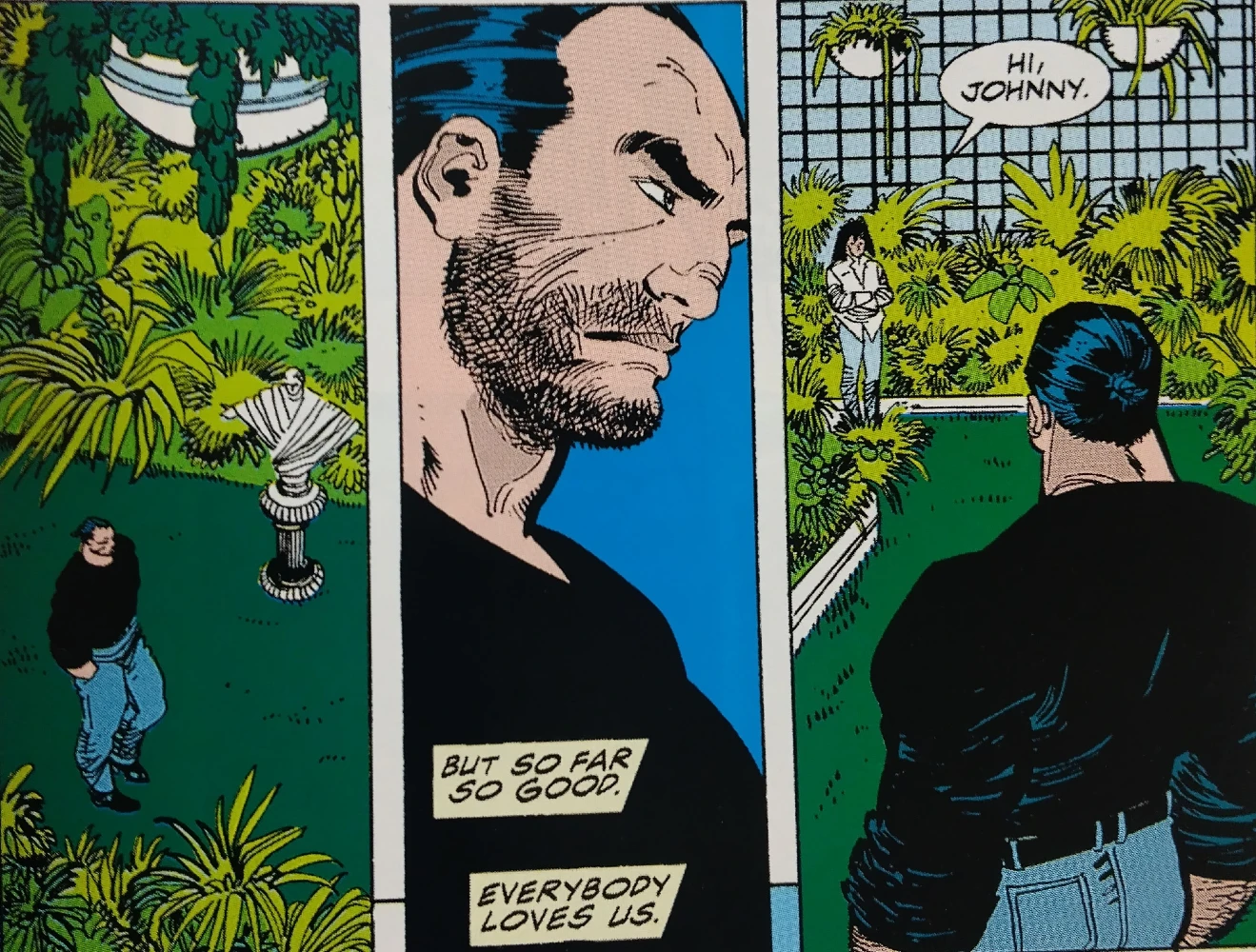
Romita Jr. capably handles all Dixon throws at him with energy aplomb. In my head, I kept comparing these issues to the War Journal arcs I read from Carl Potts and Jim Lee; Lee nailed the look of the book effortlessly, incorporating the grounded technology and violence necessary to keep the series running smoothly. I wondered if Romita Jr. was up for a similar task. He is, he totally is, and though this book dabbles in some sillier shenanigans–take one look at deuteragonist Shotgun for the only example you need-he nevertheless provides the polished weight to keep the action moving along in a manner that doesn't feel exaggerated. It also just helps that I tend to give a two thumbs-up to anything Romita Jr. pencils, finding comfort in his linework and how he draws faces.
Throughout this arc, Mickey Fondozzi receives a running gag where he likes to pretend Frank is a big, dumb thug, sort of his way of getting Frank back for drawing him into this mess. The Punisher resents such treatment, but he doesn't do much to refute it. He is kinda dumb in these issues, Dixon generating more interesting external conflict than anything simmering inside Frank Castle. It feels Dixon wanted to take the character in an interesting direction, which he admittedly does, and then got tangled a little in the logistics. It means our villains are often smarter than our main protagonist, figuring out a ruse that shouldn't take much to maintain. It's that darn itchy trigger finger and that darn itch for something deeper emotionally, Castle's pursuit of justice and his awkward foray into romance playing havoc on his one-man mission and with the one true friendship that's carried him through trouble in the past.