Distinguished Critique: Robin: Tragedy and Triumph Review
Though repeating some previously established concepts and plot points, this volume nevertheless stretches Tim Drake in admirable directions
—by Nathan on April 14, 2026—
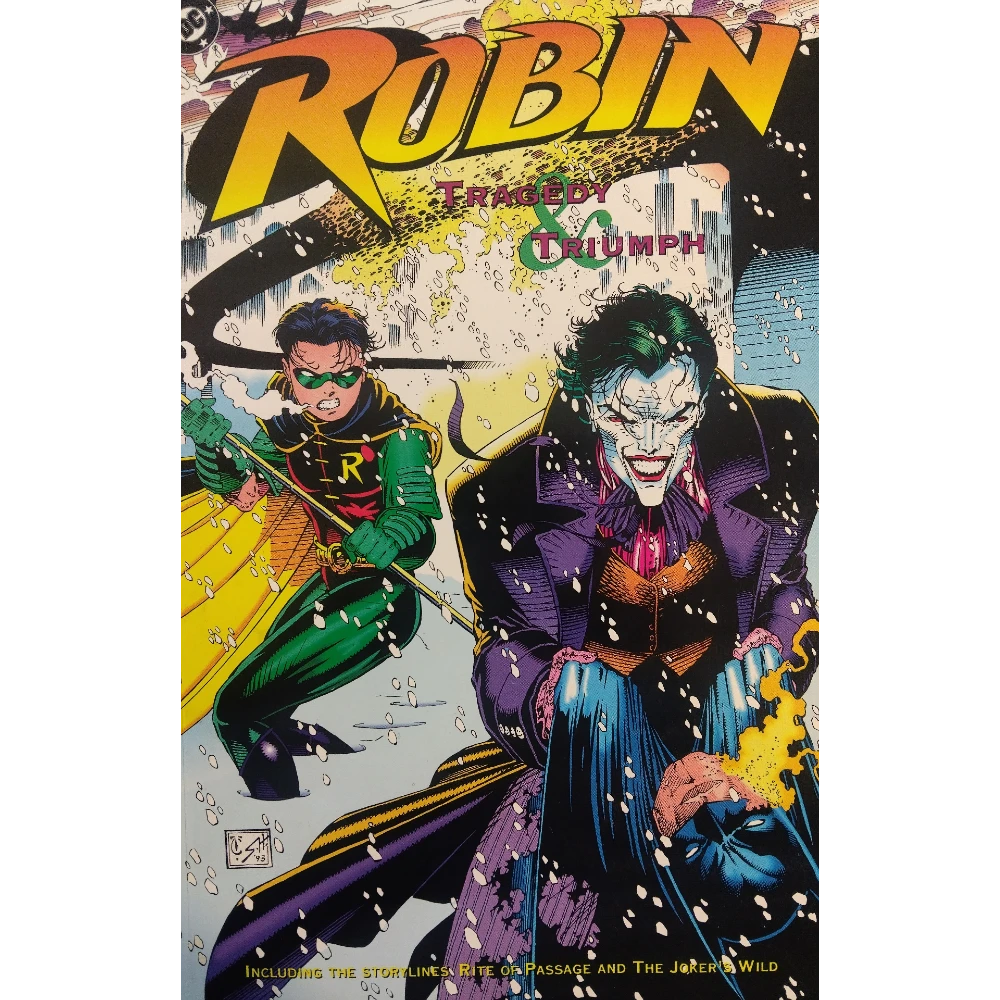
Last "Distinguished Critique" post, we examined the first volume collecting Tim Drake's adventures as Robin, notable for carrying the sidekick's name in the title rather than his winged mentor. Though Batman was involved, the volume's focus was Tim's development in the short time since his debut, the young man moving from "Jason Todd replacement" to "third Robin in his own right" fairly quickly, gaining the skills and tools necessary to work alongside the Dark Knight.
This volume represents somewhat of a continuation of that development, and I say "somewhat" because the contents found here actually bookend the stories we discussed last time. Tragedy and Triumph is split into two halves: a four-part Detective Comics yarn and Tim's second solo series. Those Detective Comics issues precede each story in Hero Reborn, with the second limited series (Robin II: The Joker's Wild) coming after Tim's first globe-trotting escapades against King Snake. Why such a decision was made, I have no idea, but readers seeking a chronological format can easily pick up a few different volumes than these two. I grabbed Hero Reborn and today's volume because they were fairly cheap and allowed me to glimpse into Tim's early career without diving too deep.
The process of reviewing these, however, is kind of like first removing the cream from a jelly-filled doughnut and then eating the leftover dough. So today we're smush-ing the dough into a more palatable form, mashing those halves together to make more cohesive sense of a collection with a pretty darn accurate title: we get tragedy, and we get triumph, and we'll work to see how those ideas entwine.
Robin: Tragedy and Triumph
Writers: Alan Grant and Chuck Dixon
Pencilers: Norm Breyfogle and Tom Lyle
Inkers: Dick Giordano, Steve Mitchell, and Bob Smith
Colorist: Adrienne Roy
Letterers: Todd Klein and Tim Harkins
Issues: Detective Comics #618-621, Robin II: The Joker's Wild #1-4
Publication Dates: July 1990-September 1990, December 1991-February 1992
I played coy with the "tragedy" aspect of this volume last review, noting that an event occurs to help shape Tim into a mold better resembling the two other Robins as well as Bruce Wayne. I went so far as to call it "mean-spirited," without having any knowledge of the story itself, solely on the basis the idea seemed cruel. Having now read the Detective Comics issues which utilize that tragedy, I can now confirm: it certainly is a mean-spirited decision.
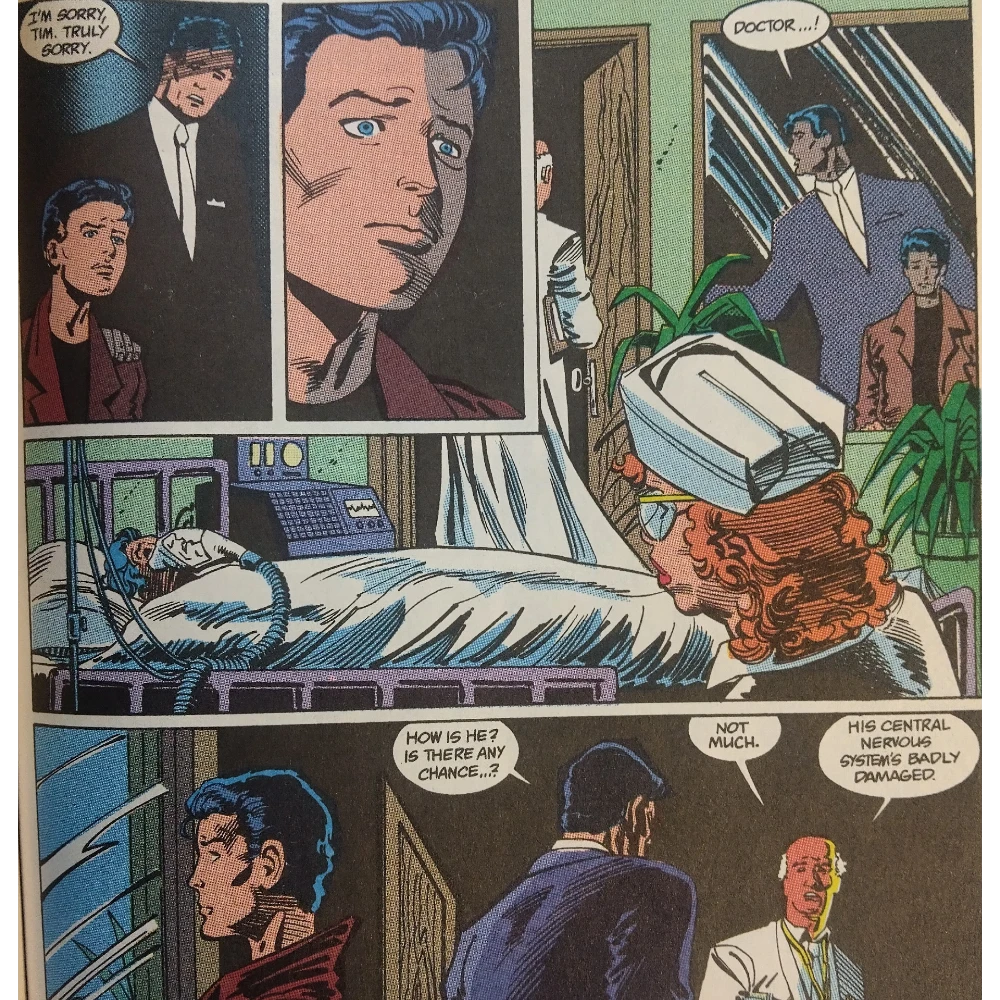
I'll rip the coyness away like a Band-Aid, because we're now talking about comics that are over thirty years old: Alan Grant kills off Tim Drake's mother and cripples his father (Jack Drake wouldn't die until Brad Meltzer killed him in 2004's Identity Crisis), turning to the age-old trope of familial loss as incentive for Tim to be drawn further into the folds of the bat. Grant would explore the ramifications of the events here more fully in the Batman issues I reviewed previously, but their importance here should not be understated. Janet Drake is murdered, and it's Batman who fails to rescue her.
Grant allows the couple to be captured and held at ransom by the Obeah Man, a Caribbean witch doctor engaged in voodoo, far, far away from the city of Gotham. It's a premise which does inculcate decent tension, with Tim feeling helpless and concerned for his parents' safety and Bruce feeling responsible for being the guy to save them. If you headed into this narrative blind, you really wouldn't feel terrified for the couple–the Obeah Man is a valid threat, murdering a companion of the Drakes' to prove his seriousness, but it's hard to say that Grant provides enough tension to make it seem credible that one or both of Tim's parents could actually die. This is a superhero comic, after all! Batman's swinging to the rescue! Surely nothing can go wrong.
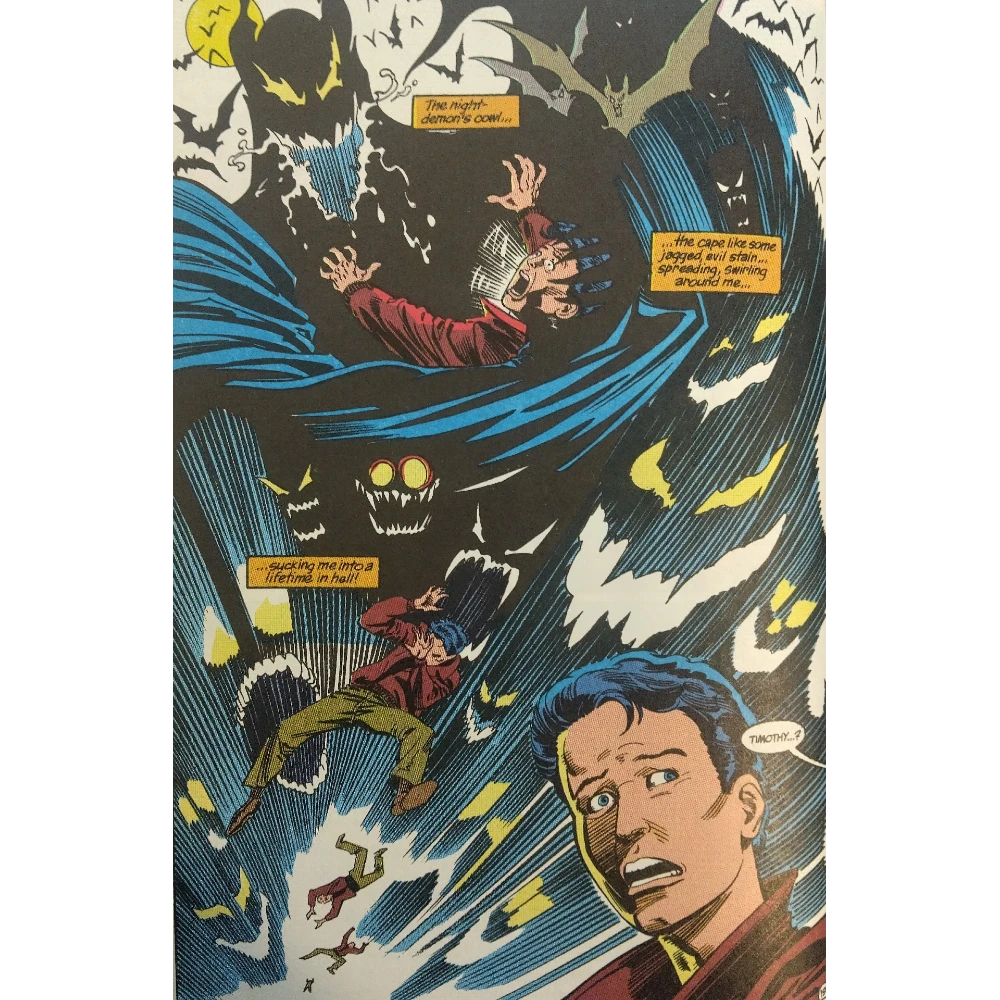
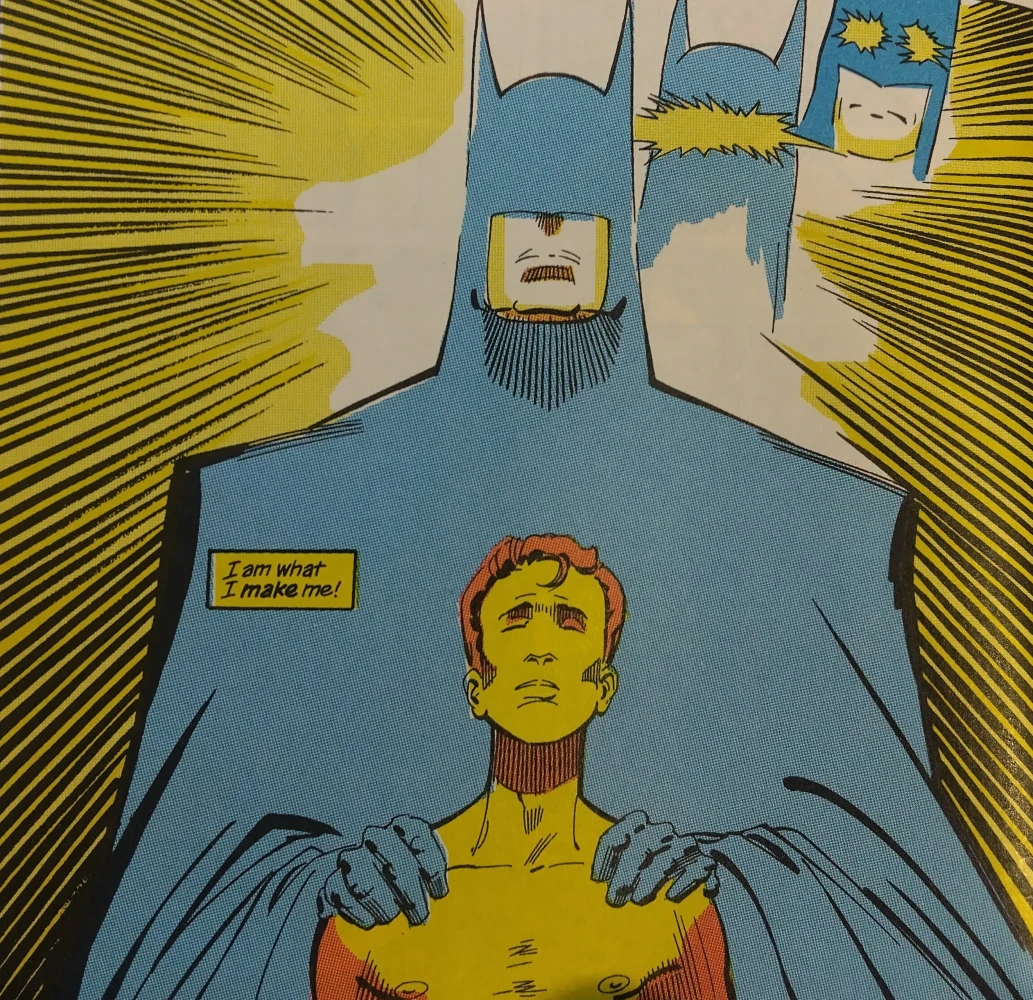
What this means is that, at the moment Tim loses his mom, the strengthened connection between himself, Dick, Jason, and Bruce feels somewhat cheap and forced. It's as if you just can't let a Robin have a completely healthy, happy family life for him to be Batman's sidekick. He also has to be an orphan…or, at least, half an orphan. Grant attempts to capitalize on the concern this causes Bruce, that Tim will be inexorably drawn into the same yawning maw of the bat that the deaths of Bruce's parents drew the young millionaire into…that he, too, will become a grim, brooding creature of vengeance. There is something of merit there, but it comes at the repeated price other sidekicks have already paid. The "dead parents" bit just seems a little worn.
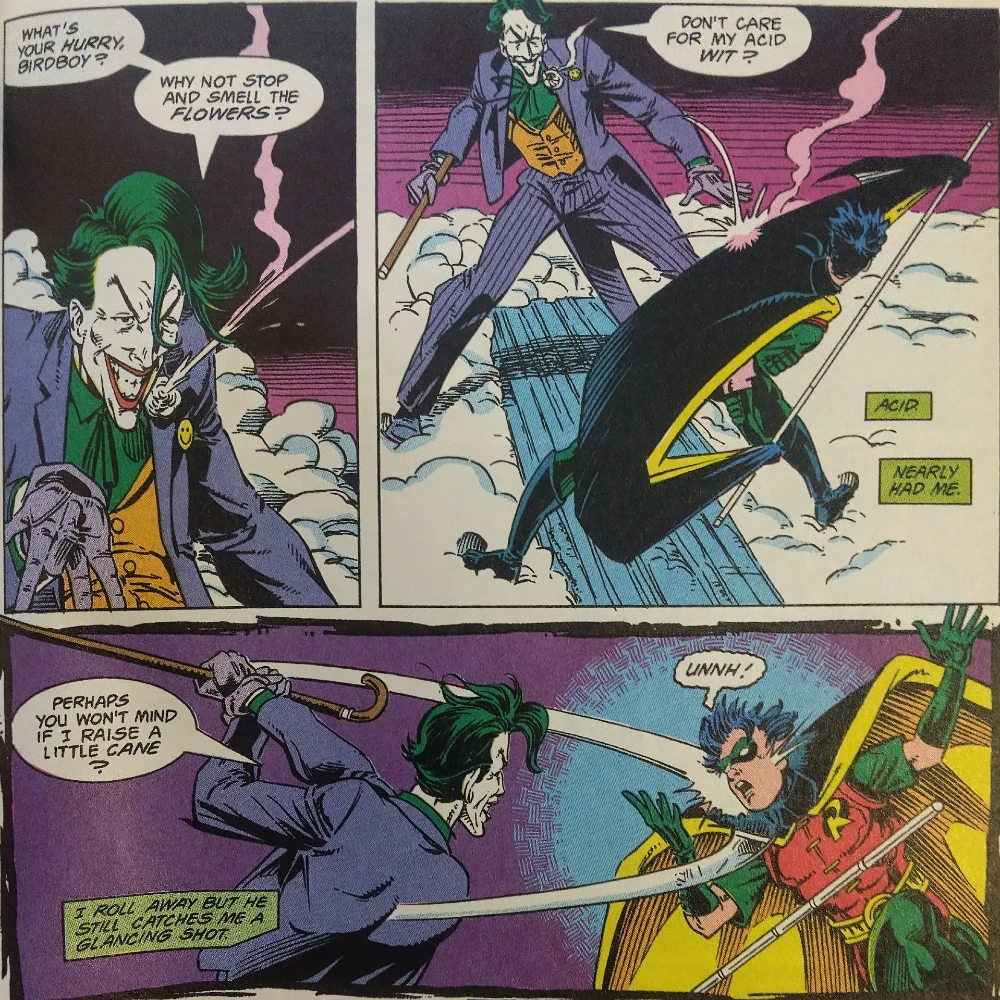
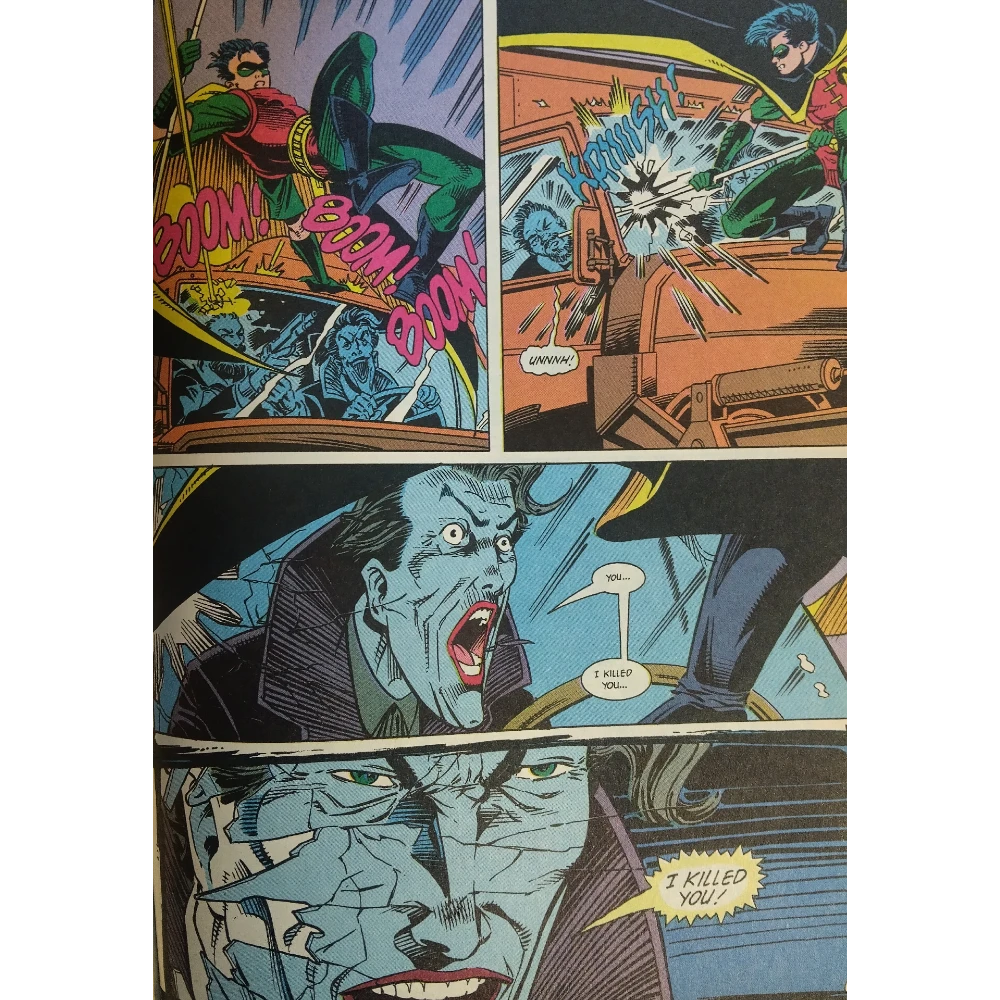
Better wielded is Chuck Dixon's use of the Joker in Tim's second limited series; here, the writer uses the villain to comment on another connection between Tim and the Robin legacy, that of Jason Todd's untimely demise at the Joker's crowbar-holding hands. "I killed you!" the villain snarls as Robin appears before him, as if seeing a ghost, probably turning an even paler shade of white than he already is. A rivalry is thus formed between the two, an immediate tether, as the Joker becomes determined to rid Gotham of another red-shirted irritation.
Robin's tussle with the Joker comes at a time where Batman has temporarily left Gotham, placing the city in the young man's (hopefully capable) hands. As Dixon explored Tim's ability to learn and grow during his time abroad in his first limited series, so does he let Tim endure a baptism of fire in facing the Joker without the aid of Batman. It makes for a fun challenge, honing in on Tim's intelligence as he devises clever ways to trick the Joker into believing the young man isn't "home alone" in Gotham. Dixon's Joker sashays between vengeance-driven maniac and class clown, allowing Dixon's penchant for clever dialogue to come through but perhaps not taking the villain's heated rage towards a new Robin as seriously as he could at times.
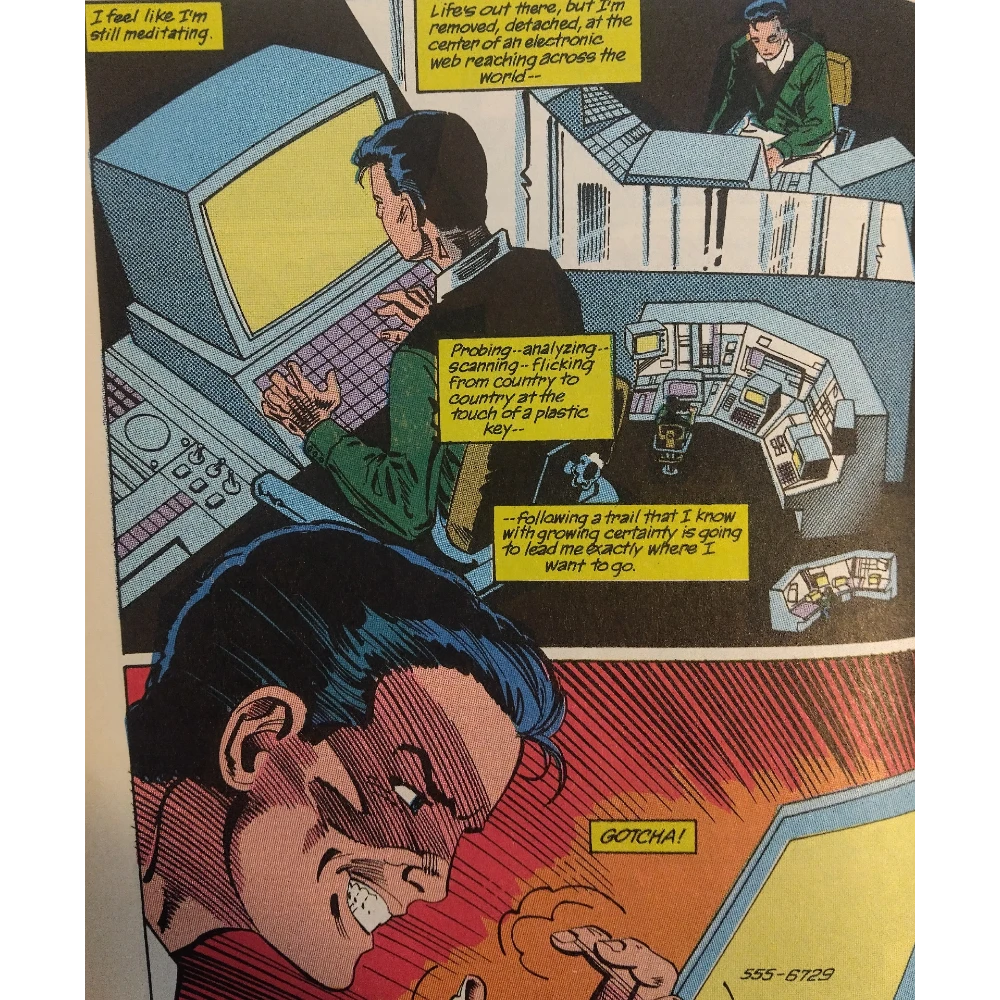
Dixon also works to stress Tim's familiarity with technology, a facet Grant also endeavors to utilize. Both writers recognize Tim's smarts as one trait which needed to be made clear to readers. Dick was always dutiful, Jason always a rogue, and Tim always intelligent. It's his "thing," an element which sets him apart and, I would assume, helped him appeal to a generation of readers growing up with comics as well as emerging technologies. Neither writer seems terribly invested in the particulars of technobabble, wanting to convince the reader that Tim is smart enough to acclimate to this newfangled world of servers, wires, monitors, and keystrokes. And you do believe them, to an extent; I fully trust that Tim is a capable and intelligent character, but I'm less enthused about how Grant and Dixon have him interact with computers. The writing becomes stilted and simplistic, as if both writers are filling text boxes with basic terminology to paper over the fact they're unfamiliar with the specifics.
Likewise, computers become a somewhat awkward plot point in both narratives. Grant has Tim dig into a hacking scheme while Batman attempts to rescue Jack and Janet Drake; the exercise serves to keep Tim's mind off his parents' predicament while also making sure he has something to do during the story. It does lead to a somewhat amusing interaction with one of Grant's creations, the vigilante Anarky, but I would have much preferred Grant somehow bring Tim directly into the trouble surrounding his parents…though a bit more on that in a second. Dixon leans heavily into the computer aspect by having the Joker's plan hinge on Gotham's reliance on digitization, and though it's certainly a viable threat to expose, the Joker feels like the wrong guy to tamper with then-modern technology. Maybe the Riddler would have made for a better option there?
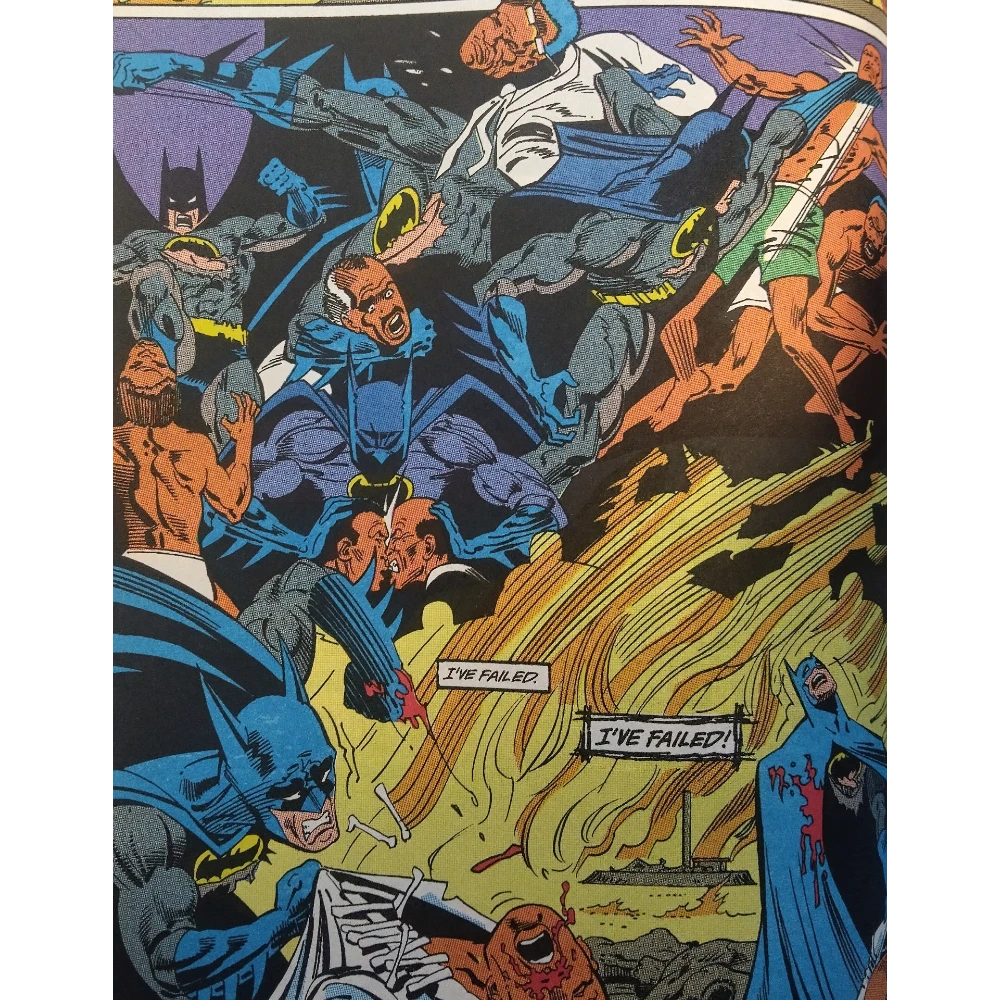
With Grant's issues, I understand the counterargument to my above statement regarding Tim's lack of involvement with his parents is, simply put, this is a Batman comic. Yes, this tale is centered on Tim's growth, but Grant heavily leans on Bruce's involvement, as discussed above. When Batman resolves the hostage situation, yet not before Janet Drake is beyond saving, he feels he's failed. He's failed Tim, himself, Jack, and Janet. That idea alone is weightier than Janet Drake dying, that Bruce was in a position to prevent the same tragedy which happened to him from breaking Tim…and he fails. Tim has entered his circle of influence, but he never intended it to be so complete as it was for Dick and Jason. Bruce realizes he's now watching out for a third young man whose (mostly) lost the support he needs the most.
Grant also seems less interested in seeing Tim as Robin and more interested in using Tim as…well, Tim. As noted, this Detective Comics arc preceded the Batman issues I reviewed earlier, where the young man really steps into the Robin role for the first time, new costume and all. Tim Drake hasn't gotten his wings yet, so keeping Tim as a young man still learning about the weight of his decision to become Batman's sidekick may have been more important to Grant than having the kid don a costume and go out to fight a Caribbean voodoo man. Hence the focus on hacking, the skill Grant could use while Tim was still growing towards his "first flight" as Robin.
Both of these Robin volumes I've reviewed really follow the same thematic undercurrent: Tim becoming Robin, Tim growing into the role in various ways. Tim proves himself to Batman by fighting the Scarecrow; he gains the necessary skills and tools needed in the Dark Knight's homefront war by training abroad; he shows Bruce he can use his brain to take on the Joker and win; and he's been marred by familial tragedy, same as all the others in the Bat-family. Some of this feels a tad repetitive at moments, mainly Grant using different situations to reinforce certain similar ideas. Dixon's narratives feel a bit more intentional in allowing Tim different aspects of growth, from gaining training and weaponry to holding his own against Bruce's arch-enemy.
There are, as I noted, a few obvious shortcomings I find in this volume. It lives up to its title, even if the tragedy it indicates feels like a retread. Janet Drake's loss shouldn't be taken lightly, but it seems like a tool to move Tim down a similar road as others before him, and since Dick and Jason both lost their parents to criminals, nothing is done to make this part of Tim's story unique. A few rough patches also exist with the application of technology, the writers intentional about using Tim's intelligence but unable to escape the awkwardness with which they apply their own seeming understanding of computer basics.
Still, strength is found: Dixon does well to craft discord between the Joker and Tim, through no fault of the Boy Wonder's, possibly with the subtle comparison between his victory over the Clown Prince of Crime and Jason's tragic failure. Grant also reinforces Batman's involvement in Tim's life and where he will have to guide the young man, especially as Bruce endures guilt over failing to rescue both Drakes. Admirable concepts are explored here, even if the weight given them both feels a tad unsteady at times. But that's just like a bird preparing to leave the nest–shakily soaring, dipping, sometimes falling, as it tries learning how to fly.