Distinguished Critique: Robin: A Hero Reborn Review
Aside from a slight tonal discrepancy, these issues establish a smart, unique, dependable sidekick for Batman for the 90s
—by Nathan on April 6, 2026—
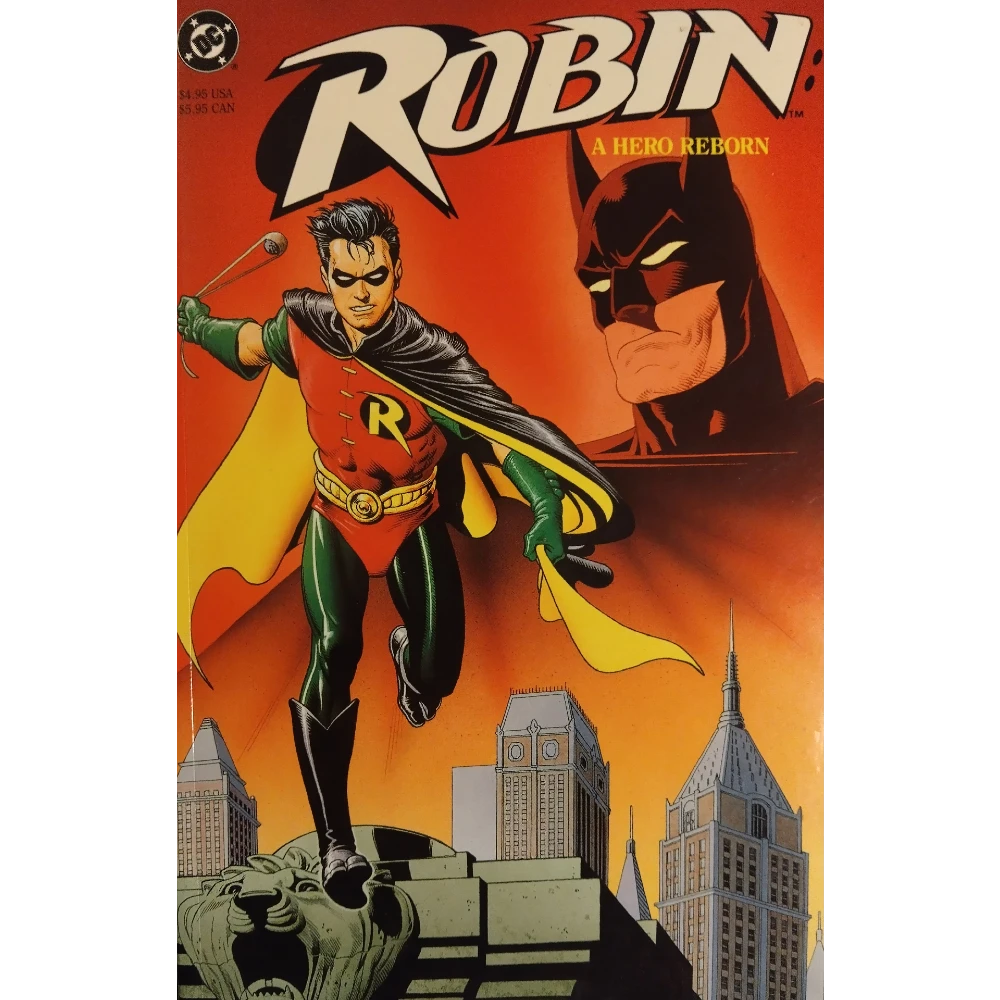
As part of my ongoing series of blogs unraveling some late 80s/early 90s Batman narratives, some of which lead up more directly to famed crossover "Knightfall" than others, I wanted to reflect on a very important character during this era: Tim Drake, the third Robin. Introduced as an intelligent young man who deduced Batman's secret identity, Tim proved himself to Bruce when the Dark Knight was still in the throes of mourning Jason Todd. Lost in a miasma of tragedy and concerned about overseeing the well-being of another young man, Bruce was eventually won over by Tim's tenacity and his dedication to the philosophy that "Batman needs a Robin," particularly after the new Boy Wonder defeated Two-Face, a villain who seems to serve as a "rite of passage" for some of Batman's wards.
We're picking up a year after Tim was introduced, a year during which he became more comfortable in the Robin role. We're also picking up in the immediate aftermath of Peter Milligan's "Dark Knight, Dark City," a Batman arc free of adolescent antics. Today's volume is divided into two narratives, both of which draw Tim Drake deeper into the role of Robin and work to set him up as a key character in many 90s adventures to come. As "A Lonely Place of Dying" introduced Tim as Jason's much-needed replacement, so do these stories give him the chance to set his identity further apart from both of his predecessors.
Robin: A Hero Reborn
Writers: Alan Grant and Chuck Dixon
Pencilers: Norm Breyfogle, Kevin Breyfogle, and Tom Lyle
Inkers: Steve Mitchell and Bob Smith
Colorist: Adrienne Roy
Letterers: Todd Klein and Tim Harkins
Issues: Batman #455-457, Robin #1-4
Publication Dates: October 1990-January 1991
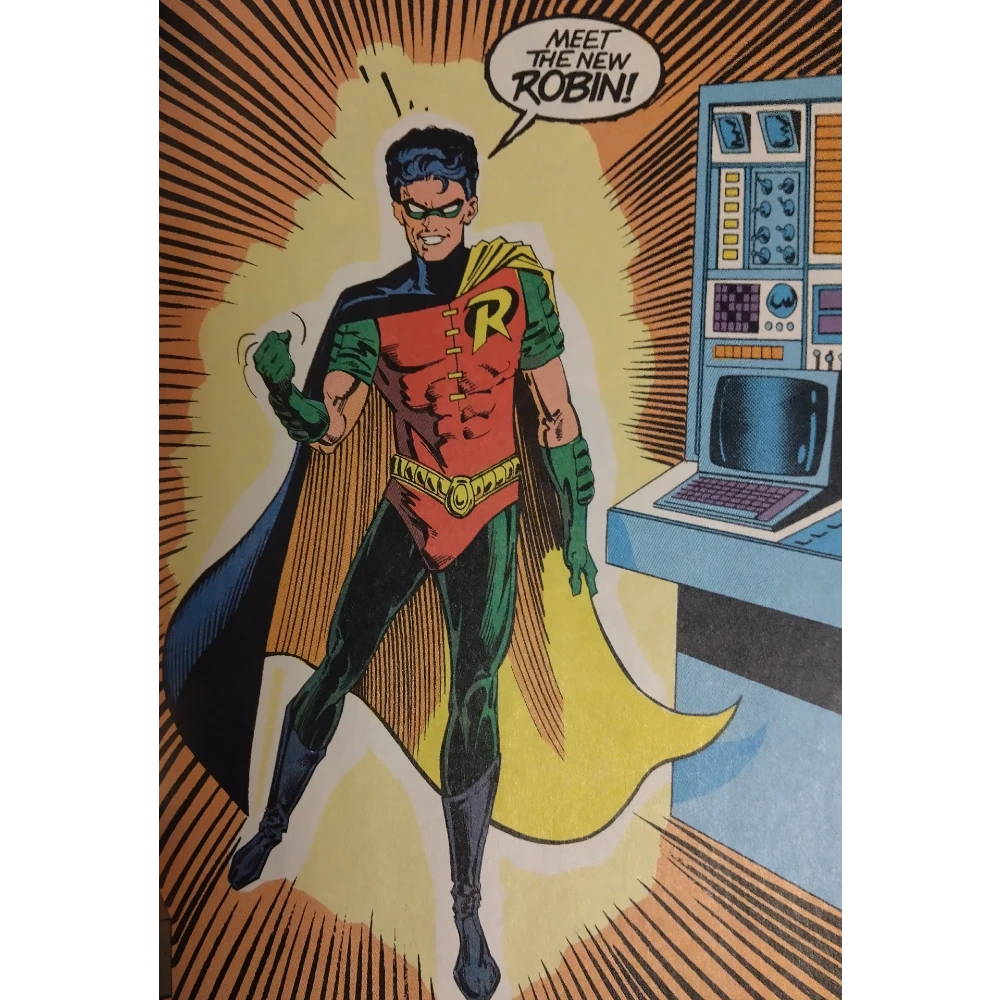
In a somewhat confusing move, DC published a very important Detective Comics arc in a second small volume of Tim Drake issues titled Triumph and Tragedy, which I plan on reviewing next. Though it also collects Robin's second solo series, those Detective Comics issues precede the issues collected here, featuring a narrative with multiple important ramifications for the issues we're exploring today. I'm not certain why this move occurred, but for those interested in a perfectly chronological order to Tim's adventures, I suggest seeking out the slightly bigger Robin: Reborn volume. We'll just deal with the inconsistencies with those bookending arcs when we reach Triumph and Tragedy next.
I won't divulge specifics, but the events in the aforementioned Detective Comics arc play heavily into these issues. They help form a facet of Tim Drake which is meant to strengthen his connection not only to Batman but also the other Robins, stripping him of a vital aspect of his life to compound his relatability to other characters. Upon reading what these events were, I found the notion a little mean-spirited, but again, I can judge more fully once I get to that collection.
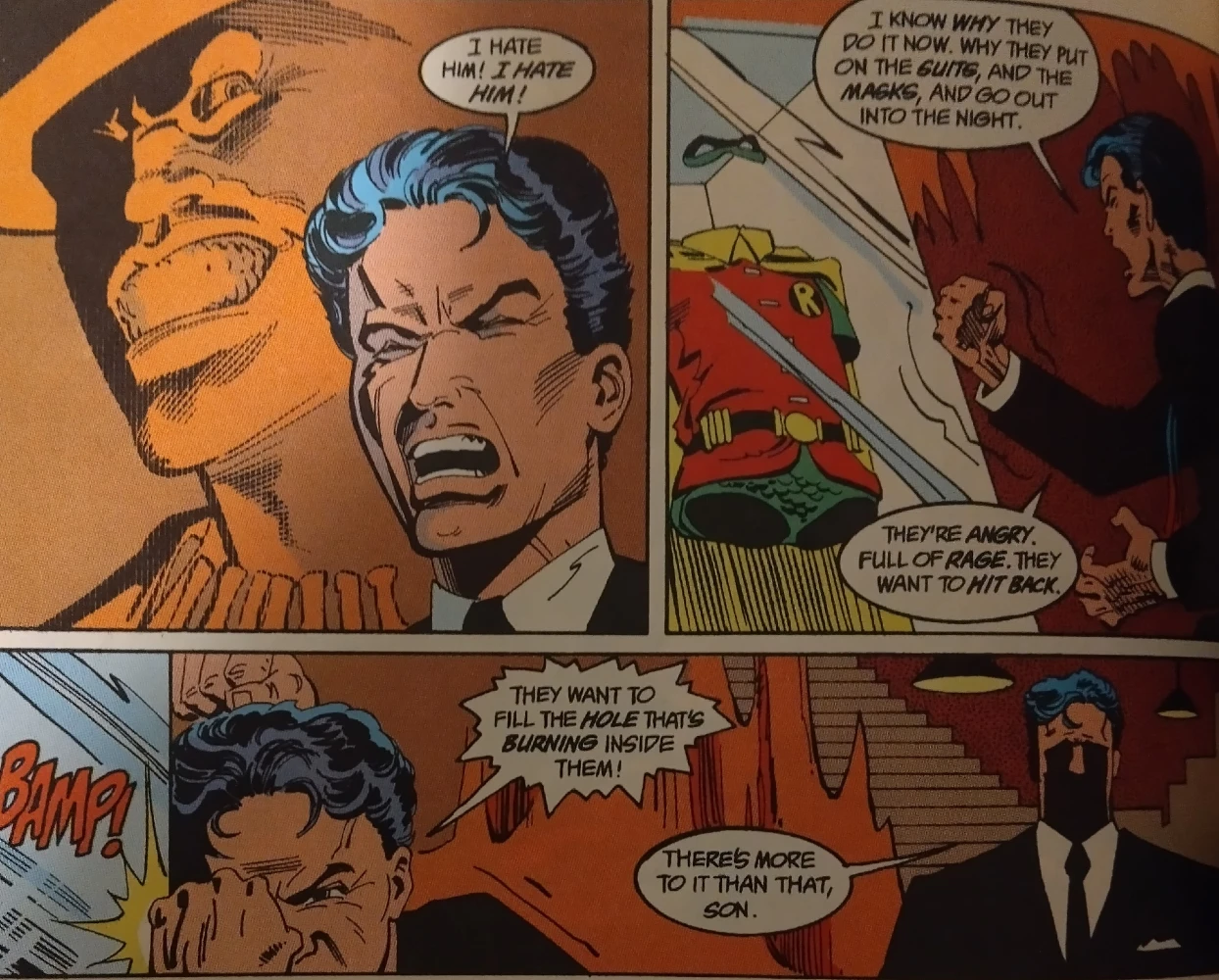
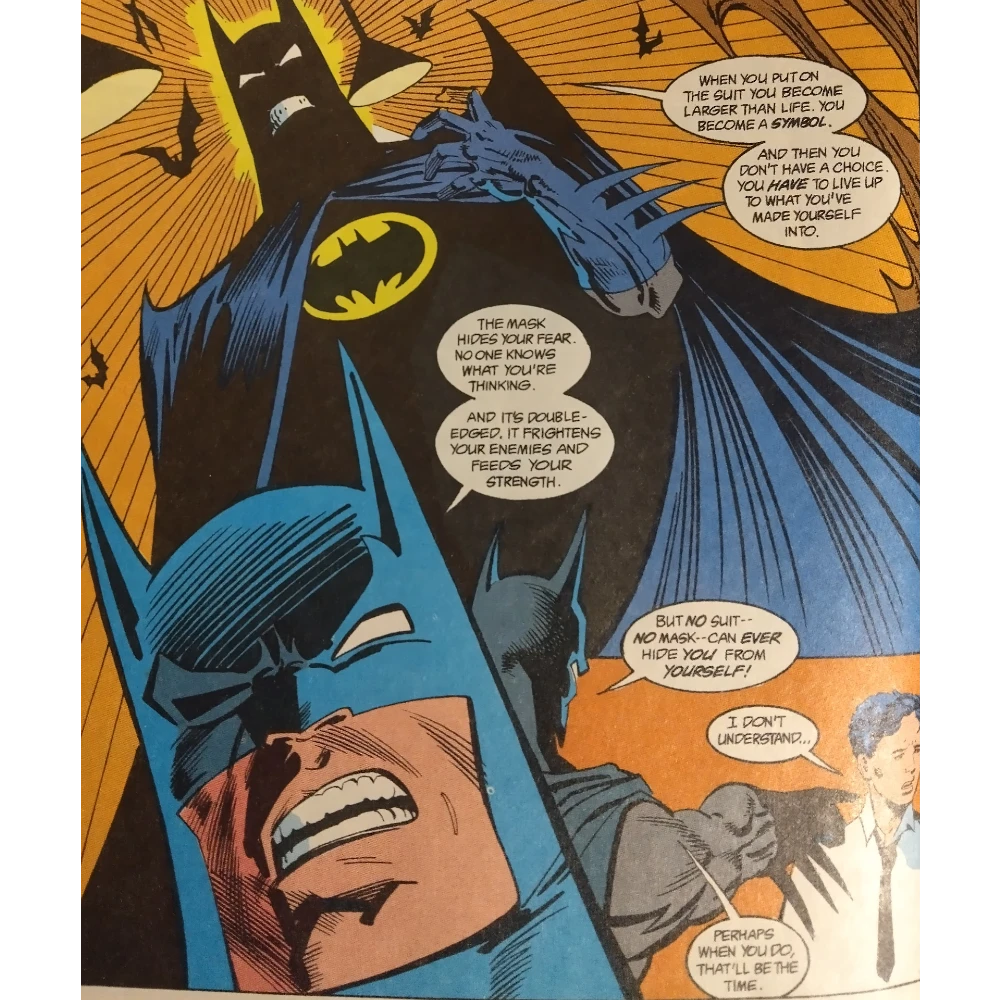
The theme woven across these issues, delivered well by both Alan Grant and Chuck Dixon, is Tim coming into his own as Batman's latest in a line of teenage sidekicks named after a red-bellied bird. I highly recommend folks read at least "A Lonely Place of Dying" prior to this arc, as it introduced Tim and cemented him as the next Robin…to the reader. Opening this volume, I was initially concerned that Grant's Batman issues were going to reinvent the wheel, with Batman apprehensive of the young man's role in his life, a concept I had assumed Marv Wolfman had explored fully in Tim's inaugural appearance. But Grant helps the reader understand that Tim doesn't need to win over Batman–he's laid that foundation. Now he just needs to prove he can build atop it. After an outburst of anger towards a murderer, Tim is firmly addressed by Bruce. "It's not that I don't trust you," the Dark Knight says. "But it's the responsibility I'm not sure of."
Bruce is, certainly, concerned for Tim's physical safety, but in the wake of a very disquieting tragedy, Bruce also understands the boy's mental capacity. He doesn't want Tim taking on a role, putting on a mask, he isn't ready to handle in a way reflecting Bruce's own personal philosophy. Bruce had years to train and grow, physically and spiritually, and he recognizes the dangers inherent to dropping Tim into his one-man war on crime without the proper conditioning…dangers not only to Tim body's but to his soul. And so these arcs are meant to showcase Tim moving in that right direction, developing the mindset, not just the skills, necessary to follow Batman's footsteps. Bruce isn't going to make the mistake he made with Jason, seeing in Tim a bit of adolescent immaturity in need of pruning.
Grant primarily views Tim through this lens, as a boy caught between choices, who must decide for himself not only whether to follow those footsteps but how to do so. He crafts a young man who is, as one other reviewer calls him, "emotionally compromised," a phrase I feel describes Tim well. He has paths before him, each with positives and negatives, and must choose for himself which is the right one. Tim has a hint of Jason's impulsiveness inside him, countered by his own intelligence and respect for Bruce's legacy. When he does decide, late in the first arc, to challenge some of Bruce's authority, it isn't without a decent amount of thought and a conversation with Alfred. He knows what to do, feels strongly about leaping into action, yet allows his passion to be tempered by consideration.
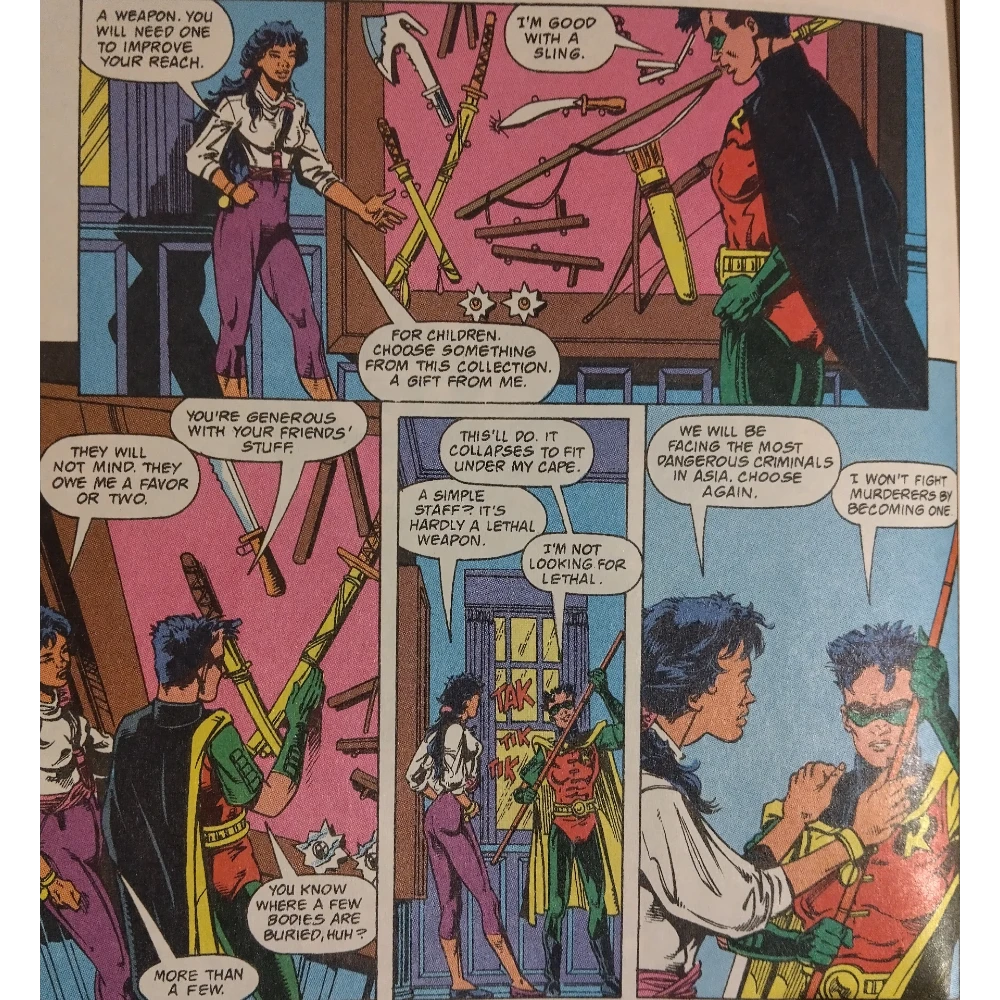
Dixon draws out a similar idea in Robin's first-ever solo series, sending Tim on a world tour in search of training to hone those physical skills he lacks. Dressed in a new costume and picking up what will become his trademark weapons, a staff and a sling, Tim is involuntarily dragged into a scheme involving King Snake, a terrorist eventually revealed to be Bane's father. It's here that Dixon, moving Tim out from under Gotham's shadows, allows the young man's canny knack for investigation to showcase his unique place in Batman's stable of sidekicks and provides him with the necessary steps to prove he can build off that foundation he laid when fighting Two-Face.
What frustrates me slightly about Dixon's series is how he begins, picking up immediately after Grant's issues and sewing a sense of doubt in Tim right after he's donned an updated Robin suit. Tim has previously expressed a sense of haunting, of bearing the legacy borne by Dick and Jason, and this sentiment could be an outpouring of that concept. Yet the dip back into doubting after just proving himself against the Scarecrow feels like it undoes what Grant has written. The doubts are meant to jumpstart Tim's adventures, send him globally to gain better fighting chops, but as they come so soon after a rousing bit of confidence from Grant, the change in Tim's demeanor is frustrating and make for a clunky transition between narratives. Granted, the reader who picked up Robin #1 a month after Batman #457 may not have noticed the odd tonal shift, but for anyone reading the issues back-to-back, the change in demeanor makes for a temporarily awkward read.
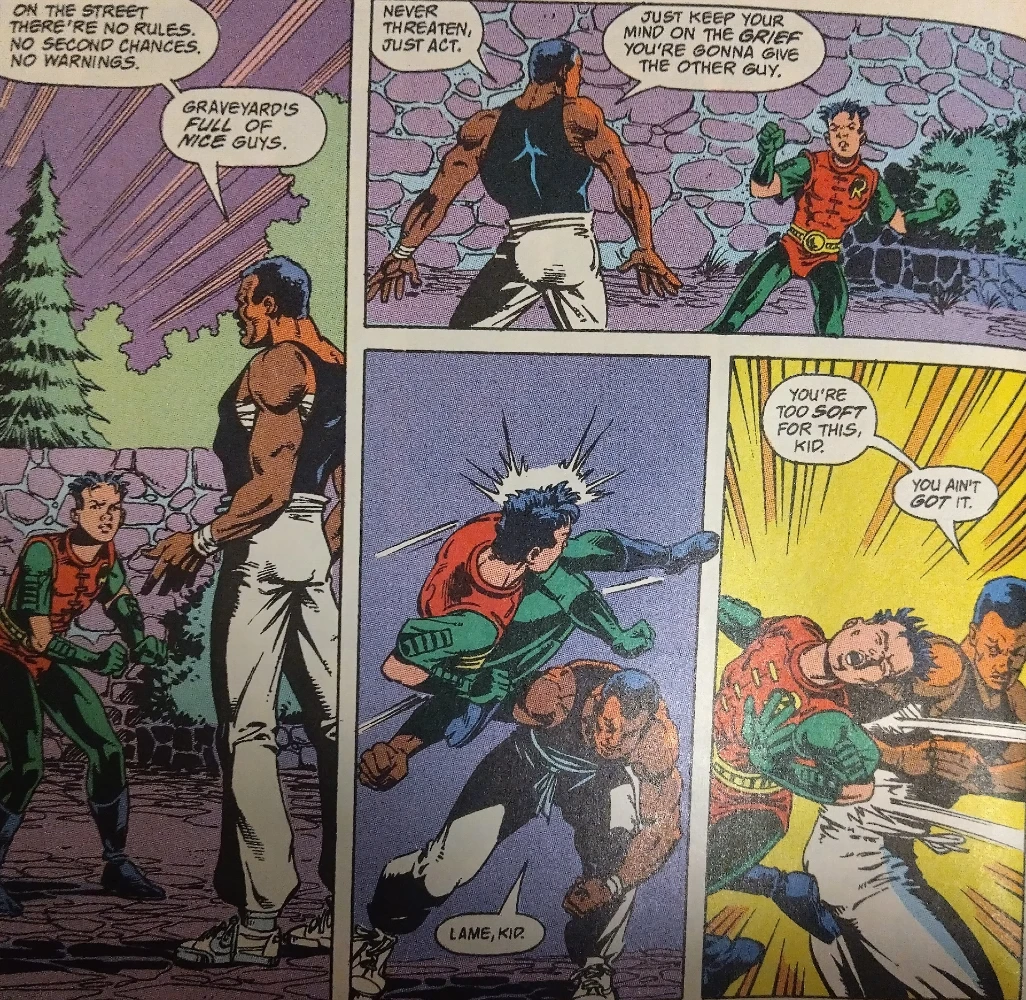
Dixon handles the rest of the series fairly well, taking what Wolfman and Grant have established and expounding on it. His Tim Drake is confident without clasping cockiness, booksmart yet with an ever-growing sense of street smarts to comfortably enhance his skills. Wolfman had clearly wanted a Robin modernized for the times, his computer skills allowing him a unique ability not possessed by Dick or Jason. Yet, as Dixon has Tim tell Bruce, "You don't need a computer hacker to sit here." Not that Dixon downplays Tim's intelligence–we're given a handful of scenes of Tim navigating a computer–but he recognizes which facets of knowledge Tim needs to bulk up on, and by providing him a few mentors outside of Batman, gives the young man individual opportunities to hone his abilities.
Our writers also seem aware of the villainous challenges they wish Tim to overcome, Grant relying on an old foe and Dixon developing new enemies. Grant's use of the Scarecrow creates a possibly unintentional parallel to Jason Todd's brief career–first facing the Scarecrow on his own, Jason accidentally, carelessly exposed the man to his own fear toxin, leaving him a quivering mass of shaking limbs. Though Tim never reflects on this incident, his more careful efforts to dismantle the Scarecrow's scheme (and save a friend in the process) showcase his attention to his detail and the drivenness necessary to carry on the mantle.
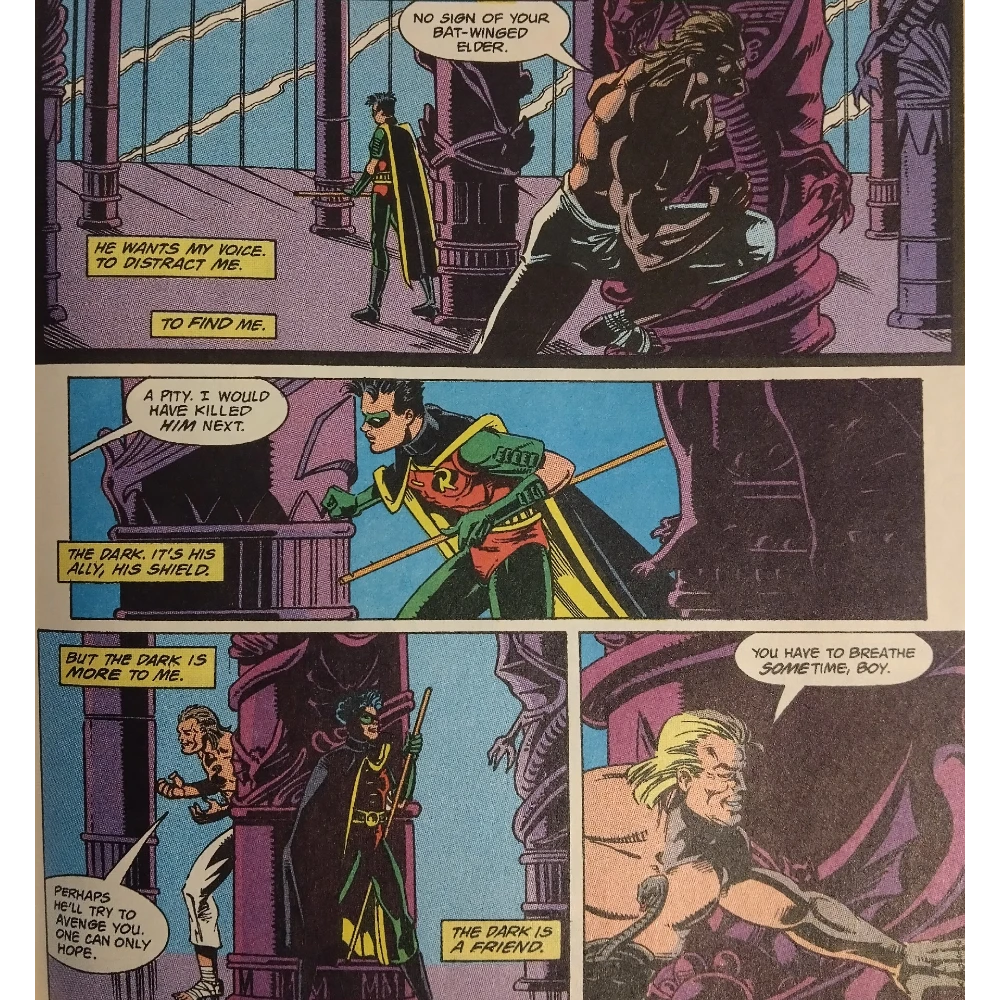
Under Dixon, Tim faces King Snake, a British mercenary, martial artist, and terrorist, whose plans Tim inadvertently stumbles on when he rescues an American DEA agent. Dixon uses the threat of King Snake to both establish a brief friendship between Robin and the agent, who receives a nicely drip-fed backstory of his own, and provide Robin a conflict which he must face and overcome without the shadow of Batman protecting him. That Bruce merely sends Robin overseas to gain training only for Tim to become involved in a whirlwind adventure that helps hone the skills and confidence he needs to fulfill his role is a bit of deftly sewn irony Dixon utilizes well.
Batman may need a Robin…but Robin may not always need a Batman. Tim proves himself more than a capable replacement for the Boy Wonder who became Nightwing and the other who became a tragic victim. He's not a soldier like Dick, nor a ruffian like Jason. Connections, such as personal tragedies, draw him deeper into the brotherhood of sidekicks, but Tim doesn't allow such events to define him as deeply. A new Robin for a new generation, Tim and his adventures truly kick off here, planting the young man as both a staunch defender of a certain Dark Knight Detective and as a hero given opportunities to shape himself in his own right.