Random Reviews: Jae Lee's Hellshock
A frustrating ending doesn't overturn strong character work and attempted theming which serves this series fairly well
—by Nathan on April 30, 2026—
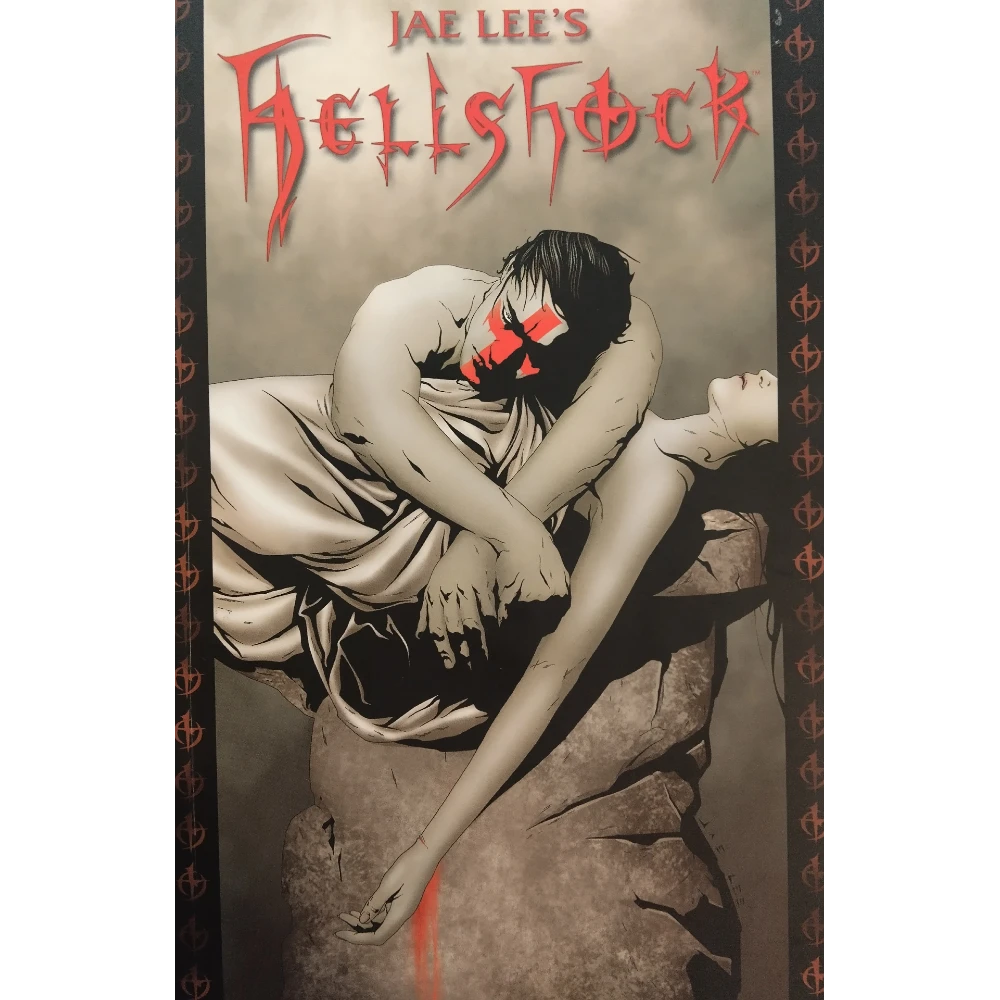
It's been some time since I launched into the early days of Image's history–after reviewing the first issues of each series started by the inaugural seven members, I fully intended on diving into the "second wave" of creator-owned projects. I touched on a few, including Dale Keown's Pitt and Jim Lee and Brandon Choi's Deathblow, but I've gone fairly silent since then. Mainly because these stories are difficult to get into, even though I enjoyed Deathblow and Savage Dragon more than other series.
Well, we're back today with another of these "round two" properties, though maybe "round three" would be a better descriptor, cause we're actually examining the second of two series created by artist Jae Lee. Lee, who illustrated an Iron Fist/Spider-Man arc I recently reviewed, introduced the world to his creation, a fallen angel named Daniel, in 1994. He followed up his four-part series with the three-part sequel we're reviewing today, collected alongside a twenty-two page "finale" and some bonus content in what Amazon touts as the "Definitive Edition" (which is certainly a frustrating misnomer). Unfortunately for us at the present moment, that first series hasn't been collected…though it may be in the near future?
Should the first Hellshock receive its own collected edition, I would certainly consider picking it up and giving it a read. Though as we dive into this series, we may find we actually don't need to.
Jae Lee's Hellshock
Writer: Jae Lee
Penciler: Jae Lee
Inker: Jae Lee
Colorist: June Chung
Letterer: Simon Bowland
Issues: Hellshock (vol. 2) #1-3, plus previously unpublished material
Volume Publication Date: February 2007
Issue Publication Dates: January 1997-February 1997, January 1998
Publisher: Image Comics
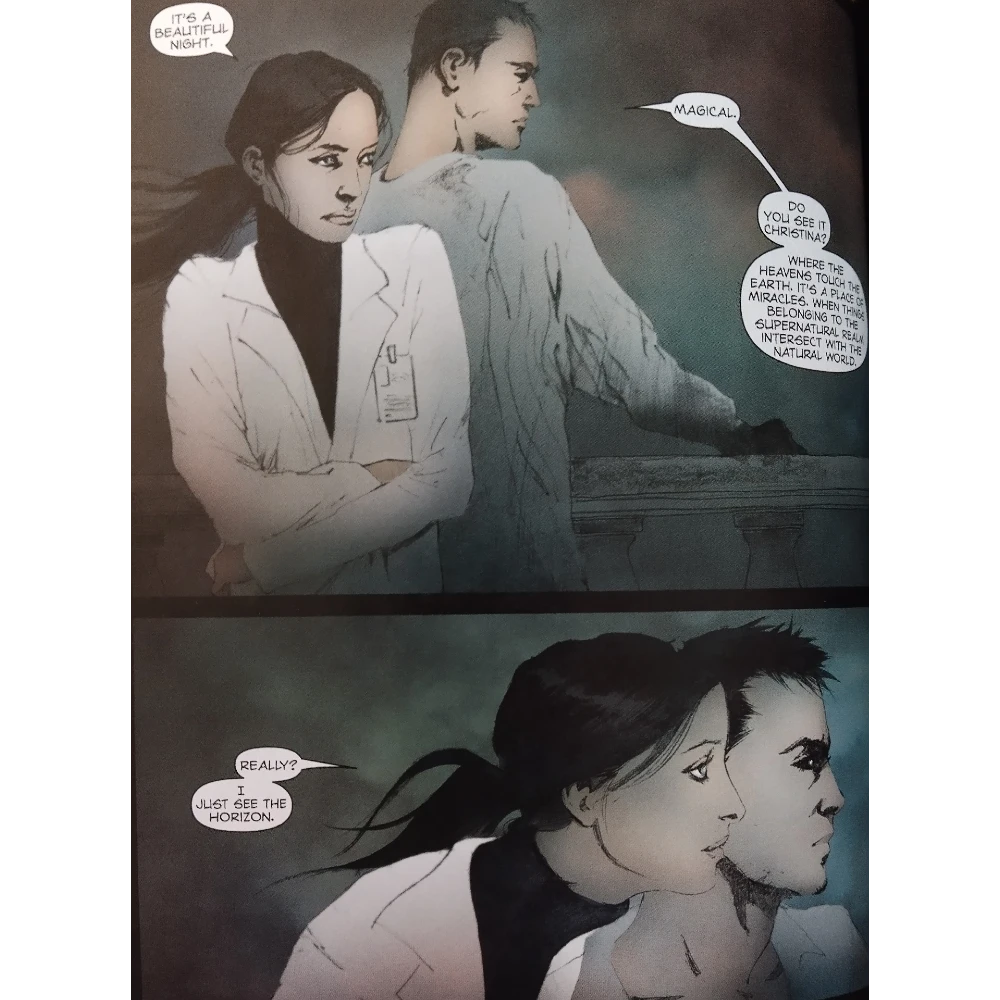
I was not aware until after I read this series that this Hellshock was a sequel to Lee's original limited series. Which makes it fairly impressive that this comes across as a pretty standalone narrative that doesn't read like a sequel. Except for several black-and-white pages in the back which outline an original introduction for the first series. That confused me. But now I know the context, so I'm less confused. Not fully un-confused. Just less so.
What isn't terribly confusing, fortunately, is that decently developed standalone nature of this comic. I had no idea what I was heading into with Hellshock, assuming this would be another grim-and-gritty exploration of bottom-of-the-barrel, 90s superhero tripe. Perhaps the first series dove into superheroics, but this narrative deals with no such silliness. Knowing it was a sequel removes some of the ambiguity I had thought Lee was layering in, but on the whole, Hellshock is a different creature, one endeavoring a level of thoughtfulness Lee's contemporaries at Image Comics were less adroit at doing.
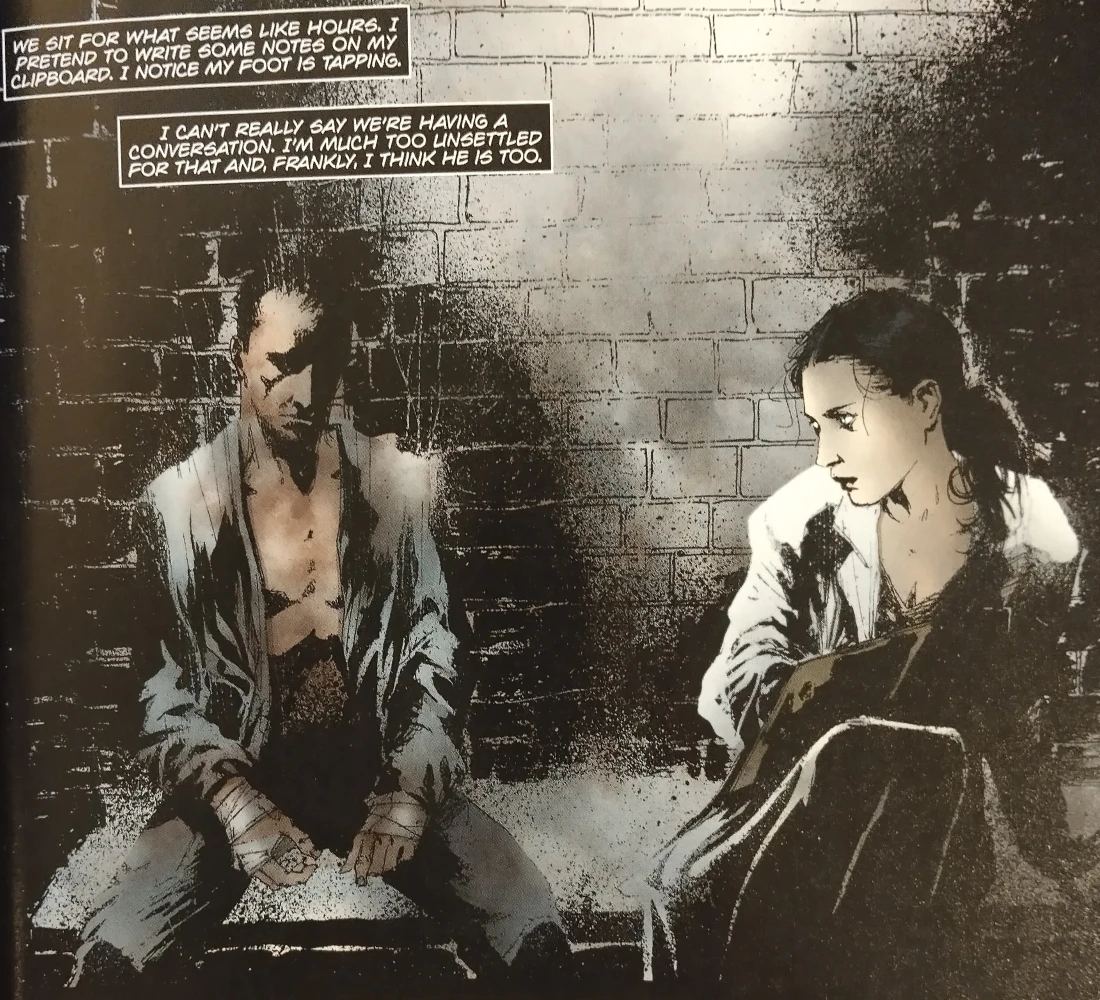
I wouldn't call Lee's storytelling abilities leagues beyond what fellow artists Rob Liefeld, Todd McFarlane, or Jim Lee (no relation) could produce, even if his attention to painterly detail is impressive and his writing feels less forced. He's still prone to some levels of discordant hyperbole in his structure, a little given over to telling us rather than showing. And it's difficult to say that the whole thing wraps up in a satisfactory manner. Blemishes exist, and if you trust Jim Lee's introduction, it appears production schedules may be to blame. The last forty-four pages of this volume, including that alternate opening but also, more importantly, the series' final chapter, do show a marked shift in both quality and tone, with the twenty-two page conclusion feeling particularly forced.
But what comes before is a fairly tightly-woven span of pages focused, not so much on its titular fallen angel Daniel, but his caretaker Christina. Interning at a psychiatric facility, Christina enters with a head full of dreams and is quickly slapped in the face with the brokenness of her patients, the occasional reality of the psychiatric system, and her own unraveling ambition. I expected superheroes, belts full of bullets, maybe grim demons. What I got was an exploration of mental health, faith, and humanity's relationship with its worst-off.
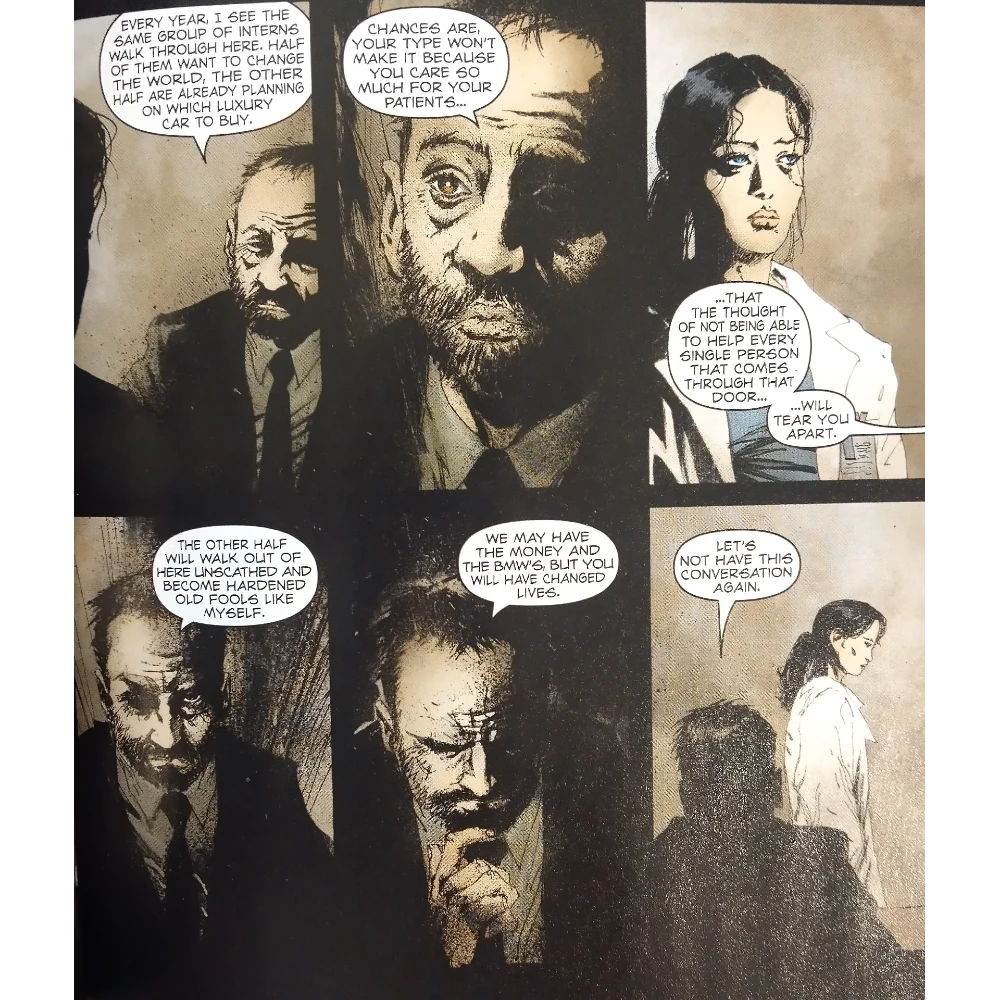
This isn't to say Lee is the most skilled writer to ever navigate issues of mental health and/or illness. Nothing reads particularly cringeworthy, but these are difficult tensions and concepts to navigate. Lee provides care, but any writer who chooses to set a narrative in an old-looking psychiatric ward that feels dirty and dusty faces awkward comparisons to a certain infamous home for the mentally impaired. Black backgrounds, small-ish rooms, and a pervasive sense of hopelessness drowns this limited series in sorrow.
Lee is absolutely sympathetic, and through Christina, he imagines a scenario where basic human decency is brought to bear against the cold splash of reality. There's no bad guy in this; you can't even really get mad at Christina's facilitator, an experienced psychiatrist who does come across as arrogant sporadically. He's not painted as some evil man in a labcoat, forcing patients into cramped cells and performing lobotomies. When faced with a possible public relations crisis, he handles the situation as carefully as he possibly can, even if his PR representative has a penchant for giving clipped, cliche responses to the media in what is certainly an intentional running gag by Lee.
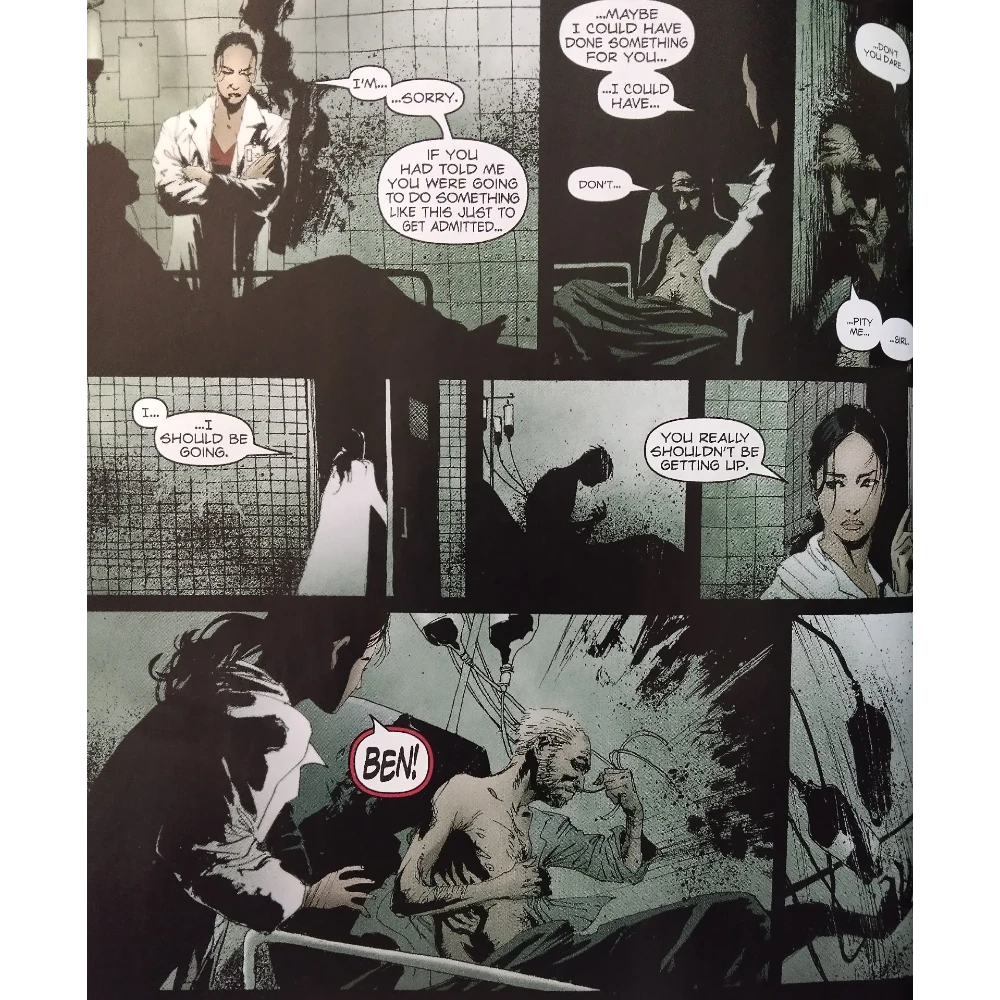
It's reality which is the real adversary of the piece, reality which beats Christina down and dims her starry-eyed dreams. I'm not certain how factual her experience is to other interns or employees in this specific medical field, but Christina is bombarded with cold splash after cold splash. She does her best, admitting "patients" who have no evidence of mental illness but just need a place for the night. She dotes on Daniel, just a seeming patient at first who, through some supernatural means, allows her a glimpse into a greater existence beyond herself…and suggests that this doesn't need to be the reality of it all.
Lee, through Christina's perspective, seems to be advocating, if not for blatant reform of the psychiatric system, at least a tweaking of procedures. Again, no villains are involved, but we're left with a pervasive feeling of loss and brokenness that could be pushed and fought against. "You have a good heart, Christina," someone tells her, "but it's not very practical in the real world." And that's the dark conflict Lee is striving against, a system that isn't inherently evil but just limited in its approach and resources pitted against a person whose capacity for care and concern for another human soul doesn't wish to be impeded.
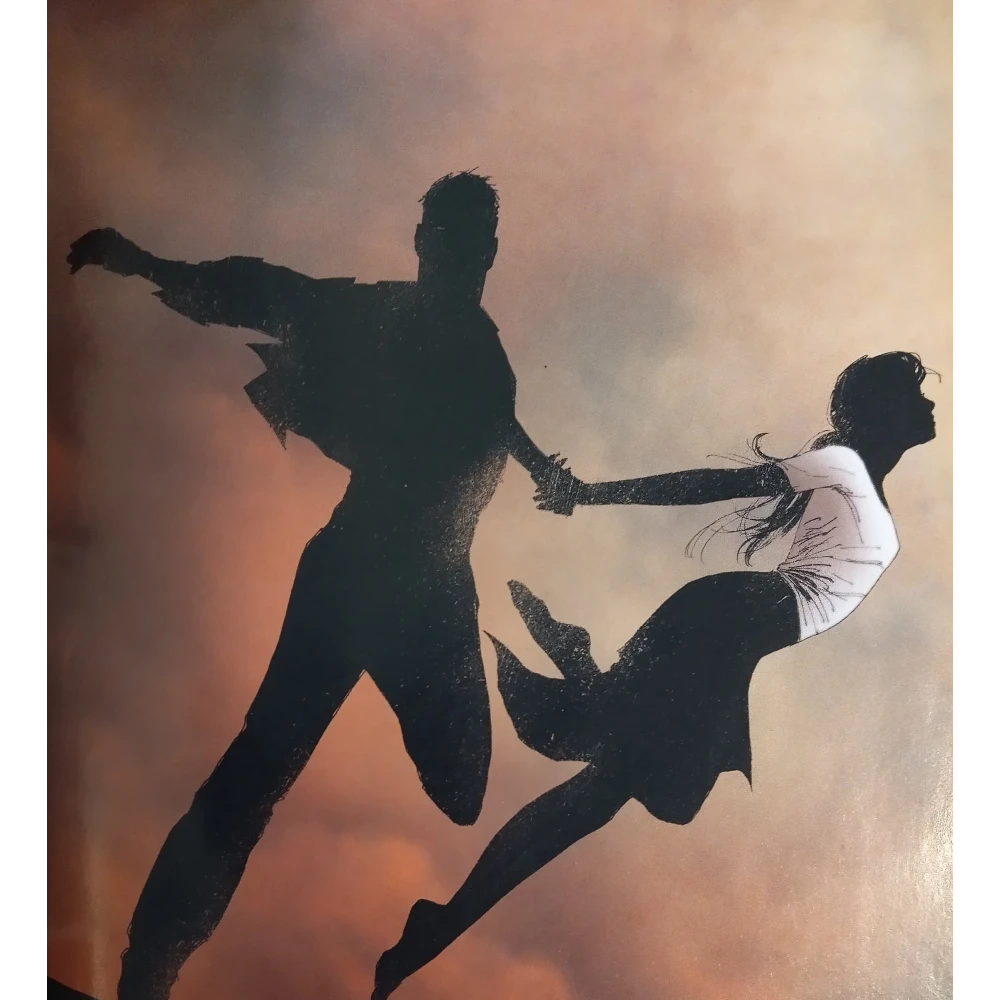
Daniel, as a character, provides her with that impetus, and maybe this is where reading the original series would do me some good. Lee never states, directly, that Daniel is a fallen angel, introducing some of that potential ambiguity that I just assumed was intentional. Now I wonder if it wasn't, that readers of the original series would clock Daniel as the same character and know how and why he came to reside in this institution. But even in my ignorance, I didn't find Daniel uninteresting. He's lost (as I assume an angel fallen to Earth would be), seemingly stuck in a catatonic state until coming into contact with Christina. Theirs isn't a romantic relationship, more of a mutual understanding, yet beyond a patient/caretaker role. There's a sweetness to it that lingers a little before the series closes.
And this is where my one primary source of frustration enters the picture. How Lee resolves Hellshock is where the writer/artist, perhaps hindered by those aforementioned production delays, winds up faltering. The seeming final issue hinges, I feel, on that sense of ambiguity, ending the narrative on a surprising note that exchanges possible mysticism for a fairly grim dose of reality. Part of the ending feels unfinished, and the extra twenty-two-page actual conclusion does little to provide a satisfying resolution. These pages are additionally disruptive in that they represent a (hell)shock of a tonal shift, in terms of art and dialogue. Bright colors replace destitute environs, and narration evokes a somewhat poppier feeling of hope. Not that hope is to be frowned upon, but Lee wields it poorly, generating a series of stilted aphorisms that read like an essay rather than a narrative. He attempts to establish a relatable connection with the reader, yet he's already done well enough with his characters previously. The ending drew me out of the series, representing a lackluster finish.
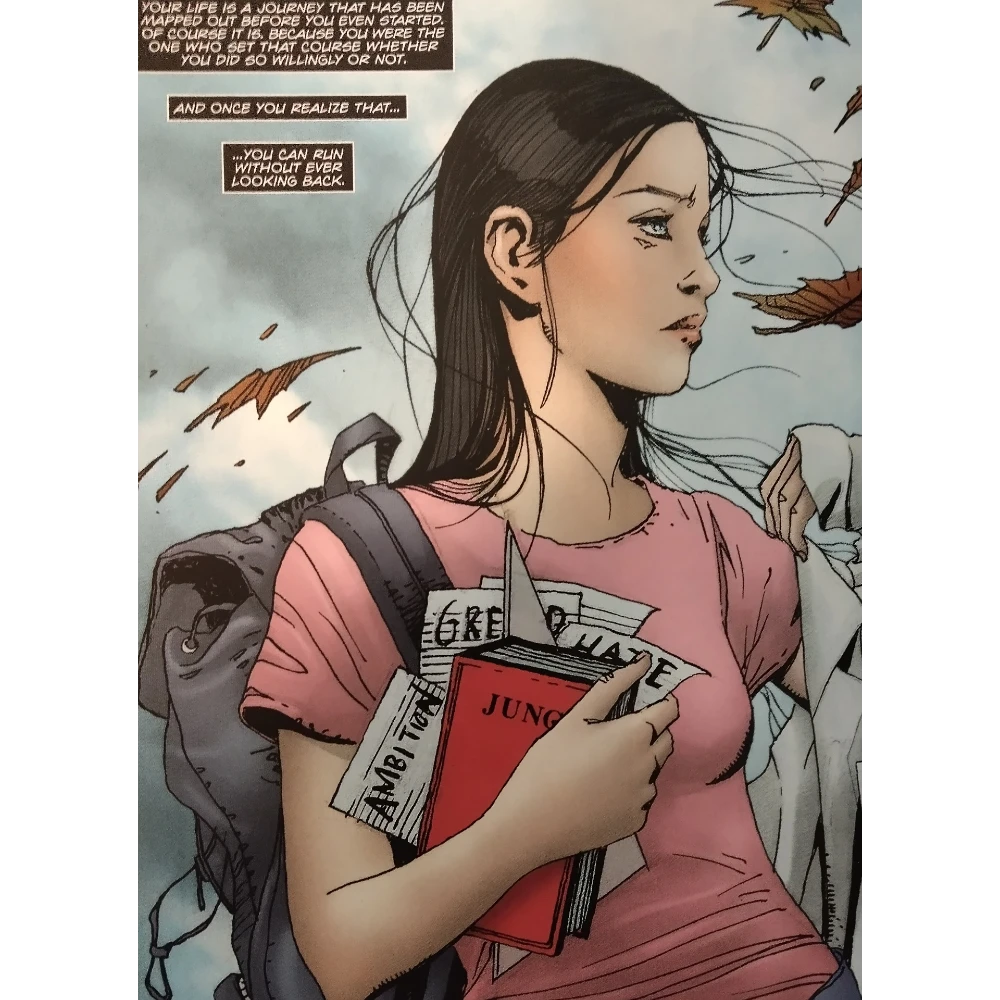
I will note that part of my frustration may boil down to interpretation–Lee's final issue is meant, I believe, to be interpreted visually, his last panel possibly pointing to a conclusion which I may not have drawn at first glance. If this is the case, then the strongest conclusion I could come to from visuals alone is darn depressing and represents a pretty heartlessly easy way for Lee to wrap the series up. Regardless, what's true is that a decent conflict is introduced before the end which challenges that pervasive sense of ambiguity, and if the final page is meant to be interpreted how I am currently assuming Lee meant it to be, it's a bummer of a finale.
There are elements here which allow Hellshock to stand out from its Image peers. Lee is looking to tell an original tale (or a sequel to an original tale) that depends less on throwing on some cool costumes and belts studded with guns and more on thoughtfully exploring characters and concepts. He's earnest about his subject matter, generating sympathy for not only our named characters but several others who tend to inhabit the dregs of society's conscience. It's a noble effort. Nothing here is misguided, though some of it feels misplaced. All the good character work is thrashed with a frustrating ending, and though the final twenty-plus pages doesn't diminish what Lee has done, it fails to generate a cohesive and satisfying denouement. When Lee utilizes character and art to let you see what he wants you to see, he creates a more impactful story than when he's telling you. Words, here, though better crafted than those from his Image companions, ultimately underscore his true strengths, as an artist able to bring a vision to the page.