(Strand)om Stories: Avengers/Iron Man: Force Works Review
This series provides a well-written second chance to characters callously discarded previously
—by Nathan on April 28, 2026—
A handful of posts ago, we watched the dissolution of the West Coast branch of the Avengers. The "Wackos" were always somewhat of a younger step-sibling to the main team, featuring lesser powered characters with not as much historical real estate attached to them. US Agent had been introduced by Mark Gruenwald in the 80s, Jessica Carpenter's Spider-Woman during the original Secret Wars, and James Rhodes' War Machine identity had first appeared in the late West Coast Avengers issues I reviewed. Some folks had been around longer–Hawkeye, Mockingbird, and Scarlet Witch, for example (even Rhodey as a character)–but lack of experience and some fairly catastrophic failures, including the death of Spider-Woman's ex-husband, an attack from Ultron which destroyed part of their compound headquarters, and the death of Mockingbird herself, nailed those final nails into the coffin of the team's career.
I critiqued those issues fairly harshly, noting that I actually appreciated the series' final issue. West Coast Avengers #102, written by the now-defunct writing team of Andy Lanning and Dan Abnett (affectionately referred to as "DnA" by fans), ended the series on a stronger note from a writing perspective, even if it disappointingly ended an era.
Yet, much like that fabled flaming bird after which Jean Grey took her name, the "Wakcos" were meant to return…sorta. Maybe like half a phoenix? From the ashes, they rose, but under the guise of a new team, with a new benefactor, and with some new blood mixed in with the old. That latter statement may sound like a medical disaster if taken literally, but in terms of storytelling, some fresh faces and old reliable ones may be just what the West Coast legacy needed.
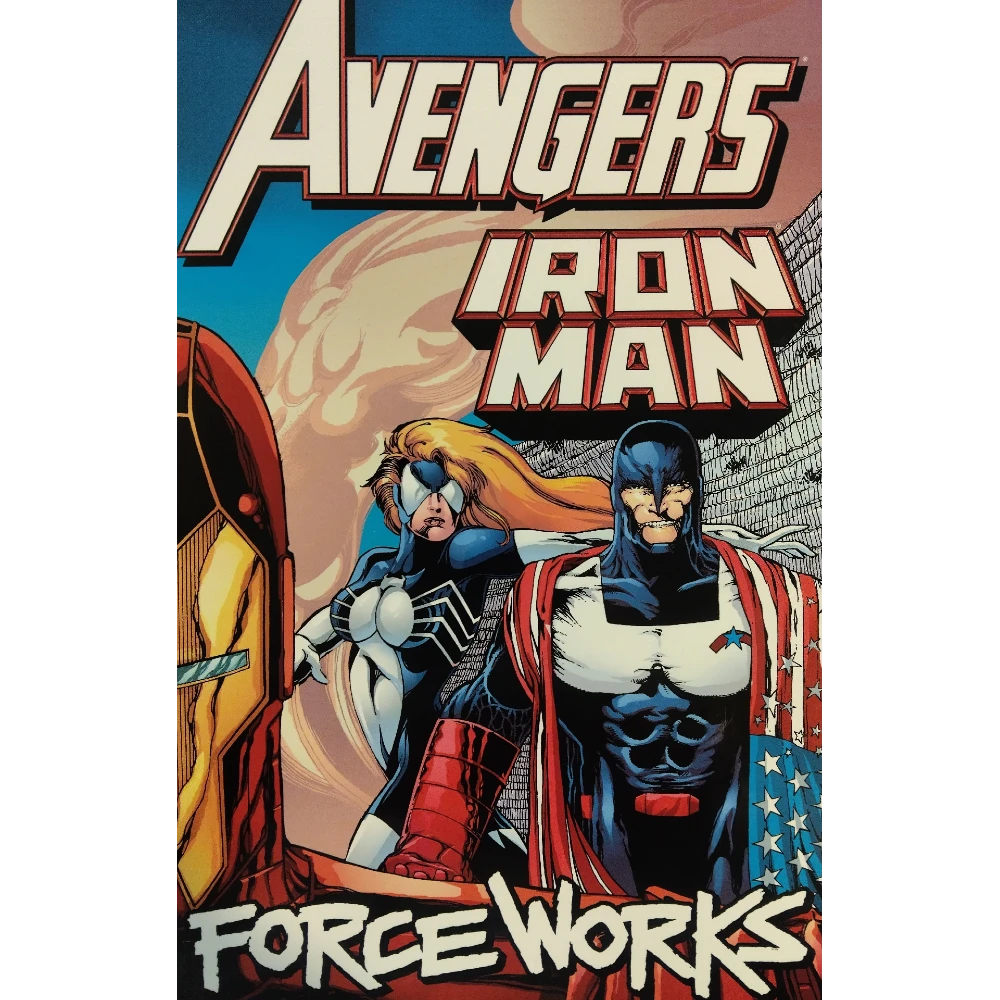
Avengers/Iron Man: Force Works
Writers: Dan Abnett and Andy Lanning
Pencilers: Tom Tenney, Dav Taylor, Stu Johnson, Jim Calafiore, Dave Ross, Jim Cheung, Tod Smith, and Paul Ryan
Inkers: Rey Garcia, Don Hudson, Mark McKenna, Peter Palmiotti, Michael Avon Oeming, and Kevin Yates
Colorists: Joe Rosas and Sam Parsons
Letterers: Jack Morelli and Susan Crespi
Issues Collected: Force Works #1-15, Force Works Ashcan Edition, Century: Distant Sons, and material from Iron Man/Force Works Collectors' Preview
Volume Publication Date: January 2016
Issue Publication Dates: January 1994, July 1994-August 1995, February 1996
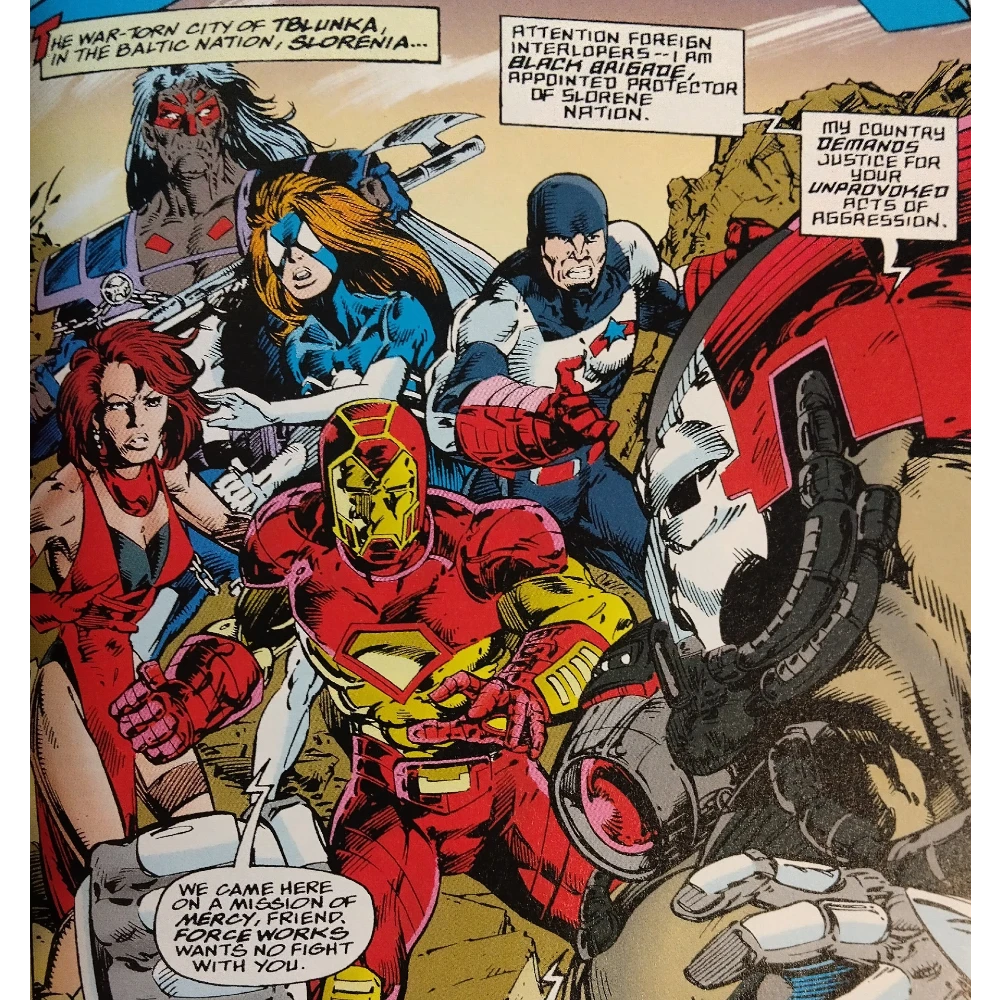
I'm not the most familiar reader of DnA's collaborations, outside of their fairly epic rejuvenation of Marvel's cosmic corner through Annihilation. Abnett and Lanning used the event to spark new interest in a side of Marvel that seemed to have faded since the completion of Jim Starlin's "Infinity Trilogy" (heck, given the declining quality of those stories, maybe even during), and though I don't think these issues reinvigorated the West Coast Avengers for years afterwards in the same way, they do mark a decent upswing for the team. If anything, the writing quality far outstrips what Roy Thomas managed during his late West Coast run, loathe as I am to admit it.
I don't know how Abnett and Lanning divvied up their writing responsibilities, but as a unit, they generate not only heartfelt characterization and fun plots but darn strong writing. Narration boxes are used liberally, and while this method would normally irritate me due to their "tell, don't show" nature, DnA methodically weave poetic descriptions and details to offset any annoyance. Character qualities are shown through dialogue and illustrated actions, sprinkled effectively throughout. Comics, especially mainstream superhero comics, can often struggle with subtlety when expressing character growth or struggle; this was certainly true with Thomas, who could be pointed or obvious with his expressions. Abnett and Lanning work differently, inserting subtler nods to US Agent's conservative fanaticism, Scarlet Witch's conflicts with Iron Man, Tony's own rocky relationship with Jim Rhodes, and even one or two references to burgeoning friendships and romances.
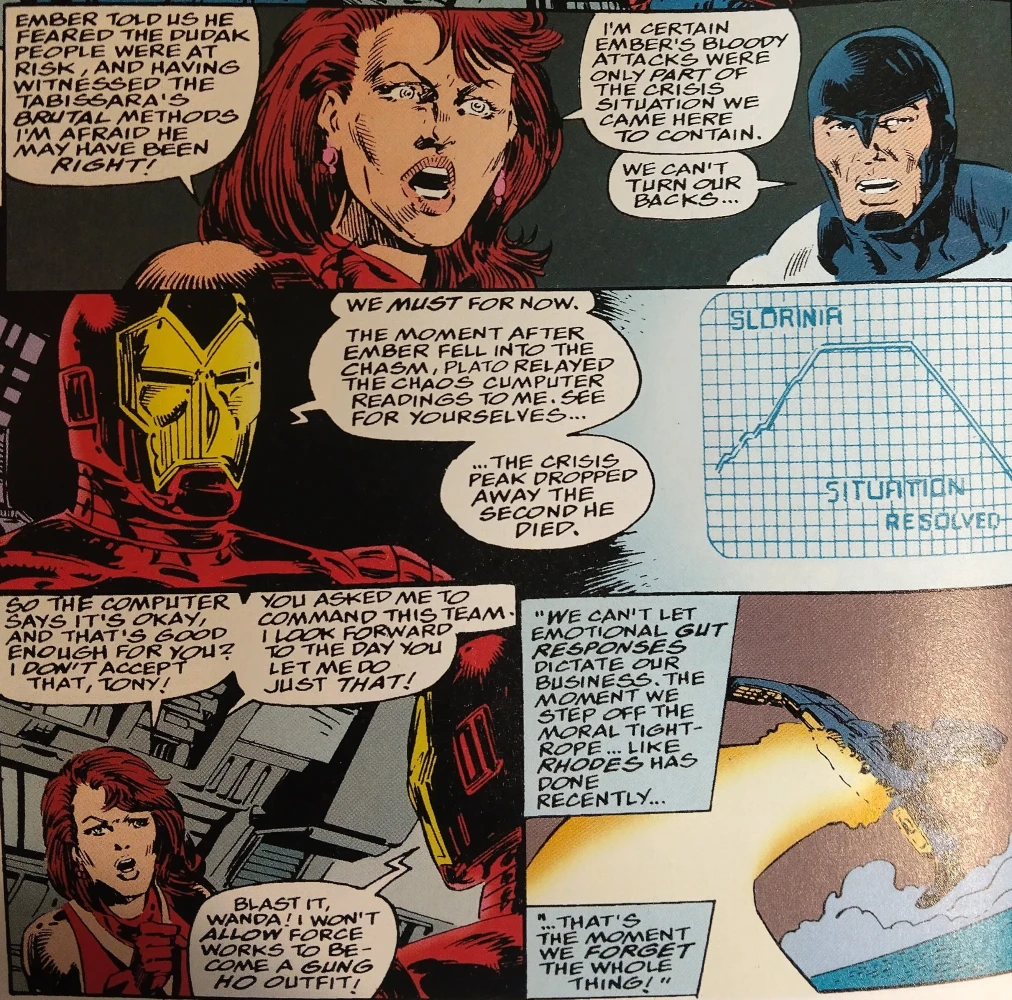
Narratively, Force Works brings several West Coast members back to their feet, benefactor Tony Stark giving folks like Spider-Woman, US Agent, and Scarlet Witch a second opportunity after the folding of the West Coast team. I've no idea what DnA thought of the original team's dissolution, but as someone who wasn't a fan of how Roy Thomas and Co. handled that particular conclusion, the idea of giving these characters another shot is affirming and rewarding. A new headquarters, some new costumes, a fresh partnership with Iron Man, and a more proactive mission statement enable these characters the chance to grow in a unique direction.
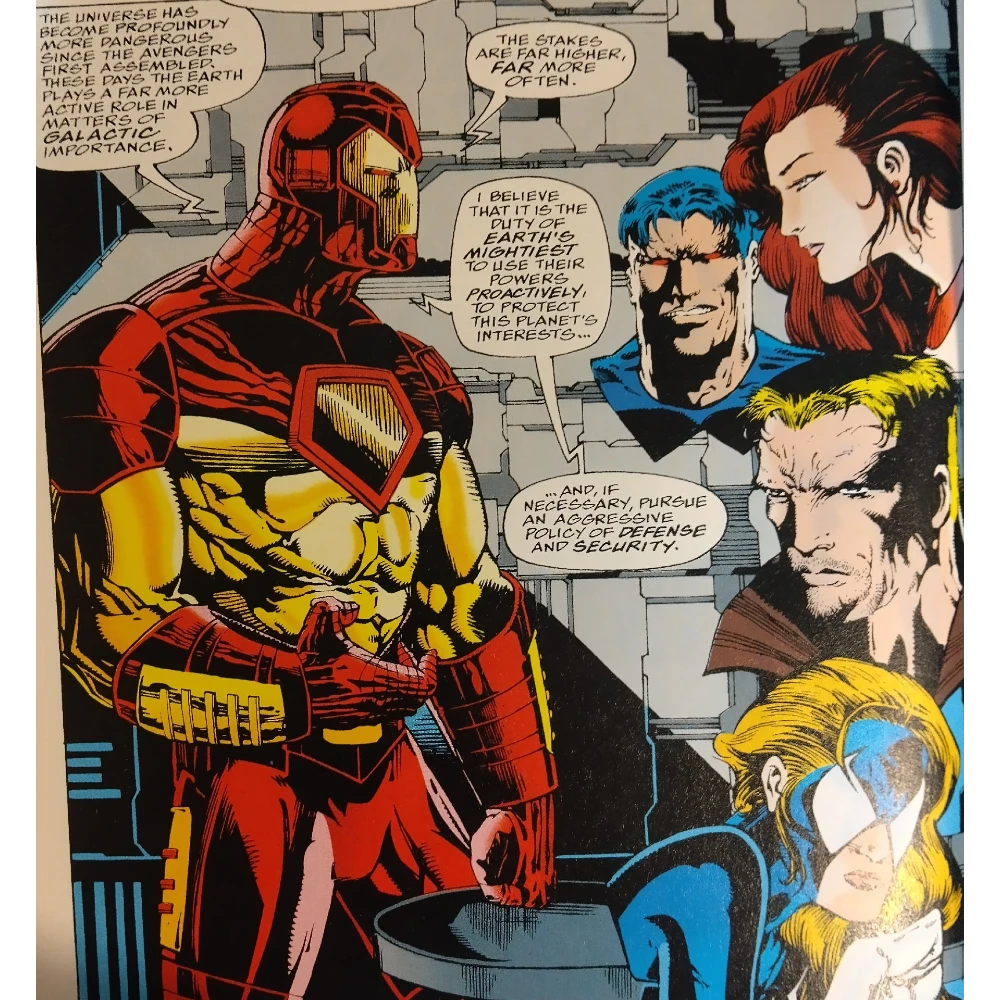
Tired of just "avenging," Tony wants to strike out at threats before they have the chance to develop, and to those ends, employs Force Works to face civil unrest in a foreign country, alien adversaries, and the Mandarin himself to keep problems under control. To this end, Abnett and Lanning create a predictive style of technology that reminds me somewhat of Minority Report, except without the precog people strapped to machines. Know the threats before they happen, you can quash them. Abnett and Lanning completely avoid any of the moral arguments that could happen with a plot such as this (unlike Marvel's own Civil War II), though as such pondering was not the series' focus, I didn't mind them skirting around those potential issues. Iron Man just wants to know what's gonna happen when, and though there is some disgruntlement when the team gets involved with a foreign nation and encounters somewhat snooty Avengers on a different mission, DnA avoid any philosophical unpleasantness.
A story always growing in the background, focused on a Rigellian Recorder observing Force Works, likely explains why those moral conundrums are largely ignored. Without providing specific spoilers, the Recorder plays a very significant role that is uncovered across these fifteen issues, ending in a fairly satisfying manner that plays true to the Recorder's inherent purpose of observing and analyzing behavior. Even this subplot, drip-fed to the audience, is a method Thomas failed to latch onto; under Abnett and Lanning, this background story generates a mystery worth following, and as its resolved satisfactorily by time this volume closes, enhances the quality of the volume as a whole.
So, too, does the introduction of new character Century create intrigue, and so, too, does it feel like DnA begin and end his particular story in a way I appreciated. I was admittedly wary of his introduction, recalling the fairly hairy way in which Jim Starlin and John Arcudi handled their own "mystery man" in Infinity Watch (though that situation was more Arcudi attempting his best to realign a fumbled opportunity left him by Starlin). Unlike poor Maxam, Century is the product of a singular writing team, his own backstory teased at points and fleshed out fully in his own one-shot. DnA do give into the occasional bit of trope tossing–the mystery surrounding Century is due to memory loss, a common enough problem to obscure the past (heck, Starlin used it for Maxam as well)–but he's a fairly solid character otherwise.
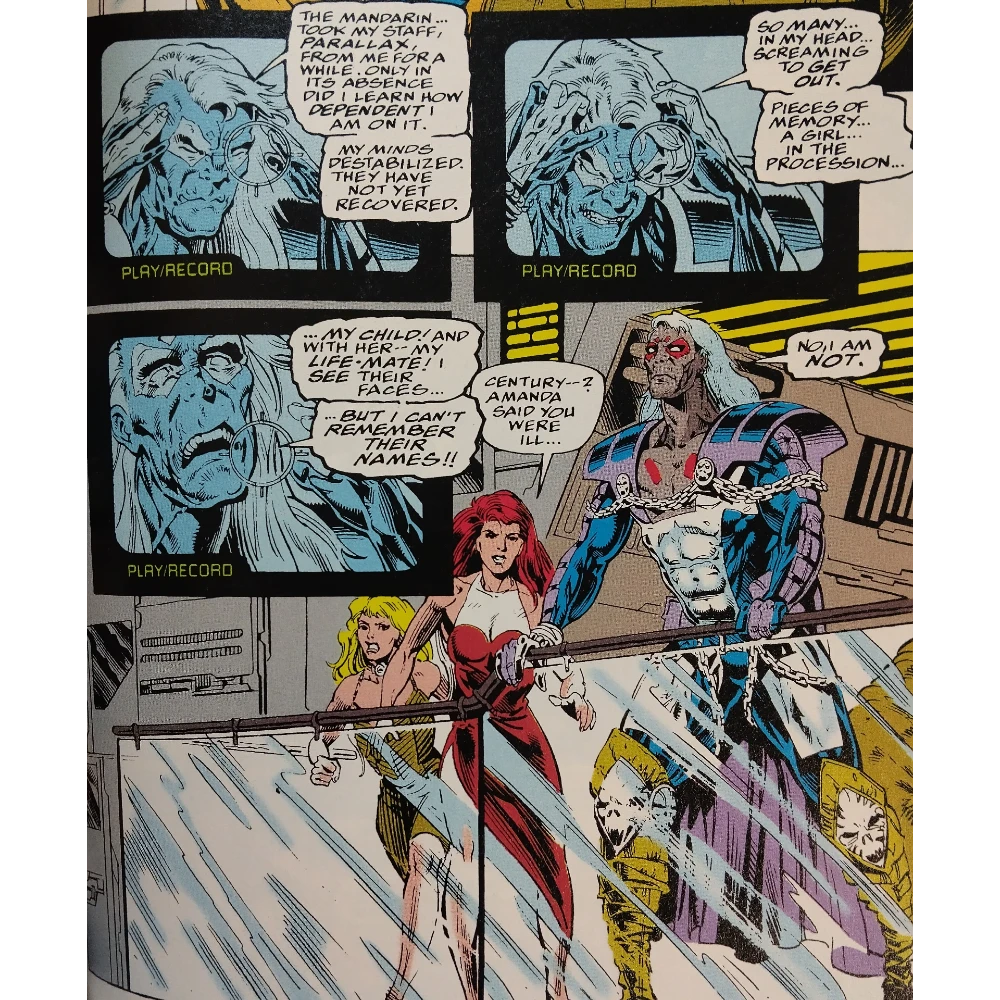
In regards to tropes, Force Works is smack-dab in the 90s era of edginess, where Image ruled the roost. Newly designed costumes for different characters fit the 90s look, from US Agent's armor-looking outfit and energy shield, to Century's darker outfit and axe, to an armored Russian special units force. Yet it feels it fits better than some of these characters' counterparts. No obnoxiously huge guns or belts studded with pouches. The designs may be of the era, but they feel more intentional and crafted around the characters rather than haphazardly developed just to fit the edgy or cool factor.
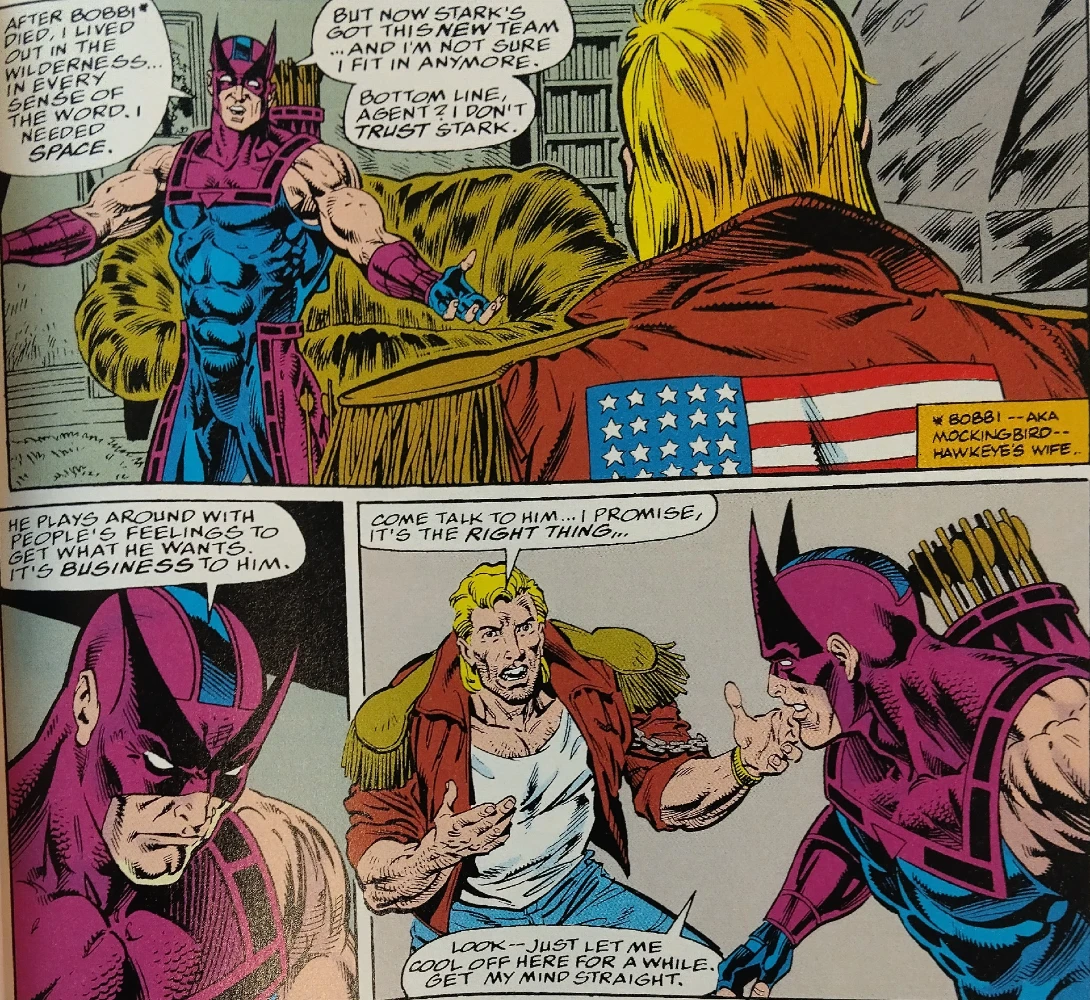
Abnett and Lanning achieve a bit of narrative depth to help combat that stereotype of lazy writing and poor plotting during this era. A multi-part arc in the country of Slorenia, broken up into two halves, features a decently development plot surrounding racial factions, personified by two age-old warrior rivals; it doesn't read like commentary on any then-current issues, but it could be extrapolated to point toward some deeper real world connection, which I find more engaging than blunt storytelling. A heroic sacrifice in the series' first issue removes a character from the Marvel chess board for several years, and the reaction to said character's passing is handled decently; a funeral scene could have been given more emotional weight, but the character's loss lingers like a dark pall over the team. A standout Christmas issue allows our heroes some room to breathe outside their costumes and even gifts Hawkeye some brief measure of peace after his wife's death, which is more than I can say Thomas gave him.
Nothing here is gonna gobsmack you with brilliance, but it's just pleasant to see how refreshingly coherent these issues are. Even a crossover with a Mandarin-focused arc told in Iron Man and War Machine issues doesn't really disrupt the flow Abnett and Lanning establish. We're given good characterization, fun plot development, nicely injected subplots, and some deeper turns at commentary. By time the volume finishes, all your plot threads are wrapped up, the mysterious Century is given some breadth, and characters seem to be in a much better place than at the end of West Coast Avengers.
In a way, Force Works feels like West Coast Avengers 2.0, showcasing how that team could have continued on with just some stronger writers and an actual focus on telling an interesting story. Characters who felt cruelly sidelined are given a new opportunity to breathe and have their presence felt. Guys like US Agent, Spider-Woman, Wonder Man, or Century are never, I'd imagine, going to top lists of best-selling comic characters, but it's nice to see someone take characters who had established personalities and histories and develop them even just a little beyond where another writer dropped them.