Random Reviews: Solar, Man of the Atom: Second Death
These inaugural issues tell a twisting tale which accompanies prior material to create a complete narrative
—by Nathan on April 25, 2026—
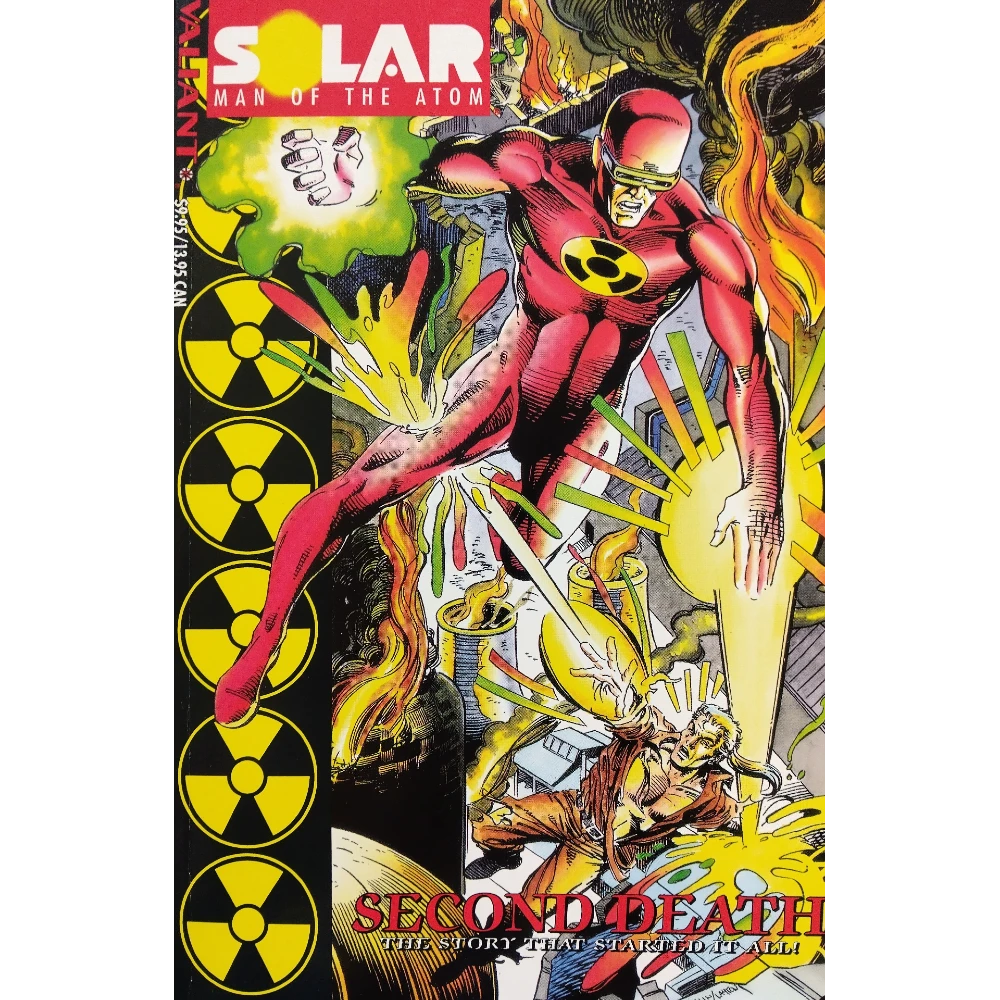
Last "Random Review," we dove back into the Valiant Multiverse to explore the origins of the company's second acquisition from Gold Key: Solar, Man of the Atom. I say "Multiverse" because, in that narrative, we dealt with an entirely different universe than the one inhabited by characters such as Magnus, Robot Fighter. Essentially annihilating his world through the formation of a black hole, Solar (otherwise known as Doctor Phil Seleski) was ripped from his universe into the mainstream Valiant Universe, a few thousand years prior to Magnus and his robotic adversaries.
Don't you love how simple these comic plots are? And if you believe that, trust me when I say it's only gonna get weirder from here.
These early Valiant narratives don't seem to be widely collected, so while I want to review some of the arcs from different series I've picked up, I don't intend to write about these issues indefinitely. There will be gaps between narratives. But these first four issues of Solar, Man of the Atom contain the second part of an ongoing narrative I began discussing in the previous post, continuing from Phil's trip through space-time. He's in the Valiant Universe, where there's another, nonpowered Phil Seleski, who also works at a nuclear power plant. And soon, there's gonna be another Solar, modeled after the red-suited Dr. Solar straight from the Gold Key source material itself.
[Insert repeated gag about comic book simplicity]
Solar, Man of the Atom: Second Death
Writer: Jim Shooter
Pencilers: Don Perlin, Knob Row, and Barry Windsor-Smith
Inkers: Bob Layton and Tom Ryder
Colorists: Kathryn Bolinger and Jorge Gonzalez
Letterers: Jade Moede, B.K. Joyce, Ken Lopez, and Audra Verde
Issues: Solar, Man of the Atom #1-4
Volume Publication Date: September 1994
Issue Publication Dates: September 1991-December 1991
Publisher: Valiant Comics
I noted in the last review that, even though Phil's origin story takes place across the first ten regular Solar issues, they really should be read in standalone fashion. There are payoffs in these first four issues which really only make sense once Phil's origin is known, so I feel that readers picking up Solar when these issues were first published had a somewhat backwards reading experience. Which is why I recommend tracking down "Alpha & Omega" before reading this volume.
As a follow-up to "Alpha & Omega", "Second Death" carries Phil's story well, bringing him over to the regular Valiant Universe where he interacts with that universe's version of himself, the humble nuclear scientist referenced above, but finds himself literally torn between personalities. Nearly halfway through this arc, the red-suited Dr. Solar splits from the Solar we've been following, dividing the man's personality in two. Just for the sake of clarity, since we're dealing with three versions of the same character, I'll reference regular scientist Phil as just "Phil," the red-suited superhero as "Dr. Solar," and his godlike counterpart from the last review as "Solar." Hopefully that will keep names as clear as Solar sees across the lightwave spectrum.
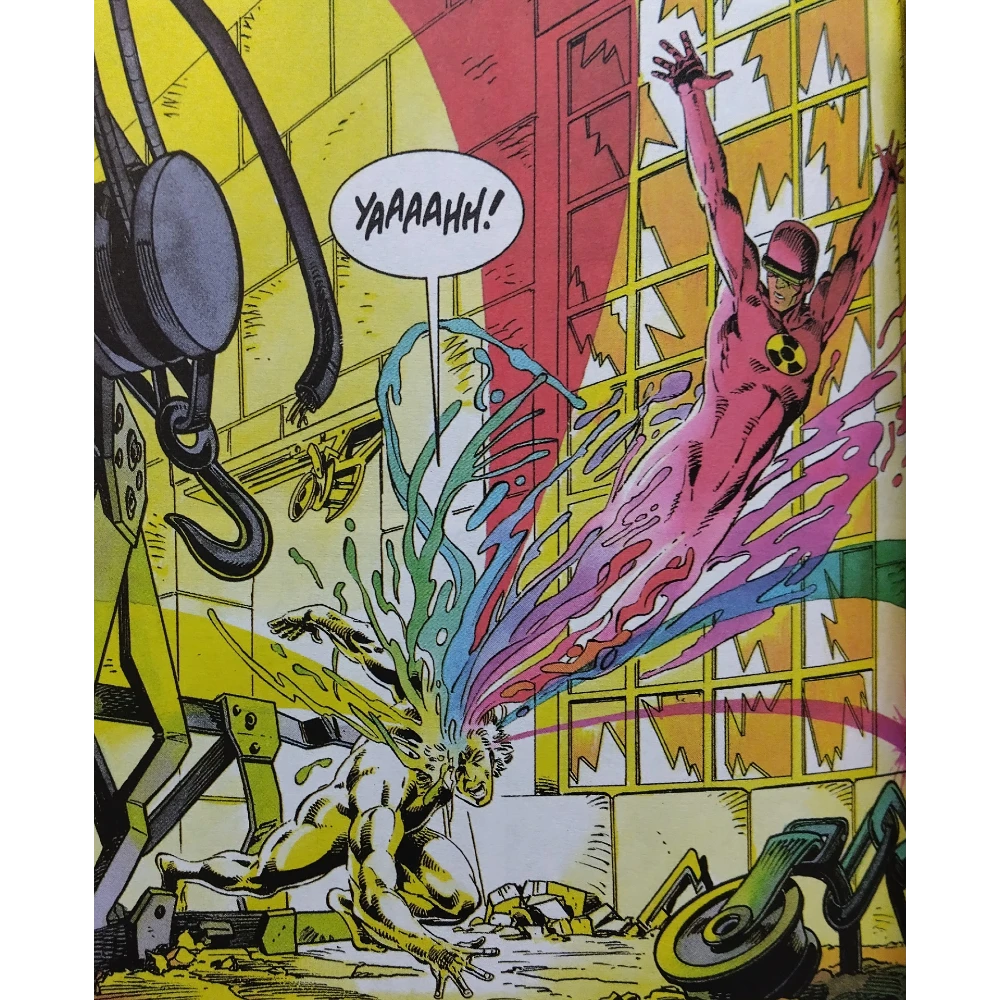
Though titled "Second Death," this arc is really about achieving a second chance or a second life, for both of our superpowered Solars and even Phil himself. Solar, having accidentally caused the destruction of his world, seeks no such fate for the Valiant Universe, often acting to staunch disaster as, it seems, a form of penance. Blowing out the candle of one world, he hopes to keep the life on another lit. Upon splitting from Dr. Solar, our white-haired "hero" is determined to prevent the red-suited radioactive man from causing any possible destruction; his guilt causes conflict between them, even as Dr. Solar seeks to bring his other half to justice.
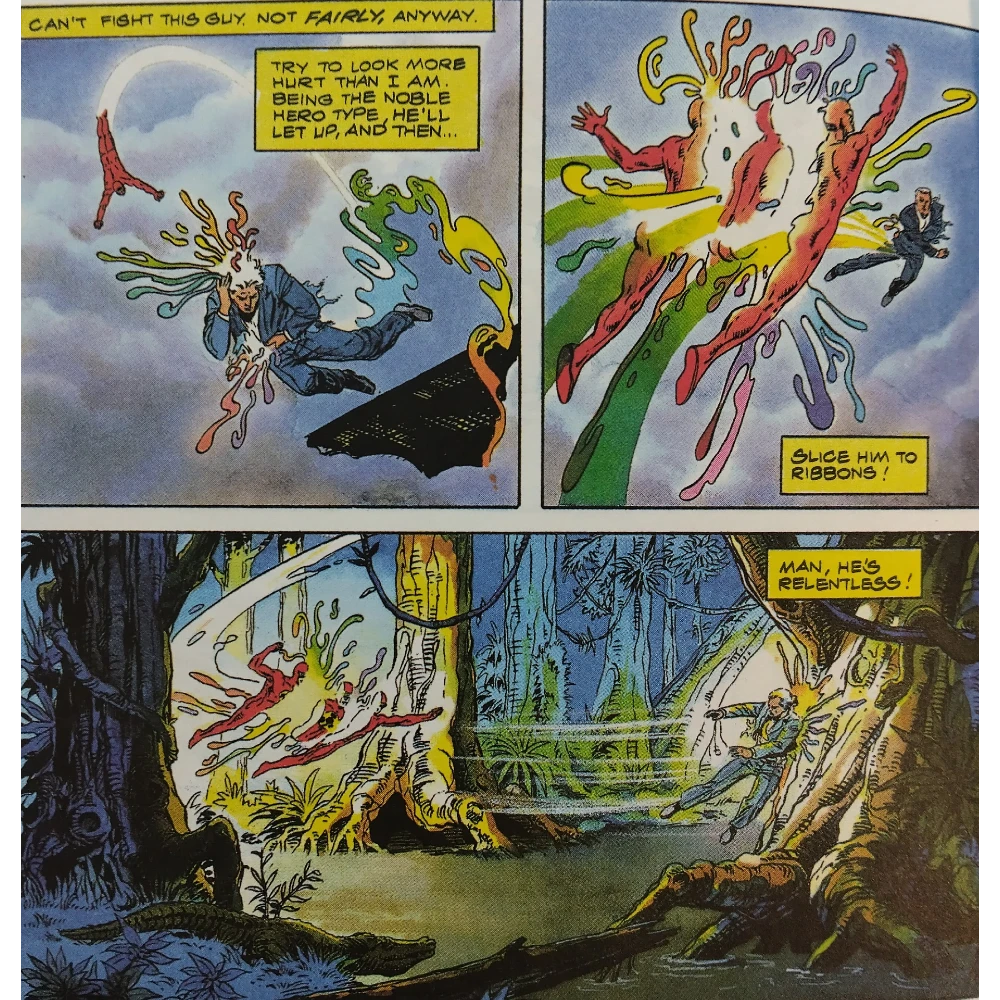
Both men, though born from the same human form of Phil Seleski, have become so much more than human and see themselves as polar opposites. This leads to a frantic fight, courtesy of Don Perlin, with multi-colored lights blazing across the Arctic as each man seeks to overpower the other. Solar, often referring to himself as a "villain," takes it upon himself to stop the dude in the superhero costume, begrudgingly filling what he feels is the best comic role he can take on–if he's killed people, if he's fighting the costumed character, then doesn't that make him the villain, by default? It's a fun attempt at subversion, and though some may find it a little too on-the-nose, I found it irreverent in a fun way.
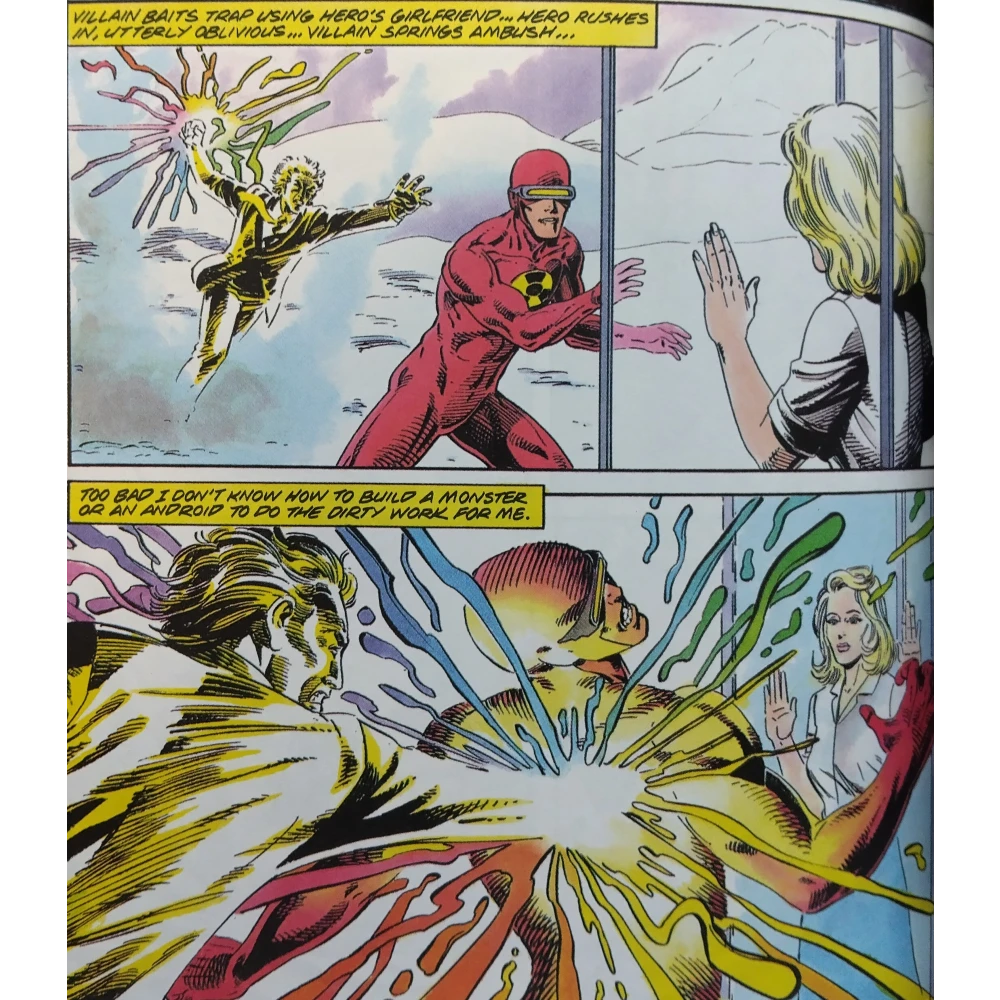
Solar's ponderous philosophizing, which I accused Shooter of drilling a little too deep into during "Alpha & Omega," has largely been stripped from his character. I mentioned that it seemed Shooter, perhaps unintentionally, caused Solar to lose some of his humanity in the last arc, and a similar movement happens here, though it feels more purposeful. Shooter presents both halves of Solar as imperfect and incomplete, with Solar taking on the darker, more critical aspects of his personality and Dr. Solar maintaining a kind of childlike, energetic enthusiasm and positivity. After seemingly defeating his "solar opposite" in combat, the doctor leans into the classic superhero role, stopping criminals and seeking to join the Harbingers, a superhuman outfit. He talks, occasionally, in a clipped tone, unbothered by certain facts or emotions. He's not heartless, starting a relationship with a woman and interacting with her son, but Shooter presents him as a bit colder. It's an interesting facet to his personality, possibly even as commentary on certain superheroes possessing a certain naivety or not being as interesting as the more colorful adversaries they face.
The conflict generated from the Phil-osophical differences between Solars drives the main crux of the narrative, which is necessary in a world that, at this point, feels fairly short on superhuman presence. The heroic Harbingers exist, introduced in this arc, along with their oddly sinister and manipulatively leader Toyo Harada, set to be the premiere villain of the Valiant Universe. Here, he's more akin to a Maxwell Lord, perhaps even a Ra's al Ghul, his presence and power touched on without reveling in his scheming just yet. Dr. Solar's interaction with the Harbingers and Harada make for some decent worldbuilding, drip-feeding readers the wider Valiant Universe, teasing other books to come. But they only appear briefly, to engage with Dr. Solar, leaving the clash of Phils to provide this narrative its main impetus for tension.
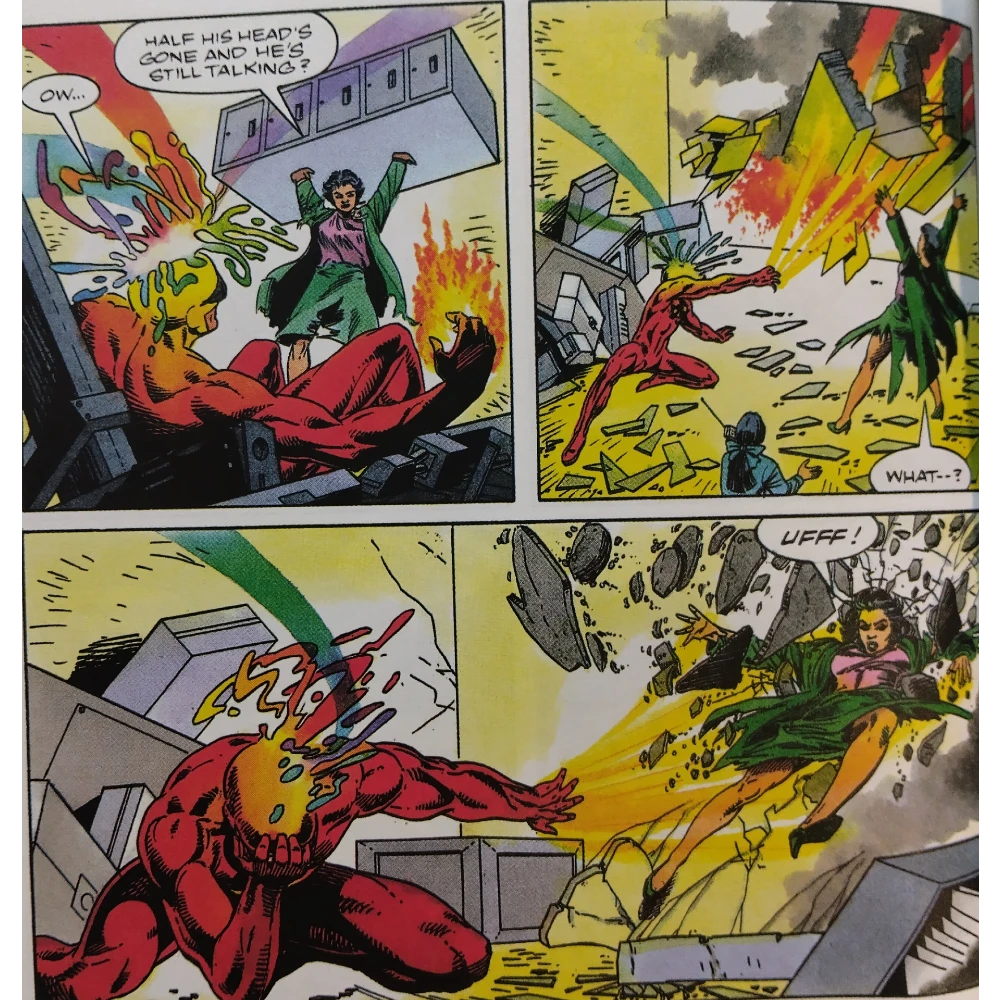
Shooter manages to land the crimson plane fairly well, utilizing a scenario established in the Valiant Universe featured in "Alpha & Omega" to develop a similar situation our protagonists must overcome. Noting the parallels, I briefly wondered if Shooter was just lazily inserting a new take on an old conflict for the sake of convenience, but it actually plays well into the story. The scenario allows at least one of our Phils a measure of redemption, a chance to possibly pivot away from a previously established future. In a move reminiscent of Jim Starlin's Warlock, a bit of spacetime maneuvering is needed to bring this pivot to bear, but just like in Warlock, the move is handled fairly deftly, with the characters' development as people centered on their actions. Even non-powered scientist Phil gets in on the action, Shooter drawing all three versions of this one man together to create a strong protagonist for future issues.
Moon Knight co-creator Don Perlin handles most of the art chores on these issues, with a bit of assistance from Knob Row and Barry Windsor-Smith. Perlin's work is cleaner and more standardized than Windsor-Smith's, bringing to mind (with the help of inking and coloring) the style found in Magnus and early Marvel graphic novels. I can't say it speaks to me on the same emotional level as Windsor-Smith's work, but it provides a relative smoothness to the arc. It's detailed well enough, particularly in the way Perlin inserts old Doctor Solar covers and does his best to ape character faces previously illustrated by Windsor-Smith. It gets the job done, so no complaints from me. I just wasn't bowled over with gratitude.
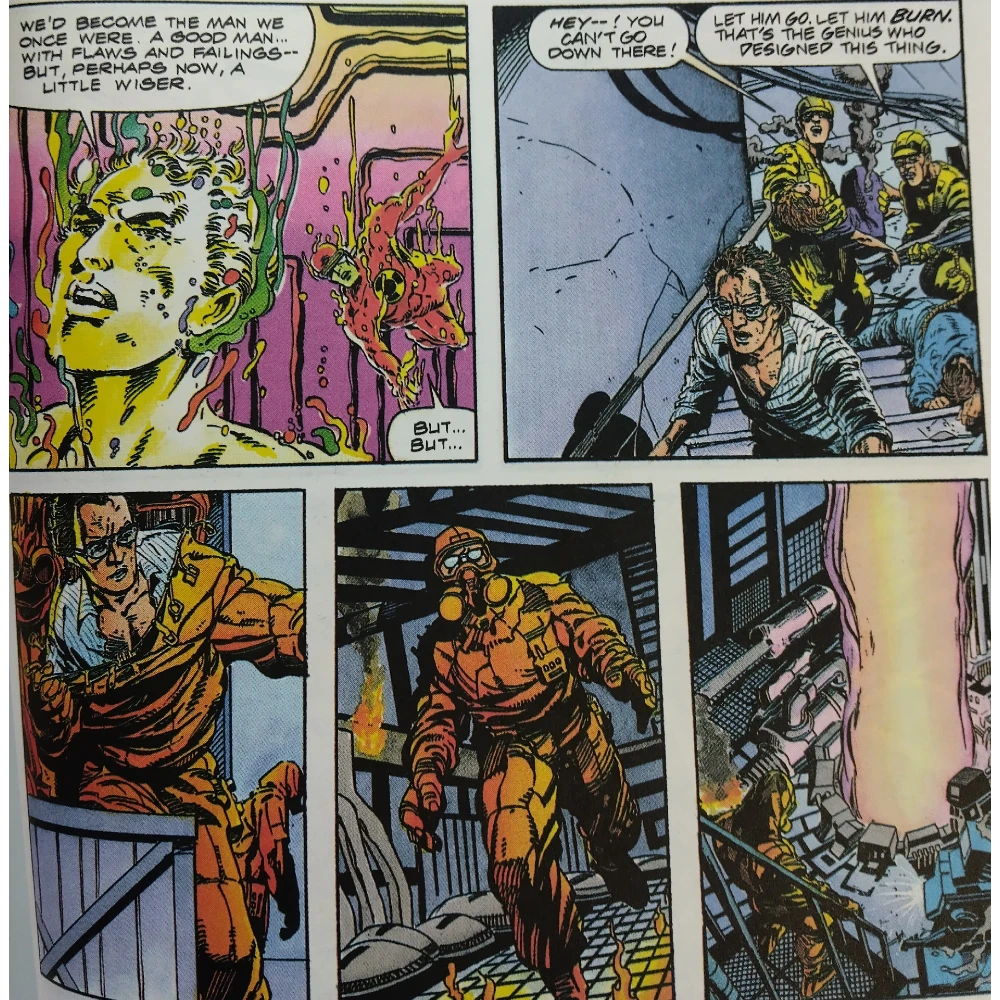
As I noted earlier, "Second Death" should really follow-up "Alpha & Omega" for all you collected edition readers out there. Shooter and Windsor-Smith create a heckuva origin story for Solar, which these issues proceed from pretty well. Similarities exist between the two narratives, but having drifted into a parallel universe, we get to see how those facets play out differently as Phil 1 and Phil 2 each attempt to prevent the fate of the "other" Valiant Universe. The conflict which arises is fun, leads to some good worldbuilding, and sets a path forward for Dr. Solar, Man of the Atom.