Random Reviews: Solar, Man of the Atom: Alpha and Omega
Aside from some philosophical rambling, these back-up strips successfully reintroduce a Silver Age character to the modern age
—by Nathan on April 18, 2026—
A little over a year ago, I reviewed the first appearance of Valiant Comics' first-ever superhero, Magnus (the Robot Fighter!). Though I guess "reappearance" would be a more fitting term, as Jim Shooter, Art Nichols, Bob Layton, and others drew from an old Gold Key character when reintroducing the reading world to Magnus. I have an absolutely blank frame of reference for the original character, but as I was interested in Valiant's first, eh, let's say noble efforts in taking the comic publishing world by storm, I was curious to read up on Shooter and Company's take on the character.
I found this inaugural narrative an engaging endeavor, Magnus' first issues creating a world torn between the haves and have-nots, with robot servants rebelling against the socialite upper crust and forcing the super-strong Robot Fighter to dance between alliances. It's taken more than a year, but I've finally swung back around to examine the second Gold Key character Valiant resurrected from his Silver Age coffin. As with Magnus, I know nothing about Solar's Gold Key origins, so I'm going into this volume as blindly as I would be if Phil Seleski let off a burst of light through the newfangled abilities he receives in this ten-part tale.
Solar, Man of the Atom: Alpha and Omega
Writers: Jim Shooter, with Bob Layton
Penciler: Barry Windsor-Smith
Inker: Bob Layton
Colorist: Janet Jackson
Letterer: Jade Moede
Issues: Material from Solar, Man of the Atom #1-10
Volume Publication Date: March 1994
Issue Publication Dates: September 1991-June 1992
Publisher: Valiant Comics
Before we officially begin, I want to apologize for the horrible cover image; the volume I picked up is all in black, which does not show well. The lettering and radiation trefoil are black as well, making for an awkwardly rendered cover on screen, and part of me wishes at least some of the trefoil was in its classic yellow. Regardless, I hope you're able to still read the text and can tell that the image is the universal symbol for "Radioactive! STAY AWAY!" That last bit is my own addition, naturally, but it seems a very logical interpretation.
Also before we officially begin, I want to make a distinction: this story does not take place in the regular Valiant Universe. In fact, in an introduction written by Valiant archivist Seaborn Adamson for a second Solar volume I intend on reviewing, the world we're examining today is referred to as the "other" Valiant Universe, but never fear, Phil and his wonderfully terrifying abilities will make their way over to the regular VU in our next post.
Spoilers, I guess, for this tale.
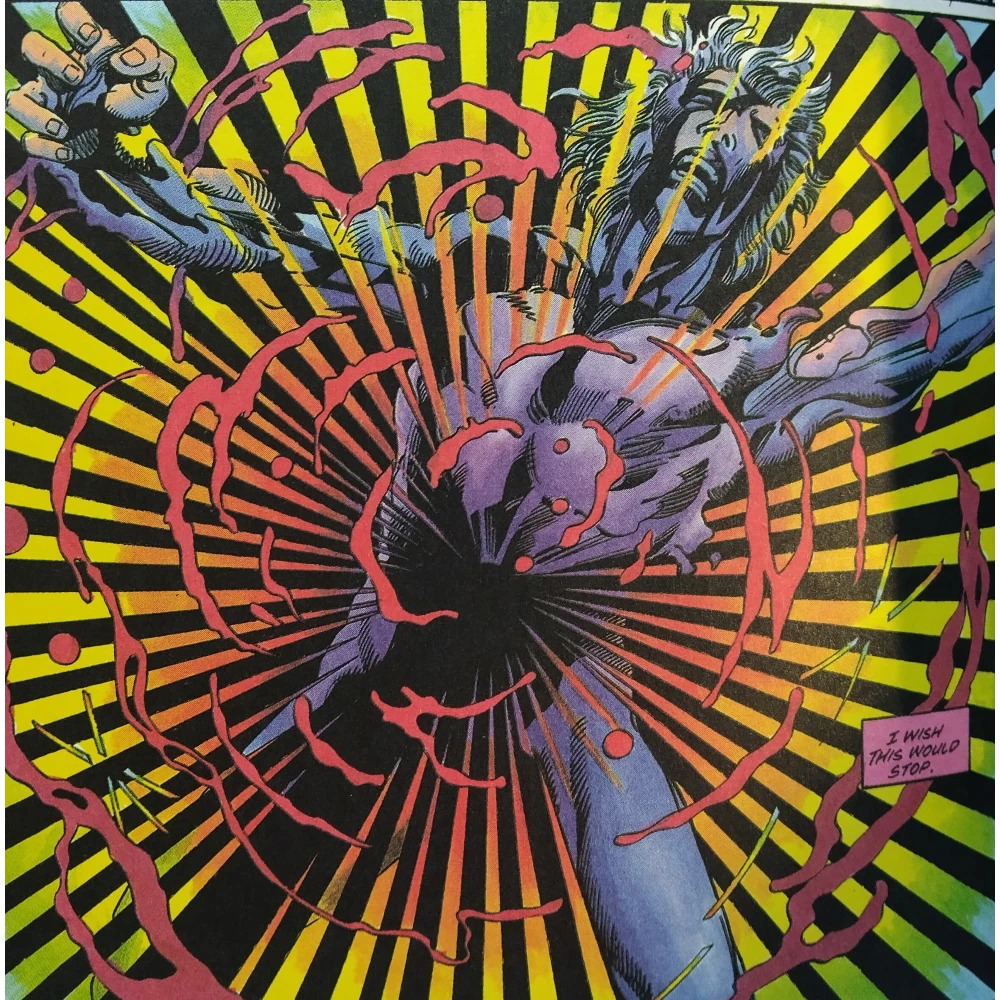
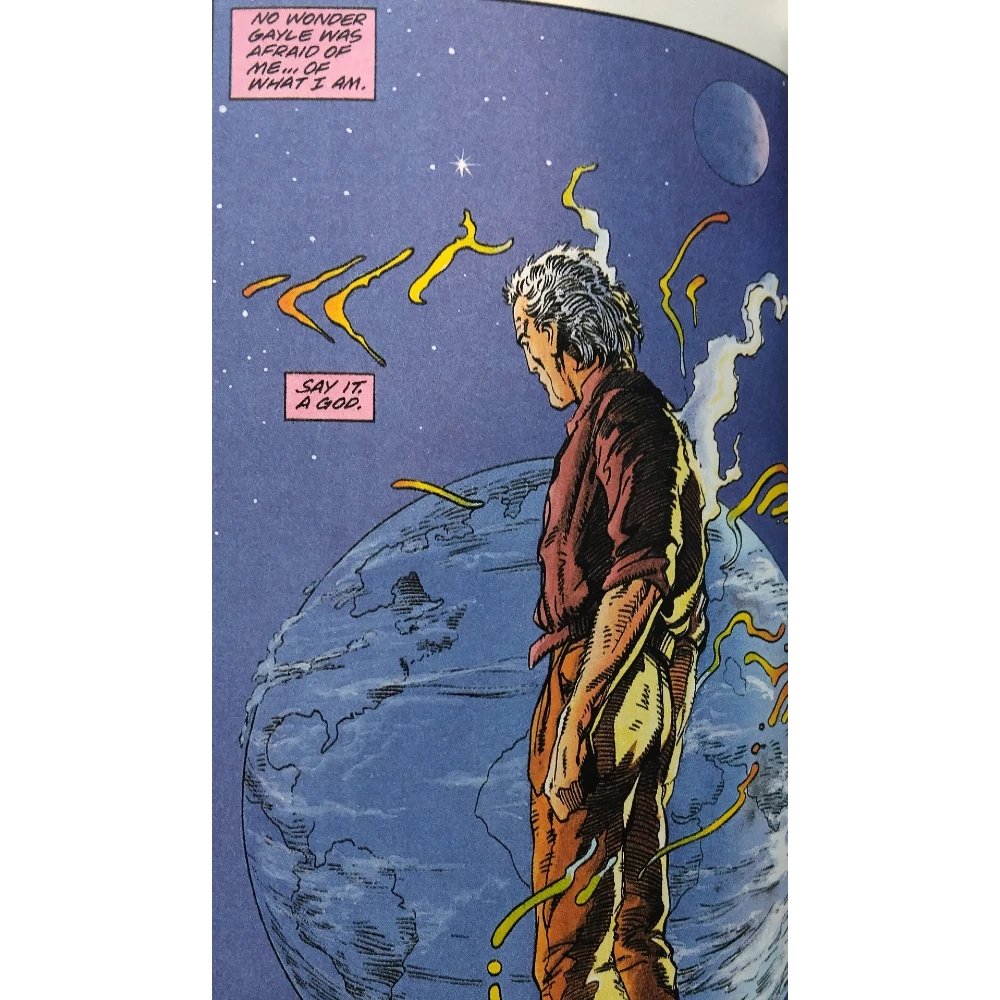
Seaborn describes this "other" Valiant Universe as being akin to the regular VU, but on first, second, and third glance, you wouldn't really be able to tell. No robot revolutions for Magnus to put down, and heck, no Magnus, though we're centuries before his time. No Turok the Dinosaur Hunter, no Bloodshot, Archer, Armstrong, etc. This world, constructed through back-up narratives found in the first ten issues of Valiant's Solar series, feels very much like our own…until the guy with the light spectrum powers shows up. But before he does, Shooter and Barry Windsor-Smith introduce Phil Seleski as a scientist who feels he's let several thousand people down when his nuclear containment unit stops containing nuclear radiation. Kind of a big deal. Spurned on by as much guilt as you can possibly feel knowing you've failed to contain a nuclear meltdown, Phil risks his very life against waves of oncoming heat and radiation to stabilize the issue.
He does. And he doesn't die. Neither do those several thousand folks. And heroic, not-dead Phil soon wakes back up, physically restored and granted superhuman abilities.
Shooter and Windsor-Smith provide a very organic development to Phil's origin and abilities. He isn't immediately a superhero, swearing to aid humanity with his radiation-received powers. He and his fellow scientists see him as a guinea pig of sorts, shutting him up for all sorts of testing as they determine the extent of his new abilities and what that could mean for humanity. Phil's eventual transition into heroics begins gradually–in classic superhero fashion, he saves someone from a burning building–and even then, he isn't fighting supervillains. Like Tony Stark witnessed the destructive nature of war and fell victim to his own weapons, so has Phil felt the effects of his own human planning and scheming. Now, with the powers of Solar, he can actually be godlike instead of just playing at God. He decides to use that power for, as he sees it, the betterment of humanity, in a way which feels natural for his character to consider.
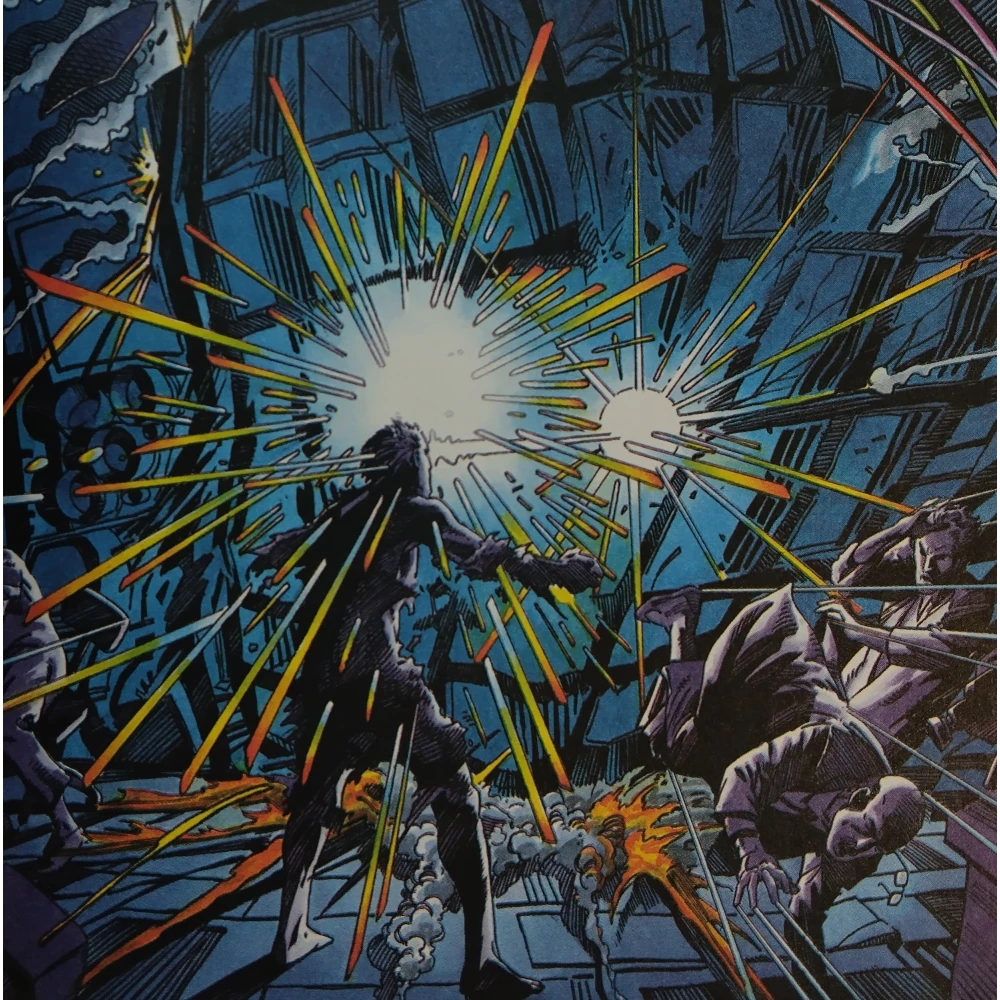
Phil's not an arrogant man, despite what some other characters may believe, and Shooter gains quite a bit of mileage from just how human he allows Phil to be. Even before receiving his abilities, the scientist recognizes his culpability in facilitating a potential meltdown, rushing into the heart of a nuclear facility to prevent further damage. The pain is excruciating, his feet begin burning away, but he plunges ahead regardless. Such a moment certainly enables Shooter and Windsor-Smith the necessary impetus to give Phil his abilities, but it also presents the scientist-turned-superhero in the noble light he needs for us to trust him with those powers. There's already a side of Phil rooted in concern for others' welfare, which makes the eventual transformation into superhuman easy to accept.
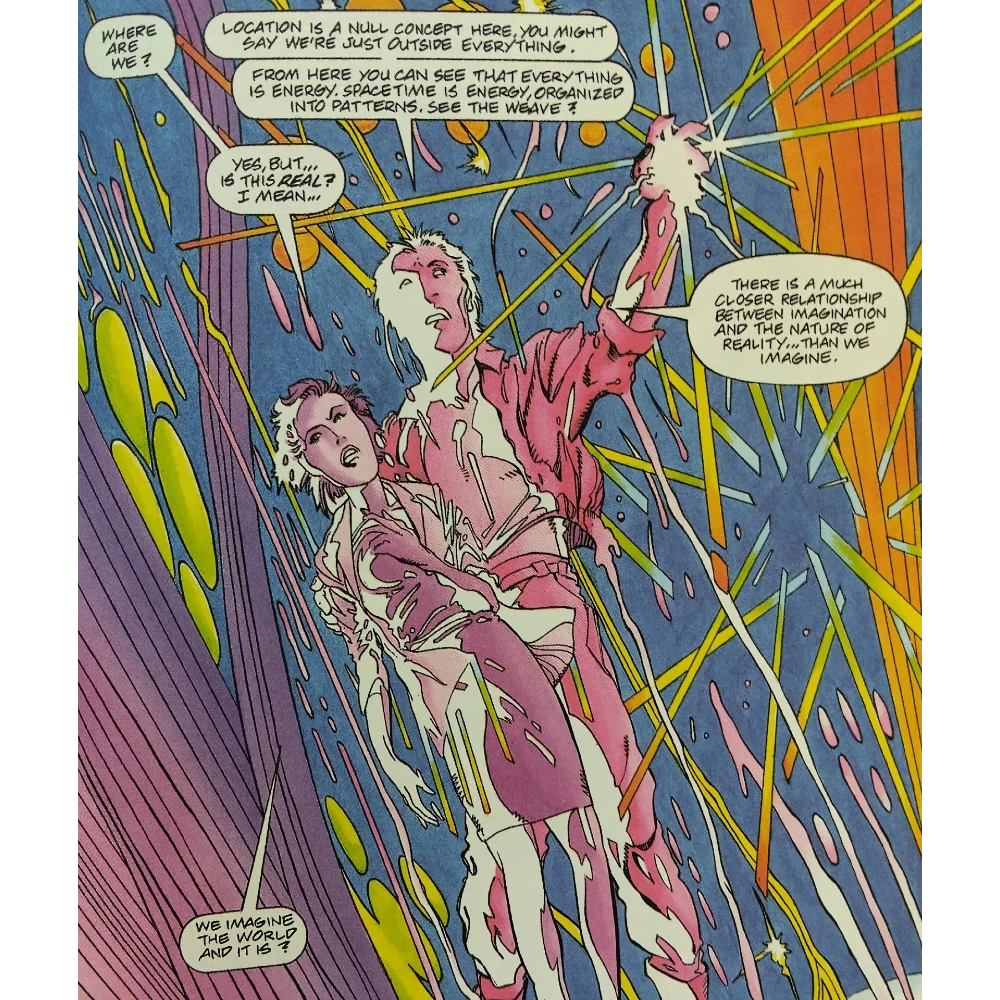
Shooter does seem, as the narrative progresses, to want to comment on Phil's waning humanity as he gains greater mastery over his abilities. This aspect isn't quite as well-written in the final few chapters, which turn Phil into a bit of a rambler as he goes on about energy and life and perception. Shooter latches on to his soapbox a little bit, and though he tries to make it a natural progression of Phil's development, he winds up making Solar a bit too wordy and preachy for my liking. Phil's a smart guy, so of course he considers certain facets of life esoterically, and I won't deny that his powers allowing him to perceive the world differently–literally, dude sees across the light spectrum–makes for an interesting character. These scenes just smack of Shooter jumping aboard some kind of hoity-toity philosophizing, which never was his strong suit.
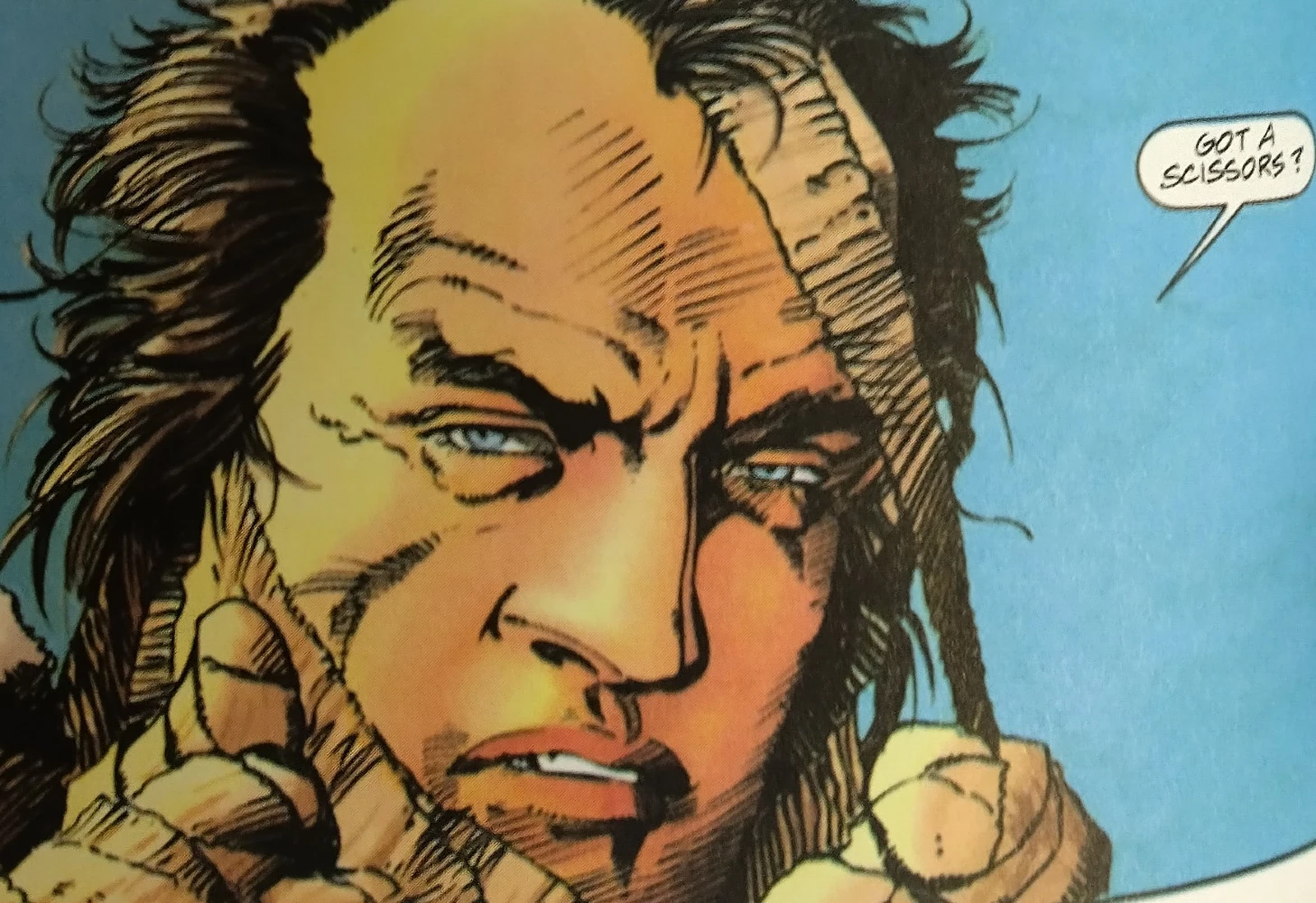
Better done are other scenes where the enhanced Phil feels stuck in a cycle of testing, retesting, and new testing. He's denied human companionship outside being poked and prodded. Instead of pursuing a relationship with the young woman he hopes will fall in love with him, he makes small talk with pillows. Even as he embraces his newfound godhood, his humanity is denied him; even as he attempts to salvage some level of human decency from the people around him, he's treated as a project. Heck, when one woman does offer affection, Phil comes to quickly realize she's acting out of the interests of others, like Delilah tricking Samson. I'd almost argue Shooter has Phil react to this denial of even basic contact and respect by more deeply embracing his abilities and becoming a tad more inhuman, though that feels more my own imposition and not an exact interpretation of Shooter's characterization.
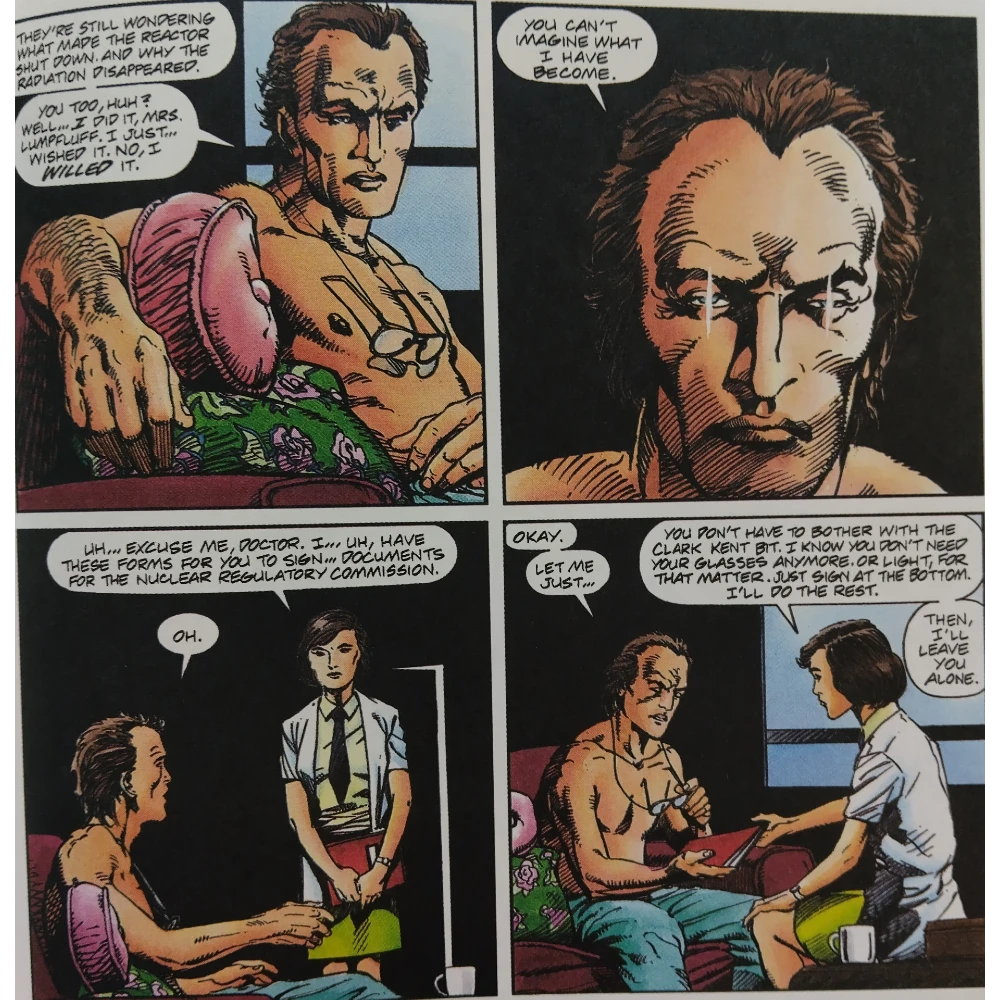
Having Barry Windsor-Smith serve as penciler gives this narrative the fantastic grounding Magnus, Robot Fighter did not possess. Magnus' sci-fi world of flying cars and rebelling robots is fantastic for what it does, but Windsor-Smith's attention to detail, to facial expressions, to fully realized settings helps the reality of this "other Valiant Universe" sink in. Small details are crucial to characters, from Windsor-Smith drawing vibrating lines around a woman's face when she seems shaking and scared, to resignation on Phil's drooped face and through his tilted head when enduring yet another test. They're minor moments across the story's scale, but they're wonderfully attentive on Windsor-Smith's behalf.
Windsor-Smith is also an inspired choice because of the interesting parallels between these issues and another story of his where an unfortunate character endures rounds of testing. Shooter is by no means making any intentional connections between Solar and the fantastic "Weapon X," but as this story began right as Windsor-Smith wrapped up his famous Wolverine arc, you can imagine him carrying over some inspiration. Diodes, wires, machines, men and women in lab coats, all give that same claustrophobic feel as Weapon X's busy rooms and corridors, and much like the man known as Logan, Phil doesn't take terribly well to the guinea pig act. As a quick aside, Windsor-Smith would later explore similar concepts in his excellent Monsters, which I have not reviewed but highly recommend. All that to say, he's a fantastic choice for a multi-part narrative seeking to explore the ramifications of scientific testing on an enhanced individual.
Having read that second volume I referenced earlier as I write this, I find Shooter and Windsor-Smith's exploration of Solar's origin here makes for a unique way to tackle introducing a new character. As this version of Solar impacts the story I'll review next, I felt these ten back-up tales strung together a successfully told origin that, while a tad snobbish-sounding at moments, lays the groundwork for what comes after in-universe. "Alpha & Omega" deserves to be read and considered in standalone fashion, meaning I'm grateful to Valiant for packaging what feels like "Part 1" of an ongoing arc in a small yet engaging collection.