Distinguished Critique: Justice League: The World's Greatest Super-Heroes Review
These graphic novels tackle actual issues through recognizable, human heroes in stories which should appeal to readers young and old
—by Nathan on May 27, 2026—
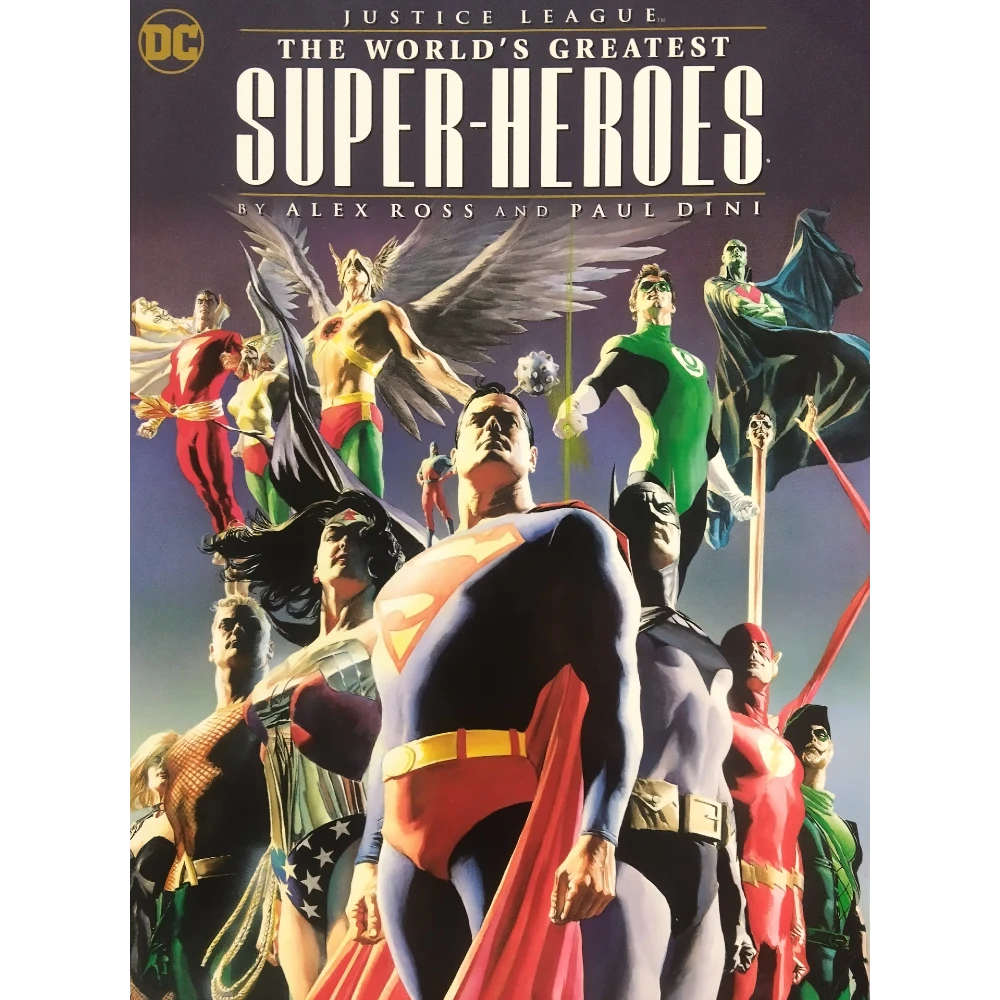
When I was a kid, either myself or my dad–likely my dad–found a handful of oversized graphic novels at our local library. Fairly thin yet taller and wider than the average issue or collection of comics, these graphic novels stared you boldly in the face, covers adorned with glossy, highly detailed faces of famed DC superheroes. Superman. Batman. Wonder Woman. And Shazam. I'm not sure if I was aware of it at the time, but these covers, and each comic's interior, was painstakingly painted by Alex Ross. I'm sure I made the connection at some point, as I first read these fairly early in my comics reading "career," along with Ross and Kurt Busiek's gorgeous Marvels limited series.
These graphic novels, produced by Ross and Paul Dini between 1999 and 2004 to celebrate each character's 60th anniversary, weren't Ross' first foray into the world of DC. Though his actual first work for the company was a painted cover for a Superman prose novel, his most well-known assignment was (and likely still is) Kingdom Come, penned by Mark Waid, which explored an alternate universe where the DC heroes we love grew old and retired, supplanted by a younger generation of violent, snot-nosed punks. Ross returned to the DC Universe proper with these oversized graphic novels–at least, I'm pretty sure these are canon–which have been collected in the volume I'm reading today. Shrunk down from their original size but still maintaining significant height and width to maintain Ross' detailed style (in other words, the volume won't fit on the shelf alongside your other trades), these graphic novels ask what happens when some of DC's most famed heroes decide to turn their attention to the problems humanity faces every day.
Justice League: The World's Greatest Super-Heroes
Writers: Paul Dini and Alex Ross
Pencilers: Alex Ross
Inkers: Alex Ross
Colorists: Alex Ross
Letterers: Paul Dini, Todd Klein, Bill Oakley
Issues: Superman: Peace on Earth, Batman: War on Crime, Shazam!: Power of Hope, Wonder Woman Spirit of Truth, JLA: Secret Origins, JLA: Liberty and Justice graphic novels
Publication Dates: January 1999, November 1999, November 2000, November 2001, January 2003, January 2004
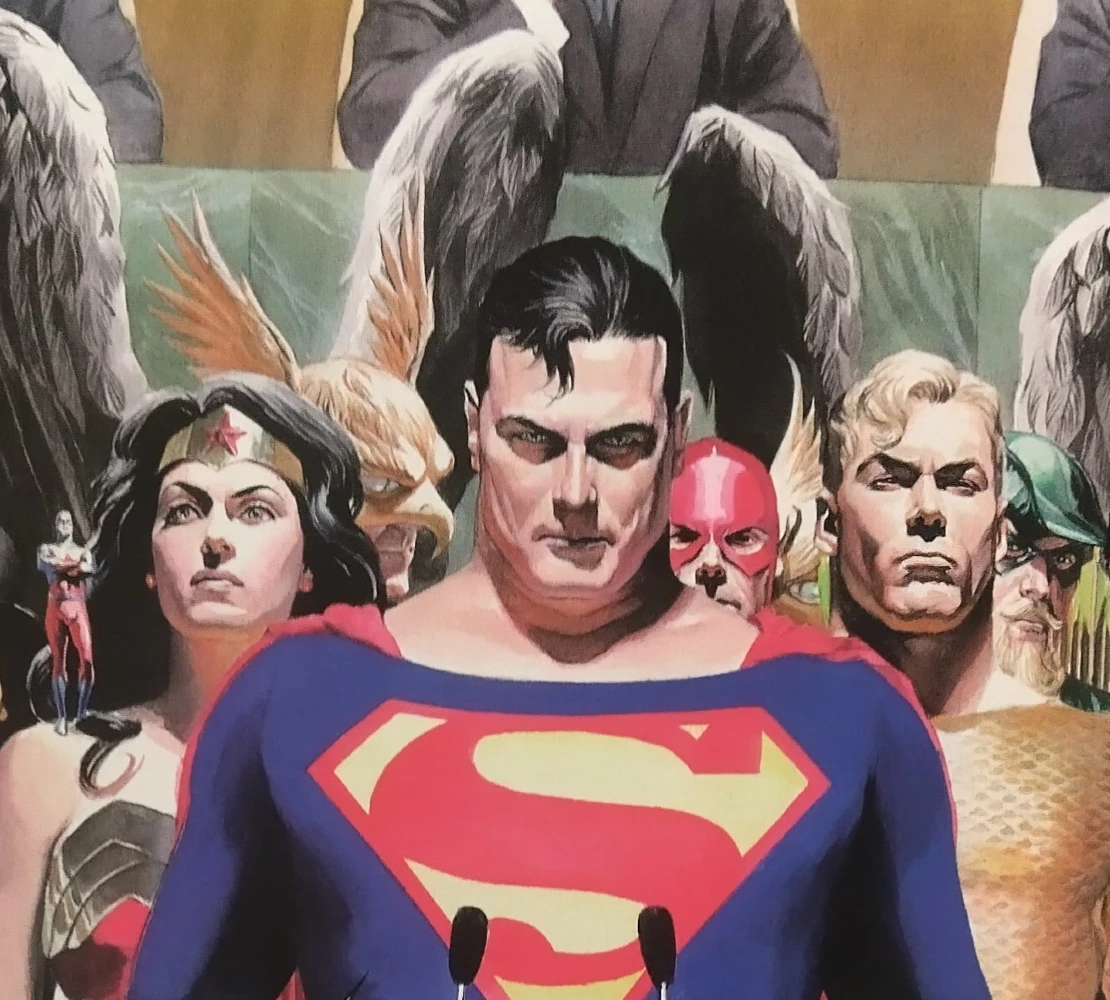
Though I may take umbrage with this collection's subtitle (sue me, I'm a Marvel guy at heart), the members of the Justice League, individually and collectively, do prove their greatness in this series of graphic novels. Not by defeating Starro the Conqueror or Vandal Savage or by preventing alien invasions. Enemies are confronted, but these adversaries are hunger, disease, gentrification. The only invasion found is bacterial, and okay, it is alien in nature, but instead of little green men, it's a viral infection threatening to spread across the globe (still a very timely threat in our post-pandemic world). Poison Ivy, Catwoman, and the Penguin pop up at one point but only for a panel or two each. Otherwise, this collection is free of costumed criminals, instead focusing its energies on how these larger-than-life heroes are a benefit to reality…though not perfectly.
I tend to refer to the themes found in these kinds of stories as "commentary" in my reviews, generally using that phrase to remark on any narrative which has an underlying message that is applicable in some way to our existence, whether it's subtle or direct. I often find stories struggle to maintain balance, favoring pushing a message over telling a genuine story. Allegory and subtlety tend to be my favorite tools in a writer's belt, exchanging blatant proselytizing for dramatic emotions and characterization. Considering a recently read example, Garth Ennis doesn't preach the evils of smoking in his "Dangerous Habits" arc in Hellblazer; he instead tells you John Constantine's story, the price paid for those titular habits, and the desperation driving him to undo, if possible, the damage done. Nowhere does Ennis scream at the reader to either quit smoking or never take it up. He doesn't need to.
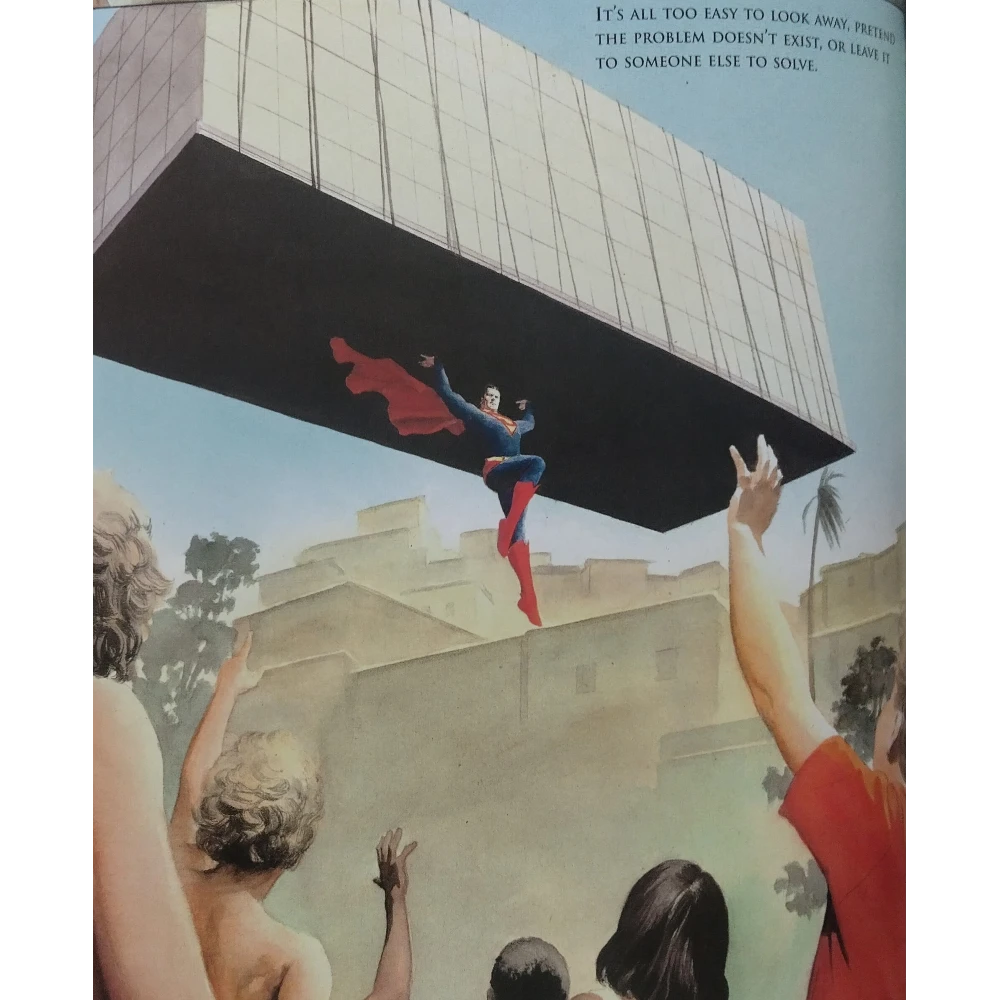
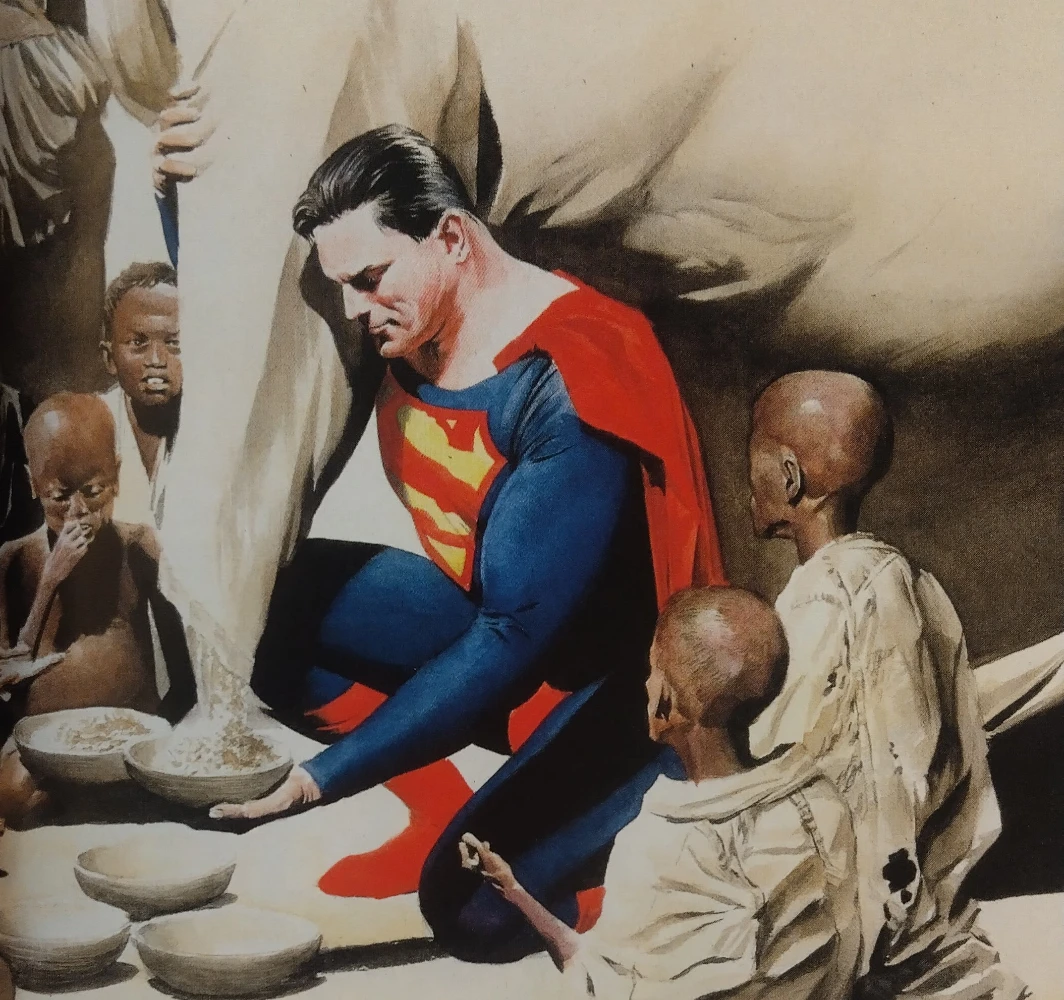
The graphic novels Dini and Ross develop here, though a tad more pointed, work on a similar level. Dini recognizes, in places, that he's walking a tightrope between creating strong emotional resonance and becoming a bit too real. Anytime a non-American country is involved, particularly one with selfish aims, they go unnamed. You could use visual references from Ross' art to make your own inferences, but when Superman encounters a hostile general when he tries bringing food to a starving country, or when Wonder Woman faces resistance when she attempts to free hostages, the emphasis is less on indicating a real world counterpart and more on the nature of evil itself. The problems people create for each other and the efforts done by others to stem those problems are where our focus should lie.
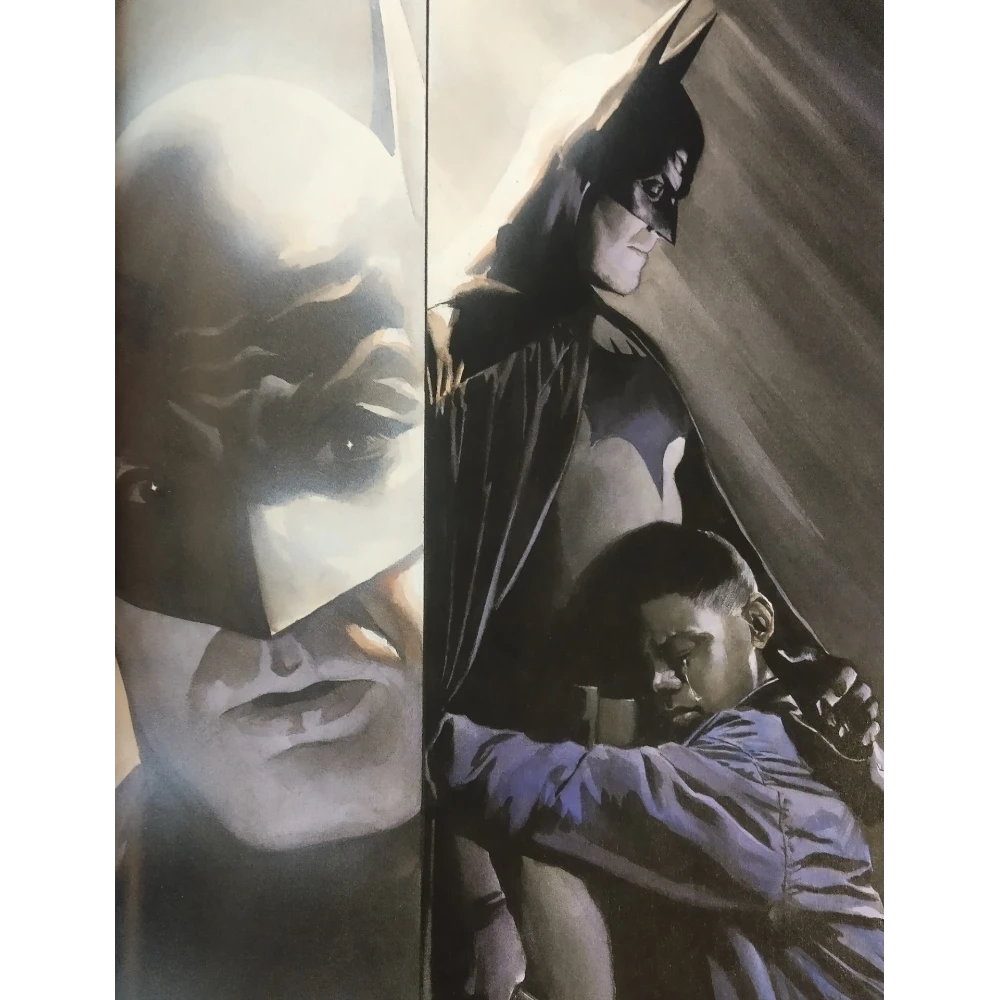
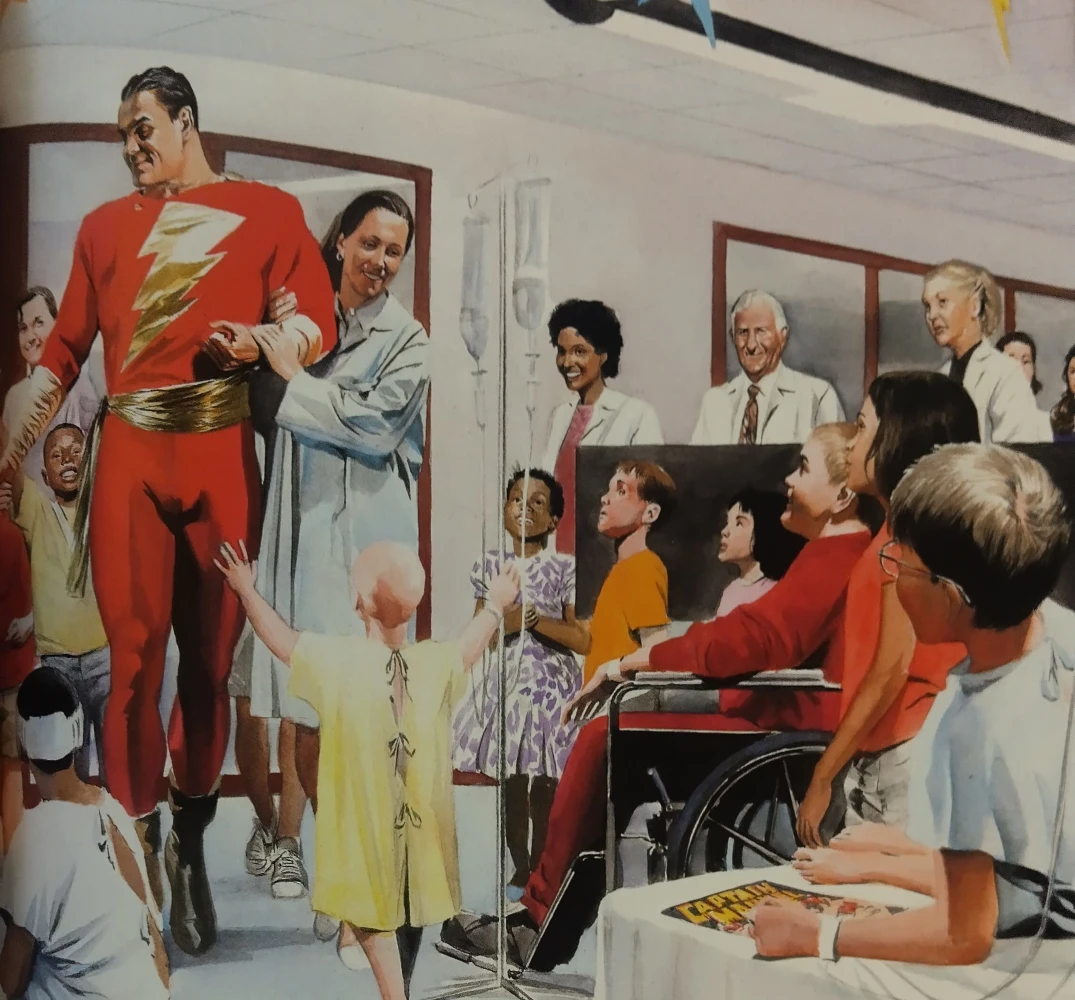
There's no overarching plot here, and each graphic novel is a standalone indictment of some kind of injustice. Dini and Ross narrow the scope to specific heroes tackling particular problems–for Superman, it's global hunger; for Batman, it's the effects of crime on the impoverished; for Wonder Woman, it's human rights; for Shazam, it's childhood illness and abuse; and for the Justice League, it's that virus. Dini is smart in selecting individual problems for individual heroes to face, as they each relate to our heroes in some way. Superman and Wonder Woman have global reach and attack global issues, while Shazam is a young boy at heart and chooses to care for children who are much like Billy Batson.
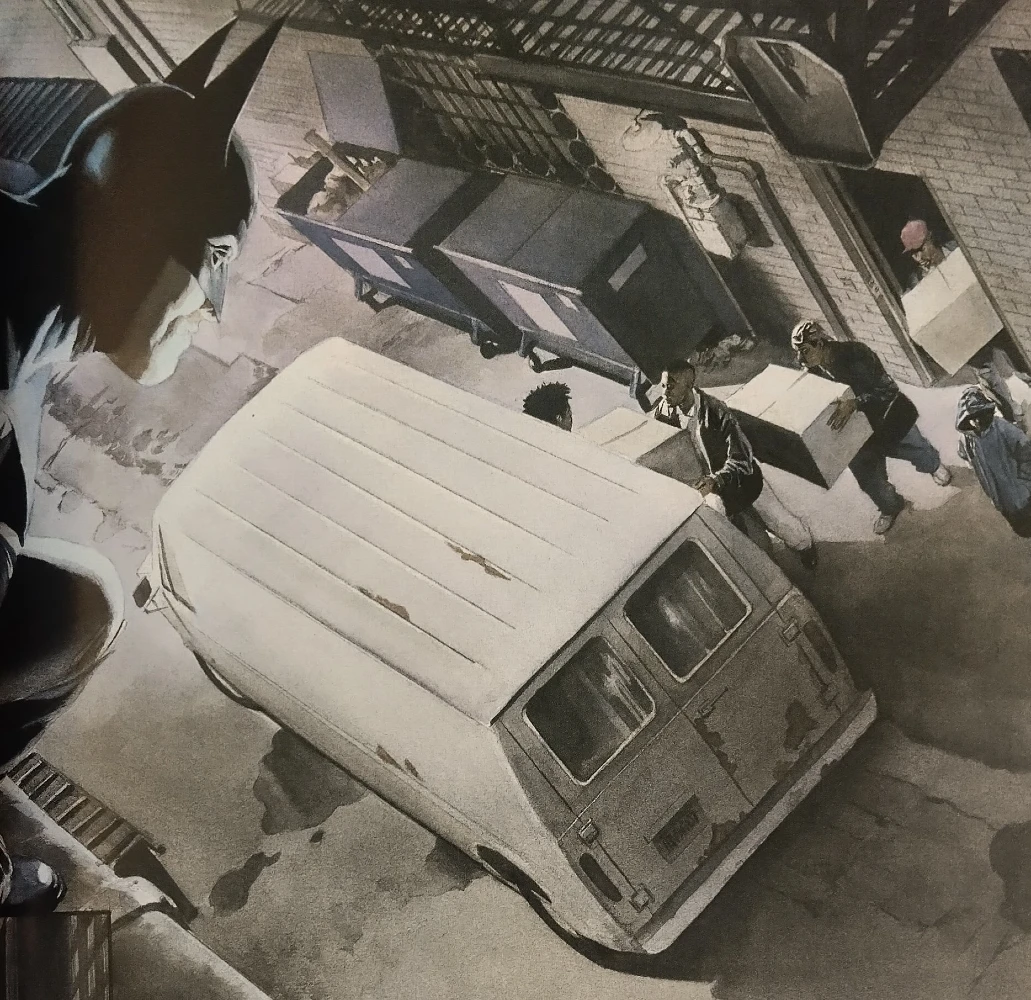
Such writing allows Dini to grasp the heart of each character, and while you won't discover any earth-shattering revelations about your favorite DC heroes, you'll hopefully recognize the core traits which are on full display. We're not given a bitter Superman forced to snap necks to save people; we're given a Superman who uses his prodigious strength to singlehandedly deliver shipping crates of food all over the globe. We're given a Shazam who, even as an adult, is still a young man–Billy can effectively approach issues the Big Red Cheese's powers cannot, like befriending children who need a peer instead of an adult, but he still wrestles with a bit of youthful immaturity. Bruce Wayne grapples with the weight of his parents' loss as he sees the death of another couple and its impact on their son. Dini keeps these characters close to who they've always been–their motivations, their origins, their personalities.
Importantly, Dini and Ross make certain to remind us their heroes are fallible, regardless of their incredible abilities. Wonder Woman finds herself working around political red tape, and an early attempt to save a protester from an oncoming tank is met with fear towards her otherworldly strength. Superman encounters resistance when trying to feed the world, discovering this may be too large a problem for even the Man of Steel to overcome. Shazam sits by a dying child's bedside as they pass away, clearly affected by witnessing how death can take even the youngest among us. Growth happens in these moments, as Diana alters her strategy, Clark realizes even his limits, and Billy faces an all-too real side of life at an age younger than he should, even if he assumes the physique of a man.

Failure, defeat, loss are integral to these stories. I've said it before: comic book narratives which provide a wholesale solution to an actual real world problem aren't nearly as effective as stories which focus on the fight. If The Death of Captain Marvel ended with Mar-Vell's cancer cured, you suddenly have a solution for that problem that (1. eliminates that kind of story from the Marvel Universe and (2. represents a disconnect between that universe and ours, as we have no such cure. The impact is lost. Superman eradicating hunger, Batman wiping out crime, Wonder Woman ending all human rights violations are noble pursuits, but the problems are just too big, complicated, and systemic for even a superhero to resolve.
This is what adds a layer to depth to graphic novels which feel fairly simple on the surface. Maybe it's because I read these as a kid, maybe it's because Ross creates sweeping images with touches of text from Dini, but I've always applied a "picture book" quality to these graphic novels. Both children and adults could appreciate these narratives–they're not written in a manner which would be too sophisticated for kids to understand, yet they're not dumbed down for a slightly more mature audience. Dini plays up the empathy inherent in each of these stories, for the starving, for sick and wounded kids, for women, for plague-stricken societies, and by staying with those central conflicts, he prevents himself from getting entangled in morally gray areas.
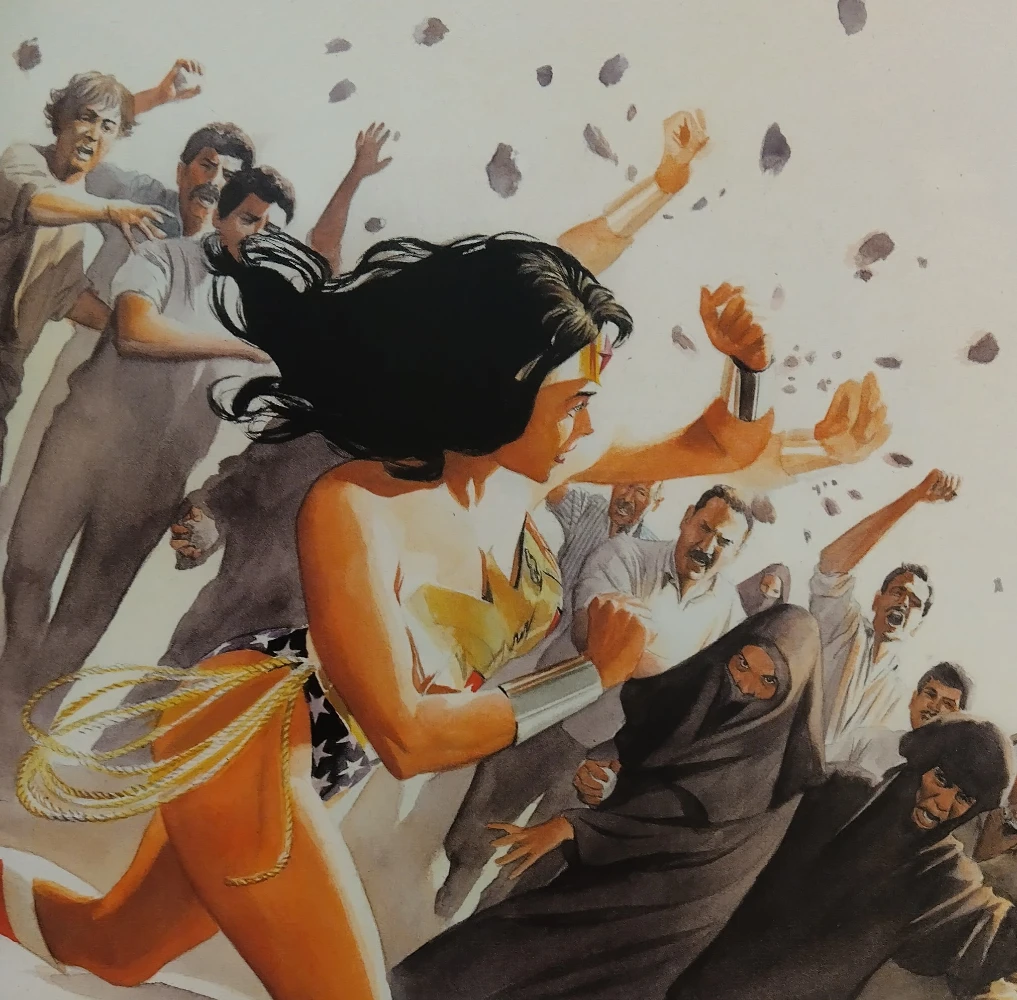
Yet a more mature reader can see the deeper realities Dini indicates. A kid may see Shazam confront a father who hurt his son; an adult could understand the implications of further abuse. A kid can feel sympathy for a hungry country; an adult can understand the systemic problems of corruption which keep cruel people in powerful positions that deny their own people basic human rights. A kid can delight at Wonder Woman freeing hostages; an adult can more perfectly recognize the political issues with threatening another country's sovereignty. Again, Dini doesn't get too deep into the details to undermine his stories. There's just enough to tread that balance beam of sophistication to appeal to a broader audience.
As nicely as Dini's storytelling is, Ross, as in much of his other comic contributions, is the real star of the volume. Without him, these stories would lack a certain emotional punch. If you're going to tackle genuine issues, it feels necessary to apply as realistic art as you can. He's never confined to your standard panel layout, choosing instead to express himself as much as he can without constraints. Full-page images and double-page spreads dominate the volume, allowing Ross to wrench every possible detail he can from musculature, faces, and settings. As inker and colorist, he's incredibly adaptable to his subject matter–Batman's world is awash with muted colors during nighttime scenes, while Superman works best shining in the sun and the Justice League provides punches of color on every page. As Dini draws out core characteristics, so does Ross draw out the most vibrant visuals.
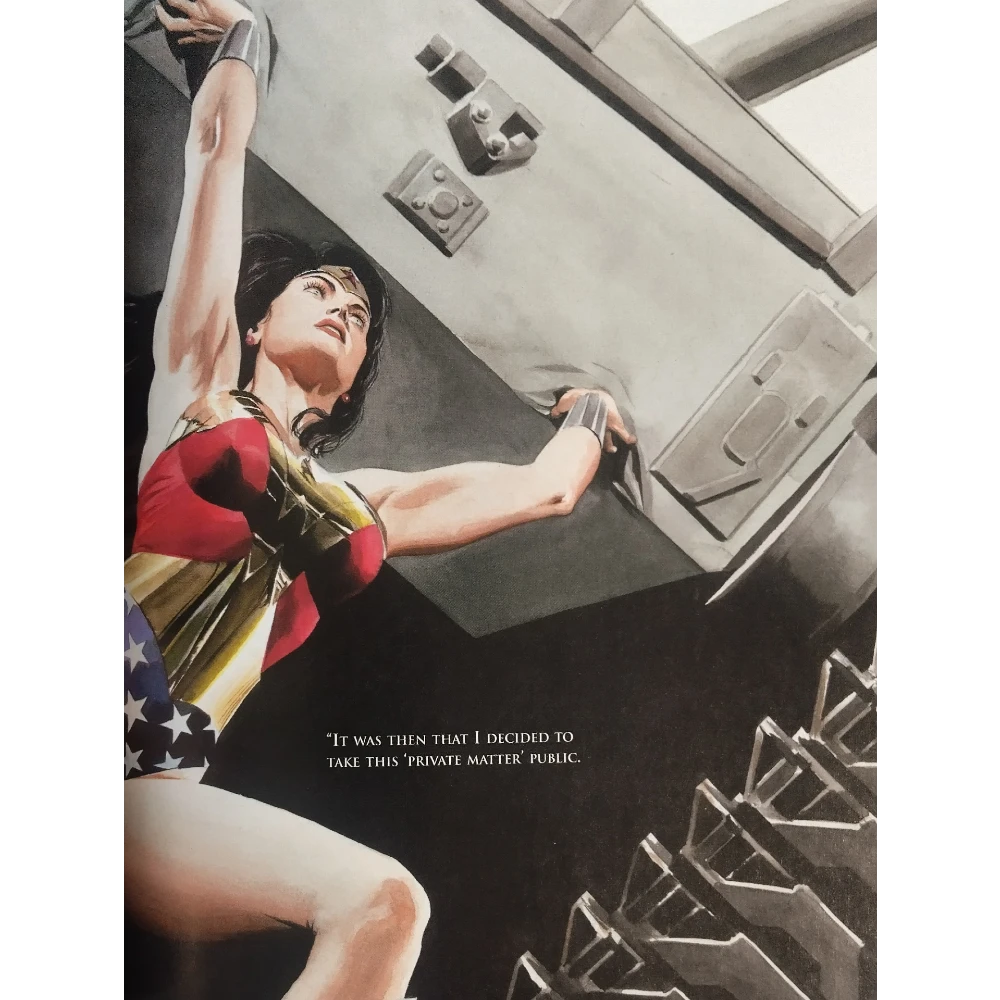
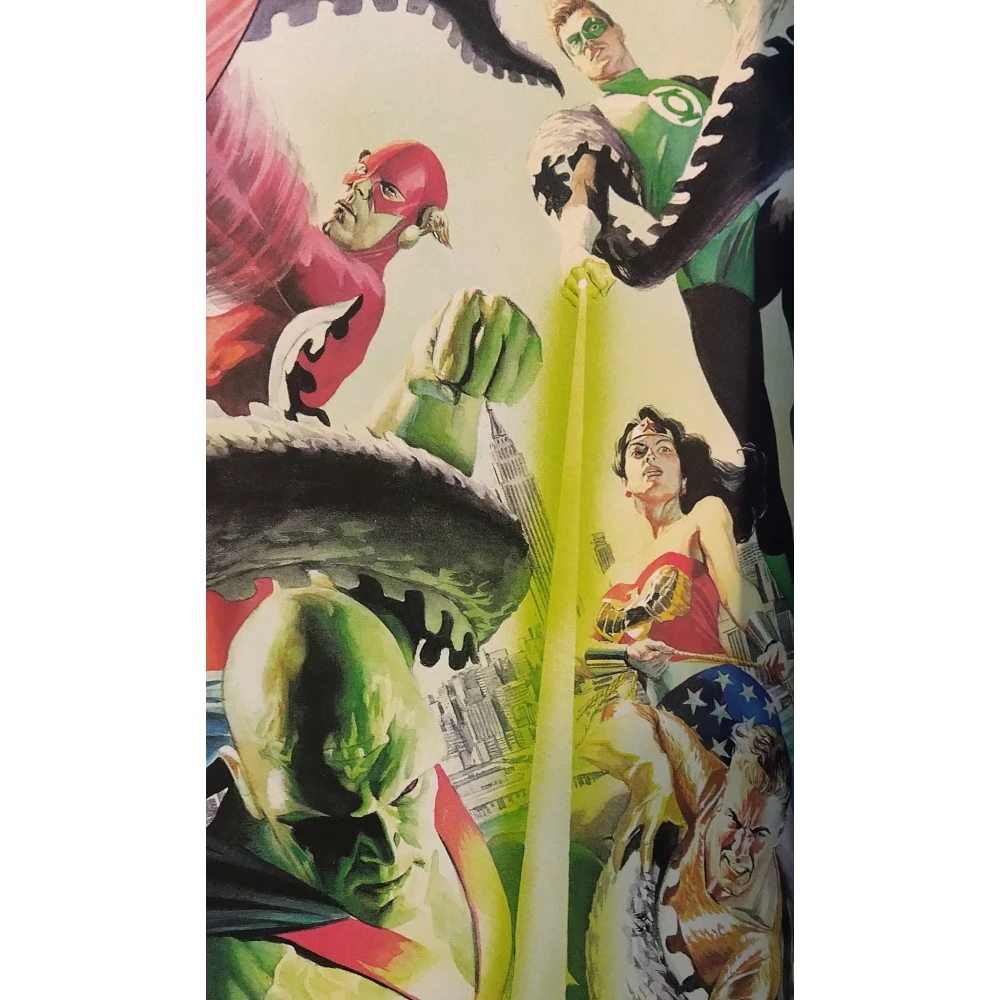
In between the graphic novels are double-page spreads chronicling the origins of not only our four headlining heroes but other DC icons such as the Flash, Green Lantern, Green Arrow, Hawkman and Hawkgirl, and the Atom. I recall these from my childhood as well, and I remember them visually shaping my perception of those characters. Dini and Ross know these heroes well enough to encapsulate them in merely two pages, to say nothing of the actions they take to showcase our principal players across these graphic novels. Recognizable characters are asked to address the problems our world faces, and they strive to find solutions. Their efforts are imperfect, as are all of ours. But these heroes, according to Dini and Ross, aren't here to solve all our problems. They're here to jumpstart hope, inspire people to actions beyond what any fictional comic character could take.