Distinguished Critique: The New Teen Titans (vol. 2) Review
These issues tell titanic tales balanced between teenage tension and artful adventure
—by Nathan on August 15, 2026—
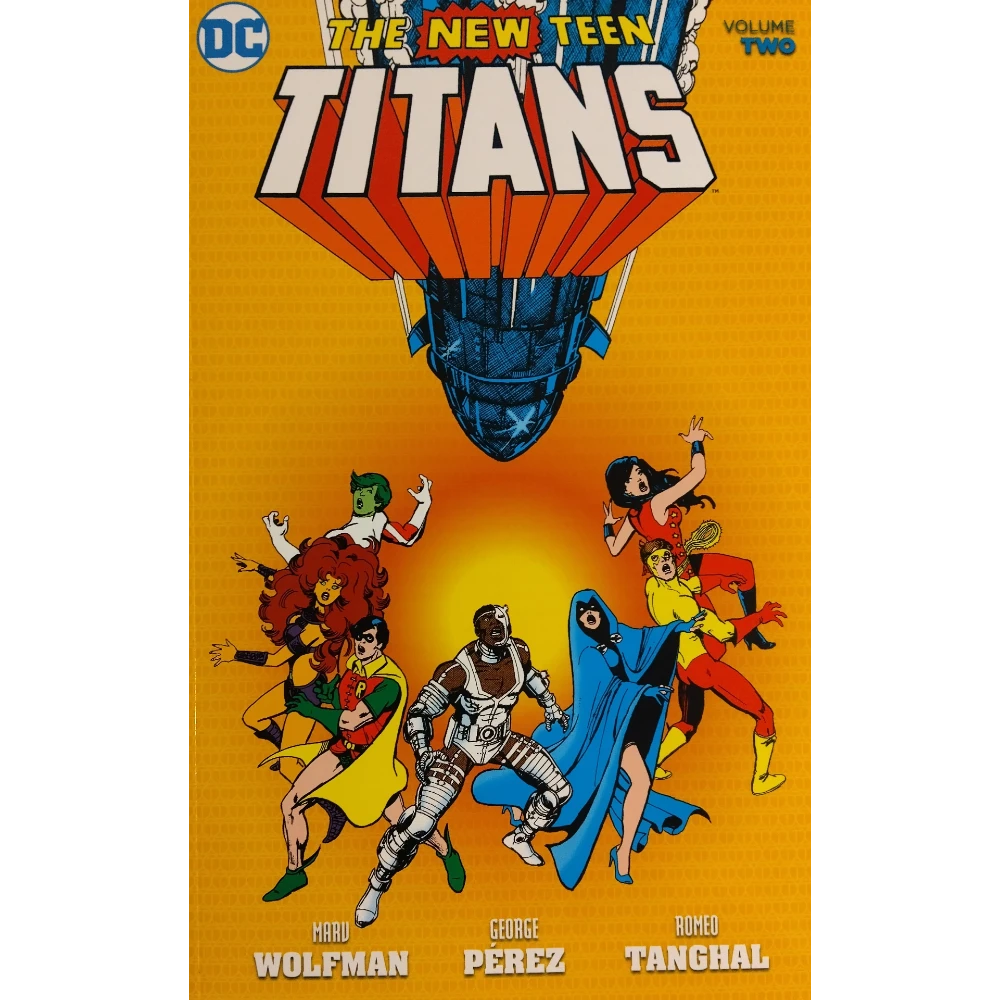
In early 2025, I reviewed the first volume collecting the initial issues of Marv Wolfman and George Perez's celebrated New Teen Titans run. Giving new life to a team first appearing in the 60s, Wolfman and Perez charged into the 80s with a series starring a young cast whose personalities shaped their exploits as much as their powers. Familial discord, budding romance, schisms with personal identity…all traits which breathed an air of humanity into the lives of our adolescent adventurers that made a formerly failing fraternity of friends fan-favorites.
And, no, I did not just start talking about Chris Claremont's Uncanny X-Men…though that's partially the reason why we're here today.
In the early 80s, as Claremont was making his name with Dave Cockrum and John Byrne and Wolfman and Perez established themselves together, someone had the brilliant idea to combine both super-teams. For quality storytelling purposes, naturally. Nothing to do with the fact that, at one point, each team represented their respective publisher's best-selling title. Thus, the obnoxiously long-named "Marvel and DC Present Featuring the Uncanny X-Men and the New Teen Titans #1" was born! Because I reviewed said crossover fairly recently and then dove into a different X-Men crossover featuring Claremont as a writer, I thought it only fair to balance the scales on the DC side. It's been a while since I last explored Wolfman and Perez's work, so forgive me some forgetfulness as we catch up on DC's premiere teenage heroes (in the 20th century, at least).
The New Teen Titans (vol. 2)
Writer: Marv Wolfman
Penciler: George Perez
Inker: Romeo Tanghal
Colorist: Adrienne Roy
Letterers: Ben Oda and John Costanza
Issues: New Teen Titans #9-16
Publication Dates: July 1981-February 1982
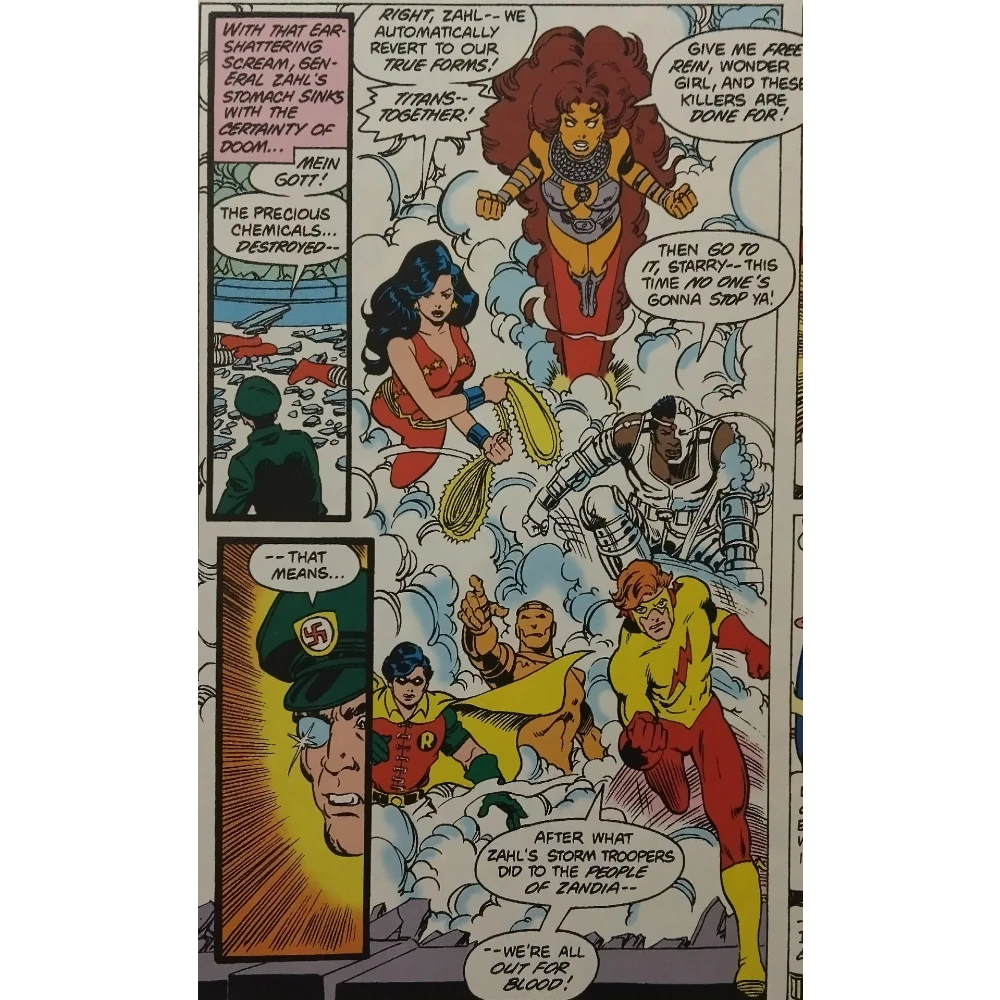
I previously discussed, at length, one of Wolfman and Perez's central themes in the first New Teen Titans volume: our heroes, to some degree, have been affected by their upbringing. The theme wasn't tethered to every Titan (as we shall see shades of that theme become prominent for others here), but it was apparent enough. Robin, separating himself from Bruce Wayne and striking out on his own as a hero; Raven, physically fighting her father Trigon; Starfire, once given over by her father as a slave to another alien race. Characters wear the scars distributed, unknowingly or not, by their forebears.
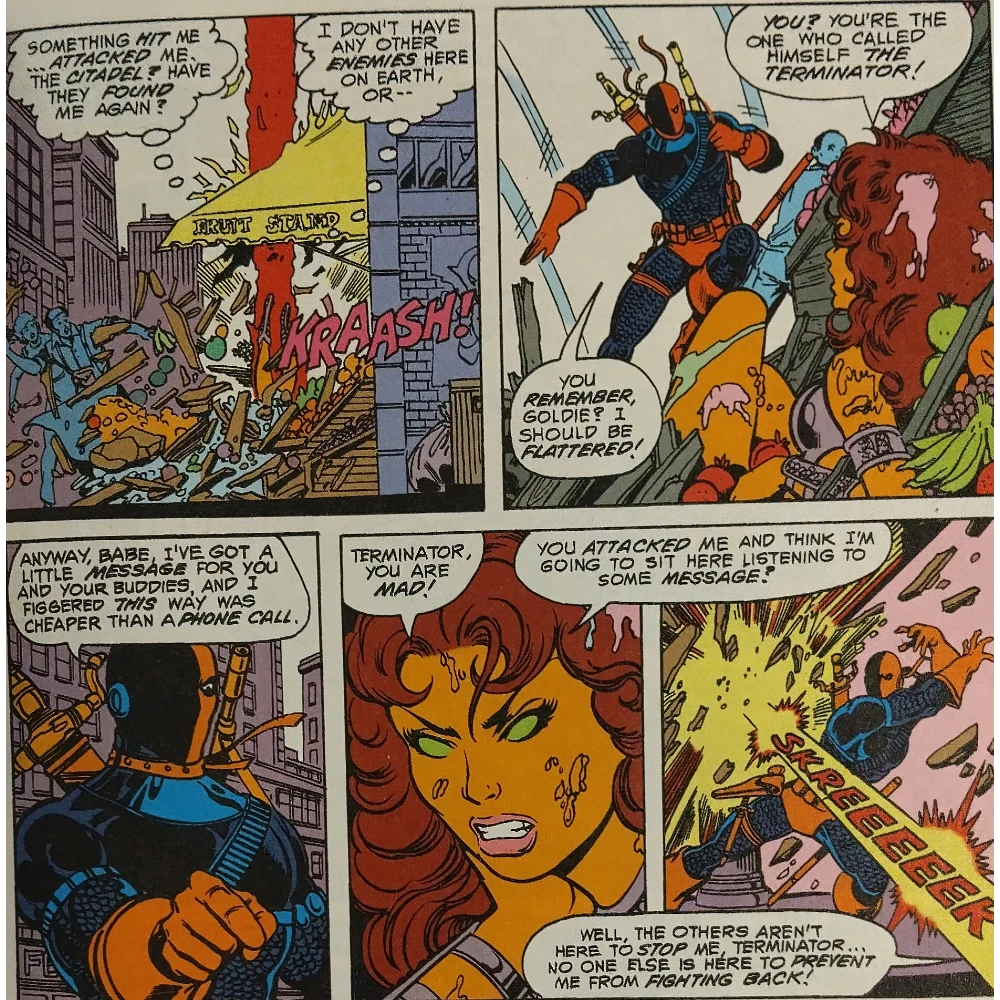
As this was not a series written "for the trade," as the lingo goes, we can expect that theme to bleed over into this volume. That parental drama or trauma, or even just the effects (for good or ill, but mostly ill) of familial tension, certainly play into these issues. Wolfman and Perez's longest, most engaging arc, featuring Changeling (perhaps better known by modern audiences as "Beast Boy"), sees Gar Logan's alter ego in search of his estranged stepfather, Steve Dayton, a former associate of the seemingly deceased Doom Patrol. Wonder Girl, on a visit with the team to Paradise Island, is pulled into an alliance with her mother Hippolyta's old foes, the mythological Titans (the ones thousands of years old, to distinguish them from the pubescents), themselves the parents of the Greek pantheon. Even Deathstroke the Terminator, as a father, carries a deep grudge against the (pubescent) Titans, holding them responsible for the death of his son Grant in an earlier issue. It seems downright impossible to create a series about youthful heroes without having their elders somehow have an impact.
But that isn't the primary theme we find scuttling through these pages.
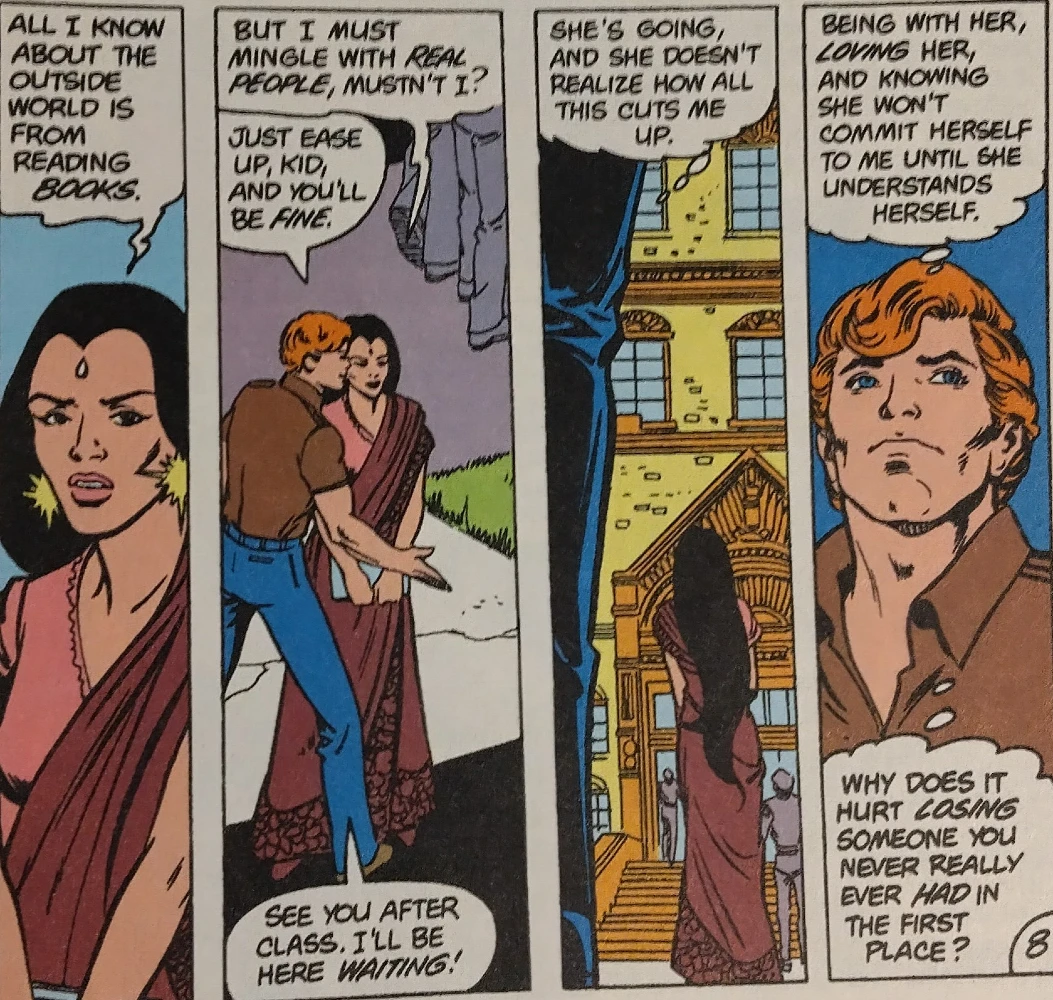
Having established their central cast–Robin, Starfire, Cyborg, Changeling, Raven, Kid Flash, and Wonder Girl–in their inaugural issues, Wolfman and Perez are now building upon the foundation, diving deeper into our characters and providing them opportunities to explore the tensions of adolescence. Our Teen Titans spend most of these pages as superheroes, for sure, but they're also budding young adults. Raven attends college, her relative inexperience with our planet (tends to happen when you're raised in a parallel dimension after your mother secrets you away from your demon dad) fascinating and flummoxing members of the student body. Starfire, despite romantic tensions with team leader Robin, dates a young man while pursuing modeling gigs. Wonder Girl seeks comfort in the arms of longtime boyfriend Terry Long after one particularly harrowing adventure. Despite the elements which make these Titans more than human–the cybernetics, the green skin, the alien heritage, the magic–they still are, very much, people. Just a little more than kids.
Wolfman and Perez find their strongest issues and moments happen in the quieter sequences, where that humanity can come to the fore. Cyborg helps lead a classroom of physically impaired children taught by his friend Sarah Simms, connecting to the kids as someone continuing to learn his own special faculties. Donna and Terry have lunch as Donna wrestles with experiencing mind control at the hands of one of those thousands-of-years-old Titans. Kid Flash wrestles with his burgeoning interest in Raven, which he knows is originally from a spell she cast…but is that all it is? Inner thoughts, tensions between characters, and palpable emotions help drive the moments set in-between bouts of action.
Team dynamics, naturally, play a significant part in these stories, beyond developing romances. Other relationships are found, such as Beast Boy and Cyborg's growing friendship or Starfire and Wonder Girl sharing an apartment. Some of these alliances, such as Robin and Kid Flash, have been around for a while, giving certain team-ups a more natural bent to them. Robin chatting with Wonder Girl, for example, just feels natural, as they, along with Wally (and Aqualad), were the original Titans. But Wolfman emphasizes the friendships he wants to watch develop, especially among his newer characters. He wants you to like Cyborg and Beast Boy, so he has them buddy-up, even explore certain insecurities about physical characteristics in relation to one another. He allows Raven a bit more humanity than in other issues as she works to shape herself as someone other than a magical manipulator. The somewhat ignorant Starfire is allowed moments of agency as she continues adapting to Earth culture and customs.
Our young heroes, though growing in experience, can lean into their relative youthfulness, in ways which feel natural and ways which don't. Wolfman's favorite flaw to emphasize, it quickly becomes apparent, is hot-headedness, with a dash of bloodlust. Anger becomes the default reaction for multiple characters at several points in these issues, whether its Starfire giving into her race's warrior rage, Cyborg threatening to murder Deathstroke, or Changeling taking on increasingly animalistic forms to pursue a foe that, it's implied, he fully intends on killing. The anger doesn't bother me as much as the murderousness. From a narrative perspective, Wolfman actually provides Changeling with a fairly solid reason for his vengeful bent, with the suggestion he's giving more fully into his animal abilities. Yet for others, such as Cyborg, the bloodlust is awkwardly reactive, not providing much in the way of character dynamics outside of asserting our heroes' bent towards strong emotions. I don't disagree with that bent (having been a teenager myself); I just think Wolfman relies on it as a fallback too often.
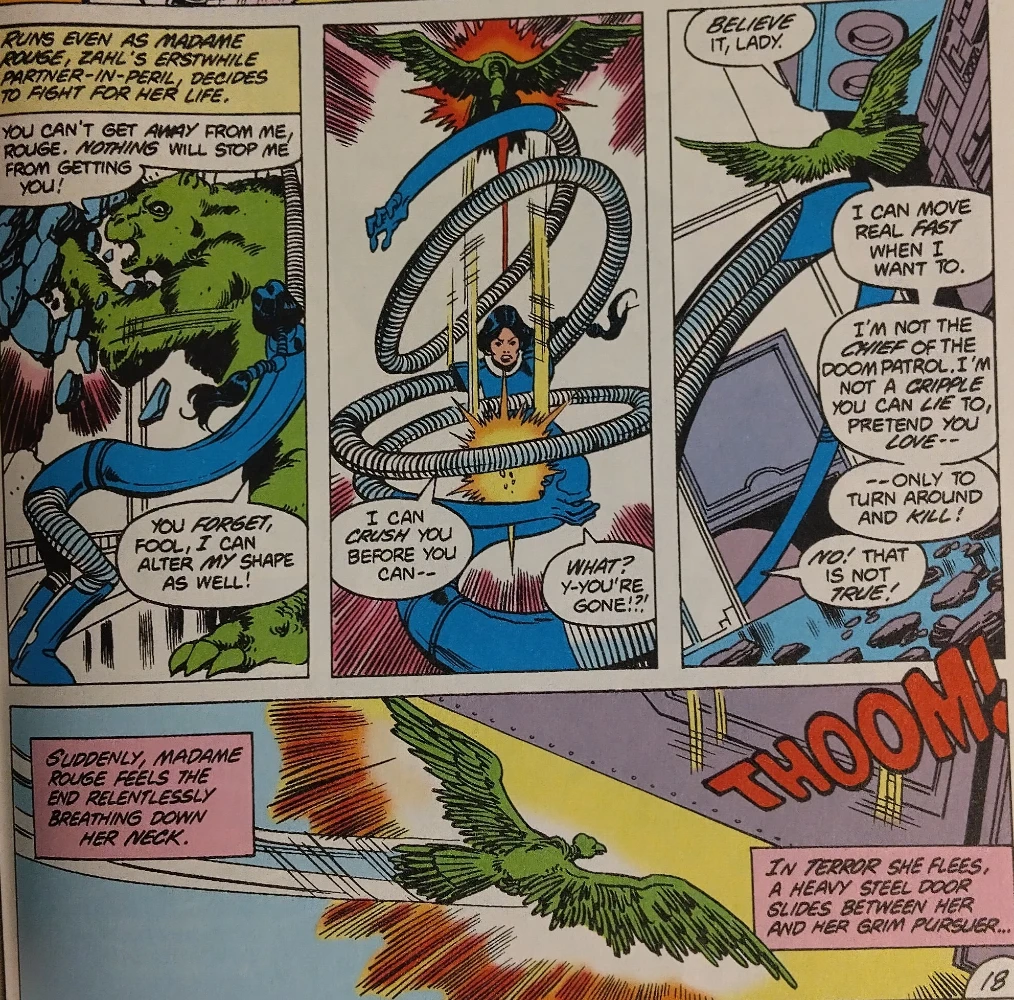
"Dynamic" is the operative word for most of the issues, as our heroes find themselves on a plethora of unique, spirited adventures that, though standalone in nature, nicely feed into one another. Wolfman and Perez are telling fairly short tales here, generally an issue or two in length. A two-part tale featuring the return of Deathstroke steps aside for the Paradise Island tale, which leads into the three-issue "Changeling searches for Steve Dayton" arc. Wolfman seeds cliffhangers where he can, allowing these tales to flow into each other–the Deathstroke arc creates a need for the Titans to visit Paradise Island, for example, while the Island adventure organically gives way to Changeling's search with a brief epilogue. Such writing delivers consistent tension with the promise that the next issue will follow up and provide further exploration.
While each arc feels standalone, the effects ripple outward. Wolfman isn't as direct as Claremont was in intentionally seeding larger narratives he intends to purposefully unspool later in the series. The Titans writer is much subtler in his approach, and as fond as I am of Claremont's work, I found Wolfman could more easily surprise the reader. A member of the terrorist organization H.I.V.E., humiliated by Deathstroke, pops up for vengeance later in a completely unexpected yet welcome fashion. When Changeling wonders about his stepfather in this volume's first issue, you don't anticipate the reference transforming into a hunt for the man (especially as it's given without any hint that Changeling will take any action steps), and yet it does. We're often kept on our toes, unsure yet looking forward to what our creators have planned and seeing how each story shapes the next one.
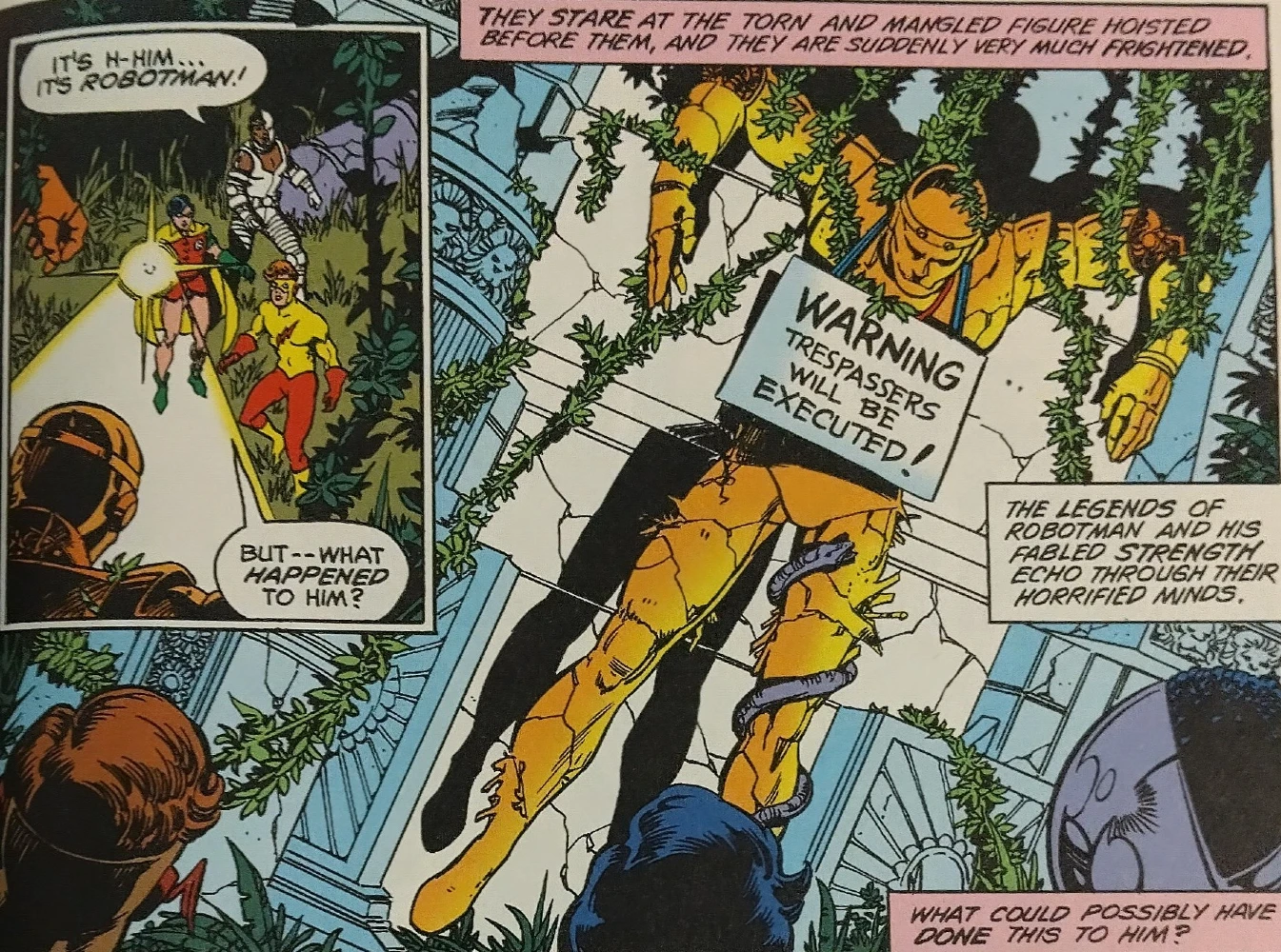
Wolfman and Perez find that sweet spot in these issues pursued and emulated by so many other comics: the fine line between superhuman efforts and human living. The line can be surprisingly difficult to tread, particularly in team comics. Like contemporaries such as Claremont and Paul Levitz, Wolfman and Perez travel that line carefully, knowing the precipice yawning beneath them should they lean too far one way or the other. On one side, you get an inundation of costumed capers without much humanity. On the other, you get a slice-of-life narrative which sets superheroics to the side. New Teen Titans knows how to offer both in proper amounts, creating a dividing line between the hero and the human when necessary but smartly understanding when the best course of action is to blend both elements together in a fairly seamless manner.