Crossover Capers: Marvel and DC Present Featuring the Uncanny X-Men and the New Teen Titans #1 Review (DC vs. Marvel Omnibus, Part 4)
This issue takes the shared universe concept to heart with a great ensemble cast and many creative moments
—by Nathan on August 7, 2026—
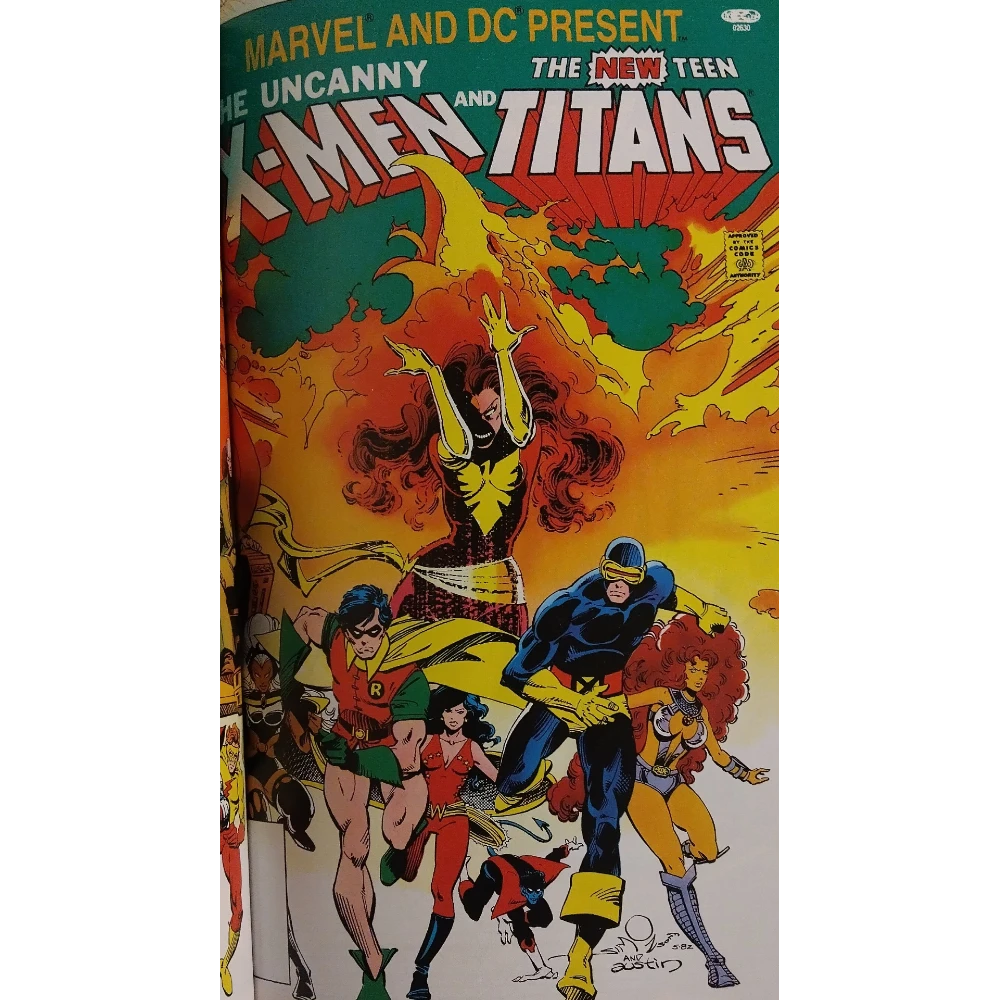
One of the most important aspects of the last DC/Marvel crossover we reviewed, an issue pitting the Hulk against Batman, was that writer Len Wein was familiar with both characters. Awkwardly as the pairing between DC's Dark Knight Detective and Marvel's Jade Giant may have sounded from a pure power scaling perspective, Wein's understanding of both characters encouraged him to use both. The results are entertaining enough, most of Wein and artist José Luis García-López's energies and efforts poured into determining how best to stage fair, fun fights between the title characters.
For this next crossover, originally published a few months after Wein and García-López's, we get the benefit of Chris Claremont, who had been deeply invested in one half of this issue's starring teams: the Uncanny X-Men. Though Claremont, as far as I am aware, never penned the adventures of this story's other half, DC's Teen Titans, he was aware of how to write a group of somewhat younger characters working their ways through the complex vagaries of adulthood. In my mind, the bones of this crossover just make more sense: you have two bestselling (at the time) superhero teams composed of relatively young characters sharing the page, facing dreaded cosmic threats to their respective universes.
Though, for this story, that's just "universe." Welcome back to Earth-7642, where we encounter a narrative which takes the crossover concept beyond face value, delivering a story which genuinely makes you believe these characters could exist in the same space.
"Apokolips…Now"
Writer: Chris Claremont
Penciler: Walt Simonson
Inker: Terry Austin
Colorist: Glynis Wein
Letterer: Tom Orzechowski
Issue: Marvel and DC Present Featuring the Uncanny X-Men and the New Teen Titans #1
Publication Date: January 1982
My primary complaint across a couple of these crossover classics has been, perhaps, an inability, maybe an unwillingness, to plumb the depths of the shared universe concept. I feel Jim Shooter has served as the best example of exploring the idea so far, having Spider-Man and Superman switch cities and newspaper employers for a time, exploring the ramifications of different environments and cast members on their characters.
Claremont still takes the notion and blows it out of the briny deep.
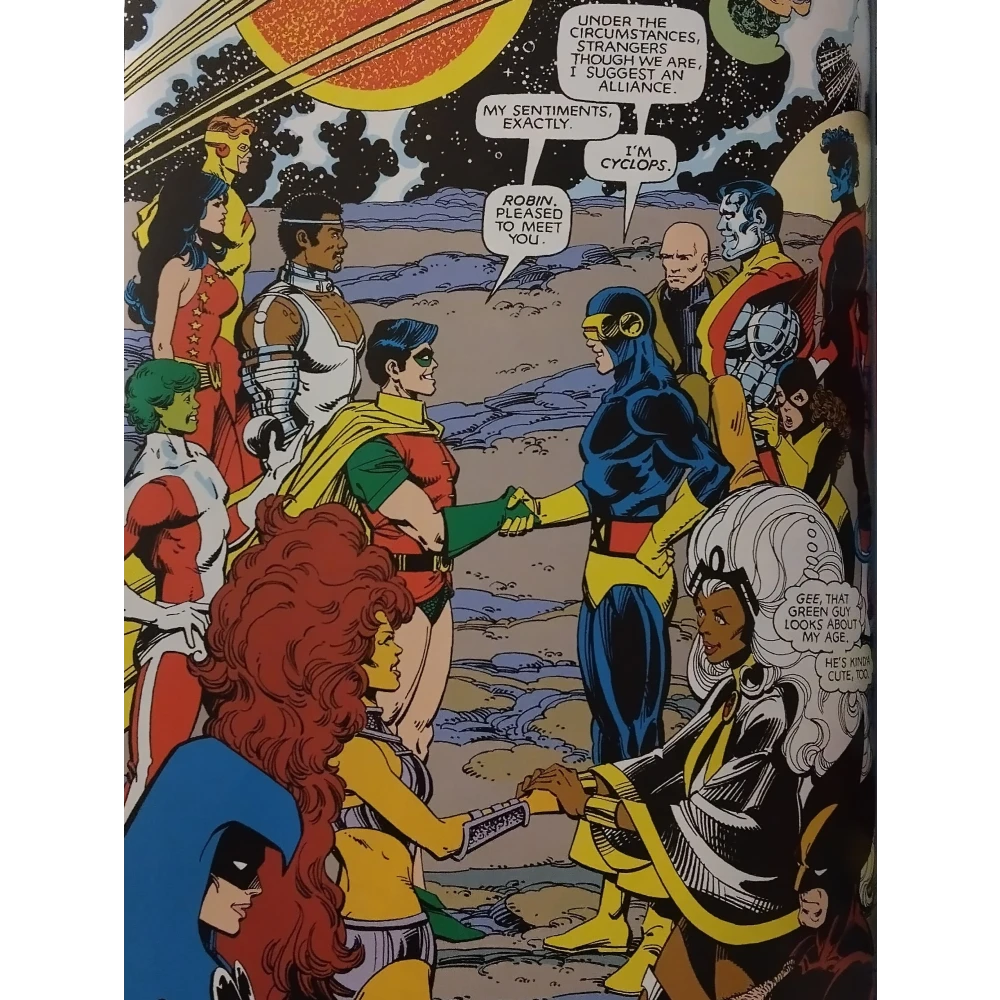
What works so well in this issue, making this crossover my favorite of the ones I've read so far, is how naturally our two teams feel inhabiting the same space. Claremont doesn't just have characters switch places or have heroes brush against each other or only team-up to fight a villain; his entire story is based on the shared universe concept, drawing in elements from both teams' main universe continuities and letting those pieces influence the story.
I think it can be argued that Marv Wolfman and George Perez's success on New Teen Titans can be owed, in part, to Claremont's success on Uncanny X-Men with Dave Cockrum and John Byrne. Wolfman and Perez took the blueprint Claremont, Cockrum, and Byrne created, crafting a soap opera-esque epic with interwoven plots and relatable characters whose relationships with one another were just as important and impactful as their own personal trajectories. Claremont, in a space where he can use both teams, isn't shy about utilizing those same tactics here; though no one character is given a deeply definitive arc, very human and relatable elements are sewn across the issue as characters complement each other.
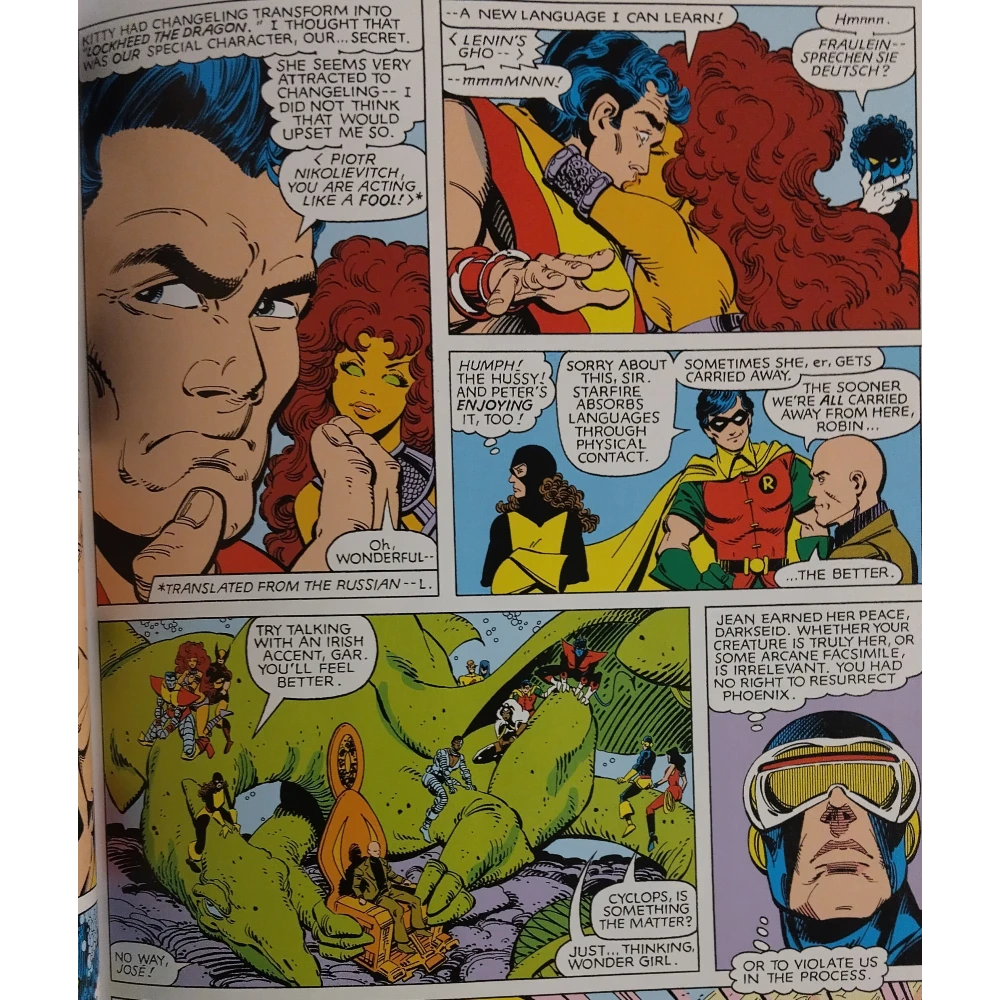
Claremont never relies too heavily on establishing comparisons and connections between the X-Men and Teen Titans, scattering them through singular moments as he develops the narrative. Kitty Pryde appears momentarily infatuated with Changeling, much to Colossus' chagrin (though the opposite occurs when Starfire kisses Peter to learn Russian); attacking enemies mistake Cyborg for Colossus; Wolverine tests his reflexes against Deathstroke the Terminator. In little ways, characters collide, interact, learn, and grow in confidence with one another. "The X-Titans," one villain calls the combined team, cleverly emphasizing the neat synergy Claremont develops between them. This way, Claremont organically enables fun character moments that, again, don't allow for any deeply introspective character development but maintains a sense of bonding and unity throughout. Interestingly, the X-Men and Teen Titans never actually fight, Claremont skirting the stereotypically inevitable skirmish to focus elsewhere.
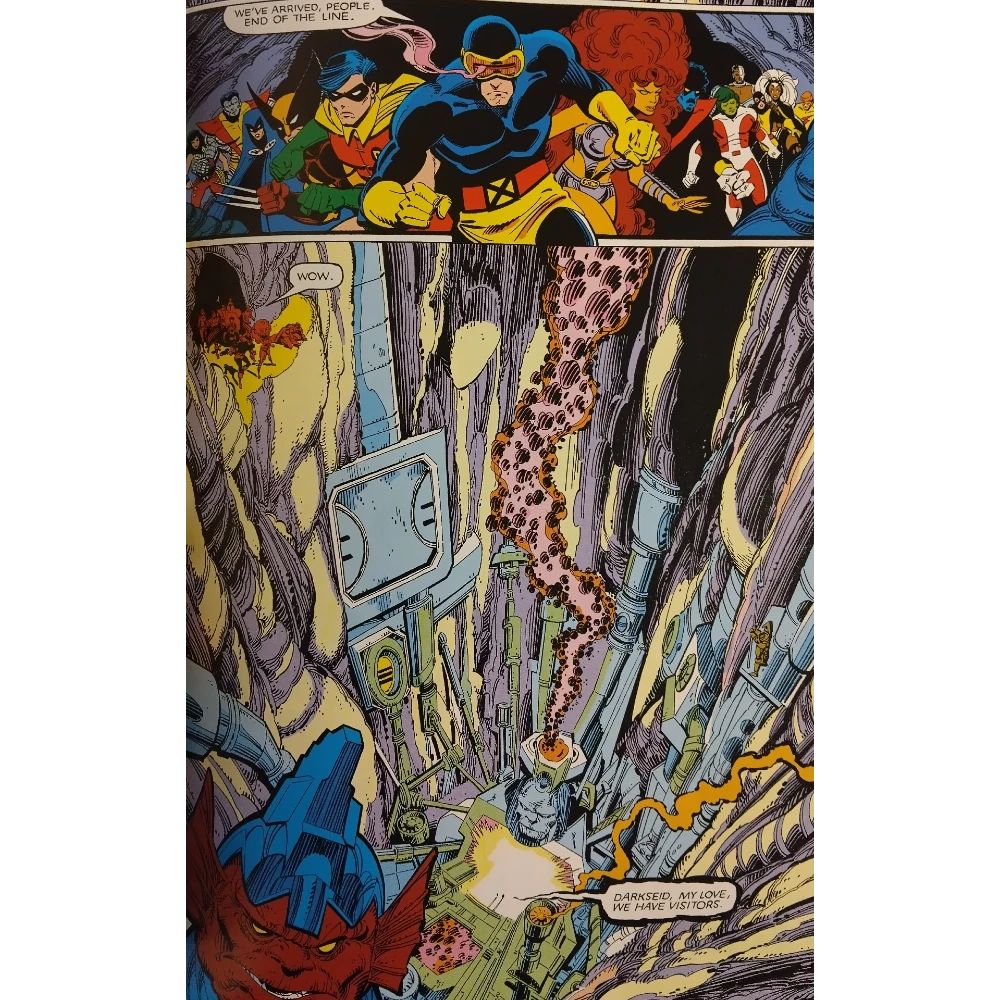
That focus is usually in favor of directing our heroes against our issue's villains, and though I've already mentioned Deathstroke, he's not the key threat. Appropriately, Claremont pulls in X-Men adversary Dark Phoenix (still, at this time, the corrupted Jean Grey) and DC arch-fiend Darkseid (shortly before he made the transition from Jack Kirby's New Gods corner to DC's 31st Century), giving both teams genuine cosmic struggles to undergo. Part of me would have appreciated the X-Men also receiving a secondary human antagonist to confront, but Claremont's use of Phoenix makes perfect sense.
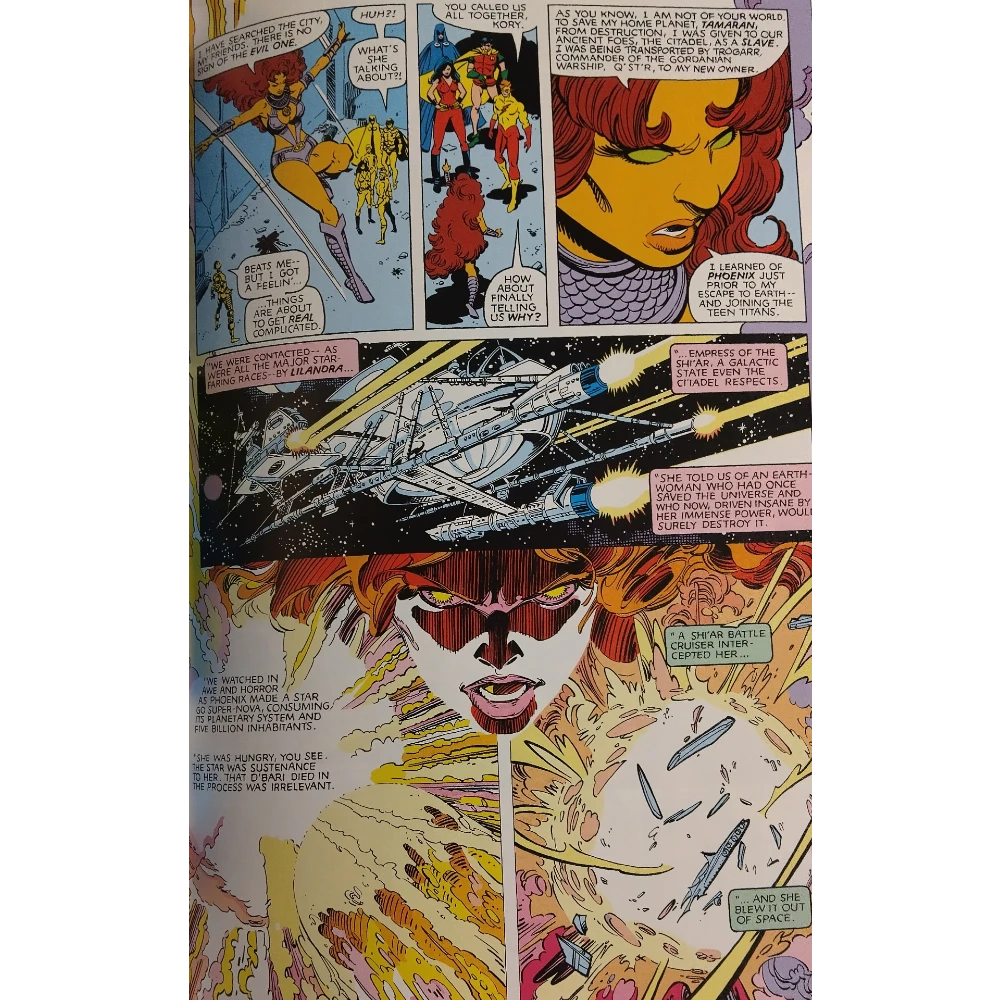
Through our villains, Claremont weaves a plot that makes this special issue a spiritual successor to the acclaimed "Dark Phoenix Saga," even if it takes place in an alternate universe (maybe one where Phoenix actually was Jean instead of a different cosmic entity?). Darkseid's plan hinges on making the discorporated Phoenix whole again, allying with her to create a new Apokolips for him to rule. Claremont not only uses this to draw in the X-Men for obvious reasons, utilizing Cyclops' grief effectively, but he generates a natural connection to the Titans as well, the teens becoming involved thanks to Starfire witnessing Dark Phoenix snuffing out an entire solar system.
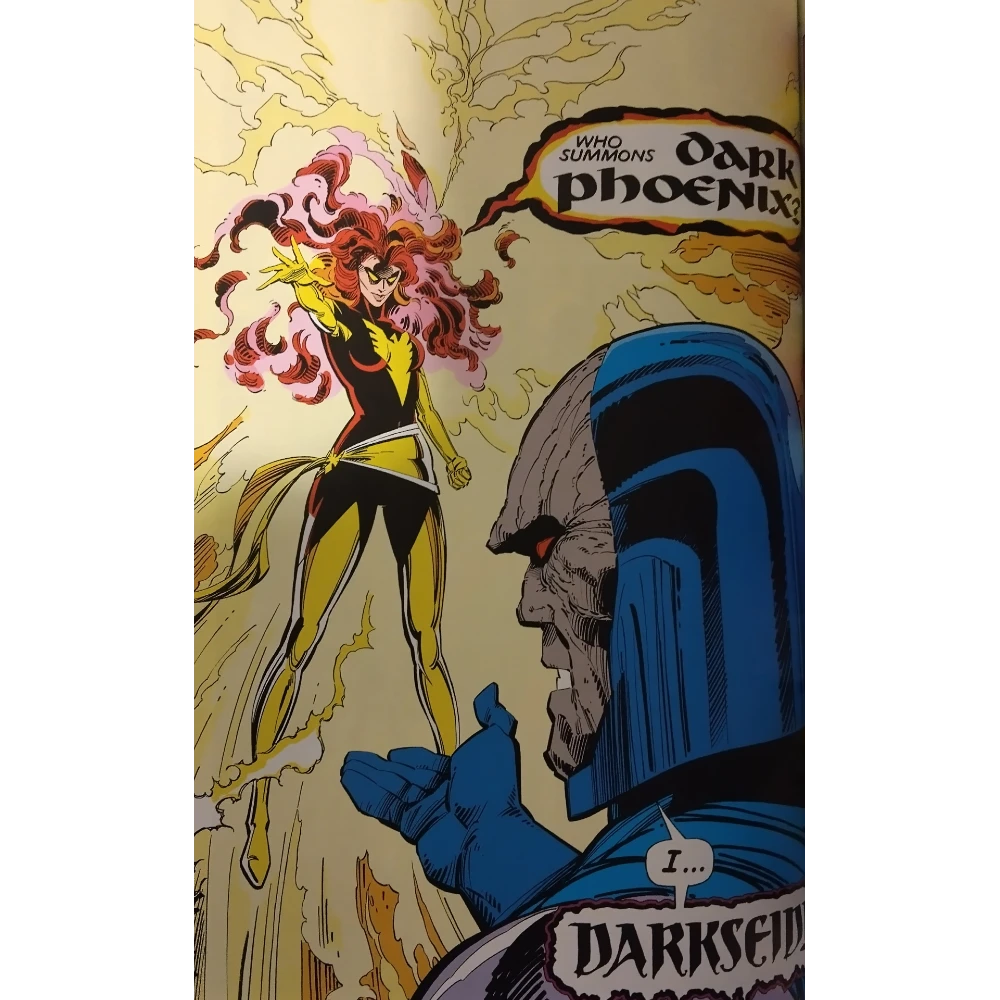
It all just makes sense. Pieces fit together as if they were made for one another, whether it's the logical assumption that Starfire, while traveling to Earth (something straight from Wolfman and Perez's work), could have seen Dark Phoenix's devastating actions or that Professor X, in need of transportation, could temporarily use the New God Metron's Mobius Chair. Even something seemingly insignificant such as Changeling and Wolverine both having "Logan" in their name or Kitty reminding readers of her tech capabilities when she comments on Cyborg's gadgets are connections, strands enhancing that all-encompassing sense of togetherness. Claremont strategically picks his characters and the moments in which to emphasize their commonalities, and though he can't draw lines between every character, he does enough. He recognizes Kitty and Changeling's relative youthfulness, Robin and Cyclops' leadership qualities, Wolverine and Starfire's warrior sensibilities.
If one fault can be found it's that Claremont is more reliant on X-Men lore than he is on the Teen Titans'. Given he'd been writing the mutants for close to seven years at this point and had recently concluded one of his defining stories, Claremont can hardly be faulted for not understanding the Titans deeply. He uses characters well, makes Deathstroke a viable threat, crafts those fun connections, but part of me wishes a bit more of their history had been included. The issue's emotional crux is set solely upon Cyclops and Phoenix's relationship, and though passing references are made to Starfire's journey to Earth and Raven's demonic parentage, these elements don't add much to shaping the story's conflicts or resolution.
Claremont's partner-in-crime this go-around is renowned Thor artist Walt Simonson, and his ability to convey narrative bolsters the tale Claremont is telling. Hewing close to designs by Cockrum and Perez, Simonson maintains each character's classic look while integrating his own particular style. He works especially well in minor moments, leaning into the details to deliver pieces of characterization, such as when Wolverine, suffering from a nightmare projected by Darkseid, begins popping his claws in response. The story's scope allows him to give face to cosmic concepts, such as DC's Source Wall and Parademons slipping in and out of Boom Tubes, allowing him to craft scenes which feel akin to the work he'd later develop on Thor.
Artistically and narratively, this issue represents, to me, the zenith of Marvel/DC crossovers. Claremont's typical poetic prose is on full-bore here, and paired with Simonson's wonderful details, a story is created which truly encompasses the potential of the shared universe idea. Compatible teams of heroes, wisely selected villains, and enmeshed bits of lore help this narrative fulfill the intended brief of these kinds of stories and allow for some really entertaining intertextuality. If you're excited by knowing a world exists where Starfire witness Jean's Dark Phoenix downfall, or if you just want to watch Wolverine square off against Deathstroke or see Dark Phoenix and Darkseid inhabit the same page, this issue provides those moments and never lets the intentional interwovenness of our heroes falter.