Random Reviews: The Saga of the Swamp Thing (Book Four)
Though a tad repetitive at times, these issues turn horror parables into an epic saga
—by Nathan on October 29, 2026—
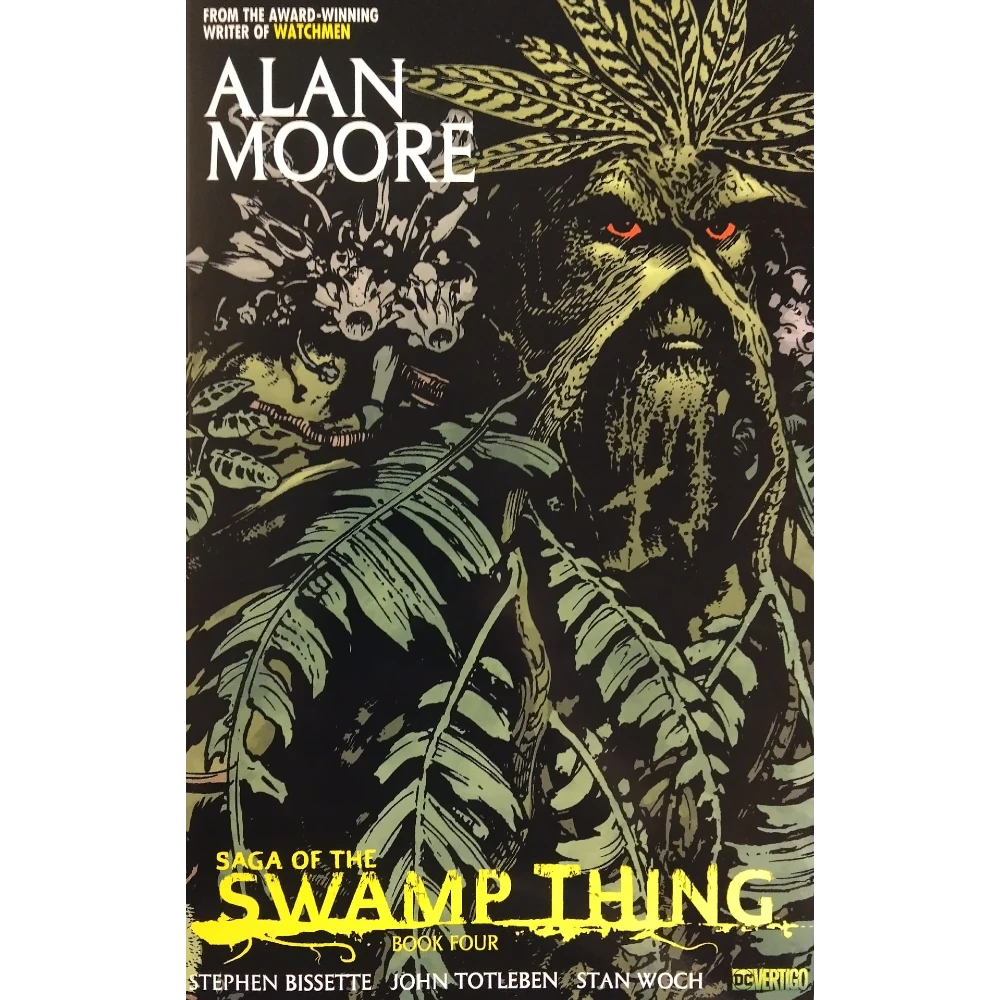
Alan Moore, across the last issues of Swamp Thing we've reviewed, has been leading the creature which once was Alec Holland's alter ego (and us) on a merry pursuit. Or perhaps not so merry. If you enjoy watching a moss-made monster duke it out with a bloated mermaid queen, a werewolf woman, a radioactive homeless man, and the ghosts of racists, then good, you've enjoyed these issues.
(though I may look at you askance)
Dark and grim these tales have been, but Moore has layered his palpable parables with meaning, infusing within the horrific imagery and monstrous antagonists parallels to real world evils. Swamp Thing, as he has done since his inception, engages with intangible evils given form and flesh as Moore draws him ever deeper into a personal quest for identity and purpose. No longer seeking a return to humanity–Moore establishing that Swamp Thing is his own creature imbued with Holland's memories hammered the nail into that particular coffin–Swampy is more interested in finding meaning in his own existence.
Love? Possibly. Far-fetched as it may appear, the concept is certainly on the table, Moore drawing Swamp Thing closer to Abby Arcane, niece of his former arch-foe. Significance? Swampy's moving in that direction, guided lately by British occult detective and poster child for lung cancer John Constantine to different supernatural "hotspots," where not-Holland has battled the mermaid, the werewolf, the racist ghosts. And more!
(that's lowercase "m," single "o." This isn't an "Animal Man meets Grant Morrison" scenario)
These scattered conflicts are building somewhere, to something. Moore is making that clearer all the time. As we enter this volume (if we dare!), we'll finally pinpoint the location to where these events are leading.
The Saga of the Swamp Thing (Book Four)
Writer: Alan Moore
Pencilers: Stan Woch, Steve Bissette, Ron Randall, and Rich Veitch
Inkers: Ron Randall, John Totleben, Alfredo Alcala, and Tom Mandrake
Colorist: Tatjana Wood
Letterer: John Costanza
Issues: Swamp Thing #43-50
Volume Publication Date: July 2013
Issue Publication Dates: December 1985-July 1986
Publisher: Vertigo (DC Comics imprint)
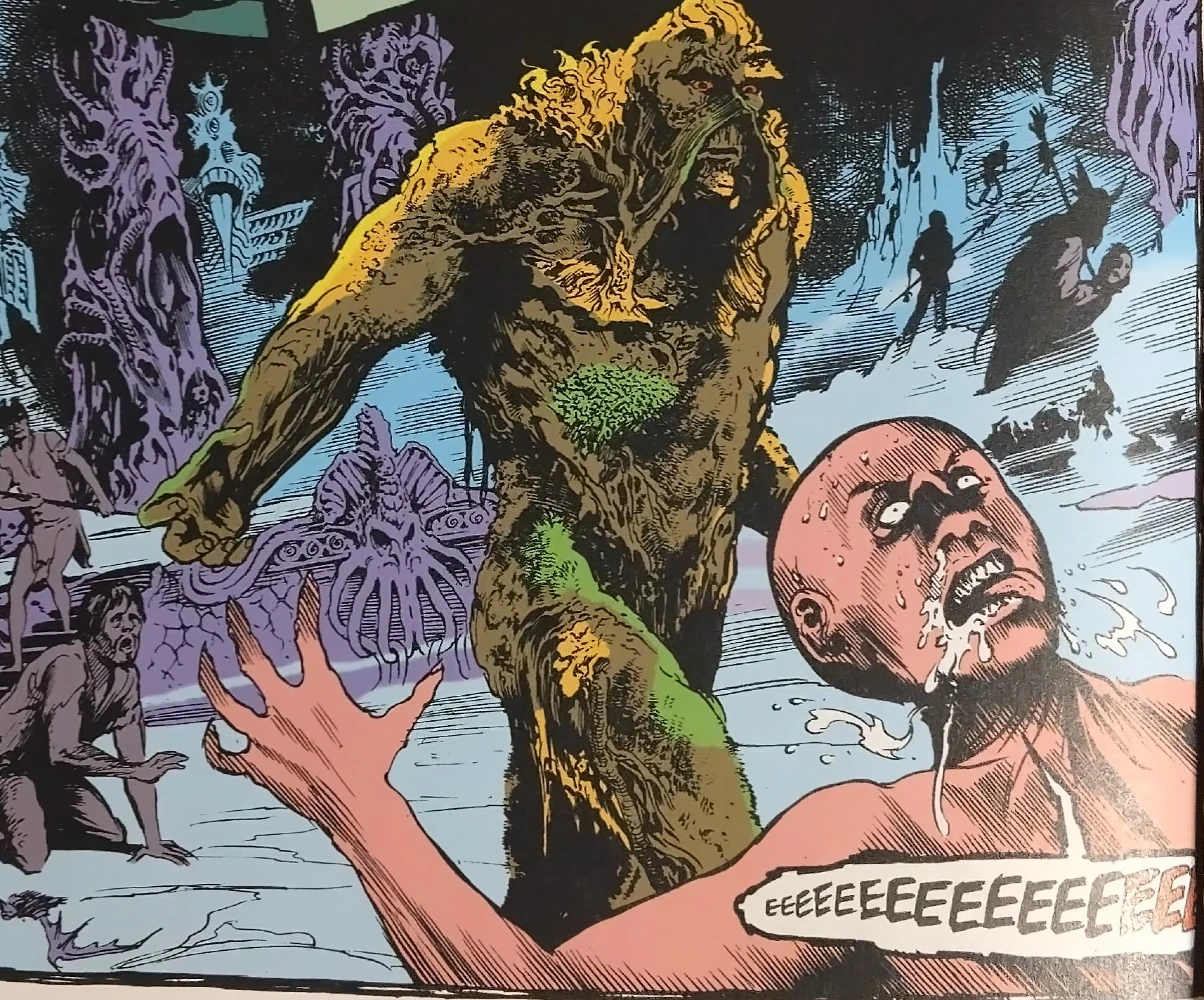
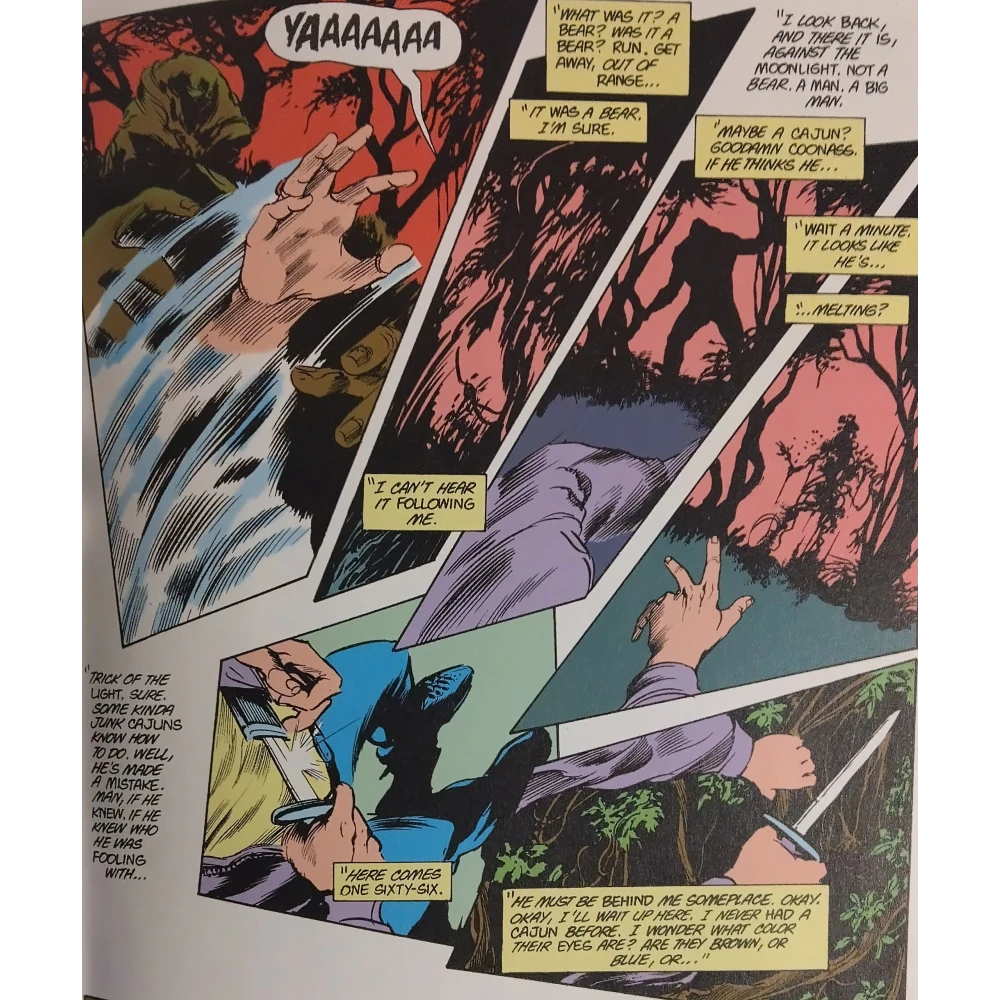
Up until this point, Moore has largely treated his audience to smaller arcs, one-to-two-issue events which display those singular conflicts in which Swamp Thing has engaged. Each narrative, as I noted above, seems to represent a different form of evil–racism, sexism, pollution–and the early issues here provide similar material. An issue written largely from the POV from a serial killer presents Swamp Thing as this lumbering, unknown behemoth our murderer has the misfortune to meet in the mire; the opening issue sees a tuber sloughed off Swamp Thing's body used as a hallucinogen; another issues sees Swampy attempt to rescue some adventurous morons from a haunted house filled with the ghostly victims of a firearm magnate's guns in a clear nod to the Winchester Mystery House.
This may be more of a complaint of the volume's structure, but by the third issue, I found myself a tad tired of the one-off issues. Don't get me wrong–the format works exceedingly well in the previous volume, where Moore is beginning to take his series down this metaphorical avenue, drawing parallels to actual evils and events which shape and scourge society. By this point, however, we've seen several examples of those evils and Swamp Thing's response to them, and so to be greeted by more of Constantine dragging Swampy's leash to these "hotspots" gets a little old. Drugs are bad, gun violence is bad, murder is bad. And so on. You feel, as Swamp Thing himself does, that Constantine is withholding the much-needed answers, and you want the pace to pick up just a little.
There is a method to Moore's madness, however, and by time the volume's "second act" begins moving forward, intertwined with DC's multiverse-shaking Crisis on Infinite Earths, the endgame starts dawning. No stranger to the multiverse, Moore conjures up a fairly clever take on incorporating the events of Crisis, having John and Swamp Thing begin a quest to rescue the spiritual side of the universe while other heroes rush to save physical reality. It's a great idea and, given that Swamp Thing hasn't really felt like part of the rest of the DC Universe under Moore, lets the writer sew his own story related to the crossover without feeling overly connected to Crisis.
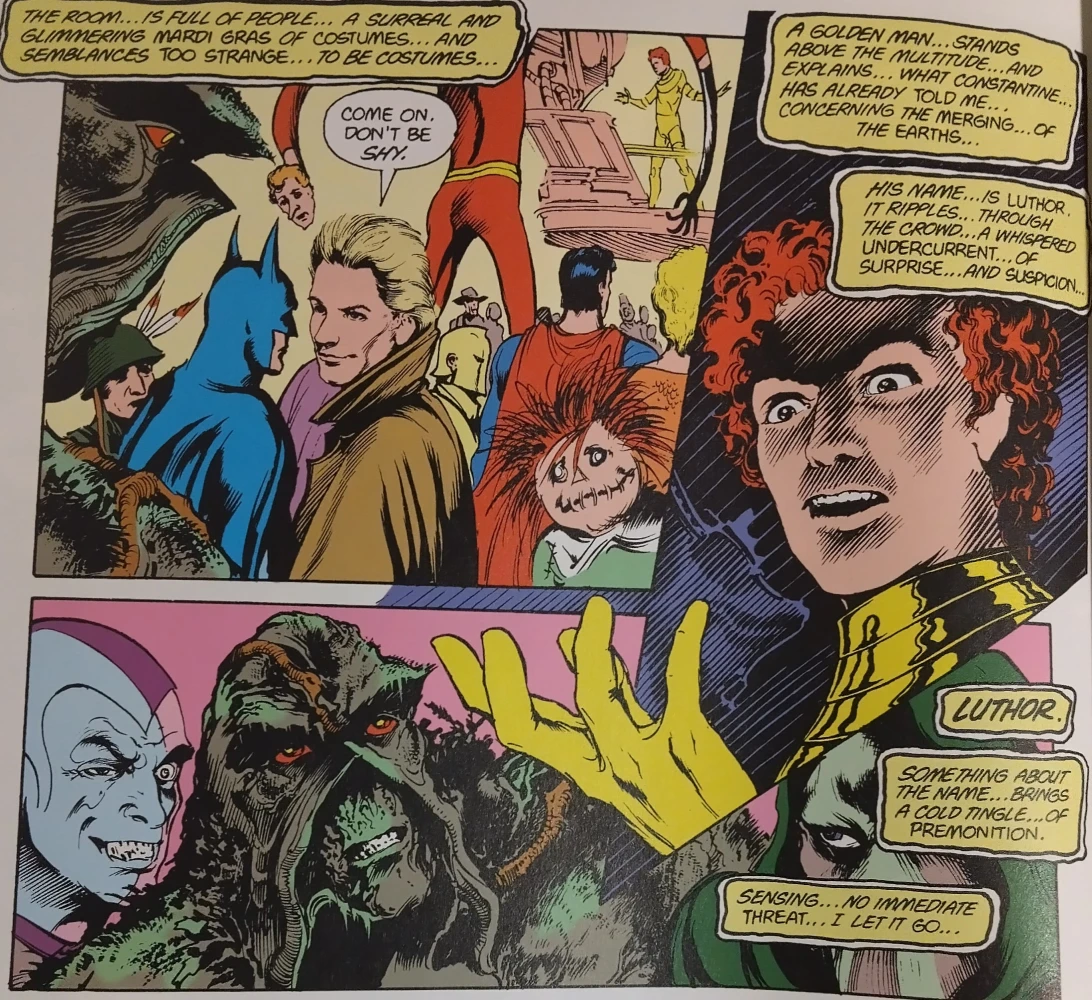
Inevitably, Moore offers the occasional opaque tether to Crisis, dragging John and Swampy to the Monitor's satellite to briefly hobnob with costumed crimefighters and awkwardly incorporating Batman into an early scene. They're minor moments, nothing the main story really hinges on, but they feel out of place, as if Moore was instructed to involve the more common aspects of Crisis–the recognizable characters, the broader "save the multiverse" plot–by DC management or editorial.
But Moore's narrative becomes far more interesting as it congeals, and I'd argue it's better than Crisis' central conflict. Whereas that series is a smorgasbord of scenes and characters slapped together, hopping constantly between people and places, Moore offers focus. The spiritual threat is palpable–the fate of Heaven itself, we learn from Constantine, hangs in the balance–and provides the crossover event a unique twist. The cast is far more manageable, Moore drawing in characters associated with DC's occult side. Folks he's used before, such as Etrigan the Demon, Deadman, and the Spectre, are brought in along with characters Moore's using for the first time, such as Zatanna, her father Zatara, and former Doom Patrol and Changeling's stepfather Mento.
Even better, though I got a tad tired of the single-issue plots, I was suitably satisfied seeing how Moore tethered those individual issues to his larger narrative. There's a logical thread weaving its way through those previous issues, events building upon themselves yet given a greater context outside themselves as Moore unravels the very tangible, sinister underpinnings to these recent stories. You learn, gradually, that this has been Moore's intention all along, and when he finally snaps the trap around you (and our characters) shut, you're plunged into an arc where the stakes have never been higher.
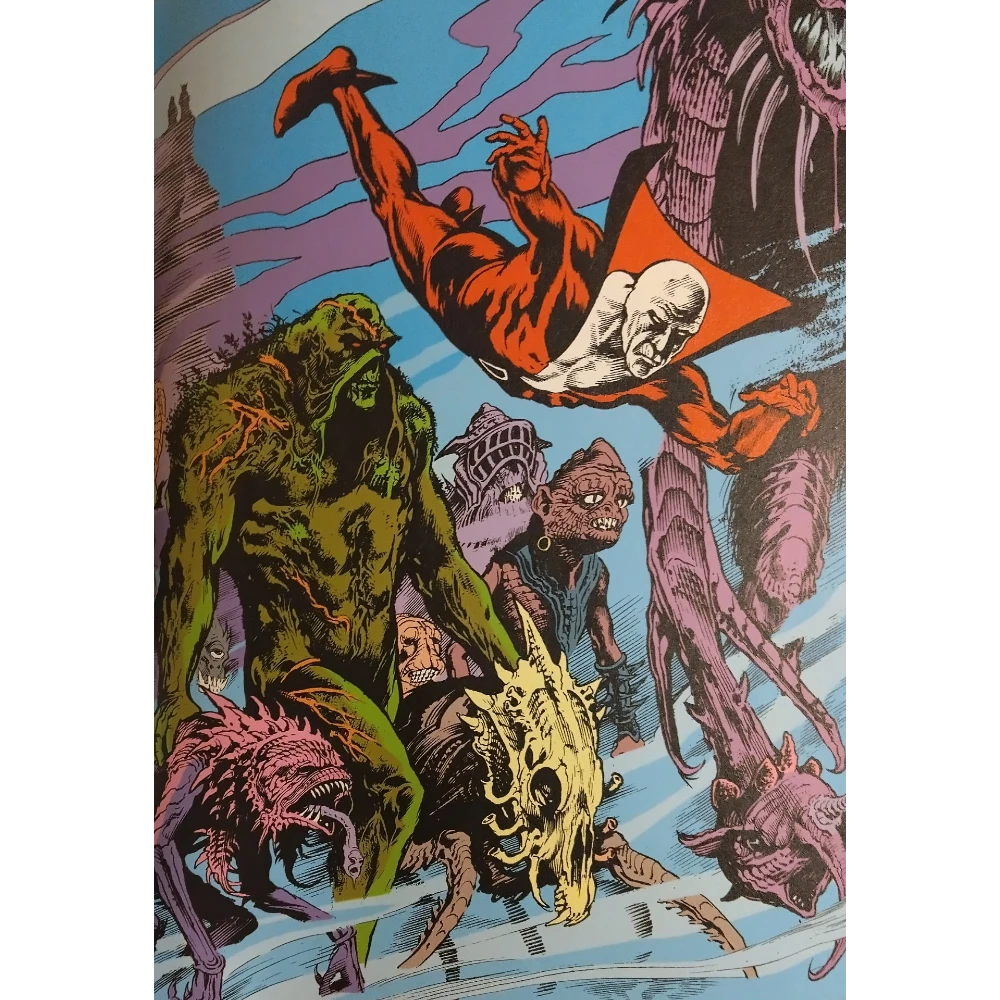
Once the unfolding narrative concludes, these issues could mark a great stopping point for Moore; he doesn't stop here, but he could. The risks grow ever higher, the threat ever larger. Moore's Swamp Thing, until this point, has been a very personal book, and though Swampy and his quest still fuel his character across these issues (more on that in a moment), the evils presented become cataclysmic in scope. Tonally, it works. We never feel wrenched into the chaos and horror, because we've already grown accustomed to the chaos and horror. The volume's closing issues just present more of the same, at a much grander scope that previously explored. It works. It sometimes feels like it shouldn't, but it does. Backed with a few twists that feel very unexpected yet nicely executed (very much an Alan Moore trait), this latter portion offers a better application of overpowering evil than Crisis presents, in my humbly offered opinion.
As noted, Swamp Thing drives the heart of these issues, a surprisingly human heart given his tuberous, fibrous exterior. We've already witnessed his growing love for Abby and a greater hold on his abilities, which Moore continues exploring apace. Yet as his control over his physical form and connection to "the green" are strengthened, so does Swamp Thing gain a greater mastery over his own destiny. He's not just a wondering, wandering soul or Constantine's lapdog in these issues; he pursues his own twist on the agenda, a concept heightened when his meets the Parliament of Trees, elemental creatures just like him (including the precursor Swamp Thing created by Len Wein and Bernie Wrightson) yet far distant from the kind of mulch-monster-with-a-man's-memories individual Swampy wishes to be.
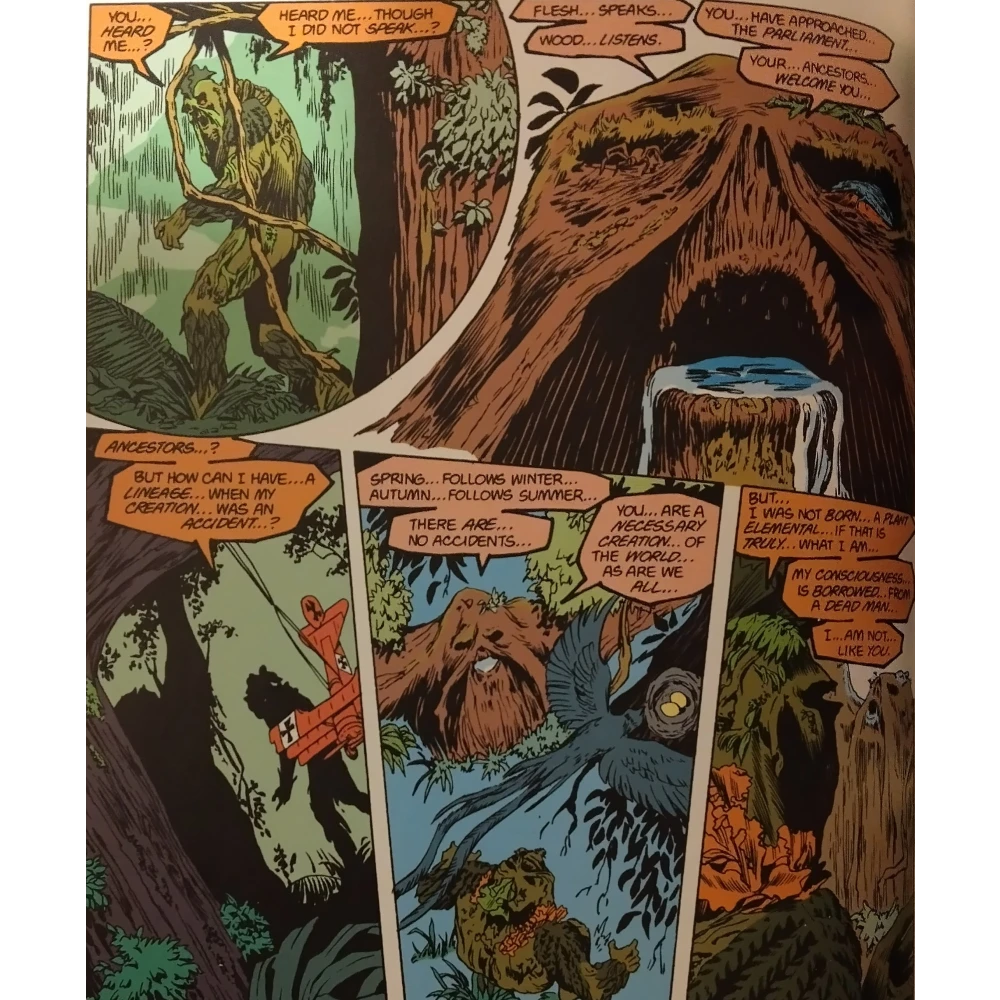
Moore has always nicely provided Swamp Thing a human core, and that is present here perhaps more strongly than in any other volume before. Yet the dichotomy between his human feelings and his inhuman physical form gets wrenched around here. The aforementioned serial killer sees him as nothing but a shambling abomination rising from the marsh; folks who learn of his and Abby's romantic relationship begin to fear its unorthodox nature. Moore hints, ever so slightly, that maybe some of these folks are…a little right? We understand that they don't understand Swamp Thing, that maybe greater familiarity with him would change their minds…wouldn't it? Or maybe there is something creeping through not-Alec which we should be concerned with as well.
With these issues, Moore brings his series to new heights while maintaining the character development we've witnessed in the previous volumes. With this collection, we have passed the halfway mark of his run, making it through the Crisis with a few bumps yet, hopefully, even more aligned with Moore's vision for the series. These issues leave me invested with the next steps Moore takes, wondering if the writer, having reached an endgame of sorts, takes the series in a somewhat different direction than where we've been led so far.