Crossover Capers: DC Special Series #27 (DC Versus Marvel Omnibus, Part 3)
The titanic tussles featured here should maintain reader interest, even if the main narrative can't quite measure up
—by Nathan on June 9, 2026—
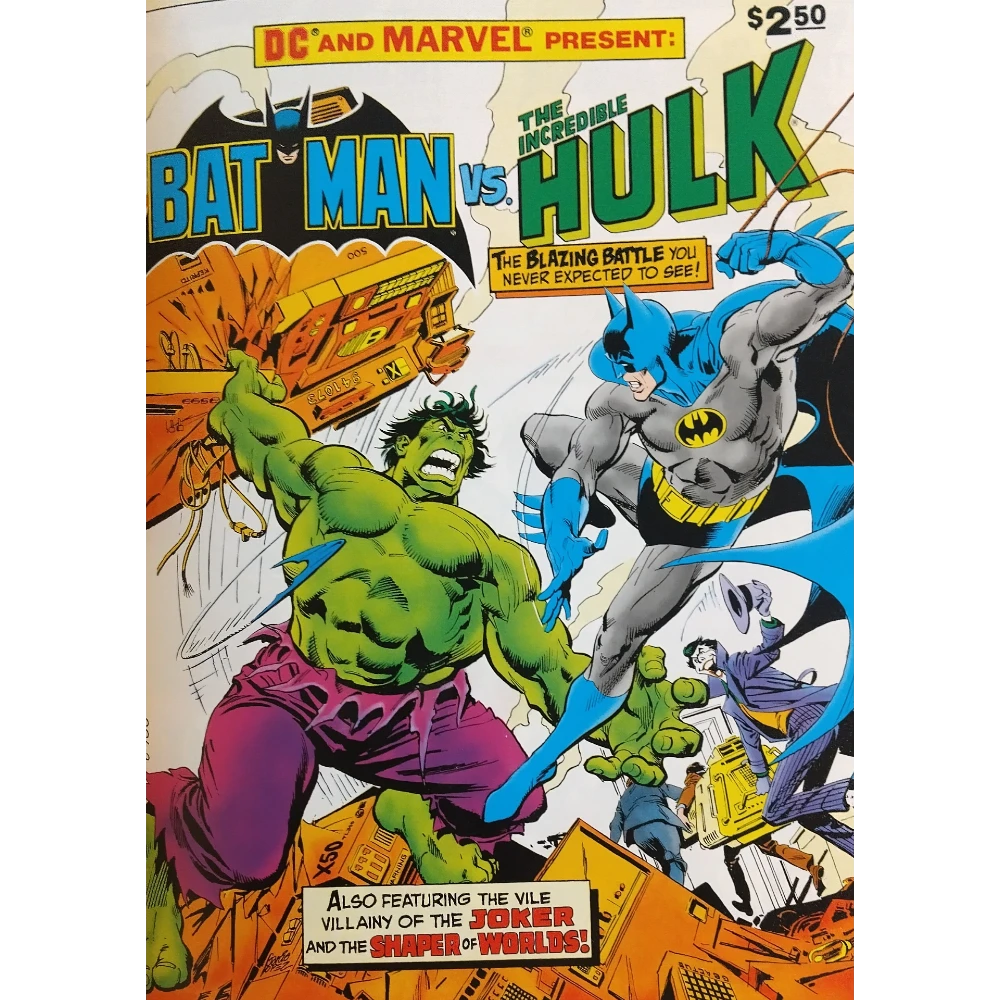
In the Marvel corner, we have Bruce!
And in the DC corner, we…also have Bruce?
If you, like me, felt that Jim Shooter's supporting cast members the Hulk and Wonder Woman in the second-ever Marvel/DC crossover comic (and second-ever Spider-Man/Superman team-up) could have used some additional pages to better justify their inclusion, you're kind of in luck for today's review: one of those characters comes back!
Sorry, Princess Diana of Themyscira.
I enjoyed Shooter's use of the Hulk as a combatant for Superman, but truth be told, it would've been fun if the Green Goliath starred as more than a brainwashed thug, right? He's called "incredible," not "inculcated," for a reason. Fortunately for you readers, Marvel and DC must've been thinking along a similar wavelength, because mere months after making his debut on Earth-7642, the Hulk returned to duke it out another DC mainstay: the Dark Knight Detective himself.
Not Captain Marvel. Not Power Girl. Not someone who could throw their weight around...or throw the Hulk's weight around.
Batman.
As the Caped Crusader is a member of DC's famed trinity, it made a certain amount of sense to pit Bruce Banner's bulky alter ego against one of DC's most iconic characters. You've already told two tales featuring each company's flagship superhero, and you've already had the Hulk take on the Last Son of Krypton! Strange a pairing as it may seem, Batman vs. Banner seems the natural way to go, after a fashion.
But those disparities between the two, in weight and power, lingered at the forefront of my mind as I headed into this issue. To have Spidey and Superman fight their first time around, Gerry Conway and Ross Andru employed a little narrative trickery to boost the Web-Head's abilities. Will Len Wein–a man familiar with writing both Batman and the Hulk–and Jose Luis Garcia Lopez do the same to create a more even grudge match between the Dark Knight Detective and the Green Goliath?
"The Monster and the Madman"
Writer: Len Wein
Penciler: José Luis García-López
Inker: Dick Giordano
Colorist: Glynis Wein
Letterer: John Costanza
Issue: DC Special Series #27
Publication Date: September 1981
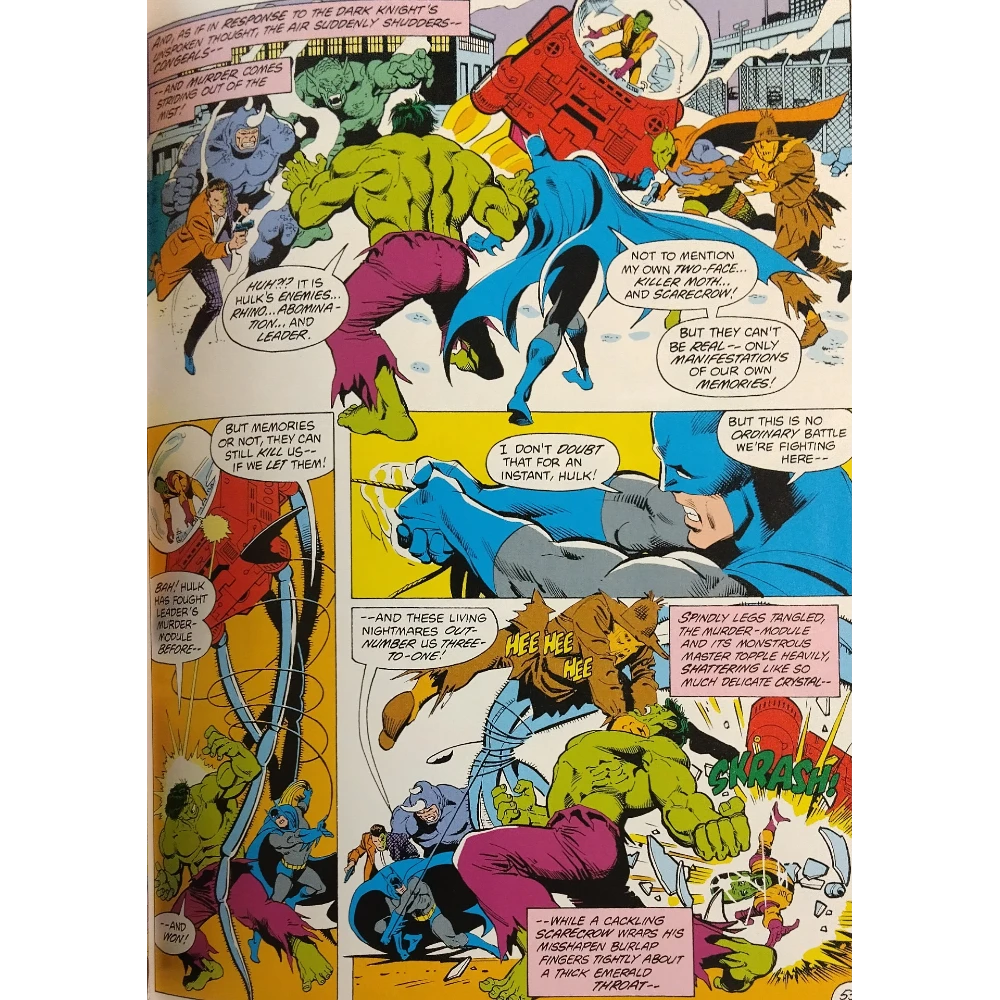
To answer my hair-raising question immediately: no. Our starring heroes are not evenly matched whatsoever in this issue. Batman isn't given a shot of Venom, the Hulk's strength isn't diminished in any way. These two tussle twice during the issue, pitting mind and muscles against muscles and, uh, more muscles. Not much mind with the Hulk. Neither fight ends with the heroes shaking hands like they're best buds, but that means we're given a more definitive victory, because SPOILER ALERT:
Batman wins.
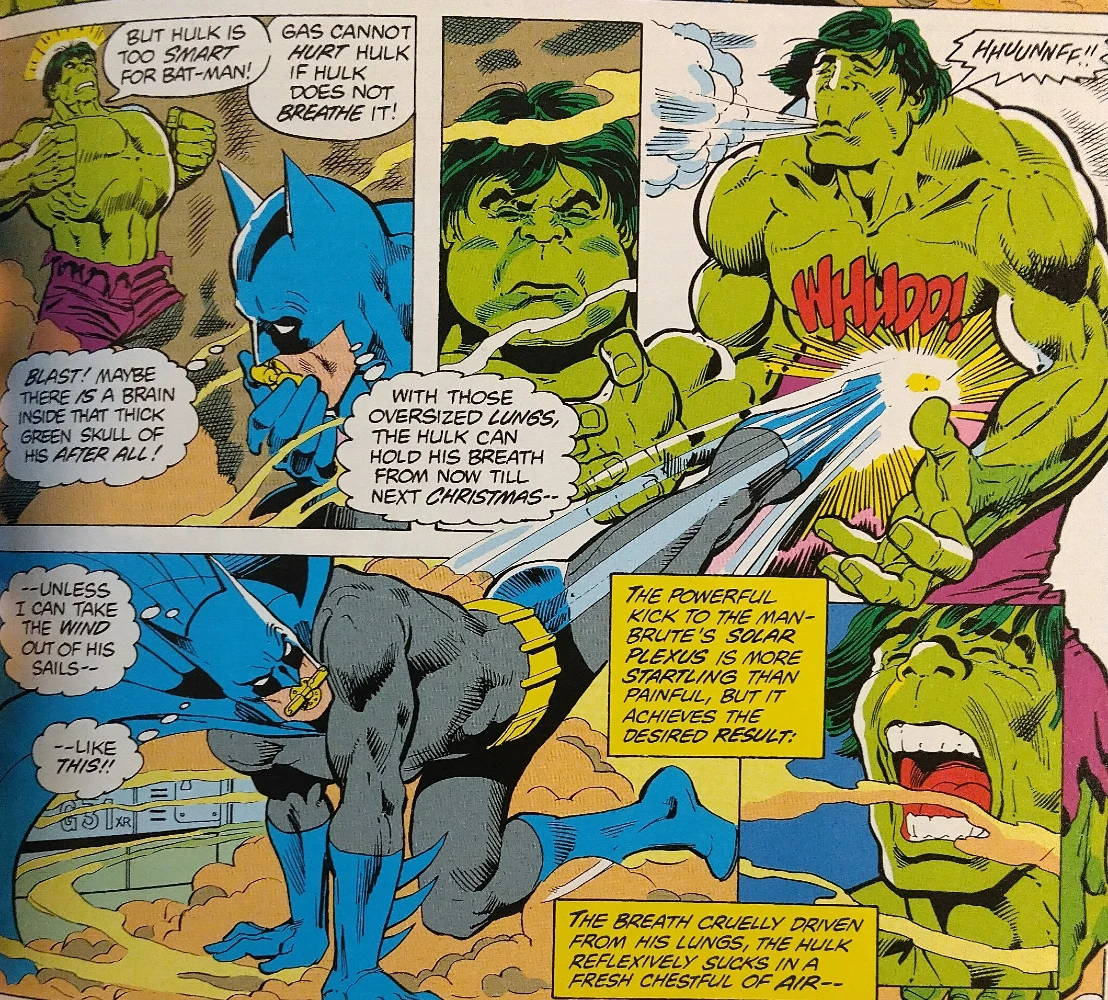
Okay, he only wins the first match. The Hulk, arguably, takes the title for their second bout, but even that could be arguable. Regardless, Bruce takes out the Hulk during their first match-up, and I do mean takes out. A well-timed kick to the solar plexus knocks the wind out of the Hulk, causing him to inhale a goodly amount of sleeping gas and eventually collapse. The question whirling throughout this entire fight, and even during their second, is this: does Batman deserve the KO?
I am going, for a second, to remain somewhat objective. You can talk all you want about how "Batman + prep time = all the wins, every time" until you're more blue in the face than the Hulk would eventually get holding his breath against sleeping gas (and, brother, that's a looooong time). I won't deny my personal love for the character and his general level of sheer awesomeness. Batman's greatest trick isn't that he's rich; it's that he's used those riches to invest in high-tech gadgets, a dope car, and years of traveling, training, learning, experimenting, and meditation. He's honed his body and mind to near physical perfection; he's a master tactician. And any writer can turn to the "Oh, he's Batman" trick to write themselves out of any corner they want. Yes, Batman is awesome, but it's so easy to make him too awesome.

So when it comes down to a fight like this, it's up to Wein to make the conclusion believable. Could Batman, for all his vaunted cleverness and skill, take down Jolly Green? The answer, as far as I am concerned, is mostly yes. I add "mostly" to indicate there's a certain amount of belief you must suspend: the Hulk holds Batman in a grip that would break his back, and I wonder if Batman wouldn't be more injured afterward than he is. Later, Bruce escapes a collapsing parking structure the Hulk bounds away from by, off-panel, diving to safety. Some luck is on his side. But in the tussles themselves, I'll maintain Batman decently holds his own.
What Wein does well is have Batman set himself up for the first victory, not before the fight, but during. His Batman is maneuverable enough to evade the Hulk, knows enough about human anatomy to distort the Hulk's balance, makes certain the sleeping gas is deployed before thumping the Hulk's gut. This isn't a Batman who just so happened to bring an anti-gamma grenade with him prior to the fight, just in case; the only tool he uses is the gas pellets, and those seem a common enough feature in his utility belt to not feel like an underhanded trick by Wein. The most awesome thing Bruce (Wayne, not Banner) does is launch himself through the windows of a car gamma-grown Bruce (Banner, not Wayne) throws at him, which is a genuinely fantastic moment while also seeming believable enough given the Dark Knight's athleticism.
Now for the Hulk.

This is dumb Hulk, largely monosyllabic Hulk. He doesn't even need to be brainwashed this time around; the Joker just appeals to him as a person–hilariously noting their shared hair color–and directs him Batman's way like a green guided missile. For most of this comic, the Hulk is an antagonist, and it's more pure luck than anything that he winds up helping fight the issue's villains. Is it a poor showing on his part? Not necessarily. This is who the Hulk generally is: not terribly smart, somewhat easy to manipulate. He's huge, he's fantastically strong, he lumbers about. To what will likely be to my father's chagrin, he doesn't get to punch much, and the one sizable creature he does face fairly handily defeats him. Some fans may perceive this as a downside. Seeing the Hulk slug it out with a big fella would have been highly entertaining, but treating him a deuteragonist makes sense given his personality. Still, the Hulk does learn from his mistakes, refusing to fall for the sleeping gas trick again during his second fight with Batman, so maybe some additional intelligence glimmers behind those emerald eyes.
Other storytelling decisions don't pass muster quite as easily with me. A very uneasy alliance between Batman and Joker feels implausibly concocted, especially when the Dark Knight expresses surprise when Joker behaves in a selfish and underhanded fashion. Of course he would, Bruce! He's the Joker! Why does this surprise you??? Additionally, I wish Wein had leaned more heavily into the "shared universe" aspect of the plot. He makes one strong connection–Bruce Banner is a scientist employed by Bruce Wayne–but we don't get the same intermingling that we got in the second Spidey/Superman adventure. Alfred pops up for a few pages, we get a single panel of General Ross and Doc Samson, and dream versions of a few rogues briefly battle our heroes, but that's all the worldbuilding we receive. Shooter managed to weave Peter Parker and Clark Kent's backgrounds and professions together nicely in their second go-around, and I just wish Wein had paid the same level of attention and care to the details.
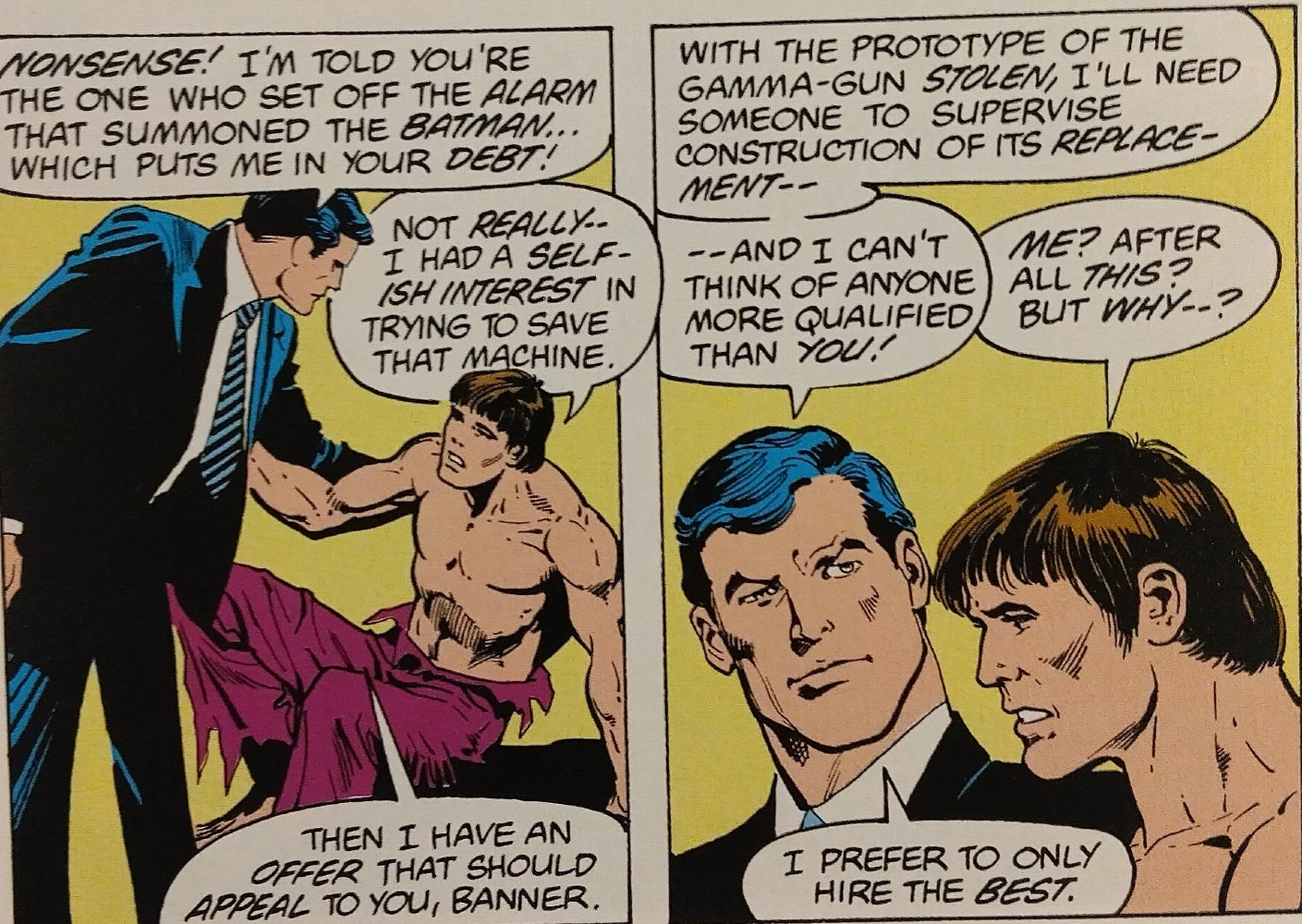
I'm also on the fence regarding our villains. The Joker representing Batman's rogues is an obvious option, though given his brand of trickery and manipulation, he's by no means a bad choice. The Shaper of Worlds, a Hulk foe, initially feels like a more bizarre, less grounded inclusion, though Wein finds a decent enough way to draw him into the plot to make his and the Joker's alliance effective, and a scene where the Shaper briefly gives Joker control over reality lets García-López run wild with visuals. Still, I do wish we had received a more mainstream Hulk villain, such as the Leader or possibly the Abomination. Maybe Wein wanted to avoid the first Spidey/Superman team-up's use of arch-enemies, avoiding the jugular and nicking a more obscure artery. It works for the narrative, even if it feels a little off.
What isn't off is García-López's art, particularly when paired with Glynis Wein's colors. Spidey and Superman give off so much red and blue that the change in color scheme, the Hulk's gleaming green and purple pants contrasting Batman's somewhat darker accents, is welcome. García-López makes the whole comic feel classic, drawing in the Joker's effective trenchcoat look, providing the Hulk enough muscle, and rendering an athletic Batman. The aforementioned reality scene draws on all his skill in developing a topsy-turvey world that feels like a glimpse of what an Alice in Wonderland comic drawn by Neal Adams would have looked like.

The story surrounding our two heroes is a fine enough tale, but you can tell that Wein and García-López were more dogmatic about the brawls between our bruisers. All the other included pieces, from the villains to the general "crossover" aspects, feel like they play second fiddle to convincing readers of a viable Batman/Hulk match-up. You're here for the slugfest, a battle between brain and brawn. They're good flights, showcasing the power of strength against the power of intelligence. We're not exactly given a draw in the way some fans may like their heroes to come out even (sorry, Dad), but the bat and the behemoth are each given opportunities to remind audiences why they're the best in their particular qualities.