(Strand)om Stories: X-Men: Fatal Attractions Review
A taut, thrilling escapade, this crossover arc solidly reframes the mutant manifesto
—by Nathan on July 13, 2026—
I have, over a few recent posts, been watching one part of the Marvel Universe build towards the X-Men-focused crossover event of the mid-90s known as "Onslaught." The "Thor" part of the Marvel Universe, specifically. Between Warren Ellis and William-Messner Loebs (backed by the consistency of Mike Deodato Jr.'s presence), the Norse God of Thunder has been stripped of his godly abilities, forced to reckon with a city held hostage by terrorists, and sought out his drunken, disheveled father. Though Thor has staved off Ragnarok in the past, the end approaches all the same, in the form of a creature born of Professor Charles Xavier and his arch-nemesis Magneto both.
But before we get to the main event, we have a bit more prequel material to explore.
"Fatal Attractions" is one of several X-Men crossover events of the 90s, none of which I have yet to explore. I assume that, someday, I'll get to others, such as "X-ecutioner's Song," "X-Tinction Agenda," and "Age of Apocalypse," but we're bypassing those for today's, uh, attraction. Those crossovers have their place and influence this narrative in their own ways, but today's tale has a fairly significant impact on "Onslaught," so I figured it'd serve as the best lead-in to that arc.
Though Chris Claremont helped perpetuate the X-Men's success and generate spin-off series during the 80s, he'd left the title by time this arc debuted. Other writers and artists were guiding the four mutant titles (yes, four whole books for one Marvel property! Completely unthinkable, right?) involved in this arc, which was set to be a dramatic turning point in the lives of the X-Men and their siblings-in-arms in X-Factor, X-Force, and Excalibur.
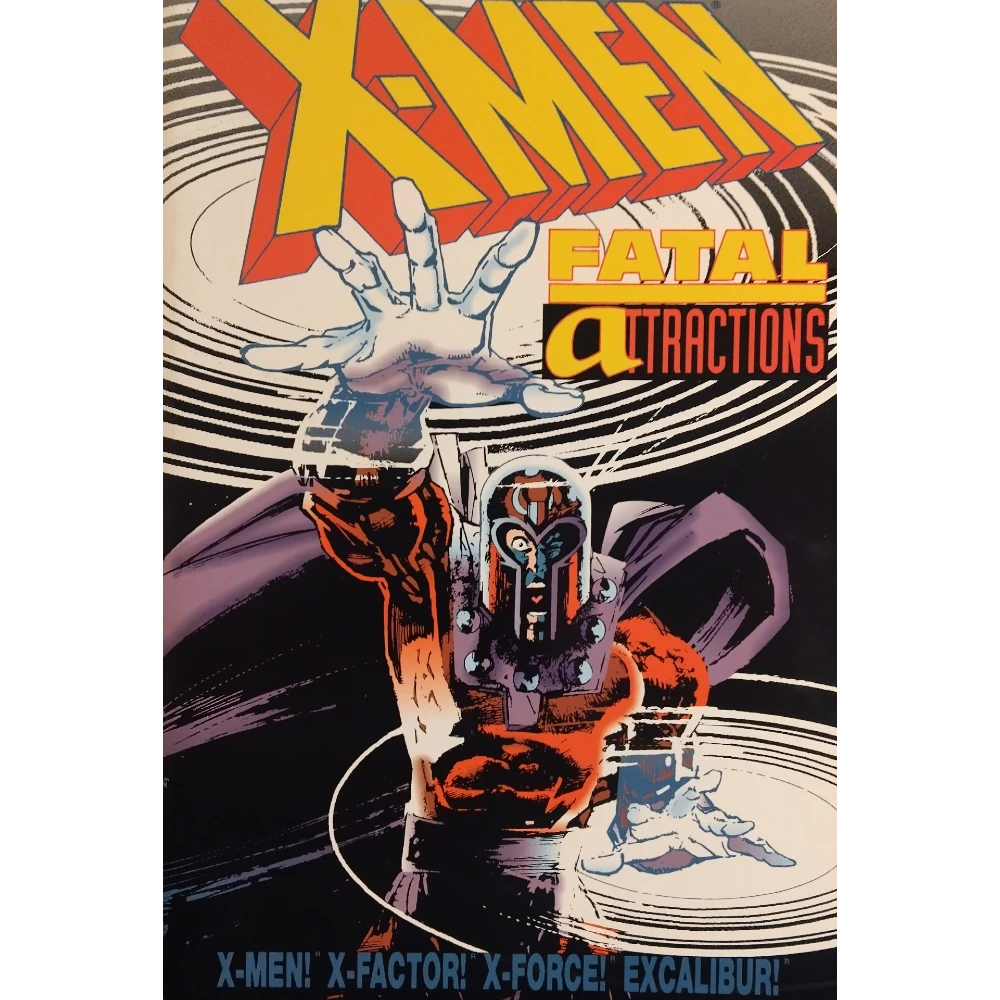
X-Men: Fatal Attractions
Writers: Scott Lobdell, Joe Quesada J.M. DeMatteis, Fabia Nicieza, Larry Hama
Pencilers: Joe Quesada, Greg Capullo, Jae Lee, Chris Sprouse, Brandon Peterson, Paul Smith, John Romita Jr., Andy Kubert, Ken Lashley, Darick Robertson, and Matthew Ryan
Inkers: Al Milgrom, Cliff van Meter, Bob Wiacek, Daniel Green, Paul Ryan, Jimmy Palmiotti, Scott Hanna, Kevin Conrad, Terry Austin, Dan Panosian, Tom Palmer, Keith Williams, Matt Ryan, Mark Farmer, Mark Pennington, Cam Smith, Randy Elliott, Randy Emberlin, and Mark Nelson
Colorists: Glynis Oliver, George Roussos, Mike Thomas, Joe Rosas, and Steve Buccellato
Letterers: Richard Starkings, Chris Eliopoulos, Bill Oakley, Pat Brousseau, and Dave Sharpe
Issues Collected: X-Factor #92, X-Force #25, Uncanny X-Men #304, X-Men #25, Wolverine #75, Excalibur #71
Volume Publication Date: December 1994
Issue Publication Dates: July 1993-November 1993
There are other, more complete volumes which collect all the issues surrounding this particular arc, but I found the cheapest way to procure "Fatal Attractions" was through this edition, which contains the central six-part saga. No muss, no fuss, no fluff. Of course, some context is important to know, particularly that, as this volume opens, Illyana Rasputin has died from Stryfe's Legacy Virus, the latest casualty in an ongoing mutant war which has also, seemingly, claimed the life of that malicious master of magnetism. Yet, as this arc reveals, Erik Lensherr isn't as deceased as everyone believes.
I say "as deceased" as if there's a range. There's no range. He's alive. Magneto lives!
The arch-villain had been through quite a bit in the years leading up to this arc, learning he'd been genetically manipulated by Moira MacTaggert (during a brief stint where he'd been de-aged to an infant in the 70s), returning to his previously villainous role after serving as the New Mutants' headmaster, and seemingly dying at Wolverine's hands. But, as they say, you can't keep a genocidal maniac and self-proclaimed protector of mutankind down.
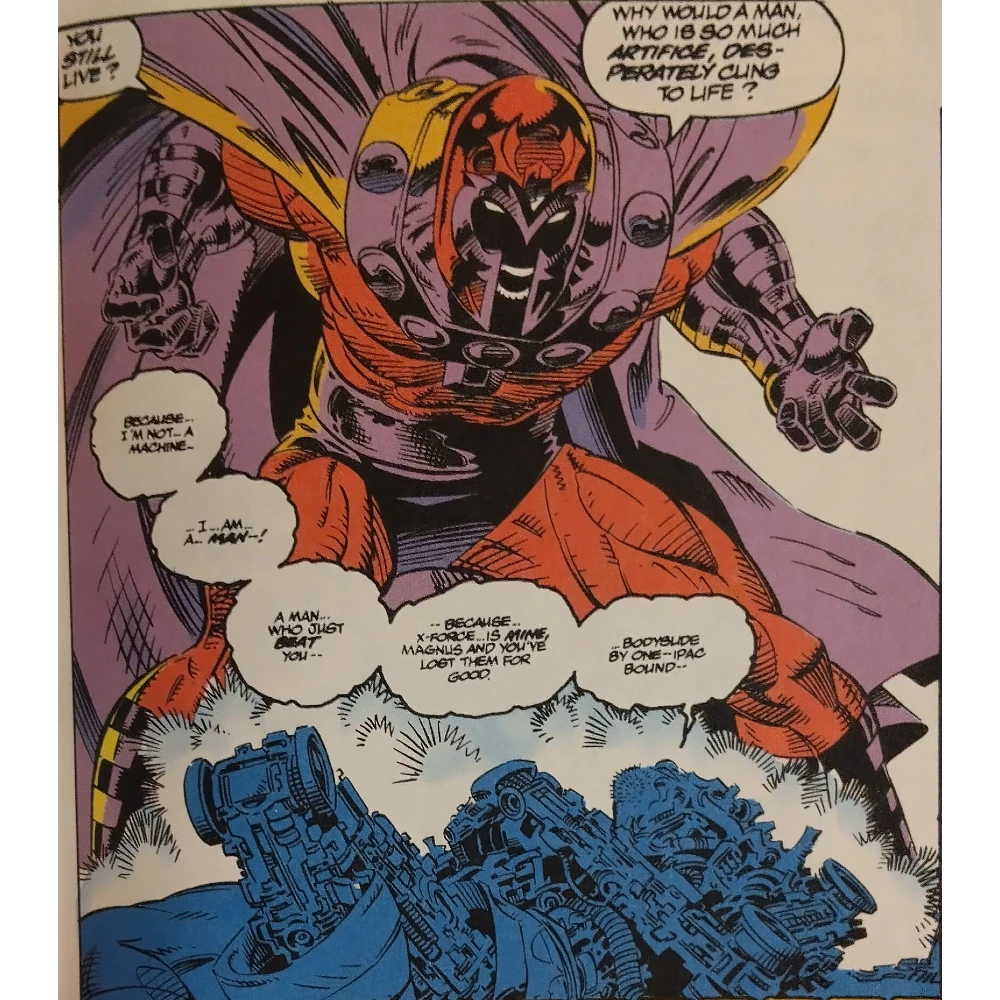
Scott Lobdell is the primary architect of this arc, and in bringing Magneto back from supposed death, emphasizes the arch-fiend's potential for dramatic villainy. Claremont provided Magneto a depth and complexity which hadn't been seen much in the years since his creation, with Erik's turn toward heroism a new wrinkle in his continually developing personality. I'm not aware how fans felt about Magneto' shifting nearer the side of angels, but his heel turn back towards supervillainy, culminating in his scheme here, feels like an appropriate direction for the character to go. I like "complex Magneto" over "straight-up evil Magneto," but a return to form for the master of magnetism feels warranted after years of shifting loyalties.
Magneto's return also marks a step in an interesting direction for the X-Men franchise overall. I'm not an X-Men scholar by any means, and there are significant gaps in my collection and knowledge between the mid-80s and this early 90s arc, so I don't know if prior stories had dealt with similar themes as "Fatal Attractions." What works in this arc is that our writers seriously consider the weight and effects of the racial tension analogue forming the crux of the X-Men mythology. I've read that the "Charles Xavier is Martin Luther King Jr. and Magneto is Malcom X" analogy has come under fire for various reasons, so I'll draw a line before we reach that metaphor. Let's instead focus on the concept that mutant characters belong to the same species and are actually fighting for the same dream yet do so in decidedly different ways.
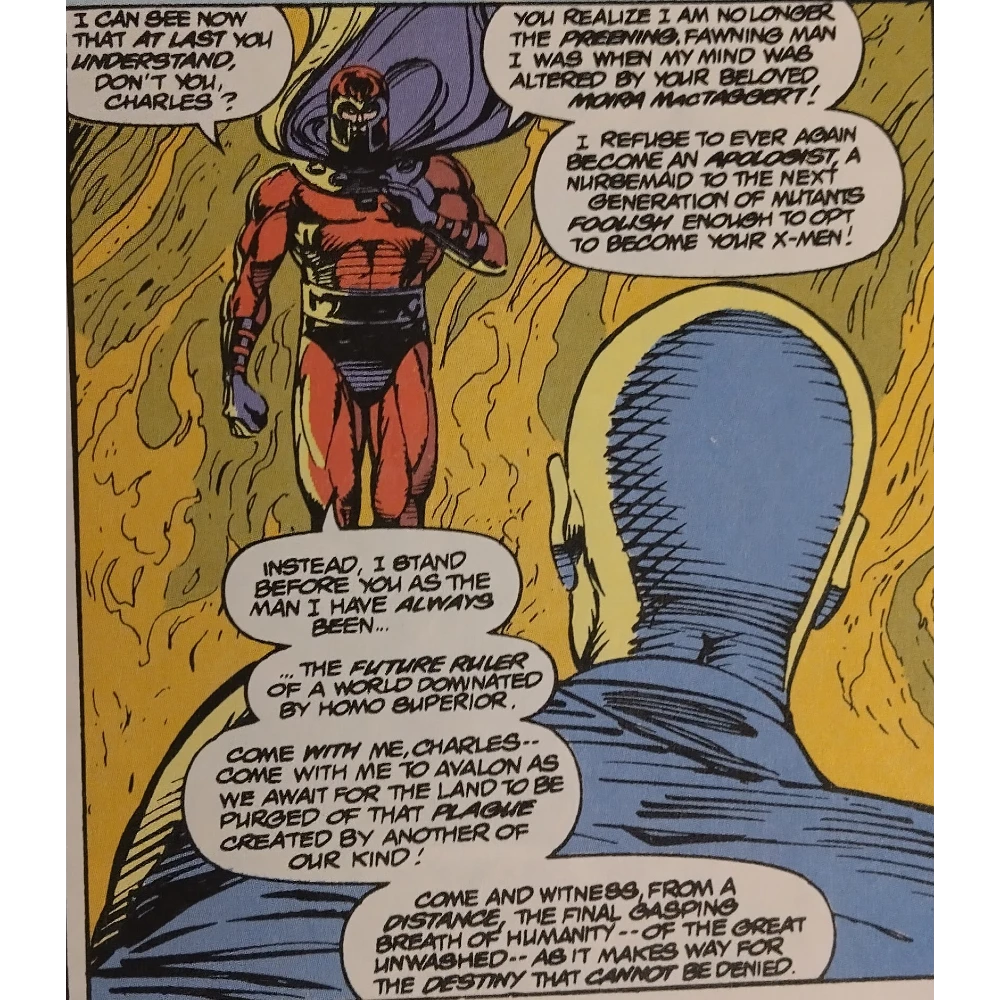
This is the concept that Stan Lee and Jack Kirby developed in their earliest X-Men issues, which gained additional complexity under Claremont. Yet that idea, tensions between mutant factions, was always so core to the X-Men that you could never really move beyond it or shake up the status quo too much. The world would never stop hating mutants, and the X-Men would never stop protecting the world against evil mutants that wanted to harm or enslave humanity. Lobdell and other writers add a few intriguing twists by not only having Magneto take a significant step toward his own victorious ends but in developing the doubts which surround the Xavier's dream.
"Dream" becomes this arc's buzzword, as Illyana's death, compounded by other tragedies, calls into question what the X-Men and their associates are truly fighting for. Xavier himself feels the heavy toll of his responsibilities, and Colossus in particular falters in his faith, temporarily aligning himself with Magneto's Acolytes, against the protestations of his friends. Stress is placed upon the similarities between Xavier and Magento's aims, two sides of the same coin, with the mounting hopelessness creating questions around whether Xavier's side is really any shinier than Erik's. This arc questions the very roots of the dream, not just the dreamer.
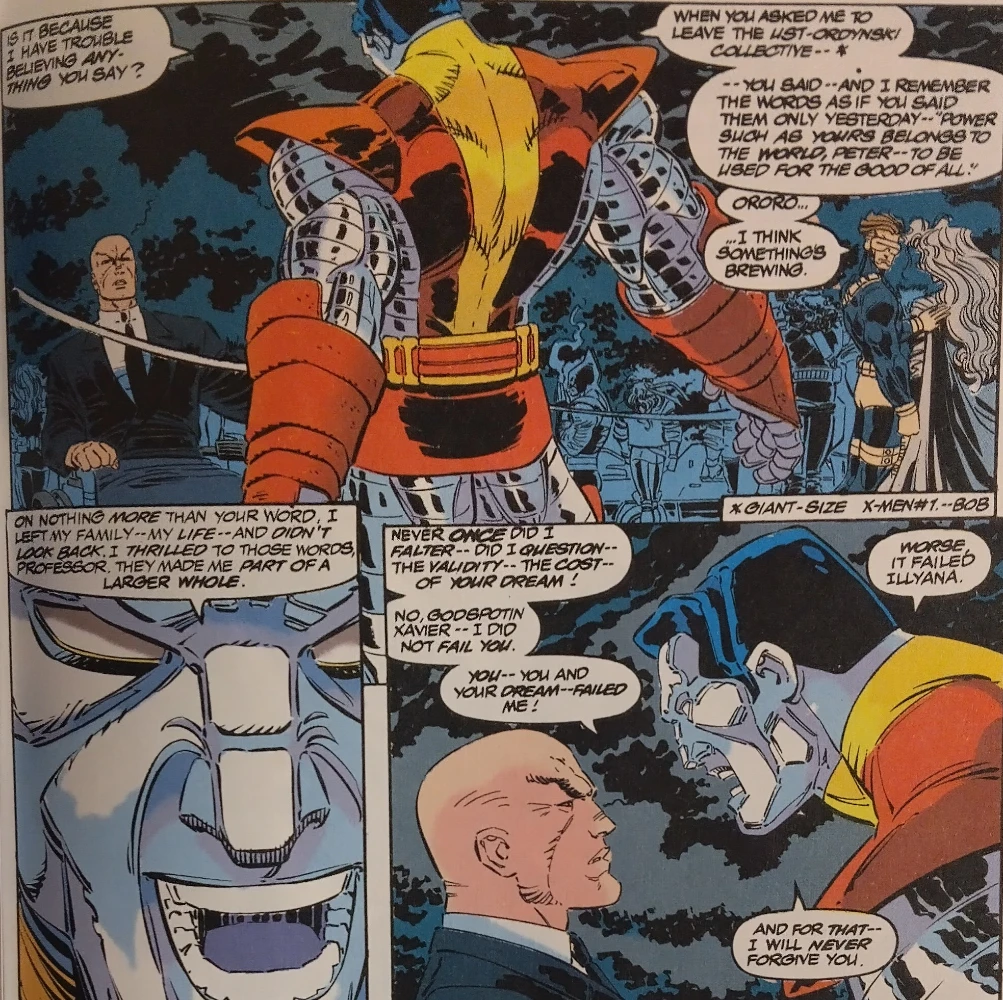
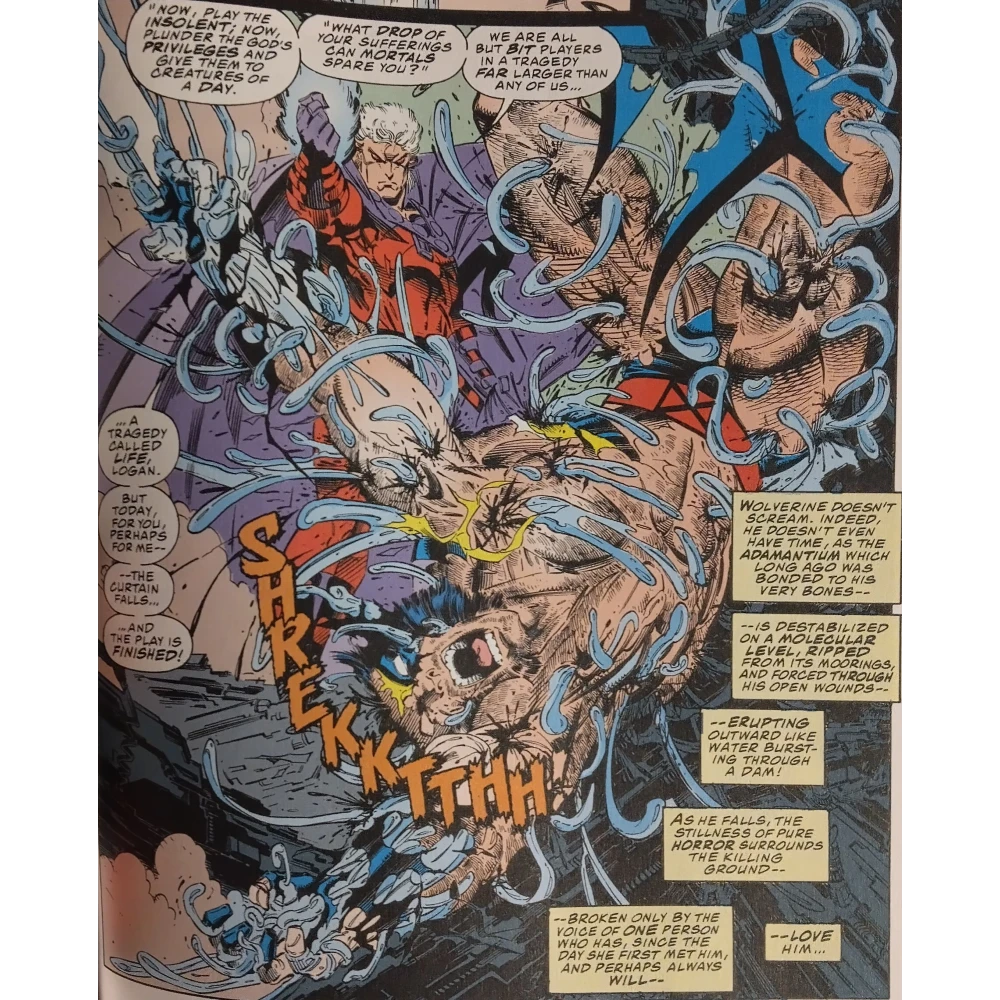
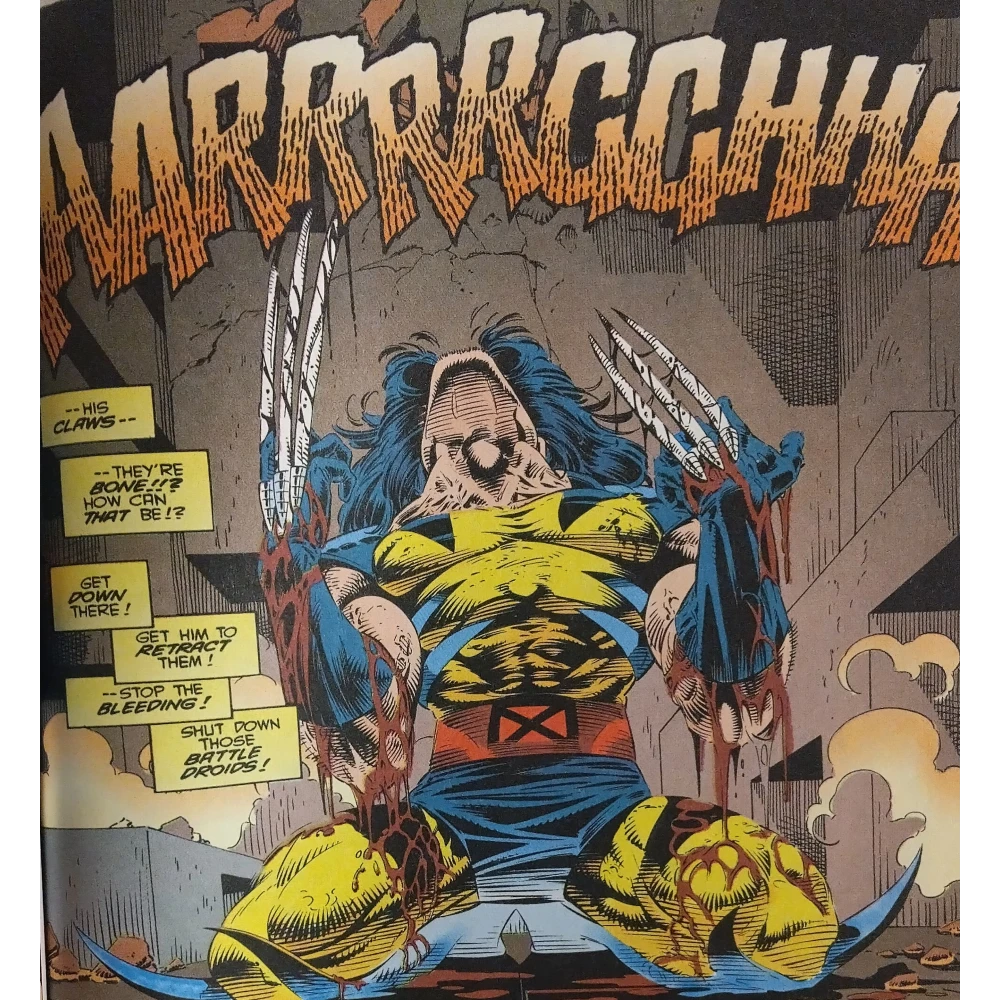
You never, or you should never, ally yourself with Magneto in practice, even if our writers endeavor to fashion empathy for him as a character. Though he does so in a rather wordy fashion, Lobdell latches onto the villain's past, drawing memories of dead loved ones to stress his hatred for humanity and fueling an attack on our planet which feels more monstrous than other previous attempt. He ravages Cable's body, confronts the X-Men physically at Illyana's funeral, and in this arc's most climactic moment, proves his full return to villainy by ripping the adamantium from Wolverine's bones. If you know one image from this arc, it's Logan's anguished form as Magneto extracts his skeleton's protective coating.
Yet the X-Men's founder himself is not left without blemish. Most integral to the "Onslaught" saga, Xavier rips through Magneto's mind, shutting him down in retaliation for the Wolverine attack. It's yet another example of how "Fatal Attractions" is framed as a turning point in the ongoing X-Men narrative. Xavier, presented in increasingly complex ways, leans heavily into a grayer morality than allowed him in his initial appearances. His dream has exacted a heavy toll on himself and his mutants, and one can't help but wonder if his assault on Magneto's mind isn't a satisfying form of delayed vengeance as it is a seeming necessity to shut the arch-villain down.
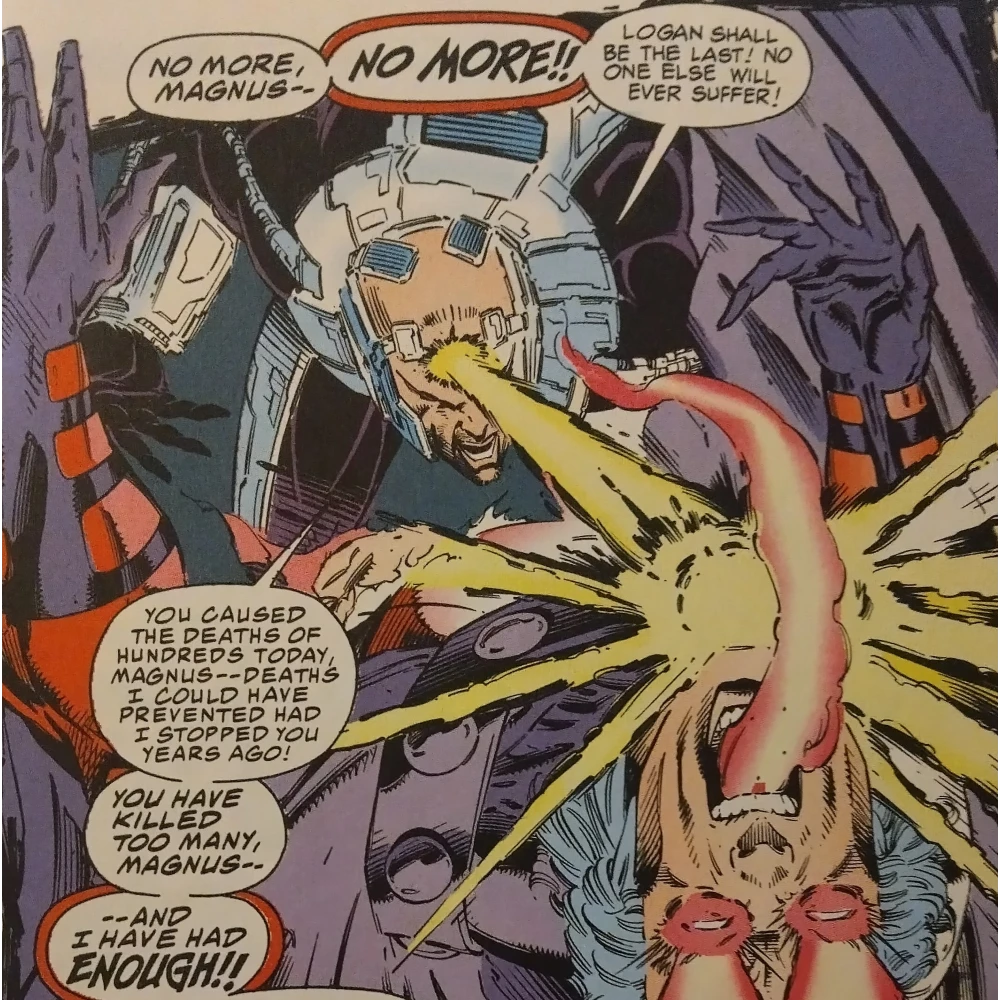
And what of Xavier's students? Our writers place them in their own frustrating situations as they confront not only Magneto but their mounting doubts in Xavier's dream. As X-Factor faces the reality of government pressure against mutants, so does the surprisingly introspective Quicksilver dwell on his own role in his father's legacy. Colossus wrestles with his own uncertainties, despite comfort offered him by longtime love Kitty Pryde; a brief scene where he burns some art pieces neatly shows him indulging in grief, destroying rather than creating. Nightcrawler, leading Excalibur at this time, seeks to expand his team's role in protecting mutandom in light of Magneto's actions. Wolverine, bearing the brunt of Magneto's physical retaliation, lives with the agony of a damaged healing factor and bone claws; Larry Hama, whose work in compounding Wolverine's mental state I've complained about previously, writes what I consider the best issue of the arc, heightening the impact of Wolverine's injuries and adamantium-free status with an external conflict which threatens the team.
Naturally, three decades have passed since this arc was written. The new status quo "Fatal Attractions" established has changed, through other events such as "Onslaught," "House of M," and X-Men's Krakoa era. Wolverine's skeleton is more once protected; Magneto returned in full force; Colossus rejoined the X-Men (and died, and was resurrected). Change is constant. Despite its temporary impact from a historical perspective, "Fatal Attractions" shouldn't necessarily be judged through history's lens. At the time of publication, it promised a major alteration in not only the lives of the various branches of mutant teams but in the core of their beliefs. It promised to shake the dream, contort it into more of a nightmare. And it did that.
"Onslaught" is the culmination of that twisting, as we'll explore later in this series, a grandiose epic running across multiple titles. If you want to explore "Fatal Attractions" in a similar fashion, as I noted, there are other volumes which pull more issues and series together. But as a core narrative, these six issues tell a fairly straightforward story that wrenches the mutant narrative in a dramatic, dark direction. A villain returns, heroes fall, alliances are strained, a dream is fractured. The exposition can run on a little long at points, but otherwise, the execution here is as solid as an adamantium coating before it's torn from Logan's bones.