(Strand)om Stories: X-Men: Colossus: God's Country Review
This volume provides a thoughtful cross-section on Peter Rasputin and his connection to home
—by Nathan on March 18, 2026—
There is a scene in 1976's X-Men #99, by Chris Claremont and Dave Cockrum, where the titular mutants head into space to fight the latest batch of slaughter-happy Sentinels. Both prior to launch and while in space, the armored Colossus makes reference to his brother, Mikhail Rasputin, a Russian cosmonaut who died on a launchpad after his own rocket exploded. Such an experience certainly instilled no small amount of trepidation in a man about to be blasted into the vast unknown beyond Earth himself. Nigh-invulnerable metal skin wouldn't be much help against the breathless vacuum of space.
They're brief moments given the whole of the arc, but they're some of the first pieces of dialogue which create deeper characterization for Piotr Rasputin (known to his friends as "Peter"). He's not just a metal man anymore. He had a brother, and as subsequent issues would reveal, possesses a longing to see his parents, younger sister, and homeland again. It's a testament–alongside, in that same issue, references to Storm's claustrophobia–to the hallmarks of Claremont's run: strong characterization, doled out early in pieces, which compounded upon themselves to generate empathy for and development in his central heroes.
We're not here for Claremont today, however. We're here for, in the words of our steel-skinned superhero, a "comrade" of Claremont's, or at least a contemporary: Ann Nocenti.
Nocenti's name has popped up sporadically in these blogs over the years, primarily for her few contributions to Spidey lore which I've read. I've never been the biggest fan of the work she created, noting (in hopefully fair quantities) strengths and weaknesses both. I've enjoyed what little of her Daredevil run I've read so far, and a recently reviewed Venom limited series of hers is what prompted me to review this volume. Nocenti isn't the only writer represented in the issues collected here, but she does provide the story from which it derives its name, a multi-part Marvel Comics Presents arc placed in conversation with a few other pieces which all depict Peter's relationship with his beloved homeland.
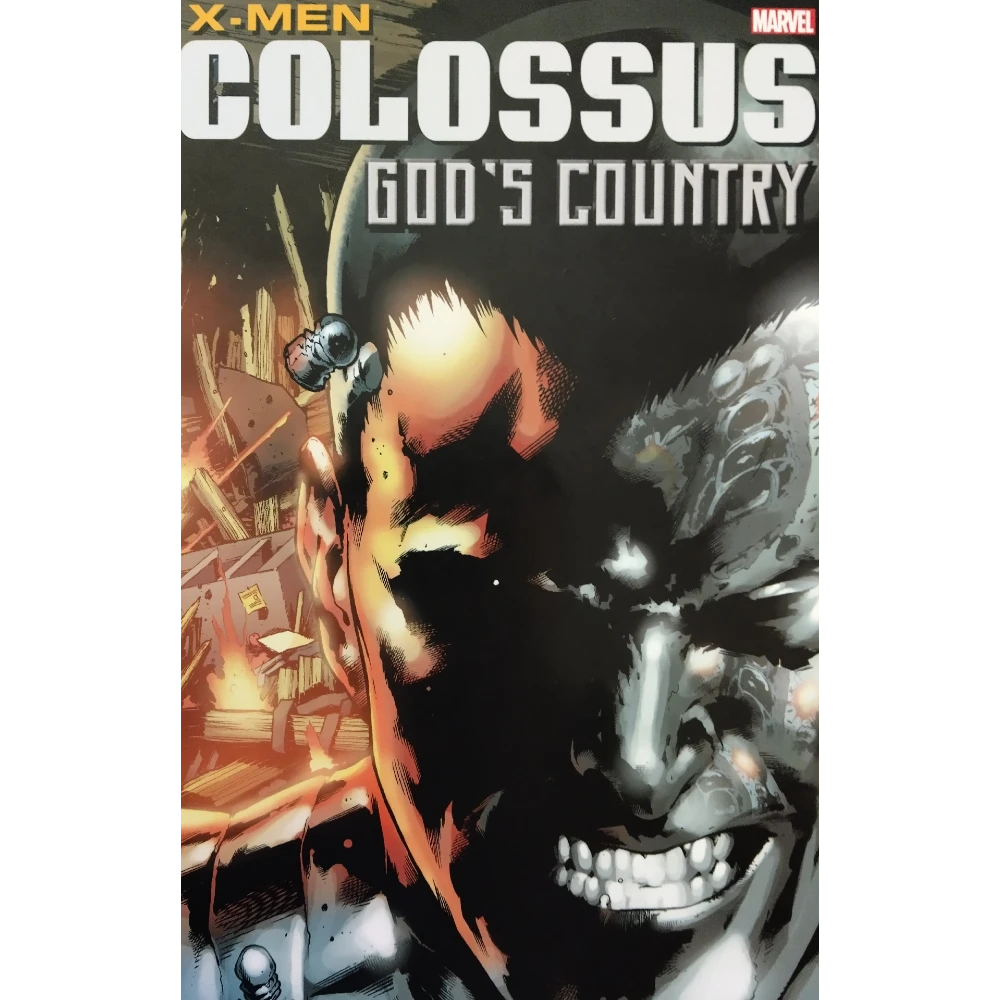
X-Men: Colossus: God's Country
Writers: Chris Yost, Chris Claremont, Ann Nocenti, Cully Hammer, and Neil Kleid
Pencilers: Trevor Hairsine, John Bolton, Rick Leonardi, June Brigman, Cully Hammer, and Michael Avon Oeming
Inkers: Kris Justice, John Bolton, P. Craig Russell, Roy Richardson, Al Milgrom, Cully Hammer, and Michael Avon Oeming
Colorists: Val Staples, Glynis Oliver, Mike Rockwitz, Michael Higgins, Gregory Wright, Marie Javins, and Pete Pantazis
Letterers: Todd Klein, Tom Orzechowski, Ken Lopez, Joe Rosen, Paul Tutrone, and Dave Sharpe
Issues Collected: X-Men Origins: Colossus and material from Classic X-Men #5, Classic X-Men #21, Classic X-Men #29, Marvel Comics Presents #10-17, X-Men Unlimited (vol. 1) #29, and X-Men Unlimited (vol. 2) #14
Volume Publication Date: January 2016
Issue Publication Dates: January 1987, May 1988, January 1989-April 1989, December 2000, June 2006, July 2008
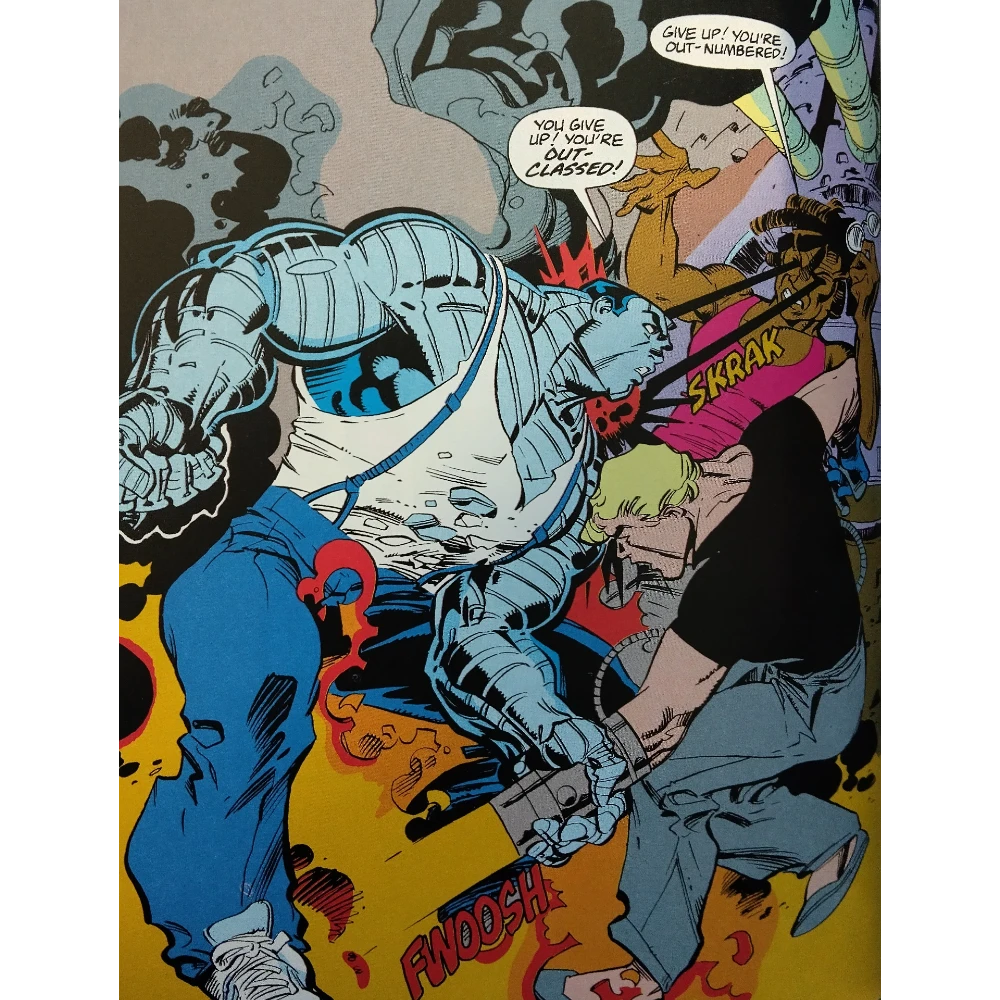
Around the same time Don McGregor was using Marvel Comics Presents to send T'Challa on a quest for his mother, and about the same time Claremont was wrapping one of Wolverine's first ongoing solo adventures, Ann Nocenti was grappling with American politics and how folks on each side of the Iron Curtain perceived each other. "God's Country," appropriately enough, takes up most of the space in this volume, meaning I'll be discussing it the most out of all the included narratives, but I'd prefer beginning with focusing on the collection's overarching theme: Peter Rasputin's relationship with his home country.
These assembled stories, published over twenty years, largely reflect on Peter's earliest days with the X-Men, and even before, with Nocenti's arc feeling the most "recent," relatively speaking. Peter's younger, he hasn't been with the X-Men long (if at all) in these stories, and he finds himself at a strange crossroads in terms of identity. He doesn't want to be defined by politics, especially those of Russia's leaders, but he cannot help but find himself drawn back into its embrace, particularly when he returns home.
Peter may be a man of metal, but his home was affected by a particular "man of steel" (and I'm not talking about Mark Miller's Soviet Superman), and the impact of Stalin's Communist policies lingers across these issues. They create turmoil for Peter and his family in the wake of his brother's death, conflict with neighbors in a narrative where Peter returns home, and even frustrations between himself and Americans as folks try to figure out just who this giant of a Russian man supports in this Cold War. But tension exists, and these narratives, though published at different points in time and focusing on different aspects of Peter's life, do well to present Colossus as a well-rounded figure, enmeshed in the struggle of identity.
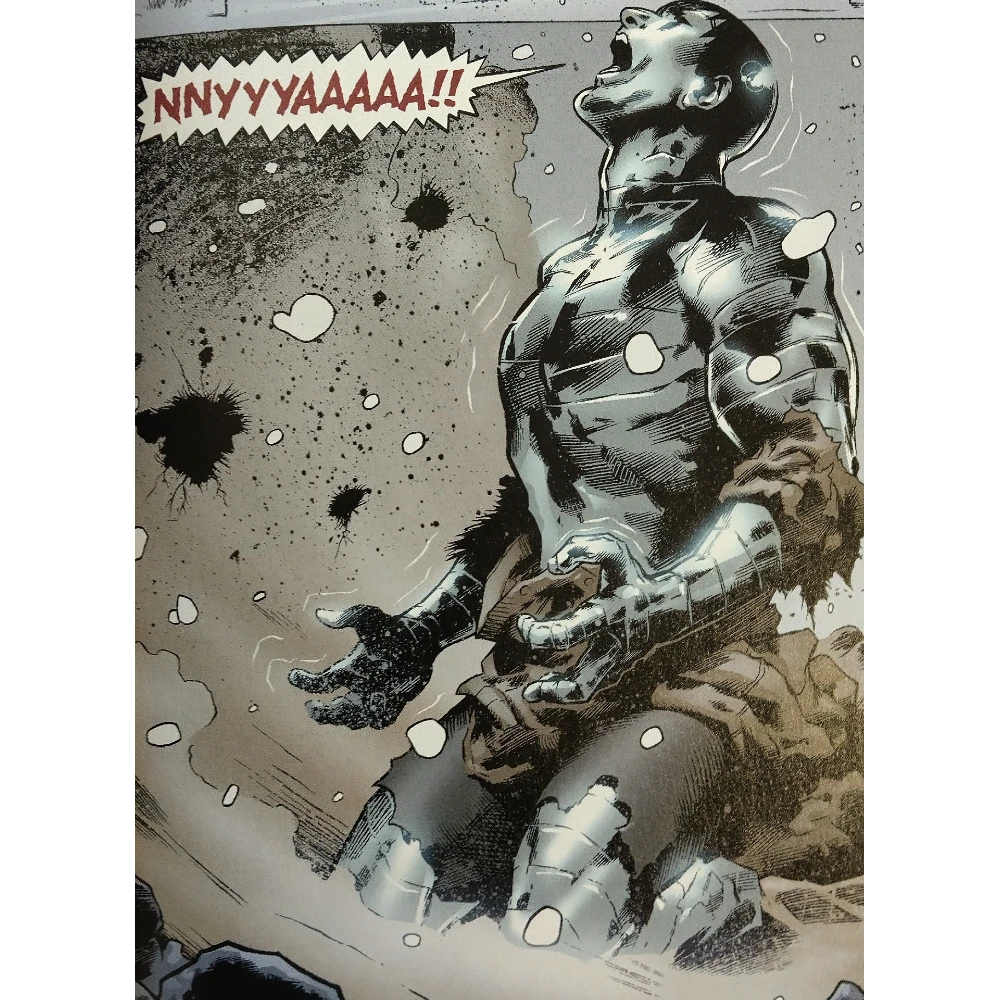
Peter loves his family, that much is clear, his older brother and younger sister specifically. Chris Yost and Trevor Hairsine show in the opening narrative how Peter's powers were triggered after hearing of his brother's death, a poignant moment which grafts his beginning struggles as a mutant to an even deeper tragedy. Mikhail's ghost figuratively haunts these pages, serving as both Peter's greatest loss and a deep inspiration. We're not told much how specifically Peter's upbringing fashions him, but this volume helps you recognize the values instilled in him by his family, as shown by the way Peter treats others. These narratives, especially those written during the 80s, are intended to create a bit of conflict in the reader: America and the Soviet Union may have been at the tail end of the Cold War, still mired in messy politics, but Peter provides an example of a Russian citizen who embodies strong values that aren't corrupted by politics.
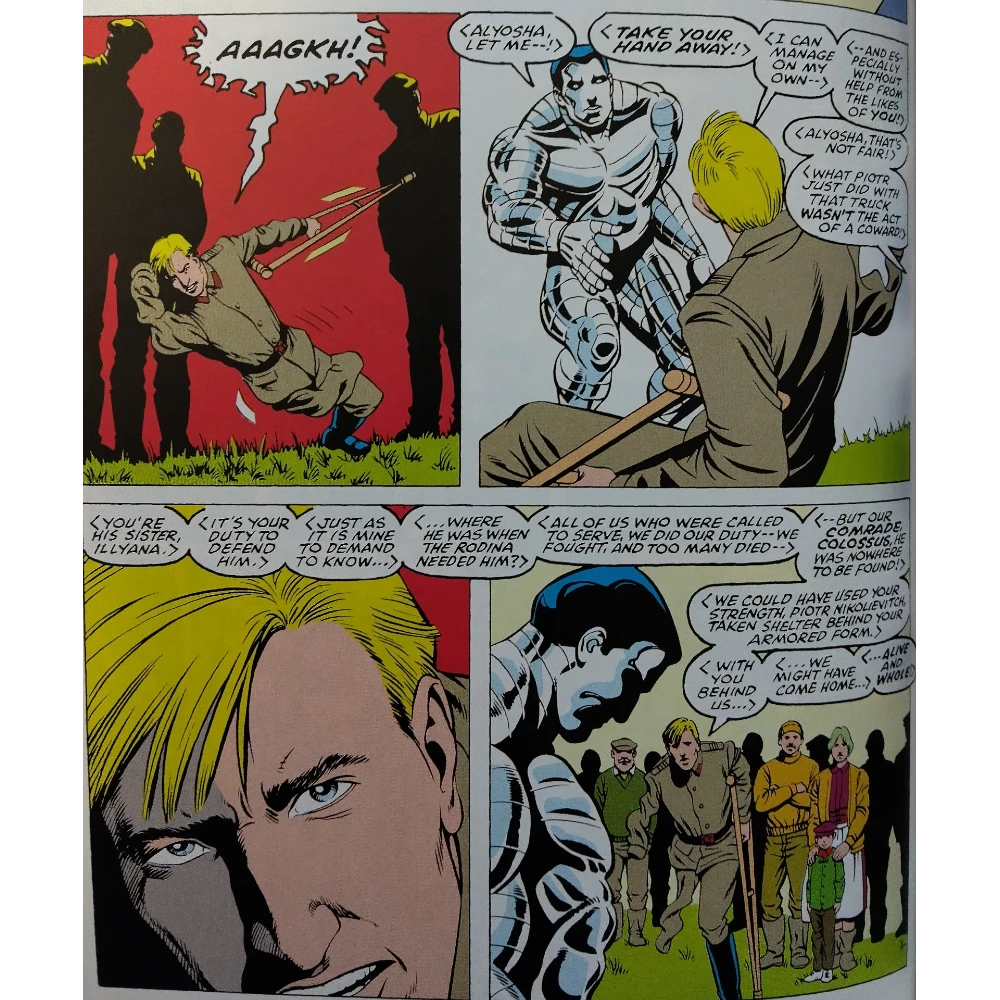
The "Motherland," in all its complexity, is presented in the multi-faceted way it needs to be to escape either sappy platitudes or demonization; Peter isn't the only "good" Russian in this volume, but there are very real evils presented…and those evils or even perceived injustices aren't only committed by Soviet characters we would label as "villainous." When revisiting his family in a Classic X-Men issue, Peter visits the grave of a friend killed in Afghanistan, is accosted by another friend wounded in Afghanistan (who specifically calls Peter a traitor), and spoken to more tactfully by a federal agent. The reality is made clear: Peter left, and to some, that means desertion. His life fighting with an American superhero team feels traitorous. Colossus is left to grapple with the complexity that brings, the love for family and home seemingly at odds with being so far physically but leading a life that embraces other ideologies.
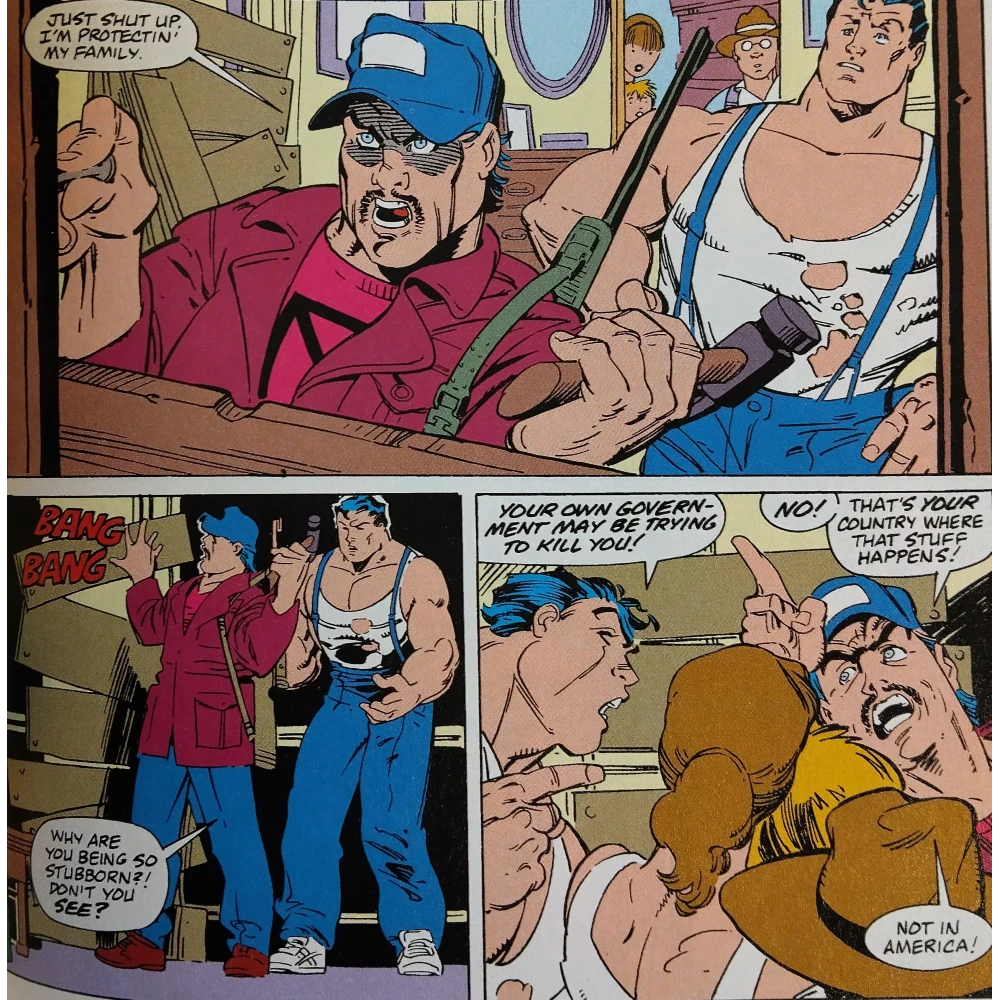
Yet Peter's time in America is imperfect, and it is here where Nocenti's "God Country" plays into the volume's themes. At least one other review I've read notes that Nocenti's portrayal of Cold War conflict in this Marvel Comics Presents arc is somewhat simplistic, and I would temper such language a tad. Nocenti is direct, her themes writ without much flourish, her characters embodying concepts to the point of caricature. Peter teams up with a former army veteran who's a die-hard supporter of anything American and seeks to protect his family, home, and values. "A man's home is his castle" kinda guy. Yet the story doesn't deal with Soviet or even Russian enemies…the bad guys are Americans.
Such storytelling allows Nocenti to not only highlight Peter's nature as a genuinely kind individual, even when branded a "Commie," but it lets her wrestle with some American sins. Russian politics and American culture collide as she uncovers a sinister homefront conspiracy. The former army vet may be all about apple pie and baseball, but he learns over the issues to temper his expectations; readers see the impact his "rah-rah!" spirit has on his impressionable young son and the dangers of such ideological rearing; even the man's wife, suffering from mental illness of some sort, is allowed moments of grace and empathy, especially as the reader sees an inner strength she possesses that is generally cowed by her husband.
There's an arc to these issues, and though the endgame may be obvious, it's still an engaging read. You know, from the moment you meet Army Vet Guy, who his character is going to be, you know you're meant to get your nose a little bent by his mannerisms, and you assume he'll either dig in his heels or come to terms with his own political and moral blindness. Better presented is Peter himself, who makes a few cutting remarks on exploitive American culture, which aren't groundless. In good lies evil, and in evil good, and it's in this seeming paradox where Nocenti tries her best to work and find commonalities between characters, regardless of where they're from.
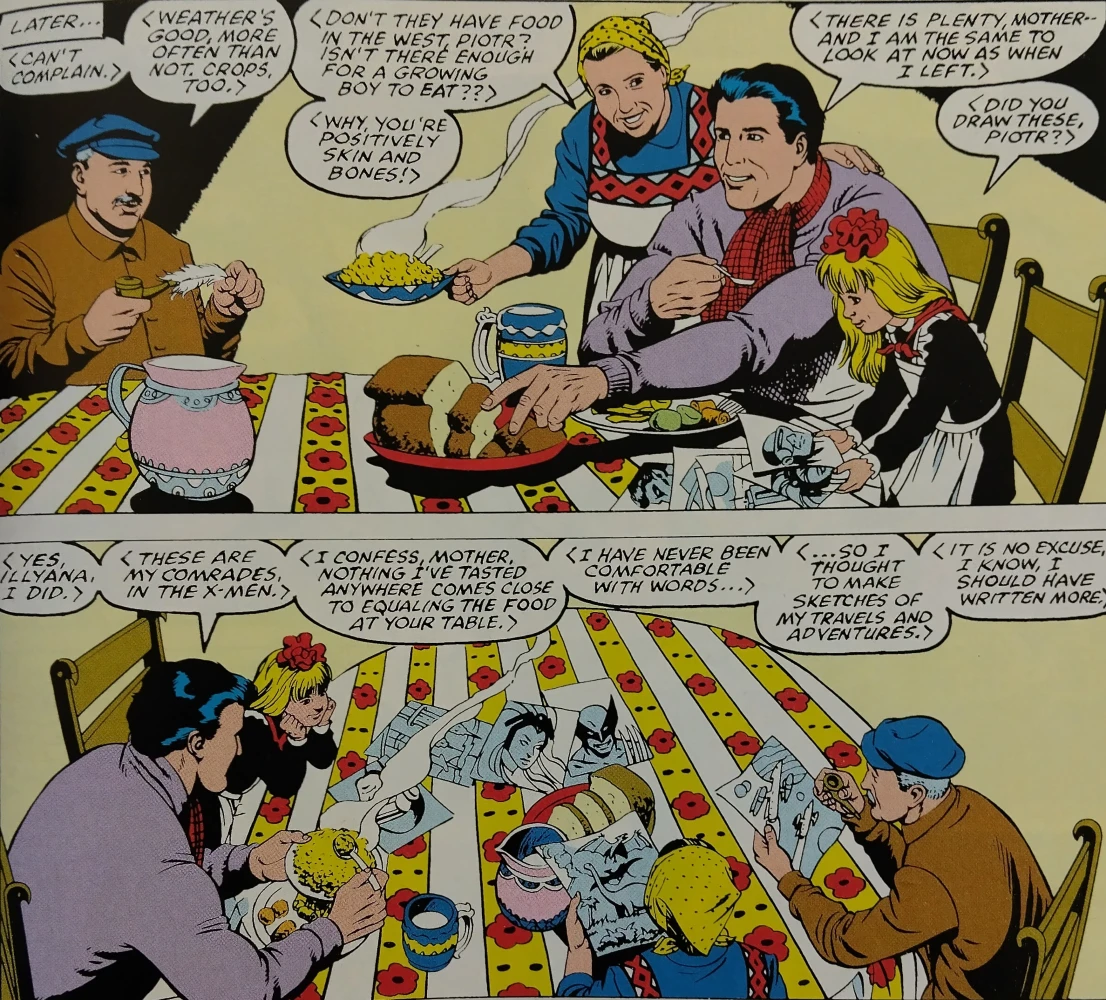
Peter as a person, not even just a hero, proves throughout the volume why he became a standout member of Claremont's X-Men. The writers here remember Peter's passion for art–a little fact I had forgotten myself–using the medium to let Peter express his interests, his opinions of his home. He criticizes exploitive American art, draws pictures for sister Illyana, carves a memorial for a fallen friend. In a few stories, he seeks the possibility of romantic love, and elsewhere occasionally gives into a bit of seething anger, though writers are careful to temper his strength with a quieter, more peaceful demeanor. He's a deeply characterized individual, and though we can thank Claremont for those seeds, it's good to see how other writers have capitalized on the initial steps Claremont took.
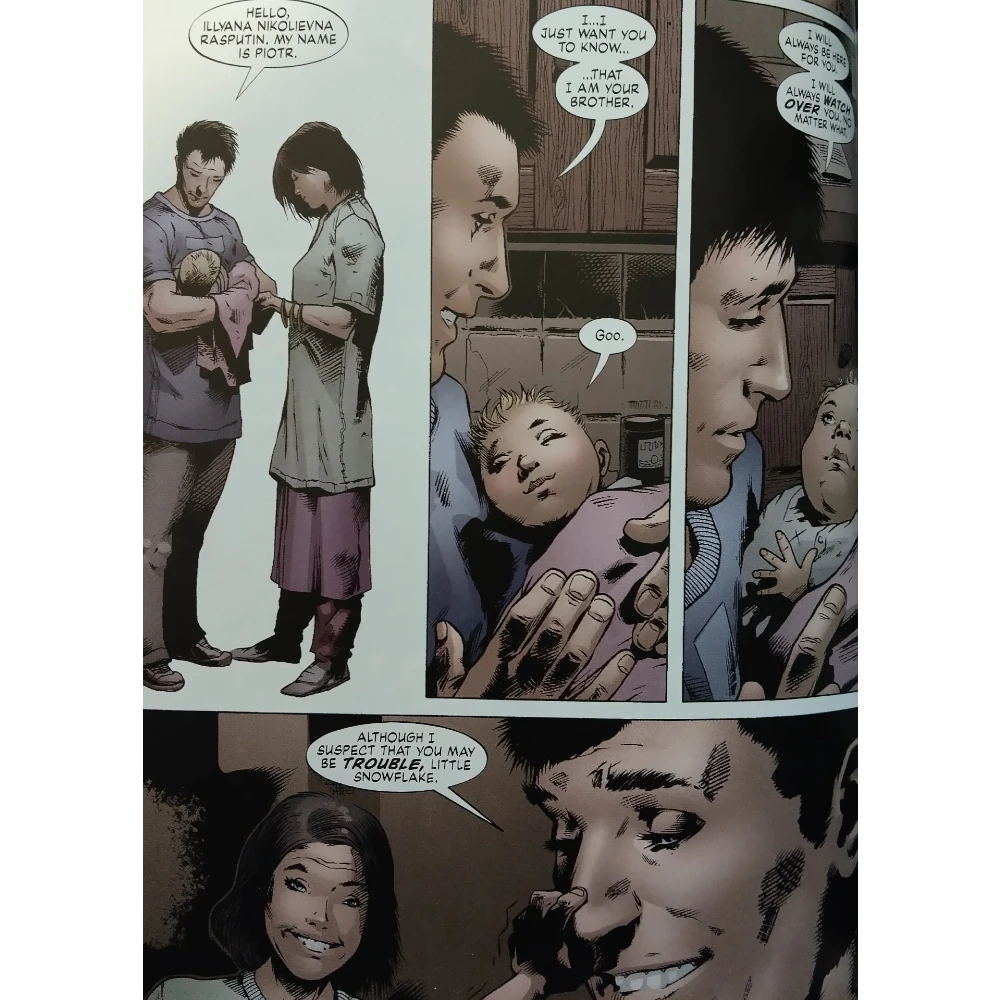
Several of these narratives draw in Illyana Rasputin, prior to her transformation into Magik, presenting her as a younger sister Peter absolutely adores. Yost marvelously implies Peter's desire to watch her as Mikhail watched him, being for Illyana the older sibling Peter lost with his brother's death…which only makes his journey to America to serve Professor Charles Xavier and the X-Men all the more personal and costly a decision. Yost and Claremont both treat her as someone astounded by her brother's mutation, not cowed like others by Peter's silver sheen. Her presence, though sporadic, is massively important to Peter as a character, and it's great to see this volume emphasize how integral she is, even before becoming a New Mutant.
There may not be an overarching narrative guiding this volume along, but there is a thematic tether. The premise may be pulling together stories which showcase Peter Rasputin's conflicted relationship with Mother Russia, but other touchpoints can be found—Colossus' strength and heroism, his love for his youngest sister, his artistic talent. This volume is like a smaller version of Wolverine: Prehistory, a collection I reviewed which shows the fan-favorite mutant moving through time. So, too, do these issues present a chronological movement for Colossus, albeit quite a bit shorter, as he grows from a young man to a mutant hero. Colossus may have a nigh-invulnerable exterior, but the heart inside him is another matter: vulnerable, looking for belonging and love, wondering how best to move within the complex politics of two countries he thinks of as "home."