Random Reviews: Airboy Archives (vol. 1)
Our titular hero is a tad straight-laced, but other characters and circumstances provide engaging complexity in these issues
—by Nathan on July 11, 2026—
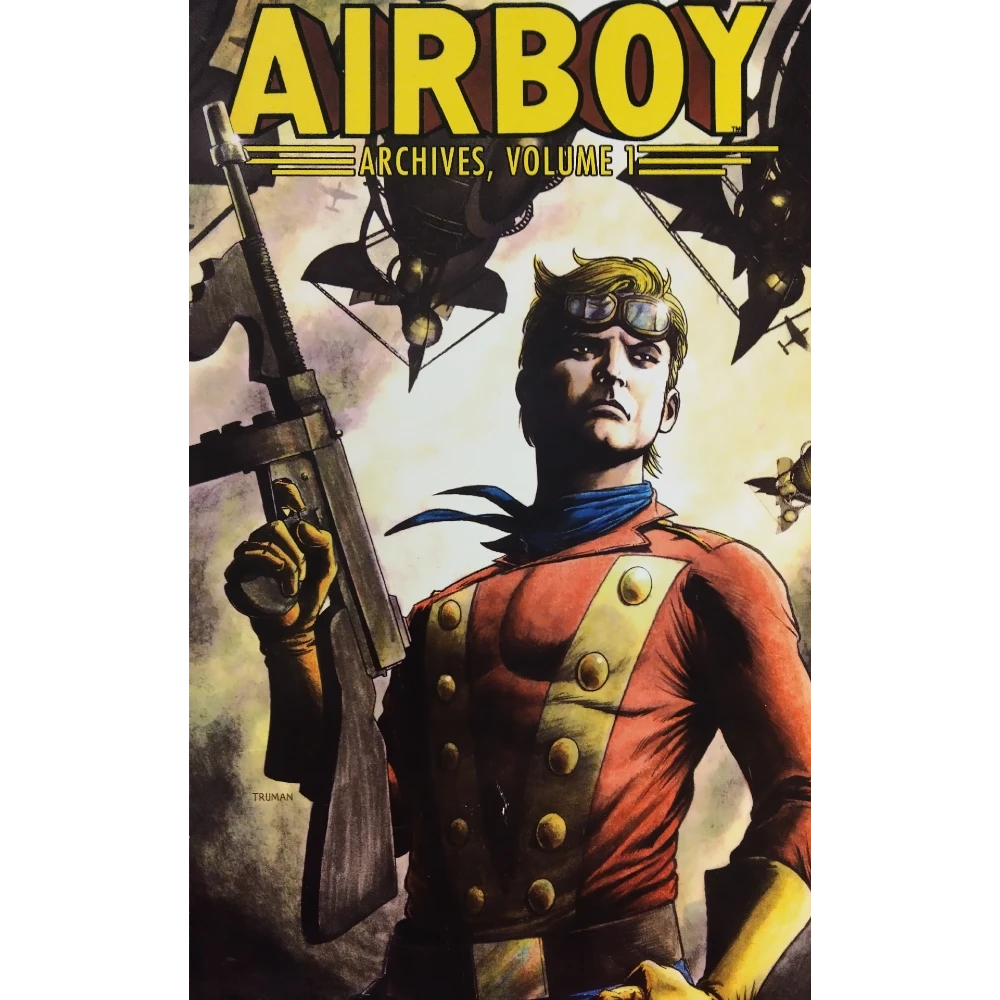
Today's review features the latest hero in a handful of pulp characters whose updated appearances I've reviewed. I previously examined the adventures of Doc Savage and the Shadow as reimagined by DC Comics in the 70s and 80s, respectively. Valiant, during the 90s, even had some fun with then-modern takes on Magnus, Robot Fighter, and Solar, Man of the Atom. For this post, we're checking out another company that decided to get in on the "pop icon rebirth" bandwagon in the 80s: Eclipse Comics.
Eclipse, as an independent publisher working through the direct market, has not popped up much in these reviews. I took a look at Dave Stevens' The Rocketeer (itself an homage to pulp heroes of old) and Tim Truman's Scout, but I've not explored the breadth of their output. Truman actually makes his return in these issues, the Hawkworld writer/artist providing some early art for a series kicked off by one of the guys responsible for breaking Batman's back. As I've been exploring that near-fatal fight between Bane and the bat, I realized I wanted to divert a little into different material presented by Chuck Dixon. Paired with Truman and other artists, Dixon takes a hero originally debuting in the 40s and modernizes him for the 80s. But this Airboy hasn't just resurfaced from the ashes of World War II as an old man. This ain't Airman Returns.
No, that's not quite right. Airboy does return…and as an old man. But a different, younger hero is set to take up the goggles and pilot the sentient airplane known as "Birdie" in these issues, ready to keep the "boy" half of that moniker intact.
Airboy Archives (vol. 1)
Writers: Chuck Dixon, with Cat Yronwode
Pencilers: Tim Truman, Stan Woch, Larry Elmore, Ben Dunn, Bill Jaaska, and Tom Lyle
Inkers: Tom Yeates, Will Blyberg, Emil Novak, Jeff Butler, Mark A. Nelson, Larry Elmore, John Nyburg, Hilary Barta, Bill Jaaska, Kim DeMulder, Jeff Darrow, Romeo Tanghal, and Vern Henkel
Colorists: Ron Courtney, Olyoptics, Moon Doggies, and Steve Oliff
Letterers: Tim Harkins and Steven Haynie
Issues: Airboy #1-16
Volume Publication Date: March 2014
Issue Publication Dates: July 1986-February 1987 (published bi-weekly)
Publisher: Eclipse (issues), IDW (collected edition)
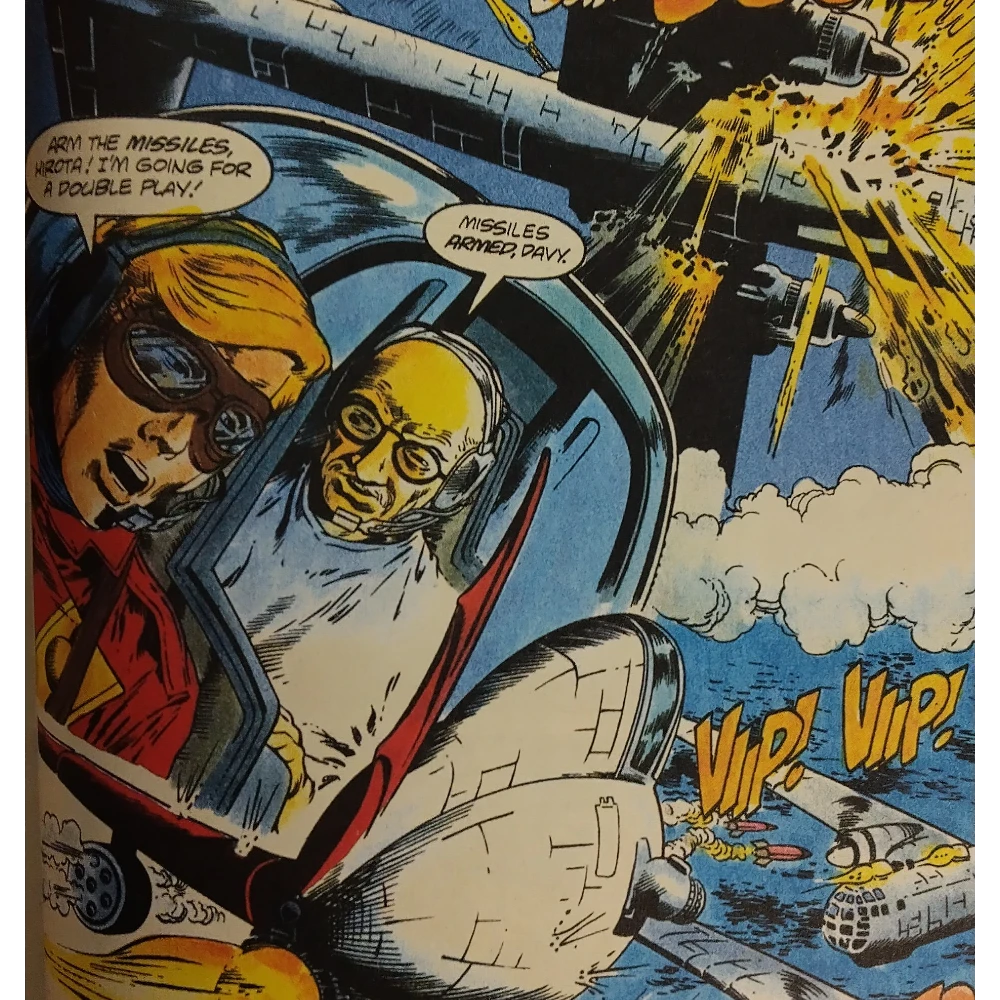
I am not at all familiar with the original Air Fighters comics published during World War II, where Airboy debuted. Though I recognize some of the character names coming into this volume, such as Valkyrie and the Heap, I have no personal affiliation with any of their appearances prior to Dixon's series. That means I entered this series clean of comparison, which I tend to prefer when examining updated versions of classic characters. I recognize that some folks read modern takes on the Spirit or the Phantom, for example, specifically because they love the originals and often compare the two versions; that doesn't apply to me so much. I'm just here for the stories.
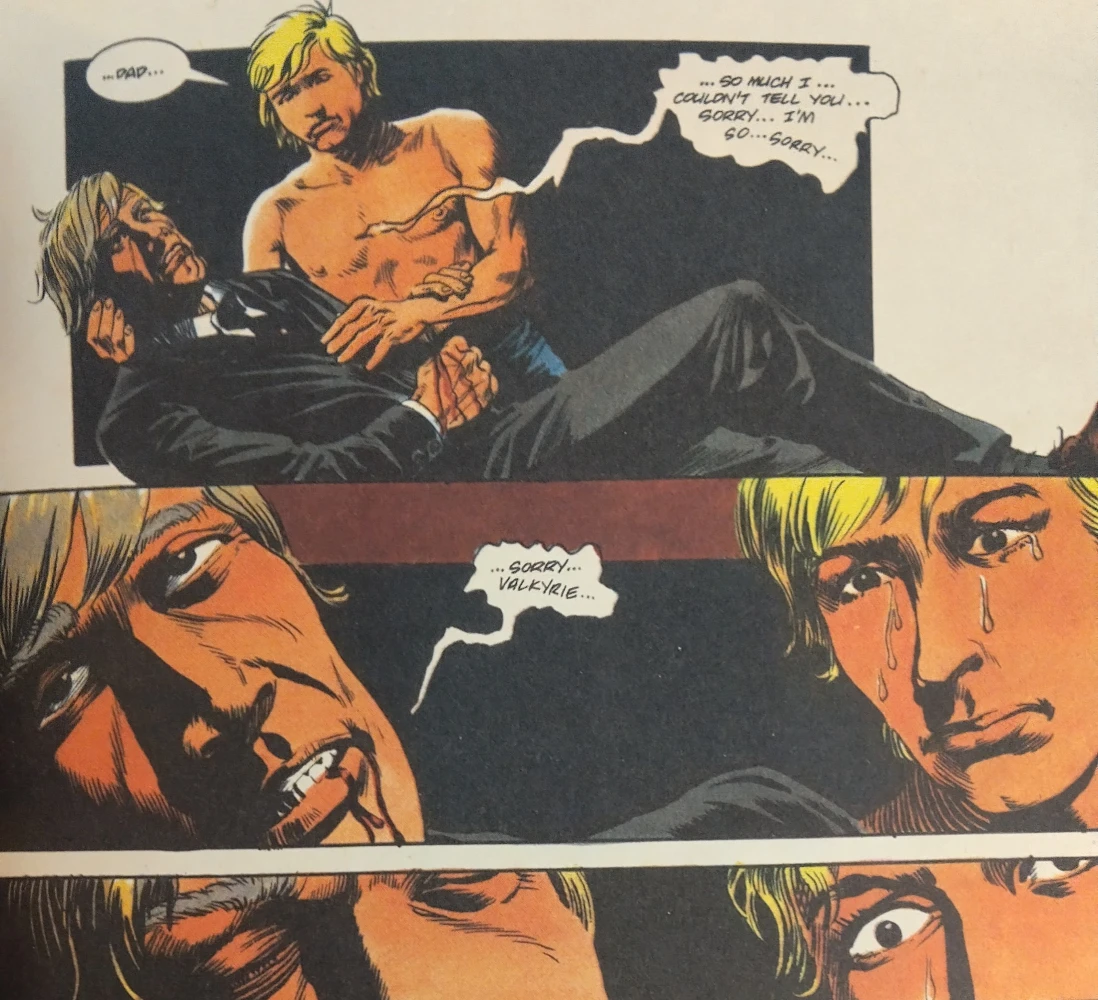
Which means I entered the adventures of Davy Nelson III without any strings to hold back my perspective and found myself open to the direction these issues take the Airboy concept. Dixon gives the old war hero a new, fairly violent twist: Davy, you see, is the son of the original Airboy, Davy Nelson Jr. In our very first issue, the older, retired Airboy is brutally murdered, leaving his son to pick up his wings. His purpose, moving forward, is twofold: avenge his father's murder and continue the Airboy legacy. The former is a pretty easy accomplishment; the latter becomes much more complicated.
Dixon nicely recognizes that he must move beyond what I assume were the black-and-white morals of the original comics, where you could just throw Airboy at Nazis without anyone batting an eye. I'm all for costumed heroes taking down Nazis, but even though their particular brand of fascism continues rearing its ugly head, that isn't the kind of evil Dixon plans for Airboy to tackle. Davy's enemies are within and without, the young man sometimes becoming engaged in Cold War-style espionage and war adventures, other times facing threats from within his family's history. He could be battling his father's greatest foe Misery in one issue, a gang of Floridian dope dealers the next. Airboy's adventures, fairly, take him to different ends of the earth, Dixon always maintaining strong levels of action and suspense throughout the volume.
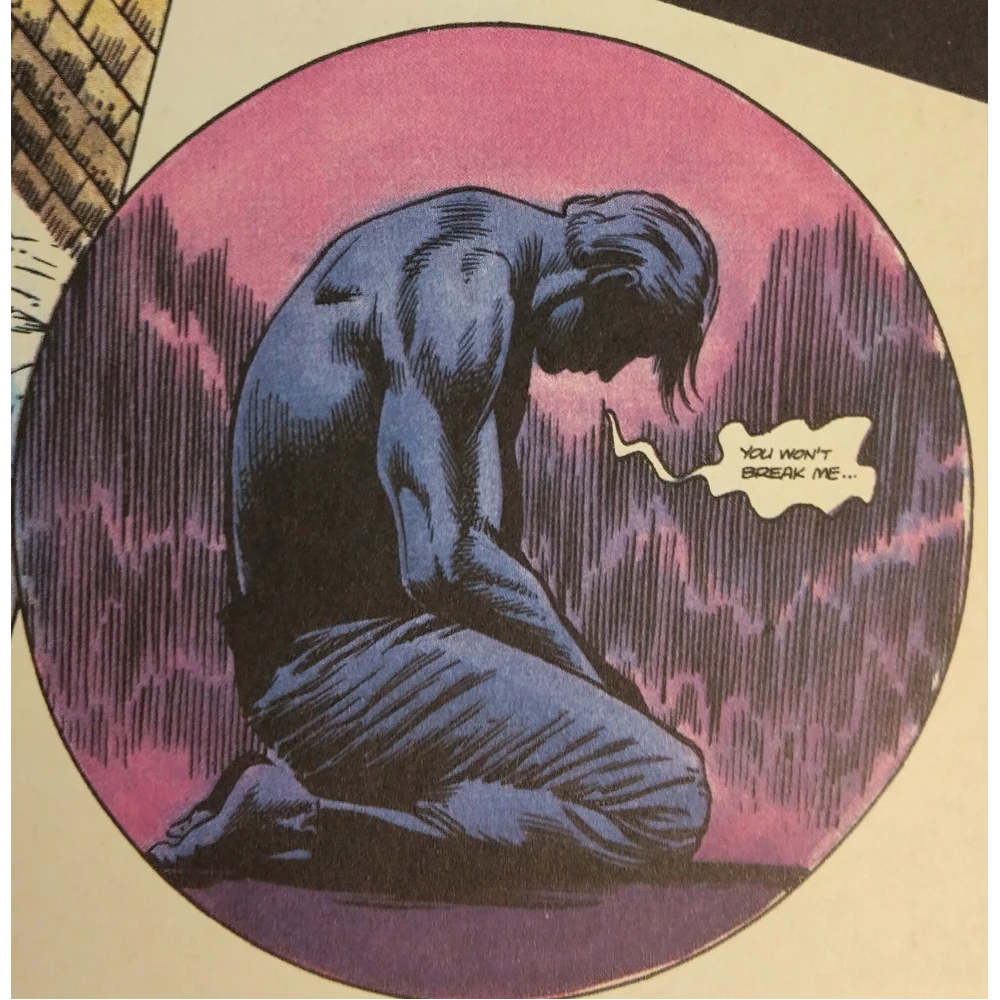
Most interestingly, Davy contends with the concept of legacy, his father's dual life haunting him in more ways than one. Dixon throws in the moral wrinkle that Davy learns his father's company dealt arms to known smugglers, cocaine dealers, and so-called revolutionaries. I was hoping this revelation would lead Davy on an "Armor Wars"-style mission to prevent further atrocities, but he instead gives his company a stern talking to and goes on his way. Still, it lets Dixon set Davy up as someone his father may not have been: this new Airboy's going to be more attentive to the world around him, more aware of evil in all its forms. He possesses great fortitude, enduring a kidnapping early in the volume, swearing to not be broken. Davy doesn't want to be better than his father, eclipse the original Airman's legacy, but he perhaps wants to be less ignorant.
There can be a "goody two-shoes" aspect to Davy that periodically grates. He's not without his slight rough edges–he seems to have little compunction about killing–but from the jump, he's beyond decent. Generally makes the right decision, endures harsh conditions, wants to look out for underprivileged people. None of these attributes are inherently bad or weak, and they're what make Davy a hero. But they mean he comes across as pretty static across these issues after swearing to uphold his father's mantle. He encounters conflict as a result of this decision, but most of that conflict is external. There's not much in the way of internal development or challenge that he must personally overcome.
Fortunately, Dixon saves that aspect for his supporting cast members, all of whom are presented as more interesting than our main flyboy. Japanese swordsman Haroda serves as a mentor to Davy, following a code of ethics he established after first fighting the original Airboy during World War II. Skywolf, a fellow Air Fighter from the original Airboy comics, serves as a grizzled old veteran that represents the somewhat harder edge I wish Davy had; he receives his own back-up strips beginning with issue #9, and these tackle more interesting subjects of spycraft and political drama, Skywolf sneaking past red tape to get results. He teams up with the Yakuza in one tale! I don't see Davy doing that. Skywolf offers those moral ambiguities that Davy breezes right past, those back-up strips delivering an extra layer of complexity.
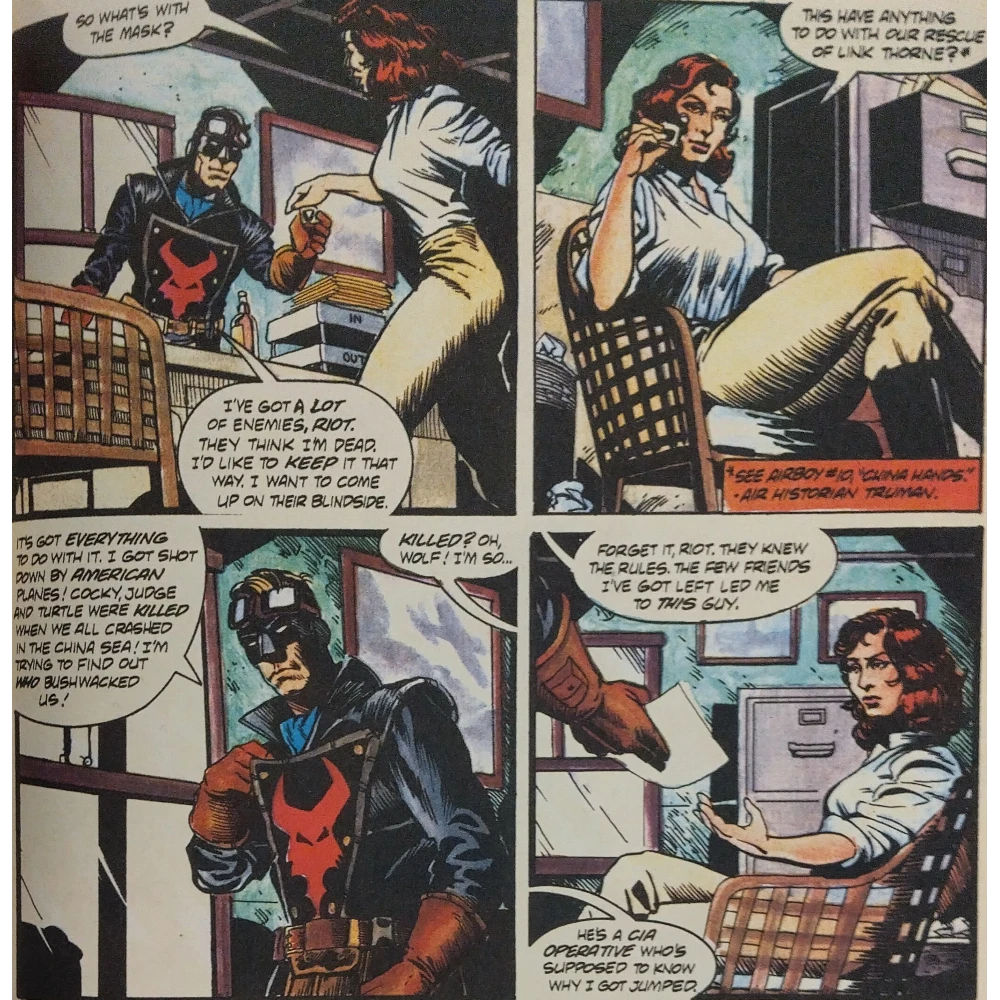
Dixon's strongest character is Valkyrie, a German foe-turned-friend (and more) of the original Airboy. Trapped in suspended animation for years, Valkyrie reemerges to find her beloved Davy dead, replaced by a younger Davy. That he reminds her so much of the man she once loved creates conflict for both Valkyrie and the young Airboy, their relationship a game of emotional ping-pong. Dixon doesn't slide too deeply into melodrama, founding their burgeoning interest on genuine confusion. Davy wrestles with his own possible burgeoning interest, knowing well enough how unfair any emotional attachment might be. Valkyrie, too, realizes she can't just fall for Davy because she still loves his dearly departed dad. Thus, tension.
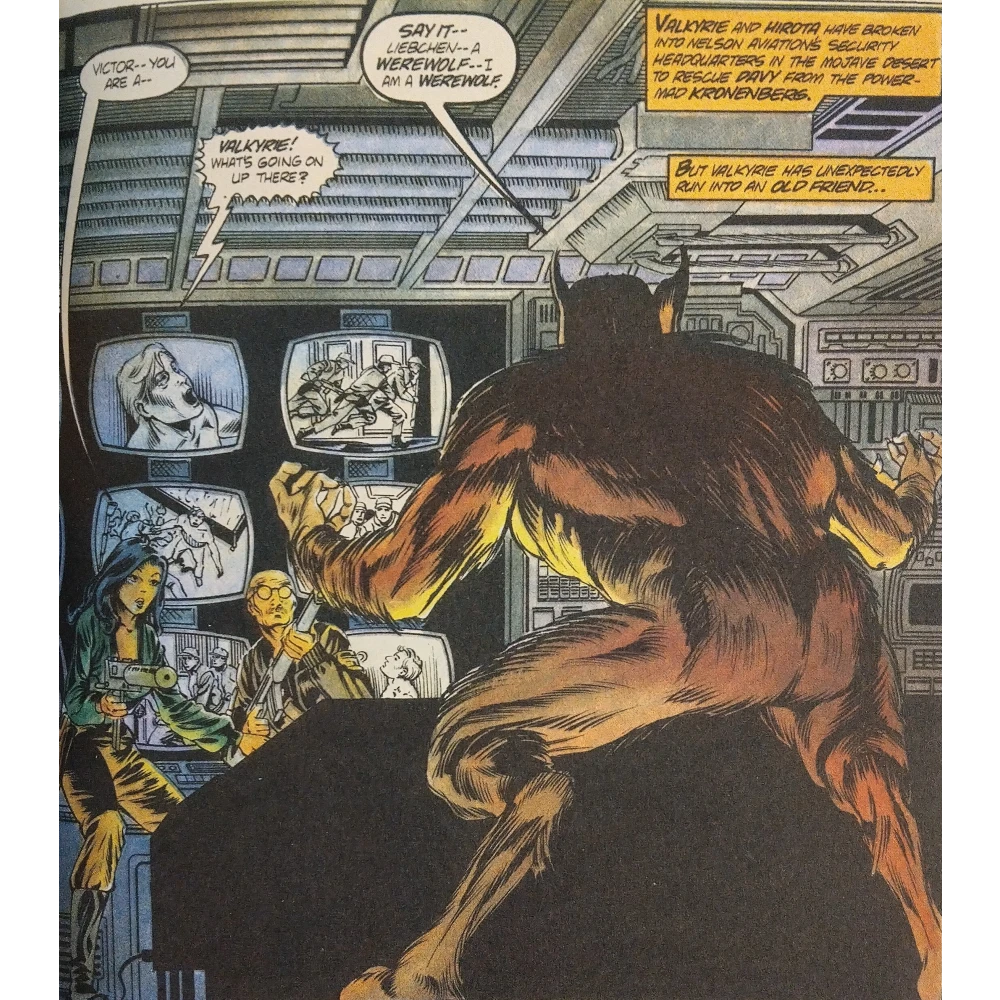
These stories ask readers to walk a balance beam between realism and fantasy. Davy and his fellow Air Fighters confront actual problems of the day, including drug runners and rebellious fanatics. It's the Cold War; the futures of entire countries are fought over, and Davy and Friends swoop in with their planes to prevent the spread of evil, be that communism or cocaine smuggling. The groundedness Dixon achieves is heightened by Truman and other artists, who bring realistic enough art that hones in on the details of flying machines, settings, and military gear. Yet Airboy dips its toes into the fantastical elements I assume were inherent in the original comics; the Air Fighters team with the Heap, Valkyrie and Haroda confront a werewolf, Airboy's father's arch-enemy is a hooded dude with a skeleton head. Enough weirdness exists to add a bit of pep to the series' more somber tone without drawing you out of the stories. You'd think the shambling muck monster or female German warrior asleep for decades would be jarring, but Dixon manages to splice the natural and supernatural nicely.
From what I can tell, the next Airboy volume is out-of-print and stupidly expensive, so my forays into the world of Davy Nelson III likely end here. But it's a soft landing, Dixon, Truman, and others guiding "Birdie" to the ground gently. Some turbulence comes in the form of a fairly uninteresting central character; he's actually more engaging when impacted by events and characters around him–his father's murder, Valkyrie's torn affections, a legacy tainted by arms dealers and smugglers. But it's a clever idea Dixon hits on, drawing in a classic hero's son rather than just aging up the original Airboy. It means Davy enters a world his father didn't encounter much of as a hero, bringing the Air Fighter brand to the Cold War. He enters that world a little too perfect, perhaps, but that's why we can rely on other characters to bring the additional drama and moral complexity young Davy lacks.