Distinguished Critique: The Forever People Review
Clever ideas do not a narrative make, as Jack Kirby's imagination supersedes his storytelling here
—by Nathan on July 29, 2026—
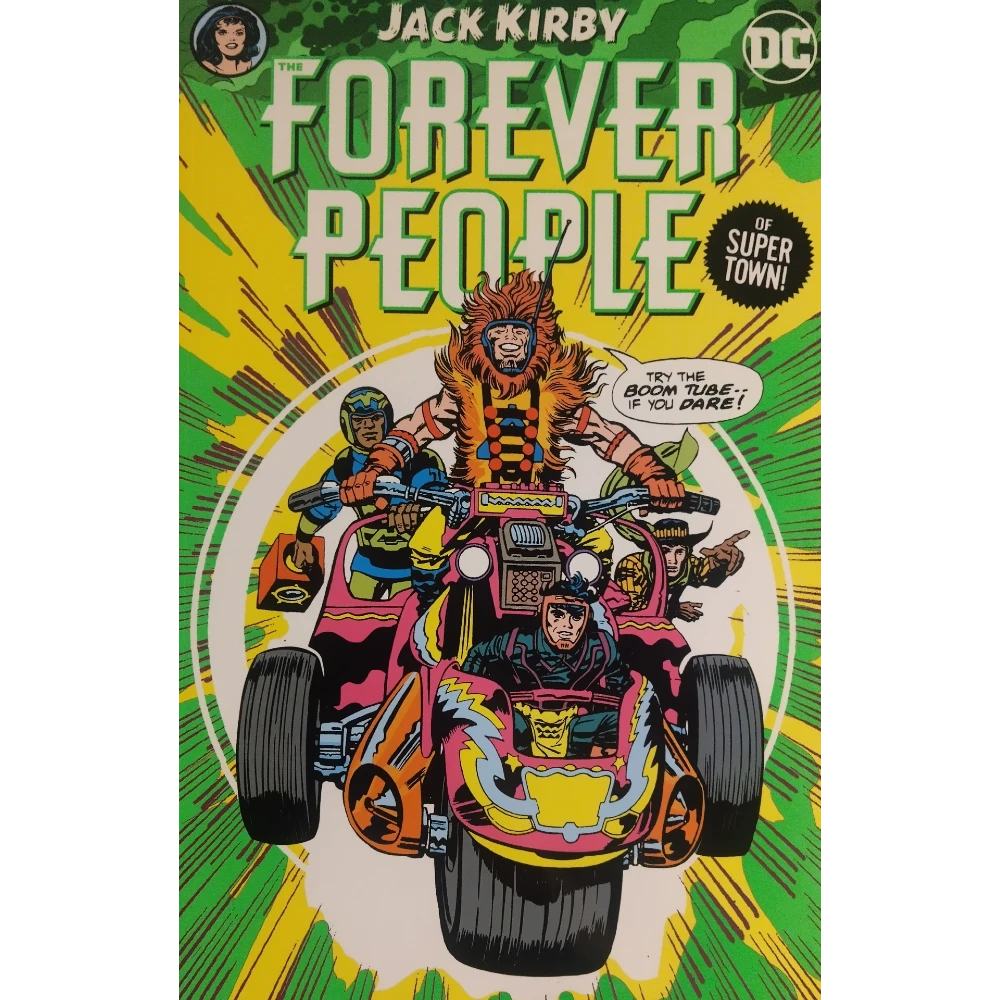
We are back with another dive into Jack Kirby creativity for this review. Kirby's 70s output, for both Marvel and DC, has become an area of focus for this site the past few weeks, and though my perception is quite divided on this material, one thing has always been clear: there is no doubting Jack "King" Kirby's imagination.
Ideas are Kirby's greatest strength, whether through telling the story of humanity's development by alien genetic modification, giving ancient narratives a sci-fi spin, or hinging a tale of humanity's penchant for hate on bombs made from brains. Kirby was never a slouch in the concept department. My own takes on these tales have skewed a bit critically, but this is mostly because I feel Kirby's unfettered imagination could have used the storytelling chops of more proficient and skilled writers.
We'll see if that critique remains true today.
Kirby came into DC Comics with a vision to establish a mythology. He chose an unorthodox title to begin seeding that mythology in Superman's Pal, Jimmy Olsen, where he introduced media mogul Morgan Edge. Jimmy and Clark Kent's boss at the Daily Planet, Edge is also a scheming underling for Intergang, a group in the employ of the dreaded Darkseid. For some reason, Darkseid has taken an interest in Earth, and it's through The Forever People that his grand scheme becomes somewhat clearer.
The Forever People
Writer: Jack Kirby
Penciler: Jack Kirby
Inker: Venice Colletta
Colorist: Uncredited
Letterers: John Costanza and Mike Royer
Issues: The Forever People #1-11
Publication Dates: March 1971, May 1971, July 1971, September 1971, November 1971, January 1972, March 1972, May 1972, July 1972, September 1972, November 1972
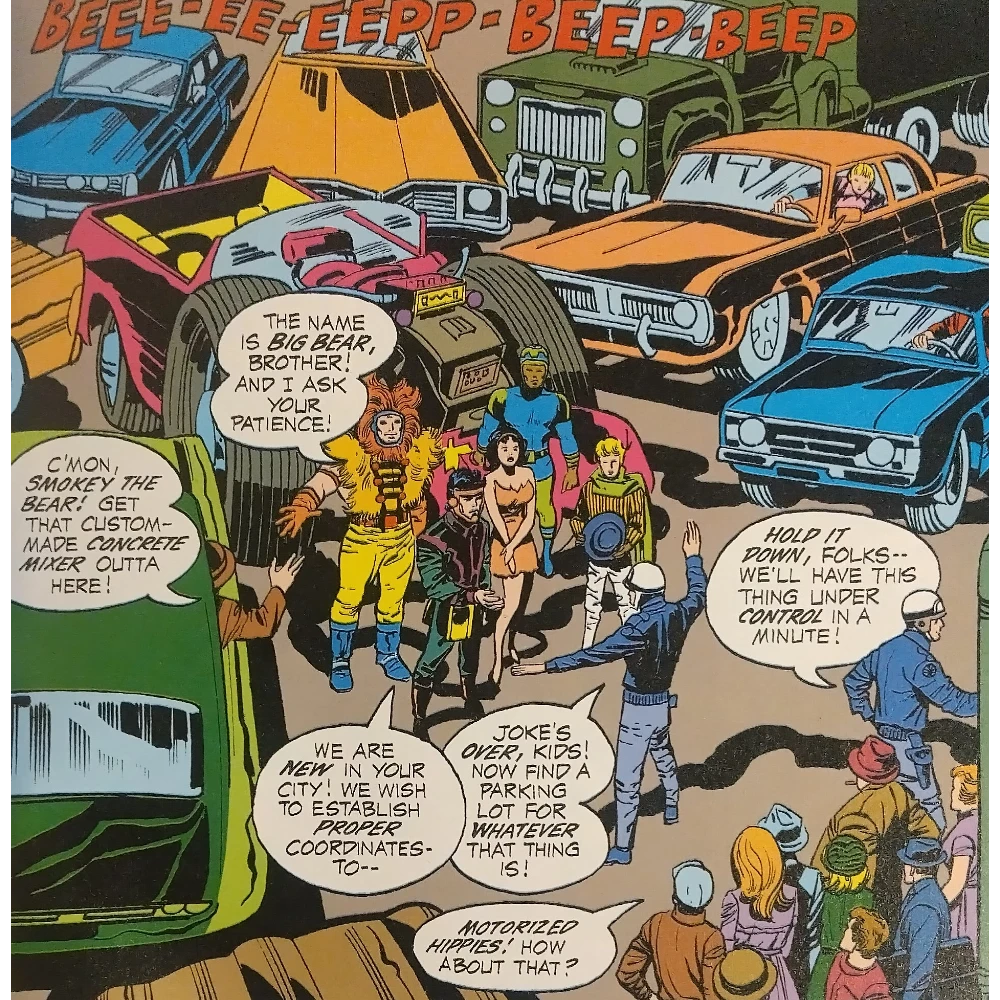
The problem with reading Kirby's "Fourth World" epic in this format is that I'm checking out individual series at a time, whereas Kirby's comics were published concurrently. I'll completely own up to that. I could track down individual issues and read them in publication order or even learn what the proper publication order would be to read issues in the trades I own. But it's easier for me to read and review full series or arcs.
I preface my review with the above paragraph to provide a possible explanation for why The Forever People can feel like a slapdash effort from Kirby. "Unfocused" became the mantra rolling around my head, and I wondered if it was more because parts of his "Fourth World" epic relied on New Gods and Mister Miracle to better understand the saga in its entirety or if this series was genuinely jumbled in its execution. A bit of research indicates the best reading order of Kirby's whole saga weaves issues from different series together, so perhaps any disjointedness truly falls on me.
And now for the counterargument.
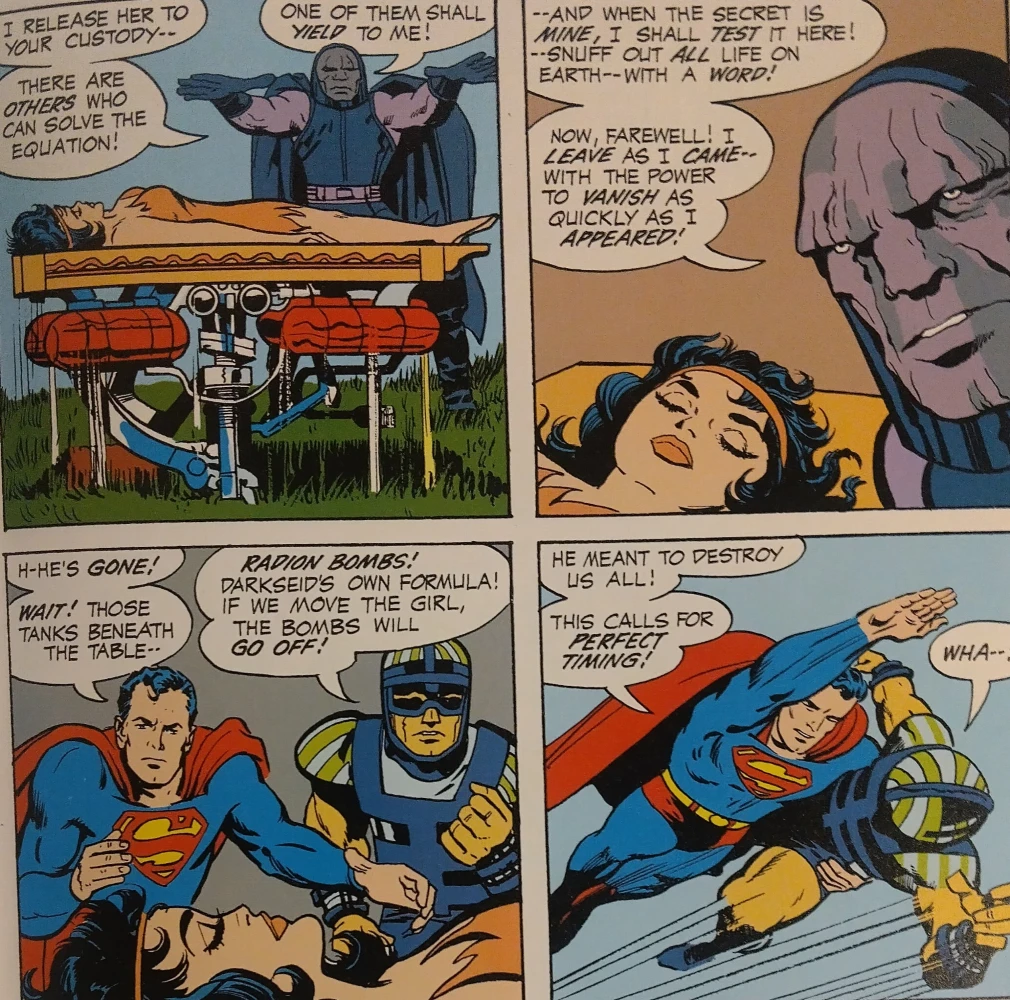
Forever People doesn't read like it's one series out of four dealing with the mounting rise of Darkseid and Kirby's New Gods lore. There aren't consistent editorial text boxes noting "For the rest of this adventure, check out Mister Miracle #3!" for example. There are story beats that certainly feel partially incorporated into the series, which is perhaps the strongest argument for why the full "Fourth World" needed to be experienced in a specific issue order. But for me, that doesn't fully explain some of the weaker elements of this series.
For one, even with references to Kirby's burgeoning mythology and incorporation of characters such as Mantis and Darkseid and concepts such as the Boom Tube, Mother Box, and Anti-Life Equation, Forever People feels oddly separate from the dealings of New Genesis and Apokolips. Darkseid and his minions periodically appear and Highfather pops up momentarily, but there are no other New Gods present, and no one travels to either of Kirby's iconic locations. The Forever People note their loyalty to Highfather and his aims, but their adventures are strangely absent of grandiose mythological elements which could more strongly connect them to the overarching narrative.
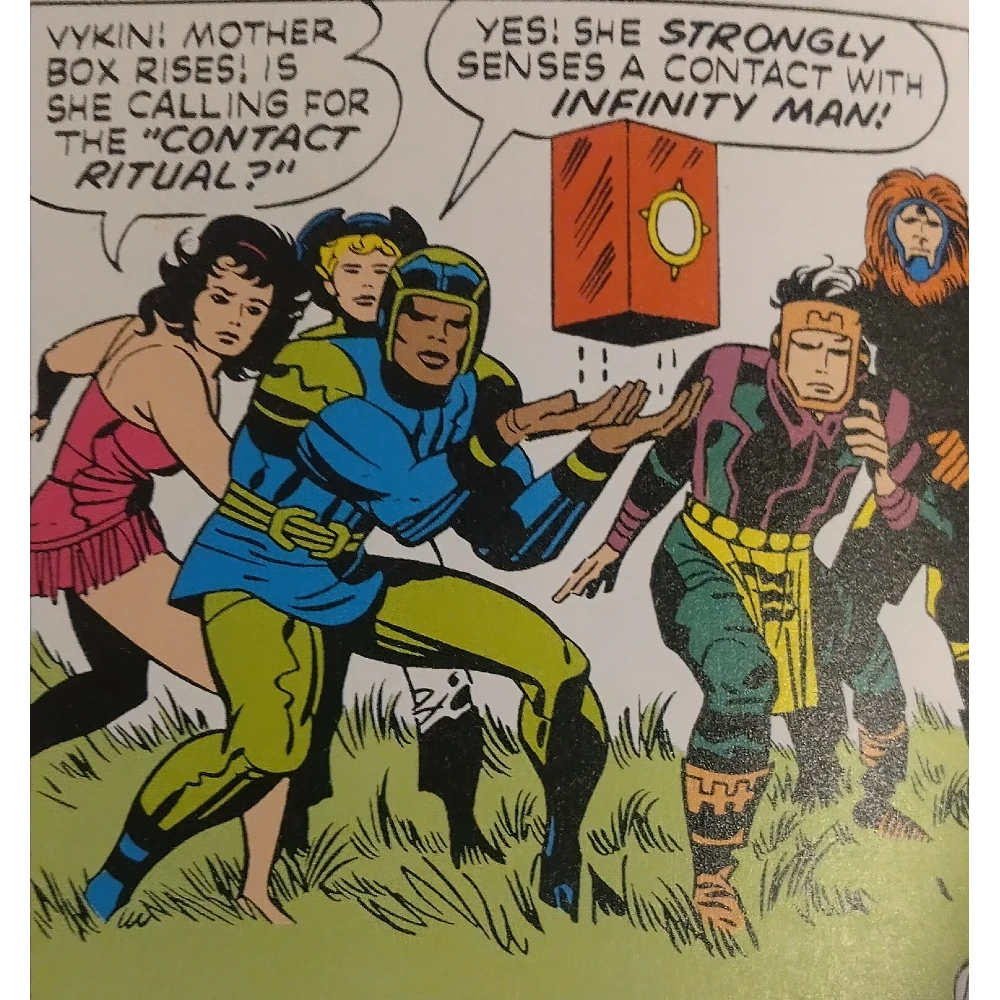
What are these adventures, you ask? Excellent question. Our five young heroes–Beautiful Dreamer, Big Bear, Mark Moonrider, Serifan, and Vykin–travel from location to location, via their Super-Cycle, to prevent Darkseid from getting his meaty mitts on the powerful Anti-Life Equation while immersing themselves in Earth's culture. Kirby endeavors to balance these two purposes, having the young immortals encounter a variety of deadly, often unnecessarily ostentatious schemes while they grow more connected to humanity.
Kirby manages to successfully incorporate the "Forever People versus Darkseid" element, but even this is done in some awkward ways. The five heroes very much represent positive youthfulness and often engage older, adult enemies whose perspective of the world has become tainted and twisted. Very hippy-like in appearance and mannerisms, the Forever People claim pacifism as a philosophy yet don't neglect the call to battle when needed. They're exploring an unknown world and are seeking to rid certain evils as they do, such as a villainous businessman, the eerily captivating Glorious Godfrey (who seems almost a denouncement of highly vocal televangelists), and Darkseid's master of torture Desaad. Not every threat feels like a stand-in for some real world evil, but there are enough concepts which feel adapted from our world.
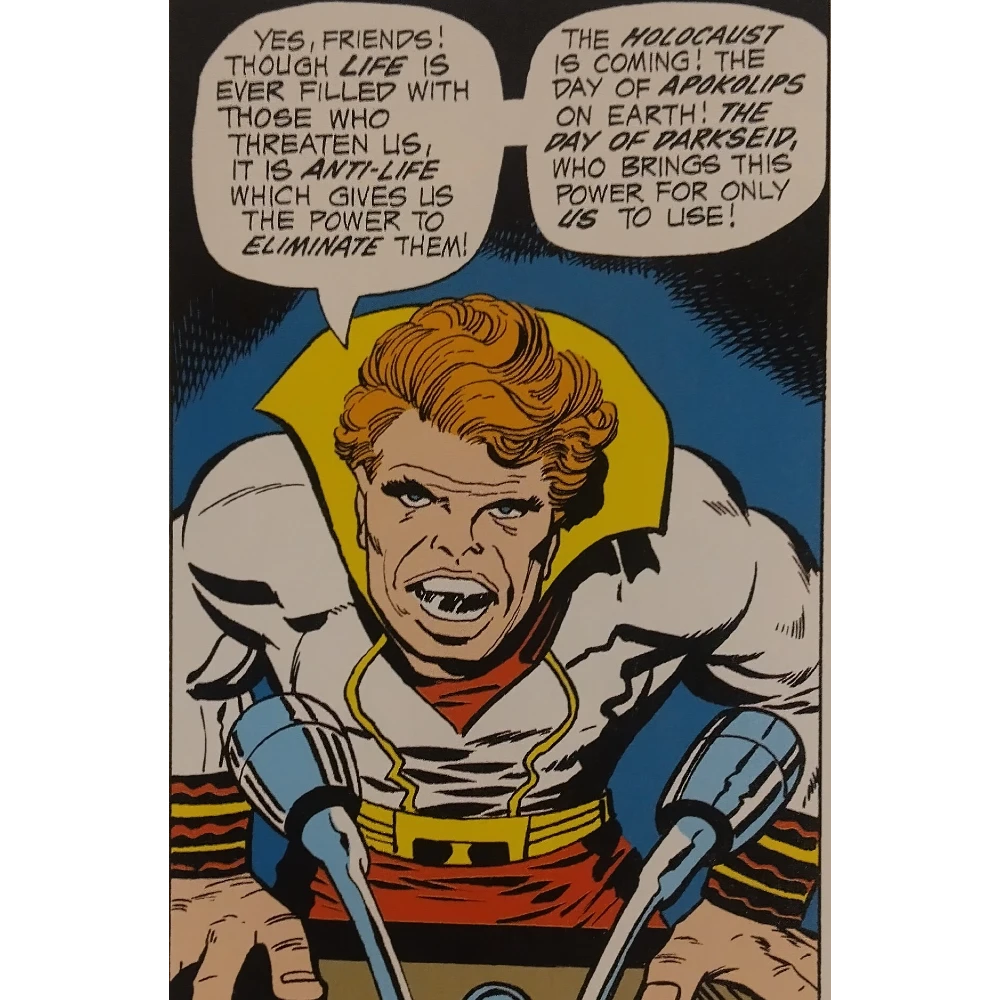
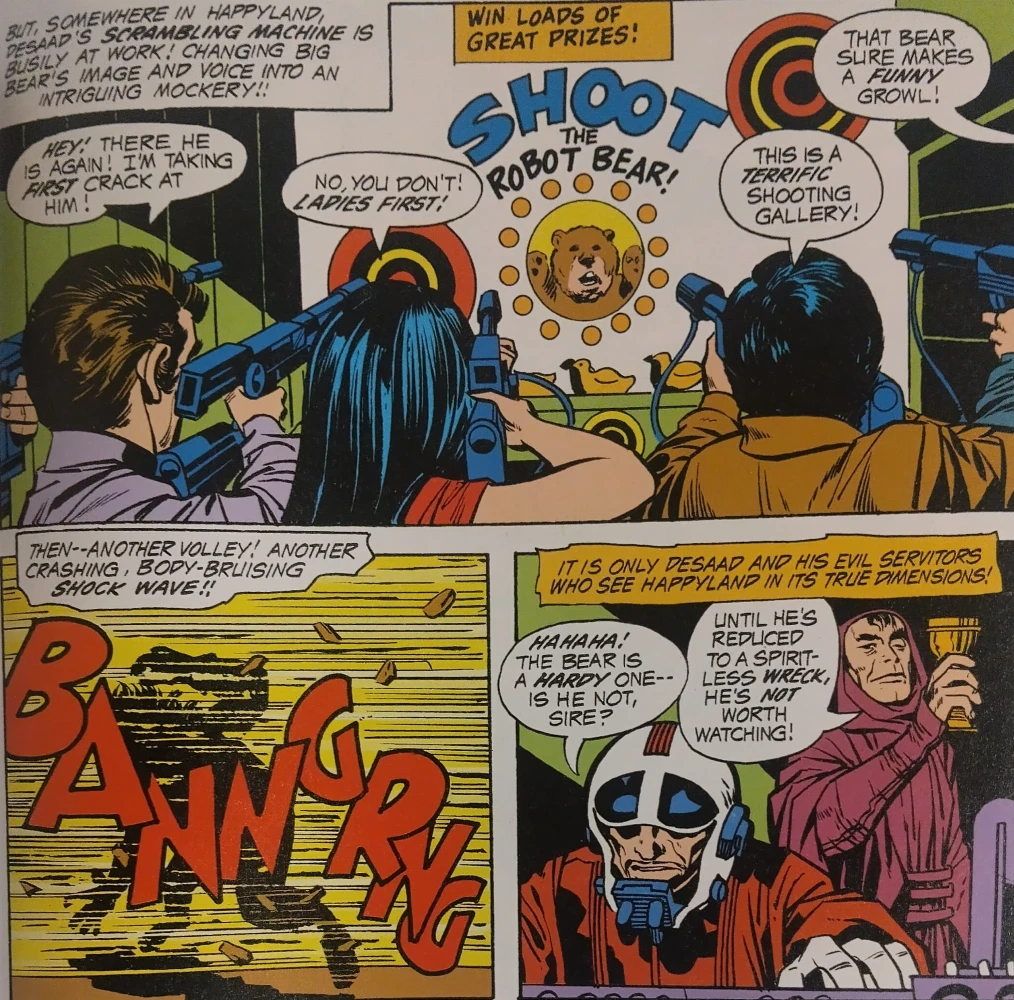
That's the cursory connection between these issues, yet there's no larger plot serving as tissue tethering the entire series. Hence the reason I used the word "unfocused." Our Forever People bounce around America on seeming whims, guided by whatever Kirby cooks up. Darkseid's quest for the Anti-Life Equation is a prime plot mover, yet it's incorporated haphazardly, explained in a disjointed manner, and relies on a few outlandish plots where Darkseid dons disguises or has Godfrey create a prison camp that's essentially a theme park. The Forever People combine at moments to become the Infinity Man, a powerful protector used in moments of coincidence and, also quite conveniently, tossed aside for a handful of issues. Such plotting means that several imaginative ideas are tossed in and scrambled around a bit before becoming discarded or feeling ineffective.
It's not the ideas themselves which lack merit; it's how Kirby pulls them together. As I've discussed in other reviews, he brilliantly draws in some fairly clever concepts which, on their own, work. The amusement park/prison camp setting feels bizarre for a DC villain as imposing as Darkseid would become, but it blends something childlike with a deeper, more sinister reality. One issue sees the Forever People sent back in time to different points in history where they can employ their particular skills to try and aid in a Roman war and possibly prevent President Lincoln's assassination. In a trilogy of issues featuring Deadman, the Forever People battle a criminal so ambitious he schemes to steal the Pyramid of Giza, arguing that in an age of superhumans, crime must be made super to match. Kirby manages to blend aspects of reality with the fantastic, as he's done elsewhere, but he falters to utilize the proper storytelling methods to string them together successfully.
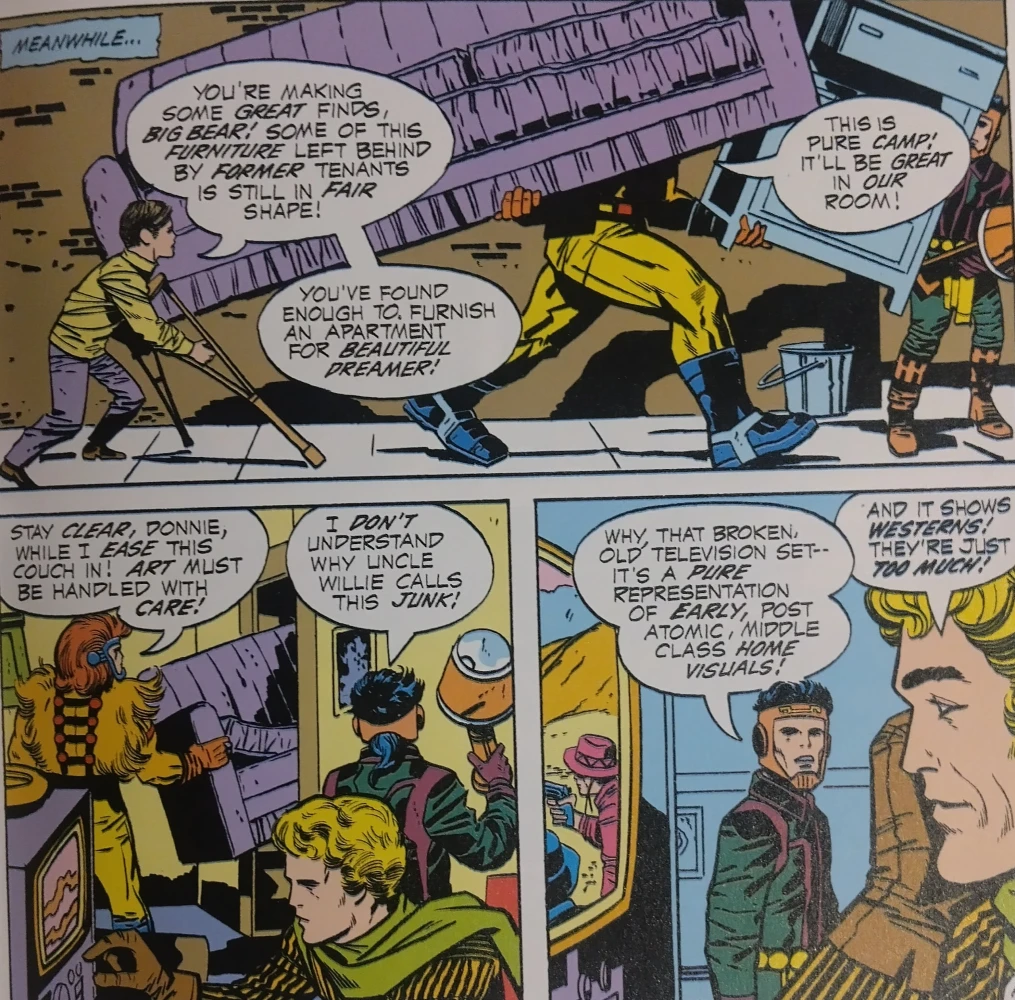
His five central heroes are also a mixed bag. They feel distinct enough from each other in terms of powers, and even a few have distinguishable personalities. Big Bear, for example, is a giant of a man who has taken a particular interest in Earth's history, while Vykin is a mechanical genius, Serifan relies on his pills with various powers, and Mark Moonrider and Beautiful Dreamer are clearly a couple. And while Kirby somewhat explores how the group adapts to Earth, he doesn't provide them with individual arcs to transform from the characters they begin as to more complex representations of people. Beautiful Dreamer gets some new clothes, becomes a model in one issue…and that's really it. Aside from fierce loyalty to one another, they're a fairly static, flat buncha godlings.
Reading The Forever People often reminded me of other narratives, specifically those written and/or illustrated by Jim Starlin for Marvel. Though I'm unaware if Starlin was directly influenced by Kirby (save one area), certain elements of this series seem to have been better utilized at the Distinguished Competition's distinguished competition. Starlin's Thanos is a clear homage to Darkseid, but thank goodness the Mad Titan's first grand scheme involved a more imposing threat than a theme park. The Forever People's combination into the Infinity Man also feels similar to the Rick Jones/Captain Marvel union (though that idea predated Forever People), and the Anti-Life Equation seems a fairly ambiguous sort of McGuffin stand-in for something like the Cosmic Cube or Infinity Gems. Kirby's series ends on a note that Starlin, knowingly or not, would lift for his Warlock series, though I'll note I prefer Starlin's version. His ending seemed planned for Adam Warlock's character, whereas Kirby's final issue feels ramshackle, perhaps forced by the series' impending cancellation.
The Forever People is likely the most frustrating, least satisfying Kirby epic I've read in recent weeks. Some folks I've encountered online believe it's the weakest of his "Fourth World" cycle, so it seems I'll need to find satisfaction in New Gods and Mister Miracle at some point. I'll admit I'm not frothing at the mouth to jump at those series just yet, however, mainly because I'm left with a bitter residue from this series. As everything Kirby did, it's ambitious and imaginative. Yet like other examples of his 70s output I've encountered, it lacks a certain polish, insisting on clever spectacle when it should prioritize strong characters and a compelling plot. If you want 70s sci-fi genius, look instead to Marvel. Better yet, jump into the 80s, where Darkseid's menace looms larger outside of Kirby's universe, refusing to be confined by an amusement park turned torture camp.