(Strand)om Stories: The Incredible Hulk: Ground Zero Review
Peter David and Todd McFarlane redefine the Hulk in an arc where horror draws the line between men and monsters
—by Nathan on October 25, 2026—
In my last post, we took a look at a one-shot written by Peter David featuring both the symbiote-suited Venom and the character David is most synonymous with: Miguel O'Hara.
No, I'm kidding. David would incorporate both characters into a one-shot with Rick Leonardi in 1995, but that wasn't the comic I reviewed. Though of all the writer's comic contributions, Spidey 2099 may be his second best-known. I mean, what? You gonna put Aquaman over the Spider-Man of the future? Jason Mamoa over Oscar Isaac? You are? Fine, we can take this out back.
While I'm gone, the rest of you can immerse yourselves in a brawler of a different type: the incredible Hulk, the actual character Peter David is most synonymous with. Guy wrote Bruce Banner's bombastic adventures for eleven years, 130-plus issues, including the one-shot I just reviewed. As far as comics go, the issue wasn't the greatest representation of either Ol' Greenskin or Carnage's dad, a handful of pages dedicated to some sluggin' wrapped around a mediocre plot and half-baked attempts at humor. Far from David's best work.
Today's arc lives on the opposite end of the spectrum.
We're turning the clock back to the 80s, where David hasn't even completed his first year on The Incredible Hulk. I'm not going to pretend I understand a lot of the character's context coming into this tale–that would be for my dad to describe. What's important to know is the generally Jade Giant is now sporting the same shade of gray as he did in his first appearance, he's momentarily estranged from wife Betty Brant Banner, and he's recently confronted memories of his abusive father, a plotline introduced several issues earlier by Bill Mantlo.
Oh, and he's on a crosscountry road-trip with old pal Rick Jones and SHIELD agent Clay Quartermain, having recently learned the government is stockpiling the very weapon which created the green behemoth to begin with. Cause in an era of denuclearization, the last thing we want is more bombs…especially ones which could create more viridescent Lou Ferrigno lookalikes!
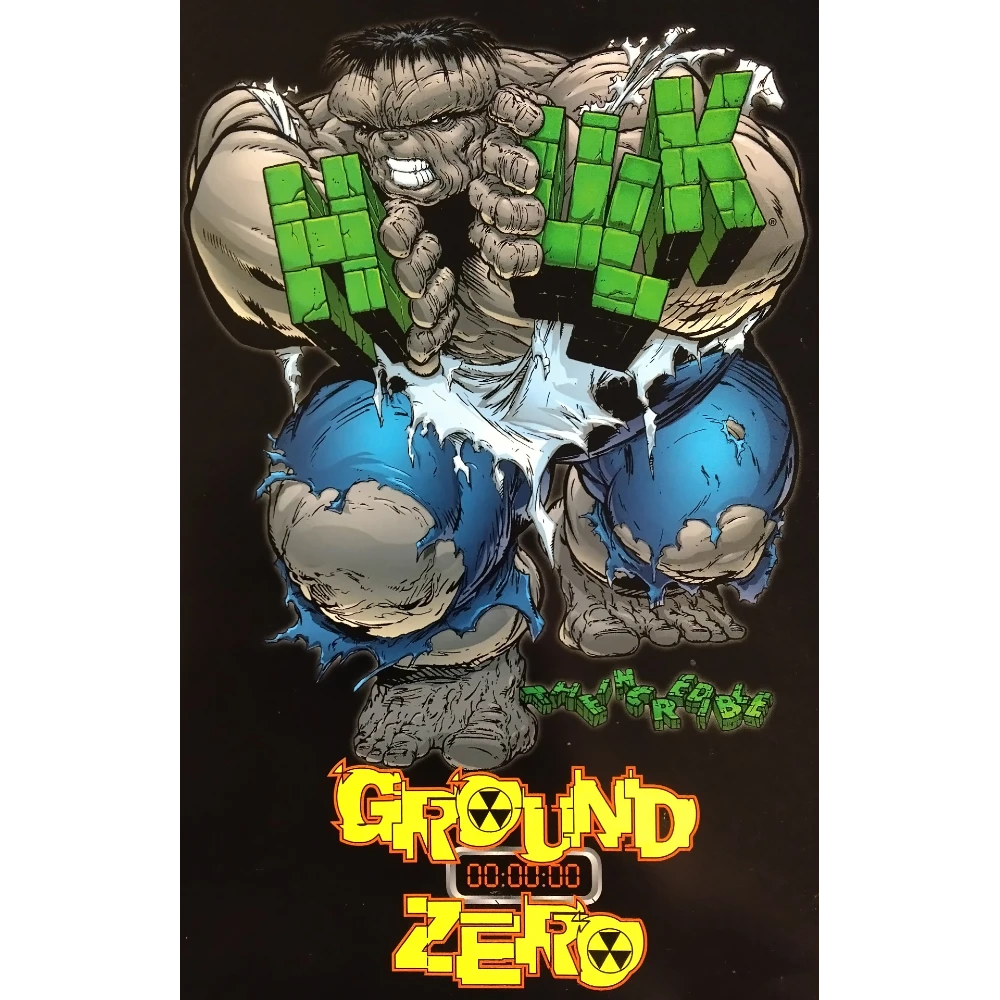
The Incredible Hulk: Ground Zero
Writer: Peter David
Pencilers: Todd McFarlane and Erik Larsen
Inkers: Todd McFarlane, Bob Wiacek, Jim Sanders, and Chris Ivy
Colorist: Petra Scotese
Letterers: Rick Parker and Joe Rosen
Issues Collected: The Incredible Hulk #340-346
Volume Publication Date: July 2001
Issue Publication Dates: February 1988-August 1988
Peter David recognized that, sometimes, plot served as a backdrop against which a character could be made to stand out, a series of circumstances intentionally designed to show a hero's true face against adversity. He pitted Spider-Man against a shotgun-wielding serial killer, indicating the lengths to which Peter Parker could take his code of responsibility, even against a regular dude. He aligned X-Factor with the government, forcing his mutants to determine whether personal ideologies superseded authority. He let Wolverine wander in his own doubts when faced with an imposing enemy, forcing the adamantium man to claw his way back to certainty. David created scenarios, dropped his heroes in, and watched them squirm against enemies and against themselves to see what sprouted from seeds of conflict.
Effectively, he did the same with the Hulk during "Ground Zero."
Our gray Hulk, speaking more than monosyllabic words but far from a genius, becomes an increasingly complicated beast in these issues, David teasing the interplay between the former Green Goliath's halves. For so long, the character had been flitting between his Jekyll and Hyde personalities, each side cursing the other, and David comes along and latches onto the nature of dependency.
Mantlo had recontextualized the Hulk as a product of Brian Banner's abuse, a side of Bruce unleashed in the wake of the original gamma bomb. David decides to take this a step further, not just hinging on the Hulk being a manifestation of an aspect of Bruce's mental state and emotions but exploring the creature and its creator being one and the same. The Hulk isn't just a side of Bruce released during bouts of anger or when night falls; he is Bruce, and through engaging means, David draws out that notion.
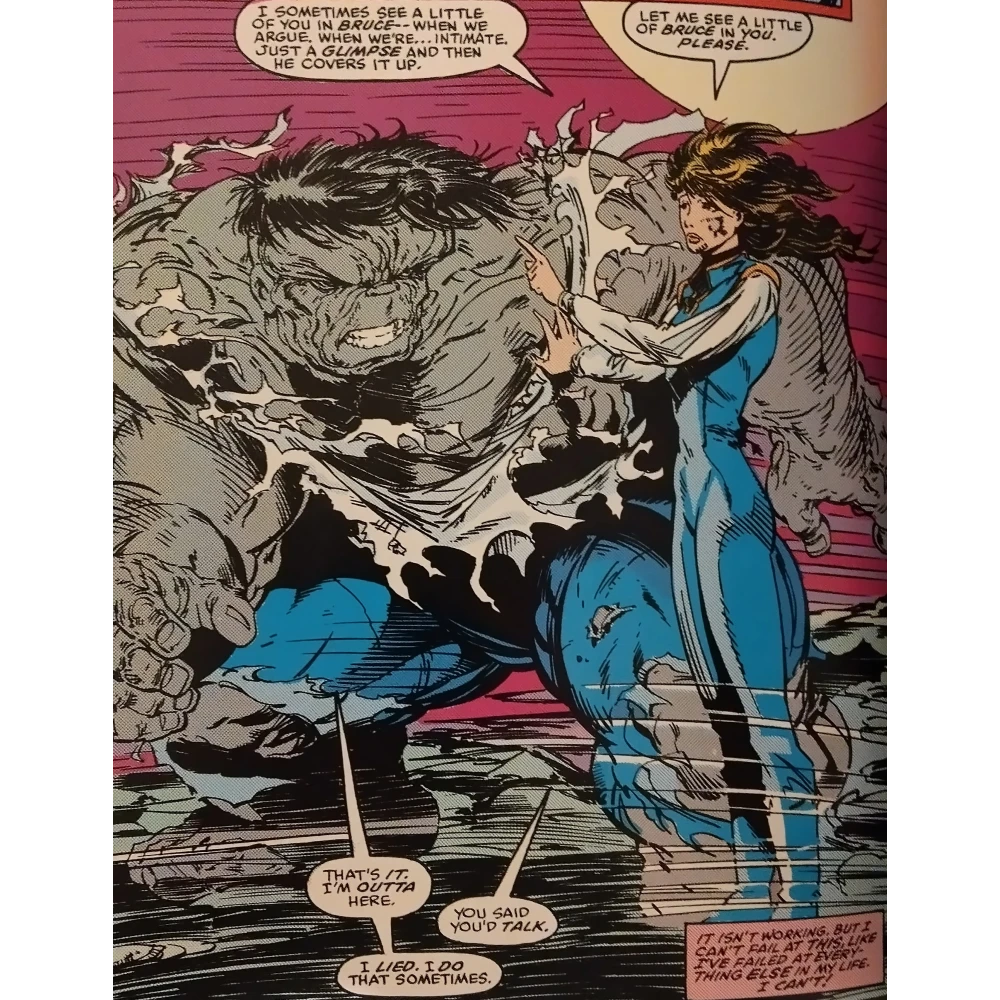
In a pivotal scene where Betty has a heart-to-heart with her hulking husband–yes, not man Bruce but monster Bruce–the former Ms. Ross pushes against the Hulk's, and by extension Bruce's, denial of this interweaving. She can see the intertwining, how aspects of Bruce and the Hulk are tied together intimately. That she chooses the monster as the recipient of this emotional encounter, as well as the first person to hear of her pregnancy, speaks to her confidence in this perspective, feeling like David nudging us that we should be agreeable to this development.
Were David to relegate that twisting to mere dialogue, I'd be disappointed. He instead goes even further, showing us in Bruce's own outbursts of increased aggression (including voicing his need to be the hero who saves Betty instead of the Hulk) and the Hulk's affection toward Betty (including giving her a gentle, comforting embrace) that these aspects of Bruce, so often at war and convinced of a better existence without the other, run deeper than a more division of personality. There's coexistence here, a need for integration rather than termination. Some of the characterization is a tad blunt, but David understands the need to offer hints and weave theming and development through action rather than simple dialogue.
"A little monster in every man, a little man in every monster" becomes the narrative's crux, and if you think that idea applies only to Bruce, you'd better read all seven issues. The balance between humanity and inhumanity–even the struggle to find that balance–become hallmark concepts woven deeply through the entire story, affecting most characters we encounter and forming the bedrock upon which the plot is laid. Only a monster would stockpile gamma bombs, only a monster would scheme to use them, and it seems only a monster is necessary to stop them from being used.
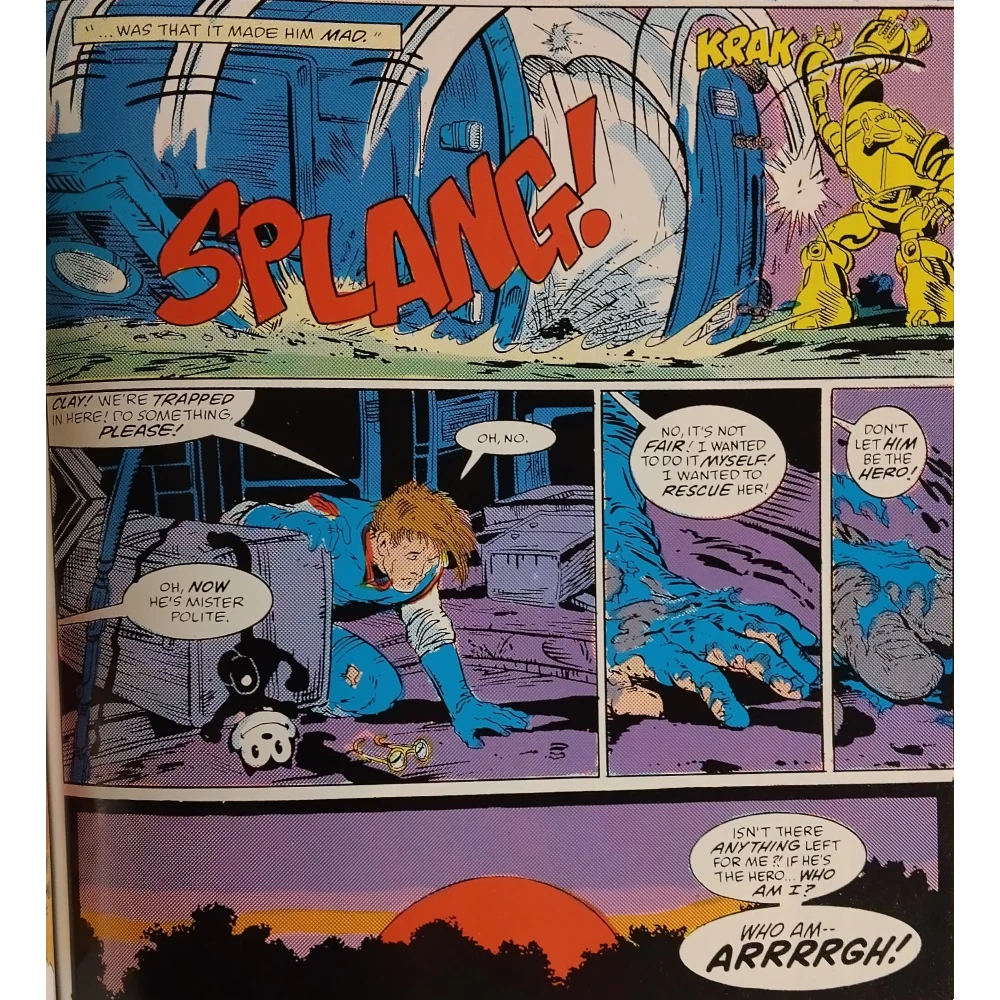
Our Hulk winds up in several important skirmishes across the entire arc, each one poking at humanity and inhumanity intertwined. Bruce battles a bull-bodied beast named Savage, a cow-killing creature who, at the end of the day, is just looking to survive in a world hunting him down. The gamma-cursed Half-Life, introduced a few issues earlier, believes (futilely, it's implied) he can regain his humanity, if only he can leech all the energy from the Hulk's bones. Rock and Redeemer are former Hulkbusters bonded with weaponized suits, their humanity sacrificed for a violent cause. Even our arc's central antagonist, the Leader, maintains his irradiated intellect makes him a superior human, putting less stock into the inhumanity of his plot and willful manipulation of others to his whims.
Folks are likely to recognize this arc from its opening issue, where our buddy Bruce crosses swords with the ever-popular Wolverine. No stranger to the clawed Canadian, David develops a Wolverine who hasn't quite sunk those adamantium claws deep enough into his own heroism to gain a handhold on his own aggressive sensibilities. We're given a character whose own humanity, hanging by a thread, is severed by the big guy without claws, as a fantastic fight with the Hulk tests and then exceeds a threshold of control Wolverine had found. Todd McFarlane provides the most brutal battle yet between the classic combatants, reveling in both men's healing factors letting him render flesh and fling blood across the page.
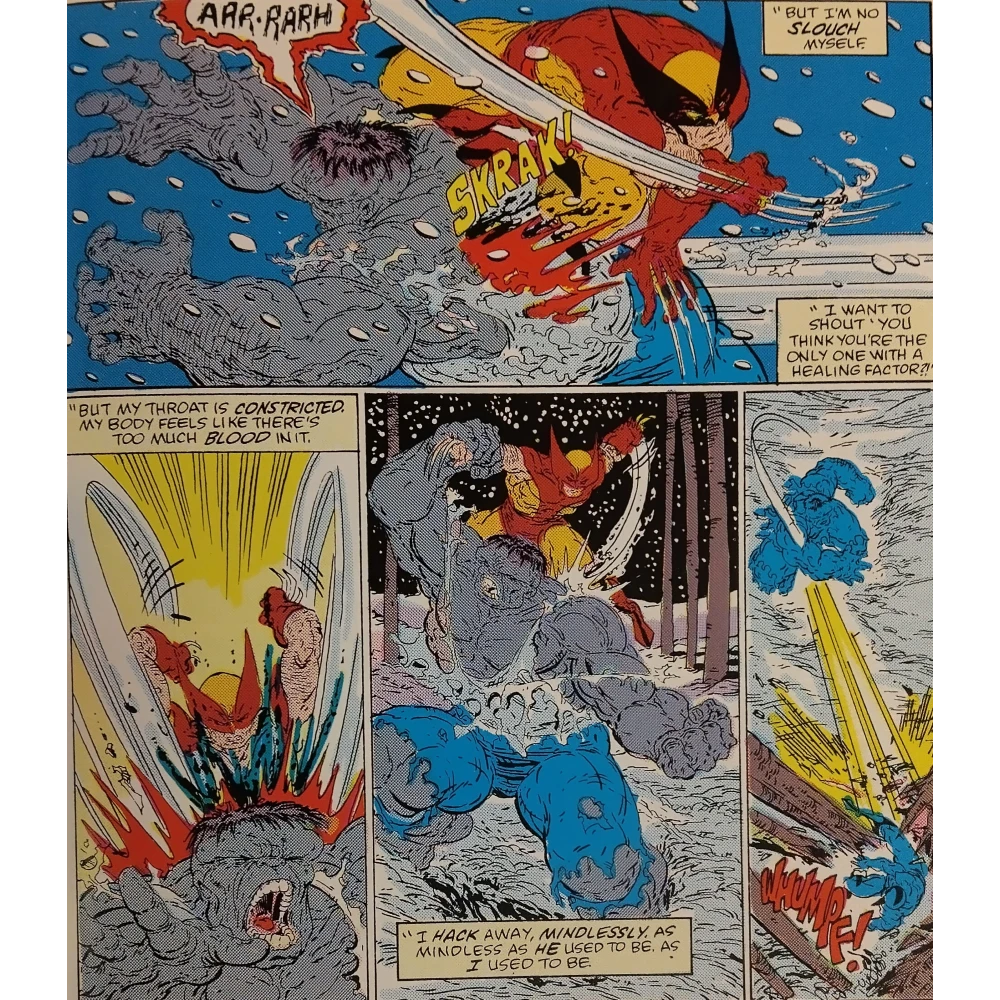
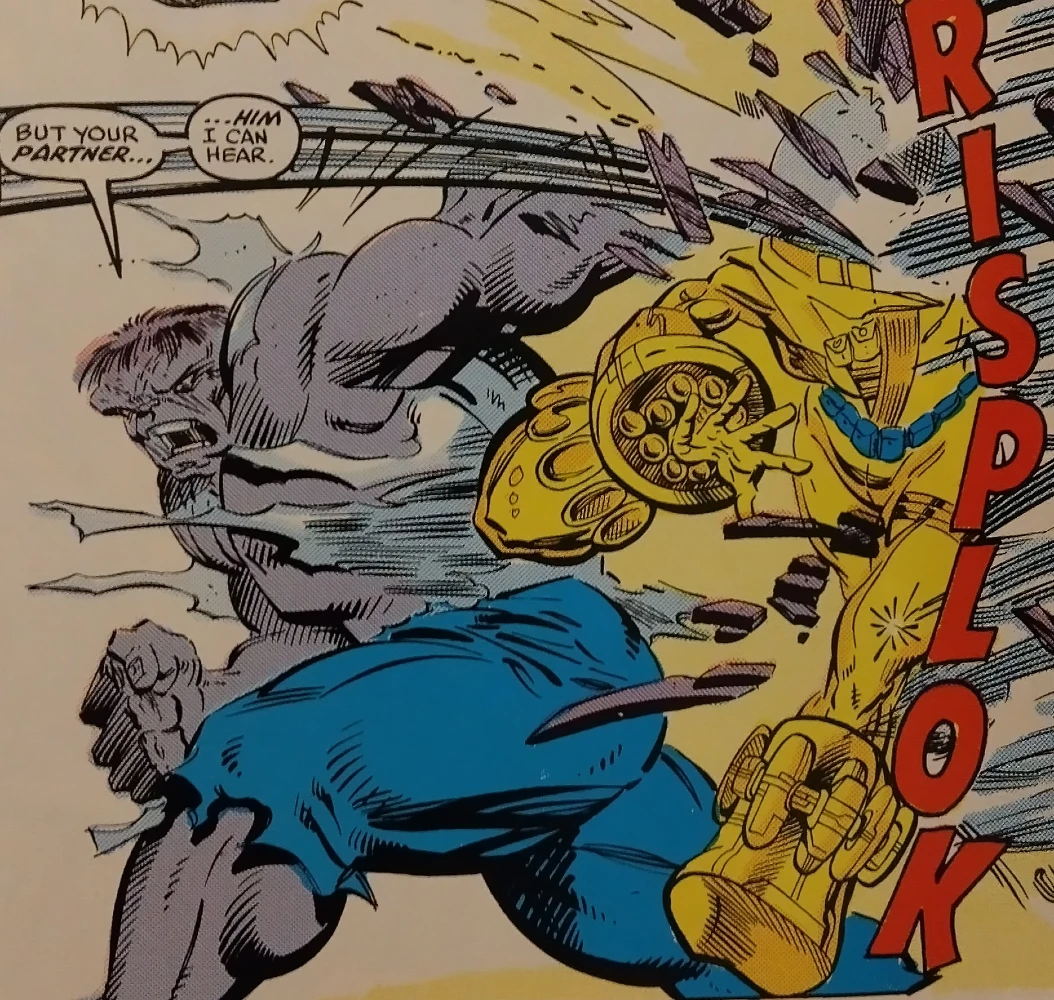
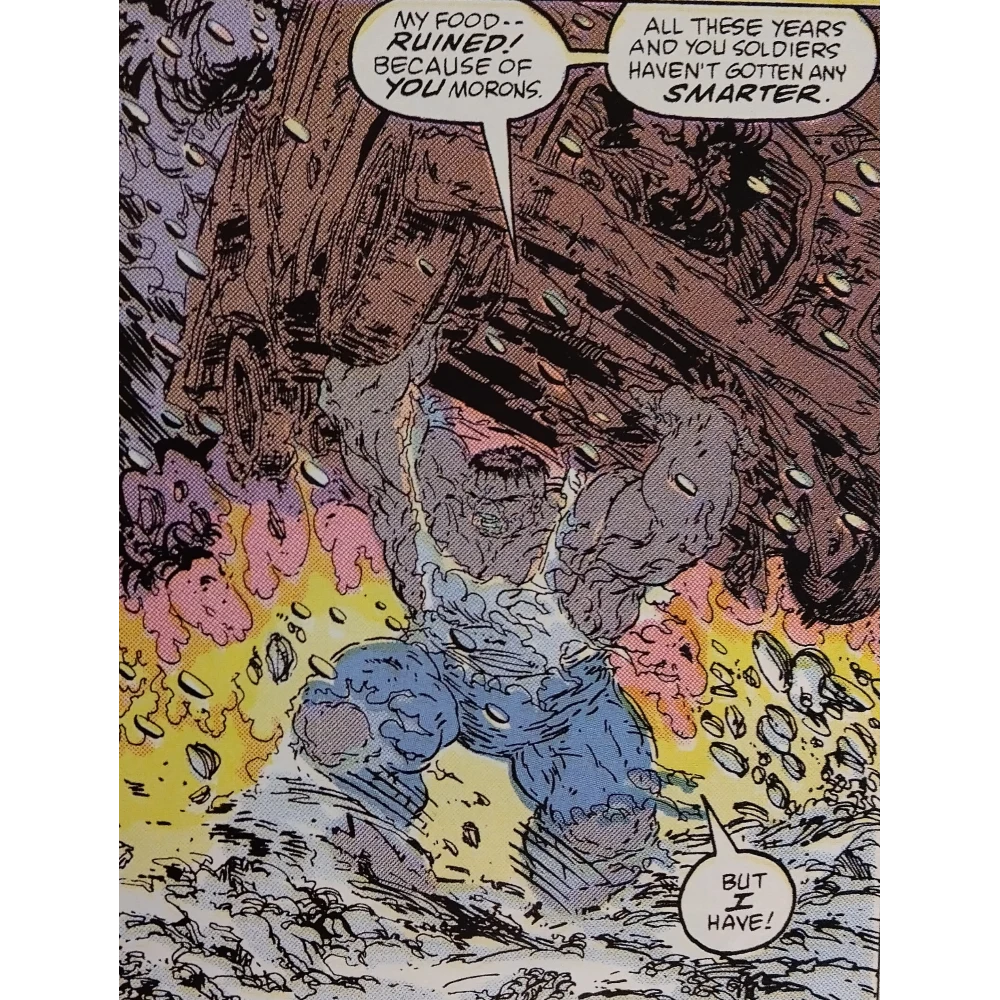
McFarlane's time on the Hulk ended with this arc, and though he'd leave these grayer pastures for webbier ones, he made quite a mark on the book (and I mean beyond Wolverine's claws). He's the perfect artist for David on these issues, his ability to convey emotion, etch details, and play with shadows creating strong character designs and adding tension. His Hulk is no hero; inspired by the bulky behemoth's first appearance and other early depictions of the character, McFarlane leans into a Frankenstein-esque physiology, providing the Hulk mottled hair and a jutting forehead; he's even allowed some variety during the Hulk's battle with Half-Life, diminishing the gray giant's musculature and allowing his skin to sag.
Together, David and McFarlane weave in hints of horror also found in those original issues, from those moodier character designs to the sheer evil on display as the Leader's masterplan culminates. Our Hulk is a brooding, brutal beast, executing a "take no prisoners" display of ferocity combined with a sliver of tactical understanding. The Leader's head pulses with creeping veins (gosh, Brave New World did him dirty…), ordinary folks are maimed and murdered, and there's no guarantee of victory at any step.
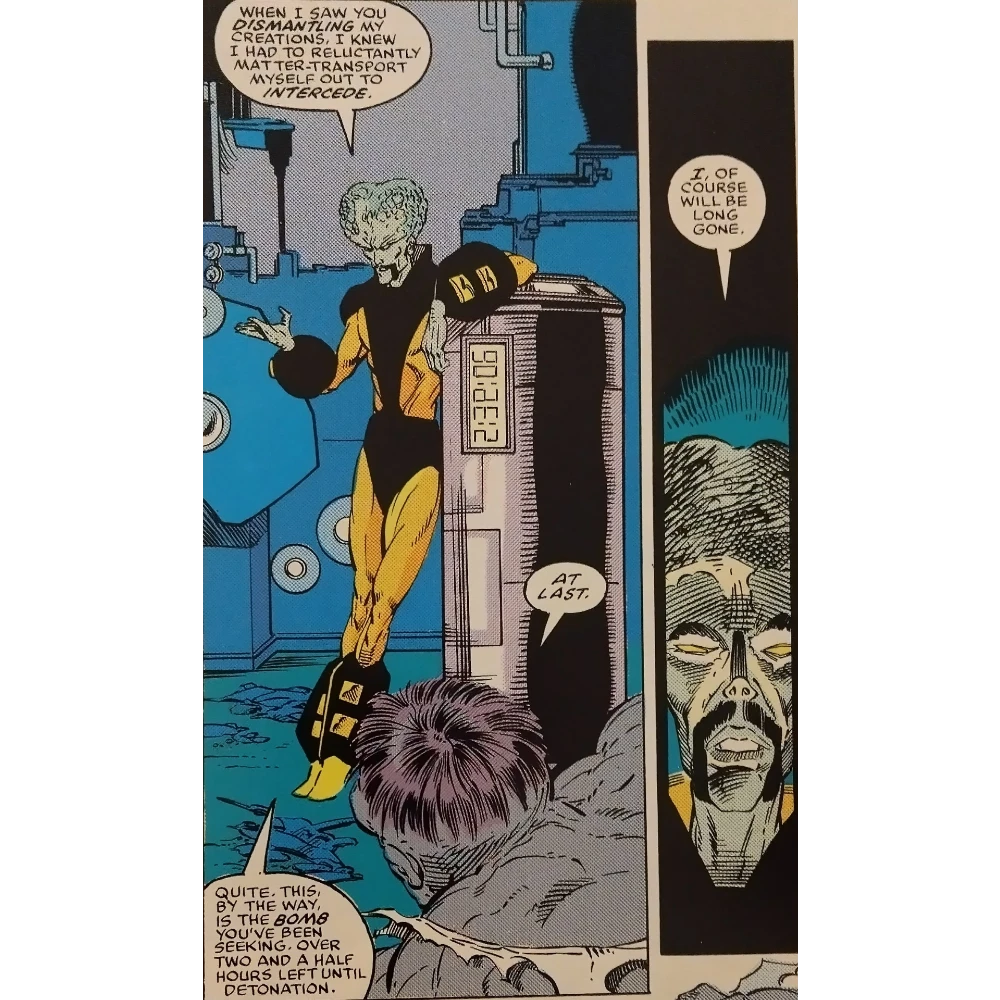
The basic plot gives our characters direction, Bruce driven by a guilty conscience at seeing his brainchild mass-produced without his say-so. Yet the narration allows some Cold War drama to escalate the tension, the gamma bomb stockpile serving as a none-too-subtle parallel to nuclear ordnance. No direct comparisons to real world incidents are made, though the term "Gammagate" does pop up. Again, David uses plot as a backdrop, knowing, like contemporary Alan Moore, how well some fantastical horror can poke and prod at the underlying fears and evils within our own society.
Though perhaps blunt at moments–David makes a direct comment on Agent Quartermain having a brother named "Alan," all but hammering the reference home–the "Ground Zero" arc deserves to be a celebrated epic. Packed with humanity, horror, heroism, and heart alike, the six-issue narrative finds its footing paralleling real world tensions, using that plot to sculpt a story centered on men who are monsters and monsters who are men. The Hulk may be our principal catalyst for development, but from Wolverine all the way to whoever decided to replicate the gamma bomb, the ever-complicated human heart is laid bare and the consequences of its tricky ticking are made brutally apparent.