Spider-view: "The Man Who Would Be Spider-Man"
Though the plot could be directed differently, this issue does toy with some neat metafictional concepts
—by Nathan on June 5, 2026—
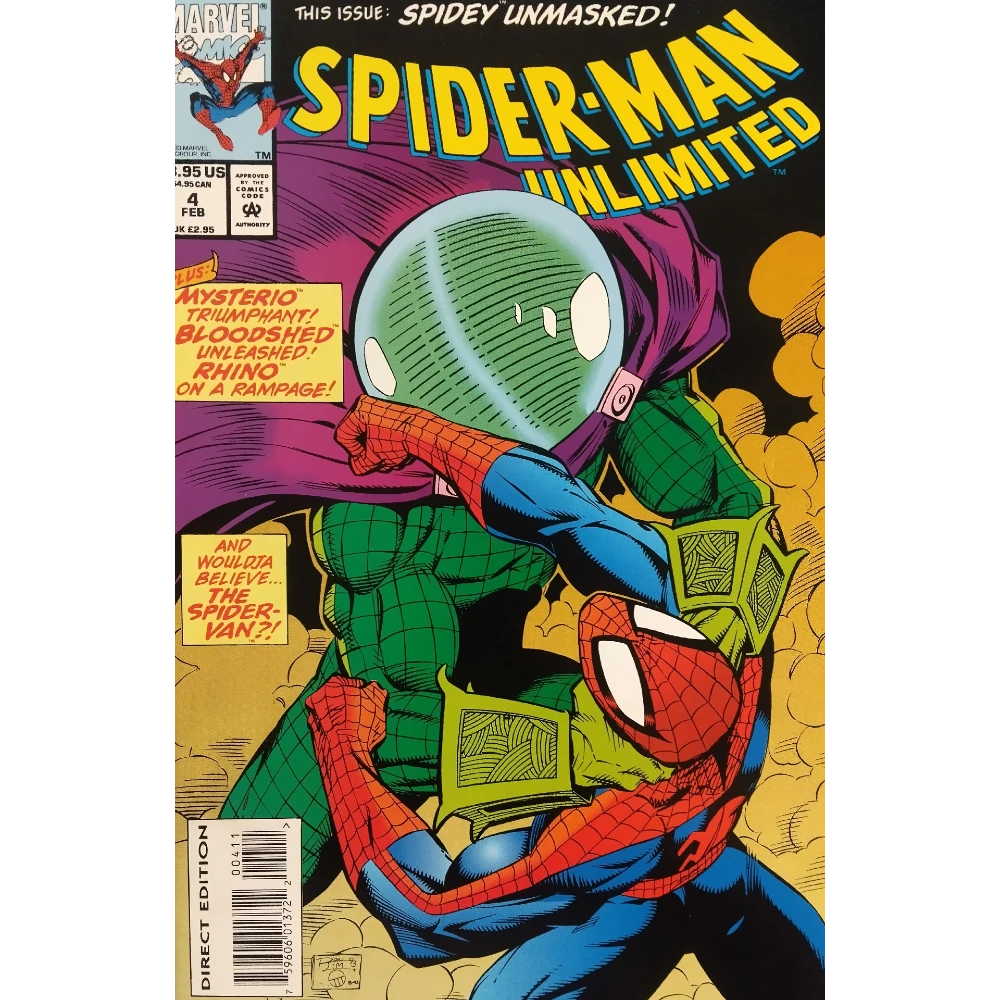
Tom DeFalco and Ron Lim, in the third Spider-Man Unlimited issue, dove into the briny depths to explore the tragic origin of Otto Octavius, showing how a young man with a broken family home grew into Doctor Octopus, the multi-limbed mastermind feared throughout the world. In this issue, we're not given an origin, but another classic Spidey foe is brought back to menace our Web-Head once more.
Unlike other series, Spider-Man Unlimited doesn't have any central arc to it–this isn't David Michelinie uncovering the truth behind Peter Parker's parents reappearance or Peter David charting the saga of Miguel O'Hara in 2099. The appeal, in lieu of an ongoing plot, seems to have been the double-length page count and glossier paper stock. The first two issues served as bookends to the overarching "Maximum Carnage" crossover, with the third issue dialing back the action for that character-centric Doc Ock tale. The team of DeFalco and Lim return for this story, one predicated on a master of illusion and trickery…and we'll have to see if it lives up to its central villain's penchant for impersonation.
"The Man Who Would be Spider-Man"
Writers: Tom DeFalco, Kurt Busiek, and Carl Potts
Pencilers: Ron Lim, Kevin West, and Dan Norton
Inkers: Scott Hanna, Al Milgrom, Keith Williams, Jimmy Palmiotti, and Keith Williams
Colorists: John Kalisz and Keith Williams
Letterers: Loretta Krol, Joe Rosen, Dave Sharpe, Steve Dutro, and Joe Rosen
Issues: Spider-Man Unlimited #4
Publication Dates: February 1994
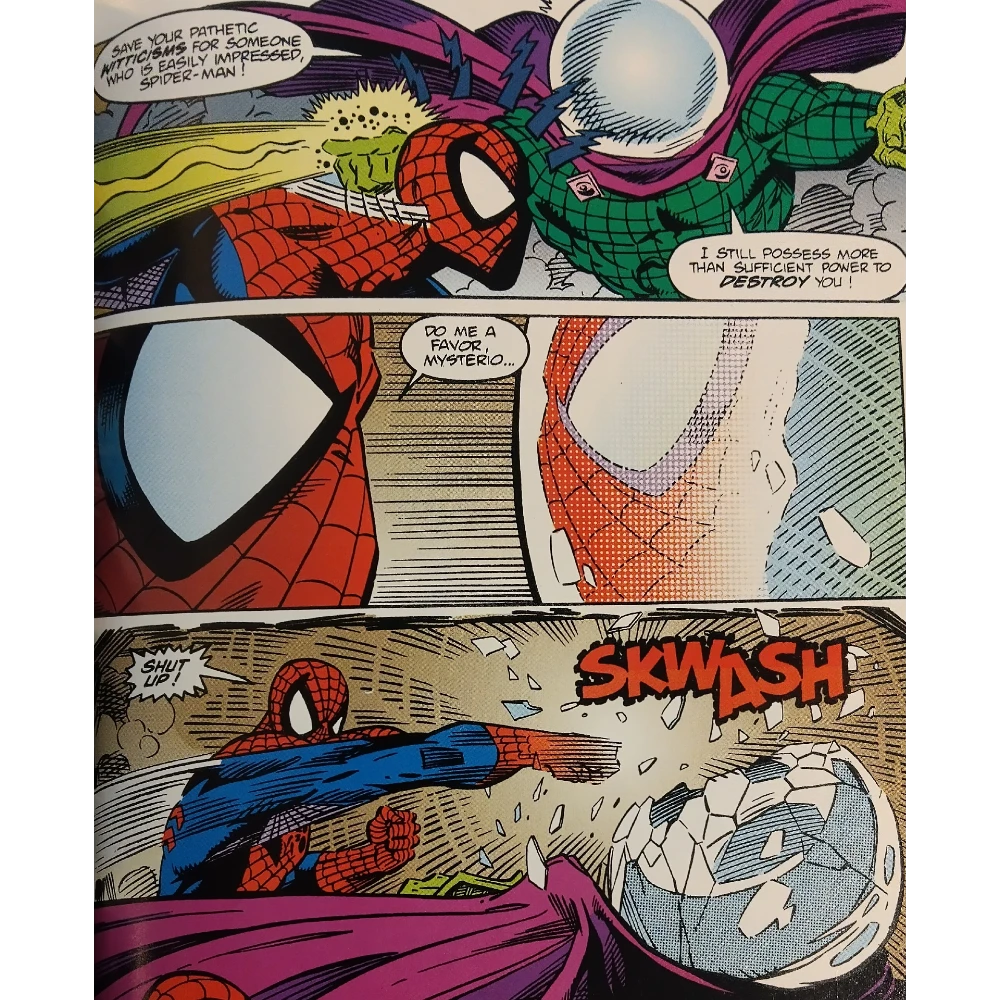
A good Mysterio story requires a certain level of subterfuge, hints towards his involvement without fully revealing the scope of his activity until the appropriate time. It's why his second-ever solo appearance works effectively, as Stan Lee and Steve Ditko had him pose as a psychiatrist convincing Spidey he was delusional–heck, Mysterio never appears in his actual costume in that issue. And it's one reason why I appreciate Kevin Smith's "Guardian Devil", the anticipation of its central threat building until Quentin Beck stands revealed (forget for a second that both Smith and Mysterio take significant inspiration from Kingpin's scheme in Frank Miller's "Born Again"arc). The character is at his best when he's kept in the background as long as possible before directly involving himself as a threat.
Which explains why this issue fails to utilize Mysterio effectively.
For starters: he's right there on the cover! "Mysterio Triumphant!" a text box trumpets. You know exactly who you're dealing with before you even open the issue. This makes DeFalco and Lim's decision to physically obscure Mysterio in shadow somewhat puzzling, as the reader is already fully aware of the master illusionist's involvement. Perhaps the cover was out of DeFalco and Lim's hands, and they hoped for a story laced with secrecy until the appropriate time.
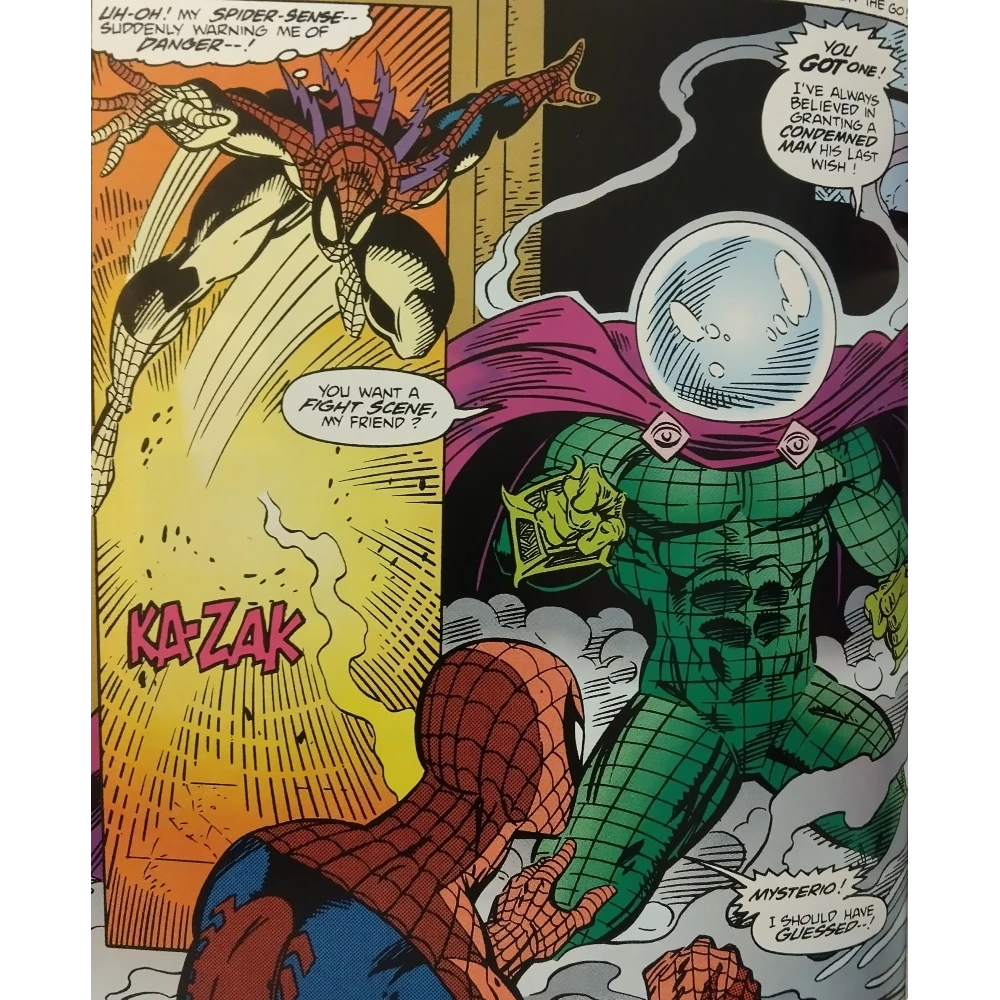
Of course, even that argument falls flat relatively quickly, as panels of Mysterio's unmistakable gloved hands appear fairly soon within the tale. Better illustrated is a silhouette that, while providing the curvature of Mysterio's trademark domed helmet, could be misconstrued for something else were you not aware of the master manipulator's presence. Deep sea diving helmet, perhaps? This is the kind of image I wanted to see more of across the narrative; even if it was a fairly decent nudge to Mysterio's identity, it'd at least be a clue rather than a blatant tell. Mysterio's given the short shrift here, the possibility of suspense obliterated before he even appears in the comic.
Even if the story's central villain is touted immediately, DeFalco and Lim do what they can to weave some level of intrigue into the plot. A petty crook takes on Spidey's guise and, working with Mysterio in a strange subversion of the villain's very first scheme, manages to make the Web-Head something of a household name. By approaching the public and being "honest" about who he is after the media catches a glimpse of his face–not the first time a writer has approached that particular idea–this guy (named "Phil") secures branding deals and even the admiration of the typically surly J. Jonah Jameson. He gets action figures, has his own van, even makes a deal for an animated series…he becomes everything Spidey isn't, by being everything Spidey isn't. No powers, no responsibility.
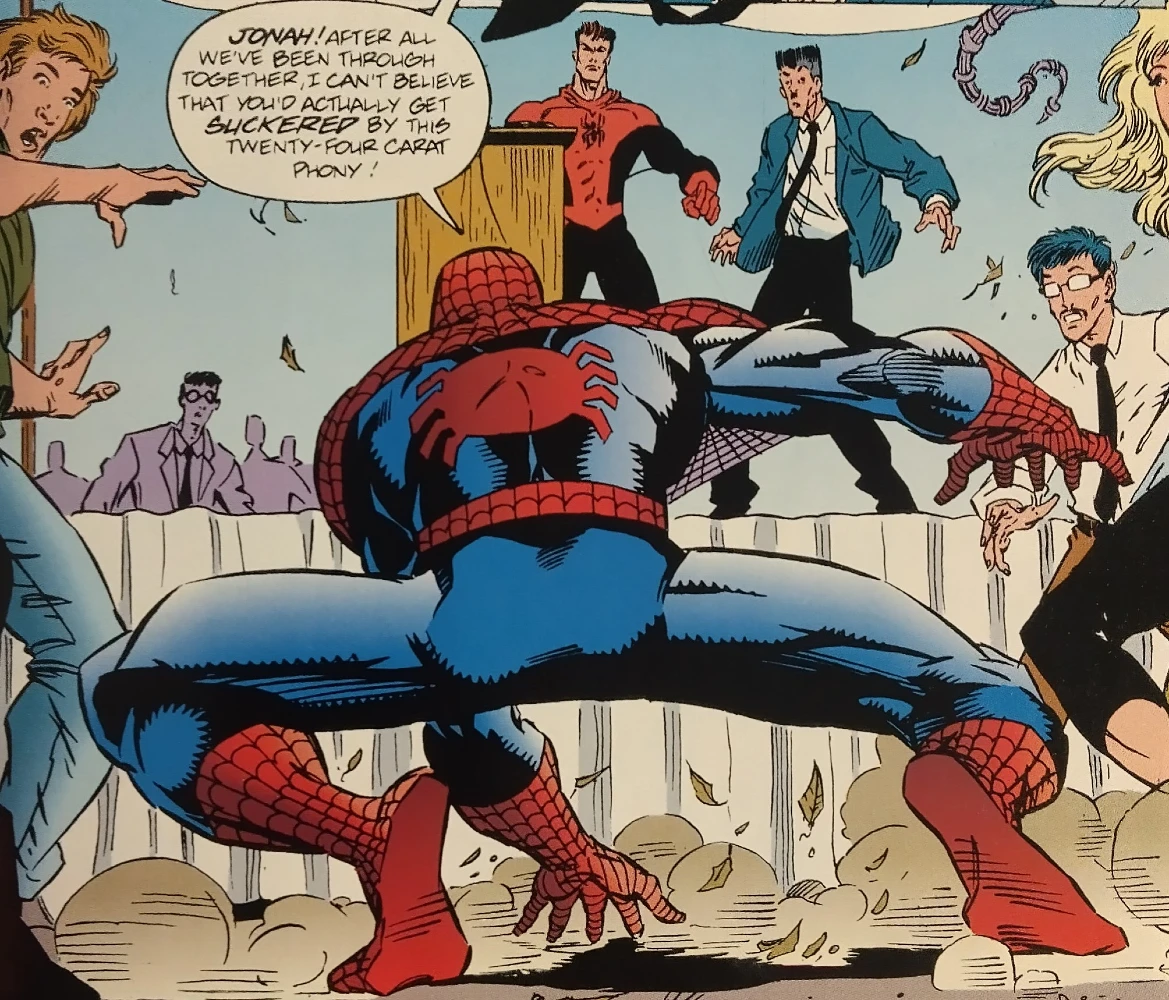
That dichotomy is worth exploring, and DeFalco gets some mileage out of the contrast between fakey Phil and the real spider deal. Peter becomes jealous that someone has capitalized off his name and brand, after all his years of appealing to New York as a hero, and he can't do a thing about it without messing up his own long-held secret. Mary Jane nails it on the head when she questions just how truthful Peter's being to himself about the unfairness of the entire situation, leaving Peter to momentarily wonder about his feelings. The moment doesn't last very long, but it's a decent step by DeFalco to inject some character conflict within Peter.
Where Peter goes wrong is how he tackles the situation. Peter launches into an investigation and makes a dumb mistake right off the bat, later becoming more involved when the Spidey imposter makes a stupidly public move of his own. DeFalco wants Peter to appear smart and detective-like, yet the whole plot becomes resolved out of a fairly simple coincidence. Spidey proves his own against Mysterio later on in a tussle involving weaponized merch by the master of illusion. The struggle is a decent diversion, perhaps even serving as a wink-nudge towards the downsides of Spidey's commercialization or even just a prophetic glimpse towards the last few decades of Spidey memorabilia.
(Not that I'm complaining. It's a blessing. I own Spidey shirts, action figures, LEGOs, pajamas, posters, DVDs, Blu-Rays, video games, Christmas ornaments, keychains, a wonderfully soft comforter…)
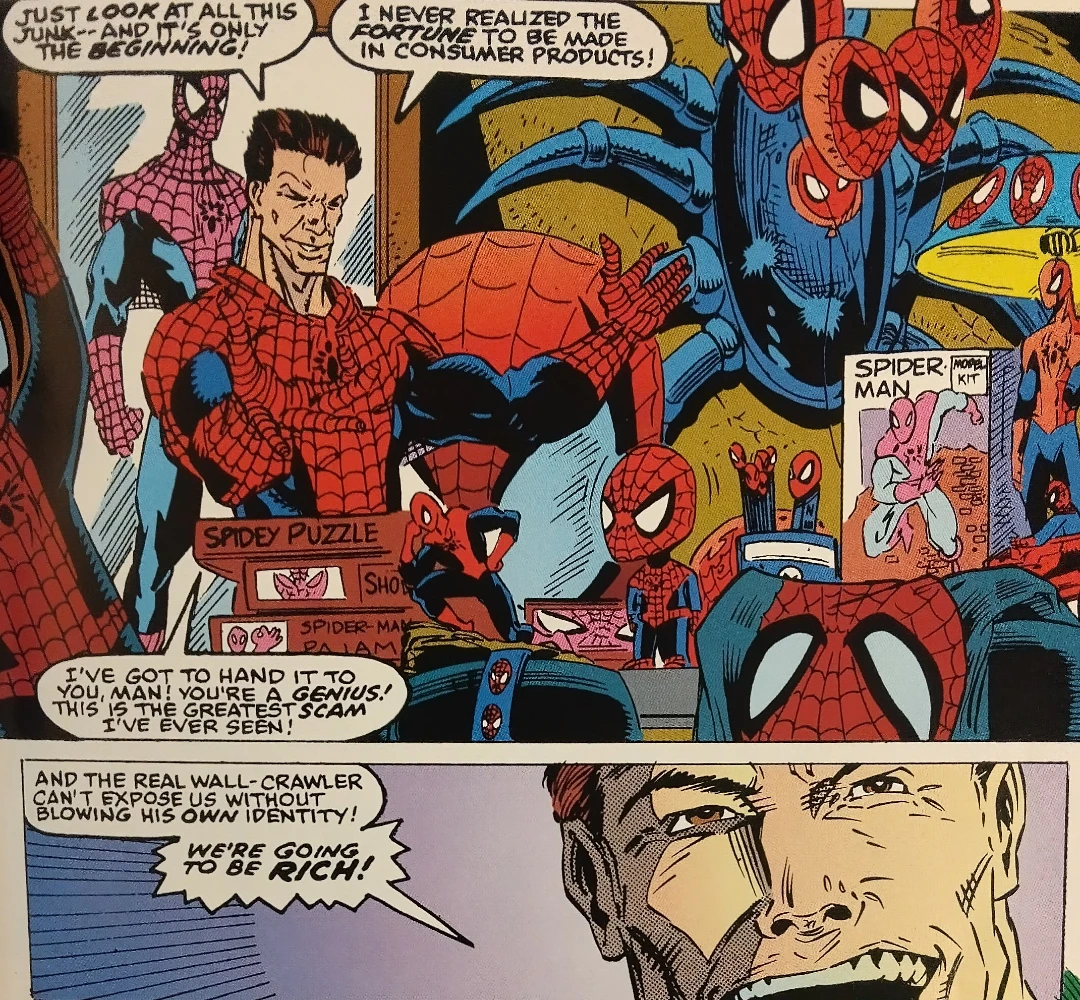
But that's largely my own interpretation, given the narrative's emphasis on commercialization and Peter's own inability to make a buck off someone using his name. Such ideas nicely hearken back to the days of yore, when Lee, Ditko, Romita, Conway and others consistently placed Spidey in situations where someone else profited off of or benefited from Peter's own misfortune. Fake Spidey even gets a van which is a step up from the maligned Spider-Mobile. Point being, DeFalco and Lim, though they use their primary villain in a manner which feels less optimal than it could be, still manage to introduce some interesting theming and a bit of brutal personal irony for Peter.
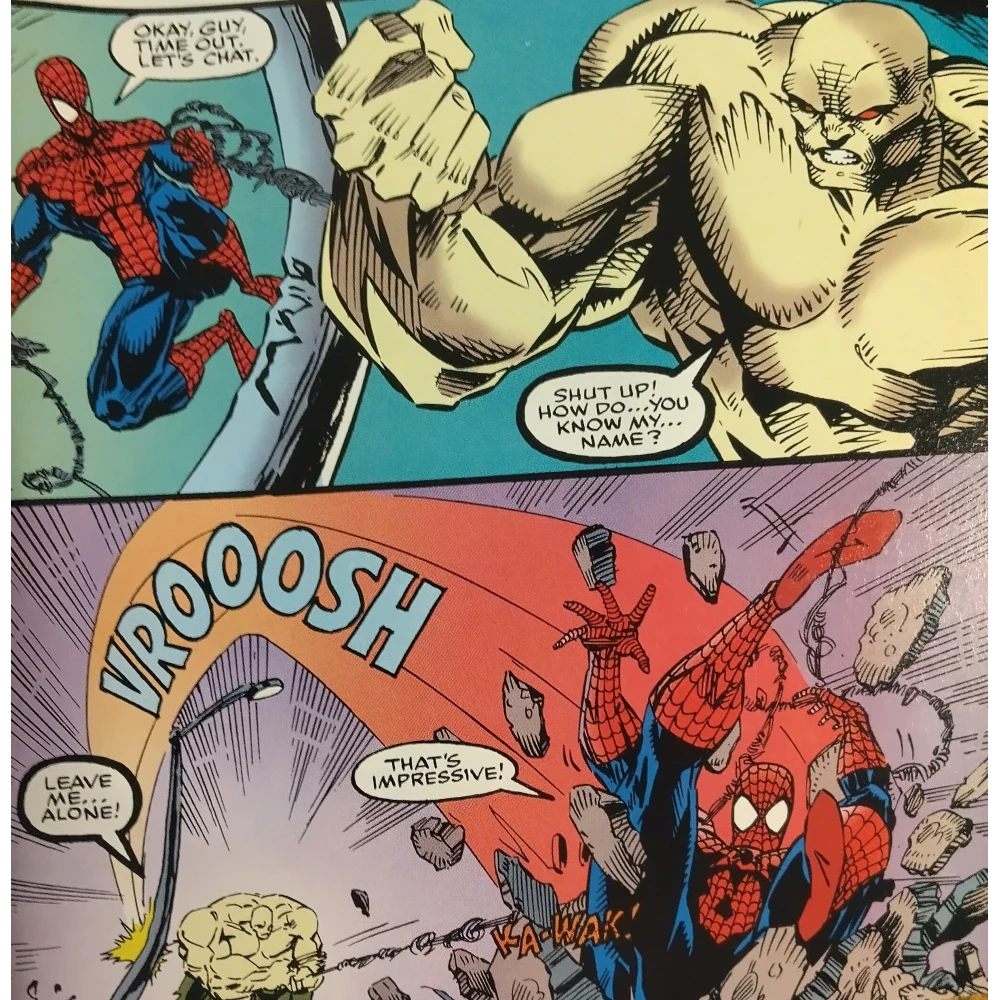
As this is a double-sized issue, we're treated to back-up strips, courtesy of Kurt Busiek and Carl Potts. Both narratives are fine, with Busiek's reintroducing a somewhat-then-recent villain and Potts' serving as an amusing homage to the Lee/Ditko classic "Just a Guy Named Joe." Busiek's script lacks the polish seen in other work he presented at the time, such as Marvels and Astro City, but Potts manages to present a more playful side of his writing not seen as much in books such as Punisher: War Journal and Venom: Funeral Pyre (though you'll be hard-pressed to find an image as fantastic as Frank Castle wearing a tropical, short-sleeved t-shirt over his body armor while riding a jet ski). They're just back-up narratives to pad the length, and as is generally my complaint with these things, I'll throw in the obligatory "You coulda just made the man event longer."
No mystery for Mysterio in this issue, which is frustrating. That darn cover, though drawn nicely, spoils the whole shebang. Though I guess a mystery wouldn't have mattered much, as Spidey concludes who his primary adversary is fairly quickly. To his credit, the master of illusion does turn to a hired underling rather than pretend to be Spider-Man himself again, so at least he tries something a little different. "It doesn't take an Einstein to figure out" the genius behind this plot, Spidey himself says, honing in on Mysterio pretty quickly as the culprit behind his woes. Which, given how smart Mysterio is supposed to be, doesn't bode terribly well for his credibility! Maybe Spidey got a glimpse of the cover before reading this thing, too.