Crawling Back: Amazing Spider-Man #11-12 Review
Tragedies are compounded by action as Lee and Ditko's stand-out supervillain triumphantly returns
—by Nathan on February 21, 2026—
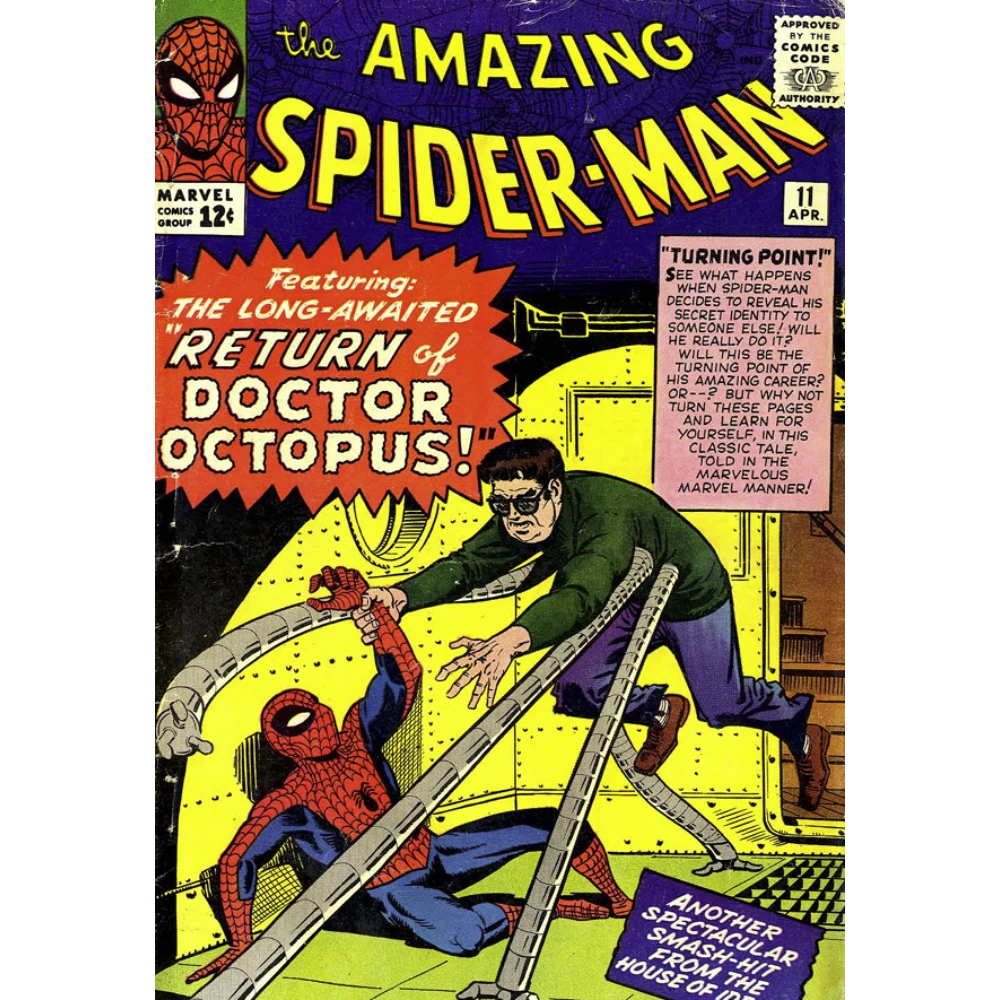
Last post, we waded through the murky waters of Doctor Octopus' history, Tom DeFalco providing an overview of not just the villain's famed origin and his first fight with Spider-Man but also the events contributing to the tragedy which bonded his metal arms to him. The tentacled titan was made to be an empathetic character, given a dose of complexity to help explain his wayward lifestyle.
Ock is a fantastic member of Spidey's rogues gallery as he's genuinely been allowed to breathe as a human being. He doesn't just lead supervillain teams or kill sacrificial police officers; he has personal trauma and tragedies which add to both his backstory and present outlook. Though I was not a huge fan of Dan Slott's Superior Spider-Man run while it was being published, I'll admit it takes a unique angle on Otto Octavius, made all the stronger by the complexities other writers developed through him over the decades. The evil doctor is a conglomeration of ideas and narratives, many hands grasping for substance and pulling them back to create his unnerving slice of a soul.
Yet, if we turn the time machine back, we'll find that such characterization, though not wholly absent, may not have been quite present in his inaugural outing. Brilliant and driven, much like his arachnid adversary, Octavius was still a product of that popular comic trope "science accident," a chemical explosion resulting in chemical imbalance and his control over his arms. Yet something about him must have resonated with both fans and his creators, as Doc Ock became only the second-ever supervillain to claim a rematch against his famed foe. As Stan Lee and Steve Ditko bring this eight-armed enemy back to plague Spider-Man in this two-parter, we'll see if anything about the villain has changed since his first defeat.
"The Return of Doctor Octopus"
Writer: Stan Lee
Penciler: Steve Ditko
Inker: Steve Ditko
Colorist: Stan Goldberg
Letterers: Artie Simek and Sam Rosen
Issues: Amazing Spider-Man #11-12
Issue Publication Dates: April 1964-May 1964
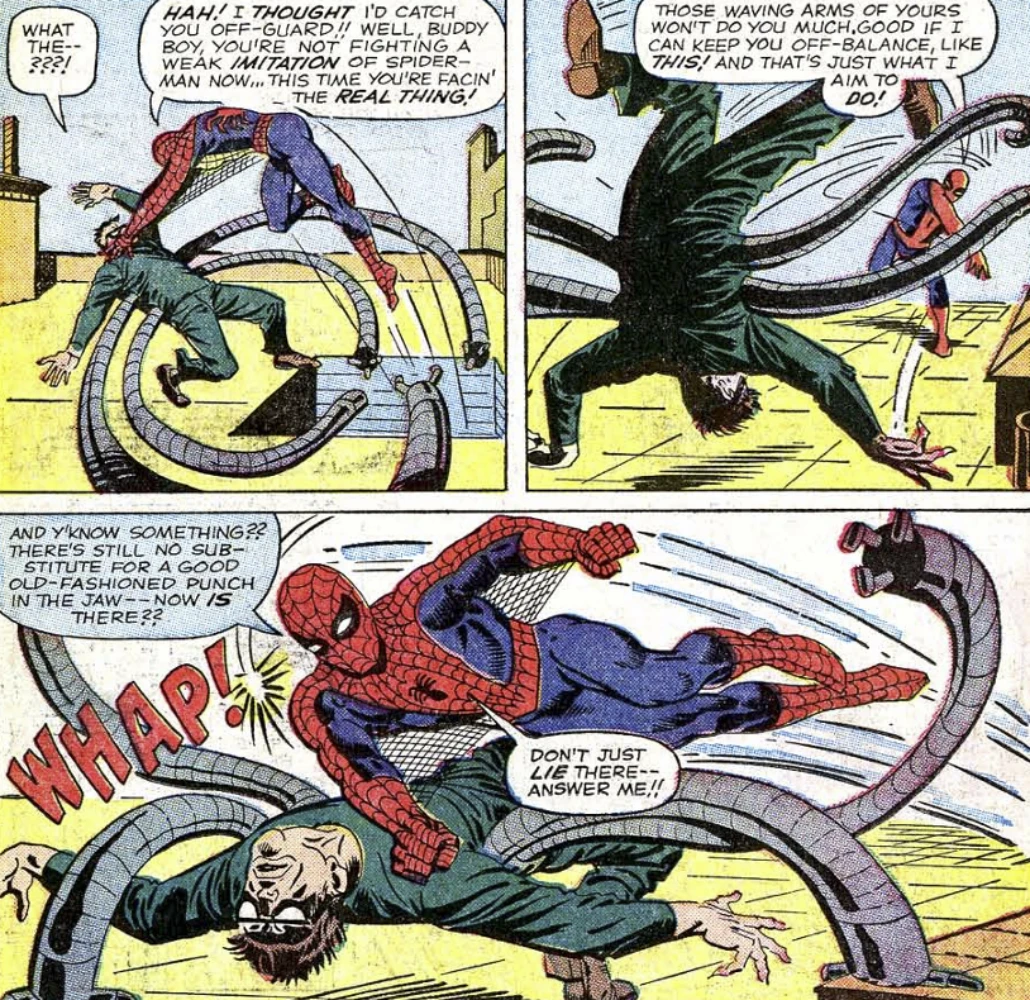
The sheer hate our multi-armed madman effuses across these pages is enough of a draw to maintain any reader's attention, even if there weren't other interesting aspects to explore. Doc Ock, perhaps more than other villain yet, simply despises Spider-Man, and Lee churns out a litany of insults and threats across three different fight scenes. Ock has clearly been rattled by being outsmarted by this pesky Web-Slinger, and he can't help but remind the young man how much smarter, quicker, better than Spider-Man he is and why that will ultimately lead to Peter's downfall. In our second issue alone, Octavius commits riskier crimes and rampages around the city just so he can draw out his arch-enemy. Dude's that miffed.
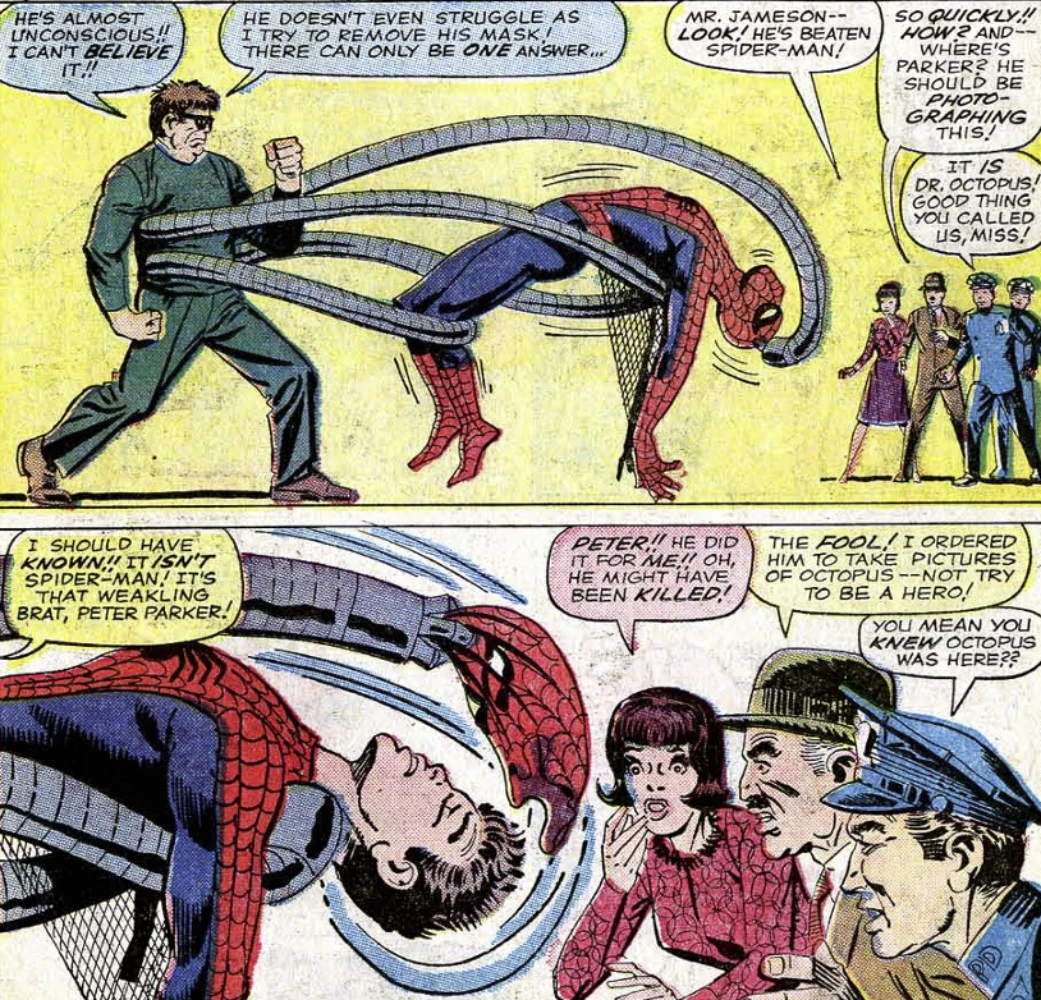
Octavius' arrogance had been established previously, his faith in his own intelligence meant to grate against the humility Spidey presents himself with as a formidable academic mind in his own right. Across both issues, Lee has the villain wax poetic, chortling about his and Spider-Man's "final battle" and the great humiliation the hero will suffer at Ock's (many) hands. Peter, stricken with a cold in the second half, tackles the doctor anyway and is easily batted away, leading to the famous image of Octavius unmasking his opponent. In his narrow-minded arrogance, however, the great Doctor Octopus cannot comprehend Peter's youth and sick-stricken weakness, tossing the boy aside as a frail plaything. He will hunt for the real Spider-Man elsewhere.
What's interesting is our tale doesn't necessarily begin with Octopus swearing vengeance on our hero or even trying to hunt Spidey down after being released from prison. He spends approximately half the narrative as a hired stooge for a different gangster, breaking him free from prison in exchange for a promised sum of money. It's kind of a weird foot (or tentacle?) for the story to start off on, and as a result, I'd wager the second half of this two-issue tale is a better representation of the devious doctor.
Lee and Ditko's attentions are elsewhere, primarily for that first half, though our most important characters appear enough in both issues to drive their individual stories. Our central focus is Betty Brant, Peter Parker's first "love" and kind of girlfriend at the time (he never calls her as such, but I guess he's courting her?), who's not only given a brother in this tale but also develops a bit of a dislike for Spider-Man…because she loses that brother. Betty becomes what I'd consider the deuteragonist for this narrative, the most important character outside Spidey himself.
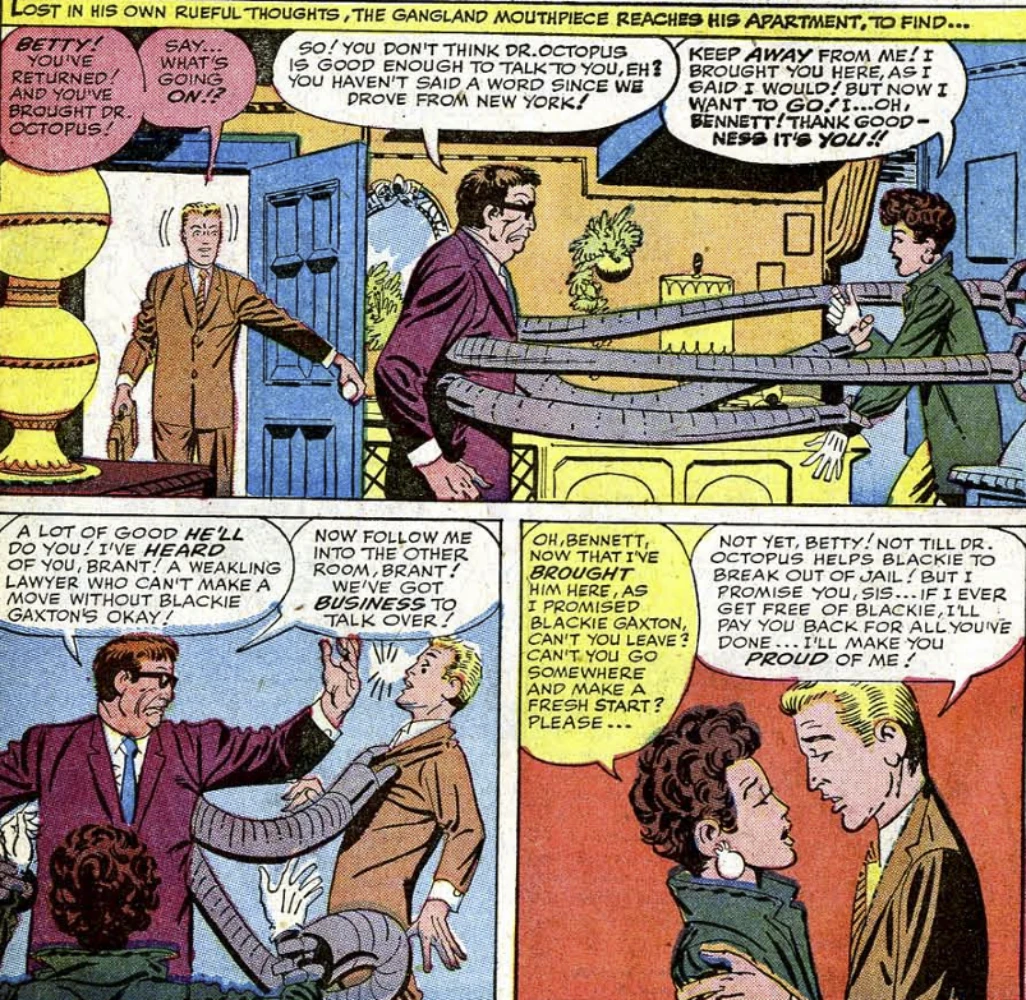
Betty has never had the greatest agency in terms of characterization, her main defense against trouble being running away, ditching Peter for a moment and leaving J. Jonah Jameson scrambling for another secretary. She's used here as a bit of a plot device, though her motivations center around the safety of that heretofore unmentioned brother, Bennett Brant. Her concern for him is genuine enough, considering we've never even heard of this guy before, and her grief upon losing him to an errant bullet is palpable. Like Peter before her, she's lost a loved one to spidery shenanigans, and though Spider-Man's involvement in Bennett's death is less direct, her temporary rage towards the hero is understandable.
Lee nicely compounds the tragedy of these events by making the reader believe Peter realizes how important Betty is to him (even though it just seems like he's courting her?) and considering revealing his secret identity (the potential "turning point" suggested by the title) to her. This won't be the last time Peter gives this weighty decision such consideration, but it's arguably the first. He clearly sees Betty as someone he can trust enough to divulge his greatest secret to, laying bare his soul to another person and shrugging off some of the weight he carries by living a dual life completely alone. This is all, of course, before Bennett's death creates conflict between herself and Spider-Man–railing against the young hero initially, Betty later confides in Peter she recognizes Spidey has no fault to bear; still, she says, she'd rather not interact with the Web-Head, unknowingly driving a wedge between herself and Peter's plans.
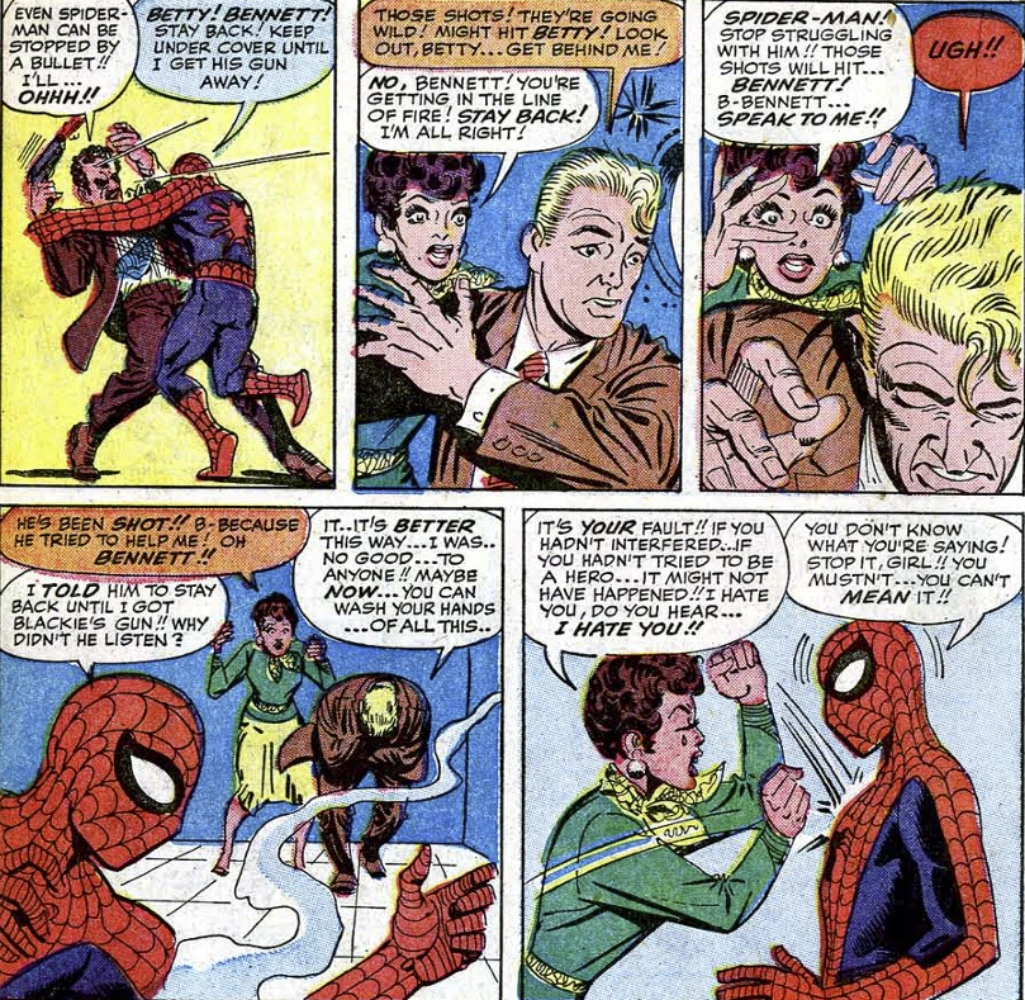
Bennett deserves a mention, even a minor one. Spidey history buffs will know, like most characters, Bennett didn't actually remain dead (though him being a non-superpowered character makes it a strange occurrence, something his Marvel wiki notes with the wonderfully vague summatory declaration of "Apparently, Bennett didn't die"), returning to menace Flash Thompson's Venom as the new Crime-Master (because, being a non-superpowered character, the original actually remained dead). At least one later issue, as I understand it, would add to Bennett's backstory, but he's presented here as a young lawyer with gambling debts who owes money to a gangster Doc Ock frees. With the limited space they have to use him, Lee and Ditko don't do much to make you care for the guy, the tragedy of his death hinging less on his life being cut short and more his sister's loss. Betty loves him for the sake of him being her brother, giving him money and ferrying Doc Ock to Philly to orchestrate a breakout, but Bennet is relatively spineless. His one heroic moment is saving Betty, Lee and Ditko decently using the cruel irony of his one unselfish act as the event which leads to his death. He's just kind of a shmuck, dying a little less like a coward than how he lived.
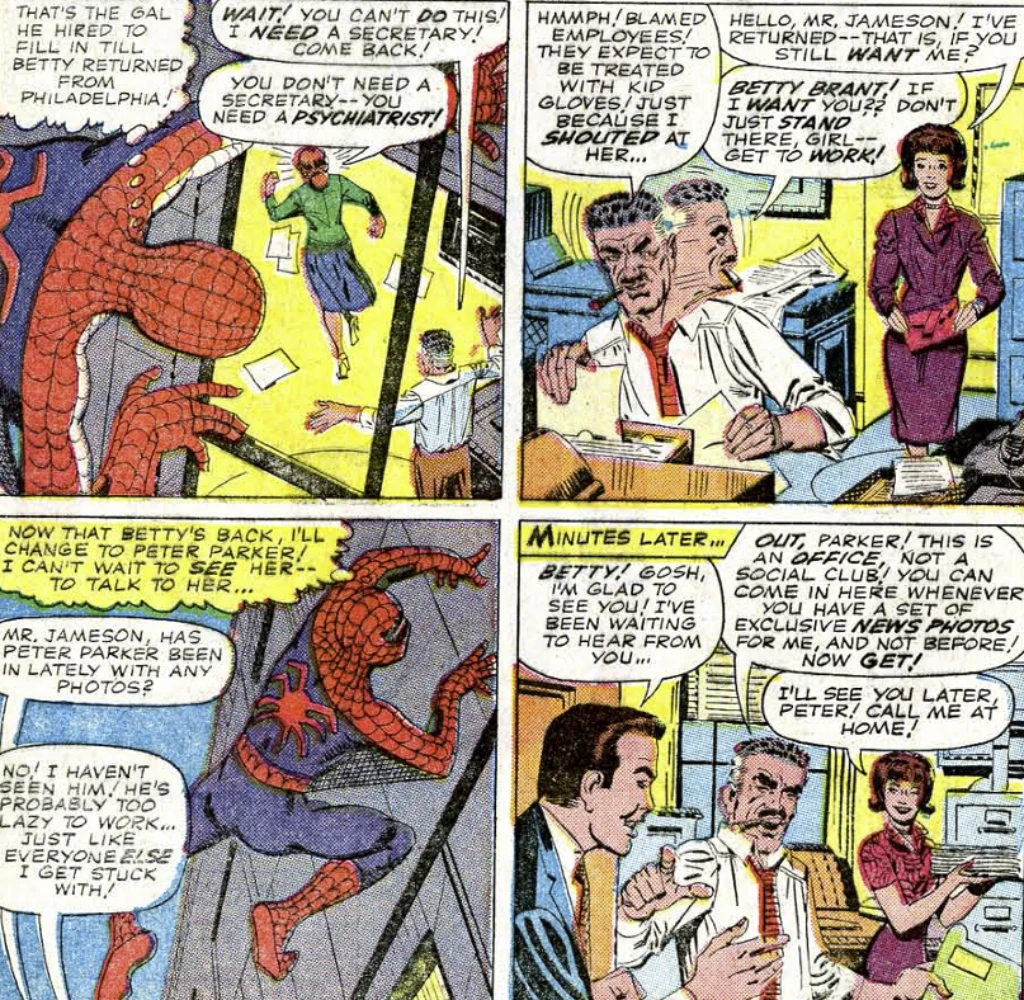
I do think Lee and Ditko could have capitalized on Bennett's death more immediately–ASM #12 sees Betty return to working for Jameson, much to the publisher's (and Peter's) surprise. But the audience should be surprised, too. We're not told much time has passed between issues; any context clues indicate it's been very little, not nearly enough for Betty to become reconciled to her brother's passing. No funeral, no mention of Bennett in the second issue, not even a tear…she's just back at work and quickly kidnapped by Octavius. Some semblance of mourning would have been nice to see, enhancing her connection to Bennett and the fractures created between Betty and Spider-Man.
Surrounding all this is perhaps Ditko's greatest contribution to the narrative–the scenery. As far as I understand the Marvel method of storytelling, I glean that Ditko may have been responsible for some specific story beats, stretching himself in terms of developing locations. He intentionally positions Spidey in close quarters situations–a tugboat, an artist's studio–to combat Octavius and various goons, drawing the eye with realistic details. The settings themselves add to the conflict, with Spidey twisting his ankle on the boat and his third fight with Doc Ock starting a fire in the studio. Great details abound in all scenes–sculptures littering the studio, bolts fastening metal pipes together, water towers dotting New York City rooftops–adding a sense of presence to the surroundings. These places feel vibrant as Spidey and Ock scamper, swing, punch, and kick their way through them.
'Tis a tale of expectations clashing with bitter realities which our creators weave–Octavius' grand genius hampered by a menial job for gangsters and his overindulgent ego; Betty's noble efforts to support Bennett destroyed by his arguably pointless death; Peter's strength failing him to illness at a moment he needs it most; his desire to share his secret with Betty ruptured by her disdain for our costumed hero. "Turning Point," the title of ASM #11 trumpets, and it truly is. A text box on that issue's cover croons about the concept, asking "Will this be the turning point of his career?" adding some unnecessary drama by tacking on an "Or–?" These issues mark a turning point regardless of what occurred, and in true fashion, Lee and Ditko lead us toward a dramatic downturn for our hero. Doc Ock may be our primary villain, yet it's poor luck which doggedly pursues Peter. As a testament to his heroic fortitude, these issues are a triumph: Peter pursues Octavius, battling him thrice, even when suffering a cold. Yet the return of Doctor Octopus brings with it a turn for the worst–a brother lost, a relationship fractured, a young woman plunged into the throes of mourning. Spider-Man may not be responsible, but he certainly feels like he is.