(Strand)om Stories: Moon Knight Epic Collection: Shadows of the Moon Review
Though playing a little loose with identity at times, these issues help establish Moon Knight as a serious hero in a serious world
—by Nathan on March 7, 2026—
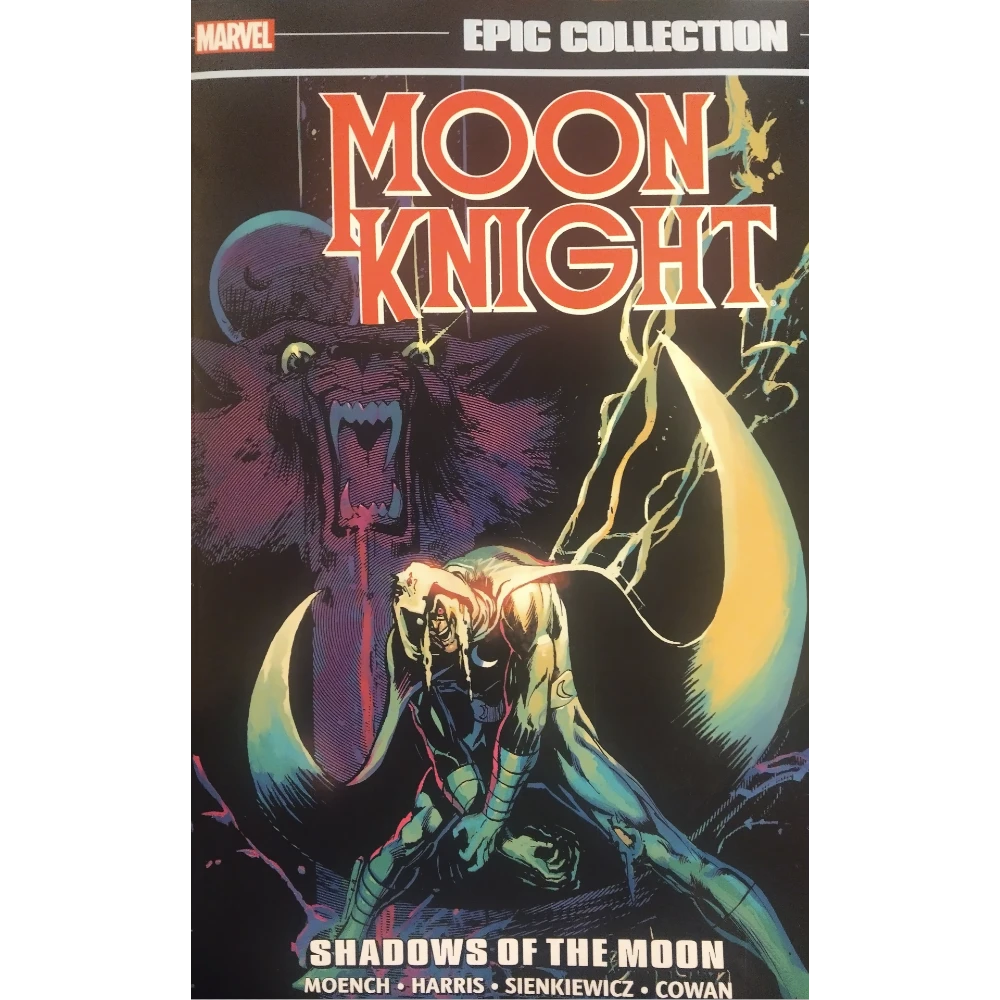
Nearly three years ago, I plunged into the first Epic Collection covering the creation of Moon Knight, Marvel's answer to Batman…and then some! Introduced as an adversary for Marvel's Werewolf-by-Night, the silver-garbed mercenary became a hero in his own right, guest starring in a few titles before receiving a series headed up by the man who co-created him: Doug Moench. Moench, paired with Bill Sienkiewicz shortly thereafter, introduced readers to the Knight's alternate identities–millionaire Steven Grant, soldier-of-fortune Marc Spector, and taxi cab driver Jake Lockley.
As Moench has written a few narratives I've recently reviewed–including, appropriately enough, a Batman story which tackled identity–I wanted to step back behind the wheel of Moon Knight's crescent-shaped copter (hope Frenchie doesn't mind me driving) and follow along with his further adventures. There's no fluff to be found in this volume: no guest appearances, no crossovers, only Moon Knight issues as Moench and Sienkiewicz, plus a handful of others, dive deeper into just who this vigilante is, be he one man or many.
Moon Knight Epic Collection: Shadows of the Moon
Writers: Doug Moench, Jack C. Harris, and Alan Zelenetz
Pencilers: Bill Sienkiewicz, Denys Cowan, Vicente Alcazar, Jimmy James, and Greg LaRocque
Inkers: Klaus Janson, Frank Giacoia, Bill Sienkiewicz, Steve Mitchell, Josef Rubinstein, Armando Gil, John Tartaglione, Bob Camp, Dave Simons, and Joe Albelo
Colorists: Bob Sharen, Carl Gafford, Don Warfield, Roger Slifer, and Christie Scheele
Letterers: Rick Parker, Jos Rosen, Janice Chiang, Jack Morelli, Irv Watanabe, Michael Higgins, and Diana Albers
Issues Collected: Moon Knight #5-23
Volume Publication Date: November 2015
Issue Publication Dates: March 1981-September 1982
I discussed in my review of the first Epic Collection how Moench turned to Moon Knight's four separate identities as a unique plot development rather than an actual study in human psychology. I don't even remember if the term "dissociative identity disorder" was used at all in the volume. I can follow up those comments by saying, while the term isn't used here, Moench is far more invested in the idea of Marc Spector's multiple personalities (with Marc being the primary one, meaning that's how I will refer to him as throughout the review). This isn't like how Bruce Wayne juggles his Batman persona or changes into Matches Malone once in a while–he's still Bruce Wayne, just with other masks. When Marc changes names, he changes who he is, references to himself in third-person and all. And while Moench isn't terribly adroit in his usage of such a plot point, he is empathetic, as shown through his characters.
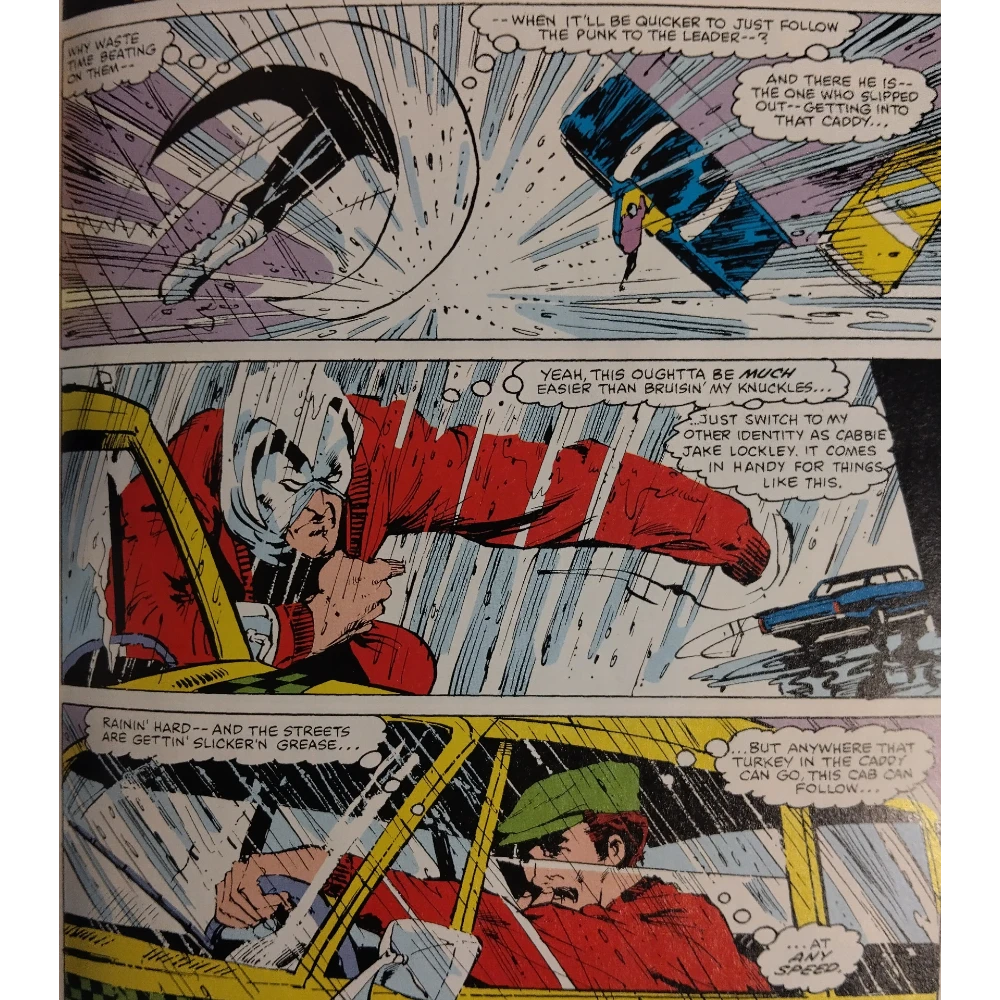
There's an ease with which Marc slips from one identity to another–he can easily rip off his Jake Lockely mustache and throw on a suit to become Steven Grant, or he can remove the Moon Knight costume, become Steven, and then be told to shift into Marc, which he does effortlessly. Moench doesn't supply any narrative direction for when one personality subsumes the other, save the obvious change in appearance when needed, nor does Sienkiewicz provide much in the way of artistic direction between Marc and Steven, specifically. This doesn't necessarily confuse the reader, and I feel it's intentional, showing how easy Marc has taken on some of these other identities.
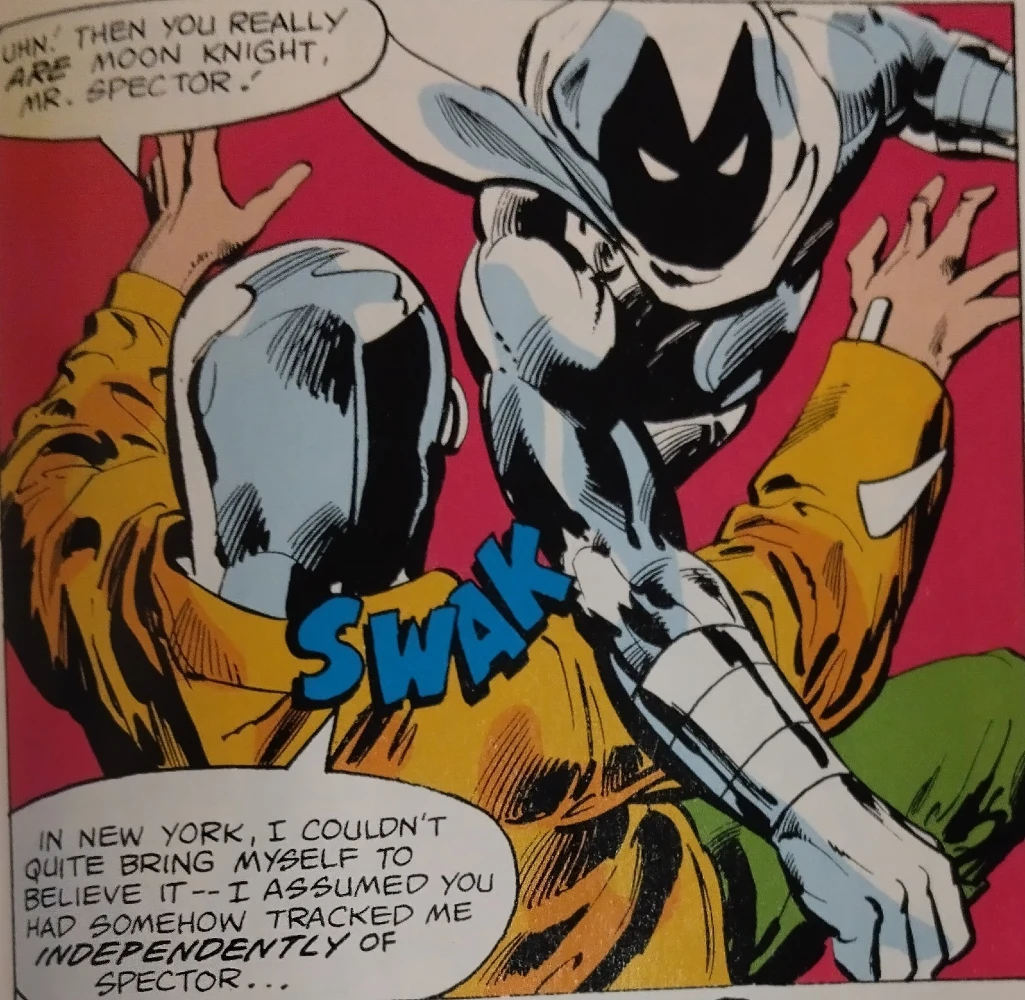
Perhaps too easy, at certain moments, which is really my only gripe with the volume. Moench has Marc run into several individuals, enemies and allies alike, who recognize him as a former mercenary, only to conveniently tether him to Moon Knight when the vigilante appears later on the scene. That several tales deal with individuals from Marc's shady past only strengthens the connection and essentially ensures that certain characters will wind up dead by story's end, if only to let Marc maintain the secrecy of his identity…or "identities." It could be that Marc juggles too many personalities and just struggles to keep the details straight from those he interacts with…or it could just be a highly convenient way to introduce tension.
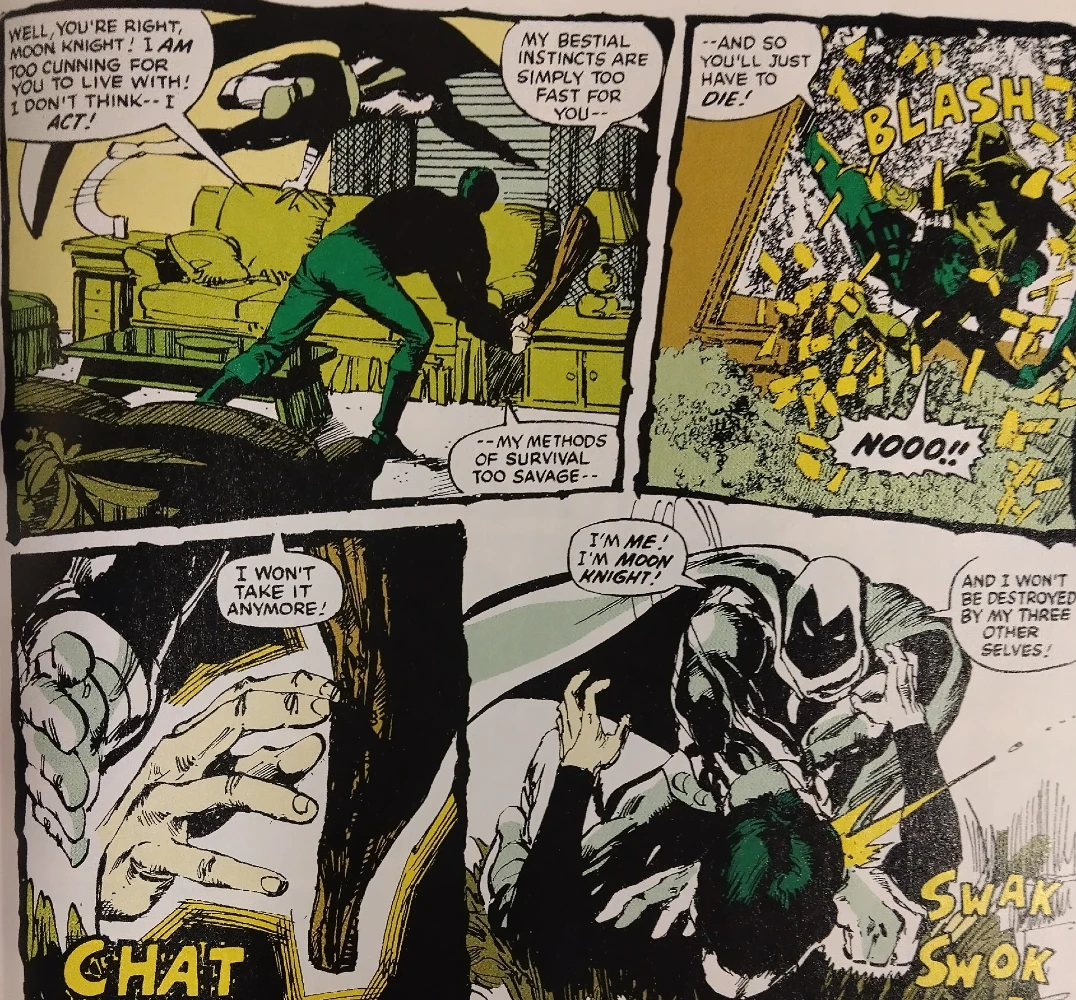
What Moench and Sienkiewicz do provide, to their credit, is conflict through this concept of identity, specifically how it pertains to Spector and Grant. In some places, the theming is obvious: a two-part arc where Moon Knight battles a man capable of causing nightmares sees the vigilante physically fight aggressive versions of his personalities, but even here, it's well-written. Marc, at the least, seems fully aware of the roles he must assume when taking on these individual identities. When he's injured on his property by a gunman in one issue, Moench switches to a scene where the millionaire demands certain protection and assures police he'll stay and convalesce, knowing full well he's merely applying a smokescreen and Moon Knight will soon strike at the shooter. Here, the Bruce Wayne/Batman parallels feel strongest, Marc knowingly leaning into the characteristics common to his social station to manipulate certain events and remove obstacles so Moon Knight can fulfill a mission.
Moench has fully bought into the idea that these personalities cannot be waved away or taken lightly; the thin membrane separating each identity from the other bears weight, and the actions of each persona have consequences…on Moon Knight and others. Moon Knight himself is treated as a separate entity of sorts, responding to different names at different times (a drifter named Crowley who knows Jake Lockely often refers to Moon Night by that nom de guerre, while Marlene prefers Steven and Frenchie prefers Marc), only adding to the fluidity of his true self. As I understand it, and as I alluded to above, Marc Spector is the base identity, but Moench isn't straightforward about allowing him dominance. Each character is given their moment under the sun…or moon, as it were. But the hero himself, agent of Khonshu, seems his own person at times, regardless of his name, determined to mete out justice as an instrument of righteousness. That's the mission; quibbling over which man wears the mask is for other folk.
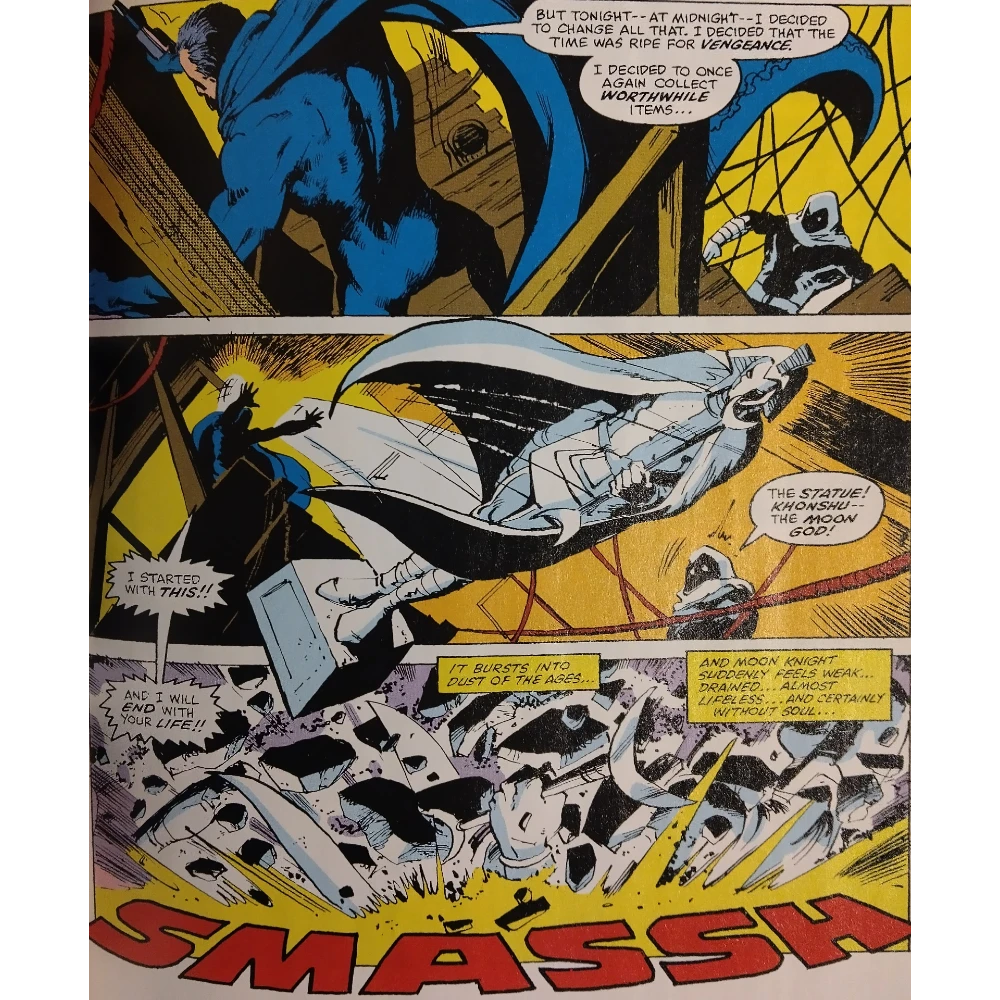
Moench is delightfully coy about the moon god's relationship with Marc, teasing the reader as to whether Khonshu exists or whether his seeming influence is a sign of instability on behalf of our white-clad vigilante. A narrative where Moon Knight loses a precious statue representing the god Khonshu, shattered by enemies Midnight Man and Bushman, calls into question the root of the Moon Knight identity. Feeling disconnected from the Egyptian deity, Marc finds himself lost, unsure of who he is anymore, requiring the stability of friends to pull him back into a sense of self. But is the god's existence and sway over Marc real? Later comics would establish Khonshu's permanence, but here, Moench plays lightly with the idea. A few back-up strips, focused on Khonshu's potential influence on other people, could also chalk circumstances up to pure coincidence or turns of fate. Pure accidents, if you're so inclined…but that relies on the reader's interpretation.
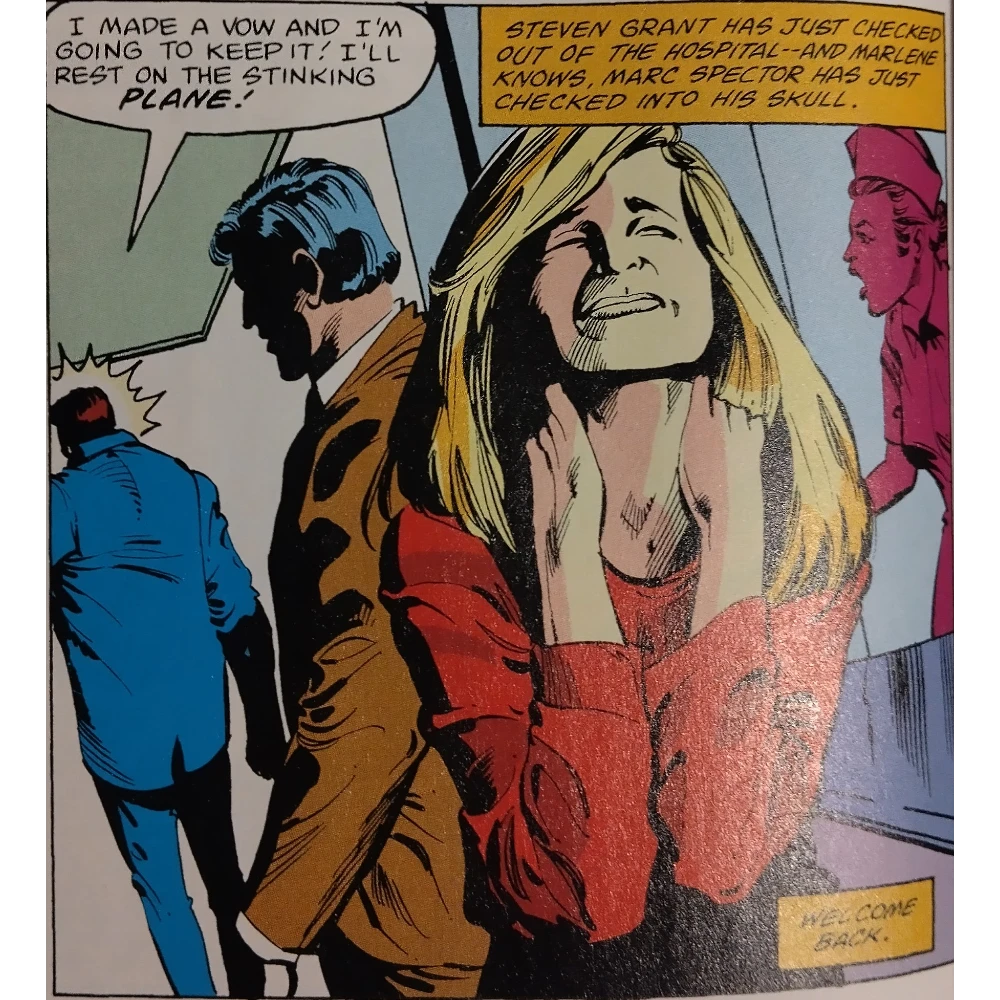
Marc's girlfriend Marlene is the most affected by his shifting identities, concerned when the more aggressive personality of Marc Spector takes over on a mission to avenge the death of a friend. She loves Steven and can deal with the other personalities, but the vengefulness Marc Spector's mercenary tendencies exudes can be troubling. Marlene, as a primary female character, is given a strong amount of agency in these narratives; her role is basically to aid Moon Knight's mission, but she doesn't only support from the sidelines. She redirects Marc's emotions, journeys with him to foreign countries, grapples with her own concerns. But the spectre of "Who is Marc?" lingers over their relationship, creating instability and frustrations.
The notion of identity seeps into other stories, affecting the very natural and supernatural threats Moon Knights battles. In a team-up with Daredevil (following their obligatory skirmish, natch), Marc fights the Jester, himself seeking revenge on people who affected his former life as an actor. A killer tries to murder a Japanese ambassador, angered by the presence of non-white Americans; the nightmare man, named Morpheus, seeks vengeance on a doctor he believes ruined his life; at least two stories present criminals dealing with some strained relationship with a parent. Villains and heroes alike feel their sense of individuality threatened, and they react in kind, some bowing to their fears and choosing to kill (or try to kill), others stepping beyond their worries in an effort to save others. Even when Marc is up against voodoo witch doctors, zombies, and the severed head of Medusa, very real and relatable evils are found–greed, hate, vengeance. Grim Cold War connections, such as nuclear threat and violence in the Middle East, add a layer of relevance to the proceedings.
Such evils abound the world over, and Moench is willing to draw Marc and his comrades whenever the Moon Knight is needed. Sienkiewicz is tasked with populating the vigilante's adventures with locales as near as New York, as colorful as a Mardi Gras parade in New Orleans, and as far-flung as Switzerland and Jerusalem. The globe-trotting yarns make for engaging adventures, regardless of the evil Marc faces, and give Sienkiewicz a chance to stretch his artistic talents.
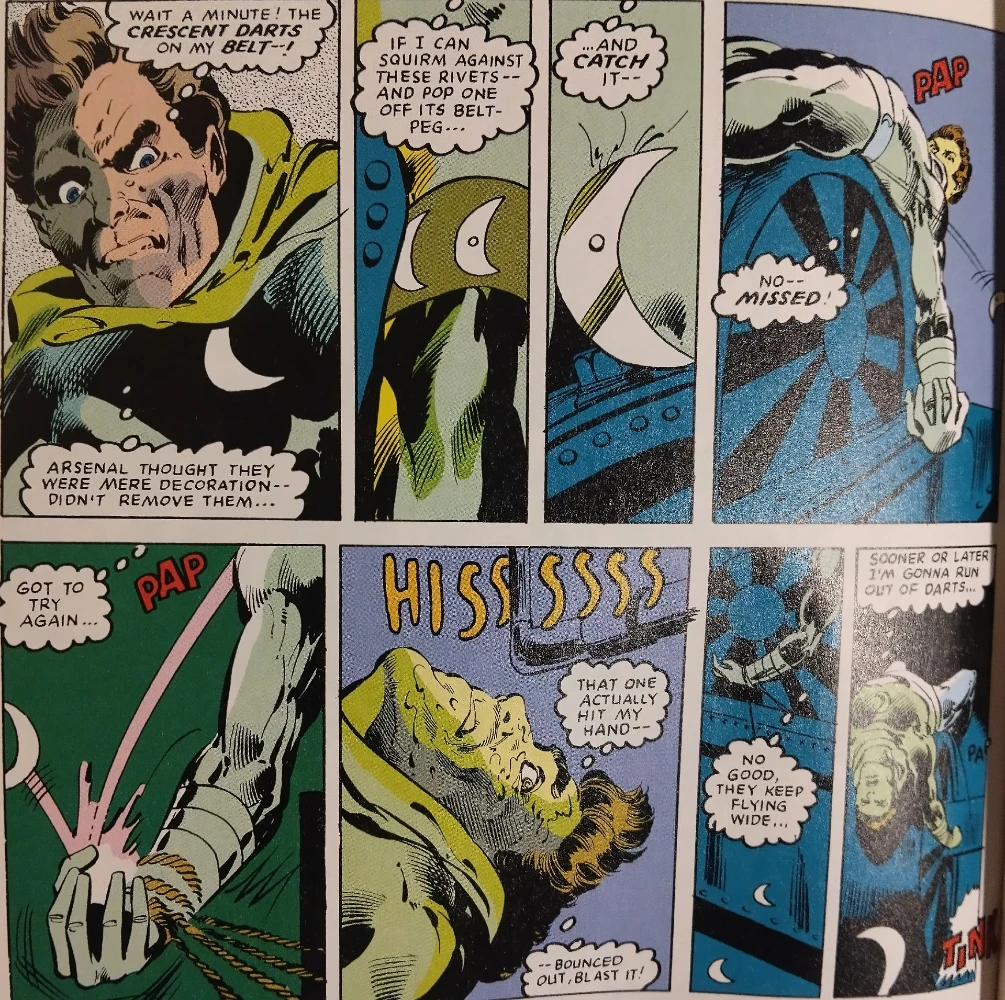
The artist undergoes a transformation as these issues progress, starting the volume with work more akin to Frank Miller and ending it taking steps towards the style he's most associated with in New Mutants or Daredevil: Love and War. That Sienkiewicz can wring emotions like surprise and determination from Moon Knight's face, often shown as two white eyes peering out from the darkness of his hood, only makes his efforts more impressive. Wonderfully detailed as his art becomes, Sienkiewicz also possesses a strong sense of pacing, slowing down important moments over multiple series of small panels, such as heightening the tension during a scene where Marc escapes a death trap. Unique compositions, like a nine-panel page showing Marc dodge bullets in a circle, help redefine what comic art could be at the time, in the early dawn of the 80s.
I would assume that, thanks to the Oscar Isaac-led series on Disney+, Moon Knight's popularity has increased, but I would hope the MCU version doesn't ever eclipse his comic counterpart. Great as that show is, it owes a lot of its foundation and ideas to what Moench and Sienkiewicz laid down together, stunning, detailed art upholding stories built upon identities and the conflicts surrounding them. I invite you to step into Moon Knight's world, or Marc Spector's, Steven Grant's, or Jake Lockley's. It may be the same place physically, but if you stare into the shadows a little longer, you'll find there's a lot more here to explore than you may have originally anticipated.