(Strand)om Stories: Power Pack Classic (vol. 1) Review
These youthful adventurers and their development can be enjoyed by any reader, whether growing up or already grown
—by Nathan on November 24, 2026—
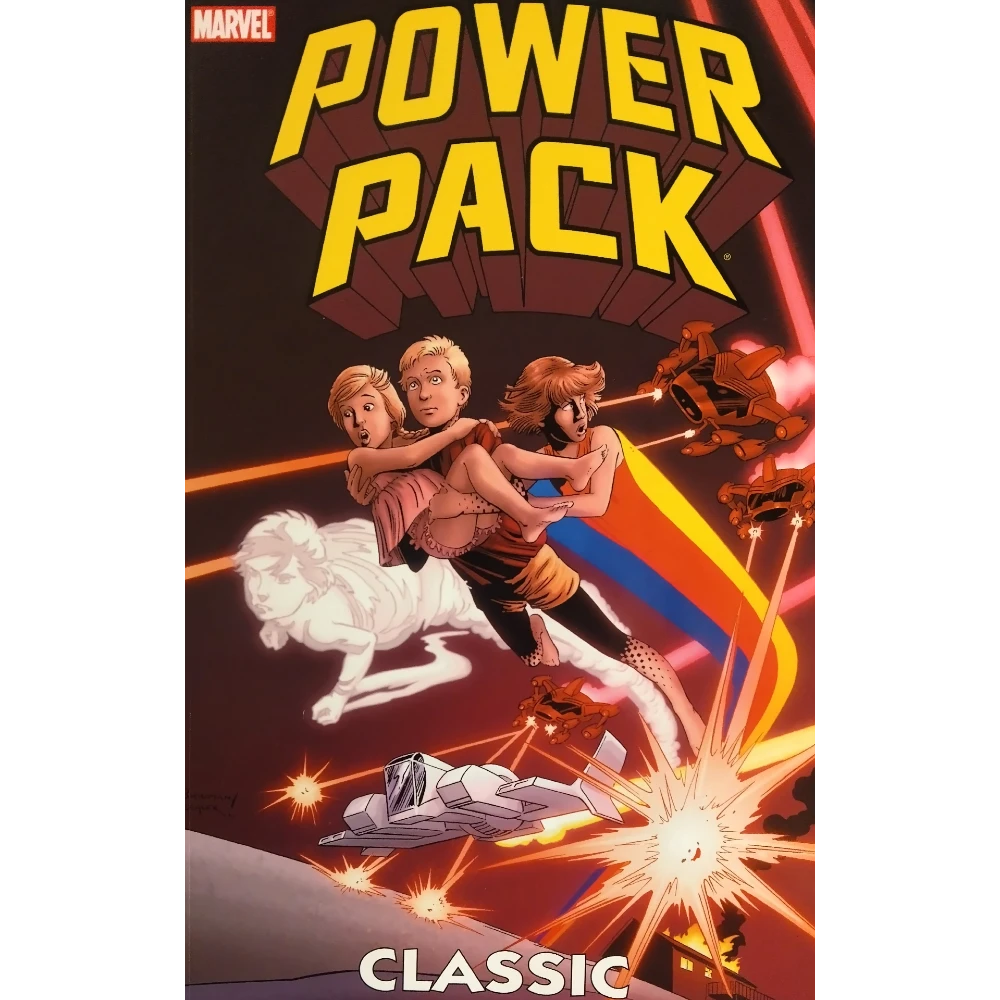
We have reached that venerable fourth week of November, dedicated in America to preparing for and celebrating the holiday Thanksgiving. Like its July predecessor Independence Day, Thanksgiving can come loaded with several emotions, but it can also come loaded with several ways to stuff your face. Certainly something I enjoy celebrating each year, the bounty of the feast.
Last year, I reviewed a comic to commemorate Turkey Day, as I've been trying to do more frequently for holidays on this site. Unlike Fourth of July, where I can snap up one of many Captain America comics to review, or even Halloween, where a Batman or monster-focused review feels appropriate, Thanksgiving doesn't have terribly many comics or graphic novels associated with it. I did some research and came up with the same limited hits across several websites, with most options not resonating with me or not already part of my collection.
Which leads me to Power Pack.
I picked up three small collections of this 80s series a while back, fairly cheaply, and just have not found the opening to review them until now. I'm slightly more familiar with the team's twenty-first-century incarnation, colorful comics created specifically for younger readers. Not to say this original series wasn't developed with kids in mind, but the handful of issues I've read don't seem geared specifically for children, at least not in the same way Marvel's Star Comics imprint (which debuted the same year as Power Pack) was. These are kids, sure, but they're also superheroes, published in the same continuity as Spider-Man, the X-Men, and Daredevil.
That's all well and good, you may say, but what's Power Pack got to do with Thanksgiving?
When researching Thanksgiving comics, I found most results mentioned issues dealing with the holiday rather than arcs or series dedicated to stuffing your mouth with stuffing. There isn't "Thanksgiving Guy, the Complete Series!" Instead, you find an issue of The Long Halloween where Batman delivers a meal to Solomon Grundy, or a tense meal between Vision, Scarlet Witch, and her family in an issue of the couple's 80s limited series, or a double-sized issue featuring a cadre of colorful kids fighting crime and fitting in a decent bedtime.
It's not ideal, but since I had the Power Pack collections, I decided to give 'em a shot. And since the Thanksgiving arc is found in the third volume, I took a page from this year's Independence Day posts to provide a trilogy of reviews: the first volume today, the second tomorrow, and the third on Thanksgiving itself. I'm thankful for comics, regardless of the series, so until Marvel gives us Thanksgiving Man to read while we eat our turkey and potatoes, I'll settle for any examination of an art form I'm grateful for today and every other day.
Power Pack Classic (vol. 1)
Writer: Louise Simonson
Pencilers: June Brigman, Mary Wilshire, Mark Badger, Brent Anderson
Inkers: Bob Wiacek
Colorists: Glynis Wein
Letterers: Joe Rosen
Issues Collected: Power Pack #1-10
Volume Publication Date: July 2009
Issue Publication Dates: August 1984-May 1985
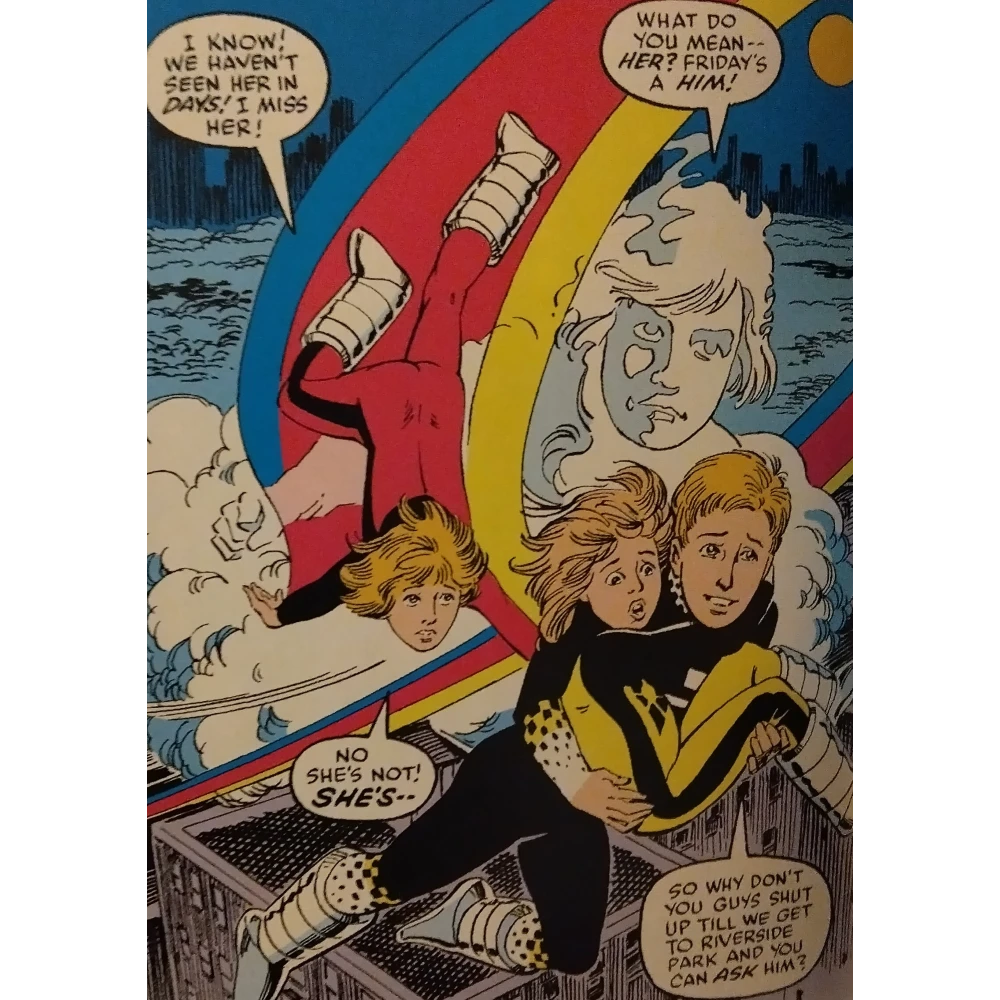
I noted in the introduction that, while Power Pack was likely written for a younger audience, it doesn't read like a series written for a younger audience. This isn't "Marvel Jr." or "Playhouse Marvel," dumbed down for little kids with amateur visuals and dialogue. Louise "Weezie" Simonson had been in the industry for a decade at this point as an editor, working on high-end titles such as Uncanny X-Men and New Mutants. Main artists Brigman and Wilshire may not have had as much experience, but they serve Simonson well in developing a series aesthetic that doesn't hinge on juvenile artistry. There is certainly an appeal to younger readers, given the subject matter, but Simonson and her artists craft issues which could be appreciated by comics fans of any age.
As a reader in his early thirties, I was a touch concerned Power Pack would fail to engage me. Yes, I picked up the volumes, but that was primarily because this was a well-received Bronze Age series I had not read yet, and I wanted to add it to my stockpile of classic 80s comics. I found, as I read, that Power Pack did hold my attention, for a primary reason that may be an extension of why this series appealed to younger readers.
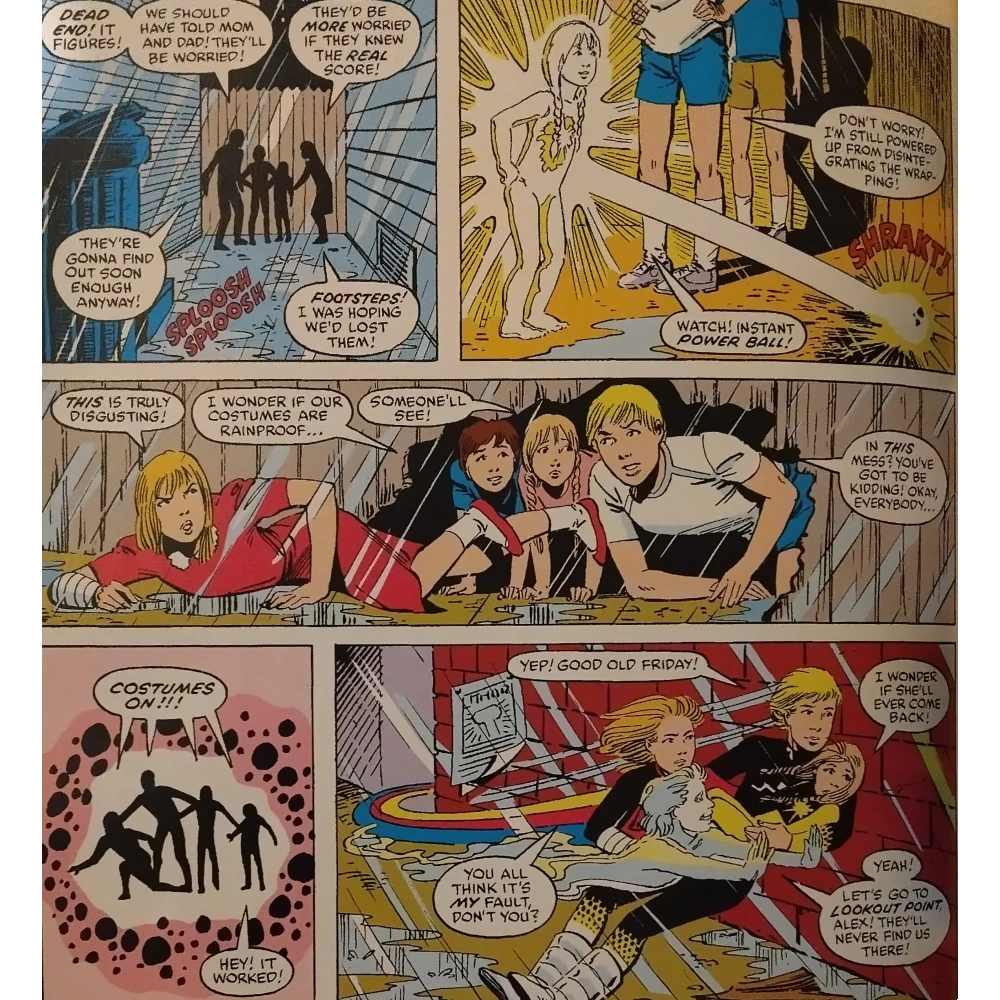
Much of Power Pack's core strength comes from, unsurprisingly, its central cast, the Power siblings–Alex, Julie, Jack, and Katie–four kids who are given abilities by a dying alien. The Kymelian Alfie Whitemane blesses the children with their powers before he dies, his smartship Friday gives them costumes, and the four siblings head off to save their parents from the Snarks, the aliens who killed Alfie. Simonson and Brigman stretch the full origin story across four issues, which allows us enough time to appraise our youthful heroes and for the Power kids to at least become acquainted with their abilities.
They aren't sidekick teenagers like Robin or Kid Flash; they aren't even independent teenage heroes like Spider-Man in his first several years. The Power Pack are children, prepubescents, with two parents (yeah, really!), homework, and sibling dynamics. While this allows Simonson and her artists to create characters within a demographic younger than many comic readers, the series' youthful protagonists provide a perspective on the superhero genre unique from what most comics had at the time and likely still do not have now.
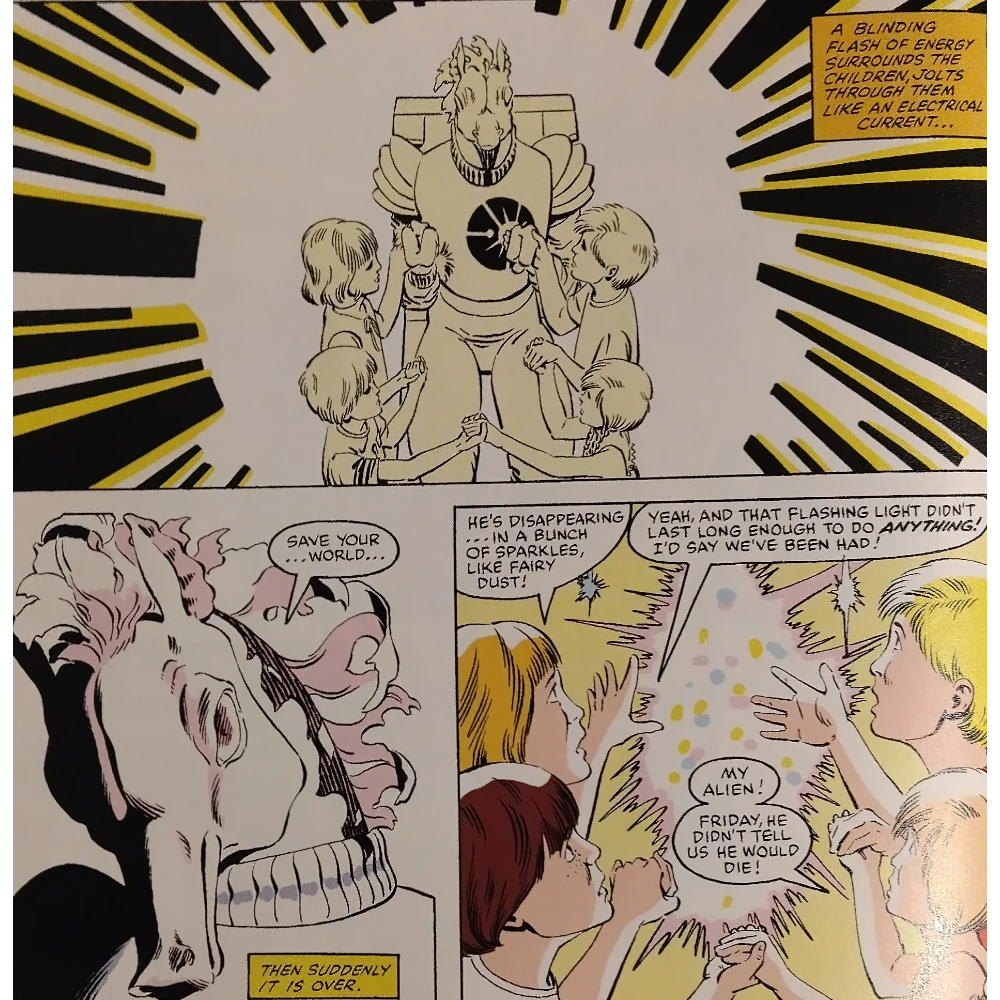
Simonson deftly manages to concoct characters who are relatable to kids reading these issues–the Power Pack squabble, call each other names, and support each other lovingly; they have to balance household chores and homework with discovering their own independence; they have grown-up idols and icons they admire and want to emulate. Like other comics, it is a kind of power (pack) fantasy–not necessarily to have the strength to fight injustice or confront global evils but to have the ability and freedom to express yourself and be accepted among your peers, even if it's only your siblings, because of your uniqueness.
A guy like Spider-Man works so well because, especially in his initial appearances, Stan Lee and Jack Kirby balanced superheroics with teenage antics. Spidey fought the Green Goblin, sure, but he also needed to make sure he took pictures to pay his rent. He dealt with girl problems, college courses, family medical issues. Likewise, as the Power Pack fight enemies and aliens, Katie deals with a frustrating loose tooth; the girls run across the android Dragon Man and temporarily "adopt" him like they're taking in a stray dog; the kids visit an aquarium with their grandfather, only to run afoul of an extraterrestrial sea creature Simonson previously introduced in a Marvel Team-Up annual. Mundane moments and events are given a somewhat fantastical twist, Simonson holding the necessary balance.
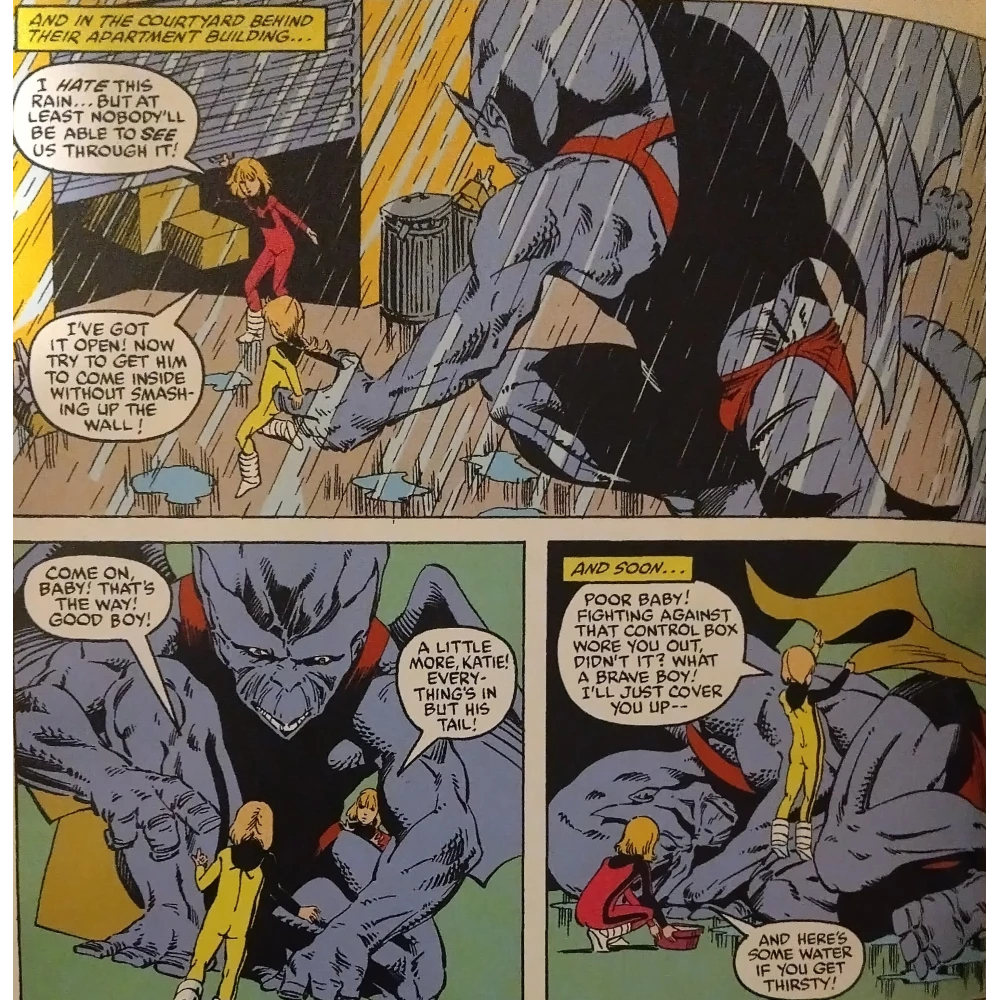
As an adult reader, I found I often cast my mind back to my own childhood, growing up with two younger siblings I adore to this day. Several moments in these issues felt plucked, more or less, from my own life (without the alien adversaries, naturally)–like my youngest sister, Katie takes offense at being called the baby of the family (it's never gonna stop, Katie, sorry); the kids quibble and use goofy nicknames; the boys do what they can to eek as much free time out of the last day of summer vacation before–blegh!–school comes along again. I didn't so much relate to these kids as I remembered what it was like to be a kid, and Simonson does a smart job having them express the same concerns, wishes, and hopes I and likely several other readers would have felt at their ages. You can find aspects of the quintessential American childhood experience in these issues. I, too, never wanted summer to end, disliked cleaning up my toys and washing dishes, and felt a connection to my siblings that couldn't be shared with others, especially adults (sorry, Mom and Dad).
Importantly, Simonson utilizes certain moments which feel like a wink-nudge to older readers–younger readers may feel frustrated when, after a brief team-up, Spidey tells the Power boys to head home or when their parents (unaware of their children's dual identities) ground the kids for leaving the home unsupervised, but older readers understand. You want to root for the kids and their sense of independence, absolutely, but you also recognize the inherent dangers in their choices. At least one criminal shoots at them, a few of the kids are almost crushed by Dragon Man, and each Power sibling winds up the prisoner of an enemy at some point. Simonson intentionally undercuts their doe-eyed innocence, slowly introducing the kids to a world a bit more dangerous than they previously understood and thus requiring certain safeguards against their obliviousness.
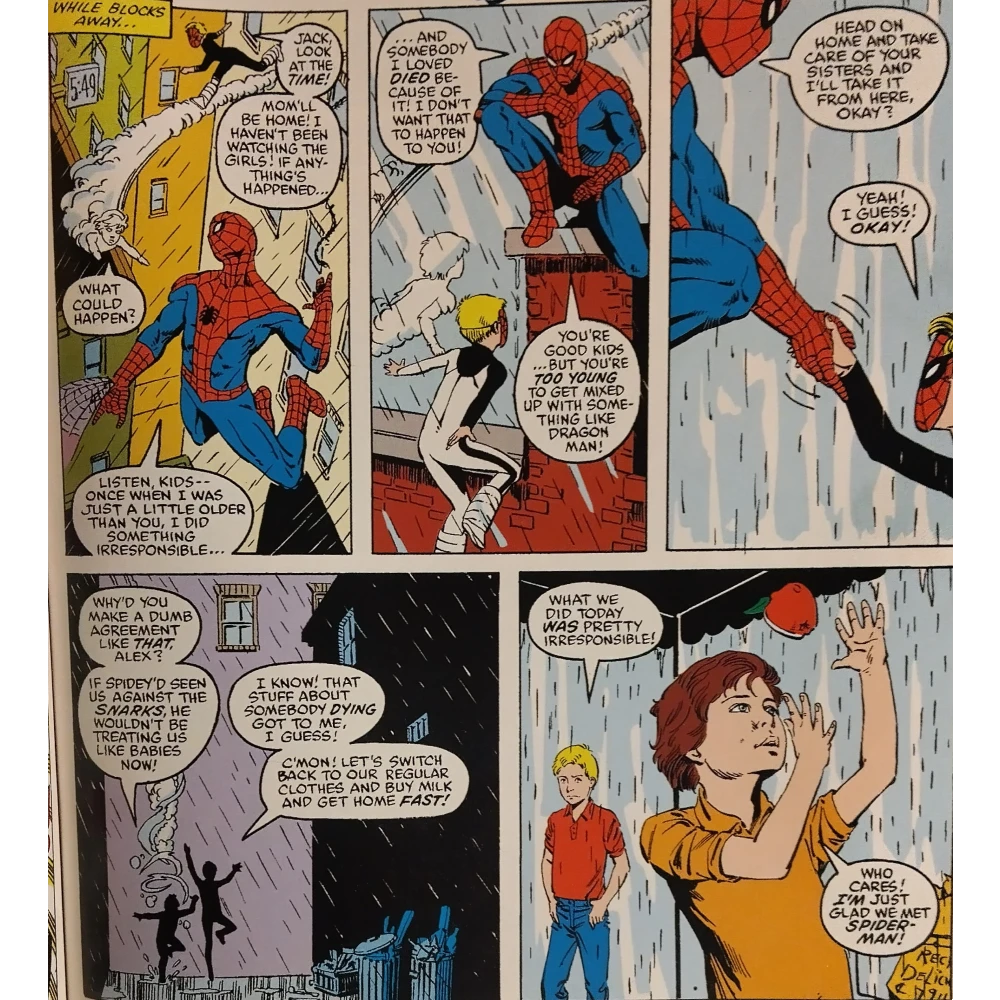
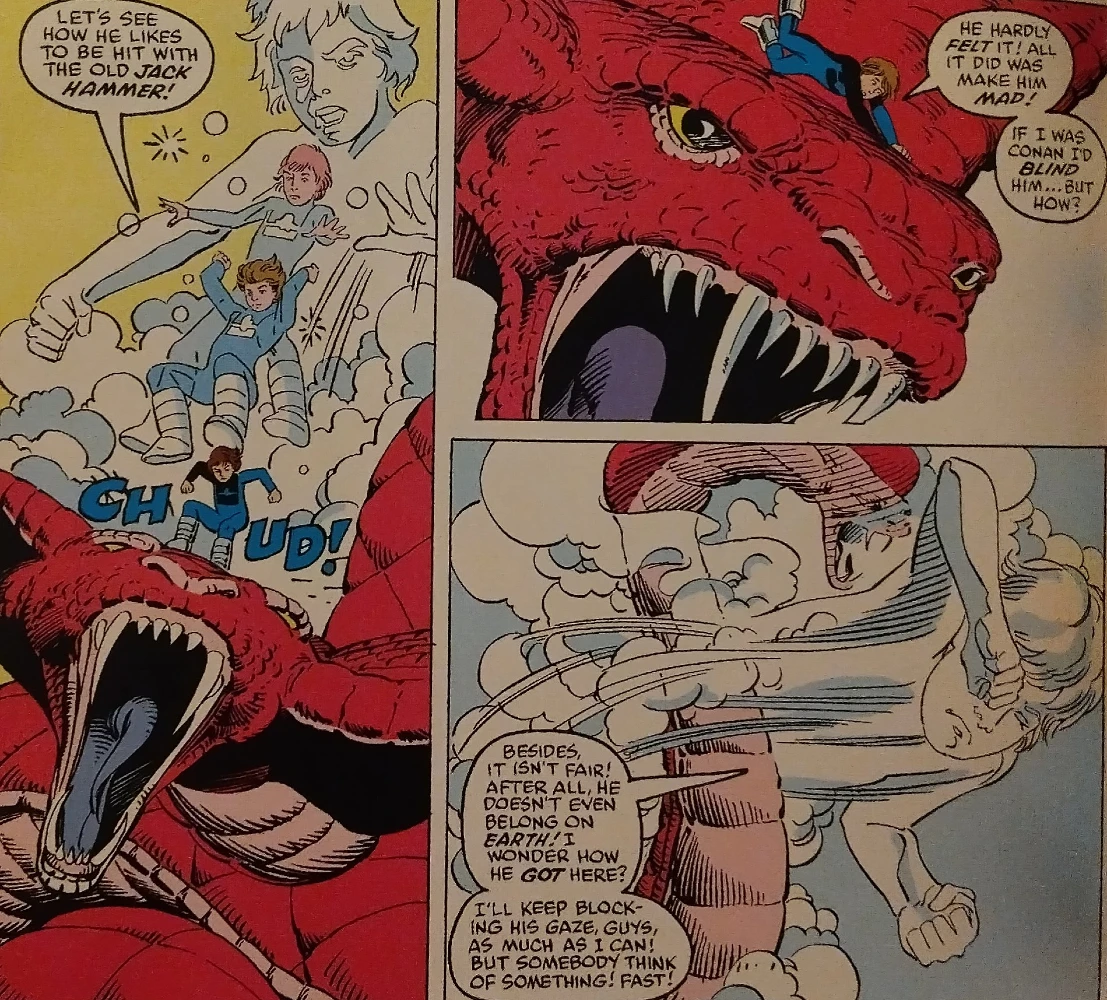
I've not mentioned the individual kids much, but I will add how well Simonson develops each Power sibling individually. They work well as a unit and in their interpersonal relationships, especially between the sisters and brothers, but each kid is allowed their own personality. Alex is fashioned as a science-wiz, fascinated (as Gee) with his power over gravity. Julie, the second oldest, may be called bossy and witchy, but as Lightspeed, she possesses a quick decisiveness which makes her as much a leader, if not more so, than Alex. Jack transforms into living cloud as Mass Master, which seems like Simonson's clever way of displaying his braggadocios personality as literal hot air (in an amusing running gag, he refers to himself as "ole Mass Master," as if he's been in the superhero game a long time). And Katie, though reliant on her older siblings, is the team's most offensively capable member as Energizer, her energy projection abilities tapping into an assertion made early than she can be a little destructive.
Each kid, unique in their mannerisms, is given the chance to grow in handling their powers. From Gee determining some means by which to propel his gravity-free state, to Lightspeed improving her speed and maneuverability (similar to New Mutant Cannonball), to Mass Master learning to shrink while maintaining solidity, to Energizer gaining greater mastery over what she disintegrates to charge up, each kid faces a learning curve with their newfound abilities. Like other superheroes, they don't suddenly hone their powers perfectly, and just like kids developing new skills, they find repetition and some hard knocks enhance confidence and control.
As they grow a little in age and their understanding of the world, so do the Power children come to understand themselves better as they take their first tentative steps into the wide world of superheroes. It's a world which will expand as we dive into further issues tomorrow. These opening installments are, largely, an extended origin story, with Simonson and her artists decently charting momentum across each chapter, keeping story beats flowing from issue to issue. The Power children still have a ways to age–I have no idea when they reach adolescence–but Simonson, Brigman, and the others deliver an opening salvo relatable to kids of bygone days who are now adults and to kids right now who still have growing to do.