(Strand)om Stories: The New Mutants Omnibus (vol. 1) Review
This titanic tome smartly introduces a youthful team and all the ways they're made to grow
—by Nathan on August 27, 2026—
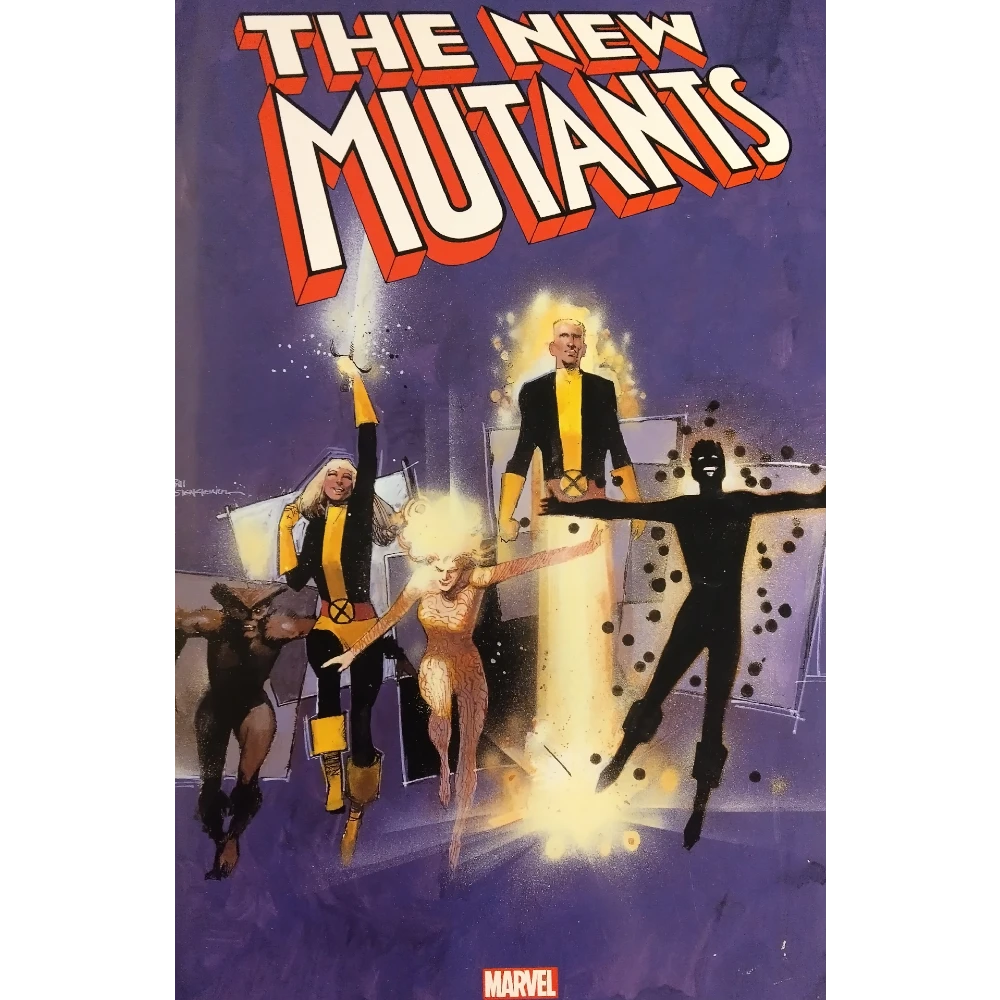
It's been five years since I reviewed my last omnibus, specifically my last X-Men omnibus. I was on a decent roll there, churning out posts covering Chris Claremont's time on Uncanny X-Men with guys like Dave Cockrum, John Byrne, Paul Smith, and John Romita Jr.
And then I just…stopped.
I've always intended on taking a more complete look at Claremont's run (goodness knows there's plenty more to cover), but for the last five years, I've just been reading and reviewing other comics. "I’m gonna do what I can to stay on top of the action," I wrote when concluding my review of (Uncanny X-Men Omnibus (vol. 4)*. Then life sweeps you off your feet, the days and their drama roll on by, and next thing you know, half a decade has passed.
So let's get back into it.
Specifically because I recently reviewed Claremont's contribution to a classic Marvel/DC crossover starring the X-Men and New Teen Titans, I wanted to examine some other work which feels like a synthesis of that crossover's premise: where the Marvel/DC epic teamed a group of mutant heroes with a group of youthful heroes, the heroes in today's omnibus are a group of youthful mutants. Taking the DNA from the X-Men and the "New" from Teen Titans, our cadre of kids represent a facet of mutantdom readers hadn't seen for a while. Young mutants, newly christened by one Professor Charles Xavier, faced with a world that not only hates them because they're genetically different but tends to treat them with indifference because they're snot-nosed punks. "Get off my lawn!" the world yells at these youths, adding a quick "Before you burn it to nothing with your pyropathy or something!"
As if the challenges of adolescence weren't hard enough.
The New Mutants Omnibus (vol. 1)
Writers: Chris Claremont, Bill Mantlo, and Louise Simonson
Pencilers: Frank Miller, Brent Anderson, Bob McLeod, Paul Smith, Sal Buscema, Ron Frenz, John Buscema, John Romita Jr., Bill Sienkiewicz, Bret Blevins, and Steve Leialoha
Inkers: Bob Wiacek, Bob McLeod, Mike Gustovich, Kevin Dzuban, Tom Mandrake, Tom Palmer, Dan Green, Kim DeMulder, Bill Sienkiewicz, Mike Esposito, Steve Leialoha, Armando Gill, and John Tartaglione
Colorists: Carl Gafford, Glynis Oliver, Bob Sharen, George Roussos, Ken Feduniewicz, and Andy Yanchus
Letterers: Annette Kawecki, Tom Orzechowski, Rick Parker, Janice Chang, Joe Rosen, Lois Buhalis, and Bob McLeod
Issues Collected: Marvel Graphic Novel #4, New Mutants #1-34, New Mutants Annual #1, Marvel Team-Up #149, Marvel Team-Up Annual #6, Uncanny X-Men #160, #167, #180, #189, and #190, Magik #1-4, and material from Marvel Team-Up #100 and Secret Wars II #1
Volume Publication Date: December 2020
Issue Publication Dates: December 1980, August 1982, November 1982, March 1983-December 1985
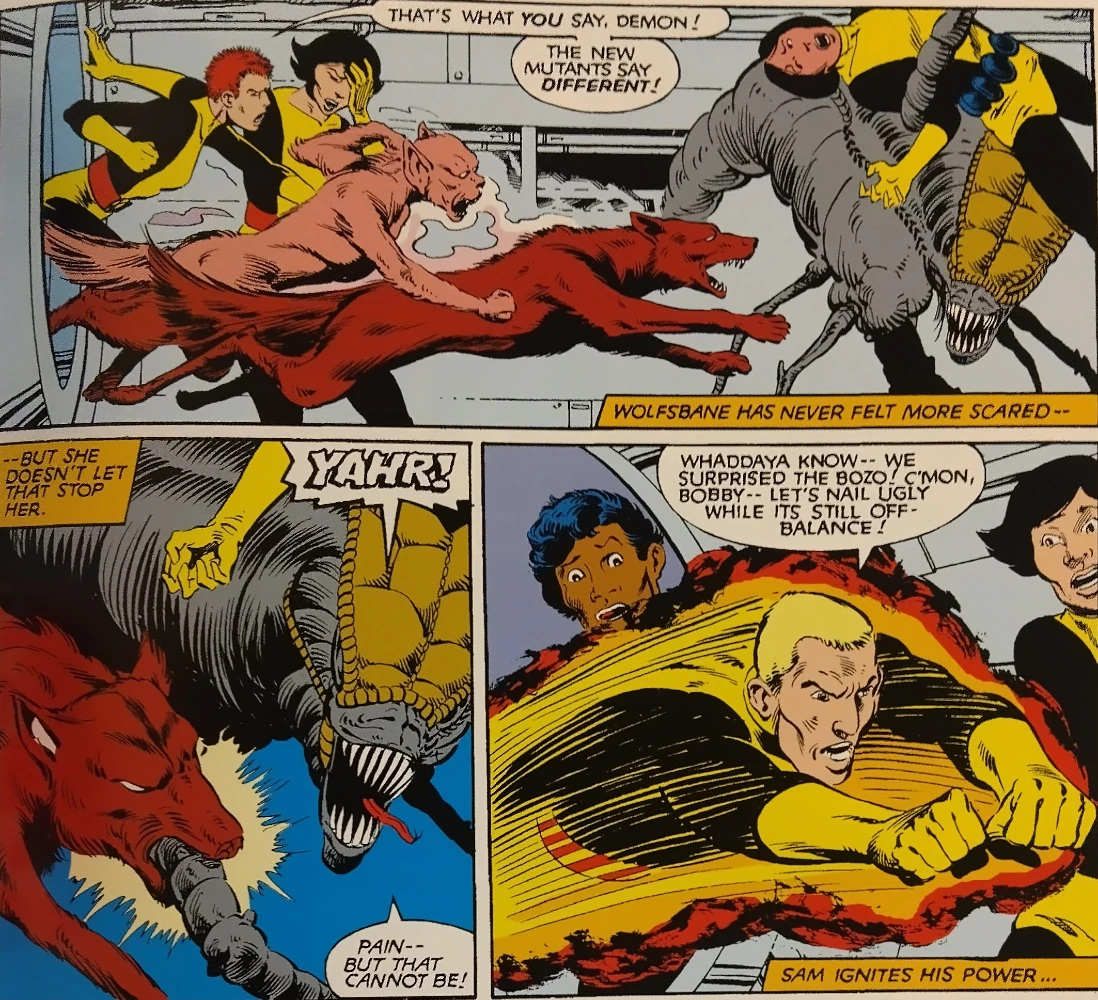
Sitting at a little over 1200 pages, with nearly 50 issues of content, this sucker is gonna take you a while to get through. It took me several weeks of near-daily reading to creep my way through it. Not because the issues are boring or uninteresting; it's just that there's so much here that the best reading experience was done, in my subjective estimation, at a relaxed pace. Read what you want, when you want. A few issues a day was the best option for me.
But these are good comics; maybe not quite to the extent of Claremont's best X-Men material (which, as I noted in my review of that fourth omnibus, I may have worked my way past…we'll see), but these are strong stories with a unique cast of characters. Stan Lee and Jack Kirby had originally introduced the X-Men as teenagers, quite like our New Mutants, but there's a youthful energy that Claremont and collaborators such as Sal Buscema and Bill Sienkiewicz bring to the title that had been missing from the mutant side of the Marvel Universe pretty much since Giant Size X-Men #1. The new X-Men, such as Wolverine, Storm, Colossus, and Nightcrawler, had always skewed a bit older, firmly in that young adult-adult range. Kitty Pryde brought some childlike levity to the book, but if you're going to write a series that tries to capture the same youthful spirit as the original X-Men comics, you need a full team of youths.
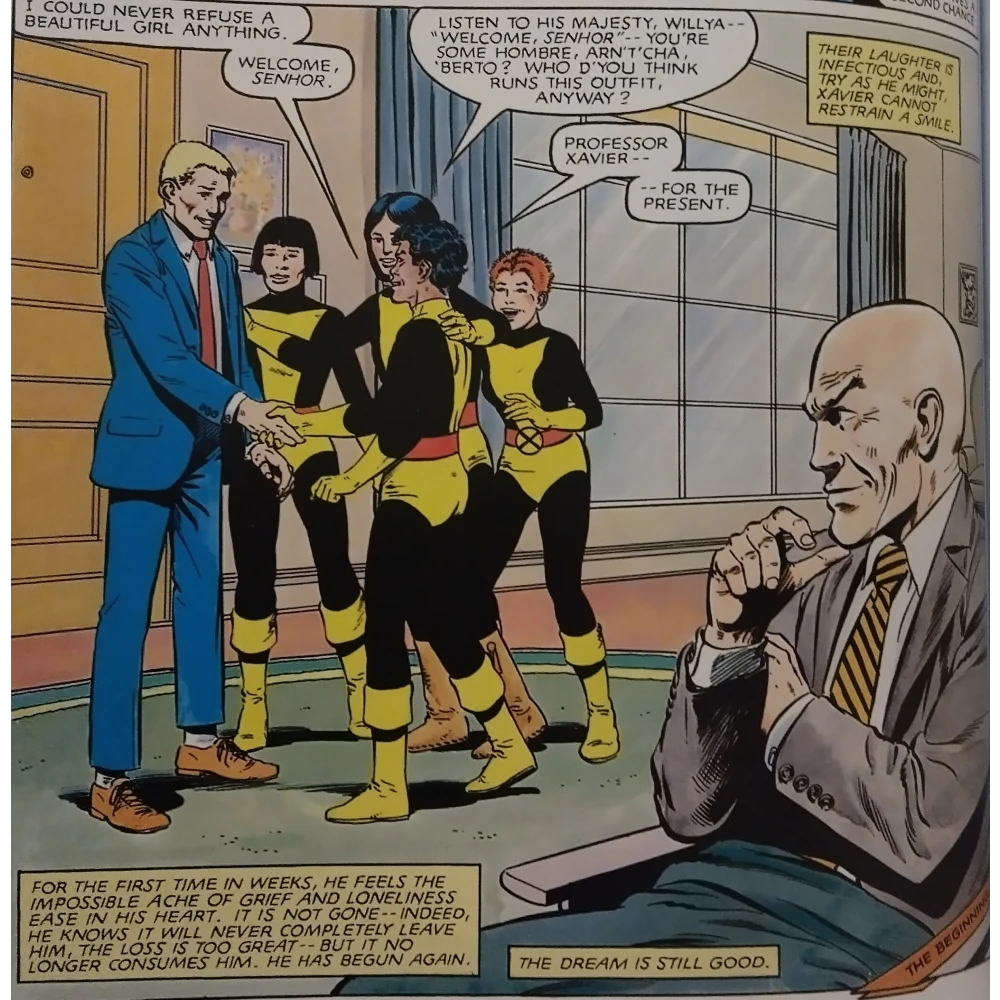
That's the central focus of these issues, this band of intrepid kids. Claremont, across the introductory graphic novel and these first several issues, creates a cast of characters who feel vibrant and hopeful in a dark world, even as they're thrust into positions and circumstances which kids their ages should never undertake. Xavier accepts these new students during a time he believed his beloved X-Men were dead, and though he struggles with wondering whether he can foist such responsibility on such young shoulders (again!), the New Mutants become determined to quell his fears…by putting themselves in the exact situations which would completely demoralize the professor were they ever killed.
I say "vibrant" and "hopeful," not in a tongue-in-cheek manner, but with legitimacy. These are stories about kids growing up, about learning the realities of the world around them, yet they're also about those kids retaining core characteristics that don't budge under the weight of violence, family drama, racist villains, and their own burgeoning emotions. Between bouts with superbaddies, the female New Mutants host a sleepover with friends and the group watches Magnum PI and attend a rock concert together. Sure, the sleepover is interrupted by a new alien ally, the sleepover is crashed by the X-Men, and the concert is interrupted by an extraterrestrial bounty hunter, but hey! It's comics! These kids still try to afford themselves some level of normalcy even when surrounded by the insanity of happenstance.
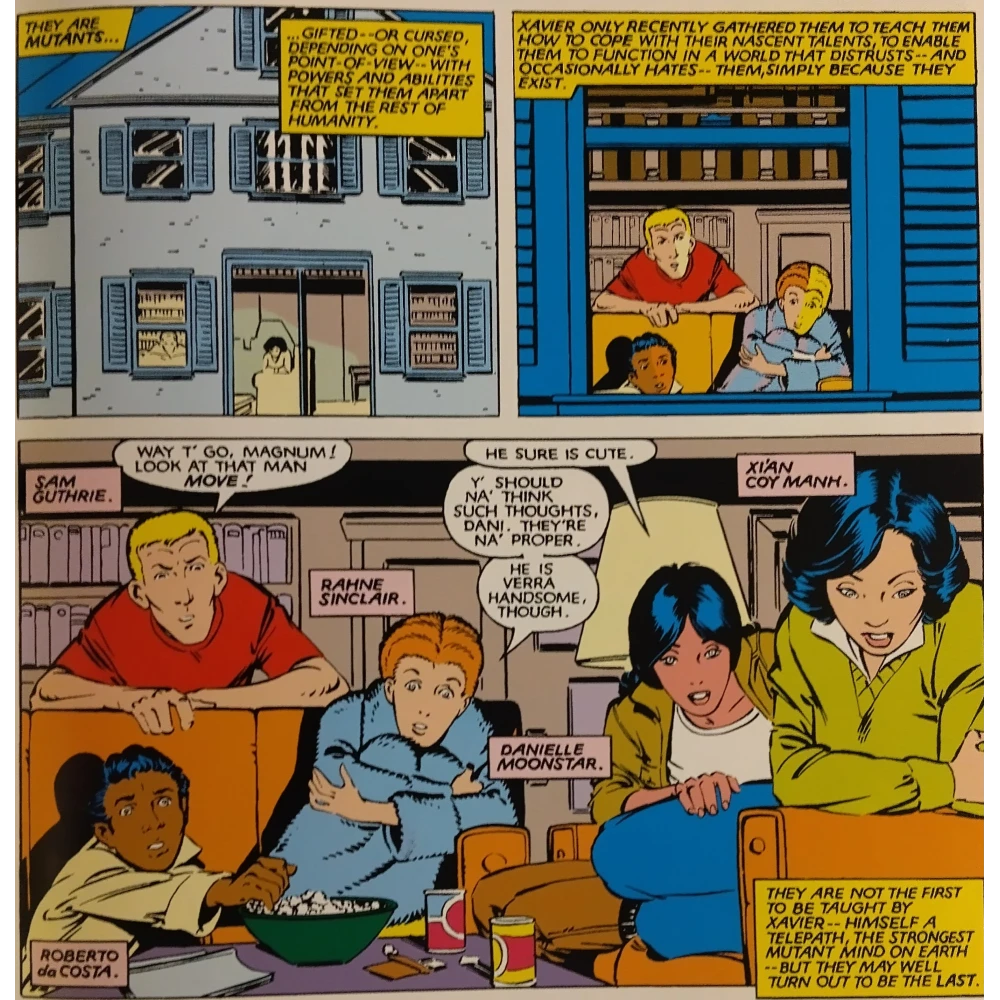
Lee and Kirby struggled, in my estimation, to provide their young X-Men much of a semblance of maturing outside a few awkwardly developed romantic relationships. Sure, big moments happened, such as graduation, but those occurrences were isolated events, squashed between fights against Magneto, Juggernaut, and the Sentinels. Claremont recognizes these kids and their maturity exist at the core of the book, and he fashions a few avenues through which growth occurs. For each character, development exists internally and externally, with Claremont intertwining those two facets.
Oftentimes, the experiences and attitudes which affect our heroes' non-mutant lives compound the superhuman changes they undergo. For example, Sunspot (Roberto de Costa) would still be a hot-headed young man whose parents experience marital struggles even if he didn't have his vaunted strength; his mutant abilities directly lead to some circumstances, such as the death of his girlfriend, but they also reflect his natural temperament and provide a channel for his innate bent towards frustration. Cannonball (Sam Guthrie) believes himself the least in control of his power (even though he's invulnerable when he's blastin'!); as the man of his own house following his father's death, he recognizes the weighty leadership responsibilities Xavier tasks him with, which he strives to fulfill while gaining greater mastery over his abilities, even if change sometimes comes in increments of inches and degrees.
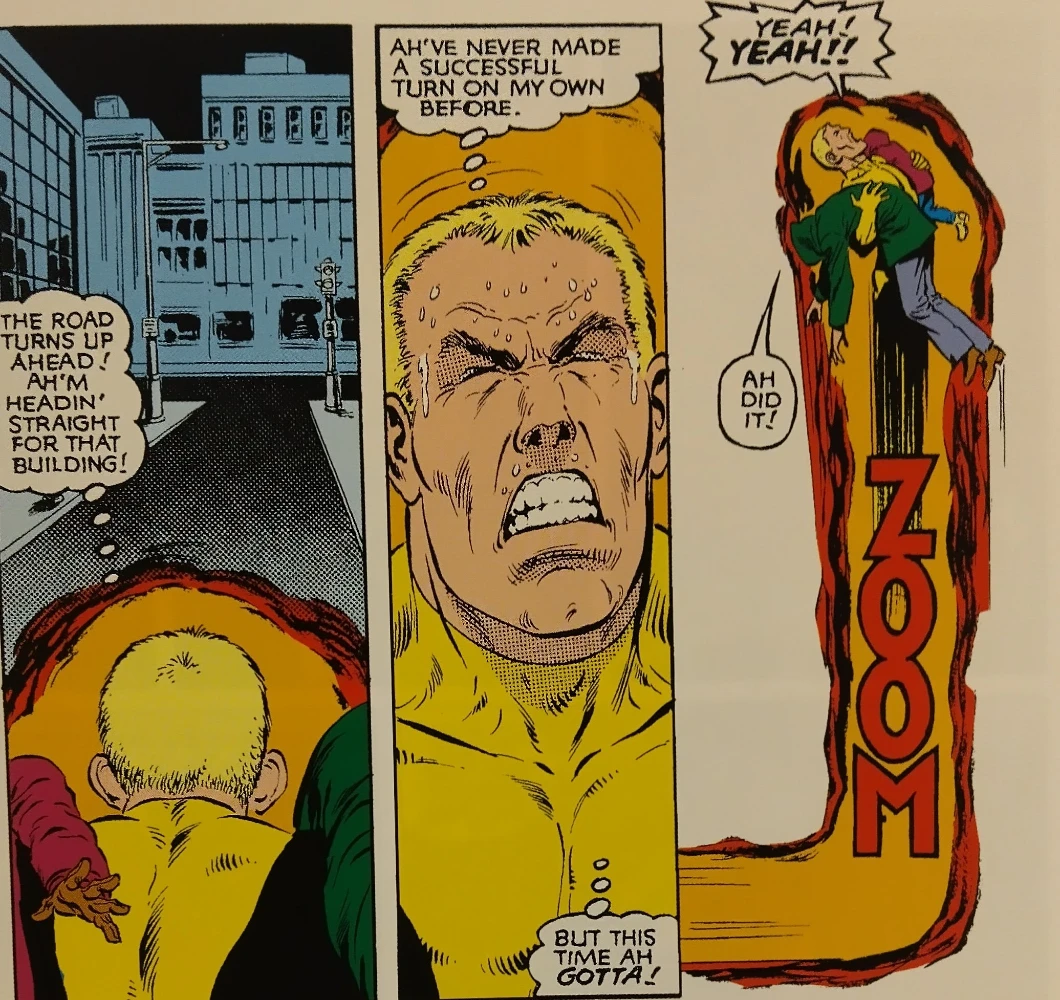
Claremont never lets his characters remain static–he's always interested in them moving forward or at least enduring some form of conflict. For Sunspot, it's cooling his tendency towards temper, and for Cannonball, it's learning to control his powers. Wolfsbane (Rahne Sinclair) struggles with reconciling her religious upbringing with her lycanthropic mutation, becoming a tad less rigid in her beliefs as she tries to fit God within a greater appreciation, even enjoyment, of her lupine form and growing animalistic predilections (a conflict which continued roiling within her even as a member of X-Factor). Mirage (Danielle Moonstar) can cause people to see their greatest desires or fears, a power that feels somewhat appropriately twisted for a young woman whose greatest, unspoken fear generates plenty of tension in the volume. Colossus' sister Illyana later joins the team, working through her own internal division as Magik, a sorceress wanting to do good whose body and soul are tainted with a demon's enchantments.
Since this is a book about kids, it only seems natural that adults form the greatest external challenges provided our students. Karma's (Xi'an Coy Manh) uncle is a corrupt millionaire, Roberto's father a potential Hellfire Club member, Warlock's father a murderous alien organism. The kids are hunted by a former Hellfire Club inner circle member in their introductory graphic novel, targeted by Emma Frost and her version of Xavier's school, manipulated by a modern day Roman politician (yes, really), and genetically altered by some drug-dealing goons. Not everyone over eighteen is a callous jerk, but the kids often seem like the last vestiges of decency in a dark world populated and run by pretty scummy people. From the Hellfire Club, to the American government, to influential individuals, the New Mutants' enemies grasp at power they don't deserve, confronted by younger heroes who represent a better, lighter, kinder way of addressing reality.
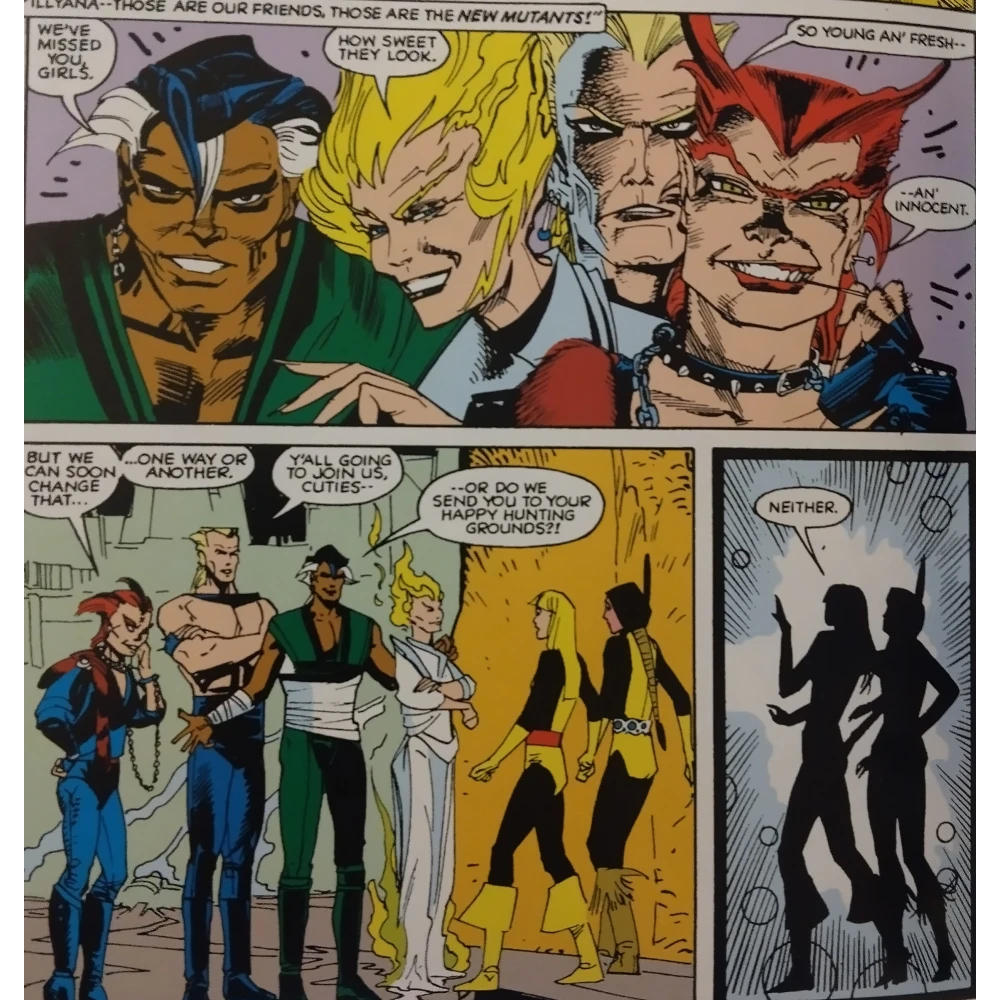
Manipulation, particularly by adults, is a huge theme across these pages. Illyana is essentially raised by the demon Belasco in his home dimension in the hopes she'll become his unwilling demon servant. The witch Selene mind controls Mirage and Magma, Emma Frost appears to influence a good chunk of the New Mutants for a time, and one character is later revealed to be controlled by a former telepathic foe of Xavier's. As these students grow and become more attuned to their powers and personalities, they find the greatest threats against them are those which seek to dampen, remove, or damage their identities, undermine or twisting their formation as people. Even Professor X can occasionally project his own agenda first.
Yet this isn't one of those "all the adults are morons and all the kids know best" stories (maybe if New Mutants had been a Disney+ movie…). Our characters are fallible, whether it's through secrets withheld, feelings offered too easily, mistakes made in the heat of action, or voices raised inappropriately. The team is given time to bond, yet they find certain characteristics irk each other. They can act rashly, use powers foolishly, hurt or frighten others without meaning to. A spate of issues sees Professor X press Kitty Pryde into joining the group, yet her own stubbornness at being an X-Men and the New Mutants' unwillingness to reciprocate friendship prevent her from ever feeling close to anyone but Illyana. As adolescence is an era of dumb choices and human progression, so, too, do the New Mutants determine their own vulnerabilities, weaknesses, and moments of rashness.
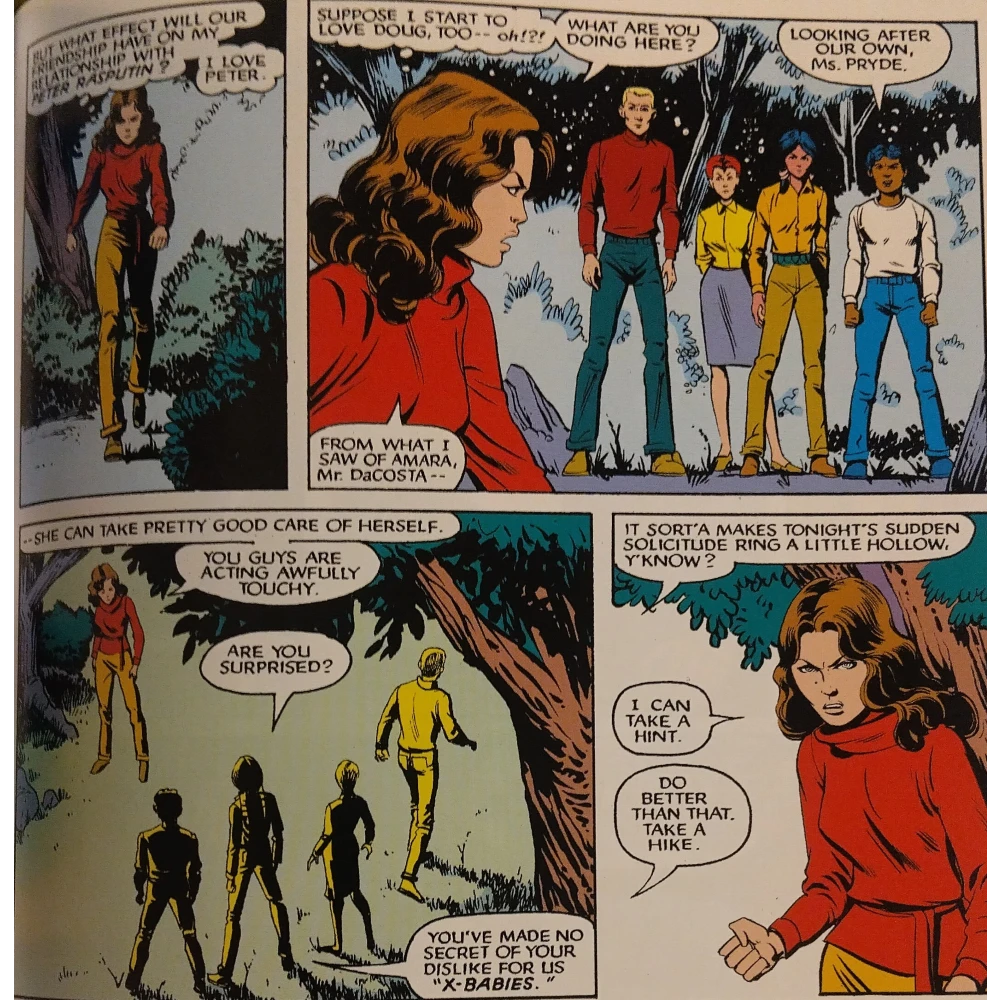
Though belonging to an X-Men spinoff, our core characters are generally kept on the fringes of ongoing X-Men continuity. Certain stories and characters have their influence, such as the kids facing a Brood Queen, Nightcrawler training Cannonball in the Danger Room, or Storm teaming with the kids to face an old foe. But this is largely New Mutants territory, Claremont wisely recognizing that incorporating the X-Men too deeply (outside Xavier's consistent presence) would undermine not just his heroes but the theme he's crafting about young adults and their growing independence. The kids get caught up in a few other adventures, such as a Spidey team-up, a Cloak and Dagger escapade, and Secret Wars II, but they're largely left alone, doing their own thing. Ain't that just like teenagers?
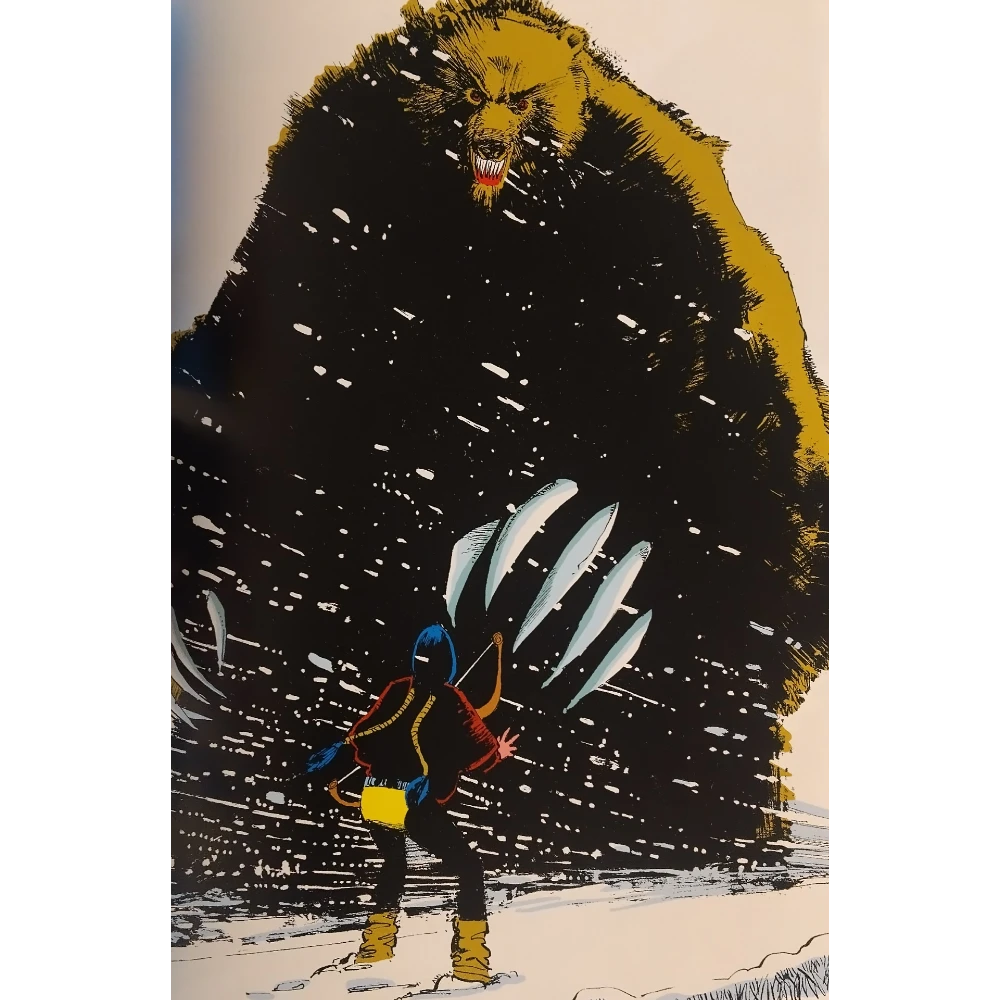
Sal Buscema contributes heavily to the first several issues of the book, and while his work is always appreciated, the series doesn't really find its identity artistically until Bill Sienkiewicz comes on board, beginning with issue 18. Kicking off the famed "Demon Bear Saga," Sienkiewicz provides the same level of sharp linework, mixed with a splash of abstraction, found in his Moon Knight work and the Daredevil: Love and War graphic novel. Characters are slightly exaggerated and distorted, not enough to look inhuman or comical, but just enough to provide the series a look unique from its peers. His style is hauntingly perfect for "Demon Bear" and a three-part narrative focused on Xavier's estranged son Legion. Buscema's contributions are nothing to sniff at either–his work has always been fairly consistent and traditional, and even though Bob McLeob introduced the world to the New Mutants, Buscema feels like the man who established their ongoing visual identities before Sienkiewicz took charge.
Where the original X-Men and even Claremont's later X-Men were metaphors for racial tensions, the New Mutants symbolize puberty, adolescence, young adulthood, call it what you will. The racism angle flutters in periodically, but it feels buried in the main context Claremont develops for the series, popping up in moments where the New Mutants feel that difference between themselves and regular peers. But "difference" shows itself in so many other ways–they're different from each other, from parents or parental figures, from the X-Men. The ways they either lean into or resist those differences shape who they are. These "X-Babies" find themselves surrounded by a world that wishes to dictate who they're supposed to be, whether that's from the good-hearted intentions of Professor Xavier or the mental manipulations of the White Queen. As they take these first steps, the New Mutants learn for themselves who they're meant to be, resisting outside enemies as well as their own internal demons (literal and otherwise) to forge those paths.