Distinguished Critique: The Kents Review
Thoroughly engaging character studies become somewhat hampered by a confining backdrop in this twelve-part series
—by Nathan on October 1, 2026—
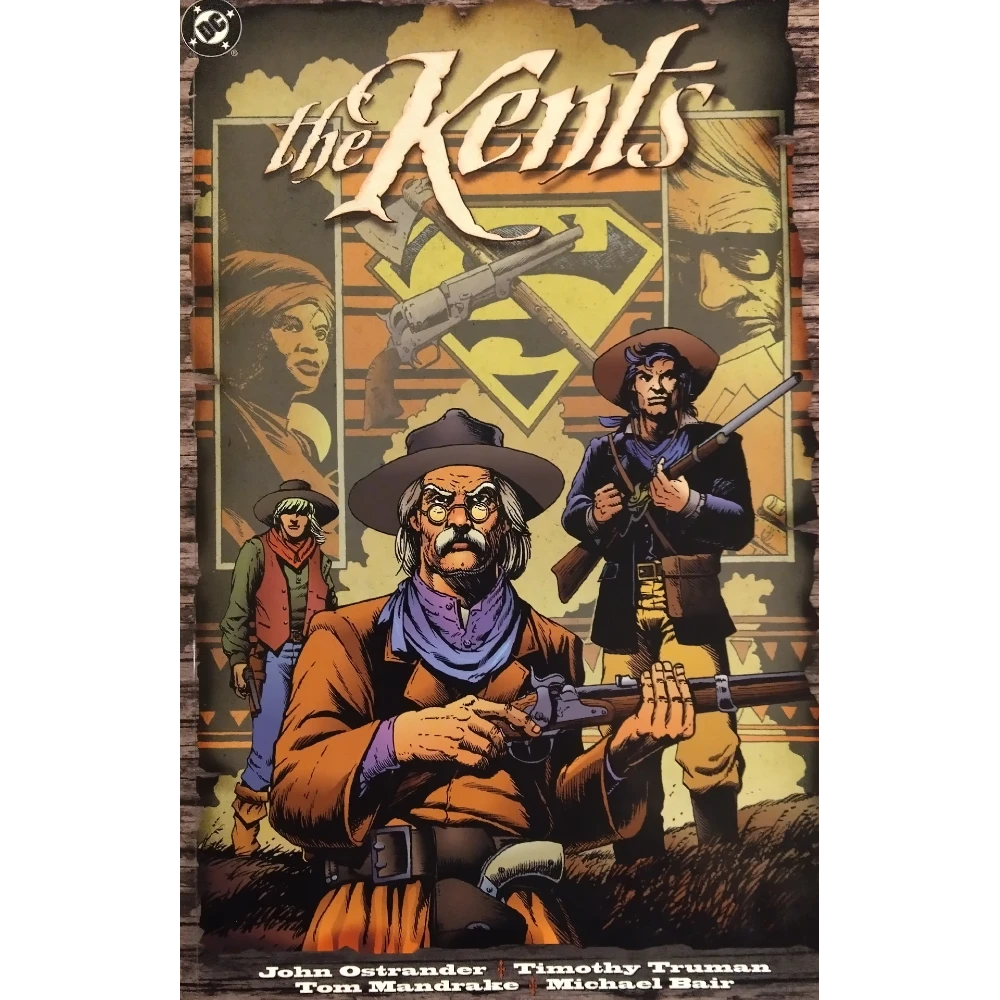
There are some ideas which just make sense.
I love it when a comic can, organically, take a concept and twist or explore it in a unique way that makes you wonder why no one ever thought of it before. Someone asks the question "What if the Legion of Doom got the upper hand on the Justice League?" and you get Jim Krueger, Doug Braithwaite, and Alex Ross' twelve-part Justice. "What would the Joker do if he believed he killed Batman?" J.M DeMatteis muses and winds up writing "Going Sane," exploring the Clown Prince of Crime's post-Dark Knight Detective lifestyle. When a writer or artist can push the envelope just a tad, unique stories await.
Of course, if you're dealing with mainstream comics, you eventually close the envelope, seal it, and stick a stamp on the corner. Status quo reasserted.
Or you find a unique angle that doesn't hinge on current continuity, such as the series we're reviewing today.
Inspired by his late wife, Suicide Squad architect John Ostrander wanted to write a Western that married actual American history to some of the DC Universe's fictional "history." And wouldn't you know it, but there was a proper DC hero, Superman himself, raised in the heartland of Kansas, even if he wasn't born there. Ostrander credits Paul Levitz with the idea, and the rest is American history.
It just makes sense. Kansas, made a state in 1861, the same year the Civil War began. You've got fertile ground there, both literally and in terms of storytelling. And so Ostrander, along with his GrimJack partner-in-crime Tim Truman, begins digging…and keeps digging…and keeps digging. It's a lot of ground. Twelve whole issues worth, unpacking how the Kents came to live in Kansas and how they embodied the same traits Superman himself would come to personify.
The Kents
Writer: John Ostrander
Pencilers: Tim Truman and Tom Mandrake
Inkers: Michael Bair and Tom Mandrake
Colorists: Carla Feeny
Letterers: Bill Oakley
Issues: The Kents #1-12
Publication Dates: August 1997-July 1998
I really enjoy Todd Phillip's first Joker film. So much so I wish it were his only Joker film. But taken without any consideration toward what I hear is an abysmal sequel (which I, as of this writing, refuse to watch), I find it a strong character study of Arthur Fleck. My biggest gripe, however, is that you would only need to strip away or change a few elements to no longer have a Joker movie. The DC Comics connections are skin deep. Alter a few names and, bam, Joaquin Phoenix is just playing a murderous clown wrestling with mental illness. He does a fantastic job playing a clown wrestling with mental illness, but the comic connections aren't enough to make the film feel as definitive or authoritative as it could be (and that's even before the sequel retcons the whole thing, anyway).
Reading The Kents provided a similar conclusion: I'll hold it high as a strong comic…but not so much a strong Superman comic.
Ostrander quickly creates a frametale that he repeats in the opening pages of each issue: Pa Kent has found an old trunk stuffed with letters dating more than a century earlier, detailing the adventures (and misadventures) of the first Kents in Kansas before, during, and after the Civil War. Every issue, Pa learns a bit more, sending his findings to his superpowered son in Metropolis, so both men can take stock of their family history and legacy. The death of patriarch Silas Kent leaves the fate of his family in the hands of his two sons, Nathaniel and Jebediah, as the country grows ever more divided over the matter of slavery. From this story, you're meant to piece together the values which were instilled across the generations, all the way to Clark.
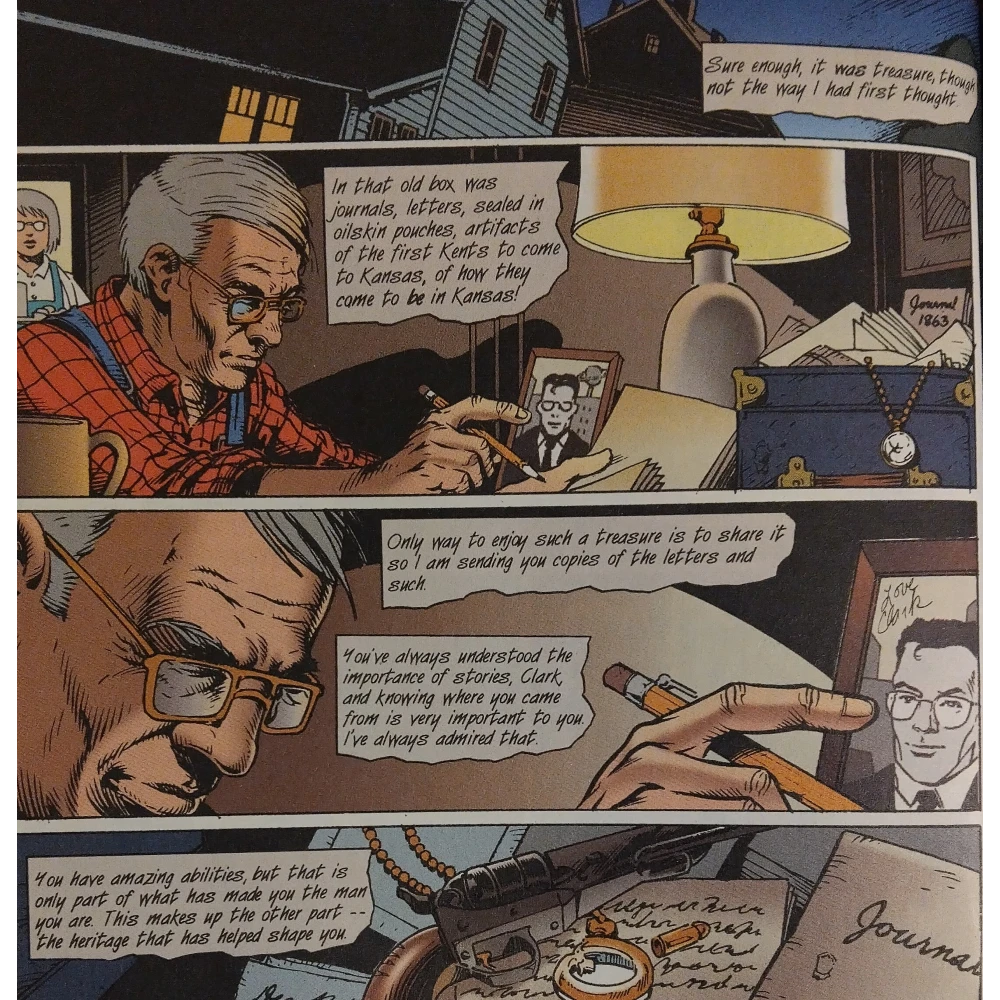
The idea is decent, and it generates a stronger standalone story than it does an "origin" for Clark's morals. Ostrander transforms Nathaniel and Jebediah into well-rounded characters. Both men are the most compelling individuals across the entire series, as philosophical differences over slavery and the worth of African-Americans grows more extreme with the coming war. Nathaniel fights for the eradication of slavery, while Jebediah can't even bring himself to consider slaves as people. They serve as microcosms of larger, warring ideas that affected a nation's history, and how Ostrander weaves their stories creates compelling reading.
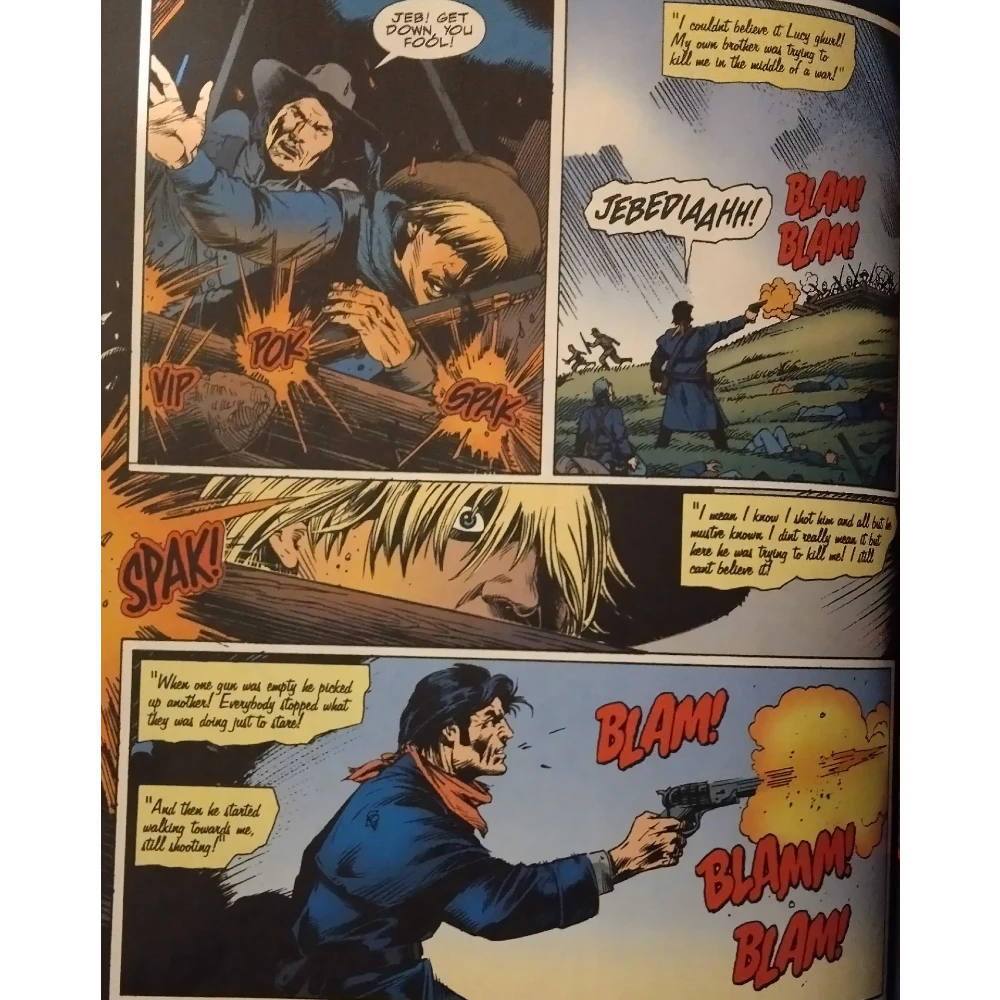
Nathaniel is, hopefully obviously, the easier fellow to support, even if it weren't for the fact he is, clearly, a physical stand-in for Clark (which doesn't make much sense, given Clark's alien origins, but for a Superman comic without much Superman, you need something recognizable). The set jaw and dark hair set him up as the good guy pretty much immediately, yet he has his foibles and flaws. There's some rage there, a bitter temperament, a side which wants to enforce moral ideas yet not always in a moral fashion. He's certainly likable, and you feel a swell of pride when he befriends an African-American family, joins with the Union during the Civil War, or fights injustice as a sheriff's deputy.
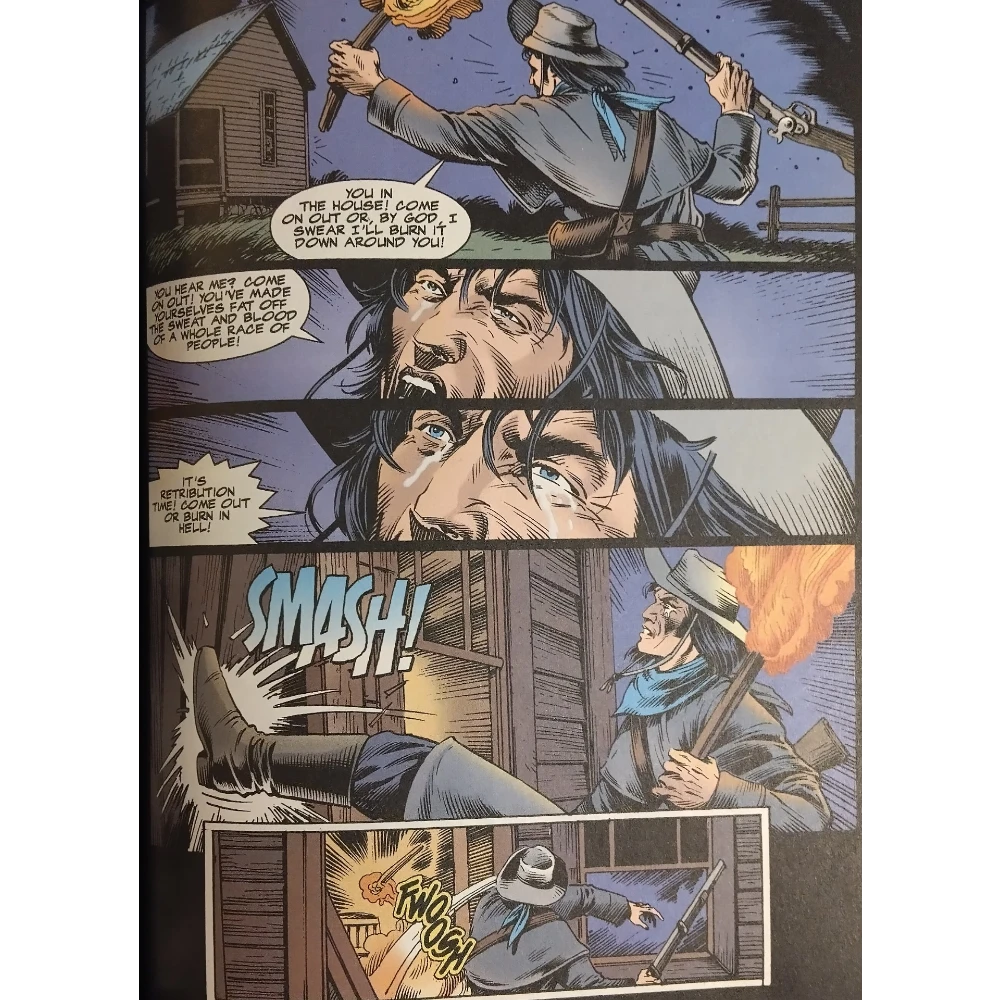
Unlike some versions of the Man of Steel, Nathaniel isn't a boring strongman, sticking to his guns (philosophically and physically) just because, without any deeper motivation than just doing the right thing. His arc deals more with his relationship with Jebediah than coming to a better understanding of his personal morality, and it's that exploring where Ostrander finds complexity. It'd be easy to make Nathaniel perfect; that Ostrander doesn't by giving him a darker bent when it comes to determine what justice means for his brother once their grievances escalate beyond "Sorry, bro" drives the character through physical pain, war, and heartache.
For his part, Jeb encounters transformation of his own. Though clearly the more antagonistic of the two, Jebediah isn't an out-and-out villain. Like Nathaniel, he's complex, and he earns his development. Ostrander makes it clear from practically the start that Jeb is more fit for service with the Confederacy, yet his own journey–from ruffian, to soldier, to criminal, to maybe something more–is marked with moments of consideration as he wades through the quagmire of his soul. Ostrander explores why the young man feels the way he does and how, as he grows older, those feelings become increasingly complicated and more difficult for a headstrong man like himself to navigate objectively.
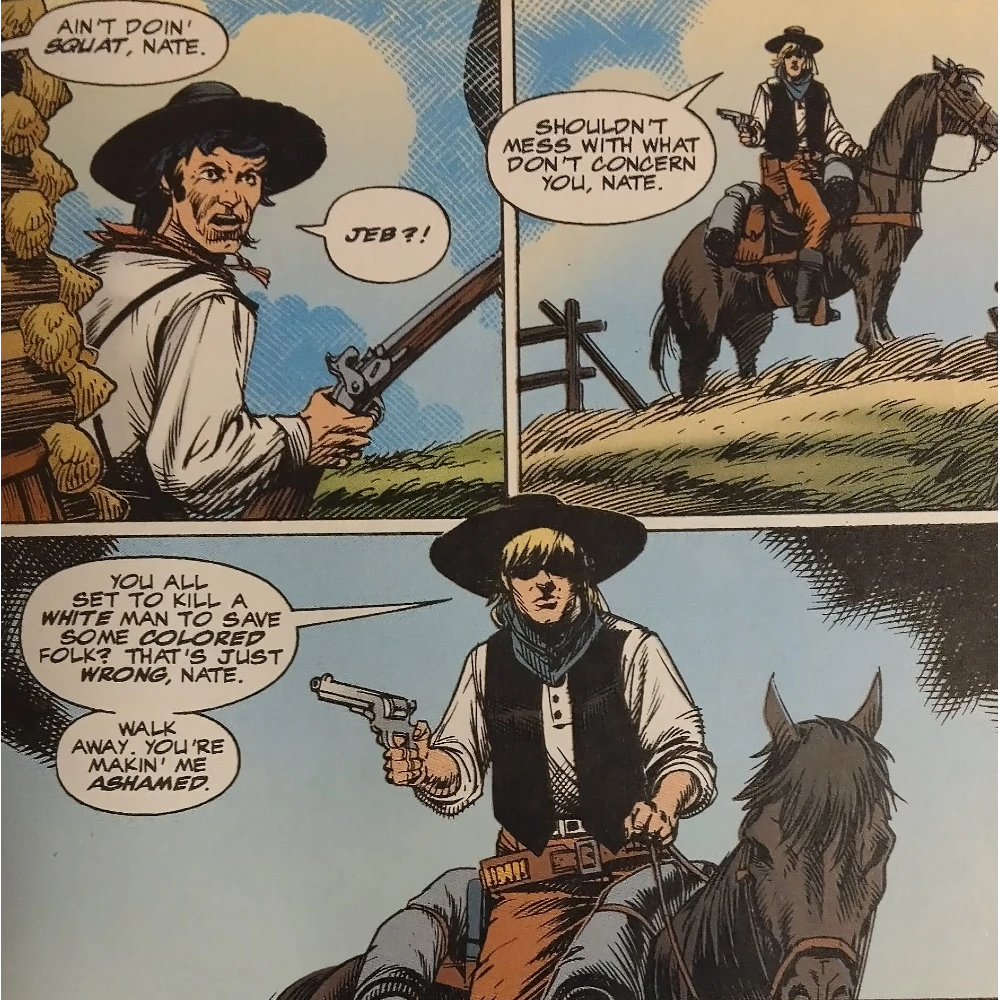
Nathaniel and Jebediah are interesting enough without the Kent connection, better representing those polarizing beliefs which turned brother against brother, blood and otherwise, during the Civil War. You won't find yourself siding with Jeb, but Ostrander should at least convince you as to why folks would believe what a man like Jeb believed and how men like Nathaniel, though right-headed, were also capable of injustices in the name of justice. Ostrander allows the Civil War to be a multifaceted conflict, rather than just divided cleanly between blue and gray sides.
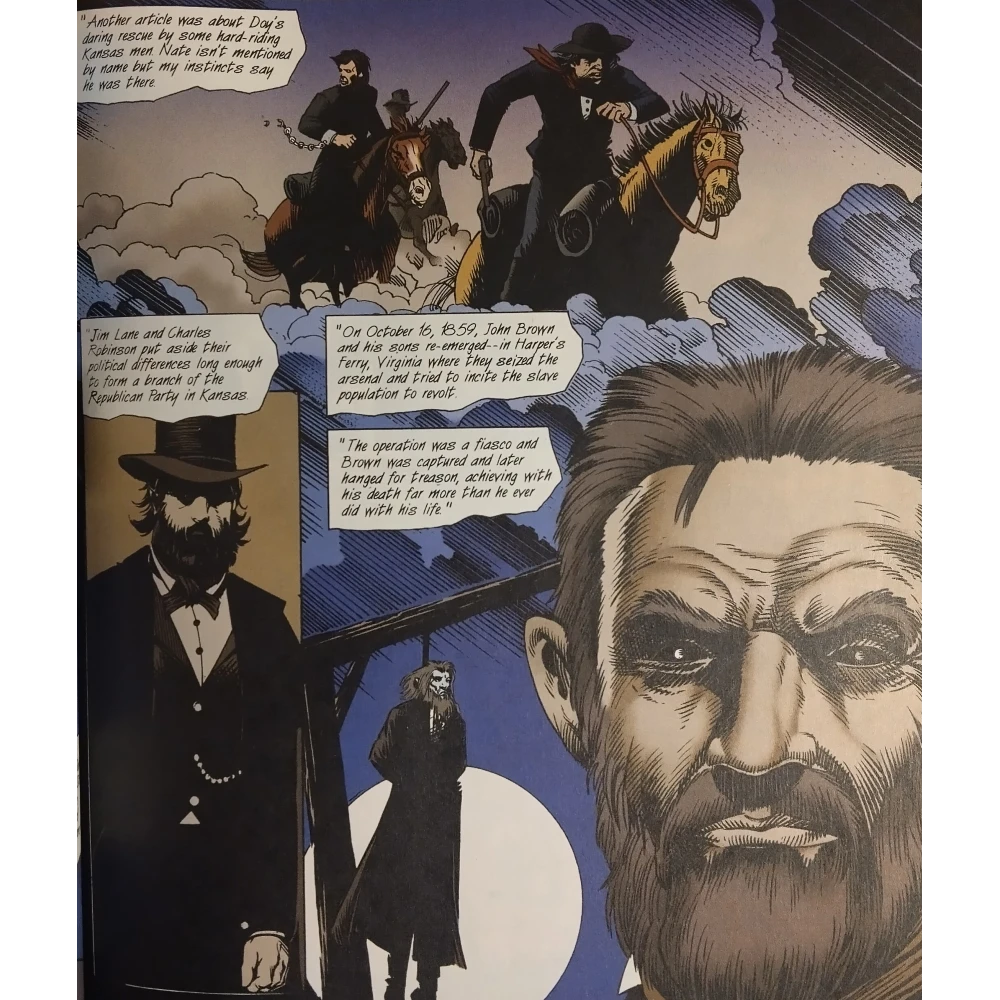
Though it'll never become required reading in Civil War history classes, The Kents is packed full of real people and events from the era, senators and soldiers, battles and bloodbaths. Ostrander is meticulous in his details, as are Truman and Mandrake in their depiction of historical figures. I found myself divided between appreciating how well-researched the book is and frustrated with the constant deluge of details. Ostrander can move the story at a decent clip, yet his introductory pages tend to get bogged down by epistolary exposition–dates, names, and places that reinforce the series' biggest limitation: its dedication to actual events. Ostrander can tell a story between the actual chess piece movements of the Civil War, and Truman especially can detail the horrors of close combat, but the maneuvering between different battles, elections, and laws can hamper Ostrander's pacing. He has to get his characters to central locations and conflicts in the war, and this necessity means pouring in chunks of detail and some convenient coincidences that go down like swallowing hardtack.
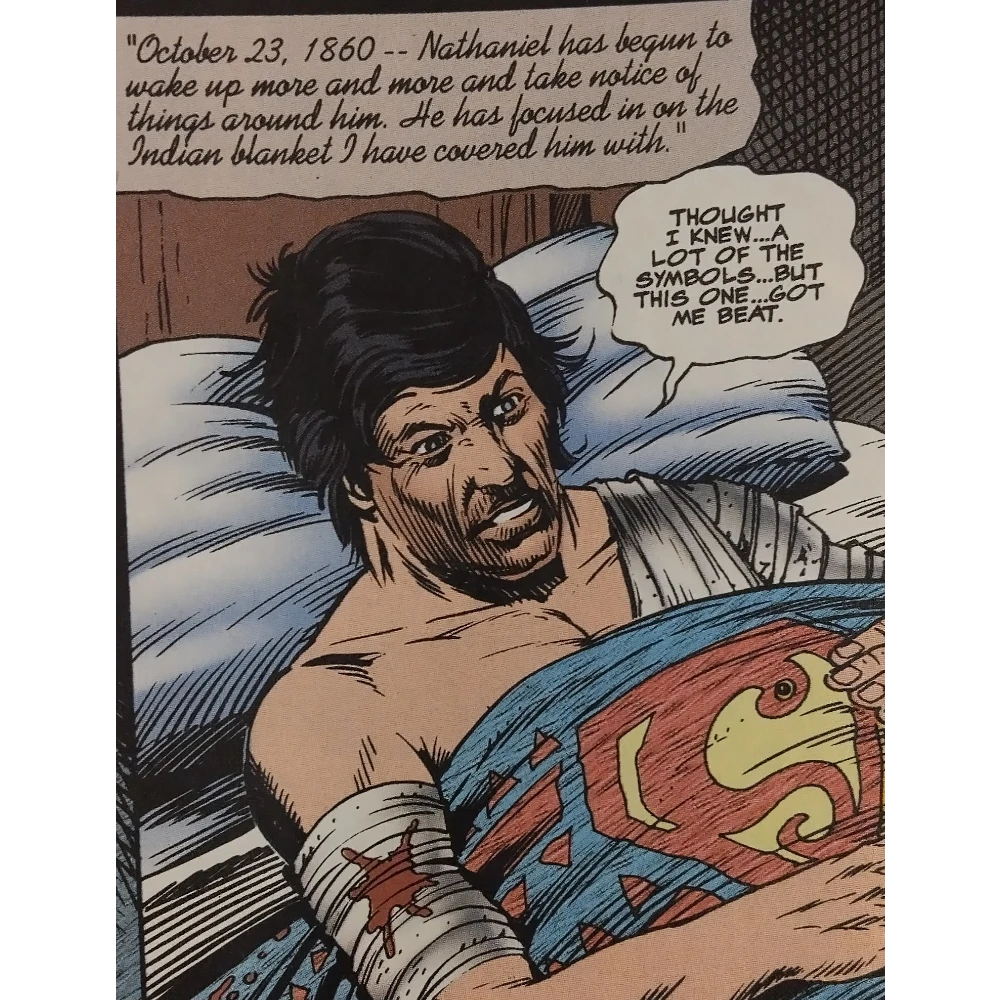
Additionally, as Ostrander is telling a tale driven by compelling characters and intertwined with real history, he's also beholden to the Superman premise. He walks a thin line between cleverly weaving in elements important to Superman and being blunt with the imagery. Having the Kents settle in a trading post-turned-village named "Smalls' ville" (after its founder, Ezra Smalls, naturally) is a bit of a groaner, but it gets Clark's family where they need to be. More awkward is an attempt to weave in an explanation for Superman's crest, tethered to Native American symbolism, that reminds me of Denny O'Neil's "Shaman" and the establishment of a practical reason for Bruce's incorporation of bat symbology.
Much of the awkwardness has to do with how little of the Superman element exists in this series. Characters with the name Kent, a reference to the village which will one day become Smallville, and a nod to the chest symbol (which I thought already had an established Krypton connection at the time, anyway?) feel surface-level, as do brief encounters with other DC characters such as Jonah Hex and Scalphunter. Granted, Ostrander could have been more explicit threading in Superman mythology–for a while, I was afraid he'd connect a villainous character named "Luther Reid" to a certain bald-headed bad guy, and I was grateful to learn Senator Jim Lane was a historical figure and of no relation to the Daily Planet's star reporter. Mercifully, he avoids awkwardly convenient connections between the ancestors of certain characters.
Despite the critiques, I am now asking "What did I expect?" If the surface-level inclusion of Superman nods feels too passive, yet I'm grateful Ostrander avoids outlandish connections, what was I hoping for? A middle ground, I suppose, something which gave more than nods to the character's mythos yet avoided anything outlandish. Or maybe a strong Western narrative without the Superman connection, something that relied on a well-told story without feeling held hostage by an agenda. I'd even go for casting Superman as a soldier during the Civil War, though Roger Stern developed that idea around the same time as this series.
Gratefully, the series is well-told. Ostrander, Truman, and Mandrake give us a strong Western/Civil War story that, on a scale of 90s comics, places The Kents closer to an enjoyable romp like "Fatal Attractions" than a disaster like "Onslaught". For a guy who's never been into cowboys all that much, I found I enjoyed the human heart Ostrander applied to The Kents. Even if the trappings of dusty roads, tumbleweeds, lassos, and gun duels don't deeply appeal to me, I appreciated the character dynamics Ostrander presented. How Nathaniel and Jebediah navigate the Civil War, matters of slavery, and their fracturing relationship gives this series a hefty amount of humanity. They're good characters, written well, driven by diametrically opposed philosophical and political beliefs, placed against a backdrop I don't care for as much as, likely, some other folks. I guess I feel Ostrander limits himself a little by the time period and the need to make this a Superman-adjacent series, and though intentional confinement can help direct a story and prevent it from becoming bloated, his direction hampers his ultimate aim. Bang! goes the gun, hitting just shy of the bullseye…or, in this case, the direct center of Superman's S symbol.