Distinguished Critique: Justice Review
Fantastic art and genuinely terrific tension carry a series less interested in developing its central cast
—by Nathan on June 14, 2026—
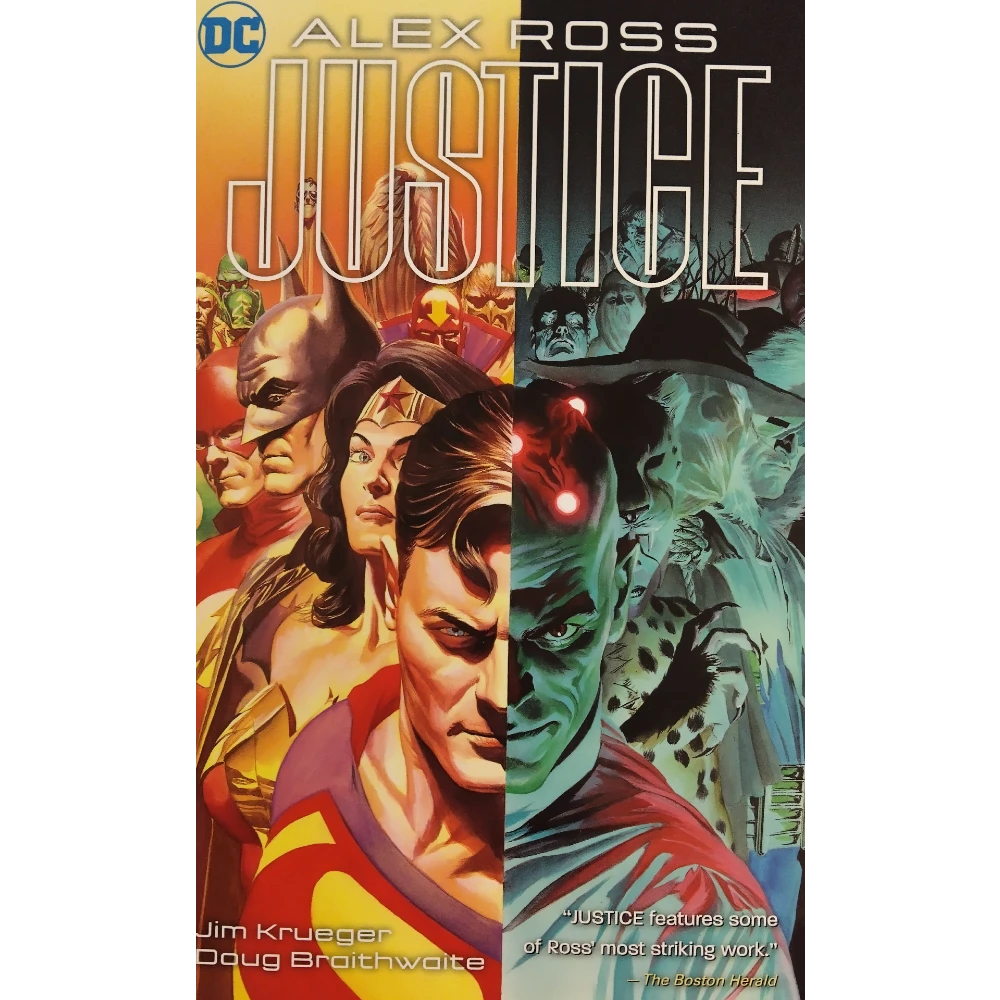
When it comes to DC superhero cartoons, I never got into Super Friends. I have one very vague memory of watching an episode or two with my cousin in a hotel room years ago, but otherwise, the classic series, in its various incarnations, is a blindspot for me. Though I enjoy several comic-based animated series, they all fall within the late 90s/early 00s period, during my childhood; perhaps if I had been exposed to Super Friends earlier, I may have appreciated it, though you're reading words from a guy who found the original Spider-Man cartoon repetitive and boring as a kid.
I know. Absolutely criminal.
It's an age thing, honestly. Had I been a child in the 70s, I likely would've deeply loved Super Friends. Fortunately, Jim Krueger and Alex Ross, whose painterly style graced a few interiors and covers for comics I've recently reviewed, had the forethought to modernize the classic team for today's reading audiences. Drawing on the cartoon, specifically the version featuring the Legion of Doom, the pair, along with Doug Braithwaite, churned out this twelve-issue, bimonthly limited series. Unlike readers of the original issues, I did not need to wait two years to read the full thing, picking up a handy collected edition and taking far less than twenty-four months (heck, far less than twenty-four hours even) to peruse its painted pages.
Justice
Writer: Jim Krueger
Pencilers: Alex Ross and Doug Braithwaite
Inker: Alex Ross
Colorist: Alex Ross
Letterer: Todd Klein
Issues: Justice #1-12
Publication Dates: October 2005, December 2005, February 2006, April 2006, June 2006, August 2006, October 2006, December 2006, February 2007, April 2007, June 2007, August 2007
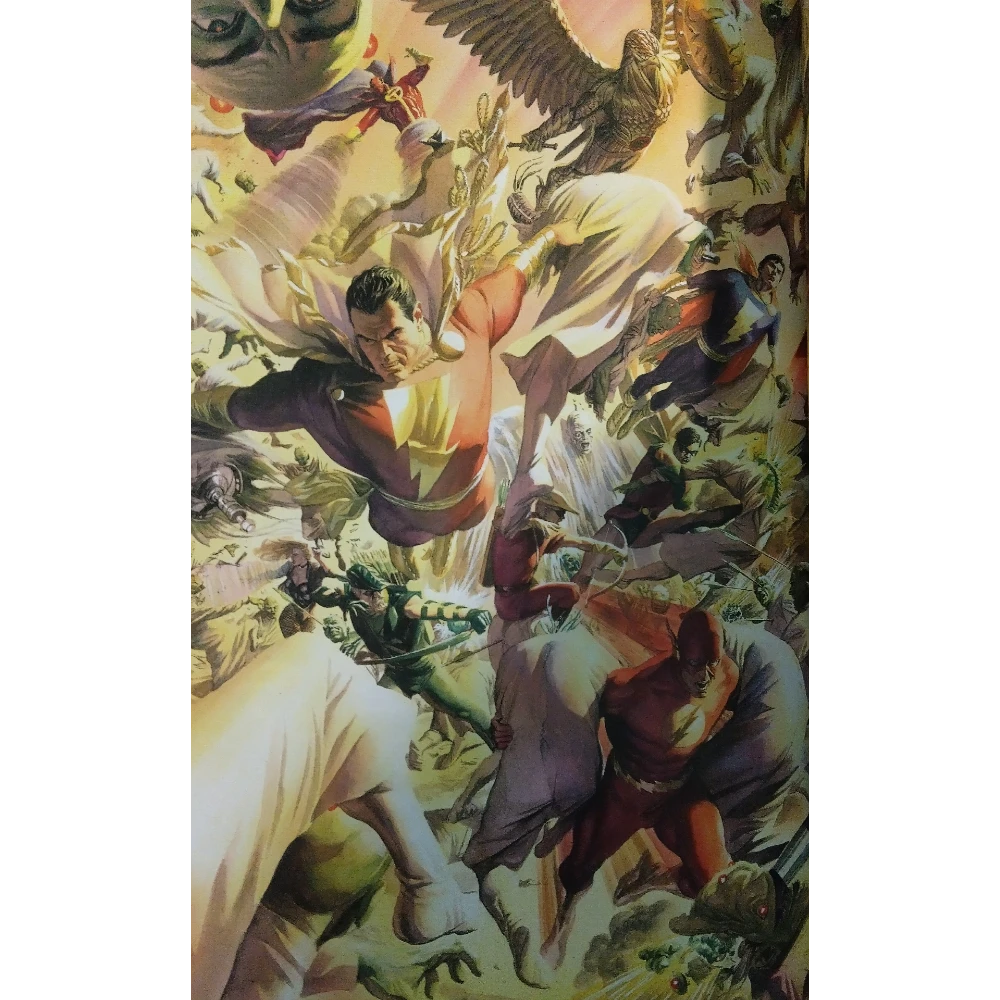
A love letter to both Super Friends and Silver Age DC characters in general, Justice is reminiscent of another of Ross' artistic projects: Marvels, a wonderful homage to the Marvel Universe of yesteryear. Yet where Marvels dives back into the Silver Age itself to draw out the era's complexities, Justice brings beloved heroes to the present. These aren't the exact Super Friends versions, but our DC heroes carry with them a kind of nobility–dare I say, a kind of simplicity–which harkens back to older decades.
I don't mean "simplicity" to sound insulting. These are just not your deconstructed, post-Watchmen, post-Dark Knight Returns DC heroes. The series, as I understand it, takes place in its own universe, so while a certain amount of continuity is intact and recognizable from other comics, much of what is presented feels drawn from a simpler time. Aquaman's infant son is still alive; Dick Grayson fills Robin's boots; there are no nods to Guy Gardner or Kyle Rayner–the only other Green Lantern referenced is Jon Stewart.
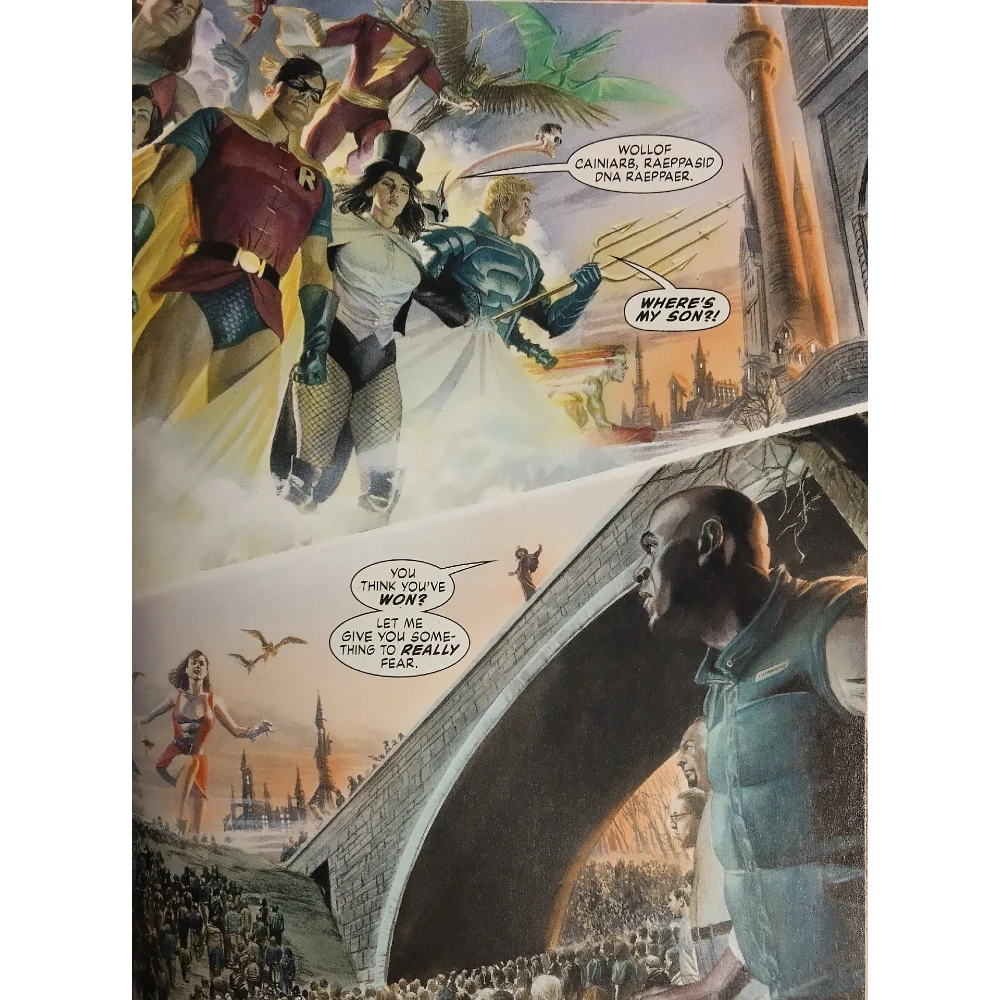
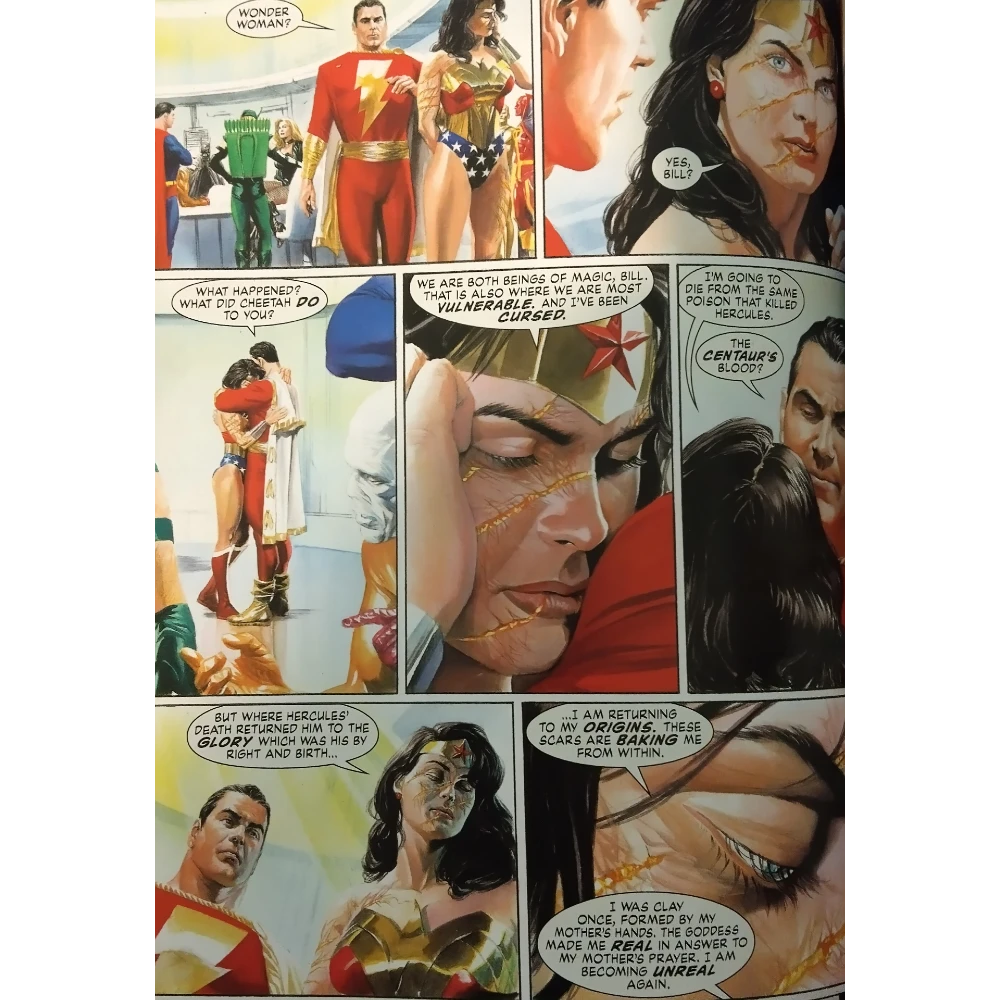
What this means is that Krueger and Ross can go absolutely wild with the narrative, and by doing so, they make a series that's a darn fun, exciting read. Without threatening too much established continuity, and without possibly damaging characters moving forward, they're allowed to draw an immense amount of conflict into Justice and have it drive the series forward. Very early on, our villains in the Legion of Doom learn all our heroes' identities, using that information to target not only Justice League members in their civilian guises but their loved ones as well. That plot, giving the series a somewhat darker edge for a good chunk of its page count, adds a devastating amount of tension. Superman, attacked in his workplace, is nearly killed by the combined might of Metallo, Bizarro, Solomon Grundy, and the Parasite. Wonder Woman is slashed and poisoned by Cheetah. Poison Ivy invades the Bat-Cave and makes Batman an unwilling servant.
Krueger and Ross have the freedom to explore ideas your traditional comics may not be able to, and though they draw the line at jostling a certain status quo, they also challenge those traditional narratives. Diana, suffering the effects of Cheetah's poison, knows her body will crumble into the same dirt from which she came unless she gets help. Hal Jordan, cast across the universe by Sinestro, turns his body into energy inside his ring to stay alive, creating a home for himself while contemplating a future floating forever in space. Our assembled Legion of Doom, extending goodwill towards humanity, actually brings about a level of positive influence, change, and growth our heroes rarely ever do, questioning the very idea of superheroes and churning opinions within a public grateful to former would-be-world conquerors.
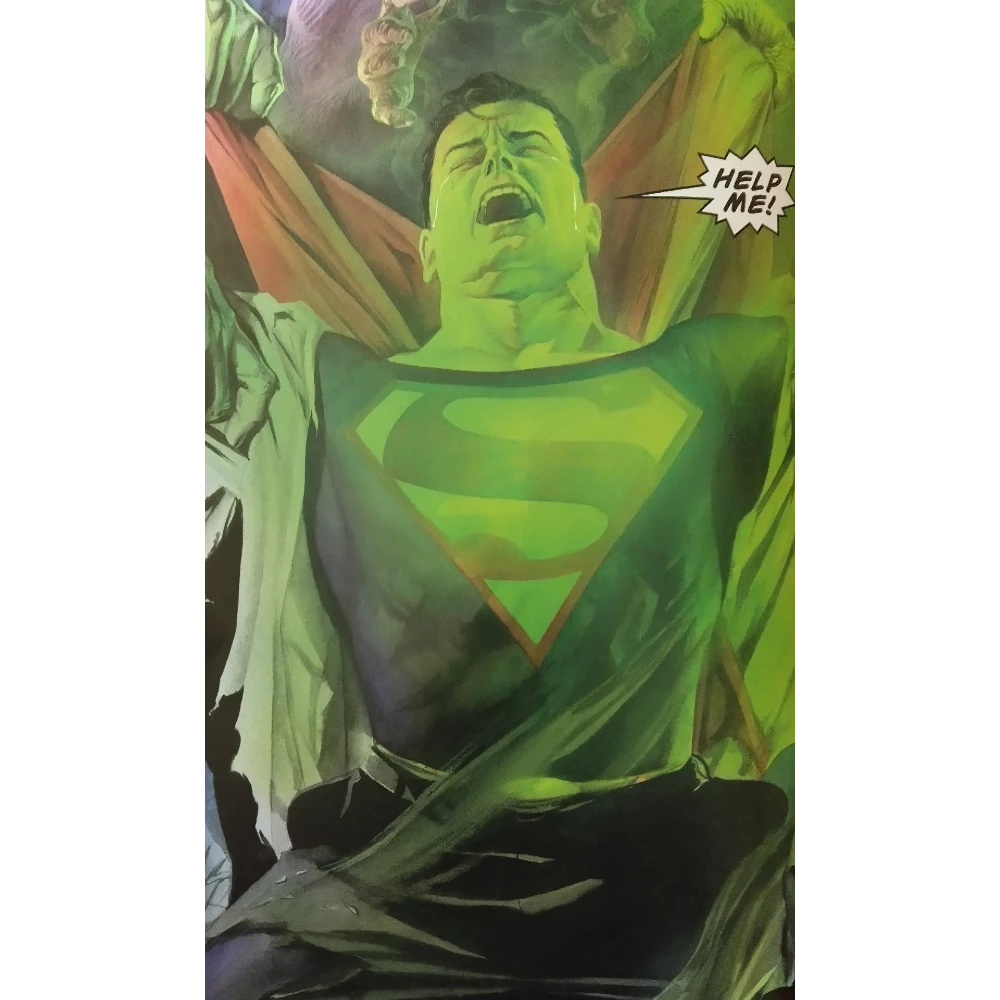
Most interestingly: the bad guys gain the upper hand for a remarkable amount of time in this series. Krueger methodically moves his plot along, strategically doling out the bigger picture in pieces. At twelve issues, this series has quite the page count to fill, but nowhere in the main plot does it feel like he's adding padding (do note, however, that I deliberately stated "main plot"). The dire circumstances lead to a more profound effort from our heroes, as they work individually or together to escape their present circumstances and try to regain the ground they've lost. There are very clear stages in this plot, making it an easy to follow narrative that unwinds nicely across the issues. Darkness and despair lead into a slow build up to confrontation and the possibility of victory. Classic superhero material, waiting until that climactic third act for an ultimate showdown.
Significantly, one's appreciation of the series is partially reliant on how well Ross and Braithwaite draw the reader's eye to our collective cast. These are classic characters molded in classic forms–no unnecessary complication in terms of character design. The only updated costumes we receive come late in the game when the Justice League fashion new outfits to battle the Legion, and the designs for these look incredible while also maintaining each character's distinctive identity. That's the crux of the visual choices here: recognition. These characters are immediately noticeable, and Ross and Braithwaite do their darndest to ensure you know who's who on every page. From Superman's iconic costume, to Brainiac's Silver Age outfit, to even a simply dressed man with a glowing heart of green, the artists strip away any pretense or complication to keep core characteristics at the fore. Color, though muted in some instances, also captures the essential essence of each character–Green Lantern gives off an emerald glow, while Luthor has an eerie purple luminescence reminiscent of his traditional purple/green outfit and the Flash blazes by in streaks of red.
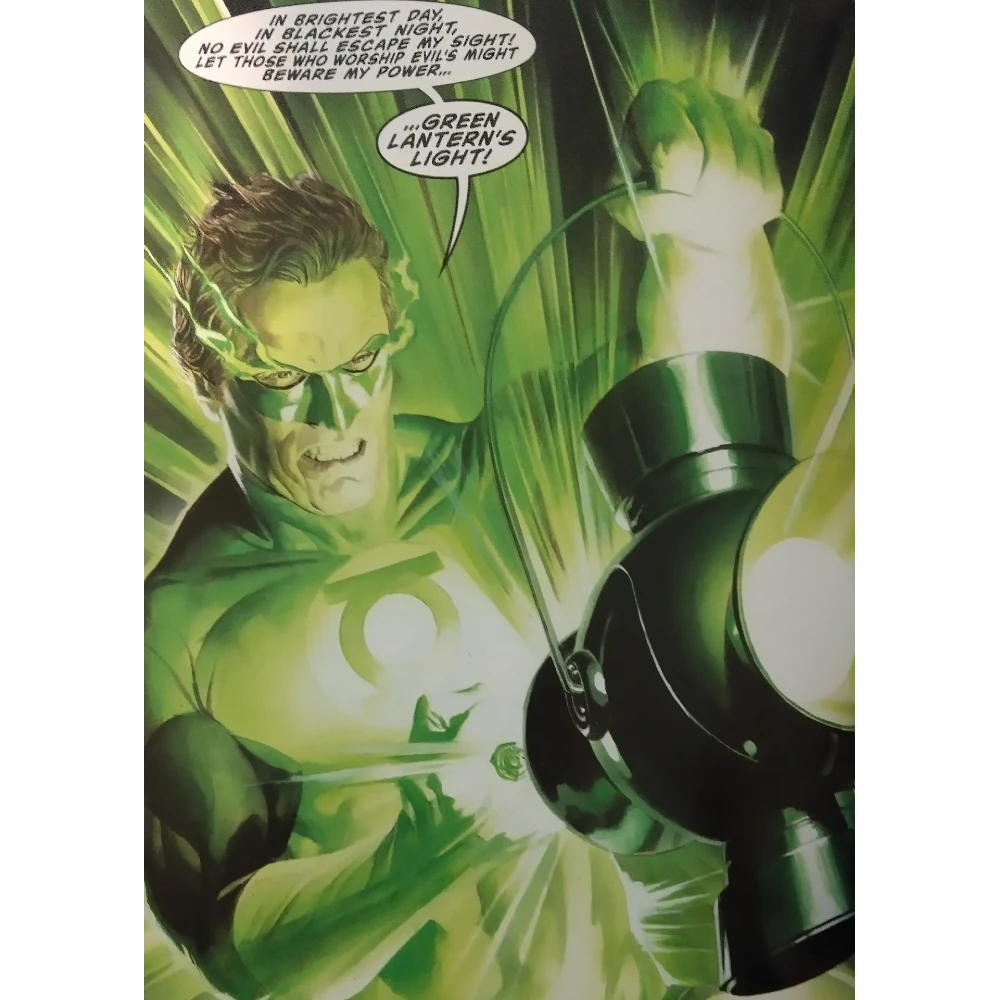
Though Ross and Braithwaite's art stuns consistently across the entire series, Krueger's dialogue, characterization, and even aspects of his story aren't as astounding. As noted above, Justice is a fun read, following that arc of defeat and desperation and giving rise to a fantastic culminating confrontation. Yet throughout, engaging as the story is, Krueger ends up doing little to cement any significant character. Our heroes, perhaps because they're cast in the simpler "Silver Age mode" I discussed above, don't undergo much change outside of the horrible circumstances they endure. They are, justifiably, miffed when they come together as a team–Wonder Woman battles Cheetah over the scars the villain has inflicted; Arthur battles Black Manta to save his son; Green Lantern is more than happy to confront Sinestro over firing him across the universe. The series is titled "Justice," after all, and this is what our heroes want to enforce, even if justice sometimes feels akin to revenge.
Even that would be a concept worth pursuing, the dividing line between justice and vengeance, but Krueger isn't terribly interested in exploring character facets. What you see is what you get for our heroes, and though some express regret for what's happened–Batman hates having been mind controlled by Poison Ivy, for example–those feelings don't filter into any kind of symbolic growth. Perhaps I'm asking too much of Krueger? Again, we're talking about a series that amounts to somewhat more than an extended Super Friends episode written for adults that showcases classic DC heroes at their peak of kindness and power. You're not here to watch Superman, Martian Manhunter, or Aquaman wrestle with moral ambiguities and weighty decisions. The line between justice and injustice is cleanly etched.
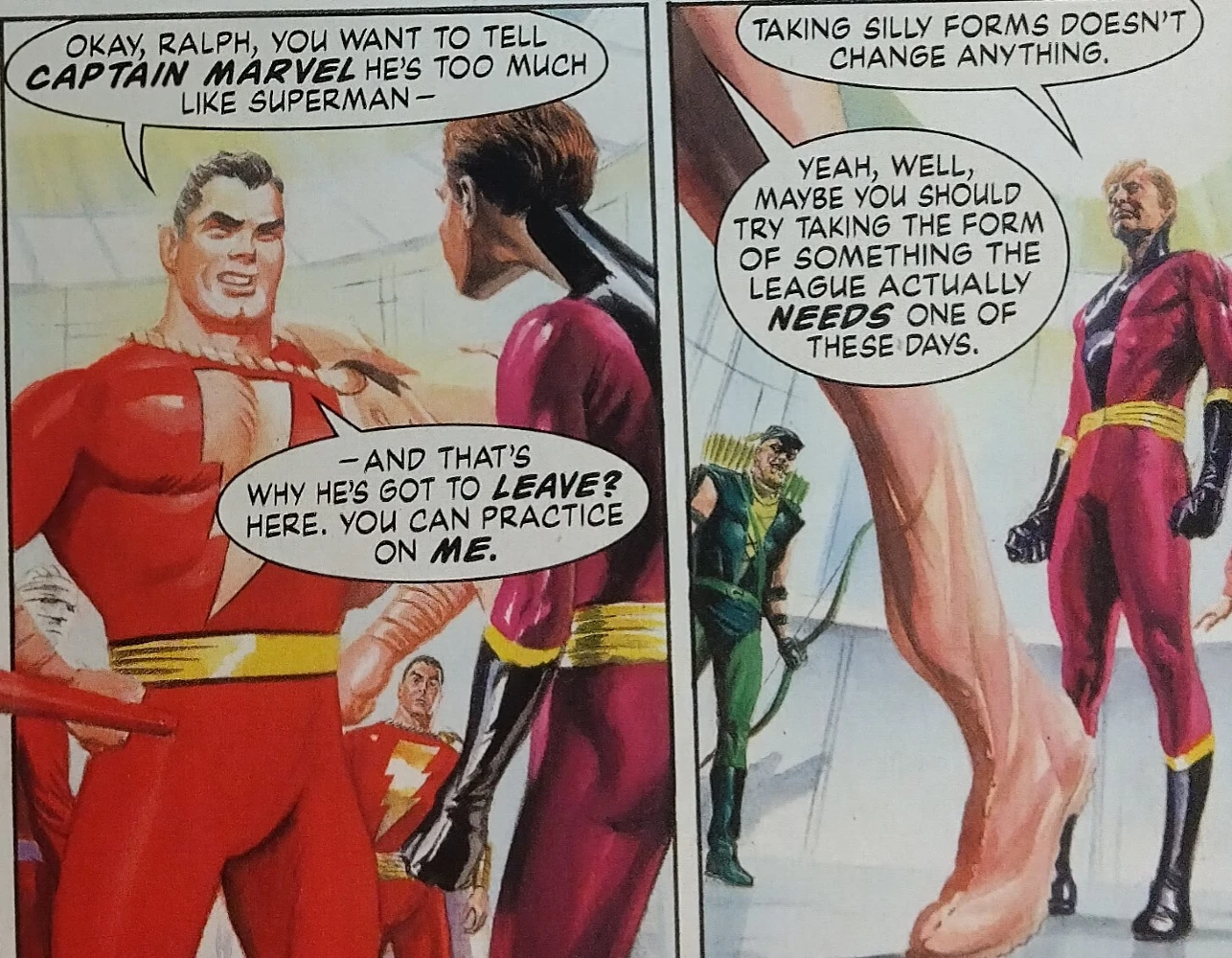
Krueger attempts to maneuver some subplotting throughout the series, but those instances are limited as well. Most interesting is a fun sequence of short scenes with Elongated Man, consistently frustrated with Plastic Man's admittance to the JLA while Ralph remains a reservist. Near the end of the series, Krueger allows Ralph an entertaining moment of heroism that feels like it caps off the previous scenes. This is the kind of storytelling I wanted to see more frequently across the series, even a small building of moments for particular characters that had some payoff late in the game.
Elsewhere, Krueger works to use the Joker in a similar fashion, seeding him throughout the series and giving him a larger role near the series' end as well. Normally, I would approve of such plotting, but the Joker's involvement feels less centered on him as a character and more engaged in maneuvering him into a position where he becomes integral to the plot. Switch him out with any other bad guy, and you get the same plot development; I'd argue you could even remove the Joker entirely and craft a different sequence of events to achieve the same result. He's not essential, and even if he's given some interesting turns of phrase, he's not engaging as a character.
I'm not going to say you should read Justice only for the art, even though the art is beautifully detailed and captures the essence of each character, be they hero or villain. But you should read this for the art first. The story Ross and Braithwaite convey is chock full of action and tension, drawing the League in directions you likely wouldn't find in other mainstream comics, but it stumbles in terms of saying anything interesting about our characters. Any time Krueger makes a pithy, introspective-sounding comment about a Leaguer, you nod along, not because you're astounded by a sudden revelation, but because you already agree. And, as I keep saying, I don't mean to deride that level of simpler storytelling–it means Krueger, Ross, and Braithwaite squeeze a lot of fun out of the story. But it also means a certain level of complexity, particularly when it comes to interesting arcs for characters, is sacrificed in the name of prioritizing the plot first.