(Strand)om Stories: Strikeforce: Morituri (vol. 2) Review
This second volume isn't as effective in unfolding an ongoing story, a late tonal shift providing reprieve from repetition
—by Nathan on October 5, 2026—
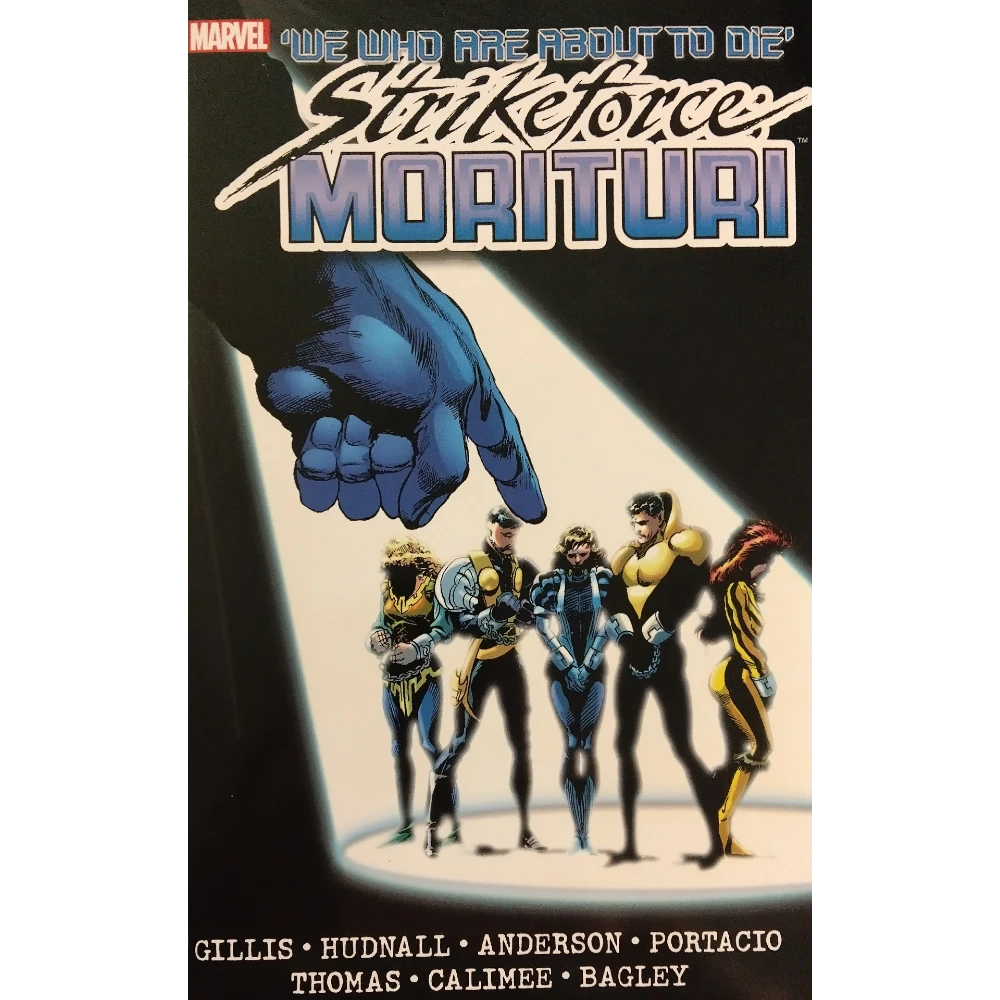
Close to a year ago, I reviewed the first thirteen issues of a genuinely unique series Marvel produced in the late 80s: Strikeforce: Morituri. Created by Peter Gillis and Brent Anderson, the series explored an Earth besieged by the alien Horde, the planet's only saviors a cluster of humans given extraordinary abilities…
…that promised to burn their bodies out within a year.
I read those issues transfixed. Here was something special, different from anything else in Marvel's catalogue or even the comic book medium. Superheroes die and return all the time. Heck, DC even published a series about a character whose very superpower was resurrection. And in a decade where Jean Grey was killed and resurrected, where Elektra was killed and resurrected, where Barry Allen and Jason Todd were killed only to be resurrected later, here was a series that made a promise: these heroes aren't coming back. Death is permanent.
Gillis and Anderson invite us to step into a world where actions and consequences actually matter. Fond as I was of those inaugural issues, I itched at the opportunity to dive back into Earth-1287. As Anderson pencilled issues of an 80s Ka-Zar series I recently reviewed, I thought now the perfect time to witness the further adventures of the Strikeforce's surviving members…and whoever else would step up to the challenge.
Strikeforce: Morituri (vol. 2)
Writers: Peter B. Gillis and James D. Hudnall
Pencilers: Brent Anderson, Whilce Portacio, Scott Williams, Huw Thomas, John Calimee, and Mark Bagley
Inkers: Al Williamson, Scott Williams, Tony DeZuniga, and Val Mayerik
Colorist: Christine Scheele
Letterer: Phil Felix
Issues Collected: Strikeforce: Morituri #14-26
Volume Publication Date: February 2012
Issue Publication Dates: January 1988-July 1988, September 1988-February 1989
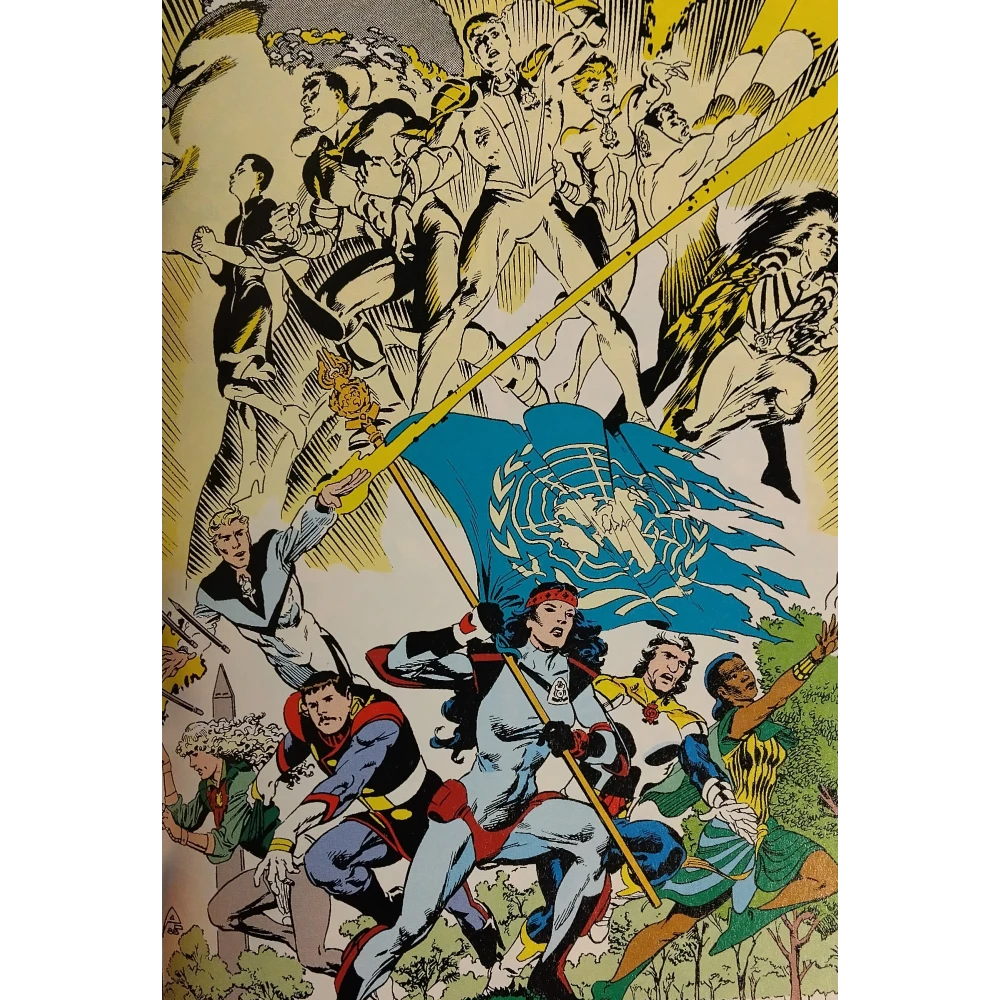
In what is perhaps a slightly cruel application of irony, I found the issues in this volume, paralleling the Morituri process which grants our heroes their abilities, affected by time. Much like our heroes' effectiveness is limited to a year's span, so does this series' impactfulness feel somewhat dulled by its ongoing nature. It seems a somewhat mean way to start a review covering the second portion of a series I raved about a year ago, but let's parse through the particulars.
In some ways, these next batch of Strikeforce issues carry the same heart Gillis and Anderson imbued the series with from the very start. We open with the ongoing adventures of the "third generation" of Morituri, preceded in death by the first group (called Blackwatch) and most of the second generation, folks we've grown to love in the previous volume. These heroes, too, are destined to die and want to do all they can for their world before the last grains of sand fall to the bottom of their hourglasses. Gillis carries over the same sacrificial heroism, the same criticism toward their government handlers, the same barbarism of just how unfair this entire situation is for everybody.
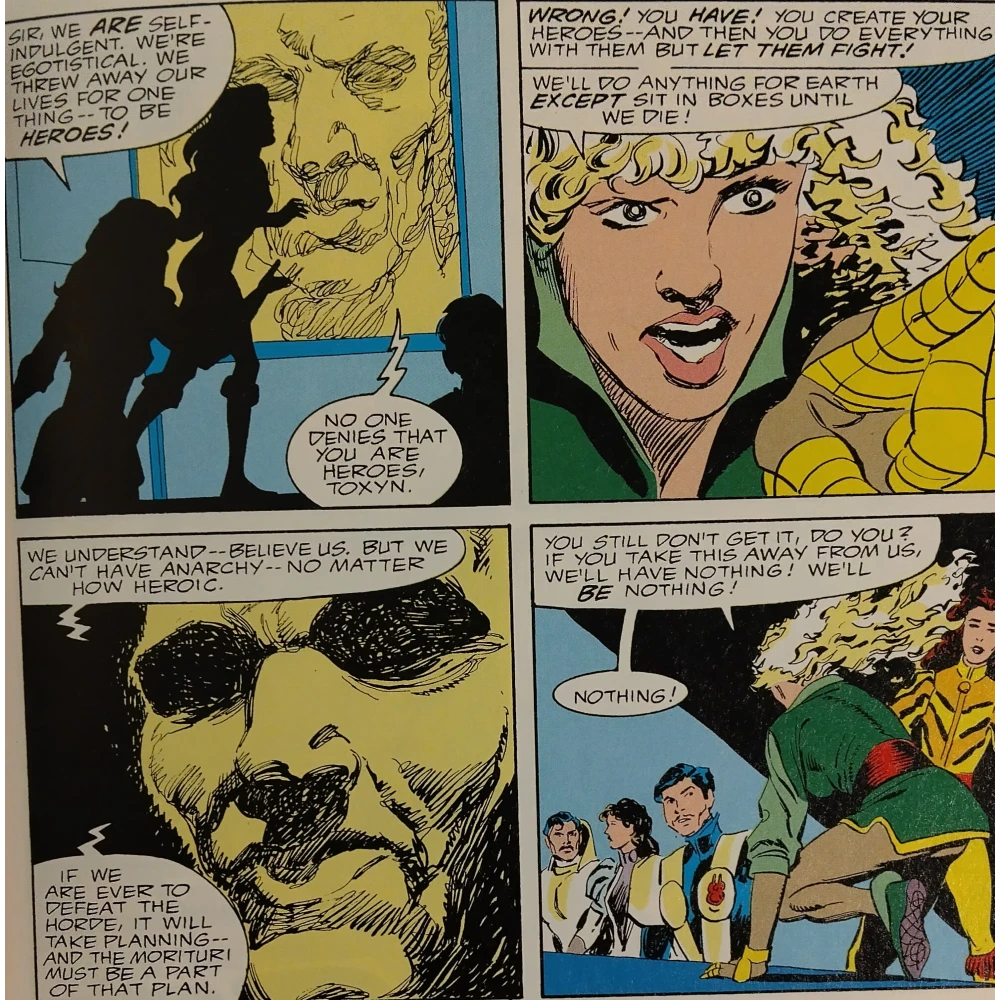
All those elements are part and parcel of these issues, and if you enjoy watching more of that unfold, great. But if you want more than that, you'll find, under Gillis at least, not much happens plotwise beyond maintaining this status quo. Anderson can still create vicious attacks from Horde enemies, scenes of Strikeforce members leaping into battle, and the occasional devastating end to one of our heroes, but at this point, we've already witnessed much of the same. Like in the prior issues, Strikeforce members continue to push against the confines their superiors have created, go off to save civilians when they determine heroism and sacrifice supersede governmental authority, and experience internal crises between using their time well and knowing the limits on their lives.
But the effectiveness of how well these issues convey those ideals feels diluted, the ongoing violence desensitized. Part of this is from Gillis not allowing us time to become as acquainted with our newest group of Morituri as we were the original team. Scenes of training and bonding have largely been skipped over, and while Gillis works to insert human elements into the unfolding drama, none of the characters are quite as relatable. There are pieces which fit in nicely–pregnant Morituri member Blackthorn wonders if she'll deliver her baby on time and mourns not having the opportunity to raise her; a few others hope they can enjoy their remaining time as a couple–but no one character feels as integral or worth exploring as their predecessors.

James Hudnall, coming in part way through this volume, seems to want to change the formula up somewhat, and he carries the second half of this collected edition in a much more satisfying manner. I've read online that his material, beginning in issue 21 and lasting the remainder of the original series (which we'll discuss in my review of the third volume), is not as strong as Gillis', which concerned me coming into this volume. Though Hudnall may not have as refined a voice as Gillis, he navigates the narrative more fluidly than his predecessor, offering us (from a purely subjective perspective) the strongest material since the series' initial issues.
Under Hudnall, and with newcomer Mark Bagley arriving shortly thereafter, the series' story and tone shift dramatically. Hudnall can play into the ideas Gillis championed, and off the bat, he introduces some much-needed new blood to the Strikeforce's dwindling numbers: members Revenge and Scanner are the most interesting newcomers, given genuine backstories and arcs which continue into the third volume (though you don't have to have to be a genius to determine what Revenge wants out of the process). We're given a sense of forward momentum under Hudnall as new characters feel more explored, certain plot elements Gillus introduced (such as the possibility of a cure) are used more effectively, and some worldbuilding radically alters the course of the series.
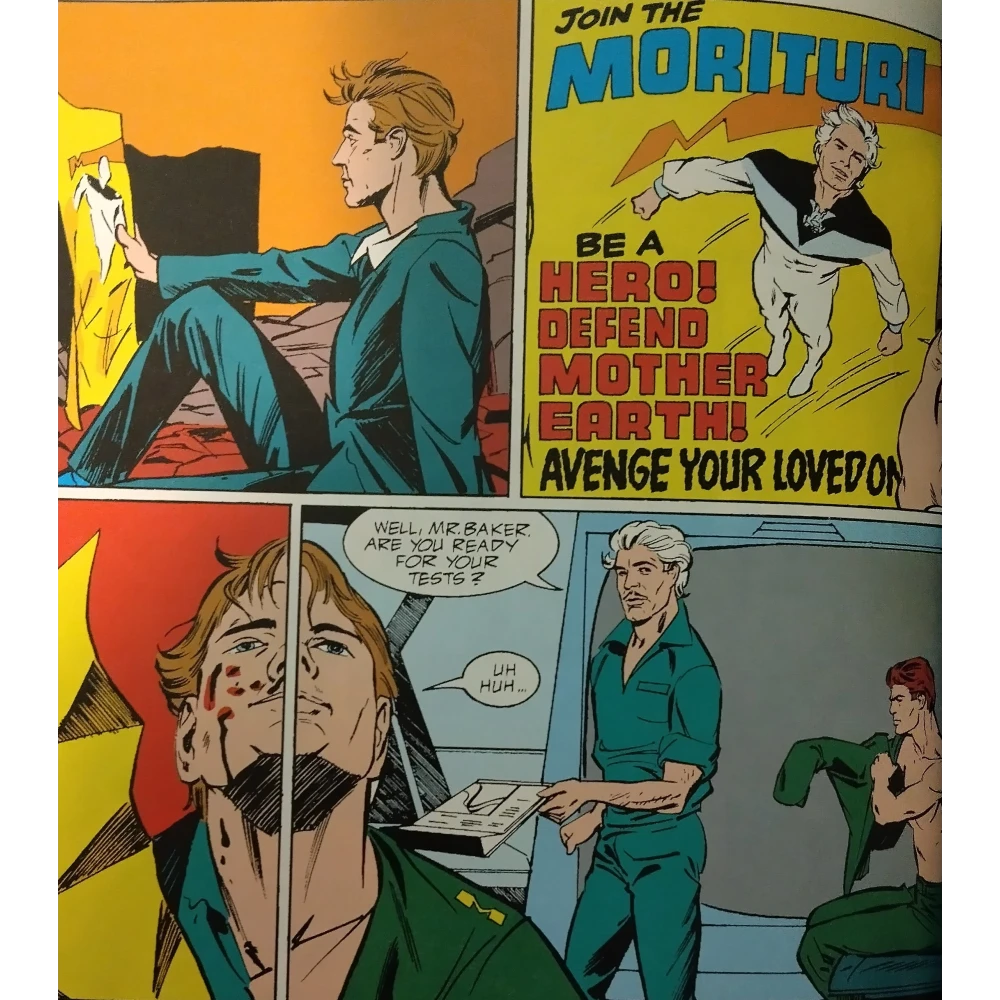
With Hudnall behind the wheel, we're no longer spinning our tires, the writer offering genuine momentum as the volume closes. I found I waffled on just how precisely I appreciated his changes–one fairly important development rips asunder part of the narrative's basic premise, meaning we move from a stalemate established by Gillis to a brand new status quo in a matter of issues as this volume closes. Some threads are dangling, but you could shut this volume and feel like an ending of sorts has been provided. That's how dramatic the changes are. Do they happen a tad too quickly? Absolutely, and if it weren't hindsight speaking (since I've read the third volume prior to writing this review), I'd probably sound more frustrated than I do.
That tonal shift I referenced above also plays into the final issues presented here and, as noted, your appreciation of how Hudnall handles that aspect may rely on you reading the third volume to receive the full effect. Gillis' narrative was always fairly basic, his interests lying more in exploring our characters (when he did so) than bringing closure or explanations to certain facets of the ongoing story. Hudnall is much more engaged in exploring the question "Why?" finding untouched threads in Gillis' basic framework and tethering them to grander ideas. A larger plot–you could even call it a conspiracy–becomes present in these issues, again, carrying into that third volume.

The changes aren't unwelcome, but they take some time to get used to. They do ensure that the plot receives that much-needed shift into high gear, taking our Morituri from a status of treading water and forcing them to swim. At this stage, Hudnall doesn't seem quite as tethered emotionally to our characters, providing a few deaths which feel almost cold in their execution (no pun intended). Gillis could be creative in removing his chess pieces, honing in on the heroics and weight of these continual losses. Hudnall is less adroit, with two deaths in particular occurring suddenly and simultaneously, with the emotional response feeling like an afterthought.
My opinions of this volume are much more divided than I assumed they'd be coming into the collection. I assumed a continuation of Gillis' strong writing, characterization, and theming; these aspects do continue but with a repetitiveness that damages the series' uniqueness. "Too much of a good thing," in this case, or at least too much of the same thing. Hudnall promises and delivers grateful changes to the narrative and tone, though the full impact of those changes aren't felt by time this volume concludes. We'll have to dive into the third collection to see how Hudnall, our only writer from here on out, continues casting his own vision for Gillis and Anderson's world and whether that vision can outlast the series' dwindling effectiveness.