(Strand)om Stories: Ka-Zar: Savage Dawn Review
Some frustrating particulars only slightly undermine an introspective take on the Savage Land's lord
—by Nathan on September 29, 2026—
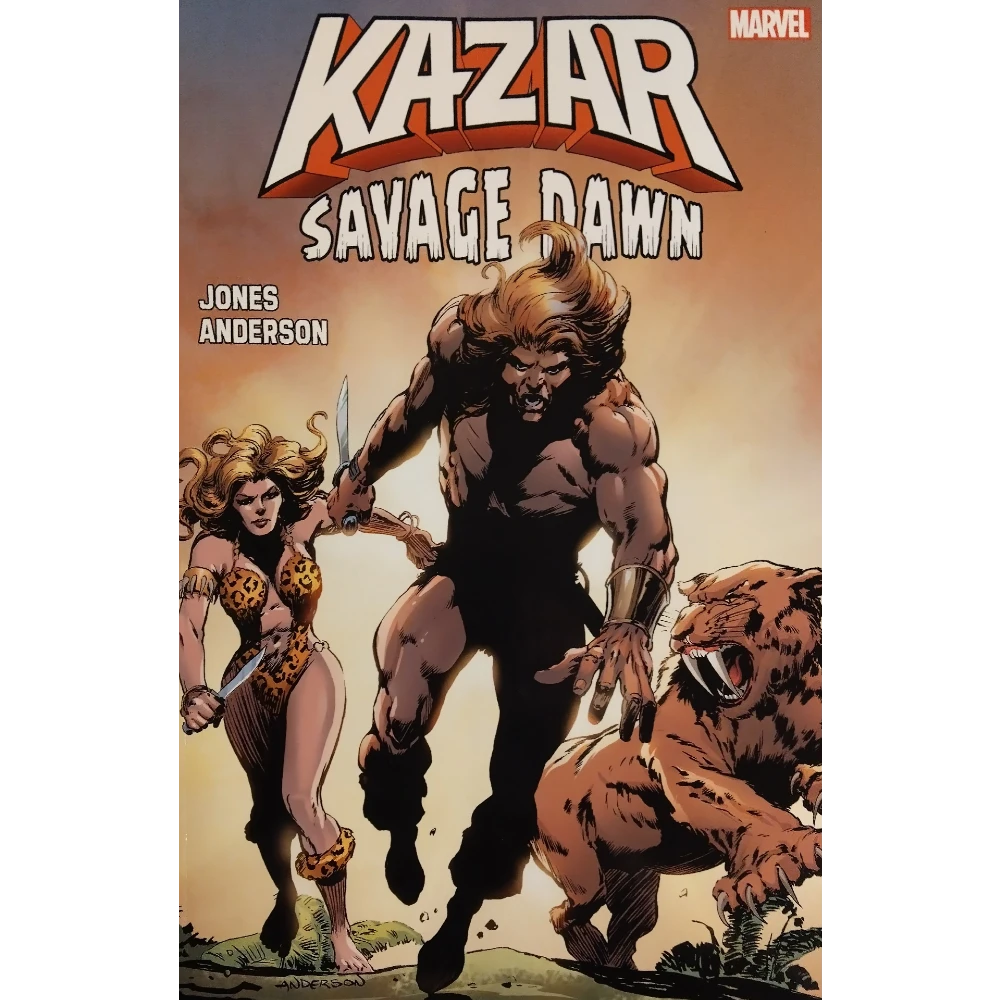
While reading a few other narratives where dudes and dinos share pages recently, I was reminded of, perhaps, comics' most classic example of the "jungle hero" character not adapted from the works of Edgar Rice Burroughs. We've come this far, I thought to myself, so why not keep the train chugging a little longer?
Of course, you won't find any trains where we're going. A place called the "Savage Land" doesn't necessarily bring to mind modern locomotives. These folks are likelier to ride around on Triceratops than steam-powered engines of industry.
We've watched as men moved from modern eras into the past, finding worlds within our world that have not advanced past a more primitive era of sword-swinging and stone-slinging. Technology has existed, just to throw a few wrenches into the storytelling, but our heroes have generally found themselves up against some pretty ferocious opponents with only their natural skills and survival instincts as soldiers and scientists. Ka-Zar's story is no different
Born Kevin Plunder, son of Lord Robert Plunder, in Castle Plunder in England, our titular hero, despite the name associated with him would otherwise suggest, did not grow up to be a viking or cat burglar. Look to his brother for acts of thievery (dude calls himself "The Plunderer," no subtlety there). Lord Plunder brought Kevin to the Savage Land, where the man was killed and Kevin was raised, like Tarzan, to be a son of the jungle. I know little of the character's history, outside of him confronting the X-Men in an early issue, interacting with Daredevil, and aiding the X-Men against the vampiric Sauron on two separate occasions, in what are some of the best pre-Claremont X-Men issues and in the inaugural issues to Marvel Fanfare.
But because we've been gallivanting through prehistoric-looking lands, I wanted to give Marvel's foremost forest favorite son a shout out. In the 80s, Ka-Zar was gifted his own series, which ran for about three-and-a-half years. While an omnibus collects the full series, I elected for the cheaper option. Like in my examination of early Warlord issues–collected in a volume which, like this one, features a blond-haired hero charging the reader, weapon in hand, followed closely by his favorite female companion–we're only getting a taste today of Ka-Zar's adventures, courtesy of horror writer Bruce Jones and Strikeforce: Morituri artist Brent Anderson.
Ka-Zar: Savage Dawn
Writer: Bruce Jones
Penciler: Brent Anderson
Inker: Carloz Garzon
Colorist: Nel Yomtov, Roger Slifer, and Don Warfield
Letterer: Jim Novak
Issues Collected: Ka-Zar the Savage #1-5
Volume Publication Date: January 2017
Issue Publication Dates: April 1981-August 1981
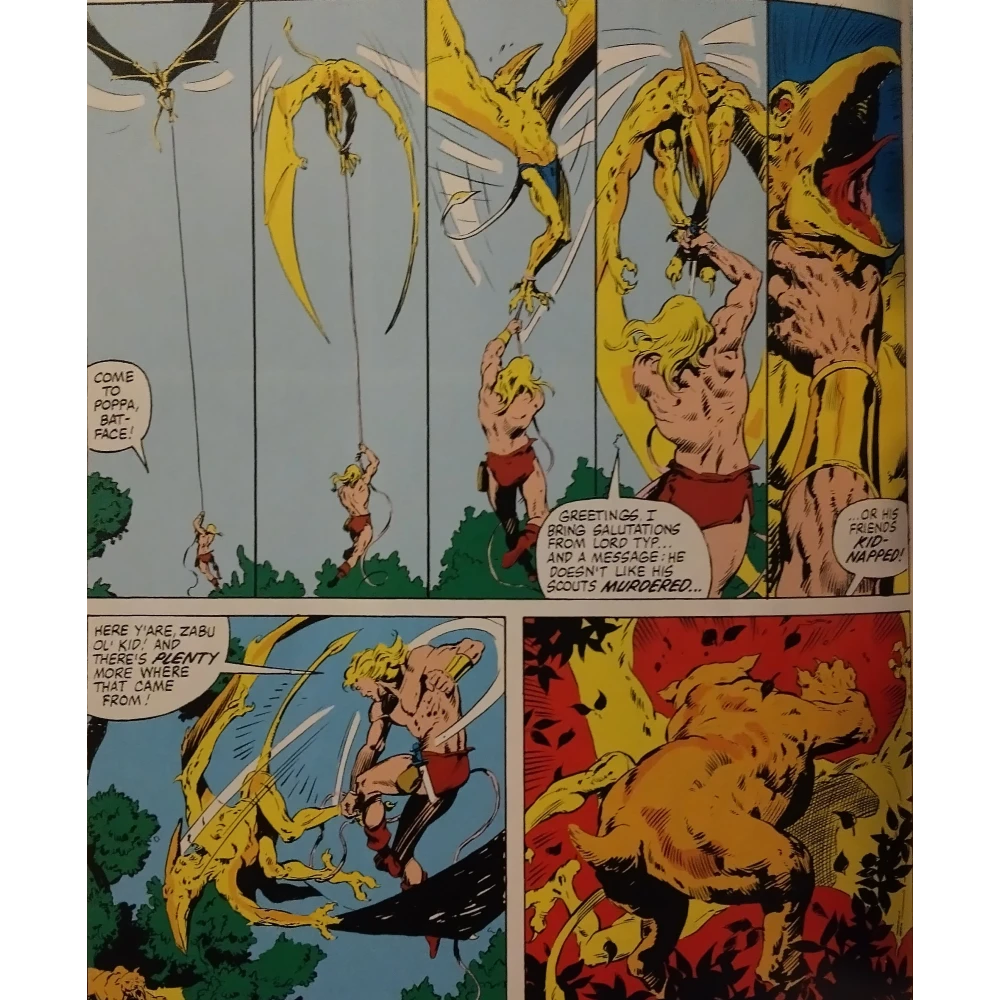
The other "jungle hero" stories I've reviewed have all witnessed men and women whisked away from the comfortable and familiar into unknown terrain. Jim Scully and his allies, sucked through a wormhole over the Bermuda Triangle; Travis Morgan, flying into Skartaris, a world within ours; Ray Palmer, discovering a miniature civilization in the vast Amazon rainforest. They stumble upon an unfamiliar environment, culture, or people and must learn to adapt to the rules and overcome conflicts.
Ka-Zar, as Jones and Anderson open their series, has already adapted to the Savage Land. We're given a man in his element, at least physically. He's strong, paired well with his sabretooth tiger companion Zabu, well-adjusted to the climate and challenges. He's even, maybe, found love, in the arms of Shanna O'Hara, the She-Devil, though Jones provides their relationship (if you can call it that at this stage. What do the kids say these days? "Situationship"?) wrinkles like what you'd find on an elephant. Because there's a certain level of discomfort here, even in a world Ka-Zar has grown to love, and Jones begins exploring that unease in earnest.
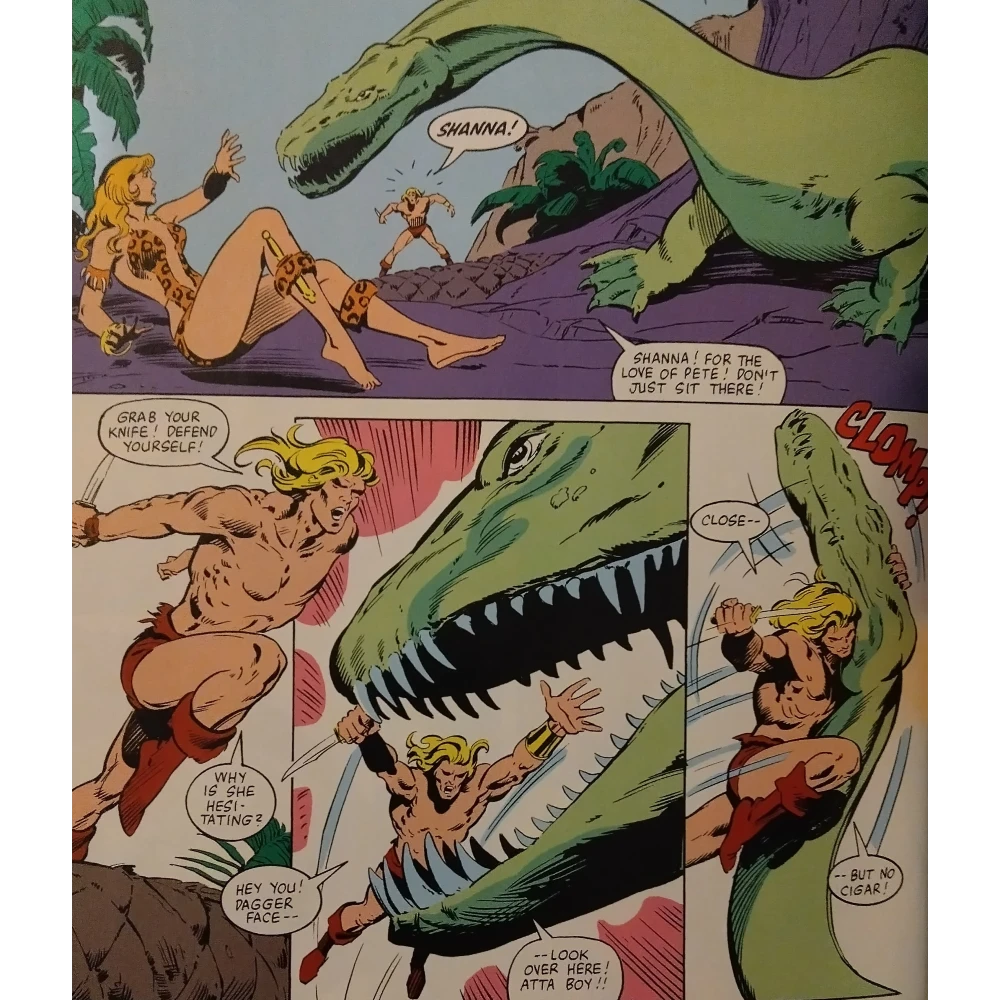
Our boy Kevin–though he's not a boy any longer at this stage–has known both worlds, that of Western civilization's modernity and that of the Savage Land's, well, savagery. He's well-educated, talks well, peppers his conversation with lingo and references. Jones, through Ka-Zar and Shanna, neatly balances a tightrope between modern language and countenances and the more primitive stylings of the Savage Land. Our main characters may wear animal belts and huck spears, but they reference American baseball teams and psychiatrists. Our couple-but-not-really? exist in this liminal space, between the inborn tendencies and beliefs of then-modern society and the "law on the jungle" by which they abide daily.
Jones latches onto this concept as a source of tension, and though I'm unaware of how grafted the idea is into the entire series, he makes his mark, like the bite of a sabretooth tiger, in these opening issues. External conflict exists aplenty, but it's the internal rumblings where Jones wants his focus. Ka-Zar, a child of two worlds, reckons with his current lifestyle, calling into question his and Shanna's decisions as, perhaps, cowardly. Throw on a tiger pelt, swing among trees, fight the occasional prehistoric beastie…it is, in ways, a child's fantasy fulfilled. No responsibilities other than those chosen, no corporate overlords, no trash to take out Monday nights.
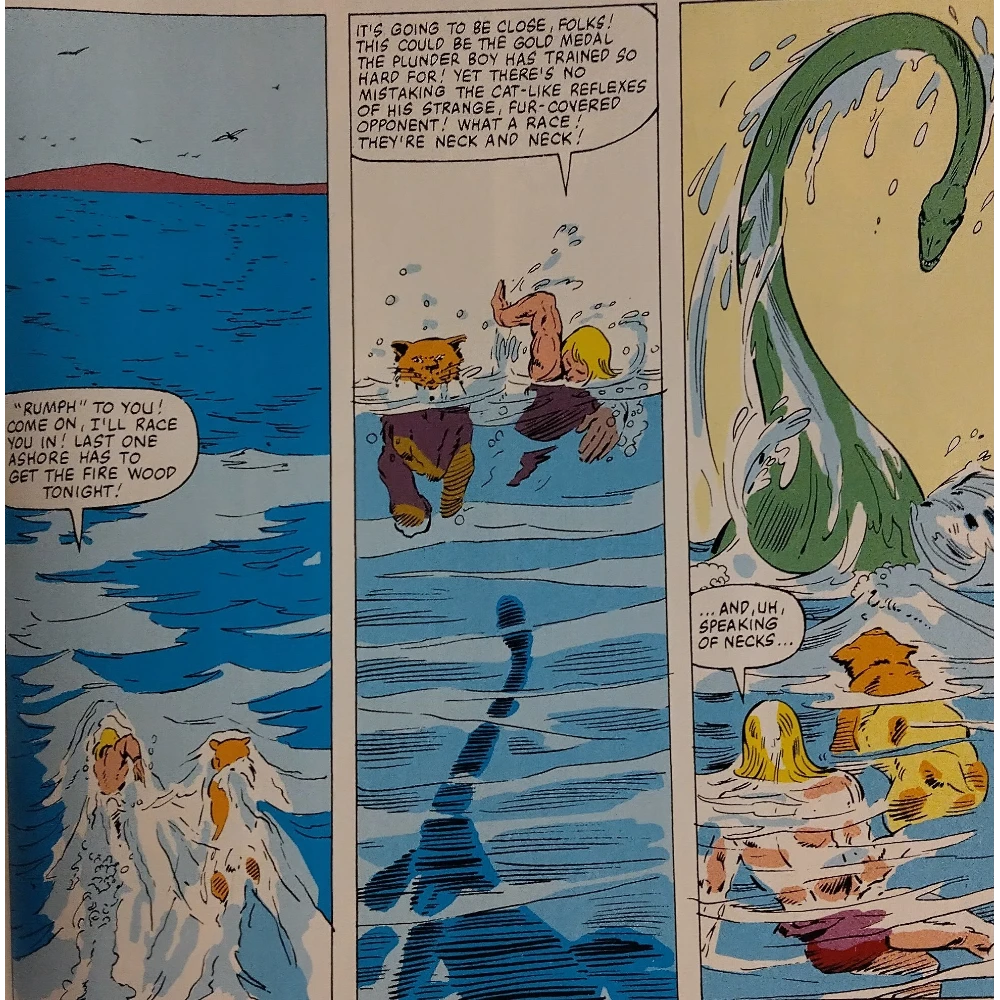
And yet, as this introspective Ka-Zar deliberates, is it the right choice? Jones looks at a character whose modus operandi–playing the two-bit Tarzan–has been taken for granted. Marvel wanted a tree-swinging jungle hero, so they made a tree-swinging jungle hero. Jones is determined, even in these opening issues, to probe at why. Ka-Zar's smart, suave–heck, Shanna herself was a veterinarian prior to moving to the Savage Land–so why throw all that away to sleep in tree branches?
What we get is conflict, somewhat between Ka-Zar and Shanna, somewhat in a more outwardly expressed form, where the restrictions of civilization clash with a seemingly unbridled freedom…which, as Ka-Zar is finding, is paradoxically more confining than he realized. There's this notion of repression through unlimited choice here, that with seemingly inexhaustible choices comes a dwindling of purpose. Ka-Zar, a man who abandoned civilization to live a life free from constraints, wants more. He can live the life he wants…but now that he has that life, it doesn't carry the same meaning.
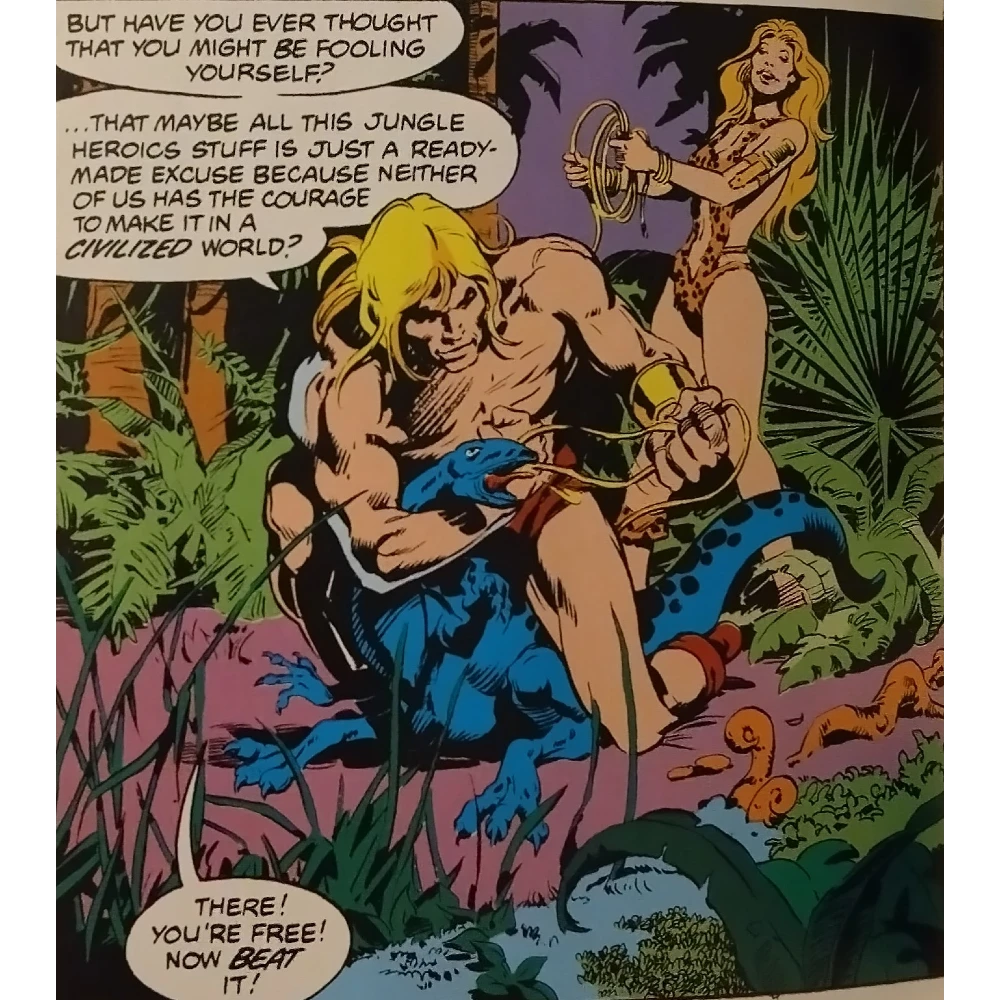
Jones doesn't frame this in the same way Mike Grell fashioned Trevor Morgan in Warlord, for example. Where Morgan realized his proclivities toward violent heroism through battling hordes of enemies and wondered at his own transformation, Ka-Zar isn't so much doubting this restlessness. Shanna isn't completely won over by his newfound drive, hence the conflict generated between the two of them as Ka-Zar wonders and wanders in discovering this newer sense of self. But Ka-Zar feels a certain confidence within himself, that this wrestling will lead somewhere, that denying or burying it will only lead to additional unsettled feelings.
To that end, Jones drives Ka-Zar into Pangea, an ancient paradise outside the Savage Land, opening a brand new world for this new Ka-Zar to explore. He discovers new friends, the possibility of new love, new challenges to confront. Jones, it seems, wants to quell Ka-Zar's doubts by driving him deeper into this primitive world, making a promise to the reader that, while you're not getting the same-old, same-old Ka-Zar adventures, you're offered something familiar. "Ka-Zar, but with 100% more mid-life crises," seems to be the thesis statement, and it is an interesting way to try and reframe the character.
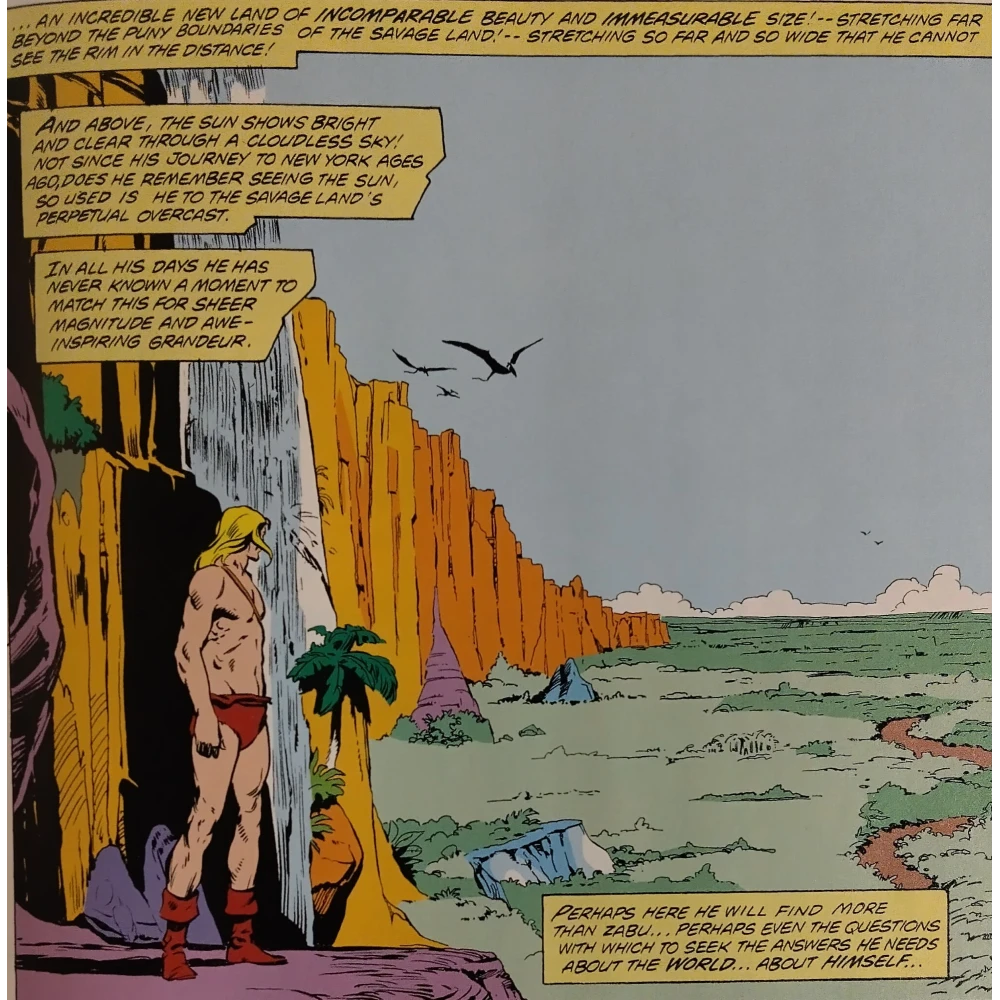
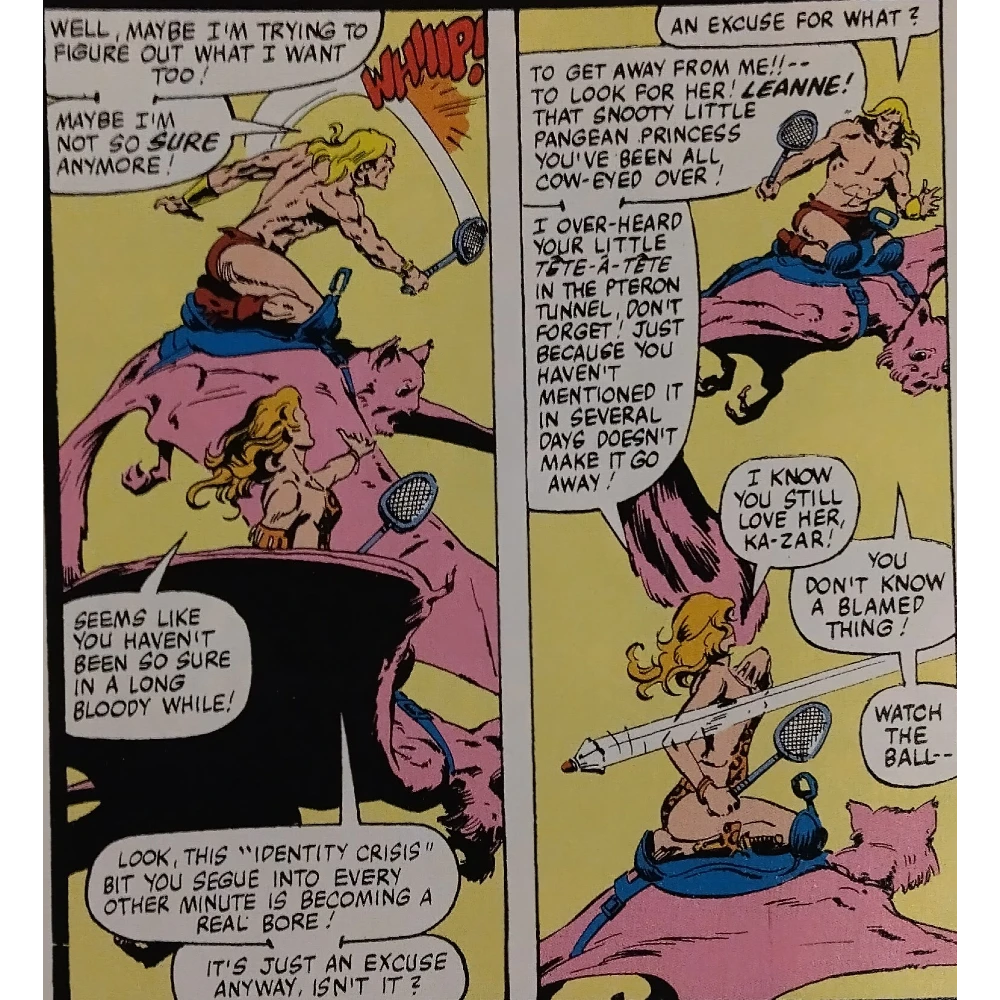
There are some frustrations in the specifics, as Jones puts this thesis statement into practice. This newly "liberated" Ka-Zar, though nicely introspective and attempting to be a deeper character than he was presented as previously, winds up a somewhat selfish, sometimes unlikable individual. He seeks a relationship with Shanna, yet he behaves in a fairly noncommittal fashion, especially when he meets another woman who, it seems, could better complement his burgeoning perspective of how he wants life to look (though, to his credit, he draws the line at accepting the advances of a third woman). There's a bizarre love triangle I would liken to Mike Baron's Flash issues, where Wally West pursued a married woman estranged from her husband, as both Ka-Zar and Wally deliberate in a fairly juvenile way between making the correct decision and acting self-centeredly. Ka-Zar even refers to this jokingly, telling that third woman he's "already what you might call committed," following it up with "over-committed, actually." He's no dummy, Ka-Zar. He knows what he's doing.
Jones' portrayal of Shanna may raise some eyebrows as well. Though he attempts to present her in a strong fashion, he does not do much more than make her Ka-Zar's love interest…scratch that, one of his love interests. Jones can't even supply significant "Will they/won't they?" tension, as Shanna only has eyes for the Savage Land's lord, whereas Ka-Zar's attentions are divided to the point where you begin thinking he sees her less as a viable partner romantically and more as a good friend who provides the occasional kiss on the cheek. Their relationship is important to her, optional to him, and it doesn't feel like the fairest handling of her character.
These concerns and complaints may have been addressed in further issues–I shouldn't expect these first five to represent the entire Ka-Zar the Savage series in microcosm. Ka-Zar, living in Marvel's version of the Stone Age, appropriately gets off to a bit of a rocky start here. There are genuinely interesting questions Jones is asking, ones worth exploring–questions of identity, of civilization, of Kevin Plunder and Shanna O'Hara's future. The concept is strong, a way to carry Ka-Zar's character forward and prevent him from feeling stale. In these opening installments, however, Jones lays out a somewhat awkward trajectory, making Ka-Zar a tad too bullish in embracing this new exploration of his identity when he should learn to adapt with the agility of a long-extinct feline predator.